• Skip to primary navigation
  • Skip to main content

International Salsa Magazine

  • HOME
  • Previous editions
    • 2026
      • ISM / April 2026
      • ISM / March 2026
      • ISM / February 2026
      • ISM / January 2026
    • 2025
      • ISM / December 2025
      • ISM / November 2025
      • ISM / October 2025
      • ISM / September 2025
      • ISM / August 2025
      • ISM / July 2025
      • ISM / June 2025
      • ISM / May2025
      • ISM / April 2025
      • ISM / March 2025
      • ISM / February 2025
      • ISM / January 2025
    • 2024
      • ISM / December 2024
      • ISM / November 2024
      • ISM / October 2024
      • ISM / September 2024
      • ISM / August 2024
      • ISM / July 2024
      • ISM / June 2024
      • ISM / May 2024
      • ISM / April 2024
      • ISM / March 2024
      • ISM / February 2024
      • ISM / January 2024
    • 2023
      • ISM / December 2023
      • ISM / November 2023
      • ISM / October 2023
      • ISM – September 2023
      • ISM – August 2023
      • ISM July 2023
      • ISM Edition June 2023
      • ISM – May 2023
      • ISM April 2023
      • ISM March 2023
      • ISM February 2023
      • ISM January 2023
    • 2022
      • ISM December 2022
      • ISM November 2022
      • ISM October 2022
      • ISM September 2022
      • ISM August 2022
      • ISM July 2022
      • ISM June 2022
      • ISM May 2022
      • ISM February 2022
      • ISM January 2022
    • 2021
      • ISM December 2021
      • ISM November 2021
      • ISM October – 2021
      • ISM September 2021
      • ISM August 2021
      • ISM July 2021
      • ISM May 2021
      • ISM April 2021
      • ISM June 2021
      • ISM March 2021
      • ISM February 2021
      • ISM January 2021
    • 2020
      • ISM December 2020
      • ISM November 2020
      • ISM October 2020
      • ISM September 2020
      • ISM August 2020
      • ISM July 2020
      • ISM June 2020
      • ISM May 2020
      • ISM April 2020
      • ISM March 2020
      • ISM February 2020
      • ISM January 2020
    • 2019
      • ISM December 2019
      • ISM November 2019
      • ISM October 2019
      • ISM Septembre 2019
      • ISM August 2019
      • ISM July 2019
      • ISM June 2019
  • Spanish
  • Download Salsa App
    • Android
    • Apple

Search Results for: Latin genres

Talented Nicaraguan Ernesto Tito Garcia and his amazing artistic career

His life and career

Ernesto Tito Garcia is a Nicaraguan bandleader and timbalero who has been part of many musical groups that passed from romantic salsa to mambo and many other Latin genres.   

This astonishingly gifted artist has been playing professionally since the year 1971. A few years later, he formed his first orchestra called Ritmo 74, which was in charge of opening up for the biggest names in Latin music from back in the day. Both Ernesto and his fellow musicians were noted for their ages and the musical styles they used at the time. 

He experimented with Latin rock during his youth until he heard salsa for the first time and wanted to devote himself fully to that musical genre. After spending a long time playing romantic music, he decided to experiment with hard salsa and added his own style to the rhythms played by La Orquesta Internacional. 

Ernesto Tito García
Talented Nicaraguan Ernesto Tito García

Our conversation

We are very happy to get him in International Salsa Magazine today ready to go and talk a little about his life and musical career. 

My father signed me up for music lessons. I did not like them very much, but they kept me busy and interested me. Thanks to those lessons I took once a week, my ear opened wide and I learned to read music, which is a very rare thing for a timbalero. In 1969, I was 13 years old and my dad was paying for weekly accordion lessons and when Santana came out in my eighth grade, I heard my first timpani and knew it would be my instrument. That’s when I told my dad not to spend money because I wanted to play the timpani. He was a good man who died in my arms because of the same cancer I have today. 

On Broadway Street, San Francisco was where I began to learn how to play the timpani. My dad helped me buy my first timpani and I found a group that played Latin rock just like Santana, which gave me the opportunity to develop my technique. When I was in San Francisco, I did not hear much of salsa because it was more present in New York City, but my dad bought some records recommended by a friend containing the last of salsa. That was the first time I heard salsa and I was playing Latin rock with the group I already mentioned. When I heard that music, I met a girl who was interested in buying an electric piano that belonged to my girlfriend’s brother who was 15 years old at the time. From there, we formed our first orchestra in 1974, which we called Ritmo 74. When the music outside like Eddie Palmieri or Tito Puente came, people over 40 years old also came, but young people did not like it because the music was very regimented and had many pitoretas (wind musical instrument, also known as clarion). 

Tito on the beach
Ernesto Tito García on the beach

About the time Willie Colón came out was when the orchestra started getting big because we were the young people of salsa. I was 16 or 17 years old, while the oldest member was 26 or 27 years old. We had agents who gave us the opportunity to open up for the biggest names in New York like Eddie Palmieri and Willie Colón. At that time, we were the only orchestra of our generation with that kind of playing. We were growing up, but the thing is that I liked education and for whatever reason, I found that I made good grades.   

As our fame grew here in the Bay Area, I had to devote much time to rehearsals, learn new songs, among other things. That’s why my grades started to fall and I was about to graduate from high school. The last two years were the most important ones at school, so I realized I would not be able to do both at the same time. So I decided to quit music and knew the only way in which I could do it was to sell my timpani, so I went to a store and they gave me $60 for them. 

I got my grades up, was admitted by San Francisco State University and the first year was amazing, but I met other Latino students who also played music. They began renting a room right there on campus to rehearse, so I did not have to go somewhere else. It was there that we founded La Orquesta Salsa Caliente and as soon as we got to be known, people liked us. About two or three years later, my grades started to fall again, so I quit music again. I graduated from College and was admitted to the school of optometry in 1985 or 1986. Thanks to that diploma I started working with a very skilled Salvadoran doctor. He was a surgeon and ophthalmologist. When I formed my own orchestra, I had two very simple rules for the members. The first was that when we played, we could not take any kind of drugs or alcohol, while the second was that we had to always wear a suit and a tie, that’s what no other youth orchestra did.   

This is Mike Rios
Tito García and Mike Ríos, who designed the album covers for Santana

Do you think that the style of mambo that your orchestra plays is what makes it unique or are there other elements that stand out? 

First of all, when I formed the orchestra, romantic salsa was in vogue just like its exponents included Eddie Santiago, Tony Vega and many more. The problem was that the music was boring because the arrangements were very simple. In 1996 or 1997 was when I heard Tito Puente with his orchestra playing mambo and that is what gave me the idea to do the same with four or five pitoretas. That’s when I lost several musicians and singers because they wanted to sing romantic salsa, but I was tired of that. 

So, we started playing what I called hard salsa, which had mambo arrangements and singers who knew how to perform it. That combination pushed us on a new level. Those who wanted to sing romantic salsa formed their own orchestra. Julio Bravo was one of my favorite artists and I helped him with some musicians. There was also my comadre Denis Corrales, who formed her women’s orchestra. The orchestra looked very good with all the girls, but it was not what dancers were looking for. There is also the case of Venezuelan Eduardo Herrera whose voice was incredible and he also grew up with salsa music, but he did not know how to sing hard salsa. 

Tito García and Tito Puente
Tito Puente and Tito García

Do you think having musicians from so many different countries has to do with the final product you present to the public?  

This did not have a lot of influence on our music. Back then, our orchestra was called Salsa Dulce. When my agent retired, I got stuck with the orchestra. He wanted the orchestra to have my name in its title but did not want it to be too obvious, for example, Los Titanes de La Salsa Con Tito García or El Gran Combo Con Rafael Ithier. Regarding nationalities, the singer was Venezuelan, the bass player was French, the pianist was Peruvian, the conguero was Puerto Rican, the saxophonist was Irish and the trombonist was American as was the trumpet player. It was the reason why my agent suggested me to call it Tito García Y Su Orquesta La Internacional. I liked how it sounded so much that I called the group that.  

What are your future projects? 

I can mention an album dedicated to Tito Puente and am going to record it between San Francisco and Nicaragua. The problem is that his family has the rights to all his music and I do not know if they give me permission to do it. I hope they are not going to charge me a lot for those rights. Of course, we are going to make money with the project, but costs are much more comfortable and negotiable in Nicaragua. That is one of the reasons why I want to do it there.  

Timpani of Tito garcía
Tito García’s timpani

Don’t Think About Not Attend The Alocubano Salsa Festival

It Starts On October 7th in Stockholm, Sweden

Dos hombres vestidos de blanco y un hombre con chaqueta y sombrero azul
Los asistentes deben guardar su entrada impresa o como recibo digital en su dispositivo móvil.

One of the most anticipated Afro-Caribbean events in Stockholm (Sweden) is the Alocubano Salsa Festival. This year, as usual, they will focus on the culture of the Cuban island and will once again do magic with the multiple Bootcamps led by Cuban instructors of trajectory that will focus on the technical development of each dancer that will make them feel comfortable and at home.

To maintain public health security, the Swedish government has drawn up a plan for the lifting of restrictions concerning the COVID-19 pandemic and a return to a more normal daily life. This derogation is based on the gradual elimination of limitations in the country with a maximum of five steps: The first step refers to the extension of restaurant openings until 10:30 PM and releases in the maximum amount of participation in activities at the open-air (Coming from June 1st, 2021). Steps two and three continue with the permission to give training and hold meetings in general without limits of square meters in open and closed spaces (It came into effect from July 1st, 2021). The fourth and fifth steps are estimated to be exposed in mid-September of this current year.

For this reason and in compliance with the measures adopted by the Swedish government, the Alocubano Salsa Festival will be held in 2021 with the main Latin genres of the moment Bachata, Cuban Salsa, Top Mambo, and urban music on four dance floors with eight Spanish-speaking DJs: DJ Javier La Rosa, DJ La’Fe, and DJ Flecha will mix the best Cuban Salsa, while DJ Soto-Mayor and DJ Raymon will make sure the attends do not leave the dance floor with the Reggeaton, moreover, DJ York and DJ DLux will do the same to the rhythm of Bachata, and similarly DJ Mauri will be mixing the best music for Top Mambo.

Venue: Royal Park Stockholm. Frösundaviks allé 15, 169 03 Solna, Sweden

Choose Your Bootcamp

Instructor de baile con camisa blanca y pantalón negro.
During the event, there will be filming and photographs that may include images of private participants

In the Bootcamps, participants will have the opportunity to be in small groups of 20 people, thus achieving a more personalized treatment during the four intensive hours of class, distributed as follows: two hours on Thursday night and the last two night hours will be finished on Friday. Additionally, you will learn a unique and exclusive choreography that you will perform with Cuban instructors on stage during the party on Saturday. (This participation is not mandatory).

Mambo Fusion: Designed for intermediate and advanced dancers. They will have a dress code that will be announced days before the event. The Cuban instructors are Rodrigo & Asya.

Bachata Traicionera: Four intensive hours of exclusive training. Instructors: Sergio and Ana. Level: Intermediate / Advanced. For the performance in the Sergio and Ana show, the participants will use a dress code that will be announced days before the event.

Cuban Salsa: It will last four hours divided into two hours of night practice on Thursday and the remaining two hours will be dictated on Friday. The choreography will be given by Cuban teachers: Seo Fernández and Bárbara Jiménez in individual Bootcamps. Level: Intermediate / Advanced. Essential dress code. The announcement will be on the eve of the event.

Date: Thursday, October 7th – Sunday, October 10th

Full Pass: 210 EUR

  • You Can Also Read: Enjoy Salsa In The New Zealand Winter

Extraordinary Concert with Havana D’ Primera & Alexander Abreu

Orquesta Havana D 'Primera despidiéndose en el escenario con luces azules
Before the concert, there will be two hours of the workshop, followed by Latin parties (before and after HDP) with DJ Soto Mayor and DJ La’Fe

Havana D’ Primera is a Cuban timba band founded by Alexander Abreu in 2007 and made up of 17 of the best Cuban musicians. The orchestra is led by the main composer Abreu, who has stood out for his melodic voice and ability to fuse genres through Salsa such as Jazz, Funk, and other Afro-Cuban rhythms.

“Since its inception, the band has released five studio albums and one live album. Following the release of the debut album Haciendo Historia with EGREM in 2009, its first release for the record label Páfata Productions, Pasaporte in 2012, received favorable reviews from the international press and was voted one of the best Latin alternative albums of the year.

Likewise, they have followed the success of “Pasaporte” with four more albums, released through Páfata Productions, and the last one in co-production with Cuban Producciones Abdala. “La Vuelta al Mundo” was released in 2015. A live album, “Haciendo Historia LIVE”, arrived in 2016, and then “Cantor del Pueblo” in early 2018, earning the orchestra a Latin Grammy nomination for Best Salsa Album.

Finalmente, en 2021 se edita el disco “Será Que Se Acabó”, como homenaje a la música popular cubana de los 80 y 90 ”. Fragmentos extraídos de la biografía de La Habana D ‘Primera

Fecha : Domingo 31 de de octubre de st

Hora : 6:30 PM – 10:20 PM

David Frankel pursued music and created Avenida B Band to reconnect with the memory of his father

After coupling on our schedules, we were able to speak with bandleader and pianist David Frankel, whose story of how he became interested in music and eventually dedicated himself to it is truly fascinating. It also shows that not only Latinos and their descendants can fall in love with these rhythms, but also people outside our culture. This is because David has Russian and Polish heritage, which did not prevent him from falling in love with Latin music so intensely.

David and Ricky playing
David Frankel and Ricky Rosa playing live some years ago

What inspired David to pursue music

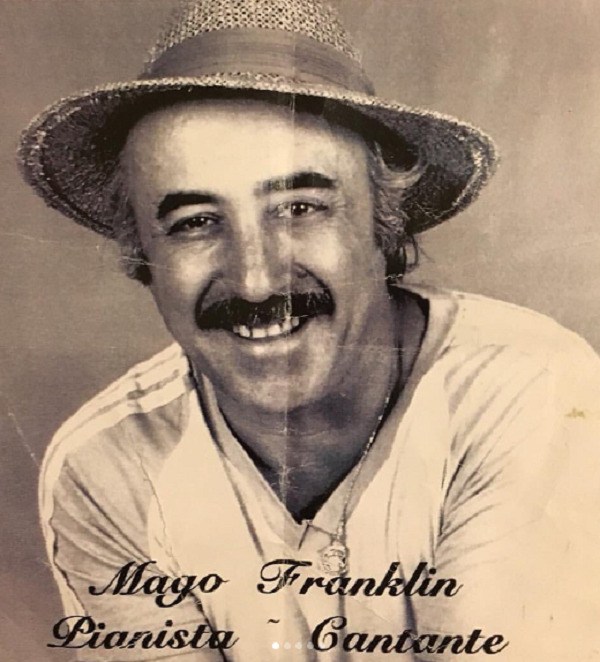
David was born in Lower Manhattan, New York, where there were many Latin families at the time. The neighborhood housed many Puerto Ricans and Dominicans. To this we must add that his father, Daniel “El Mago del Órgano” Franklin, was a musician and moved to that very place where Papote Jiménez, Ismael Miranda, Markolino, Freddy Lugo, Henry Fiol, Luis Ayala, and many others lived. Besides being a neighborhood full of artists, it was much cheaper living there, so he thought it was the ideal place for him.

It is worth noting that Daniel knew how to write music and read scores, but he had never played Latin music before in his life. He began to know it when several musicians he worked with asked for his help to read their scores, which led him to fall in love with Afro-Cuban music and develop an interest in salsa and merengue.

When David was born in 1979, Daniel had already been making music for about 15 years and had earned the nickname “The Organ Wizard” thanks to some band competitions held at a club in the Bronx. From a very young age, the boy watched bands rehearsing on the first floor of his house, so this salsa scene was natural for him. However, David had nothing to do with music until the death of his father in 2003.

David never had any interest in entering the art world, but the void left by Daniel’s death in his life drove him to study music, looking to connect with his father in some way. From there, he began taking piano and percussion classes, but he did not stop there. He also started to go out social dancing in the New York nightclubs and to know a bit more the nightlife of the city. On one occasion, a woman left him alone on the dance floor, and he was so ashamed in that moment that he decided to take classes and learn to dance.

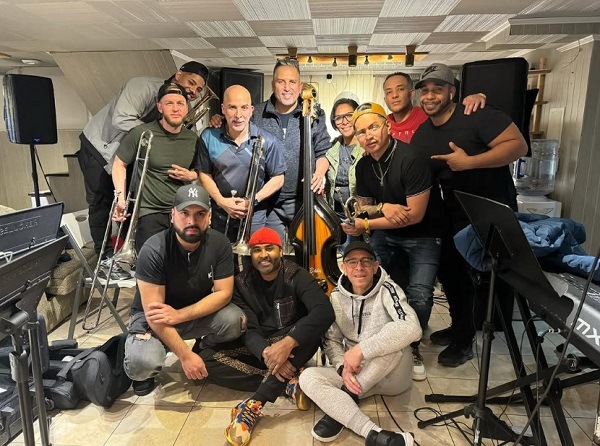
David and the rest of Avenida B
The Avenida B Crew:
Juan Bowers – piano
Alvin Céspedes – bass
Ricky Rosa – congas/coro
Brian Pozo – bongos/coro/stage direction
Jhohan Hernandez – timbales
Demetrios Kehagias – trombone
Dan Lehner – trombone
David Frankel – lead vocals

That was when he realized that all the local bands played almost the same genres and songs, but there was no need for that because there was a world of possibilities in the Latin music he had discovered during his classes. There is a world beyond La Fania, and he learned that thanks to dance schools. All this thinking led him to create his own band with different music, to the old-school style he had always loved. 

His father had always told him salsa is for dancing, and if you are not playing dance music, you are doing it wrong.

Which teachers taught David?

After thanking us for the question, David then proceeded to explain that there was a school in New York called the Harbor Conservatory for the Performing Arts, located at 104th Street and Fifth Avenue in Manhattan. The heads of the education programmes there were Ramón Rodríguez and Louis Bauzó, who were excellent musicians and great people whom he met thanks to his father, who was a piano teacher at that institution. David used to accompany Daniel to the school and met both teachers through him.

Following his father’s death, David returned to that same conservatory to study singing with Ramón, while also studying percussion with Georgie Delgado and piano with Louis. In short, this institution was of vital importance for his career, and the many things he learned there were momentous both personally and professionally. 

As for the dance, he enrolled at the Baila Society school in New York through some friends, but later studied at others such as Santo Rico Dance and Dance On 2.

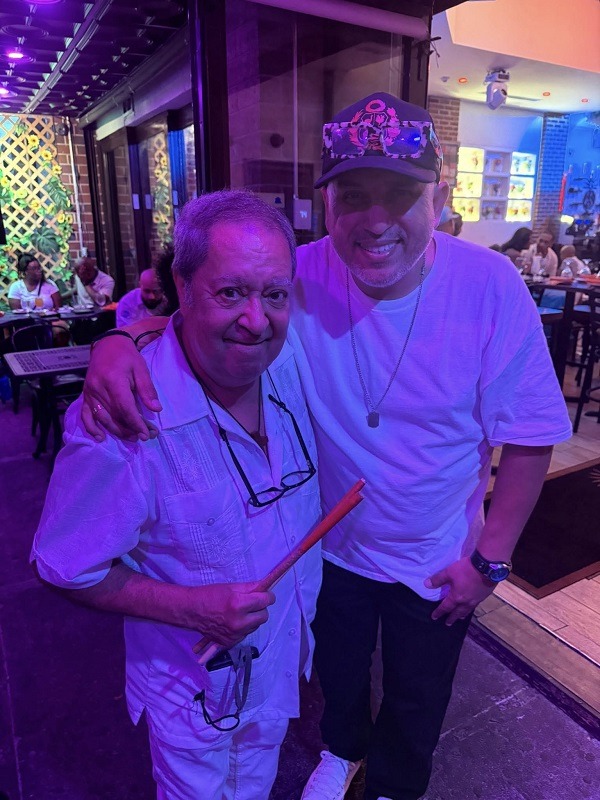
Jimmy and David
Jimmy Bosch and David Frankel

Avenida B Band

David began his career as a musician by playing boogaloo with a group called Spanglish Fly and a few other small bands. After everything he had studied and learned, already for the year 2011, the idea of creating his own group started percolating in his mind, so he posted an ad online looking for musicians and called some former classmates who might be interested in the proposal. That was how he managed to gather a decent number of people with whom he could finally put the Avenida B project together.

He chose salsa dura as his main genre because it is the kind of music that makes him want to dance, and given his background, this was very important to him.

He is also about to release an album in tribute to his father, which he has named “El Mago,” and it will feature some of his own songs; it is scheduled to be released in July 2026. 

David's father
Daniel ”El Mago del Órgano” Franklin, David’s father

Read also: Puerto Rican bandleader and musician Diana Sosa talks about her many projects in Nashville, Tennessee

Rafaelito and his career between Munich and New York

We had a very personable and honest conversation with Rafael Pareja Ibañez, who via WhatsApp has given us a few minutes of his busy schedule to tell us a bit about his fascinating career to date and the group he currently leads, Rafaelito Y Su Tumbao. 

The artist, born in Lima, Peru, has a huge love for music and remains intact to date, so he says it is a pleasure to share the story of how he came to pursue it professionally, no matter how many times he tells it.

Rafaelito playing
Rafaelito playing the guitar live

Rafael’s beginnings in music

Rafael was first inspired by the artists his parents used to listen to at home, including La Sonora Matancera, Celia Cruz, Tito Puente, and many others. Family social gatherings always featured iconic songs by these stars, so he could not help but be interested in music at the early age of 10.

It all started when his father caught him beating some paint buckets to make it look like he was playing a drum set on the roof of their house, which led him to enroll his child in a music school to take guitar lessons. While it is true that this was the first instrument he learned to play, he also plays the baby bass in salsa and the piano together with all the percussion instruments.

At that time, what the young man played the most was rock and pop because the radio and other media left little room for Latin music. In fact, Rafael formed his first rock band at 16, as this was the genre with which young people identified the most in the 1980s.

Move to Germany

At 20 years of age, Rafael decided to move to Germany, specifically to Munich, where he lived for more than 27 years. It was there that he came into contact with people of other nationalities and had far more access to Latin music, especially Peruvian music, which surprised him greatly. He also got to listen to international stars such as Eddie Palmieri, Miguelito Cuní, and Arsenio Rodríguez.

Rafaelito and Nicky Marrero
American Latin jazz percussionist Nicky Marrero and Rafaelito at Mamajuana Cafe in the Bronx

It was also in Munich where he began to have his first professional experience together with major musical groups from there such as the Sexteto Melaza, where he played alongside musicians from different parts of the world. At a student barbecue, Rafael was hanging out with many Latinos, and they began to sing and play instruments together, leading them to form a group, which they named Melaza. During that time, he dedicated himself to play salsa, guaracha, son, bolero, and cha-cha-cha in a sextet format.

The group featured a guitarist, a bassist, a conga player, a timbalero, a bongo player, and a singer. This sums up his first musical experience in Germany, which lasted about a year and a half. It also helped him draw the attention of other musicians in the city’s music scene, who convinced him to join other projects that were being created.

Another of those projects included a trio of young musicians called Madera Limpia which was founded in 2005, when rap, reggaeton, reggae, and many other genres mixed with Latin rhythms such as changüí or kiribá were super trendy. It turns out that a Romanian couple traveled to Cuba, produced a film called “Paraíso,” and went on a concert tour through Europe and North Asia. Therefore, they needed to hire many musicians, including the members of Madera Limpia, who contacted Rafael through connections and asked him to be their bassist. The Peruvian accepted the offer and toured all those places with these musicians, an experience he talks about with great affection.

Back in Munich, he met Lou Bega, the creator of the hugely popular swing-pop cover of Pérez Prado’s “Mambo No. 5,” which stayed at number one for 36 consecutive weeks in the United States. When his producer wanted to find a band to accompany him, there were very few Latin musicians in the city and Rafael was one of them. Obviously, they called him and his colleagues to work on some demos featuring Bega’s vocals and trumpet samples. After being selected, he became the director of his live band and accompanied him on many concerts in Europe between 2007 and 2008.

El Canario and Rafaelito
José Alberto ”El Canario” and Rafaelito

Rafaelito Y Su Tumbao

Right there in Munich, Rafael finally made up his mind and formed his own musical group, Rafaelito Y Su Tumbao, which currently has branches in Munich, Lima, and New York, where the artist currently resides. Rafael arrived in this city as early as 2020, which is when he got to perform with stars such as Charlie Aponte, Andy Montañez, Jose Alberto “El Canario,” Hildemaro, and many others. When he saw how good the human material was in his new place of residence, he also founded Rafaelito Y Su Tumbao in New York with musicians from there. 

What is striking about his move to New York is that it was motivated by Rafael’s reunion with his childhood sweetheart in Peru, whom he reconnected with in 2019. It turns out that his partner was living in New York, so he jumped on this new opportunity that life offered him and made the romantic decision to cross the Atlantic again and marry her. This radically changed his life both personally and professionally, but he’s glad he did.

Members of Rafaelito Y Su Tumbao
Members of Rafaelito Y Su Tumbao in New York
Line Up :
Rafael Pareja – Baby Bass
Ray Cabrera – Piano
Andres Garces – Vocal
Karla Olivo Moreno – Vocal
Dennis Hernandez – Trumpet
Christian Gomez – Trumpet
Jimmy Bosch – Trombone
Andre Carpio – Timbal
Hector “ Jereto “ Ferreyra – Congas
Chuito Quintero – Bongo

Read also: Dominican bandleader and musical director Orlando Santana talks about La Makina and his career in general

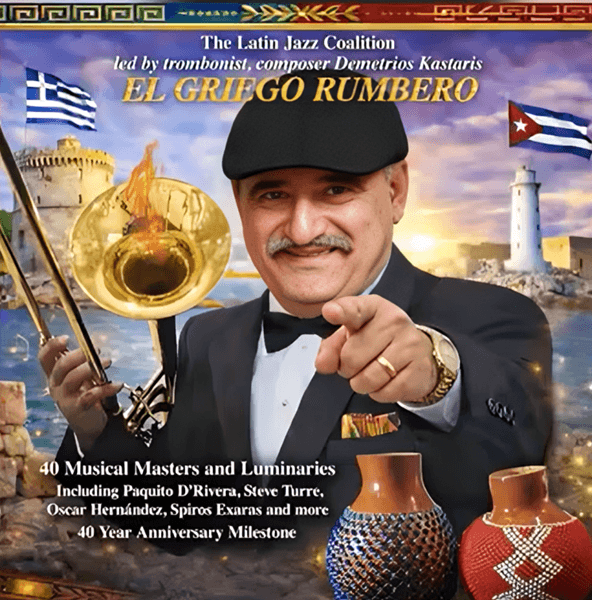
‘‘El Griego Rumbero’’ visited the Salsa Museum and donated some objects

The artist we will talk about today is a very particular case, since he comes from a country which is not usually related to salsa or Latin music in general. However, the passion for these rhythms has captivated people from all over the world, so it is not surprising that our guest has experienced the same thing.

We’re talking about the Greek-born trombonist and composer Demetrios Kastaris, whom El Rubio Boris and I were fortunate to welcome at the Salsa Museum. Here’s a little of his fascinating story.

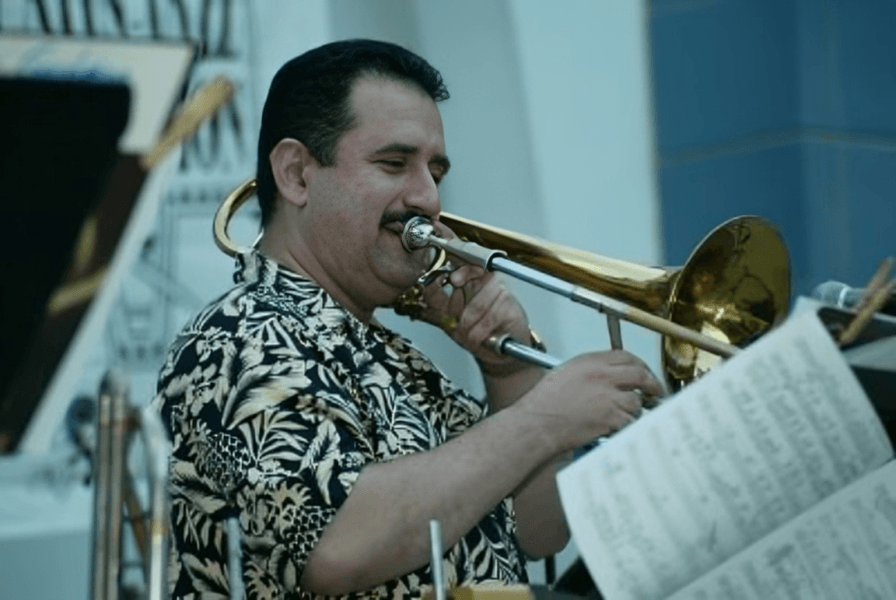
Demetrios Kastaris playing
Demetrios Kastaris playing the trombone

Demetrios’ early years

Demetrios was born in Thessaloniki, Greece, but moved with his family to the United States when he was just two years old. After living in Ohio for a few years, the family moved again, but this time to St. Louis, Missouri, a place that would be critical to the training of the Young man in the times to come.

The first contact of the boy with music was in elementary school during a live performance by a classical music quintet, but what really captivated him was a demonstration of a slide trombone by a member of the St. Louis Symphony Orchestra. It was at that instant the aforementioned instrument inspired Demetrios to take trombone lessons and join the school concert band.

More importantly, as Demetrios grew older, he spent countless hours practicing the trombone, especially in summer when he was free from school work. Finally, On reaching the age of 17, his perseverance began to bear fruit, and he got the opportunity to rehearse with the Stan Keaton Jazz Orchestra, which was the first great experience for the teenager. Just one year later, he sang as a soloist at the Classical Rimsky-Korsakov Concerto. 

Other than that, Demetrios received the John Philip Sousa Band Award just before graduating from high school. He then studied music education at the University of Missouri-St. Louis, when he played in the jazz band and won several awards with the group.

Cover of the album ''El Griego Rumbero''
Cover of the album ”El Griego Rumbero” by demetrios Kastaris

Moving to New York

Two years after having studied in Missouri, Demetrios moved to New York, where he received a scholarship that allowed him to attend New York University and take more steps in his musical career. While completing his studies, he met a bandleader on the subway and was invited to a rehearsal where he was given the opportunity to arrange Afro-Cuban jazz pieces for the first time in his life.

Latin music and its rhythmic features made such an impression on Demetrios that he began attending concerts by many of its great exponents, such as Willie Colón, Eddie Palmieri, Ray Barretto, Tito Puente, Mongo Santamaría, and many others. This led him to transcribe and conscientiously analyze these artists’ songs to satisfy his curiosity and learn more about these rhythms.

After graduating with honors, he earned a masters degree in jazz from the Manhattan School of Music. Soon after, he was already teaching in public schools while performing with one of the bands of the Concord Resort Hotel.

Other important details of his career

For over 50 years of artistic career, Demetrios has had the opportunity to perform with big Latin stars such as Tito Puente, Luisito Quintero, Alfredo De La Fé, Ray Barretto, Charlie Palmieri, Herencia Latina, Oscar Hernández from The Spanish Harlem Orchestra, and many others. 

Already in the decade of 1980, the artist founded the Latin-Jazz Coalition and recorded several of his original compositions in genres such as Brazilian and Afro-Cuban jazz. In certain Circles, his work has earned him the nickname of “El Griego Rumbero”, a moniker by which he is still known today.

Johnny Cruz, Demetrios Kastaris and El Rubio Boris

Much more recently, Demetrios was invited to play with Los Leales de Cuba at the Buena Vista Curry Club and also to rehearse with Los Muñequitos de Matanza, which was a very learning afternoon and a memorable experience for him. Thereafter, he traveled to Cuba on several occasions to learn much more about this music.

Visit to the Salsa Museum

Just two years ago, Demetrios visited the Spanish Harlem Salsa Museum directed by yours truly and spent an enjoyable time with our entire team but he did not come alone. He brought us his photograph and a poster of the Latin Jazz Coalition, which were mounted on a wall alongside many other photographs of stars such as The Fania All Stars, Hector Lavoe, Tito Puente, Celia Cruz, El Gran Combo de Puerto Rico, Larry Harlow, and many others. 

His childhood trombone was also added to our extensive display of objects donated by artists and their families. This took place on March 20, 2024, and the instrument remains at our institution to this day as a reminder of a Greek man’s love for our music and a thank you to his dedication over the years.

Johnny Cruz ISM

Read also: Rey Ruíz visits the Salsa Museum and talks about his prolific career

  • « Go to Previous Page
  • Page 1
  • Interim pages omitted …
  • Page 15
  • Page 16
  • Page 17
  • Page 18
  • Page 19
  • Interim pages omitted …
  • Page 62
  • Go to Next Page »

International Salsa Magazine (ISM) is a monthly publication about Salsa activities around the world, that has been publishing since 2007. It is a world network of volunteers coordinated by ISM Magazine. We are working to strengthen all the events by working together.