• Skip to primary navigation
  • Skip to main content

International Salsa Magazine

  • HOME
  • Previous editions
    • 2026
      • ISM / April 2026
      • ISM / March 2026
      • ISM / February 2026
      • ISM / January 2026
    • 2025
      • ISM / December 2025
      • ISM / November 2025
      • ISM / October 2025
      • ISM / September 2025
      • ISM / August 2025
      • ISM / July 2025
      • ISM / June 2025
      • ISM / May2025
      • ISM / April 2025
      • ISM / March 2025
      • ISM / February 2025
      • ISM / January 2025
    • 2024
      • ISM / December 2024
      • ISM / November 2024
      • ISM / October 2024
      • ISM / September 2024
      • ISM / August 2024
      • ISM / July 2024
      • ISM / June 2024
      • ISM / May 2024
      • ISM / April 2024
      • ISM / March 2024
      • ISM / February 2024
      • ISM / January 2024
    • 2023
      • ISM / December 2023
      • ISM / November 2023
      • ISM / October 2023
      • ISM – September 2023
      • ISM – August 2023
      • ISM July 2023
      • ISM Edition June 2023
      • ISM – May 2023
      • ISM April 2023
      • ISM March 2023
      • ISM February 2023
      • ISM January 2023
    • 2022
      • ISM December 2022
      • ISM November 2022
      • ISM October 2022
      • ISM September 2022
      • ISM August 2022
      • ISM July 2022
      • ISM June 2022
      • ISM May 2022
      • ISM February 2022
      • ISM January 2022
    • 2021
      • ISM December 2021
      • ISM November 2021
      • ISM October – 2021
      • ISM September 2021
      • ISM August 2021
      • ISM July 2021
      • ISM May 2021
      • ISM April 2021
      • ISM June 2021
      • ISM March 2021
      • ISM February 2021
      • ISM January 2021
    • 2020
      • ISM December 2020
      • ISM November 2020
      • ISM October 2020
      • ISM September 2020
      • ISM August 2020
      • ISM July 2020
      • ISM June 2020
      • ISM May 2020
      • ISM April 2020
      • ISM March 2020
      • ISM February 2020
      • ISM January 2020
    • 2019
      • ISM December 2019
      • ISM November 2019
      • ISM October 2019
      • ISM Septembre 2019
      • ISM August 2019
      • ISM July 2019
      • ISM June 2019
  • Spanish
  • Download Salsa App
    • Android
    • Apple

Search Results for: Latin genres

Gilberto Santa Rosa arrives in Spain with his “Camínalo Tour”


The great Puerto Rican singer Gilberto Santa Rosa continues his successful concert tour “Camínalo Tour” with four stops in Spain’s most representative cities. This tour is not only to relive his best hits, but also to celebrate his more than four decades on the stage. We tell you everything in the following lines.

Gilberto Santa Rosa, an artist with four decades on the stage

“El Caballero de la Salsa” was born in Puerto Rico in 1962 and from a very young age showed talent for music, especially Latin genres. After more than four decades on the stage, Santa Rosa has left an indelible mark on Latin music, hence his nickname.

This artist has managed to be very versatile in his work, even though he concentrates on a single genre such as salsa. Many of his songs show different sides of the genre, from a very romantic salsa to one that makes everyone dance.

Another of his great talents is his ability to improvise on stage, in many of his shows it is not surprising to hear different lines from the original ones. But all this, plus his great charisma, conquers his public, as he says: “In my concerts, music is always the star of the show.”

“Camínalo Spain Tour” is the reunion of Gilberto Santa Rosa with Spain

“Camínalo Tour” began in June 2021, when he returned to the stage after the COVID-19 pandemic. It has passed through the big cities of Latin America and the United States. Finally after 4 years without stepping on Spanish soil we will be able to enjoy Gilberto in this part of his tour.

The great Puerto Rican artist will be in four cities: Barcelona, Alicante, A Coruña, and Madrid; from March 2 to 5, 2023. The announcement was made in November 2022 and tickets are already on pre-sale, so if you want to see this great salsa singer, run and secure your ticket.

The love that the Spaniards have for Gilberto is so great that the best arenas in each city were reserved for these stops. And it will be a once-in-a-lifetime experience, as he himself explains: “We are a generation of artists who, if we didn’t sing on stage, would feel like we’re cheating people.”

And this love for the stage is also shown in these words: “I am very happy to be able to close this tour… which has given us so many unforgettable moments. These next concerts will be very special, because in some cities we haven’t been there for a long time and that always gives it a particular aura. The musicians who accompany me from Puerto Rico, all those who are part of the tour, and I are more than ready to present the Camínalo Tour”.

The talent, passion and charisma that Gilberto Santa Rosa imposes on his work is undeniable, which is reflected in his Latin Grammy awards for best salsa album in 2007 and 2010, best traditional tropical album in 2009, best traditional pop vocal album in 2015 and the Latin Grammy for musical excellence that he won in 2021. We are excited for this concert!

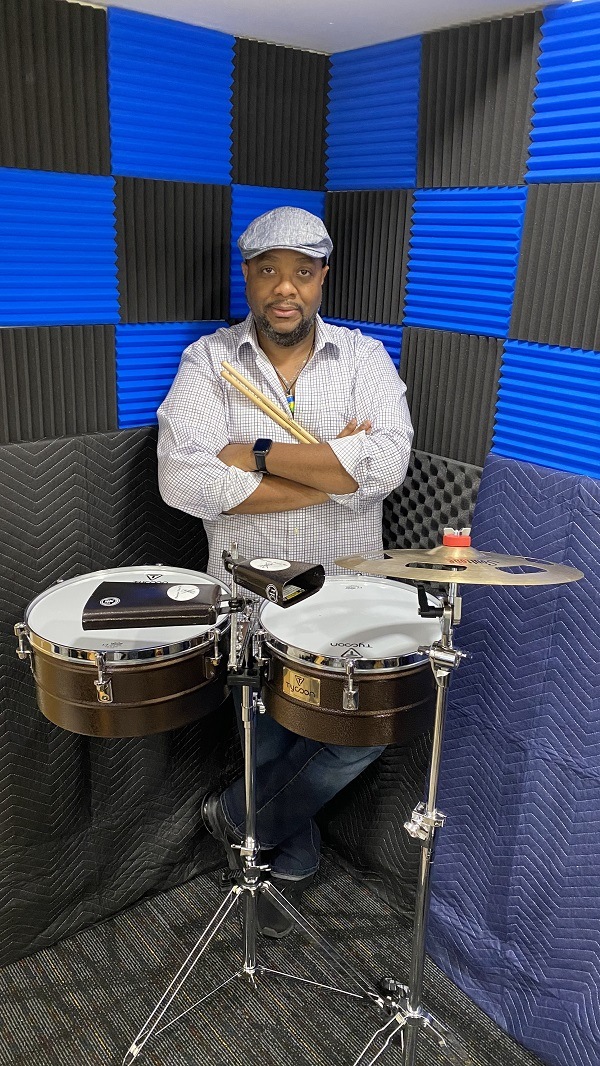
The interesting story of French percussionist Dominique Patrick Noel

How his career started

All right, so we are here with French percussionist, composer and musician Dominique Patrick Noel. How are you doing, Mr. Noel? A pleasure to have you here.

Well, thank you. First of all, I want to thank you for taking the time to interview me and to greet all those who is going to read it. Thank goodness, I am in good health and it is all good.

Dominique Patrick Noel tells us about his story and beginnings

You are a self-taught musician who started playing by age seven. Did you learn everything by yourself or did you receive some kind of training?

Since I come from a family of musicians such as my father and my two grandfathers, I can say that music has always been a part of my life. I started playing the drums by listening to a lot of jazz and fell in love with this genre. That’s how I started to develop the movements and patterns of jazz and the drums.

In school, I started playing and learned solfège, percussion, drumming, among other things. When I turned 15 years old, I started playing music at a pro level because I have always had the pleasure of learning by watching musicians, who had much more experience. Thank goodness, I had my mind fresh to grasp and remember what I had seen, which helped me a lot to continue developing in percussion, different instruments, rhythms, among other things.

When I started playing Latin music, my first instrument was the bongo. I had a mentor named Alfredo Mujica Jr.,m who knew my dad and learned by playing with him. When it was my turn, he was giving the task of helping me understand the patterns and other things. He told me that the best instrument I could choose to start with was the bongo because it would help me understand a little more about how salsa works and that helped me a lot. He showed me the basic pattern and how to imitate the sounds I heard until they were similar.

After that, I also learned to play the conga, the Dominican tambora, the güira, the batá, the cajon and the timbales.

His career started at the age of 15 and his first instrument was the bongo

When you played the bongo for the first time, did you know you wanted to dedicate yourself to the Latin genres permanently?

When I was nine years old, I moved to Martinique and lived there for about four years. There I was fortunate to learn its folklore, its rhythms, its typical instruments and its dances. I also learned to perform all those genres with the drums and tried to absorb all I saw. Concurrently, the zouk era was beginning and I fell in love with the genre since I heard it for the first time.

Sometime later, my dad and I went to the United States to be with my dad, who was living in Washington at the time. It was there where I started to accompany him in several of his activities and shows with his orchestras. Then, I began listening more to salsa, cumbia and merengue, something I liked very much. Then, I told him that I would like to learn what he knew and play with him, to which he replied that it looked good, but that it was a profession that I had to take very seriously. Therefore, he advised me to listen to everything, even if it wasn’t Latin music because all genres nurture the musician in one way or another.

With whom he has worked?

You have worked with Tito Puente Jr, Tito Rojas, Izis La Enfermera de La Salsa, Frankie Vasquez, Lalo Rodriguez, among others. What have you learned from them?

I have had the opportunity to play with maestro Tito Rojas and his musical director, Celso Clemente, gave me some advice. When rehearsing, I approached him to thank him for allowing me to play the bongo with them and ask him for advice for my career, to which he replied that he liked my work very much and that I was very good for someone who was not born in this Latin music environment.

He also advised me that I had to move forward, never play down my goals, accept constructive criticism and always stay humble. I will never forget his words.

Dominique Patrick Noel next to Gloria Estefan and Emilio Estefan

We know that you are a voting member of the National Academy of Recording Arts and Sciences, which is well known for giving the Grammy Awards. What do you base to vote for a nominated candidate for an award?

There are several processes for artists to be nominated. For us the voters, it is a long process because we have the task of listening to much music and analyzing many details such as recording quality, lyrics, musicality and much more. There are many important elements to consider when choosing the person. I want to get to the point of saying that someone really deserves my vote for this or that category.

Voting takes time. It’s not something that you do in an hour or two, it takes a long time. The day of the awards ceremony, we already know who will the winners. At that point, we can say that all of them have managed to win via an arduous selection process.

Tell us about your song Mi Secreto with D’ William.

The skeleton of the song was my idea and I got together D’ William, to whom I offered to join the song. He wanted to collaborate with me in a merengue song for some time and I sent him the skeleton, which he liked and told me that something could be done with it. When he asked me if I already had the lyrics, I said no, but I wanted to base the song on an experience of mine, so I told him what it was about and the lyrics were written about that fact. Later, we made some additional arrangements and that’s how Mi Secreto was born.

Dominique Patrick Noel next to Bobby Cruz

Read also: Earl Miranda and Ric Feliciano talk about the Latin Rhythm Boys and its history

We interviewed IndiviDúo singers Tiffany Joy and Maqui Reyes

How it all started

Today we are going to talk with Tiffany Joy and Maqui Reyes from IndiviDúo, which is a famous and successful musical duo. Great to be with you. How are you?

Tiffany: super! Very well, thank you very much.

Tiffany Joy singing on stage

You two met in 2010 in Buenos Aires while both were recording your respective musical productions separately. How was that first meeting and conversation about music?

Tiffany: you are very well informed, Karina, I love it. We met at a musical party for Colombians living in Buenos Aires. We were introduced by a mutual friend, who is also from the US, but she was living in Buenos Aires at the time. Maqui had invited me to that event through Facebook, so I went with my guitar and a liter of beer. There was a moment when he started singing ohis riginal music and I do the same later. I think that’s where a connection and mutual respect began to be created, which led to us singing together later that night.

He sang Tabaco y Chanel by Bacilos and since I knew it by heart, I started singing the harmonies. The time when our voices found each other was very magical and everyone at the party thought something beautiful was happening there. Really, since that night we haven’t stopped singing and composing music together.

What did you see in each other to form a musical duo?

Tiffany: I think Maqui has a special sensitivity towards lyrics and I admire his role as a poet. In addition, he also has a musicality related to my tastes, so it is very common for us to be on the same page about some melodies with the guitar. Melodically, I feel that we get along very well.

Obviously we don’t agree on everything all the time, but I do think we have very similar taste in music, which makes us be attracted each other musically. Personally, my partner has a very powerful energy in terms of positivity, light, pushing forward and making everyone feel special.

Maqui Reyes singing and playing the guitar on stage

What has been the biggest disagreement that you’ve had musically?

Tiffany: generally speaking, I tend to fall in love with ideas so fast. If I hear a chord, progression, melodic line or lyrics that I like, I don’t want us to change them. On the other hand, Maqui is super thoughtful and likes to try a lot of things before going back to the first thing and even make it better, but I think my anxiety about finishing it and singing it sets us at odds. He is very slow in terms of his process and that makes us different.

Considering that Maqui is Colombian and you are Californian, how did this influenced your musical styles?

Tiffany: Maqui is from Bogota while I am from right here in the Bay Area. I grew up listening to James Taylor, Kenny Loggins and the great singer-songwriters in blues, jazz and other typically American genres. I also did musical theater for many years, which led me to listen to the great Broadway plays. My love for Latin music began much later when I started listening to pop artists like Juanes, Shakira, Rocky Martin, Bacilos, among others. Then, I entered into the world of Latin music and started composing in Spanish. To that I must add that I loved dancing salsa and tango since I was really little.

On the side of Maqui, he comes from a completely different music background where he listened to salsa, bambuco, cumbia, merengue and many other Latin genres. Later, he moved to Argentina where he lived for 13 years and traveled throughout the country to learn to play chamame, samba and other Argentinean rhythms. This made him have a huge range of Latin American music, which we incorporate into our music. That is why our repertoire includes reggae, bolero, pop, salsa, rock, bossa-nova and much more.

Tiffany Joy and Maqui Reyes performing together

How do you connect with your audience?

Your music talks about many positive and reflection messages. It talks a lot about all the important things we humans put aside because we are way too concerned with superficial things. In that sense, what kind of connection are you looking for with the audience?

Maqui: among the responsibilities of a singer-songwriter or a musician, we have to say some important things, so we believe and live the music like that. The subject treated in a song has always been important to us.

I think we have managed to connect with ourselves and people like you who, for some reason, get to listen to one of our songs and identify with it. Songs like Pelea invite you to fight against your own vices, your own demons and your own problems. It is a song that people of any age can identify with, which leads us to have a connection with them beyond music.

What are the age ranges of the people who listen to your music the most?

Tiffany: I would venture to say that those who listen to us the most are people between 25 to 55 years old.

Maqui: However, I must say that we get along very well with children. When we play in theaters or places suitable for minors, there are many families with children. In fact, we don’t rule out recording an album focused exclusively on them. Of course, we know that children don’t like the more traditional genres that we used to listen to and reggaeton is the current trend. Same way, we would include some traditional music so that little ones have the opportunity to listen to it in a fun way.

Tiffany Joy and Maqui Reyes during pregnancy

On that issue, a young salsa singer told me that what he does is a mix of rhythms, while still getting the essence of salsa. Do you plan to add urban genres to your music?

Tiffany: We don’t reject the idea of incorporating urban rhythms to our music because they are good to dance to, easy to defend live and attractive for a generic and large audience. We haven’t yet, but we are open to the possibility.

Maqui: this is a great question because everything has become polarized so much that just listening to the rhythm makes us qualify it as urban, but that’s not necessarily true. What I qualify as urban is attitude and lyrics, things that we know we will never adopt for ourselves.

It’s not our style, although we’ve got nothing against these rhythms. We would like to play them in a more elegant and familiar way.

Tiffany Joy, Maqui Reyes, and their daughter Melody

You have been part of the soundtracks of several soap operas such as La Ley del Corazón and Si Dejo de Creer. How did this help you advance your careers?

Tiffany: It helped us get a little more exposure on Spotify, YouTube and other music platforms. It also gave us the opportunity to be much better known, as many people started to see what else we’ve done and listen to other pieces of ours.

What did you do during the pandemic?

Tiffany: because all the shows being cancelled, we dedicated ourselves to hosting a Facebook Live every Friday afternoon. At the beginning, it was very difficult because we didn’t know how to connect, but when we finally learned how to do it, we had a lot of people listening to us. We played original music, did a lot of covers, had a drinkie and toasted people from time to time.

During this time, we also found out we were pregnant, which was a surprise for us because we never thought about having children. We were composing at the time, so we ended up including a song for the baby on our album. Right when Melody (our daughter’s name) was born we did the official album release.

Read also: Story of achievement and dedication of Yoshie Akiba

Junito Albino and his collaborations with many orchestras

How Junito Albino began his career

Junito Albino is one of those artists who has been influenced by some of the greatest artists in Latin music and that has led him to become what he is today. Julio Junito Albino was born in New York in 1962 and got curious about the same music at the age of 11, after which he joined the school band of San Germán until he graduated from high school. When he was still a teenager, he began to play timbales with the first group to which he belonged, whose name was Orquesta La Crítica and belonged to director and trumpeter Fernando Vega. 

When he attained the proper age, he began to study music education at the Interamerican University of Puerto Rico in 1980, when he would be a part of the Orquesta Kachende de Mayaguez whose direction was by Gilberto Gili Toro. With this group of musicians, he released his first record production. By that time, he met singer-songwriter Antony Martínez, with whom he would have a great friendship. 

Julio Albino
Renowed timbalero Julio Junito Albino

In 1983, he went to live in New York City and began collaborating with the Orquesta de Los Hermanos Colón, with whom he wasted no time in returning to the Island of Enchantment to do some live performances. With this same group, he recorded his second album Ámame Un Poquito Más, which was directed by Sergio George. 

Some of the orchestras with which Albino worked

Another of the most important society that Albino achieved realizing during his career was with Joe Quijano’s orchestra and his Conjunto Cachana, with whom he had the opportunity to share the stage with La Guarachera de Cuba Celia Cruz, The King of Timbales Tito Puente, Latin Grammy winner Ray Santos, talented pianist Charlie Palmieri and many others.   

In 1986, he was fortunate to accompany some of the greatest artists from Latin genres such as Paquito Guzman, Marvin Santiago, Hector Tricoche and many more. One of the greatest unions that he would give tangible shape to would be with Moncho Santana’s Orchestra, former vocalist of Grupo Niche, with whom he chalked up enormous successes and demonstrated all his talent. However, collaborations would not stop there. 

Junito also came to be part of the orchestra of Tito Nieves and that of Ramon Rodriguez. The latter was directed by pianist Gilberto Colón, Jorge González (bongo) and Willie Romero (conga). With all his accumulated experience at this point in his life, it was not difficult for him to find a place in the Orquesta Tártaro led by Franke Ruíz. 

When he moved back to Puerto Rico, he was also in other orchestras in the country such as Puerto Rican Power, Jorge Carrión, Luisito Escobar and many more. In addition to the foregoing, he has managed to work as a producer and musician in a large number of independent groups collaborating with percussion, timbales, bongo and other instruments.   

After a successful career in other groups, he decided to create his own orchestra, Secreto A Voces, in which genres such as salsa and Latin jazz stand out. His first album was called Báilalo and contained songs of his own that were big hits in some European countries such as Italy. His second album was entitled Haciendo Ruido and included the participation of artists such as Nino Segarra, Jaime Rivero, among others.  

Salsa Superior Award won by Secreto A Voces in the category of musical quality


By: Johnny Cruz correspondent of International Salsa Magazine in New York City, New York

What Ángel Meléndez has to say about his brilliant musical career

Who Ángel Meléndez is

Ángel Meléndez is a source of pride for Puerto Rico who lives in Chicago, United States, and has a bright musical career that has not gone unnoticed by great well-known people and record labels linked to Latin music. The producer, arranger, composer, music teacher and trombonist studied at VanderCook College of Music, where he gained most of the knowledge that would serve him to become the figure he is today.   

His hard work has allowed him to be nominated for the Best Tropical Music category at the Grammy Awards and the winner of the 2005 Annual Independent Music Awards thanks to the talent he displayed on his album Ángel Meléndez & the 911 Mambo Orchestra.   

Meléndez was great lick to collaborate with some of the greats of music such as Cheo Feliciano, Adalberto Santiago, Tito Puente, Tito Allen, Frankie Ruiz, Ismael Miranda, among many others. 

Trombonist Ángel Melendez
Producer, arranger, composer, music teacher and trombonist Ángel Meléndez

His most recent projects include the one he made with Gia Fu and Ralph Riley. Riley was in charge of the making of Big Band Maquina (album name) and was in charge of organizing the work of all the artists who lent their talent to carry out this ambitious project together with Meléndez and other producers. The album includes 11 tracks and a bonus track, as a result of the serious issue of fathering so many music professionals in a single project in the middle of the pandemic and from so many recording studios. 

We had the opportunity to talk to him to learn a little more about his career and what he is doing now. We hope everyone reading this pleasant talk will enjoy it. 

Interview 

Today we are pleased to welcome composer, arranger, instructor and trombonist Ángel Meléndez. Good afternoon, Mr. Meléndez, how are you today?  

I am doing very well, thank goodness. Although I am very cold here in Chicago, but it is not your fault (laugh). 

You once commented that you always liked the Big Band sound. How important is the number of musicians in an orchestra?  

When I was a kid, my family always organized parties and played the music of Machito, Tito Puente, Tito Rodríguez and many others. So when I went to college, the jazz band director made me his manager. When I had it in front of me, I knew that was what I wanted to. I love it. That is why I say the more the better, but there are also groups like Joe Cuba Sextet that sound great with only six or seven members.   

You have been a music teacher for several decades. Do you think training other artists has influenced your style? Do you think that you have learned from your students? 

I have had many students who have become professional musicians and also learned a lot from them. In college I learned to play many instruments on a very basic level. One of the things I have learned from my students is that you can learn to play two, three or four instruments properly. I love the piano, I bought a Spanish guitar and am learning to play flamenco late in life. 

Ángel playing his instrument
Ángel Meléndez performing and playing the trombone


So you never stop learning and are always looking for new instruments and rhythms to add to your work 

Yes! Right now I am working on a project with Hong Kong producer Gia Fu and she is going to kill me because she does not want anyone to know yet (laugh). It’s called the Borinchino Project and includes Chinese songs in Latin rhythms. The first song is a bolero cha cha chá. 

What was the experience of working together with Gia Fu, Ralph Raley and the rest of the team of musicians with whom you made this album? Are you happy with the result?  

Of course we are! We were all pleased with the record. What happened was that I made a jingle called Lisa La Boricua for a dance academy called Lisa La Boricua in swing dancing about 20 or 25 years ago. In Germany, it was a hit for about 14 weeks. Gia is also a salsa DJ, she was doing some work in Switzerland when she heard that track which was like a jam session. She liked it so much that she thought about collaborating with me. After many months of looking for me, he found me. So my former timbalero is now music director of Victor Manuelle and knows the best musicians in Puerto Rico. When they called me and offered me to collaborate with them, they only wanted to make two songs. I told them if I said yes, we were going to get it right and go to Puerto Rico. Since we are in times of Covid-19, the best musicians are available. We went to Puerto Rico, made two songs and loved the result, so they said to make four more songs. The second time, Gia came from Hong Kong. She is like a painter who knows exactly what she wants. She already bears in mind the idea of how this will all turn out. She can be a bit stubborn, but, at the end of the day, everything always goes as she hopes. If she imagines a song with Tito Allen singing, she got it. 

Something that got our attention at International Salsa Magazine is the way you did this project. We know that you were conceiving everything from different countries and studios thanks to new technologies. How was the process of recording from several places as far apart? How do you feel about what you achieved?   

Most of the recordings were made at Rolo Studios in Puerto Rico. The vocals for the two tracks recorded by Herman Olivera were created at Nino Cegarra’s studio, but vocals by Tito Allen were done in New York because he did not want to travel to Puerto Rico. That is why Ralph, Gia and I went to New York to record them there, but the base, percussion, brass and backing vocals were done at Rolo Studios.   

Album Big Band Máquina
Album cover Big Band Máquina

In addition, the pandemic made everything difficult, especially travel, how much do you think the pandemic has affected your work? Do you feel that things are coming back to normal? Is your work back to normal?  

It has made it impossible to go back to work. I had about three or four bookings, but everything got cancelled when the Covid pandemic was getting worse. As I told you, In part it was a blessing because no one was working. Luis Marín (Gilberto Santa Rosa’s piano player), bassist Pedro Pérez (he has worked in more than 500 recording productions), conguero Sammy García (musical director of Charlie Aponte), Pocorelli (musical director of Víctor Manuelle as I had said), Sammy Vélez (musical director of El Canario), Richie Bastar (El Gran Combo’s congocero) were available to work with us and that it was a blessing. 

Exactly. This whole situation has given you the opportunity to do other activities such as writing music, making new arrangements and many other things.  

That’s it. I put my students on an assignment and most of them paid no attention anyway. I gave them 10 or 15 minutes to practice while I sat at the piano and waited for them to tell me something. During that time, I used to write. As they say, everything happens for a reason. 

What plans do you have for 2022?  

There’s Borinchino, which is the project I am working on with Gia and Ralph wants to repeat what we already did in mambo. Right now I am writing two new musical productions with new songs. In the case of Borinchino, the album will include several Chinese songs with Latin genres such as salsa, bolero, merengue, cha cha chá, among others. In the case of the project with Ralph, it will be almost the same as we did with the previous album. 

This is Gia Fu
Hong Kong producer Gia Fu

This all means this partnership with Ralph and Gia will continue for an indefinite time? 

Of course it will! They are thrilled with me and I am thrilled with them. They are my family in Hong Kong. The two people I love most in Hong Kong. The only people I know there, but I still love them very much. 

What recommendations do you make to young people who want to do the same thing in the future? 

I would advise them to learn about their culture. Our music is incredible and has a very high level. We grew up with children’s songs like Cheki Morena, so a complicated rhythm is very easy for us. In contrast, Americans grow up listening to the A, B, C song. When kids from our Latin countries begin to learn music, it is much simpler for them to play things with complicated rhythms. What I would like to tell those who read this interview is that they have to learn about their culture and music.  

  • « Go to Previous Page
  • Page 1
  • Interim pages omitted …
  • Page 14
  • Page 15
  • Page 16
  • Page 17
  • Page 18
  • Interim pages omitted …
  • Page 62
  • Go to Next Page »

International Salsa Magazine (ISM) is a monthly publication about Salsa activities around the world, that has been publishing since 2007. It is a world network of volunteers coordinated by ISM Magazine. We are working to strengthen all the events by working together.