• Skip to primary navigation
  • Skip to main content

International Salsa Magazine

  • HOME
  • Previous editions
    • 2026
      • ISM / April 2026
      • ISM / March 2026
      • ISM / February 2026
      • ISM / January 2026
    • 2025
      • ISM / December 2025
      • ISM / November 2025
      • ISM / October 2025
      • ISM / September 2025
      • ISM / August 2025
      • ISM / July 2025
      • ISM / June 2025
      • ISM / May2025
      • ISM / April 2025
      • ISM / March 2025
      • ISM / February 2025
      • ISM / January 2025
    • 2024
      • ISM / December 2024
      • ISM / November 2024
      • ISM / October 2024
      • ISM / September 2024
      • ISM / August 2024
      • ISM / July 2024
      • ISM / June 2024
      • ISM / May 2024
      • ISM / April 2024
      • ISM / March 2024
      • ISM / February 2024
      • ISM / January 2024
    • 2023
      • ISM / December 2023
      • ISM / November 2023
      • ISM / October 2023
      • ISM – September 2023
      • ISM – August 2023
      • ISM July 2023
      • ISM Edition June 2023
      • ISM – May 2023
      • ISM April 2023
      • ISM March 2023
      • ISM February 2023
      • ISM January 2023
    • 2022
      • ISM December 2022
      • ISM November 2022
      • ISM October 2022
      • ISM September 2022
      • ISM August 2022
      • ISM July 2022
      • ISM June 2022
      • ISM May 2022
      • ISM February 2022
      • ISM January 2022
    • 2021
      • ISM December 2021
      • ISM November 2021
      • ISM October – 2021
      • ISM September 2021
      • ISM August 2021
      • ISM July 2021
      • ISM May 2021
      • ISM April 2021
      • ISM June 2021
      • ISM March 2021
      • ISM February 2021
      • ISM January 2021
    • 2020
      • ISM December 2020
      • ISM November 2020
      • ISM October 2020
      • ISM September 2020
      • ISM August 2020
      • ISM July 2020
      • ISM June 2020
      • ISM May 2020
      • ISM April 2020
      • ISM March 2020
      • ISM February 2020
      • ISM January 2020
    • 2019
      • ISM December 2019
      • ISM November 2019
      • ISM October 2019
      • ISM Septembre 2019
      • ISM August 2019
      • ISM July 2019
      • ISM June 2019
  • Spanish
  • Download Salsa App
    • Android
    • Apple

Search Results for: Latin genres

His father’s love for music rocketed him to stardom

Latin musicians with interesting stories to tell keep coming out and today it was Colombian singer-songwriter Marcel Portilla’s turn, who has been kind enough to talk to International Salsa Magazine in order to find out more about his career in the United States after leaving his native country in search of a better future, such as millions of artists who had made the same decision.

Marcel next to Wendy
Marcel Portilla next to the singer of his band Wendy

The beginning of Marcel’s taste for music

As we were reading in Marcel’s biography, his father, Don Gerardo Portilla, played a very important role in the taste he picked up for Latin music. When we wanted to know this from his own mouth, he was delighted by the question and told us that his father used to collect music of all kinds, whether Latin, classical or from anywhere in the world. In fact, inside his business, he had a small music room where father and son passed the time and listened to all the music Gerardo had there.

They first listened to one artist and then quickly moved on to the next one as they chatted animatedly, which usually took all day. These interactions obtained a very young Marcel love music in its various genres, including Colombian folk music and the very famous trios of that time.

Gerardo generally gave Marcel a number of cassettes to choose from that day, so that is what they listened to. This great music collector was not a professional musician, which his son Marcel found very strange given his sensitivity to this branch of art. However, his grandfather, whom he would never meet, was a trumpet player.

One of his favorite groups was the Trio Matamoros and, whenever the family went for a ride, they used to listen to their most successful songs as they approached their destination.

The singer affirms that these years were the best of his life and conserves the best memories of his childhood with much affection and many of them were shared with his beloved father.

Marcel singing
Marcel Portilla Band singing live some years ago

Professional start in music

By the time he was still in Colombia, Marcel was a fan of all kinds of music and spent many hours stuck at house playing, rehearsing and listening to every single detail of the artists of the moment to try to imitate them as best he could. He also had a best friend who loved to sing, so they got together regularly to practice amateurishly. One of his favorites at the time was Jerry Rivera.

Sometime later, when he moved to the United States, specifically to New Jersey, he attended college and belonged to the institution’s choir, with which he had a performance in a large stadium. This was the first interaction he had with the public, with what he felt absolutely comfortable.

When he finished his studies, he went to North Carolina and met a guitar teacher and producer, with whom he spent a lot of time learning vocal technique, music writing and many other things for several years. After having achieved a certain level, this man made him decide to form his own band, as he saw him ready for it. 

Since Marcel had no experience at all in the subject, he had no idea how to start and where to get musicians, so this teacher started to connect him with people he already knew. In addition to that, the artist got to work by his own means and published an ad in which he requested the service of musicians to join his group, which attracted a drummer who met with Marcel and they discovered they had the same vision of music.

It was truly through this same drummer that he managed to have communication with many other musicians until October 2010, when he could complete his band with about 11 members and make his first rehearsal. This is how Marcel Polilla Band was finally born and is currently integrated by Ecuadorian guitarist Jorge Lord, Dominican bassist Carlos Baez, Venezuelan drummer Alejandro Galarraga, Peruvian percussionist Raul Verano and Dominican singer Wendy.

Marcel and his band
Marcel Portilla and the rest of his band at the Harrah’s Cherokee NC 2019

What Marcel appreciated the most to music

Marcel told us that what he thanks most to music is the diversity and culture that he has learned around this time. He also emphasized that he does not limit himself to salsa, but to any genre or country from which what he likes comes.

In addition, he enjoys being able to mix all kinds of rhythms and seemingly different genres and thus create new things that have never been done before.

Read also: Saxophonist and flutist Dave Victorino talks to International Salsa Magazine

How freelance musicians are viewed today

For several decades now, the exclusivity of the musicians in orchestras was forgotten, so now it is very common to see artists playing with many groups at the same time without being seen as traitors, as well as in the past. To know a little more about this interesting and important subject, we wanted to count with the views of our friends, Uruguayan bandleader, percussionist and singer Edgardo Cambón and Venezuelan bandleader and singer Omar Ledezma Jr., who have offered us their vision of things in the following lines of this article. 

Percussionist Edgardo Cambon
This is bandleader and percussionist Edgardo Cambon, with whom we talked in this opportunity

Freelance musicians according to Cambon and Ledezma

Before continuing, we believe it appropriate to define what a freelance musician is. In the words of Omar Ledezma, a freelancer in music is a concept of work in which the artist divides himself equally among many projects in which he participates and how well he organizes his time to strike the needed balance in all his professional activities.

Nowadays, there are many musicians who offer their work under this modality, so that they are not completely tied to any specific orchestra and can play with anyone who proposes them.

This is also the case for those who work this way, but at the same time, have their own project. This is the situation of Edgardo Cambón, who, having his own orchestra, has a very limited time for hiring and rehearsals, so he makes it very clear to those who invite him to play that his priority is his own group. 

The musician has even played with four or five orchestras at the same time, but always putting his project on top of everything else and notifying in advance if he will be able to play with any of them. 

Problems with dates and schedules

Many of these musicians constantly face conflicts with dates and schedules, so it is up to them to choose carefully which event takes precedence over another.

Edgardo has said that he is accustomed to notifying in advance, either two weeks or a month, so that the orchestra can replace him on time. There are certain events for which it is usually more complicated to find replacements, such as large festivals, so the Uruguayan also takes into account the size and importance of the performance, so that his absence does not cause a setback or damage to the group in question. 

In his role as a bandleader, he offers his musicians a list of possible replacements who can cover them the day of conflict. 

bandleader Omar Ledezma
Bandleader and percussionist Omar Ledezma Jr. also offers his view concerning freelance musicians

Meanwhile, Omar Ledezma, as well as a bandleader, says he always tries to provide his musicians with the greatest flexibility and possible replacements on hand to prevent those absences from causing problems.

What has caused the termination of exclusivity for musicians?

In the 70s, it was not seemly for a musician play for several orchestras, especially if he was the lead singer in a specific group, as public opinion took it as an abandonment of one orchestra for another. A lot of water has flowed under the bridge and this situation has cardinally changed for several reasons. 

One of them is that a big orchestra like Ray Barretto’s had the economic capacity to demand exclusivity, since it was a time when there was much more work. As there are fewer spaces for live music, it is the musician who must decide for himself to which project he gives precedence over another.

In addition, there are also many musicians who have a regular 9-5pm job, so they just have time for one orchestra and nothing else, so they do not have the possibility to accept more offers.

According to Edgardo, what changed was the economy of music and full-time artists’ need to work in six or more orchestras in order to make ends meet. Not to mention that there is less work and many bands have reduced their size, to the point that most groups do not have more than five members.

Edgardo Cambon playing
Musician Edgardo Cambon playing live some years ago

Original music 

When questioned about a possible decline in quality and lack of originality in the Latin music scene, Edgardo commented that this was not necessarily linked to freelance musicians, but to many orchestras’ fear of playing their own repertoire and their insistence on playing the hits that everyone knows. Otherwise, their owners and musicians think that nobody would want to go to their events.

In addition to that, many promoters, radio stations and media in general tend to be wary of supporting emerging bands’ original music, but the same old hits, except for some reggaeton artists or more trendier genres today.

What does a musician take into account when choosing one orchestra or another?

In addition to the economic factor, which as we said is very important, musicians also take into account how much they like the music played an orchestra and how much they have fun and enjoy being with a certain group.

On the side of bandleaders, there are two key factors to consider when keeping or firing a musician in their project and are responsibility and discipline. If a rehearsal or activity is already scheduled, it is necessary to always arrive on time and fulfill the commitment optimally. When these details are missing, things between musical directors and artists start to get tense, which can lead to an unpleasant work environment.

In the case of Omar Ledezma, as a musician, he always hopes to receive the music in advance so he can properly prepare for the performance, rehearsal or recording he attends, since one of the things he most dislikes in his project is when one of his musicians is not ready for the event. Therefore, he always does everything he can to prevent this from happening to him and to make a good impression with his performance.

The Venezuelan artist also emphasized that musicians have to be very aware of what they are capable of and be clear about what genres they are comfortable with, which will also help them make a better decision when it comes to staying or not in an orchestra.

Omar Ledezma playing
Omar Ledezma Jr. playing live some years ago

Conclusions

One of the things that Eduardo highlighted at the end of his participation is that, although the circumstances are not always ideal, the good musician always strives to give his best to the audience at every opportunity and with any orchestra. He stressed that music is what makes him most happy and that everything he has gained was thanks to it, which he dreamed since he was a teenager and he fully fulfilled it.

He also expressed that he can spend many hours in front of a computer working as a musician, but in front of an audience, his energy changes completely and he becomes a person who only enjoys what he does and wants the same for others.

For his part, Omar Ledezma Jr. said that each project has its time and opportunity. In his case, he is very clear about what he does and will do with each of his short and medium-term projects, whether it is a concert, a recording, a promotion, a music video, among other things. Being clear about what he wants in each project and organizing himself well are key for everything to go as well as it should be.

Read also: Peruvian singer Laura Bravo and her multiple projects in the Bay Area

Swedish dancer Molly Hagman made it in Europe and now in New York

Undoubtedly, Latin music continues to enslave hearts around the world and the protagonist of this story is a reliable proof of it. It has been such a great honor for us to have known the story of Swedish professional dancer Molly Hagman, who has shared with us the most important facts about her career and how she has reached the point she is at today.

Dancer Molly
This is beautiful Swedish dancer Molly Hagman

How Molly became interested in dancing in her home country

Nice and jovial Molly was describing in detail everything she has done in her career, thus answering most questions we had for her. She began by telling us that her dance studies began when she was still very young. Being only 15 years old, her best friend at the time convinced her to enroll in the Malmoe Dance Academy in the Swedish city of Malmö, to learn from instructors who introduced her to genres such as jazz, hip hop, contemporary music and ballet.

Two years later, when she was sufficiently prepared, she began experimenting with salsa and auditioning for women’s dance teams, one of them being the group Bellasitas, Molly and Maddy being the first two original members. Once the team was complete, they began to perform in congresses throughout Europe such as the Berlin Salsa Festival, the Hamburg Salsa Festival, the Copenhagen Salsa Festival, the Stockholm Salsa Weekend at the Capitol Stockholm in Sweden, the Scandinavian Salsa Congress, the Love Dance Festival, among many others.

Activity outside Europe

By the year 2014, the young woman studied a year of commercial dance at the International Dance Academy in Copenhagen, Denmark. As part of her education, she was able to travel to Los Angeles to train at the Millenium Dance Complex studio, where she remained for about three months and shared with some of its choreographers such as Gustavo Vargas, Jojo Gomez, Yanis Marshall, Tricia Miranda and many more. That time was enough for her to know that her destiny was the United States and that eventually she would like to live there. And she did.

Molly at the Malmoe Dance Academy
Molly when she was studying at the Malmoe Dance Academy during her teenage years

Some time later, more specifically in 2016, Molly moved to New York to study dance at Broadway Dance Center and the possibility to meet the best salsa instructors, many of whom were in that city. It is there where she made contact with Franklin Diaz, with whom she was dancing for a few months in a number of events, until joining the Yamulee Dance Company in the Bronx. She danced for that dance company for about six years, that is, until the year 2022.

During her time with Yamulee, she was able to participate in all kinds of events all over New York, Florida, Trinidad and Tobago and other places.

It is during this time that her passion for Latin music developed even more, since practically those whom she interacted with listened to salsa, merengue, bachata and reggaeton and the great majority of Yamulee’s members were Dominicans who gave much importance to their heritage. As mentioned before, Molly had already had contact with these genres, but this constant exposure only reinforced her decision to continue along this path.

Solo career

In 2022, Molly felt ready to start her career as an independent dancer thanks to all the training previously received. Since then, she has worked with her current dance partner ”Vittico La Magia” with whom she has performed in numerous festivals such as the New York International Salsa Festival in 2023 and 2024, the BIG Salsa Festival in the same years and the New York SBKZ Congress last year. 

Molly in Harlem
Molly posing for the camera in the Graffiti Hall Of Fame, Harlem

She also told us that she was starring in the official music video for the latest song my Thalia and Los Angeles Azules – “Yo Me Lo Busque” that already has over 1.2 million views after being out for only 5 days! What was an incredible experience and dancing for such big artists. Similarly, she has participated as a dancer for several concerts by Dominican artist Yiyo Sarante in New York and New Jersey before thousands of people who enjoyed her great talent. She also danced with Grupo Niche and La India in some of their shows.

Additionally, she has been interviewed by important shows such as The Art Of Fashion TV, which was broadcast through the Manhattan Neighborhood Network and exposed to millions of viewers, giving Molly the opportunity to make herself known to a much larger and diverse audience.

Her role as a dance teacher

Molly has been teaching dance since she was in Sweden on some occasions, but where she further gained experience was in New York, which is when she has developed all her skills through the private lessons she today offers. She says that this is an area of her work that she really enjoys very much because it gives her the opportunity to teach other young people what she herself learned at the time and this satisfies her enormously. The need to create a new choreography for each class invites her to be more creative and to keep the interest of her students with new dances in each session.

Ms. Hagman has also completed with Malmoe Dance Academy’s professional dance teams on the Swedish national talent competition “TALANG”, (“This is Talent”) where she and her team won First Place. Talang is the Swedish reiteration of the Got Talent series. Talang features singers, dancers, comedians, variety acts and other performers competing against each other for audience votes and prize money. It’s a nationally recognized dance competition which was broadcasted on Swedish national television and to viewers around the world.

Molly at the fashion week
Molly modeling at the New York Fashion Week

Read also: Nicaraguan composer and pianist Donald Vega’s hard-luck story

De Tierra Caliente founder Bronson Tennis talks about his career and band

There have been many American musicians who have fallen to the charms of Latin music, which is a practically inexhaustible source of genres allowing them to experiment with in many ways. One of them is Bronson Tennis, with whom we have been fortunate to talk about his interesting career and current musical group, De Tierra Caliente.

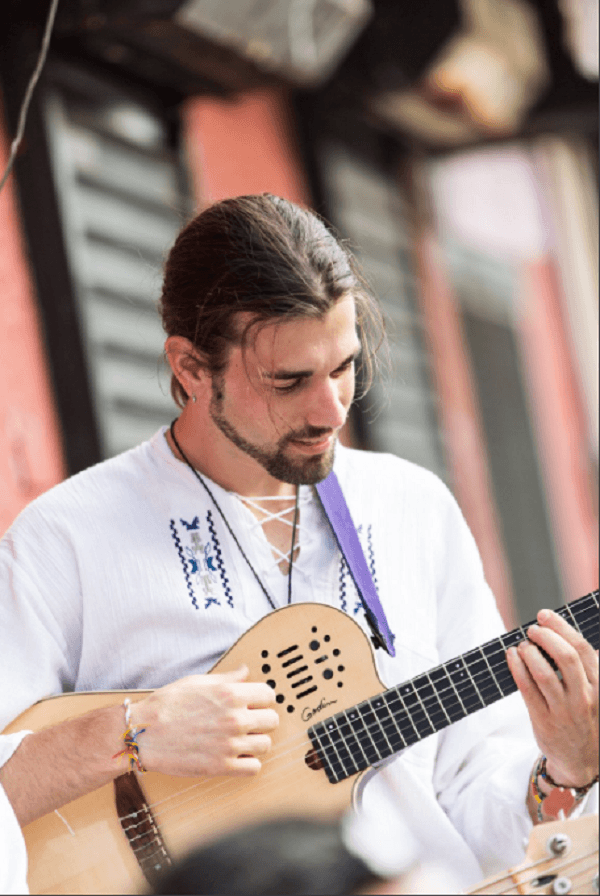
Bronson playing
De Tierra Caliente founder Bronson Tennis playing the guitar

Bronson’s beginnings in music

Bronson Tennis began to put his eyes on music when he was just a child, when he was very attracted to the 1990s alternative rock movement in the United States. When he was only 11 years old, his parents bought him his first bass guitar and later he also wanted to learn to play the guitar and sing.

In family matters, Bronson and his three brothers are musicians and several of his cousins and uncles have also been musicians. In addition, his mother was a fine artist and his grandmother was an art teacher.

Both in school and church, the boy always chased opportunities to sing and show his vocal skills to anyone who wanted to hear. He also took advantage of all these spaces to learn as much as he could about music until he was old enough to exercise it professionally. 

Today, his main instrument is the guitar, although he also plays the cavaquinho (an instrument of Portuguese origin which is widely used in samba) and the roncoco, which is an adaptation of the Andean charango that he uses to play salsa and Cuban son.

Bronson posing for the camera
Bronson Tennis playing the guitar while posing for the camera

Professional debut in music

Bronson also told us that he began his career path as a bassist and chorister in several musical groups in the city of San Diego between 2006 and 2009. He then spent some time in Philadelphia, where he also played with other bands from a variety of genres.

It is interesting that he lived in Buenos Aires, Argentina, where he also worked as a bassist and singer in some bands. In fact, in that same country, he helped form a Caribbean funk band in which he learned a lot about these genres so foreign to what he played in his childhood and youth. He stayed about four years in Argentina, specifically between 2009 and 2012, until he moved to Brazil for about six months to continue learning more and more about Latin music, but it was not his last stop in South America, as he was also in Colombia for a while more.

Following this, he returned to Philadelphia and decided to form his own orchestra which he named De Tierra Caliente.

Prior to De Tierra Caliente

When Bronson returned to Philadelphia, he had the chance to meet some musicians from the Puerto Rican music scene in that city and saw that they had similar outlooks on music, so they got back in the saddle to prepare a formal project amongst themselves.

The artist assures that it was in Argentina where he learned what it takes to move forward with his band. ”Argentines are people who do everything with strength and confidence, whether in music or in soccer. No matter who or what they have to face, as they take on all the challenges with confidence and that is something we could all learn from Argentina.” Bronson said of his stay in that country.

Bronson and his band
(L to R) Papo Buda, Bronson Tennis, Eubie Nieves, Andy Meyer and Steve Cochran

In Brazil, he studied percussion and learned Portuguese, while Colombia taught him to play salsa, champeta, vallenato and many other genres. In short, each country he has visited gave him tools to facilitate his learning in everything about Latin music in various areas.

Precisely thanks to all this acquired knowledge is that Bronson finally felt able to form his own band in 2014 in union with fellow musicians who understood what he wanted to carry out.

How De Tierra Caliente started

Upon his return to the United States, Bronson was very clear that he wanted to incorporate all those elements learned in South America and the Caribbean, but giving them his own touch. It was then that he met conguero Papo Buda, with whom he agreed on much and began the recruiting process for the rest of the musicians.

After that, Bronson and Papo could add more artists to the group, resulting in a fairly consistent group over time. Since its founding, very few musicians have left the band and Bronson and those who remain have an excellent relationship with all of them despite no longer being band mates.

Among his greatest inspirations, Bronson mentioned many artists and groups of various nationalities and genres such as El Gran Combo de Puerto Rico, the Brazilian composer and singer Paulinho da Viola, the group Caribe Funk and many others.

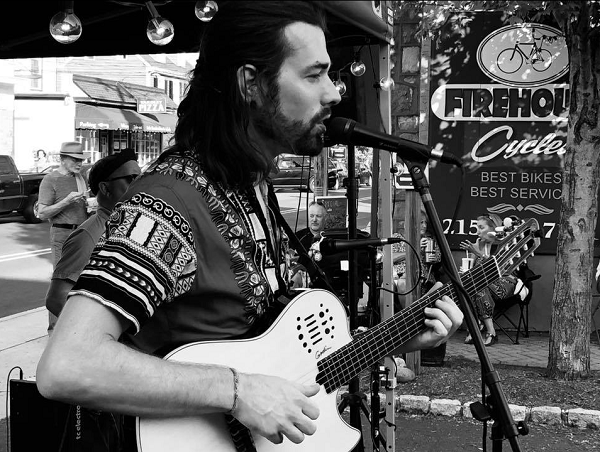
De Tierra Caliente playing
De Tierra Caliente playing live in Yardley

Read also: Latin jazz and mambo trumpeter Jonathan Powell and his great collaborations

Damian Ballester and the transformations of Cuban Folk Dance

Latin America / Cuba
Photo 3- Damian Ballester on stage

The relationship of Africa within the musical and dance culture in Latin America is notorious when we see the cultural expressions of the peoples of this continent, it is easy to see how similar they are, the use of percussion is one of the most relevant topics, in itself a mixture of cultural customs, religion, musicality, dance, in itself all the elements of the black race.

America, one of the main destinations of the ships with black slaves from many areas of Africa, caused our culture to be armed with a bit of each custom, therefore, we can say that in America there is a bit of each African people, this relationship of variety of slaves focused on dividing the forces of the race so as not to make it powerful, divided languages, customs, words and religions only left the marginalized population to communicate through percussion, an element that made the system improve at times of understanding within the fences where they lived.

Due to the above, African religions and customs are born in Cuba but, adopted by those already existing on the island, this combination gives us a rich variant of movements from three continents, Europe through Spain and Africa in all its splendor.

To clarify some topics of the folklore of the Caribbean island and its current dance transformations, we had to contact a great teacher, Damian Ballester, director of Iya Aye, one of the best folklore groups on the island of Cuba, to speak with this professional of the dance is necessary if we want to obtain real information about Cuban traditions, a great teacher who has left his teachings in many Spanish-speaking countries, among which Venezuela, Colombia, Ecuador, Mexico and now in the United States stand out…

we begin by greeting him and opening a pleasant conversation, to which we got an original response “Greetings acere, what was it”, calling him opens up a range of questions on the subject in question, here is an extract of the most common doubts generated around the relationship with salsa, its festivals and diffusion in the world.

Greetings Prof. Damian, grateful for your receptivity, we want to give information to our readers about the relationship of Cuban folklore within our world, Salsa, to begin with, what is defined as Cuban Folkloric dances?

Grateful for the opportunity and sure, that if we report on the case, folk dances are nothing more than the set of cultural goods or phenomena that constitute a cultural complex with manifestations of all aspects of popular life. It is the sum of the manifestations acquired by experience, by inheritance, by tradition, by the satisfaction of biological or sociological needs, among other things. This lasts through several generations and almost always undergoes transformations.

They will get compound terms in the word folklore, which speaks of people or people, popular knowledge, together with the popular knowledge of the people. It is a very long topic, because I should talk about so many things about my culture, better let’s leave the definition until here and thus add flavor to the interview.

Much better, we continue then, do African dances have any impact on Cuban folk dances?

Yes, of course, it is the root, the exercise of dance has always characterized my land and has suffered the same processes of contagion and transculturation between the ways of dancing of the colonizer and the styles introduced by African ethnic groups since the 16th century, in fact, the colonizers brought romance, active in the Cuban countryside for several centuries, with its couplets and their ways of singing and founding alegrías, while the black slaves included their ancestral rites, their drums, and their particular sense of rhythm and movement. bodily.

Given this brief explanation, we can say that not only dances of African origin contributed or influenced Cuban folklore, we can say that there is also an incidence from Spain, France and the Caribbean, but its main axis was born from the Spanish and the African.

We know the extent of Cuban folklore, for how long should a person prepare to be called a professor in this branch?

First of all, to carry the name, whether it is a teacher or instructor of Cuban folklore genres, there are two factors that are very important, the first is study, since Cuban folklore is made up of a very wide range of genres divided into different styles, I could mention some examples: Peasant, popular, Afro-Cuban and Franco-Haitian folklore.

Within the styles of peasant folklore, examples could be given of the Cuban zapateo, the ripiado parakeet, the chidonga, the hawk, the caringa, the son montuno, among others.

Within the styles of popular folklore, the Complex of the rumba, the mambo, the chachachá, the danzón, the dance, the pilón, the congas and the comparsas, the casino can be mentioned, within the Afro-Cuban folklore the Bantú cycle can be mentioned, the Yorubas, the Arara, the Abakua, within Franco-Haitian folklore we can mention the French tomb, the Haitian merengue, the gaga, the vodu among others, if I continue we will not finish today. (laughs to close)

Of the folkloric dances, which are the most outstanding or spread worldwide?

It could be said that there are several, examples are the popular folkloric ones, one could say the casino, the mambo, the chachachá, the son, the rumba complex, that the latter people tend to say are African or Afro-Cuban dances, that have African influence does not mean that they are classified within Afro-Cuban dances because this genre emerged in Cuba, was used as an object of protest against the government of that time and was eradicated in the essence of Cuban. In the same way, the one that has had the most impact and remained in the whole world are the Yoruba dances or dances of the orishas.

Should we open another interview to just talk about the many genres that the island embraces, what institutions correctly form the folkloric traditions in Cuba?

There are many institutions in Cuba, from the community point of view what is named in Cuba as amateur dancer are the community projects and actions that are nothing more than groups created in the communities, all of these supervised technically and methodologically by specialists from the houses of culture of each area by provincial and national methodologists governed by the Ministry of Culture.

From a professional point of view, there are art schools such as the ENA (NATIONAL SCHOOL OF ART) and the ISA (SUPERIOR INSTITUTE OF ART) all governed by a logical curriculum organized by specialists and connoisseurs of the genres.

Photo 2- Damian Ballester on stage

Other institutions that could be mentioned, is the little school of the national folkloric group of Cuba with 56 years of creation in charge of rescuing and safeguarding the traditional Cuban musical and dance traditions.

Wao, Enough, Do you know if there is any similar institution in the world?

In the world there are countless schools that are training dancers with the Cuban style and technique, whether they are Cuban or foreign teachers, but nothing like the preparation of art schools in Cuba that work with a logical and well-prepared program, in some schools around the world it could be said that they do not work under a logical methodological program for the teaching of these genres due to the commercial and monetary part, unfortunately there are many dedicated to commerce, to money and not to the necessary dedication.

This dissemination has been achieved while respecting the roots and traditions of the farmers? The root? The original essence?

Unfortunately, it could be said that a good diffusion of Cuban genres worldwide has not been respected or achieved, of 100% of the performers, it could be said that only 10% are protecting Cuban traditions, it is sad to say, but trade and populism it is destroying the folklore of an entire country.

Have these changes in traditions positively or negatively impacted Cuban culture?

First of all, traditions do not change if they are not passed down from generation to generation. In terms of their impact, I see it negatively because the dissemination that is taking place is incorrect and worst of all, there is no organization, which was of Cuba, can follow up on the program that is being given to Cuban genres, in itself, many see the commercial and hence they do not care about the poor distribution of what is taught.

What is the reason that so many dancers seek to perform Cuban dances? It is notorious to see it at festivals and congresses.

There are two very important factors: 1 Cuban music, which has been evolving in an incredible way, fusing Cuban rhythms within its repertoire, and the other factor is not because I am from Cuba, Cuban folklore could be said to be the most complete genre available. world level from the point of view of dance, is that it has a history, virtuosity is varied, it could be said that it is well complemented, due to its complexity and interpretive difficulty, it is what attracts attention, additionally, salsa comes from us, from these roots is born what now wants to be denied.

Teacher and the Cubans? Have Cubans spread their dance correctly?

It could be said that the vast majority of Cubans have disseminated the genres well, why do I say that the vast majority?

Because there is another small group that deforms it, money changes everything, foreigners think that all Cubans They dance, it has happened that they say Cuban and quickly you think he is a dancer, he knows everything, he is good, and no, that is not reality, one thing must be clear about being an opportunist, not a dancer, being a dancer by hobby and another is being one by profession or for being a teacher.

There are Cuban teachers who are hurt by the deformation that is happening with what has been studied so much, but there are others who only care about getting paid and do not care if their students do it well or badly.

How has the interpretation of Cuban roots impacted the so-called Salsa Casino in the world? Has the original and real spread of traditions been respected?

Look, since Cuban music began to evolve inside the casino, it began to undergo a series of transformations from movements to choreography due to the musical style that Cuban orchestras began to spread, known as TIMBA, which was well accepted by the public, If we talk about the impact from the traditional point of view, it could be said that there is no original interpretation of the Cuban roots because they are not executing a specific traditional genre, but rather what they are using different styles of the traditional folk dances that all this could be called Variety.

Have Cuban music and dance festivals or congresses devoted time and effort to improving these transformations? Have they worried about minimizing the damage?

In most cases, very few, first of all, if it is a competitive event, the organizers make the mistake of hiring unqualified personnel to evaluate genres of Cuban origin, and that is where the serious faults come from. There have been cases where there are groups , couples or soloists who perform a good technique within normal limits and the jury evaluates for a taste problem if they see it as beautiful and give it less points, or disqualify it, it is not about beauty, it is about correctness, the organizers should be more careful about these things.

What recommendations would you give to our dancer readers on this controversial topic?

The dancer must be clear about four aspects that are fundamental to his artistic life and entire career: dedication, love of dance and, most importantly, study.

Do only what you love and you will be happy, the one who does what he loves is blessedly condemned to success, which will come when it should come, because everything that should be, will be, and will come naturally.

Photo 1- Damian Ballester on stage

Let’s spend time respecting the roots and cultures of peoples, and above all, let’s take a good look at who we entrust our desire to learn, there are thousands of ways to learn correctly, everything is in the research, knowing who we contact and why There are hundreds of excellent instructors in the world, not to mention the many means of learning today.

I invite you to learn a little about this and other topics, I have a virtual classroom where I teach a lot of the theoretical and practical content online, I do it through the son rumbero academy and its virtual classroom format, follow the @sonrumbero accounts on Instagram and Facebook.

  • « Go to Previous Page
  • Page 1
  • Interim pages omitted …
  • Page 24
  • Page 25
  • Page 26
  • Page 27
  • Page 28
  • Interim pages omitted …
  • Page 62
  • Go to Next Page »

International Salsa Magazine (ISM) is a monthly publication about Salsa activities around the world, that has been publishing since 2007. It is a world network of volunteers coordinated by ISM Magazine. We are working to strengthen all the events by working together.