• Skip to primary navigation
  • Skip to main content

International Salsa Magazine

  • HOME
  • Previous editions
    • 2026
      • ISM / April 2026
      • ISM / March 2026
      • ISM / February 2026
      • ISM / January 2026
    • 2025
      • ISM / December 2025
      • ISM / November 2025
      • ISM / October 2025
      • ISM / September 2025
      • ISM / August 2025
      • ISM / July 2025
      • ISM / June 2025
      • ISM / May2025
      • ISM / April 2025
      • ISM / March 2025
      • ISM / February 2025
      • ISM / January 2025
    • 2024
      • ISM / December 2024
      • ISM / November 2024
      • ISM / October 2024
      • ISM / September 2024
      • ISM / August 2024
      • ISM / July 2024
      • ISM / June 2024
      • ISM / May 2024
      • ISM / April 2024
      • ISM / March 2024
      • ISM / February 2024
      • ISM / January 2024
    • 2023
      • ISM / December 2023
      • ISM / November 2023
      • ISM / October 2023
      • ISM – September 2023
      • ISM – August 2023
      • ISM July 2023
      • ISM Edition June 2023
      • ISM – May 2023
      • ISM April 2023
      • ISM March 2023
      • ISM February 2023
      • ISM January 2023
    • 2022
      • ISM December 2022
      • ISM November 2022
      • ISM October 2022
      • ISM September 2022
      • ISM August 2022
      • ISM July 2022
      • ISM June 2022
      • ISM May 2022
      • ISM February 2022
      • ISM January 2022
    • 2021
      • ISM December 2021
      • ISM November 2021
      • ISM October – 2021
      • ISM September 2021
      • ISM August 2021
      • ISM July 2021
      • ISM May 2021
      • ISM April 2021
      • ISM June 2021
      • ISM March 2021
      • ISM February 2021
      • ISM January 2021
    • 2020
      • ISM December 2020
      • ISM November 2020
      • ISM October 2020
      • ISM September 2020
      • ISM August 2020
      • ISM July 2020
      • ISM June 2020
      • ISM May 2020
      • ISM April 2020
      • ISM March 2020
      • ISM February 2020
      • ISM January 2020
    • 2019
      • ISM December 2019
      • ISM November 2019
      • ISM October 2019
      • ISM Septembre 2019
      • ISM August 2019
      • ISM July 2019
      • ISM June 2019
  • Spanish
  • Download Salsa App
    • Android
    • Apple

Search Results for: Latin genres

Oscar Dudamel continues to achieve dreams and presents “La Rumba Me Llama”

Legendary Venezuelan trombonist Oscar Dudamel expands his musical vision with a new single that fuses the essence of classic salsa with his unmistakable style, which is why he does not hesitate to express “La Rumba Me Llama”.

This song is part of his upcoming album “Sueño Alcanzado”, a production that will be released on May 30 and represents the culmination of years of musical research, fusing the classic salsa sound with jazz influences and the romantic tradition of boleros.
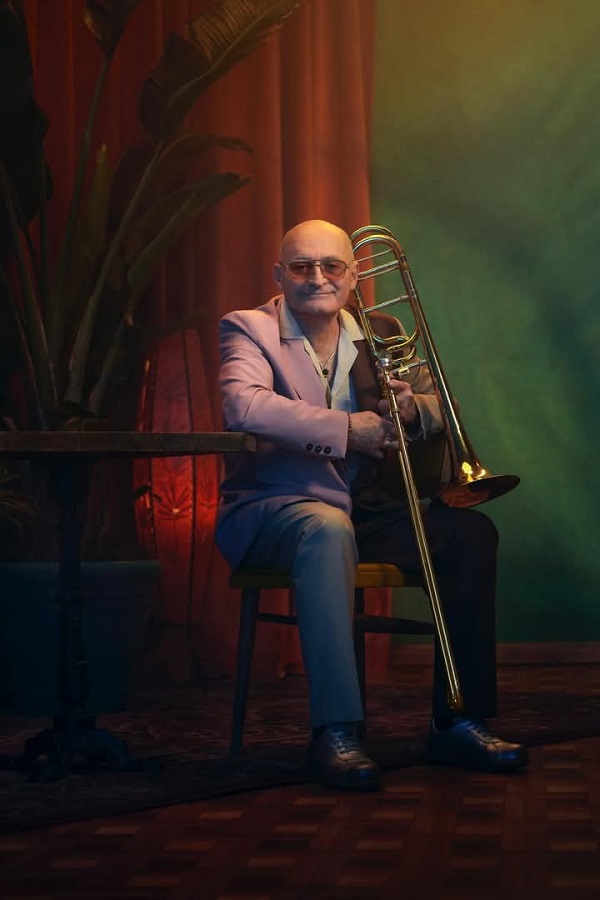
El legendario trombonista venezolano Oscar Dudamel

In “La Rumba Me Llama”, Dudamel brings his trombone to the forefront of a vibrant composition that captures the essence of the rumba as an inescapable call. With a musical structure that evokes the great salsa orchestras and an impeccable instrumentation.

The piece stands out for its meticulous arrangements, powerful brass and an irresistible cadence, faithful to the spirit with which Dudamel has approached his music. The track is an invitation to the dance floor and a testament to the rhythmic power that has defined his career.

The album Sueño Alcanzado not only takes its name from a personal concept of triumph, but also from one of his most significant pieces.

The title track was born in an intimate creative encounter in Caracas, Venezuela, with Maestro Alberto Crespo, composer Eliel Rivero and Solange Ramírez, mother of his son Gustavo Dudamel.

Oscar y Gustavo Dudamel

Dedicated to her son and with her special participation on violin, this piece encapsulates the spirit of a project that transcends the musical to become a testimony of life.

More than a nostalgic production, “Sueño Alcanzado”, of which the song “La Rumba Me Llama” is part, is the reflection of an evolution. The music that accompanied him since his childhood now takes a new form under his direction, in a creative process that has brought together talented musicians with whom he shares the same vision.

His orchestra, based in Madrid, has become the vehicle to continue taking his proposal to international stages, demonstrating that salsa is still alive in every note and every drum beat.

“La Rumba Me Llama” is now available on all digital platforms and is just a preview of ‘Sueño Alcanzado’, Oscar Dudamel’s new album, consolidating his legacy with authenticity and mastery.

Oscar Dudamel Virtuoso Musician, Trombonist and Orchestra Conductor.

Oscar Dudamel, a Venezuelan trombonist, discovered his passion for salsa as a child when he first heard “La Murga” by Willie Colón. Although his formal musical training began with Maestro Pablo Canela and later continued within El Sistema as a classical musician, that early experience left a profound mark on him, inspiring his dream of playing the trombone and solidifying his love for salsa as his ultimate passion.

Dudamel was born on January 14, 1961, in Barquisimeto, Venezuela. He grew up in a musical family where every gathering was celebrated with music, fostering his passion for the art from a young age. His parents purchased him a trombone, and he began his studies at the Yamaha Music Academy.
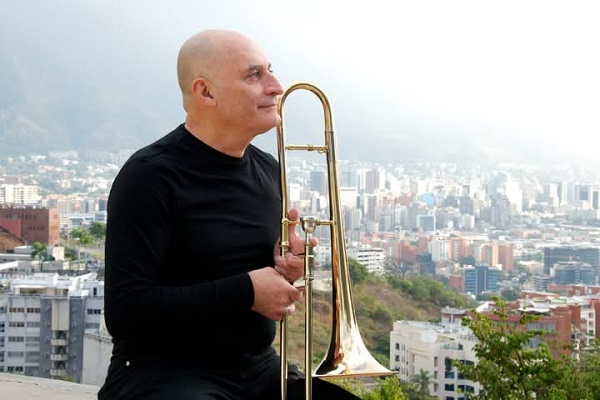
Oscar Dudamel sigue alcanzando sueños

At the age of 7, he was enrolled in a music academy under the guidance of Maestro Pablo Canela, a composer and prominent figure in the music of the Lara State region of Venezuela.It was there that he started his training with the Cuatro, the traditional Venezuelan instrument, and the guitar, which became his first instruments.

In addition to his Cuatro training, Dudamel began studying and playing various percussion instruments, further broadening his musical repertoire.

His academic training took place at the Lara State Conservatory in Barquisimeto, and at the National System of Youth and Children’s Orchestras and Choirs of Venezuela, also known as El Sistema.

During his teenage years, he became a member of the Youth Orchestra of Lara State (El Sistema Lara) and the Liceo Mario Briceño Iragorry Band, where he had the opportunity to expand his musical knowledge and explore various genres.

Dudamel entered a new phase of his life when he enrolled at the Vicente Emilio Sojo Music Conservatory to study theory and solfège, continuing his trombone studies under the guidance of his maestro, Óscar Vivenes.

Over the years, he became a member of the Lara Youth Symphony Orchestra of Lara, part of the national network of Venezuela’s El Sistema orchestras, actively participating in classical music.

However, his fascination with the Caribbean rhythms of salsa never disappeared. Thus, he combined his classical training with his passion for salsa, performing with renowned artist and sharing the stage with legends of the genre, such as Héctor Lavoe, Ismael Rivera, Ismael Miranda, Celia Cruz, Justo Betancourt, Marvin Santiago, and other great artists.

In Caracas, Venezuela, he founded his own orchestra, with which he had the opportunity to share the stage with notable figures such as Rubén Blades, Gilbert Santa Rosa, Luis Enrique, Guaco, Oscar D’ León, and many others.

Dudamel’s surname is synonymous with music. He is the father of Gustavo Dudamel, one of the most acclaimed classical music conductors in the world. Gustavo’s well-known fondness for salsa stems from his father, who recently fulfilled his lifelong dream of releasing a solo album titled Sueño Alcanzado, dedicated to his son.

Dudamel currently resides in Madrid, Spain, where he leads his ensemble, Oscar Dudamel y su Orquesta, performing salsa alongside his Venezuelan musician friends and colleagues at Café Berlín Madrid.

Oscar Dudamel y Dj, Augusto Felibertt

‍Research Sources:

Contact: Katie Baloian of Radio Notas (Compartiendo Ideas)

Alberto Crespo (Pianist and Arranger)

Dj. Augusto Felibertt

Café Berlin in Madrid

Also Read: Mariana “The Sonera of Venezuela and for the world”

El Cerrito Studio

North America / San Francisco / California

The Cuban sound, mixing and mastering engineer, winner and multiple times nominated for the Latin Grammy Award, Oscar Autie together with his wife, producer and composer, Kenya Autie gave life to the most ambitious project of their lives, they established in the area of San Francisco bay, CA, one of the best and most recognized recording studio, mixing, mastering and production, El Cerrito Studio.

A recording studio equipped with the most advanced technology and equipment, three rooms of recording and a control room completely isolated acoustically treated to achieve a quality work for all styles and musical genres.

El Cerrito Studio
El Cerrito Studio

Oscar Autie was born in La Habana, Cuba. Since 6 years old he played the acoustic guitar and his formal musical training began at 9 years old through private classes.

Oscar studied musical composition, arrangements and production at the National School of Arts of Cuba (ENA) where he graduated with a Degree in Guitar Interpretation. He also trained in drums and piano, and holds a degree in Electronics and Acoustics in a Technical School in La Habana.

When he was 20 years old and while living in Cuba, Oscar worked as a Recording Engineer at EGREM (main recording studio and music distributor in the capital at that time). He was also the Sound Engineer during the Tour of prestigious Cuban bands, such as: Isaac Delgado, Síntesis and Arte Vivo, and at the National Theater of Havana. He provided sound engineering for live shows by world-renowned artists such as: Oscar De Leon, Astor Piazzolla, Sierra Maestra and Silvio Rodriguez, among many others. In addition to all this, this wonderful musician recorded many albums during his stay in this AfroCaribbean country.

This voting member, engineer from the National Academy of Recording Arts and Sciences (Grammy) and the Latin Academy of Recording Arts and Sciences (Grammy Latino), a voting member of the P & E (Wing of Producers and Engineers), and member of the Audio Engineering Society moved to the US in 1992 in search of more advancement opportunities. Once installed in California, the talented Oscar Autie has been working on live performances, recording the mixes and mastering albums of a large number of industry musicians such as the nominees and winners of the Latin Grammy: Yalil Guerra, Mister G, Yosvany Terry, Diego El Cigala, Paco De Lucia, Fito Paez, and Mayito Rivera (Van Van) among other personalities of the artistic guild.

Integrants El Cerrito Studio - Photo
Integrants El Cerrito Studio – Photo

Also, he has been Technical Director and Sound Engineer for the prestigious Flamenco Festival of Bay Area since its inception in 2005. Oscar is currently recording and producing other albums for other artists.

In the other hand, the Cuban producer, Kenya Auntie studied guitar at the Conservatorio of Guanabacoa in La Habana and she was the first woman to play the guitar in a rock band on the island, being an inspiration figure for other women with the same musical interest. Kenya has participated in the production of projects such as: Arise Above Abuse, Clave:

Chamber Music, Vol. VI, Stand Before The Systems and Presidential Suite. Currently, this composer and co-owner of El Cerrito Studio continues to contribute her skills in projects with upcoming releases.

El Cerrito Studio operates under the label of El Cerrito Productions, a record company of licenses, promotions and publications. They make reservations to Artists from all over the world and from all styles of music.

They perform recording, mixing, mastering, production, composition, arrangement, transcripts, and promotion.

Integrants El Cerrito Studio

This studio represents the experience, creativity and professionalism that have made it stand out as one of the best recording studios in the San Francisco area. Prominent companies such as: Leap Frog, The Warner Brothers, Beyond Translations and Playsongs have made their recordings there. In addition, Deepak Chopra recorded and mixed his most recent album and book “Home” in this studio.

“I have been working as an engineer since my first 20 years. Engineering is a passion for me. I love music and being an engineer allows me to be part of many interesting and meaningful musical projects …” Oscar Auntie.

To more information, please visit http://www.elcerritostudio.com/ or like them on Facebook https://www.facebook.com/elcerritorecords/

Kiki Valera and his talented and special family’s great legacy

Cuba has an extensive list of talented musicians and a great musical and artistic tradition that are truly the envy of many countries, so it is impossible to cover all the exponents of this land of talents. However, in this opportunity, we talked to one who sets the bar very high among them all, the incredible arranger, composer, sound engineer and multi-instrumentalist Kiki Valera, whom we have been able to interview for the March edition.

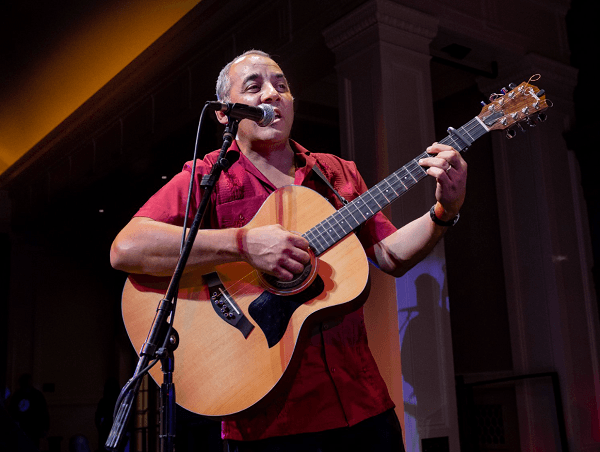
Kiki playing the tres
Kiki Valera playing the Cuban tres live at Town Hall Seattle

How Kiki fell in love with music

The first thing to point out about Kiki is that he was born into a very musical family in the easternmost part of the island of Cuba, specifically in Santiago de Cuba, which is an area well known for the presence of the now world famous Cuban son. In addition to that, his father, Don Felix Valera, inherited from his family and ancestors those musical genes that came from his grandparents, great-grandparents and further back.

So much so that Don Felix was a music teacher in the small town of San Luis, which was 30 kilometers from Santiago de Cuba, while his mother was a dance teacher. Both were recent graduates of the first national school of art instructors that was founded in the country in the early 1960s, while Kiki was just being born. 

Growing up surrounded by all this environment, music was the first thing he heard and lived, not to mention that the artist already had the necessary conditions and abilities to dedicate himself to this world professionally. When he was six years old, his father gave him a Cuban tres, one of the most iconic instruments of the son, and taught him his first songs, melodic motifs, tumbaos, among other things.

One thing to mention is that the Valera Miranda family does not consist of professional musicians as such, but rather empiric musicians who frequently get together at family events such as birthdays, Christmas, New Year holidays and vacations to play the tres, the bongo, the maracas, the guitar, among many other instruments. 

As a child, this was all very normal for him until he realized that his interest in music was genuine and he entered the Conservatorio Esteban Salas in Santiago de Cuba to study classical guitar. It was thanks to his studies that he realized that his family’s thing with music was something really authentic that had been developing a very long time ago, more precisely since the 19th century.

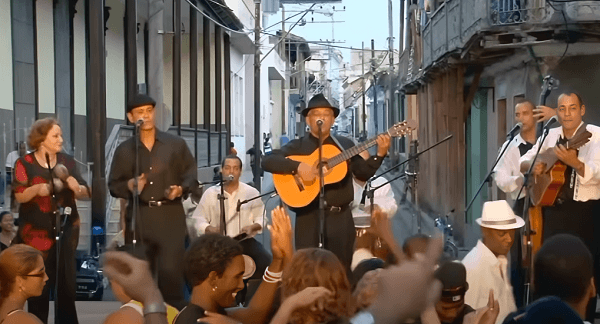
Kiki and his family
Carmen Rosa Alarcón on the maracas, Antonio Rondón on vocals and clave, Félix Valera on lead vocals and guitar, Raúl Félix Valera on bass, and Kiki Valera on Cuban tres

It turns out that a now deceased musicologist named Danilo Orozco was conducting a sociological survey in the eastern part of the country and happened to be a good friend of his father. In one of their many talks, Don Felix told him much about the family history with music for several generations, which caused Orozco’s curiosity and he got to the rural area where the family had lived. These visits determined that the oldest ancestors were true carriers of the roots of son in the eastern region, to the point that this researcher even made a documentary and the Valeras of that time recorded two albums with a didactic approach to show the cultural phenomenon that happened in that family nucleus.

After all this, Kiki felt even more destined to continue the legacy of his ancestors in music, but with a little more academic training and more modern touches in keeping with the times. That was more than 40 years ago.

Fashion artists paying homage to old genres

There is a whole resurgence of genres, already thought forgotten, by the passage of time, but thanks to tributes by certain fashion artists, they have risen from the ashes to occupy the place that should never have been taken away from them. We have the example of Bad Bunny with his album ”DeBÍ TiRAR MáS FOToS”, which focuses on the cultural and musical heritage of Puerto Rico and makes use of salsa, plena, and boleros to show the musical richness of the Island of Enchantment. We can also mention Desorden Público’s upcoming album ”Salsa All-Ska” which pays homage to salsa as part of the celebration of its 40 years of musical trajectory. Not to mention the 2024 Latin Grammy Awards which paid tribute to salsa and counted with the presence of Oscar D’ Léon, Tito Nieves, Marc Anthony and La India among its guests.

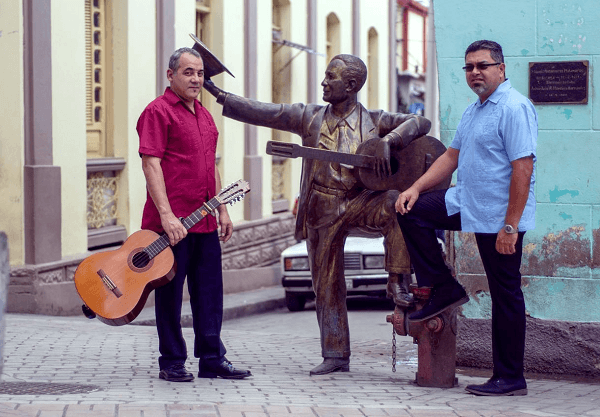
Kiki and Coco
Kiki Valera and Cuban singer Coco Freeman close to the Don Miguel Matamoros’s sculpture in Santiago de Cuba

On this phenomenon, Kiki considers that artists in general are the reflection of their time and the manifestation of the environment in which they develop. For the same reason, he believes it is inevitable wanting to look back to understand where we come from, no matter how many years pass. ”After you study a genre such as reggaeton, you can tell that it has been nourished by other musical manifestations that preceded it. Moreover, when musicians are given the task of acquiring technical and theoretical knowledge of music, they always try to innovate by recreating the foundations of the genres in which they work” said Kiki on this interesting and important subject. 

”There is a saying that if we don’t know where we come from, it’s hard for us to know where we are going and this is the case. Contemporary musicians generally provide their vision of music and create new concepts, fusions and rhythmic patterns, but all this always comes from the past to a certain extent. To build something new, you need a base” he continued.

When Kiki decides to settle in the United States

Changing the subject radically, we wanted to know when Kiki decided to leave his country to settle in the United States, specifically in Seattle, to which he replied that he arrived here on April 2, 2013. The main reason why he left was due to his partner Naomi Bierman, who convinced him to move to start a life together in another place. 

With that decision, the musician had to make a total shift in mindset, since he had lived in Cuba all his life and came from a very close-knit family. He had to give up the closeness he had with his loved ones, culture, values and climate to adapt to a completely different way of life in a territory that was nothing like his own.

Kiki and his wife
Kiki Valera and his wife Naomi Bierman at the 2024 Latin Grammys

Read also: His father’s love for music rocketed him to stardom

What a pleasure to talk to Pablo Pérez ‘‘El Alcalde de La Salsa’’

It is a pleasure to talk to Latin music artists who have left our genres in a high place all over the world and today it is the turn of the great American producer, composer and percussionist Pablo Perez, also known as ”El Alcalde de La Salsa”, who we were lucky enough to interview to know his fascinating story with music. We say to our dear readers that they cannot miss it.

Pablo playing
Pablo Pérez ”El Alcalde de La Salsa” playing the bongos live

How Pablo became interested in music 

From the beginning, Pablo made it very clear that since his childhood he has been interested in music, to the point of beginning to study it at school, as his taste was great since then. To what we must add that the time when he grew up in Trenton, New Jersey, was marked by a total command of salsa, which greatly influenced the young boy. However, he clarifies that he liked all types of genres like ballads, boleros, cha cha chá, merengue, classical music, among others. 

He grew up listening to all sorts of artists and groups such as La Fania All Stars, Ray Barretto, Willie Colón, Johnny Pacheco, Spanish Harlem Orchestra and many others. To some extent, all of them have influenced the style he applies to his own work today.

World traveler

Throughout all this process of being involved with music and learning what he knows today, he came to live in a lot of Latin countries like Puerto Rico, Venezuela, Ecuador, Argentina, Panama, Costa Rica, among others. During all these travels and stays, Pablo dedicated himself at all times to play and present his music to the populations of those places.

In the same way, each of these places has given something new to his style and, in them, he was able to hear new versions of other songs that he knew before. He himself did a new version of the llanera song ”Quierela más que yo” by Venezuelan singer Luis Silva, making it into a salsa song and giving it his own touch. ”I’ve always wanted people to connect with me through my music and I’m always looking to do new, danceable and interesting things,” Pablo said on the subject.

The artist has always liked to mix different sounds and instruments, so he had the idea of creating a trombone orchestra (the first instrument of his career) and seing how it worked. Finally, this group included two trombones, two trumpets and a baritone in order to obtain a bigger sound, helping with a ”baby bass” (an electric double bass model designed by Ampeg), and a piano.

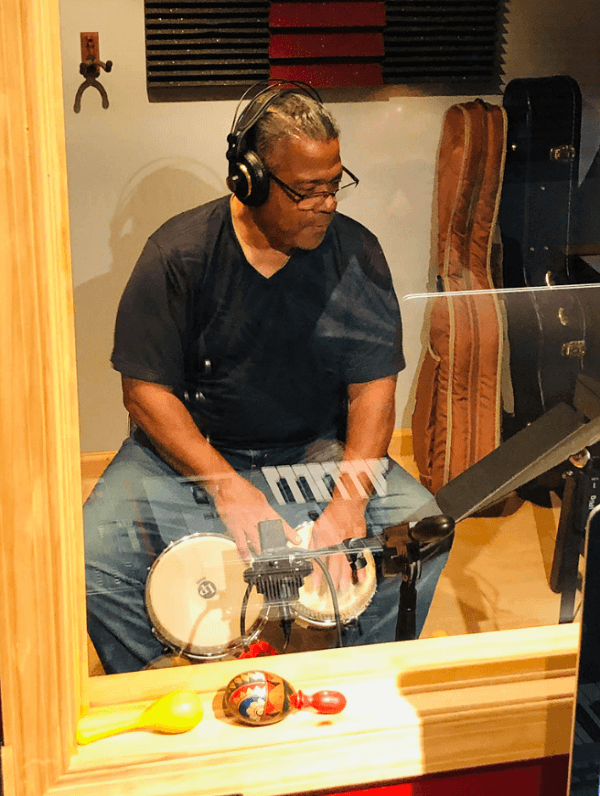
Pablo in the studio
Pablo Pérez recording in the studio

The Pablo Pérez Project and Orquesta Yanes

Although it is true that Pablo’s first major project was The Pablo Pérez Project in 2005, prior to that, he already had a group called Orquesta Yanes (2001), with which he recorded two albums back then. During that time, what was used were LPs and cassettes, one of them being a recording made in Belgium (country where he also lived) and called ”Pablo Pérez con el paisaje latino”. This was the same name of a group he created with local and Latin European musicians in Europe.

At the same time, the musician was also part of other orchestras in his native New Jersey as well as in Puerto Rico and some of them were ”El Nuevo Sonido”, ”Paquito Y Su Tumbao”, ”Peligro” and many others.

Time in Belgium

One of the most important events in Pablo’s career during his time in Europe was his involvement in the album ”Algo Diferente” by Mexican musician Héctor Islas y Su Pachuco 21. The artist referred to Islas as a very good person and a great singer whom he met in the aforementioned country and it was not long before they worked together.

Hector invited him to join his orchestra as a timbalero and they both toured the rest of Europe together, taking their music to anyone who wanted to listen to them in those territories. Later, the Mexican went to Cuba to make a series of recordings in which he asked Pablo to play the bongos.

During their tours, they were able to play alongside El Gran Combo de Puerto Rico, Jerry Rivera, Original de Manzanillo, Sin Damas, La Fania All Stars, La India and many more.

Pablo and Luis
Luis González ”El Tsunami de La Salsa” next to Pablo Pérez

El Alcalde de la Salsa

A very interesting facet Pablo had was that of a politician in 2014, when he ran for mayor of Trenton, New Jersey. Although targets were not met, the artist explains that this decision to compete gave him many positive experiences with the community.

One of the biggest endorsements he received at the time came from Willie Colón, whom he had known for many years. When the trombonist asked Pablo about his motivations for running for office, he replied that what he wanted was to help the community from a better position. That is when Colón nicknamed him ”El Alcalde de La Salsa” (The Mayor of Salsa), which Pablo liked so much that he decided to use it for the rest of his career.

It is worth mentioning that he also received the endorsement of Tito Nieves during his aspirations for political office.

Music played a crucial role in the campaign events, since the artist’s orchestra was very attractive to people, especially for the fundraisers that Pablo and his team carried out. Likewise, it was a good tool for the former candidate to connect with the community, especially the Latino community. 

It was in this same period that he made contact for the first time with his current bassist and arranger Michael Colón, pianist Efraín ”Juanito” Dávila and other musicians with whom he was able to form his orchestra, which helped him a lot during his political career to gain the sympathy and attention of people. 

When asked if he would be interested in running for public office, he assured that this stage of his life is over and that he prefers to concentrate solely on music for now. 

Willie and Pablo
Willie Colón endorsing Pablo Pérez’s campaign

Read also: How freelance musicians are viewed today

“DeBÍ Tirar Más Fotos” is not just an album; it is an invitation to reimagine music and the cultural impact it can have in an increasingly interconnected world

Bad Bunny was born as Benito Antonio Martínez Ocasio in San Juan, Puerto Rico, on March 10, 1994. He is a composer and singer of urban music, especially trap and reggaeton.

Bad Bonny DeBÍ TiRAR MáS FOToS

Although he never took formal music classes or studied any instrument, he is a singer, composer and creator of his own songs. The first samples of his art were seen on YouTube, where he slowly began to gain fans.

In mid-2016, Bad Bunny joined Hear This Music, a label created by DJ Luian and Los Mambo Kingz, presenting the hit “La Ocasión,” an anthem of trap music. There he also recorded singles such as “Diles,” “Soy Peor,” and “Tú No Vives Así.”

Bad Bunny has also participated in songs with numerous artists, such as Farruko, De La Ghetto, J Balvin, Maluma, Nicky Jam and Ozuna, among other urban music stars.

In 2017 he conquered Europe, touring with more than 20 concerts in 20 days. Upon his return he sang “Si Tu Novio Te Deja Sola” at the 2017 Billboard Latin Music Awards with J Balvin.

In addition, he sold out concerts at the Luna Park in Buenos Aires on September 8 and 9. In November he released “Sensualidad” with Prince Royce and J Balvin.

The year 2018 began with great success.

On January 12, he released “El Baño”, a collaboration he recorded with Enrique Iglesias.

On February 6, he released “Salimos A Buscarte”.

On the 9th, he presented “Fantasía”, with Alex Sensation.

On the 14th, she released a version of the hit “Báilame” by Nacho, together with Luis Fonsi, Yandel and Daddy Yankee.

On the 15th, she released “Amorfoda”, a new single in which she says “no” to love.

She didn’t wait and on the 22nd, she released “Dime Si Te Acuerdas”.

On March 16, she released a song with Khea, Düki and Cazzu, titled “Loca”.

On the 23rd of that month, “Dime” was released, recorded with Revol, J Balvin, Arcángel and De La Ghetto.

On April 1, she presented “Me Rolié”. In the same month, she released: “Te Boté”, with Ozuna, Nicky Jam, Nio García, Darell and Casper Mágico; and “Explícale”, with Yandel, Noriel Cosculluela and Brytiago.

On May 5, she recorded “Contigo”.

Bad Bunny nació como Benito Antonio Martínez Ocasio

On the 12th, 13th and 14th she presents her songs live, again at Luna Park. In between these concerts she releases “Sólo Avísame”. Then she releases “Quiere Verme”, together with Anuel Aa and “Diles”, with Ledy Medina.

On June 22nd she releases “I Like It”, recorded with Cardi B and J Balvin. On the 28th of the same month she releases the single “Estamos Bien”. She participates in Marc Anthony’s song “Está Rico”, together with Will Smith. On October 11th she releases “Mía”, in a spectacular collaboration with Drake singing in Spanish. On December 8th she releases the hit “Desde el Corazón” and on the 14th of the same month she presents “Sólo de Mí”, whose video reflects gender violence. On the 23rd her debut album goes on sale, under the name “X100Pre”.

On June 28, Bad Bunny & J Balvin present the eight-song album “Oasis” with the first single, “Qué Pretendes” (with special appearances by Mr. Eazi and Marciano Cantero of Enanitos Verdes)

Following the death of basketball player Kobe Bryant, Bad Bunny paid tribute to him with an emotional song titled “6 Rings.”

YHLQMDLG was released by the artist at midnight on February 29, 2020. The title means “I do what I want” and features collaborations with Daddy Yankee, Yaviah, Jowell & Randy, and Ñengo Flow. The album is a tribute to the marquesinas (garage parties) that Bad Bunny grew up attending, and features many nods to reggaeton from the early and mid-2000s

On May 10, 2020, he released his third studio album “Las que no iban a salir,” which features the participation of Don Omar, Zion & Lennox, Nicky Jam, Yandel, among others.

In July, after being the first Latin urban artist to be on the cover of Rolling Stones magazine, El Conejo Malo becomes the protagonist of the first digital cover of the legendary Playboy magazine.

On July 25, he releases the song and video: “Un día (One Day)” with Dua Lipa, J Balvin and Tainy.

On January 3, 2021, he releases the video for his song “Booker T”. That same year, he releases the single and video clip “Lo sentir BB” with Julieta Venegas and Tainy.

Bad Bonny
Bad Bonny

Throughout the year, he publishes several singles and video clips.

On May 5, 2022, he releases the album “Un verano sin ti”.

On June 2, he releases the video clip for the song “Tití mepregunta”.

On November 30, he releases the single “La Jumpa” with the video clip.

On December 22, he released the single “Gato de noche” with Ñengo Flow.

On February 15, 2023, he released the video for “Ojitos lindos” with Bomba Estéreo.

On May 18, he released the single “Where she goes” along with its video.

On July 21, he collaborated with Travis Scott on the single “K-Pop” with The Weeknd.

On September 25, he released the single and video “Un preview”.

On October 13, he released the album “Nadie sabe lo que va a pasará mañana” becoming a hit single.

Becoming the most listened to album of the year in a single day.

“What are we overlooking in Bad Bunny’s ‘DeBÍ TiRAR MáS FOToS’? Beyond reggaeton, a lesson in artistic evolution.”

While social media is boiling with divided opinions about Bad Bunny’s new album, it is worth moving away from the extremes and analyzing “DeBÍ TiRAR MáS FOToS” from a broader perspective.

Beyond being a reggaeton album, this work is an artistic, cultural and strategic manifesto that leaves valuable lessons for all musical genres, including salsa.

Bad Bunny has used his position as a global artist to fuse elements such as salsa with urban rhythms, achieving a musical dialogue that transcends generations and tastes. However, the impact of this project does not stop there.

I’d like to share five key aspects that other artists could learn from this release to innovate and connect more deeply with their audiences.

  1. The power of nostalgia: plastic chairs as a universal symbol

The album cover, with the humble plastic chairs, connects directly with the everyday life of Latin American neighborhoods. These common objects evoke memories of family gatherings, celebrations, and moments of community. The message is powerful: simplicity can be deeply meaningful and resonate globally.

  1. Exclusivity that generates value: “Residencia” concerts

Instead of a world tour, Bad Bunny is betting on “Residencia,” a series of exclusive concerts in Puerto Rico. With this strategy, he not only boosts tourism and the local economy, but creates a “FOMO” (fear of missing out) phenomenon in his fans. This generates massive advance reservations on hotels and flights.

  1. QR codes: intelligent digital interaction

Integrating technology with music is something that Bad Bunny has done masterfully. QR codes in Puerto Rico allow fans to interact with the album in innovative ways, unlocking exclusive content and creating a bridge between the physical and the digital.

  1. Incorporating traditional genres and sounds

Bad Bunny is not afraid to mix salsa with reggaeton, betting on musical arrangements that celebrate his cultural heritage. This shows that genres are not compartments or “silos”, but platforms for dialogue

  1. Expectation and release strategy

From the announcement of the title to the release date, passing through a short film full of cultural references, everything in this project has been designed to create a narrative that maintains the interest of the public. The lesson here is clear: music is not just released, it is experienced as a complete cultural event.

Final thoughts: innovation and evolution

In a world dominated by technology, staying traditional is not an option for artists who want to grow. Tools like Web 3.0, Blockchain, NFTs to offer immersive experiences and AI are revolutionizing the way musicians interact with their audiences and generate income.

While some lose themselves in criticism, others take advantage of these tools to redefine their art and project themselves globally. The lesson is clear: you have to look ahead and dare to evolve.

“DeBÍ TiRAR MáS FOToS” is not just an album; it is an invitation to reimagine music and the cultural impact it can have in an increasingly interconnected world.

Also Read: Sessions from La Loma brings together salsa fans from all over the world in Puerto Rico

  • « Go to Previous Page
  • Page 1
  • Interim pages omitted …
  • Page 23
  • Page 24
  • Page 25
  • Page 26
  • Page 27
  • Interim pages omitted …
  • Page 62
  • Go to Next Page »

International Salsa Magazine (ISM) is a monthly publication about Salsa activities around the world, that has been publishing since 2007. It is a world network of volunteers coordinated by ISM Magazine. We are working to strengthen all the events by working together.