• Skip to primary navigation
  • Skip to main content

International Salsa Magazine

  • HOME
  • Previous editions
    • 2026
      • ISM / April 2026
      • ISM / March 2026
      • ISM / February 2026
      • ISM / January 2026
    • 2025
      • ISM / December 2025
      • ISM / November 2025
      • ISM / October 2025
      • ISM / September 2025
      • ISM / August 2025
      • ISM / July 2025
      • ISM / June 2025
      • ISM / May2025
      • ISM / April 2025
      • ISM / March 2025
      • ISM / February 2025
      • ISM / January 2025
    • 2024
      • ISM / December 2024
      • ISM / November 2024
      • ISM / October 2024
      • ISM / September 2024
      • ISM / August 2024
      • ISM / July 2024
      • ISM / June 2024
      • ISM / May 2024
      • ISM / April 2024
      • ISM / March 2024
      • ISM / February 2024
      • ISM / January 2024
    • 2023
      • ISM / December 2023
      • ISM / November 2023
      • ISM / October 2023
      • ISM – September 2023
      • ISM – August 2023
      • ISM July 2023
      • ISM Edition June 2023
      • ISM – May 2023
      • ISM April 2023
      • ISM March 2023
      • ISM February 2023
      • ISM January 2023
    • 2022
      • ISM December 2022
      • ISM November 2022
      • ISM October 2022
      • ISM September 2022
      • ISM August 2022
      • ISM July 2022
      • ISM June 2022
      • ISM May 2022
      • ISM February 2022
      • ISM January 2022
    • 2021
      • ISM December 2021
      • ISM November 2021
      • ISM October – 2021
      • ISM September 2021
      • ISM August 2021
      • ISM July 2021
      • ISM May 2021
      • ISM April 2021
      • ISM June 2021
      • ISM March 2021
      • ISM February 2021
      • ISM January 2021
    • 2020
      • ISM December 2020
      • ISM November 2020
      • ISM October 2020
      • ISM September 2020
      • ISM August 2020
      • ISM July 2020
      • ISM June 2020
      • ISM May 2020
      • ISM April 2020
      • ISM March 2020
      • ISM February 2020
      • ISM January 2020
    • 2019
      • ISM December 2019
      • ISM November 2019
      • ISM October 2019
      • ISM Septembre 2019
      • ISM August 2019
      • ISM July 2019
      • ISM June 2019
  • Spanish
  • Download Salsa App
    • Android
    • Apple

Search Results for: Latin genres

Ramón “Mongo” Santamaría “I wanted to do something that sounded like home”.

April 7, 1917, Mongo Santamaría was born in the Jesús María neighborhood of Havana, Cuba.

Exceptional percussionist of Latin Jazz and related rhythms, whose first name was Ramón Santamaría.

Mongo left to continue playing his Congas hard in the sky on February 1st, 2003.

“I wanted to do something that sounded like home”. With these simple words, Ramón Santamaría Rodríguez “Mongo Santamaría” spoke of his essence.

The purpose of his music pursued a sonority and a memory, possibly located in Cuba, in Jesús María, a marginal neighborhood where he grew up and enjoyed a tradition attached to the drum, to religion, to the street and from where this great Cuban percussionist drank infinitely.

But surely those drums also came to him from far away, from the Congo, where his grandfather came from to be a slave on the island and who also filled his head with sounds full of meanings and colors, which he later masterfully spread around the world.

The name of Mongo Santamaría (Havana, April 7/1917 – Miami, Feb. 1/2003) is, for the glory of all music, an inevitable reference of Cuban percussion.

Since he was a child he knew that his thing was to play the drum and he was lucky enough to belong to a family of empirical musicians, singers and drummers who supported him in the learning and mastery of these instruments.

During his time in Cuba, already a professional musician, he participated in numerous groups that little by little gave him a place among the most outstanding percussionists of the time. Some names of these groups are El Conjunto Boloña, Lecuona Cuban Boys, with whom he was able to participate in the recording of his first album, Conjunto Matamoros, Segundo Grupo de Arsenio Rodríguez, among others.

Each group had its own style and stamp, but in each of them Santamaría put his personal “touch”.

At the prestigious Tropicana cabaret he played with Chano Pozo as a member of Armando Romeu’s orchestra.

From that moment on, his career would not stop. Conjuntos, Septetos de Son were the perfect selection to complete the sap from which he would draw all his style and technique.

Later, from carnival to carnival, he would gather with other percussionists to play in the comparsas and experience the festive musical atmosphere par excellence of those years.

Alongside him played other friends who soon became a Cuban reference in the United States: Patato Valdés and Armando Peraza.

As part of the Tropicana orchestra and located in a show in Mexico, he decided to settle there as did many musicians of his time and came to play with Pérez Prado and Benny Moré.

It was precisely in the latter orchestra where he met Clemente Piquero “Chicho”, another Cuban percussionist whose style made him rethink the role of percussion in Cuban popular orchestras.

Mongo Santamaría belongs to the second wave of Cuban percussionists who arrived in New York in 1950.

His new idea of restructuring and designing his own style in the use of Cuban percussion was perfectly in tune with the reality that a few years earlier was being experienced in the music produced and sold in New York, after the arrival of the Cuban rumbero Chano Pozo.

“The rhythm produced by the conga organizes all the percussion of a band, from which melodies and counter-melodies can be experimented with.”

“I think percussion is the base from which things come out.”

Already in the United States, Mongo plays with Gilberto Valdés, again he is part of Pérez Prado’s orchestra and finally with Tito Puente’s, where he stayed for 7 years. Once in the line of Afro-Cuban jazz, so popular at the time, he joined George Shearing’s group and later the vibraphonist Cal Tjader.

With his own orchestra, he accompanied La Lupe, one of his favorite singers, and undertook projects of novel formats for the time, such as small formations of brass trio, piano, bass, percussion and drums, at a time when jazz bands predominated.

Mongo Santamaría, perhaps without the theatricality to which Chano had accustomed the New York public, focused all his strength on achieving his own sonority, with a fusion of Cuban styles and genres, perfected and deepened in the introduction of Afro-Cuban rhythms with a naturalness and using colorful timbre elements by using several tumbadoras in his set.

His creativity is highly demonstrated in the great amount of music that is part of his catalog of works and the quality becomes indisputable when seeing the amount of outstanding jazz interpreters that version and recreate his work.

In 1959 he recorded Tambores y cantos, which contains the song Afro blue, which over the years became “a jazz anthem of all times”, according to Nat Chediak, author of the Latin Jazz Dictionary.
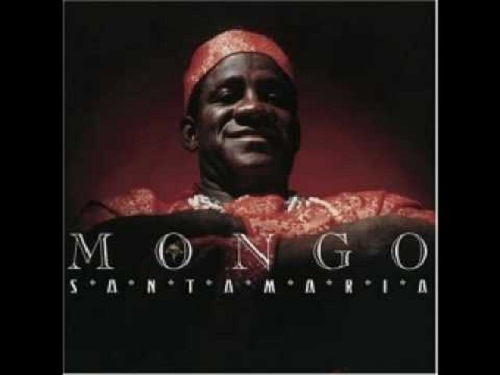
His long recording career (50 albums), testifies to the musical activity that this great percussionist carried out throughout his professional career. He worked with American jazz legends such as Chick Corea, Herbie Hancock, flutist Hubert Maws, Dizzy Gillespie, trumpeter Marty Seller, among other musicians who today still pay tribute to this Cuban conguero who was the architect of the fusion of rhythm & blues rhythms and Afro-Cuban music, recognized the connection of Cuban music to African roots and placed the congas in an indispensable instrument for the determination of Latin jazz.

In 1977 Mongo Santamaría received the American Grammy Award for “Best Latin Recording” for the work Dawn.

In 1999, Rhyno Record Company, based in Los Angeles, California, recognizing his contribution to Latin Jazz, released the “box set” (CD) Skin On Skin: The Mongo Santamaría Anthology (1958-1995), which includes 34 of his most successful pieces (from his rumba albums, his LP with La Lupe and his projects in the fusion of Jazz and Latin) and an extraordinary literature about his career written by actor Andy García, musician Poncho Sánchez and other connoisseurs of the Latin Jazz genre such as José Rizo, Luis Tamargo, Joel Dorn and Miles Pelich.

The legendary musician was extremely honored and grateful for the distinction Rhyno gave him by introducing this historic anthology to the world. As stated in the conversation with Jaime Torres, Mongo said:

“This is the fruit of many years of work, music made with taste and love.”

May he rest in peace and eternal glory to him.
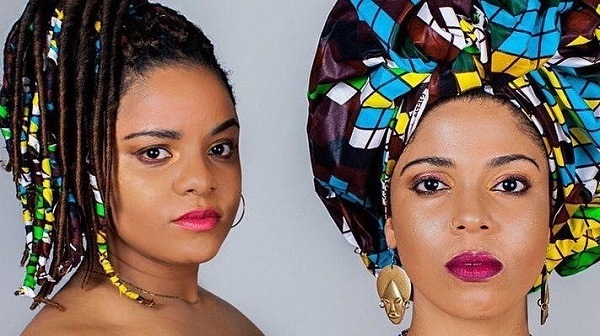
Enriching conversation with Afrocuban music group Okan

Here is the interview

We are here with the Cuban Group Okan whose members, Elizabeth Rodriguez and Magbelis Savigne, are based in Canada. How are you, girls?

All right, thank you very much!

It’s a real pleasure for me to have you here. How’s it going?

We’re doing great and trying to start over after this big break. We are ready to be on tour very soon and do more things.

Elizabeth Rodriguez and Magdelys Savigne, members of the group Okan

Where is the name Okan coming from?

We wanted a name that had something to do with our Afro-Cuban roots, so we were doing some research on the closest thing to what we wanted. So, Okan comes from the Afro-Cuban dialect meaning heart. Elizabeth’s saint’s name is Okantomi which means Heart of Oshún, so we thought that sounded perfect for the kind of music we make that comes from our heart. We wanted to pay homage with that and have a name that Canadians could easily use. There have always been problems with the band’s name because they didn’t know how to say it, so Okan seemed to us the most appropriate.

In your music, the essence of Cuba stands out over everything else, but I imagine that your songs are also a mix of what you have learned since you left your country.

Yes, definitely. We have understood and learned that Cuban music is very good, but there are also many other things in the world. Living in Toronto has helped us to see how diverse music is and how similar it is to Brazilian or Turkish music, so you can say that we are influenced by different cultures and try to make music from the heart, from what we learned and from what surrounds us. In that sense, Toronto has many things to take advantage of

Which foreign rhythms have you been including in your work?

In addition to Cuban rhythms, we have also included Brazilian rhythms. We love Brazilian music and have a great love for Brazil – we include classical music genres as well because the two studied classical music in Cuba, so we are also influenced by that. Our next album is going to have a bit of Afrobeat, so it will be a bit more commercial than what we’ve done at the moment.

Living in Toronto helped Elizabeth and Magdelys to see how diverse music is

What did Jane Bunnet mean to you and other artists of your kind?

For us, she represented the opportunity to be able to go to festivals and learn more about the business. Of course, we learned by ourselves, since she taught us nothing. However, those tours gave us a lot of experience. The most important thing about playing with Jane Bunnet was to have gained experience and participated in important events we would’t have attended on our own. I think the most important thing was being able to achieve so much on our own and to play Afro-Cuban music representing the Afro-Cuban race and culture

Future genres

Are there any rhythms or genres that you don’t like or haven’t tried?

One of the songs on our next album is influenced by the rock of the 60’s because we like it a lot. Right now, there is some kind of Cuban reggaeton that has become very popular, but we haven’t done anything with that urban genre. We don’t really listen to the latest kind of reggaeton, so we prefer Afrobeat. We don’t say we’ll never do it, but we have to find some exponent of the genre who knows more about it to inform us. We have done some collaborations with Lido Pimiento and Bomba Estéreo.

We want to recover old Cuban genres that many people don’t know, which is why we have sung mozambique, pilón, changüI, among others. Cuban music is very broad and we got a long way to go in that regard.

I have noticed that the coloring is very important for you and this can be seen in your album covers and outfits, which are very colorful. What do you want to reflect with that?

What happens here is that clothes are super boring (chuckles) because many people dress in black or gray. In contrast, in Cuba and Latin America in general, people have always worn much more colorful clothes and we took that. Also, we met a Nigerian designer, who is the one who makes our clothes and outfits; besides, our Afro-Cuban roots also come from Nigeria, so we wear those clothes in honor of our ancestors. At first, we were doing this because it looked nice, but then people started asking why we did it, so it’s part of us now.

The coloring is very important for Okan

What reaction does the Canadian public to your outfits and music?

For the most part, the reaction is very positive. Many people say they came back to life when they hear us sing. We met a Cuban woman who had many years without going to Cuba and was very excited to hear us and that made us very happy because that’s the reason why we make music. Even though Canadians don’t understand the language, they like it because they see the chemistry between us and the musicians. People can see that and connect to us, even if they don’t understand the lyrics.

What have been the biggest obstacles you have had to face as immigrant artists?

The first problem is that people in this part of the world don’t respect the music done by professional musicians as much as they should although everyone consumes this product. In fact, payments do not correspond to the work done because people think that having a concert is very simple, but that implies a lot of prior preparation, songs written, sound tests, rehearsals, among other things. After all that, they want to pay 100 pesos for a concert. Music is not appreciated as a career and we consider that to be one of the main challenges we have had to face.

The other issue is that we come from a system in which we are not taught how the music business works. Behind it, there is a huge industry and a huge business, so you have to suffer so much to learn it.

Language is another barrier that closes many doors. Our advice to those who hear us is to know that it is possible make a living from music, but you have to speak the language of the country where you are living. You also have to find a good manager who believes in you and in your music; if it is someone born in the country, so much the better.

These girls have to face some obstacles as immigrant artists, but it was all worth it

How do you see the role of the internet in music?

We believe that excess is bad. It’s not fair what Spotify and other digital platforms pay, but you also have to understand that your music gains access to a larger audience. We’ve heard of people listening to us from Russia, Poland, Brazil, Colombia, Puerto Rico, Australia and many more countries. You have to see the positive part and understand that you can reach audiences from anywhere in the world. We can’t view the internet as an enemy, but as a tool and an advantage; it has its negative aspects, but many positive things.

What will be the name of your new album?

The name of our new album will be Okantomi, Elizabeth’s saint’s name and each track will be very different from the other one in terms of rhythms. We will have many guest artists and a super special song dedicated to Cuba in relation to the current situation, but seen from the point of view of Cubans in exiles. It will be called No volví. 

Occupations when you are away from the stage

We give music, violin, singing and piano lessons.

Incredible conversation with Felipe Martínez about his career in the SF Bay Area

Here is the conversation 

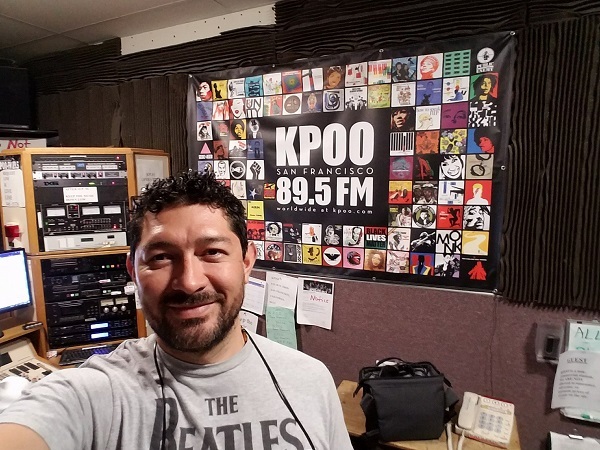
We are here with Felipe Martínez. He is a dance instructor, broadcaster and event organizer. Good afternoon, Mr. Martinez, how are you today?

Very good afternoon. Thank you very much for the invitation.

How did you start your way in the world of music? Did you do it in your native Colombia or there in the United States?

It officially started officially here in the United States, but Colombia also played an important role in this process. In my country, I played soccer and many of my football buddies came from the coast or north of Colombia. I am from the center of the country in Bogotá. When it was our turn to meet in the bus that would take us to our place of practice, each one of them carried a cassette tape to listen to salsa or music from the Colombian Caribbean. That is how I was gradually introduced into the world of music and got interested in salsa and Caribbean music, but I grew up listening to rock and pop.

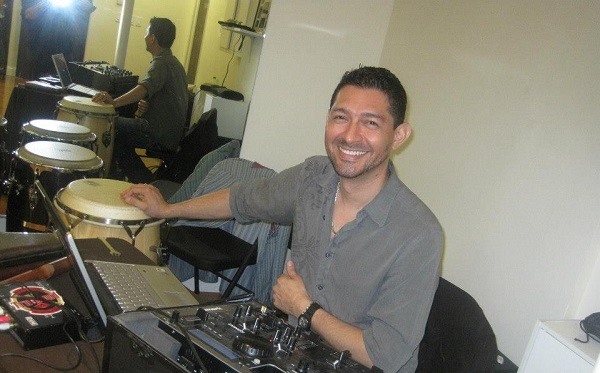
Felipe Martínez in his studio

So, we can say that your taste in music started in Colombia, but you developed professionally in the United States, is that right?

That is correct. When I came to the United States, I started dancing professionally.

You started working as a dance instructor and then as a DJ when you arrived in the United States. Meaning that you had no experience in these things from your country, but you gained it in your new country of residence.

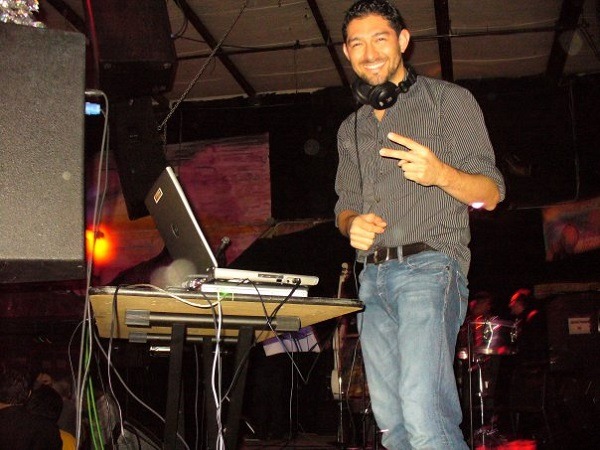
That is right. In the case of locution, I worked as a radio host for about three years in Colombia. I hosted a show with my friends while attending high school, but we were dedicated to rock because it was the genre I listened to the most. When I came to the United States in 1998, I started dancing, working with several dance companies, and studying for a while before I started teaching, so it did not happen immediately. I studied for about four years, and after that, I decided to teach. As for my work as a DJ, that almost happened immediately. In 1999, I started making music in a little club called Café Caracas in Berkley. It was by pure chance because the hired DJ didn’t show up, so the owner of the club asked me to play for a while to cover that space. I replied yes, so I started playing music that night and it all worked out. They proposed me to keep doing it permanently, I accepted and that’s how my career as a DJ began.

Luis Medina told me in his interview that he is sometimes forced to play music he doesn’t really like, but it’s what the public wants. Apart from salsa, what other genres do you play or mix?

Salsa is just a general term for all these rhythms we have. I usually mix salsa with bachata, merengue or cha cha chá. However, I don’t usually include reggaeton in my repertoire despite its popularity.

Felipe Martínez in his work as a DJ

How World Salsa Radio started

How did World Salsa Radio start? What drove you to found it?

Worldsalsaradio.com (www.worldsalsaradio.com) started as an adventure alongside a friend at another radio station. The main idea was to educate listeners about the history of records and what they include such as singers, artists, musicians, etcetera. These days, you buy an MP3, but all you can see is the name of the song and the picture, so you lose all the album information such as credits, recording place, among other details.

In my travels around the world, I have known many DJs, whom I contacted when this project started to get them to this station to do shows. Remember that the main objective was to educate the public, then, the guy with whom we started the station took a different path because we had artistic differences, so we decided to separate.

That’s how World Salsa Radio started. During the pandemic in 2020, I was here at home for about three or four months arranging everything. I invited two other friends from the Bay Area, one of them was DJ Orlando Felix, DJ Boricua, and Ivette Fuentes, DJ La Coqui. The three of us started shaping the idea of World Salsa Radio with the same goal of educating as in the beginning. I take care of all the technical part, invite DJs to play, teach them to use the software and tell them what to say. We are already 27 DJs from all over the world and, at the moment, DJ Boricua and I are the ones who run the station.

Indeed, you have DJs from the five continents. How did you manage to unite them all in the same project?

I think the idea that brings us together is the goal of educating the public that listens to us. We want to play great music, but we also want to educate people about what we play. This is something that attracks music collectors because all that information is being lost due to the digital age. I know many who are on World Salsa Radio in person, but I heard the rest of them by other means such as a Facebook Live or YouTube. I contact the ones I like, we exchange ideas and it is explained to them what they should do.

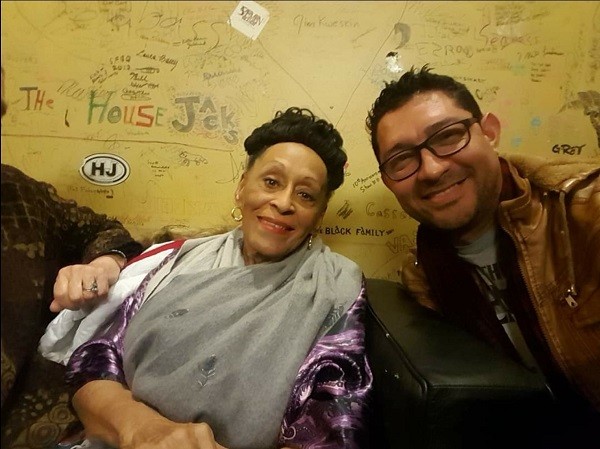
Cuban singer Omara Portuondo and Felipe Martínez

What have been the most noticeable differences in the team?

Each DJ has a different style. We all have a different style even though we are playing Afro-Latin music. Everything played here in California is very different from everything played in Lithuania. Although we all collect the same music, everyone plays it differently.

How dod the public receive World Salsa Radio?

At first, the audicence reception was very small. The first month, we had barely 300 listeners, but we have a very large group of listeners who stay tuned to us despite the time. There are about 100 listeners who are permanently connected with us. We started the project during the pandemic, which was very good for us because everyone was home. So, people who enjoy this music, dancers or musicians listened to our shows on a recurring basis. Two years later, there are already 16,000 people who tune us in every month.

There are many people supporting us without any profit motive because we do this for free. No one is paying us to move the project forward, so we are financed by donations. We also have great support on the advertising side, which has helped us grow.

World Salsa Radio is now ruled by Felipe Martínez

As a dancer and instructor, what do you think people are most passionate about in your classes? What rhythms do they enjoy the most?

As to how I teach, I use percussion much. Since I play the conga, I use this tool to give my classes. I try not to give so much importance to numbers. Many instructors use counting to teach their students, but I try to keep out of it and use percussion. For example, I use the clave and the tumbao.

I think this method works best. If you go to a club with an orchestra playing, the singer is not going to be counting on you to dance, he’s going to be focused on making his music and providing entertainment. For the same reason, you must learn to follow the music without counting.

What have you done to balance all your activities in music?

My activities are linked, but they are separated at the same time. My personal projects have nothing to do with World Salsa Radio. However, when an event invites several DJs from the station, the World Salsa Radio logo joins that production. However, I try to take things apart most of the time.

Your pages, social networks and links to financially support the station.

You can find all the information through worldsalsaeradio.com. In the main part, there is a button that says Donations, which takes you to the station’s PayPal account. People can donate whatever they want to help us, but nothing happens if they can’t. In that case, they can spread the word about the station. In that case, they can show what we do through their social networks and give us publicity.

Felipe Martínez does not combine his activities

Facebook: Eldelaclavesf (https://www.facebook.com/EldelaClaveSF)

Instagram: Eldelaclavesf

To speak of Leonardo Ortiz Chacón is to speak of a musical institution of Mexico

Performer of the tres, composer, arranger, music and radio producer, director and founder of Combo Ninguno since 1983.

He studied at the Faculty of Music of the UV, in JAZZUV, in Musinetwork in Boston MA and with teachers Luis Martinez, Carlos Tercero and Edgar Dorantes, he is a teacher of Musical Education in the Ministry of Education of Veracruz and since January 2019 participates in the direction of the Papakilistli Orchestra of the same Secretariat.

He has collaborated in television as musical director of the program “Cómo suena la clave” in TV Más. He is currently producer and host of the program “Cadencia Caribe”.

Since 1983 in Xalapa, the members of Combo perform dance music from the Antilles, integrating a repertoire with their own creations and original arrangements to themes of other authors in different musical genres such as son, guaracha, mambo, merengue, danzón, bolero, etc, achieving in their thematic diversity, a unique sound full of references to their native state of Veracruz.

He has taught workshops of appreciation and execution of Caribbean music and has participated as a lecturer and speaker on this subject in countless events, have been presented in Spain, Cuba, United States and Canada.

Accessing different forums from the small and improvised street space to large venues with capacity for tens of thousands of spectators such as the Azteca stadium or the Salsa Fest in Boca del Rio.

He has performed at prestigious cultural festivals such as the Cervantino, the Quimera, the Afro-Caribbean of Veracruz, the Vancouver Folk Festival and the International of Houston, at Fairs such as the San Marcos and the Expo Sevilla, Carnivals such as the one of Veracruz, Havana and the Mardi Gras in New Orleans and Galveston Texas.

Maestro Leo, how can you define yourself in the music scene?

Leonardo Ortiz Chacón is to speak of a musical institution in Mexico.
Leonardo Ortiz Chacón Tres player, composer, arranger, music and radio producer

I see myself as someone captivated by this music since I heard it for the first time, thanks to it I have been able to enjoy unforgettable moments and for many years I have not had a day in my life without doing something related to music. Be it as a performer, manager, broadcaster, props man, audio manager, producer, etc.

I understand that you have had many presentations abroad?

For me there have been many and I would like to have more. I think I have been fortunate to take advantage of the opportunities that have presented themselves with Combo Ninguno. I must say that personally I would never have been able to be in the places where music has taken me.

As part of your presentations you toured the U.S. How pleasant was the experience?

At one time we participated in a project to promote tourism in the State of Veracruz and we continually visited the State of Texas and then extended to Louisiana and Colorado, thanks to this an American promoter invited us to tour from coast to coast presenting a show of music and dance that began in New Hampshire and continued in New York, Pennsylvania, Illinois and other states to conclude in California after performing in New Mexico and Arizona. The program of the presentations was with original repertoire and Mexican authors.

What did it mean to you to perform for the first time in such a musical country where many great exponents of the island of Cuba came from?tional in 1989 at the Na Theater of Cuba

For me this was one of the memorable moments that I thank to music, the fact of participating with Combo Ninguno in a Gala dedicated to Mexico, in such an important place in Cuba, the country where this music was born.

I tell you that my emotion was so great that at the beginning of our performance, I could not complete the first verse of the song with which we opened, it was El jarocho by Lino Carrillo, I had to sing: Jarocho yo soy señores and I only said Jarocho, the rest was a sort of incomprehensible sounds that I could emit with a lump in my throat.

Have you had an endless number of participations in Cultural Festivals, which is the one that leaves a mark on you in your own country?

I can’t say one in particular, I remember presentations at anti-nuclear rallies where there were children, young people, adults and elderly people that were not festivals strictly speaking, a Cervantino festival where in the middle of a downpour people danced in the Alhóndiga de Granaditas under an impressive downpour, the Festival de la Nueva Canción Mexicana where we performed for the first time in 1983. And I could go on mentioning many more.

How did the Como Suena La Clave Festival come about?

 Combo Ninguno
Combo Ninguno

This festival arises with the intention of being a showcase where to make visible and position the Mexican orchestras with original proposal. Trying to promote, preserve and spread salsa music made in Mexico.

At first the orchestras were invited to play original arrangements of songs by other composers, then they were asked to play music by national composers and nowadays they are asked to play original music complemented of course with songs by national composers.

You don’t stop, you continue harvesting and now the project Coloquio Musical Afroantillano is born, why make this new proposal?

I think that in Mexico little is reflected and little is written about this genre. It seems that when we take the music out of the dance floor, we lose the rhythm and also the step.

For some time now, most of the debates on this subject have taken place backstage and in the places where musicians and some dancers gather to refresh themselves after the events. Recently, social networks have continued with this exercise, I must point out that for decades the main topic to be discussed has been: Does salsa exist or not? Should it be called salsa or son? And I believe that among other issues, we have left aside fundamental matters such as the creative part, the economic aspect and the diffusion.

Based on this consideration and thanks to the support of Rafael Figueroa, the Festival Como suena la clave, the Centro de Estudios de la Cultura y la Comunicación of the Universidad Veracruzana and the Red de estudios de la Música Afroantillana en México convened the Colloquium La música afroantillana en México: confluencias y divergencias where the participants in a framework of cordiality and respect have made valuable contributions that will be included in a report that will be released as a digital multimedia document for free distribution.

Do you think that the music called salsa is evolving worldwide?

I don’t have the slightest doubt about it, just as I don’t hesitate to mention that due to diffusion factors we only know a small part of the new salsa music that is being made in many places and that perhaps most of the music that is more accessible to us on digital platforms is not the best.

Have you experienced the best times in music today, and what do you think is missing?

Among other things, today and always it will be necessary to contribute new music that increases the cultural heritage of this genre. We need to talk about our present without forgetting the past, about our environment and our daily life in a globalized world. We need to speak our own language and disseminate these productions in the best possible way, trying to overcome the reluctance of many towards what is new and what does not come from the places where this music has traditionally been produced.

Already with seventeen record productions, now that you have worked on them, which is the production that has marked the history of Combo Ninguno? What has been the one that has left the greatest mark on you?

Undoubtedly the most significant record production is the first one, in it, as in each of the subsequent ones, our desires and also our possibilities and limitations are recorded musically. The most present record you have now is the one you are making or that you intend to make. Each record becomes a part of your musical history and your own life.

Have I heard salsa with the jalapeño touch mentioned because of that phrase?

In our case it is an advertising phrase that alludes to the hot sauce.  Salsa with jalapeño flavor. Initially it was used for our presentations in the United States where the chili peppers are called jalapeños. Today we use it by writing jalapeños with an x.

Combo None other cultural heritage that we have while we are still alive that you feel after 39 years in the music industry?

I’m looking forward to at least as many more. Looking back I realize that Combo Ninguno became a life project that has filled my days with music, so there will always be little I can do for music.

What do you expect from Leonardo Ortiz Combo Ninguno?

I have two record productions pending with Combo Ninguno, one of them is already quite advanced and I hope to finish both this year. I hope to give continuity to the Festival Como suena la clave and continue participating and enjoying everything that has to do with salsa made in Mexico.

Maestro, what would you like to say goodbye with and what message would you like to leave to the new generations?

I would invite them, besides the musical study, to try to make their contribution and leave their name in the salsa made in Mexico, to document their creativity in our reality and then communicate it in their creations, I would also ask them to debate and collaborate with their colleagues.

DISCOGRAPHY

 In their discographic work we can see a style that can be projected without problems towards the universal, but that does not cease to feed on their own Veracruz identity by offering us a combination of traditional and original pieces that exude Veracruz and Afro-Hispanic Caribbean flavor.

 To date they have made seventeen recordings, seven exclusively of combo none:

– Tumba Verde (1987)

– Traigo este son (1990)

– Son de amor (1994)

– Carnaval Veracruzano (2001)

– Con Sabor a Veracruz (2005)

– La Bruja recorded at the 17th Afro-Caribbean Festival Veracruz 2011 (2012)

– Inventario- Combo Ninguno, of which the singles Descarga de las flores, Calaveritas de Azúcar and Alambre, cuero y madera have been presented.

 And ten productions in which they intervene with other groups:

– Son 13 rolas antinucleares (1989).

– Somos indios (1995)

– Homenaje a Luis Martínez, recorded live at Barlovento de Xalapa in the 1st.

Festival Como Suena la Clave 1997 (1998)

– Tribute to Carlos Pitalúa, recorded live at Barlovento de Xalapa in the 2nd Festival Como Suena la Clave 1998 (1998).

Festival Como Suena la Clave 1998 (1999)

– From Son to Danzón (2000)

– Tribute to Emilio Domínguez, recorded live at Barlovento de Xalapa in the 3rd Festival Como Suena la Clave 1998 (2000)

3rd Festival Como Suena la Clave 2004 (2010)

– Con sabor a Veracruz-RTV music (2012)

– Tribute to Toña la Negra, a recording that records the V Festival Como Suena la Clave

Clave Festival held in Veracruz, Veracruz, Ver (2013)

– Salsa a la veracruzana, recording of the VI Festival Como Suena la Clave held in Veracruz, Veracruz, Veracruz, Veracruz (2015).

Veracruz, Ver (2015)

– Al Son del Covid, record of the VII Festival Como Suena la Clave held in Veracruz, Veracruz, Veracruz (2015).

virtual way in December 2020.

Erika Muñoz (La Mulata Rumbera)

Article of Interest: Maestro Jorge Anselmo Barrientos Silva, conductor, arranger and composer

Pedro González

Musician, Instructor, And Pioneer Of Salsa Casino In Venezuela

Pedro González dressed in white playing the bass
“I always had the connection to music, and today, I still have two congas. Sometimes I play them during classes.” Pedro González

“If people dedicate themselves to this, it is because we are doing it well.” This nice phrase arose from the pleasant and attractive telephone conversation about the history of the pioneer of Salsa Casino in Venezuela, the charismatic Cuban-Venezuelan musician and instructor Pedro González.

This affable musician and Salsa Casino instructor told us that he carved out his career from a very young age. He was born in Havana (Cuba) in 1966 and began his musical studies at the National School of Arts in the Havana capital at the age of ten, graduating in the specialty of Guitar (Short Course of 8 years) in 1984.

He comes from a musical family, his grandmother was the soprano Rosa “La China” and his mother (teacher and school principal) Zoe Portuondo Suarez, a distant relative of the singer Omara Portuondo.

“…Since I was little I liked to dance, I would dance everywhere. I learned with my cousin… I went to places like Playa… Besides, my mother danced a lot and my grandmother was a singer and she was also linked to the world of art…” Pedro commented.

His first job was as a music teacher in the Pinar del Río city, three hours from Havana. A short time later, he joins the Caranday group, and they play Son Cubano every night at the luxurious Hotel Nacional De Cuba.

After 45 days from his first presentation with the group, they meet the Venezuelan businessman Martín Gutiérrez, who takes them to Venezuela in 1993 to perform at private parties in the Falcón state.

Due to the few opportunities he had in Cuba, he decided to stay in Venezuela and formed the Latino Son band, made up of four Cuban musicians, and in turn began to be members of the Tropicana-style Cuban Fiesta Magazine (Show with a range of musical genres, interaction with guest singers, and dancers) in nightclubs of the Capital.

In Moments of pause with the musical magazine (1997), he undertook a tour with the Latino Son group with whom he traveled for almost all of Venezuela and toured the main stages of large national festivals such as La Feria del Sol (Mérida), Feria de San Sebastián (San Cristóbal), and La Feria de la Chinita (Zulia) among many others.

“We played permanently at La Giralda… At La Giralda we organized a party playing the Cuban Timba, then, there they called us “The Cuban Orchestra” in 1996, 1997, and 1998…”

During the ’90s and already residing in Venezuela, Pedro became the first Salsa Casino instructor in Venezuela without planning it as a life plan, and in 2000 he founded his homonymous academy that has graduated thousands of fans of this style of salsa dance.

Dancing is one thing that keeps you active. That is good for the body. If you have a problem in two hours or an hour and a half dancing you forget it. For my part, I like to teach… And, I like people to have fun.” Pedro González

History And Evolution Of The Academy Dance

Pedro González with burgundy flannel and four women on the sides
Pedro González is the President of the Salsa Casino Organization in Venezuela

One night at the end of the 90s, Pedro along with his friend Milan (Medical and Countryman) began to remember the Dance of the Casino in La Giralda (old venue to listen to live music and enjoy various drinks on the Boulevard de Sábana Grande – Caracas) after his customary presentation with the Latino Son group.

Both began to stand out on the dance floor with the genre of La Timba and for a way of dancing Salsa different from the one practiced in Venezuela. “We began to dance with two Venezuelan girls in the Rueda style (which was not a Rueda because there must be 3 couples)… I began to say Milan “Give me one”, “Plugin”, “The Hat”, and we began to dance the Casino Style”. Pedro “El Cubano” told us between laughs during the interview.

The two ladies were so impressed by that way of dancing that they did not hesitate for a moment to ask Pedro for dance lessons. After so much insistence, “El Cubano” agreed for the first time to give Salsa Casino classes in the capital of Venezuela in an improvised and reduced space with his first five couples. “I am from the Cerro municipality, which is the closest to Old Havana. I used to go to Playa (Municipality of Havana) a lot to dance and I learned many dances and turns…”

And so Salsa Casino began spontaneously in 1999. By the following year (2000), Pedro had 20 couples and a larger room to teach.

The evolution of him in his rise during this year was impressive. Due to the influx of students, he began to teach in the blue auditorium of the Faculty of Economic and Social Sciences (Faces) of the most prestigious University in the country, the Central University of Venezuela (UCV) through Reinaldo Mijares, Director, and choreographer of the contemporary dance “Mudanza” attached to this institution and where González assures that this movement grows.

From there, he gave way to the Casa Monagas club, a place located in the Las Acacias sector (west of Caracas) behind the UCV with the capacity to hold up to 1,000 people. Here, Pedro’s students had more space to rehearse, and Salsa Casino Parties began to be organized monthly.

Pedro González with a blue shirt dancing with two women
Dance academies in Venezuela were teaching Puerto Rican Salsa Style in the year 2000

With this overwhelming success, the creation of the Academia Salsa Casino in Caracas was imminent. It had massive attendance, national impact with graduate students, and attendance at national and international festivals such as Curacao Salsa Tour, Festivals in Cuba, and an amazing show at the Amador Bendayán Theater.

With more than 20 years of teaching Salsa lessons, Pedro has graduated more than 2000 students and changed its name to Academia Pedro González. It currently has five locations: Sábana Grande (main location), Chacaíto, San Antonio de los Altos (Los Teques), Capitolio, and El Cafetal.

The classes are aimed at children and adults. The call is open, so you can sign up without a partner and don’t worry because the essence of the Rueda remains. The estimated graduation time is three years with four basic levels, four intermediate levels, six advanced levels, you will also receive a triple casino level, two dance technique levels, and to complete the process a final choreographic exam is done.

Every dance lesson is fun because of Pedro’s ability to teach. The names of each step such as “Pégale un Cacho” are adapted to the colloquial vocabulary of the Venezuelan so that it is easy and fast to learn.

Due to Covid-19, the Pedro González Academy makes the use of the mask and antibacterial gel an essential requirement for permanence within the institution, as well as reducing the maximum number of couples per level to only ten.

Vanessa Lovera y sus amigas vestidas de negro
Vanessa Lovera (Left) accompanied by two Salsa Casino dancers at the Caracas Carnival party

At the main headquarters, there are four instructors. One of them is Vanessa Lovera, a graduate instructor from the academy. For Pedro, she has been unconditional support in difficult moments of the institution. Vanessa teaches Salsa Casino and Ballroom Dance. You can also find her at the El Cafetal headquarters, but if you prefer the main headquarters, the address is as follows: Sábana Grande Boulevard, Fénix building, 5th floor, next to the Gran Café.

For this 2022 and if there is a return to normality, the Cuban instructor and musician residing in Venezuela hopes to resume the lost spaces in Caracas such as discos, nightclubs, presentations in theaters, once again hold large Salsa Casino parties in large rooms, the return of national competitions, and the continuation of the training of instructors in person (it is only online currently).

Casino Dance Or Salsa Casino?

Club Casino Deportivo in Havana, Cuba
Club Casino Deportivo no longer exists. Nowadays only the sports fields were preserved of this infrastructure.

According to the friendly instructor Pedro González, the origin of Salsa Casino on the island of Cuba has a unique story that begins like this…

Since 1956 numerous Cuban orchestras have been registered that played very popular and contagious musical genres such as Cha Cha Cha, Guaracha, Mambo, and Son. Rhythms that invited the young inhabitants of Cuba of this time to just want to dance and have fun all night with these melodies, but they not only wanted to do it with their partners but also with those of their friends, acquaintances, and strangers. However, for this decade that was not allowed because the rules of the strict and conservative society dictated it.

In this way and with the pursuit of that goal, the gentlemen created this style of dance. A style that did not require constant practice and where partners could be exchanged using keywords such as “Plugin” to perform the movement and for the theory to be carried out perfectly without altering society. The place where this event was recorded was Casino Deportivo, a private summer vacation club located in the Miramar residential area in Havana.

“We (in Venezuela) call it Salsa Casino because it is the commercial name already used in the United States. In Europe they call it Salsa Cubana, but the original name is Baile Del Casino”. Pedro Gonzalez

That is why at the end of 1950 this style of dance began to be generated that people internationally associate with the style of gambling performed in a Casino because it is a dance in Rueda.

The popular expression of most people in Cuba every time they saw this peculiar way of dancing was to say “Ah! But you are dancing like the people of the Casino (Casino Deportivo Club)” that each day was shortening the expression until reaching the Baile Del Casino.

The peculiarity of this dance style is that it does not have a musical genre, that is, no melody that identifies it. For example, a Danzón is danced with the music of the Danzón, the same happens with the Cha Cha Cha, Mambo, Son, and Bolero. There is no rhythm called Casino, therefore this style acclaimed in the world and preferred by Cubans began with the music that existed in this glorious decade of the ’50s.

  • You Can Also Read: Sidney Poitier

  • « Go to Previous Page
  • Page 1
  • Interim pages omitted …
  • Page 47
  • Page 48
  • Page 49
  • Page 50
  • Page 51
  • Interim pages omitted …
  • Page 62
  • Go to Next Page »

International Salsa Magazine (ISM) is a monthly publication about Salsa activities around the world, that has been publishing since 2007. It is a world network of volunteers coordinated by ISM Magazine. We are working to strengthen all the events by working together.