• Skip to primary navigation
  • Skip to main content

International Salsa Magazine

  • HOME
  • Previous editions
    • 2026
      • ISM / April 2026
      • ISM / March 2026
      • ISM / February 2026
      • ISM / January 2026
    • 2025
      • ISM / December 2025
      • ISM / November 2025
      • ISM / October 2025
      • ISM / September 2025
      • ISM / August 2025
      • ISM / July 2025
      • ISM / June 2025
      • ISM / May2025
      • ISM / April 2025
      • ISM / March 2025
      • ISM / February 2025
      • ISM / January 2025
    • 2024
      • ISM / December 2024
      • ISM / November 2024
      • ISM / October 2024
      • ISM / September 2024
      • ISM / August 2024
      • ISM / July 2024
      • ISM / June 2024
      • ISM / May 2024
      • ISM / April 2024
      • ISM / March 2024
      • ISM / February 2024
      • ISM / January 2024
    • 2023
      • ISM / December 2023
      • ISM / November 2023
      • ISM / October 2023
      • ISM – September 2023
      • ISM – August 2023
      • ISM July 2023
      • ISM Edition June 2023
      • ISM – May 2023
      • ISM April 2023
      • ISM March 2023
      • ISM February 2023
      • ISM January 2023
    • 2022
      • ISM December 2022
      • ISM November 2022
      • ISM October 2022
      • ISM September 2022
      • ISM August 2022
      • ISM July 2022
      • ISM June 2022
      • ISM May 2022
      • ISM February 2022
      • ISM January 2022
    • 2021
      • ISM December 2021
      • ISM November 2021
      • ISM October – 2021
      • ISM September 2021
      • ISM August 2021
      • ISM July 2021
      • ISM May 2021
      • ISM April 2021
      • ISM June 2021
      • ISM March 2021
      • ISM February 2021
      • ISM January 2021
    • 2020
      • ISM December 2020
      • ISM November 2020
      • ISM October 2020
      • ISM September 2020
      • ISM August 2020
      • ISM July 2020
      • ISM June 2020
      • ISM May 2020
      • ISM April 2020
      • ISM March 2020
      • ISM February 2020
      • ISM January 2020
    • 2019
      • ISM December 2019
      • ISM November 2019
      • ISM October 2019
      • ISM Septembre 2019
      • ISM August 2019
      • ISM July 2019
      • ISM June 2019
  • Spanish
  • Download Salsa App
    • Android
    • Apple

Search Results for: Latin genres

Once again, maestro Bobby Valentín delivers a very daring and innovative musical theme

While it is true that salsa is very much alive, it is also true that it has been enriched through fusions and transformations.  Of course, this is not the first time we see that the salsa sound is transformed to give way to increasingly daring musical themes.   

I’ve said it before and I’ll say it again: “I’m glad there are collaborations where the wallet of other sounds invests in producing music that I enjoy.  Note that the only music I enjoy with the passion I enjoy nothing else is salsa.  This salsa I’m talking about also includes fusions and other inventions, as long as I like them.”

Well, let’s get to the mambo….

During the “Tropical Music Festival” I was backstage and was able to share with the musicians before and after their performances.  That privilege gave me the opportunity to talk to them about their projects, among other things.  On a side note, Oria Rivera graciously let me know about the release that same day of Bobby Valentin’s latest single.  As soon as I got home I listened to the song via You Tube.

Once again, maestro Valentín delivers a very daring and innovative song. I know that “chinchas” are going to fall on me as usual; but without being repetitive, you know that I am one of those who believe that Valentin is never wrong. 
Let’s establish that boogaloo or bugaloo is a Latin music and dance genre that was popular in the United States in the 1960s. It originated in New York City, mainly among Hispanic and Latin American teenagers. The style was a fusion of popular African-American rhythm and blues (R&B), in turn combining soul music with mambo and son montuno.

In the 1950s and 1960s, African Americans in the United States listened to various styles of music, including jump blues, R&B and doo-wop. Latinos in New York City shared those tastes, but also listened to genres such as mambo and cha-cha-chá. There was a mix of Puerto Ricans, Cubans and African-Americans in clubs, whose groups tried to find common musical ground. In the end, boogaloo or bugaloo was the common musical ground, a fusion of many styles cooking American son montuno, guaguancó, guajira, guaracha, mambo, R&B and soul on the same stove.  That must have been the reason why the boogaloo or bugalú allowed Spanish and English on equal terms.

As you can see, fusions are not a recent fad.

Well then.  The time has come to tell you what my salsa ears have heard, since there will be those who say that this is not a salsa song.  Well, the truth of the matter is that it is not suitable for salseros without musical appreciation skills.

From the first bars of this song, Bobby Valentín’s musical arrangement highlights the bass, accompanied by trumpets and saxophones in an arrangement that sounds great.  In the first thirty seconds of the song you can appreciate the vocal part of the composer -Bobby Valentín- ultra well accompanied by his most recent acquisition for the front of his orchestra: Leró Martínez. And for the most skeptical, Bobby and Leró sing in impeccable English.

The song is perfect, since in three minutes it opens up a range of musical possibilities in “English without barriers”.  Despite the brevity of the song, it lacks nothing.  Nor does it feel or sound like musical creativity was curtailed by trying to shorten the time.  The track flows naturally from the prelude, to the mambo, to the closing. At one and a half minutes, the saxophones provide the melody and the trumpets the breaks.  At the fiftieth minute, the trumpets play challenging the rhythm section, formed by:  Victor Roque on the tumbadoras, Kevin Vega on the timbal and Javier Oquendo on the bongo. Ceferino Cabán’s piano complements the “king’s” bass in a masterful way.

Shortly after the second minute (2.19), Victor “Yuca” Maldonado’s baritone saxophone sets the stage for Julito Alvarado and Angie Machado’s trumpets to firmly establish their presence.  This second minute also highlights the dynamism of the trombone by Eliut Cintrón. Let’s not forget that the composer, arranger, producer and bassist of this song was a trumpet player in his beginnings. At exactly 2.40 the bass takes command of the orchestra with more forcefulness, melodically allying itself with the sound of the trumpets and saxophones. Well into the second minute (2.44) the electric guitar in command of Javier Perez begins a correspondence with the bass, which is maintained until the closing of the song.

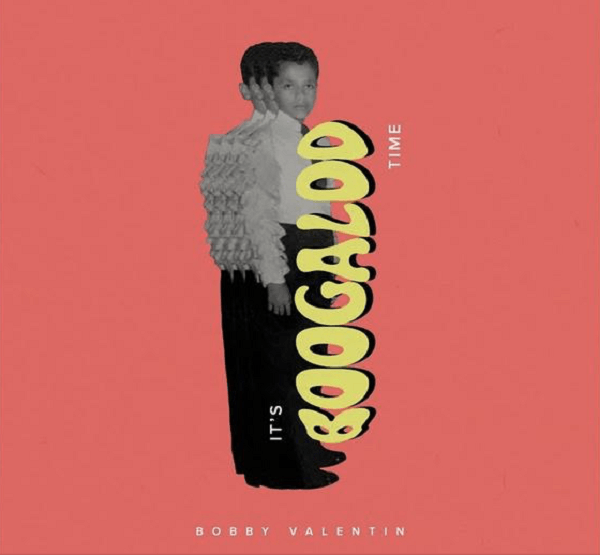
As for the cover art, it features a childish Bobby Valentine dressed as a musical celebrity.  The boy wears dark pants and a white shirt with those stylish puffed sleeves that scream mambo.  The title letters, which read It’s Boogaloo time are superimposed over the child’s image.  The style of the yellow letters that inscribe the word Boogaloo over the image described above make me imagine letters in some liquid material. The composition of the artwork rests on a rather garish salmon-colored background. According to the credits, both the graphic design and art direction were created by Orialis Valentin. Brava!

If you are one of those who say you are tired of the same old same old, I challenge you to listen to this gem, just as I recommended El Twist a while back. 
Salsa lives! I hope I have dispelled your doubts, if you had any.  If you still have any doubts, I confirm that you are not ready for this salsa conversation.

Musical Director: Bobby Valentín

Audio Recording & Mixing: Play Bach Studio

Engineer Carlitos Velázquez and Ramón Martínez

Mastering: WAVEM Acoustic LLC; Eduardo Ramos

Producer: Bobby Valentín

© 2022, Bronco Records, Inc. (Artist: Bobby Valentín)
Sr Ortegón is a big success in Hollywood

Our nice talk

Good afternoon, we have here José Miguel Ortegón. He is a music producer, composer, DJ and violinist. Pleasure to meet you, Mr. Ortegón, how are you feeling?

I’m fine. Thank you very much for the invitation.

Your name is José Miguel Ortegón, but you are known as Sr Ortegón in artistic circles. Why?

I think that is a cultural tradition in the Hispanic world. Men are always called by their last name. That was natural and came spontaneously. Taking advantage of that señor is a Latin cliché, it was perfect for the work I was doing.

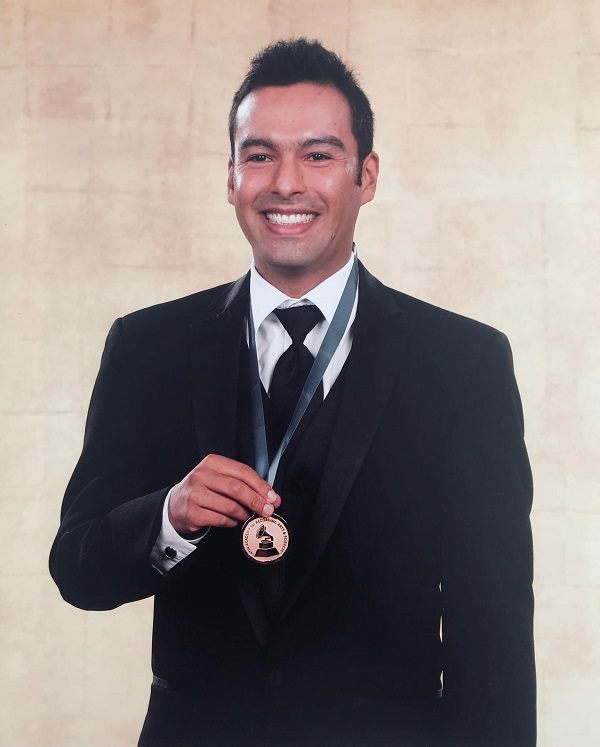
José Miguel Ortegón at the Latin Grammys

What was your first approach to the entertainment world?

I started recording with Guayacán, which is a salsa orchestra from Cali, Colombia. I received a lot of help from maestro Zumaque, who is a musician that does contemporary and classical fusion with Latin American rhythms. This was during my teens.

Then, you ventured into other facets, correct?

That’s correct. I started studying music at the conservatory when I was five years old and was in some rock bands. You know that our culture is divided into two musical styles in Latin America, which are classical and popular music. My first professional recordings came with the first computer we had at home as well as most of my generation. When the first computers came to our homes, the concept of music also changed.

How did you go from playing rock and classical rhythms to boogaloo and urban rhythms? How was that transition?

Cali has always been very linked to pachanga, boogaloo and charanga. Rock comes from blues and boogaloo is more or less part of the same trend, so it’s not uncommon for rockers to want to experiment with those rhythms I mentioned at the beginning. I also had teachers at the conservatory who taught classical music during the day, but played with professional orchestras at night. For me, that transition is inevitable.

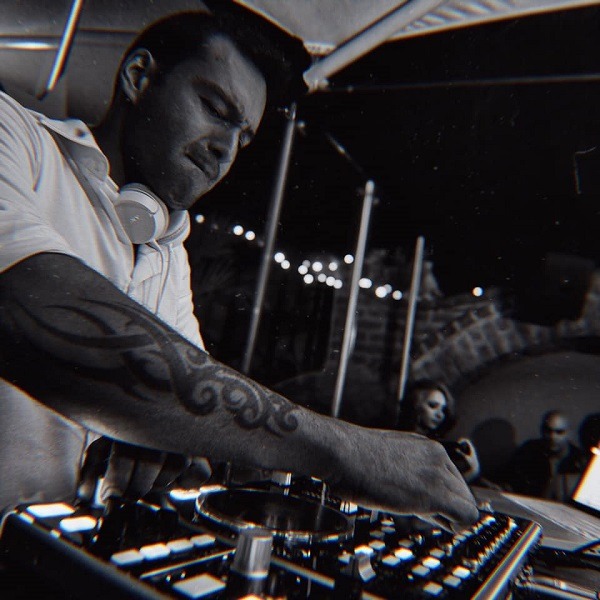
Sr Ortegón doing his job as a DJ

You have created music for series, movies, digital platforms, Disney, Netflix, animated series, etc. Did you think your career would go that far?

Thank you for your words. I make music. I have the same worry since I started in this world, I think I still have a lot to learn and maturing ideas, The truth is I never imagined it. I simply took the opportunity before me in Europe, where I was studying musicology at the Sorbonne. It is true that Latin music is very exotic there because there are not many Latin composers and producers.

At university, I got a chance to make music for a television channel. Subsequently, there was a snowball effect, a colleague who is now working in Hollywood contacted me for one of those jobs and that was my big opportunity. When I got the script, it was a Dominican series, which made me immediately discard salsa and mariachis. I thought about using bachata or something that really belonged to the Dominican Republic.

When you talk about Hollywood, it should be emphasized that there are several generations of Latinos born in the United States of any origin. A Cuban knows that a ranchera is not Cuban but from Mexico. Such a thing happenned a lot in the industry in previous years. The same rhythms and mixes were always used regardless of the Latin country involved in a production like, for example, West Side Story. I love that movie and think it’s excellent, but the music they used doesn’t sound Puerto Rican at all. That’s why I thought I should take this opportunity to respect the rhythms and traditions of each country. I know we all speak Spanish but each country has its own identity, so I respectfully take each rhythm and use it to make it authentic.

Latin music in Hollywood

When you did music for any series or film, were you given parameters to follow or did you have to be free to experiment with your music?

That’s one of the best questions I’ve ever been asked because the vast majority of producers are American and not connected with Latin culture, so salsa and merengue are the same for them. I just tell them to trust me, send me some samples to guide me, we analyze everything and move on. If the director or the editor doesn’t like what I did, we reach an agreement. Nowadays, this process is easier because there is more musical and cultural education on the part of the producers in the United States.

Sr Ortegón at the party in the Jetset Magazine

You were nominated for a Latin Grammy thanks to a mix of boogaloo and urban rhythms that you made. How did you think of it?

I’m 40 years old, so I spent my adolescence at the time when Californian hip hop was in full swing. Cali is one of the most Americanized cities in Colombia, so you were always listening to all those American groups and songs. Mixing all those rhythms with boogaloo has always seemed very interesting to me and I had no idea how to do that until I learned.

Since a mix between hip hop and Latin music is complex to make, a lot of people gsurrended and opted for reggaeton as culture. There are other groups such as Control Machete that have done an excellent job, but I felt they were lacking something. That’s how I started to learn, but it took me a long time because of lack of resources, since I didn’t have the right elements to respect the codes. So, I did a boogaloo song and a hip hop beat to mix them, which made me realize that they are sister rhythms. This work was very popular and even appeared in series and movies.

In fact, I heard about you from an email that included your new album entitled Latin Boogaloo Volume 2. I also listened to Volumen 1 and noticed the difference. What is the main difference between one volume and the other?

Volume 1 includes what I called Boogaflow, which is boogaloo with flow. Volume 2 is pure boogaloo. I tell you this because, for example, salsa is a term, but it’s really Afro-Cuban music made by Nuyoricans in New York if we go back to basics. Prior to that New York sound known as salsa, there was that phenomenon called boogaloo, shingaling or Latin soul.

I had to listen to disco to get to those rhythms because nobody teaches you anything about those genres. Unfortunately, those who created those rhythms are already dead or doing other things like Joe Cuba, Jimmy Sabater, the people from Sexta All Stars, Eddie Pamieri, Ray Barreto and many others. That fashion lasted about six or seven years and that was that. Every time I go to create a boogaloo, I have to listen very well because there are no scores or models to follow. Poncho Sanchez is one of the few who brings up the torch of that sound, although he is inclined more to Latin jazz.

I wanted to do a boogaflow, but my editor David Santiago proposed to me that we make two versions, one boogaloo version and the a little more acoustic one. What we were looking for was to please both audiences, the one who wants something urban and the one that wants something classic.

Which of the two volumes was more successful?

I know you have the answer (laughs). Volume 2 was the most successful. Number one has put me in touch with my salsa friends, but I didn’t want to tell them that I was going to make a volume two because boogaloo is not a very common rhythm.

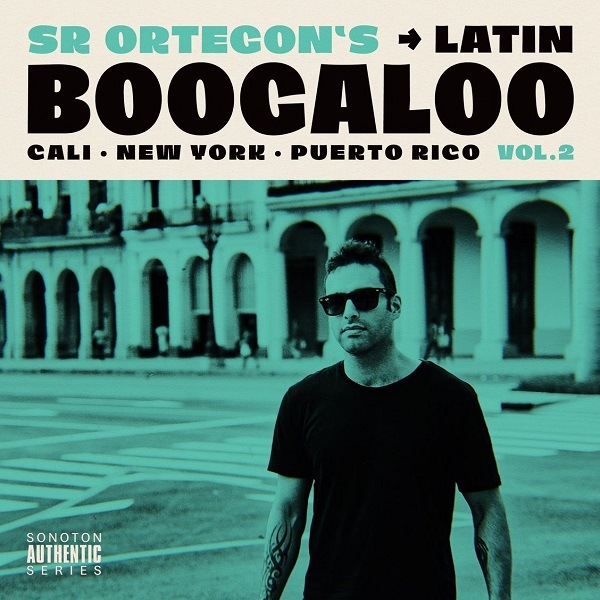
Cover of the album Latin Boogaloo Vol. 2

La Muñeca de La Salsa is here with us again

La Muñeca de La Salsa or La Chica del Bling

For the second time, we have here Puerto Rican artist Almodovar. She is a salsa singer and other genres, composer and dancer. Pleasure to meet you, Melina, how are you doing? Glad to have you here.

Thank you, Karina. Thank you for the time and I’m super pumped to be here with you for international salsa magazine (laughs).

Melina Almodóvar is a salsa singer, composer, and dancer

Why do they call you La Muñeca de la Salsa or La Chica del Bling?

La Chica del Bling comes from maestro Bobby Cruz, who did a song with me in 2016. We made a recording that was called Salsa Factory Bunch. He wrote that song specifically for me, which was called El Bling. That’s how he starts calling me La Chica del Bling and, as there are so many people who know the trajectory of Mr. Bobby Cruz, those who know that he wrote the song for me identify me as La Chica del Bling. That is something very special for me, since he is one of my salsa icons from day one.

In the case of La Muñeca de La Salsa, when I moved here to Miami, I was looking for a nickname similar to El Caballero de La Salsa or El Niño Bonito de La Salsa. Seeing how my name is like that of another renowned singer in Puerto Rico Melina Leon, I wanted to find another name that would identify me and noticed that many Latino men called me muñeca (doll in English). That’s how I came up with the name La Muñeca de La Salsa.

Your family has always been closely related to arts. Your father was a singer, your mother was a dancer and your grandmother was an artisan. What did you get from each of them?

That’s an excellent question. I’m often asked that, but not that way. My dad was a bolero singer and like ballads and old music like Camilo Sesto, and it was thanks to one of his songs that I was named Melina. He also liked Marco Antonio Muñiz and all the singers from that era. He would go to bars to sing until five in the morning and he used to take me to these gatherings in Puerto Rico. He always had his guitar in his car and was invited to parties to sing because he did it for free.

My mom was a flamenco dancer, she studied dance all her life and wanted me to dance too. So, she put me in jazz ballet classes since I was little. I studied with a lady whose name was Sophy Sanfiorenzo, who was also Chayanne, Ricky Martin, and Los Menudo’s teacher of that time. She was very well known in the city of Bayamón, Puerto Rico. Dancing was something secondary for me, but my mom wanted me to take it more seriously. At the end, we made a deal and agreed that I would study salsa and Caribbean dancing.

My grandmother always wanted me to be an artist and pushed me to be what I am today. She does a lot of crafts such as sculptures and paintings. I didn’t inherit those skills (laughs). My aunt is an architect and also paints very well, while another aunt is also very good with crafts. My family is very artistic and I followed that road.

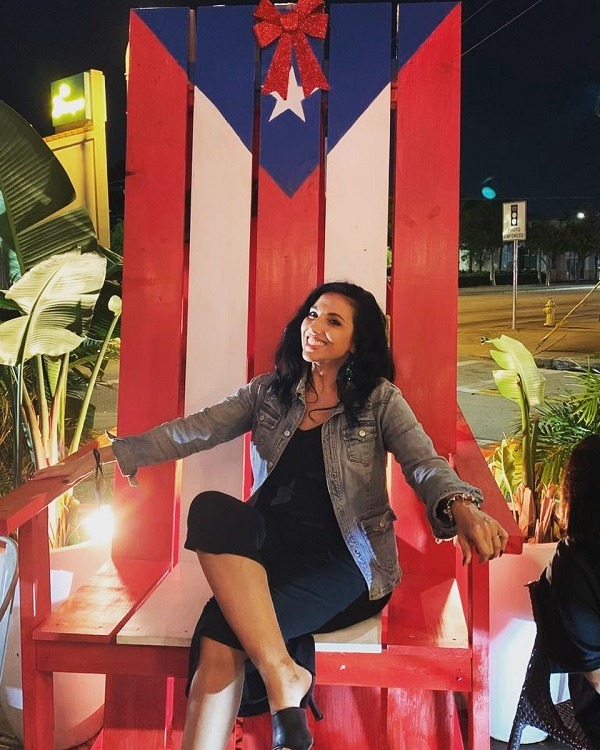
Melina Almodóvar is very proud to be boricua

Her referents

I understand that your grandmother gave you some cassettes with songs by Celia Cruz and Rubén Blades, did these artists influence you or were there others?

My grandmother gave me a Rubén Blades CD and my aunt was the one who introduced me to salsa music thanks to her taste for this genre. Most of the family liked bohemian songs made by Pedro Flores, Rafael Hernández, Bobby Capó, Sylvia Rexach, among others. My grandmother and the rest of my relatives liked bolero a lot. In my case, I like bolero very much and I have done concerts dedicated to this genre, but what moves and motivates me is salsa.

You always listened to tropical music as a kid in Puerto Rico, but I understood that I was cut out to sing salsa when started studying it and understand it deeply. In high school, I came to sing pop, jazz, country, merengue, bachata and many other genres. However, salsa is what I like the most.

You described your move from Puerto Rico to Memphis as a culture shock. What was the most shocking thing about that time?

It’s one thing to move from Puerto Rico to Los Angeles or New York or Florida where there are a lot of Latinos. When I moved, I was very young and went to live in the southern United States, where they listen to country and blues. For me, the most shocking thing was the culture. In Puerto Rico, everyone talks on the front doors and there was a lot of closeness. When we moved to Tennessee, we didn’t know anyone, so we had to start creating a new life and finding our way in this new city.

Melina Almodóvar performing at North Beach Bandshell

You were part of Orquesta Caliente. According to many, that was the first successful Latin salsa orchestra in Memphis. What do you think was the formula for success of this orchestra?

It was a combination of many things because I have been part of many groups and tried to organize orchestras in different places. After that experience, I tried to start an orchestra in Nashville, Tennessee, for a while and tried to start another one in Atlanta, Georgia.

When I was 17 years old, I was called and asked if I knew how to sing salsa, to which I replied yes. That’s when i was given a cassette tape with several songs made by Tito Puente, Ruben Blades, Celia Cruz, among others. I went home and started writing the songs down letter by letter to learn them by heart and audition for the orchestra. That day, I realized that all the musicians were American and extremely talented. I was 17 years old at the time and had no idea who I was playing with, which led me to look up their histories and they were really well trained and talented. Almost all of them were professors at the University of Memphis at the time, but they wanted to form a salsa orchestra.

So, we started playing in different places. Given that there was no internet and no social media, we had to create our own flyers by hand, make copies, go to the houses and put up them there. The first day we played, not a lot of people showed up, but it was a good start for us. After three months, not one more body fitted there.

For me, it was a beautiful experience because we started playing everywhere and were at plenty of festivals in South Florida. We were so into what we were doing and all the members wanted the music to work out spectacularly, so we were united in a common objective. I think that was the key to our success.

Tell me about the Hollywood Salsa Fest

We have been doing this festival for about seven years now and it was a dream come true because I never thought there would be more than 10,000 people there for throughout the day. It is a culmination of all the work we have done since I came to Miami. It was a great achievement.

This Hollywood Salsa Fest of this year included Maestro Charlie Aponte, Timba Live, Salsa Ballet de Cali, Maestro Bobby Cruz, Tito Puente Junior and many others.

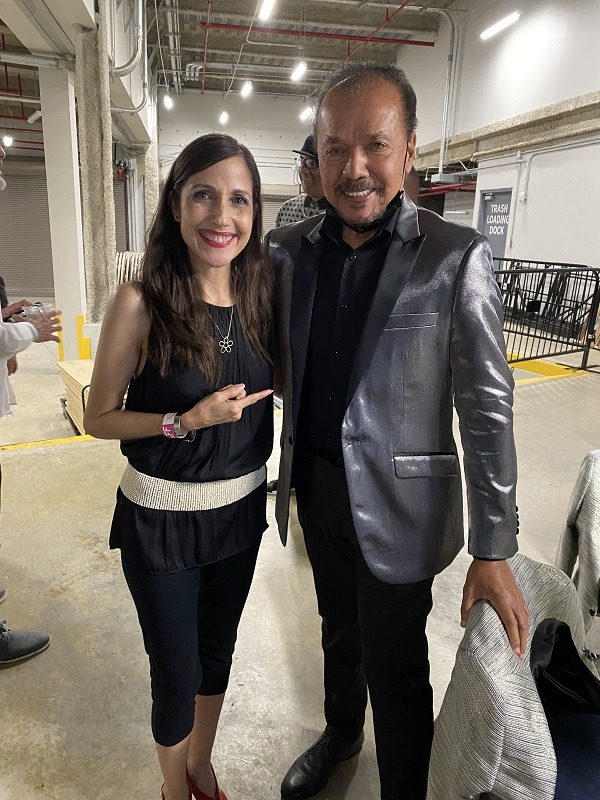
Melina Almodóvar next to Oscar D’ León

Spanish Harlem Salsa Gallery and its role towards salsa

Spanish Harlem Salsa Gallery and Latin music

The Spanish Harlem Salsa Gallery  is one of those places where every salsa lover in New York should visit since there is plenty to see here. This museum has all kinds of items donated by many renowned artists or relatives of some who had passed away. This collection of valuable possessions has resulted in a set of priceless objects that will bow anyone visiting the facilities of such a special institution out of water.

The Spanish Harlem Salsa Gallery, also known as Spaha Salsa Gallery, can be defined as an institution of a cultural nature whose main purpose is to serve as a reminder of how great our culture is, especially our music. Both residents and visitors of East Harlem, New York, can learn about the salsa genre and its roots as long as they desire. All thanks to a lot of tools, information and many initiatives with which those interested will know all kinds of interesting facts about salsa first hand.

Another of the great objectives pursued by this place is the quest for knowledge about Latin music and the artists involved to offer it to anyone who decides to visit its facilities. That is why both its president Johnny Cruz and the team that helps him have been responsible for creating an inclusive and diverse gallery in which you can appreciate how far Hispanic talent has come by the hand of its top stars.

Johnny Cruz and Rubio Boris presenting their show

Role of the Spaha Salsa Gallery in the dissemination of Latin culture

The role played by the Spaha Salsa Gallery in the dissemination of Latin culture is very important, since these institutions are the ones that manage to arouse the interest of the inhabitants of Harlem and other nearby sectors towards one of the most representative musical genres of Latinity. This has made many other cultural institutions to use this gallery in order to awaken a higher interest in its own activities, which shows extensive cooperation between those who seek to promote anything Latin-related at all costs.

Fortunately, our work is not that complicated to carry out because too many tourists visit New York every day and many of them know that this city was the birthplace of the biggest salsa movement in history, so they are always looking for cultural sports in which you can find information about this set of rhythms and how it emerges in the public arena.

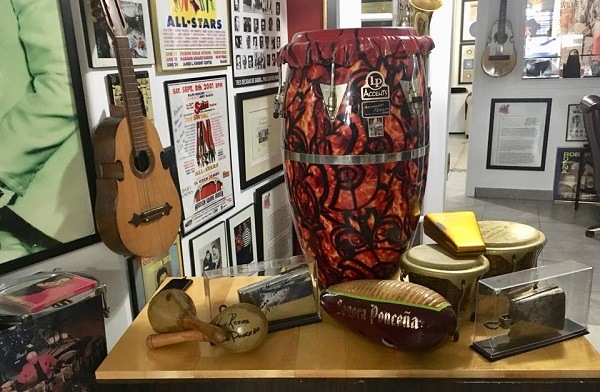
Some instruments donated by La Sonora Ponceña

Who Johnny Cruz is

Johnny Cruz is the founder of the Spaha Salsa Gallery, but there are many other facets by which this talented Puerto Rican is known in the entertainment industry. Cruz is a famous musician and record producer who has worked and make friends with a wide number of artists from all genres, by providing him with the platform to create a true sanctuary for Latin music lovers.

One interesting fact about the museum is that it is located on the plot where a hardware business owned by Johnny’s father used to function, which was made into something completely different thanks to the genius of his son long after. Today, that place contains several of the most invaluable objects in the history of salsa and whose relationship with some of the greatest figures of the genre is legendary.

Link to the official website of the Spaha Salsa gallery: spahasalsagallery.com

By: Johnny Cruz correspondent of International Salsa Magazine in New York City, New York


In Concert: Hacenoba Salsa & Jimmy Bosch In Saint-Étienne

They will be together in an exceptional concert at Le Fil this May 14th

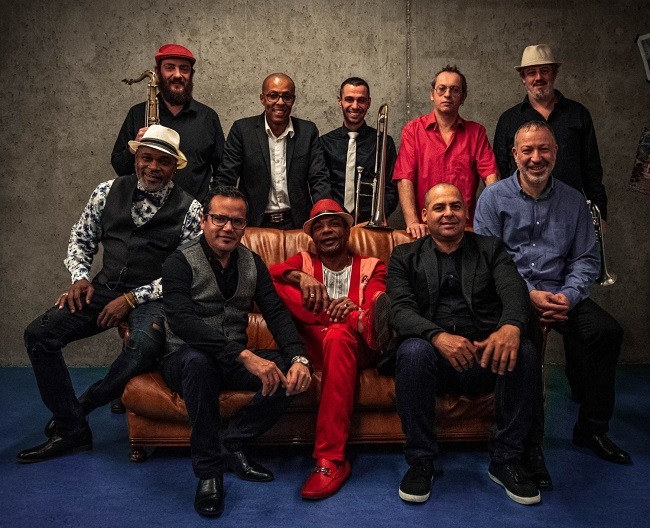
Adiel Castillo (Musical Direction – Piano), Aymel Gómez (Voice), Wilbert Valera (Voice), Nadir Slimani (Bass), Miguel Río Puntilla (Bongo), Philippe Fougerouse (Timbales), Hamid Benabella (Art Direction – Congas), Guillaume Monier (Saxophone), Laurent Sedent (Trumpet), Romain Bourlhonne (Trombone)

The Hacenoba Salsa group and the world-renowned Trombonist Jimmy Bosch will present a unique salsa show in which lovers of this Latin rhythm will sing and dance from the first notes. This concert will be preceded by a Salsa lesson by the couple (Aurélie and Rémi) belonging to the Barrio Latino humanitarian association under the best salsa mixes of the DJ from the city of Callao (Peru), Oscar D Lyon.

This show will take place on the second Saturday of May at Le Fil, an artistic platform for contemporary independent music and cultural life developed in the city located in southeast France, Saint-Étienne. Its address is 20 bd Thiers 42000 Saint-Étienne, France, and the cost of pre-sale tickets is €20 and the Box Office €22.

The Cuban Salsa orchestra, Hacenoba, brings to this concert the essential rediscovery of the island’s music (Mambo, Salsa, Cha-Cha, and Timba) accompanied by brushstrokes inspired by internationally famous composers and artists of the genre such as Oscar D’ León, Héctor Lavoe, and others.

This ten-member band with its explosive music combines percussion with piano, saxophone, and bass for a frenetic and bewitching rhythm that has led them to participate in different festivals, cultural events, parties dedicated to Cuban music (or Latin music ), and private parties in the region.

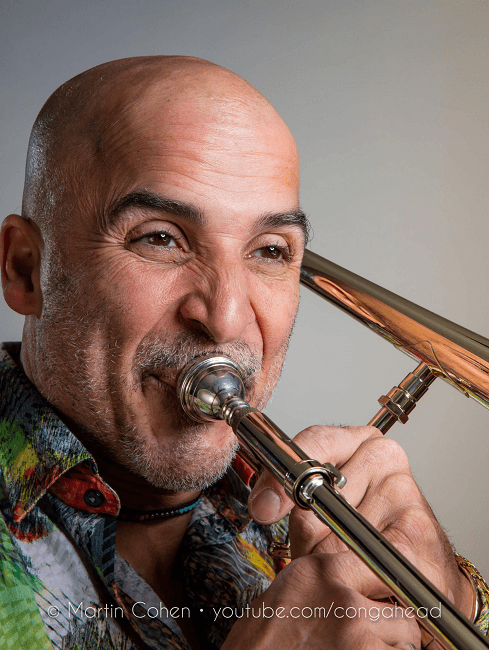
Jimmy Bosch has collaborated with Rubén Blades, Ray Barretto, and Celia Cruz, among many others.

Likewise, the master Jimmy Bosch is acclaimed in more than 70 countries as an exceptional Latin music Trombonist, has 11 Grammy Awards, and more than 100 recordings in the Salsa and Latin Jazz genres. He also has a great career as an orchestra leader and is coveted by his audience due to his extraordinary performances on stage.

The creator of hits like Otra Oportunidad (1998), La Cacharra (1999) Qué Bonito es Soñar (2004), La Noticia (2004), El Avión de la Salsa (2004) y Ay Mamacita-Boogaloo (2018) among many others, also will be dictating a Masterclass for professional musicians where he will explain and demonstrate the variations in Salsa. The lessons will be oriented towards practice and active participation with the instrument during the clinic. This masterclass will be held on May 24th -25th at Kafésynk located at Øvingshotellet, Trondheimsveien 2, Bygg H, 0560 Oslo, Norway from 5 PM to 8 PM, and tickets cost NOK 1,600 approximately $174.26.

The trombone master has worked with FANIA All-stars, Eddie Palmieri, Ruben Blades, Ray Barretto, Machito, Cachao, and many more. He has participated in Salsa conventions, Latin and Jazz music festivals around the world, as well as performed in clubs in Asia, Europe, America, and Oceania.

Jimmy Bosch’s record productions include Soneando Trombón (1998), Salsa Dura (1999), El Avión de la Salsa (2004) ,and A Millón (2009).

Oscar D Lyon was born in Callao, known as the capital of Salsa in Peru.

The perfect DJ for this magnificent evening at Le Fil will be Oscar D Lyon, who has more than 30 years of career in the music scene. He started in Lyon in the ‘90s, continued at Latino 1, and pursues his rise at Casa Latina for ten years. His likes and musical inclination from South America have made him stand out in the Latin environment of the region. Currently, Oscar D Lyon mixes the rhythms of Salsa and Bachata in various clubs in Saint-Étienne, such as Cabana Café, the Fox, and recently, Barrio Club.


  • « Go to Previous Page
  • Page 1
  • Interim pages omitted …
  • Page 46
  • Page 47
  • Page 48
  • Page 49
  • Page 50
  • Interim pages omitted …
  • Page 62
  • Go to Next Page »

International Salsa Magazine (ISM) is a monthly publication about Salsa activities around the world, that has been publishing since 2007. It is a world network of volunteers coordinated by ISM Magazine. We are working to strengthen all the events by working together.