


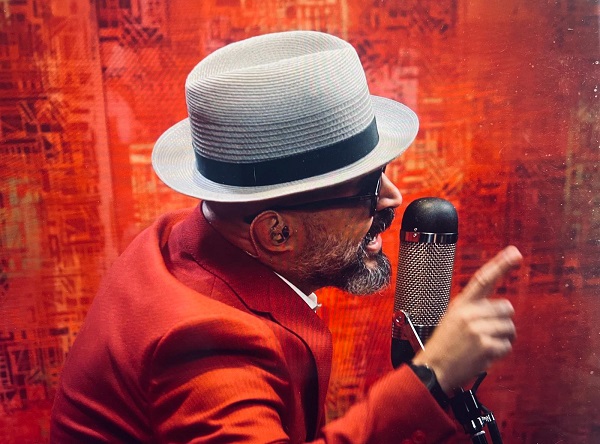
I invite you to listen to his latest single ‘Mi vida es un tambor’, also available on YouTube:
The track -whose musical arrangement is by Jerry Ferrao and John Rivera Rosa- features the participation of great recording studio musicians, such as: Efraín Hernández on bass; Juan Gómez on piano; Angie Machado, Jaimar Vázquez and Javier Meléndez on trumpets; Benny Marín, Víctor Román and Noel Abel on saxophones; Pedro Dueño on bongo; plus a parade of top-notch guests: Endel Dueño on timbal, Kachiro Thompson on tumbadoras and Luis Aquino, in a masterful trumpet solo. Backing up Jerry Ferrao’s lead vocals, we hear the voices of Flor Angel Guilbe, Wiki Gonzalez and Nandy “El Sinsonte” on backing vocals.
“I do it first out of a desire to explore new horizons. I’ve been in the bomba and plena for many years. I was with La Familia Cepeda for more than 20 years and with Los Hermanos Ayala from the town of Loíza for six to seven years. I was a disciple of the great masters: Don Rafael Cepeda Atiles, Marcial Reyes Arvelo and Tomás Flores, among others. The time has come for me, I am a composer! I have composed songs for several orchestras and folklore groups, it was time to write for myself! I said to myself, I am a composer and singer and I am going to design my own music,” he said.
He lived in Buenos Aires, Argentina while studying cinematography. There, Ferrao sang with the salsa orchestra La Clave Genética. It may have been there that the definitive leap to salsa was conceived.
Following the scourge of Hurricane Maria in Puerto Rico (2017), Jerry dedicated a salsa track titled ‘Retoñando’ (available on YouTube) to the memory of all his compueblanos who left in the aftermath of the hurricane.
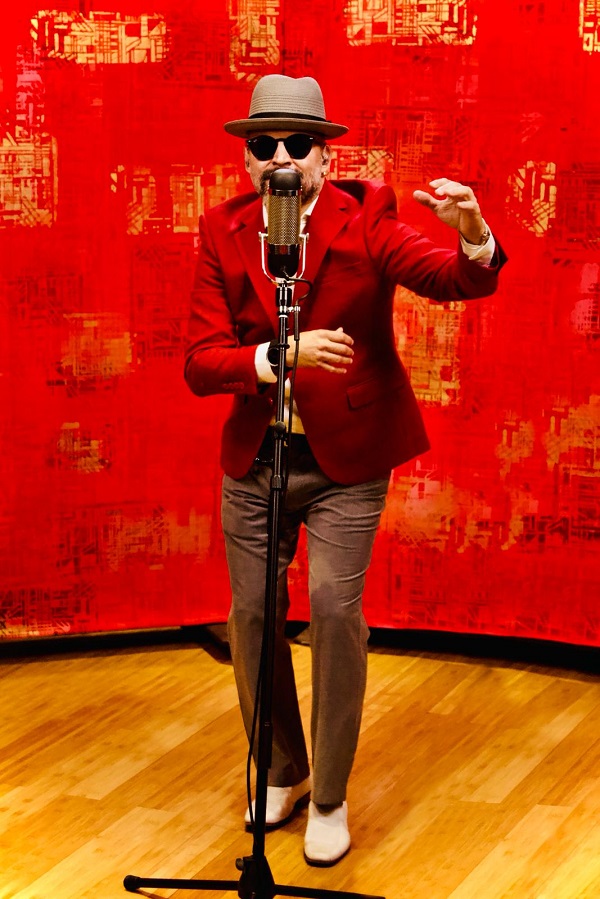
In 2012 he published what could be considered the most important documentary on the history of the Puerto Rican bomba, Ayeres de la Bomba. This document has been praised by prestigious ethnomusicologists, anthropologists, sociologists and researchers specializing in Puerto Rico’s black history. I add with certainty, that our Jerry Ferrao must be considered as the authority on our folkloric rhythms.
Since he was a child, he was influenced by the art of Afro-Antillean roots music, especially salsa and guaguancó. With uncles like percussionists Pedro Dueño, Ángel Dueño and Endel Dueño, nicknamed “Los Hermanos Dueño” in the popular artistic scene, who have been recognized in different parts of the world, mainly by salsa and Latin jazz lovers, it should come as no surprise that Ferrao has grown up immersed in the rhythm and flavor that continues to dictate his creativity.
Determined to focus on salsa, he affirms that his contribution to Borikua folklore was also his musical foundation. “Yes, it is something that lives with me and I will continue to cultivate it in some way. Who knows if in the future I will do my own little things for the public, that I will sneak in some bomba or plena between salsa and salsa. I have been in folklore since I was about eight years old”, Ferrao said shortly before affirming that with the album Desafío (2022), which contains 12 songs of his inspiration, he made his formal entry into salsa. Jerry Ferrao bets on salsa, and salsa fans bet on Jerry. His efforts have not gone unnoticed and as a salsa artist, the excellence with which he has produced his musical deliveries is striking. “I swear it was a tremendous challenge to do all this. For different reasons, the production took about three or four years. All the songs and arrangements are my own, and I don’t even play guitar, although I would love to!” he shared.
The images are by Kali Torres

Also Read: ¡Attack Sergio! Unbreakable: A fun read because of the contradictory content
The 14-member timba group is a fiery number, from its music and choreography to its well-dressed singers and musicians.
Lazaro Valdes leads the group, plays piano, arranges, composes and writes songs. Born in Havana, he studied at the Alejandro García Caturla Academy in the 1970s.
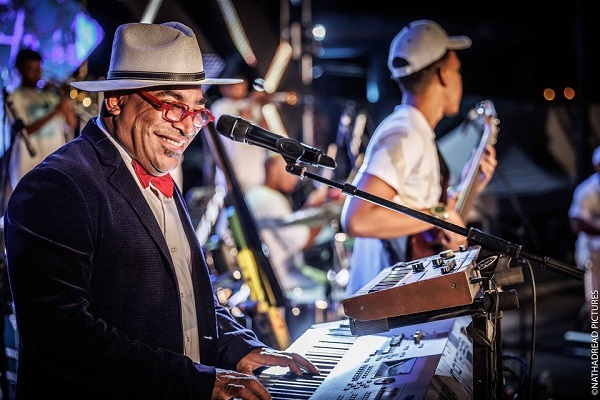
He created Bamboleo after spending time performing with artists such as Pachito Alonso, Bobby Carcasses and Héctor Téllez.
He selected the best musicians and incorporated into his new company many who had been trained at the Escuela Nacional de Arte de La Habana.
Four years later, she moved on to Pachito Alonso y su Kini Kini, which she left in 1997 to add her talents to Bamboleo.
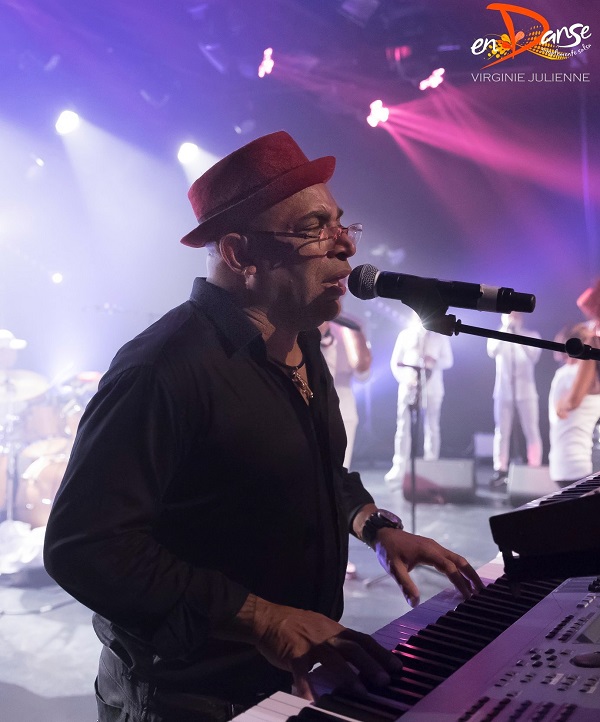
Guantanamera Yordamis Megret joined the group in 1998, a year after Mompie’s departure. She began her musical training at the age of 10 and took up the guitar.
Like Borges, she is also a student at the Escuela Nacional de Arte. After graduating, she began singing professionally with Ricacha. Before joining
Bamboleo, Megret sang in José Luis Cortés’ salsa group PG. Bamboleo began touring outside Cuba in 1996, the same year the group debuted with Te Gusto o Te Caigo Bien.
Bamboleo also collaborated on the Temptations’ Grammy-winning album Ear-Resistable.

In addition, the group has appeared on MTV’s Road Rules and has worked with artists such as James Brown, Femi Kuti and George Benson.
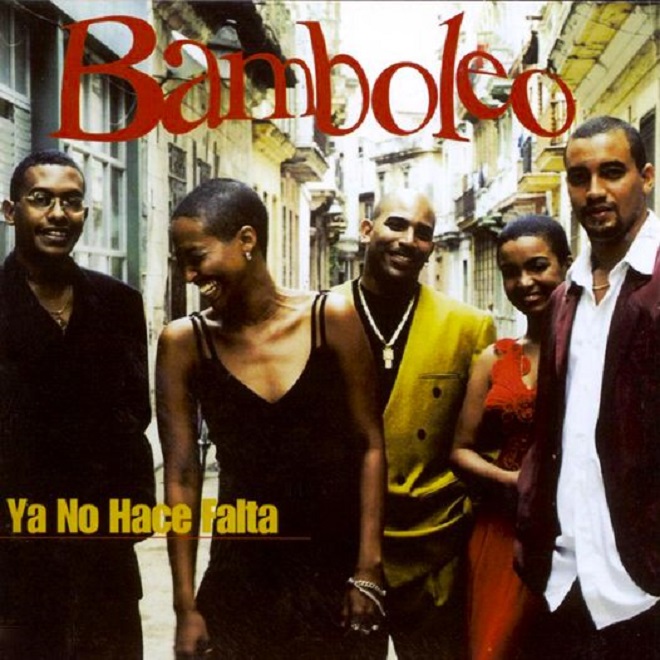
Bamboleo, one of the best-known groups on the crest of the timba wave, a new style that blends salsa with funk and jazz elements and emanates from the streets of Cuba, remains at the forefront with 1999’s Ya No Hace Falta.
After leaping to international notoriety with 1997’s Yo No Me Parezco a Nadie, the pressure was on to deliver for his newfound fan base.
Both the horn section and the vocalists have a cool, smooth approach that contrasts with the energetic sound of similar groups like Charanga Habanera or NG la Banda.
This smoky, jazzy sensibility juxtaposed with the sharp corners of the superfunky rhythm section makes for easy and enjoyable listening.
The group doesn’t lack for warmth, with salty montunos from pianist/arranger Lazaro Valdes and plenty of time changes from a percussion section as good as any operating today.
Sonically, the ears rejoice in listening to a timba album that lacks neither fidelity nor modern production sensibilities.
With its balanced overall sound, unique approach and expert musicianship, Bamboleo will set trends and erase boundaries for decades to come.
Evan C. Gutierrez
Bamboleo – Ya No Hace Falta (1999).
Musicians:
Lázaro M. Valdés Rodríguez (Director, piano, composer).
Abel Fernández Arana (Alto Saxophone)
Carlos Valdés Machado (Tenor saxophone)
Anselmo “Carmelo” Torres (trumpet)
Dunesky Barreto Pozo (Congas)
Alberto Para (Maracas)
Herlon Sarior (Timbales)
Jorge David Rodríguez (Voice)
Yordamis M. Mergret Planes (Vocals)
Alejandro Borrero Ramírez (Vocals)
Vannia Borges Hernández (Vocals)
José Antonio Pérez Fuentes (Violin)
Maylin de la Caridad González Aldama (Cello)
Ludwig Nunez Pastoriza (Drums)
Rafael P. Pacerio Monzón (Banjo)
Ulises Texidor Pascual (Bongos)
Sources:
Eva Cortés, born in Tegucigalpa (Honduras), 1972, is a Honduran jazz singer and composer.

More than a voice, she is our jazz star in the world.
She is part of the fusion movement, incorporating in her music the influences of traditional Latin American music (zamba, bolero), blues, traditional Andalusian music and jazz.
He sings with a Latin American Spanish cadence and Andalusian echoes and accent.
He grew up in Seville and currently resides between Madrid and New York.

Nowadays, his music reflects the influences received from his cultural miscegenation, as well as from the different musical genres developed throughout his career.
Growing up in a family of great musical tradition, she was exposed to Latin American music. Although we hear in her first compositions, at the age of 16, a strong influence of blues.
In January 2006 she flew to Santiago de Chile to record and co-produce Sola Contigo, her first solo album, which was later mixed and mastered in Paris.
In this work we can find South American rhythms fused with jazz and a soft touch coming from the south of Spain.
Eva feels honored to have had the collaboration of musicians with great international prestige: Jerry Gonzalez,
Antonio Serrano, Pepe Rivero and Nono Garcia among others.
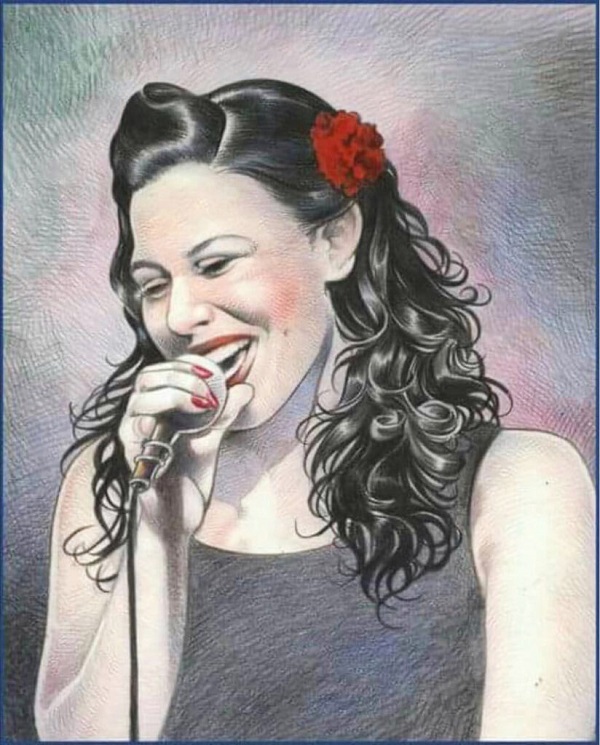
They released their third album El Mar de Mi Vida on April 6, 2010. With his personal jazz fusion, he has managed to carve a niche for himself among the most interesting and promising proposals of the Spanish jazz scene. [El Mar de Mi Vida brings together 12 songs that are maximum exponents of cultural crossbreeding.
On this occasion, in addition, the flamenco great Miguel Poveda joins in the version of the song C’est si bon, Perico Sambeat, Lew Soloff (considered one of the most brilliant trumpet players of recent times and who has collaborated with Marianne Faithfull or Frank Sinatra, among others), Santiago Cañadada, Rémy Decormeille, Georvis Pico, the electric bassist of the moment Hadrien Feraud and the English drummer Mark Mondesir (both musicians of John McLaughlin).
Eva once again signs most of the tracks and shares authorship in a couple of songs with Brazilian guitarist Kiko Loureiro.

Eva Cortes – The Sea Of My Life (2010)
Tracks:
Information realized (January 13, 2024)
Sources:
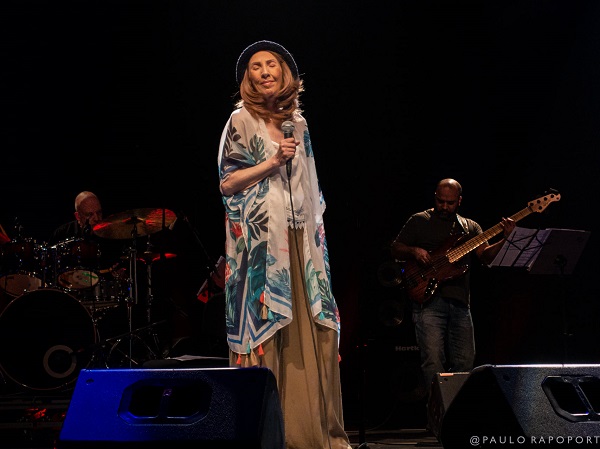
She was featured for her part on Chick Corea’s landmark album Back to Eternity.
She has recorded and performed with many artists, including Stanley Clarke, Dizzy Gillespie, Gil Evans, Stan Getz, the Grateful Dead, Santana, Jaco Pastorius, and her husband Airto Moreira.
Flora Purim’s voice has earned her two Grammy nominations for Best Female Jazz Performance and Down Beat magazine’s Best Female Singer award four times.
Her musical partners include Gil Evans, Stan Getz, Chick Corea, Dizzy Gillespie and Airto Moreira, with whom she has collaborated on more than 30 albums since moving with him from her native Rio to New York in 1967.
In New York, she and Airto became the center of the period of musical expression and creativity that produced the first commercially successful “Electric Jazz” groups of the 1970s.
Blue Note artist Duke Pearson was the first American musician to invite Flora to sing with him on stage and on record.
She then toured with Gil Evans, about whom she says, “This guy changed my life. He gave us a lot of support to do the craziest things.
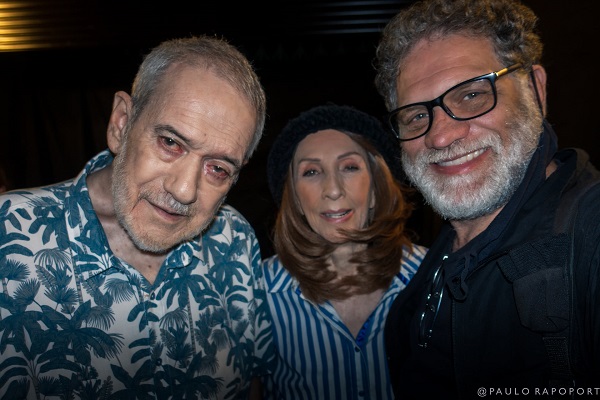
Soon after, Flora began to seriously re-educate discriminating musical minds after joining with Chick Corea, Stanley Clarke and Joe Farrell to form Return To Forever in late 1971.
Two classic albums resulted – Return to Forever and Light as a Feather nodal points in the development of jazz fusion.
Flora’s first solo album in the United States, Butterfly Dreams, released in 1973, immediately placed her among the top five jazz singers in Down Beat magazine’s jazz poll.
In the mid-1980s, Flora and Airto resumed their musical collaboration to record two albums for Concord – Humble People and The Magicians – for which she received Grammy nominations.
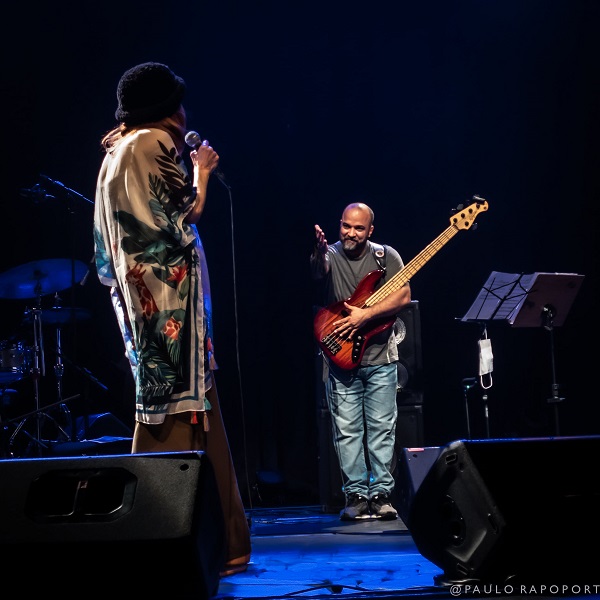
The launch of the Latin jazz band Fourth World in 1991, featuring Airto, new guitar hero Jose Neto, and keyboard and reeds leader Gary Meek, marked a new era in Flora’s career.
The band was signed to the British jazz label B&W Music, and Flora consciously set out to win over the next wave of listeners.
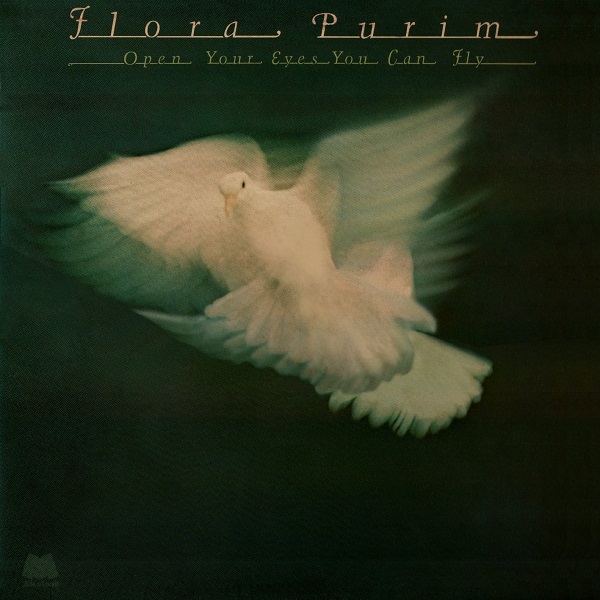
Flora Purim Open Your Eyes You Can Fly (1976)
1- Open Your Eyes, You Can Fly (Chick Corea-Neville Potter)
2-Time’s Lie (Chick Corea-Neville Potter)
3- Sometime Ago (Chick Corea-Neville Potter)
4-San Francisco River (Airto Moreira-Purim Purim)
5-Andei “I Walked” (Hermeto Pascoal)
6-Ina’s Song “Trip to Bahia” (Flora Purim)
7-Conversation (Hermeto Pascoal)
8-Medley: White Wing/Blank Wing (Hermeto Pascoal-Flora Purim).
arrangements:
Hermeto Pascoal (4.5.7.
Egberto Gismonti (4)
Flora Purim (6)
The whole group (1.2.3)
01-David Amaro – electric guitar
George Duke – electric piano
Alfonso Johnson – electric bass
Ndugu (Leon Chancler) – drums
Background vocals: Flora, David Amaro, George Duke, Hermeto Pascoal
Instrumental solo: David Amaro (electric guitar)
02-Hermeto Pascoal – flute
David Amaro – acoustic guitar
George Duke – electric piano, ARP sequence,
ensemble synthesizer
Alfonso Johnson – electric and acoustic bass – Alfonso Johnson – electric and acoustic bass
Ndugu – drums
Airto Moreira – percussion
Instrumental solo: Hermeto Pascoal (flute), Nudgu (drums)
03-Hermeto Pascoal – flute
David Amaro – electric guitar
George Duke – electric piano, ARP sequence,
ensemble synthesizer
Alfonso Johnson – electric bass
Ndugu – drums
Airto Moreira – percussion
Laudir de Oliveira – congas
Instrumental soloist: Hermeto Pascoal (flute), David Amaro
(electric guitar)
04-Hermeto Pascoal – flute, electric piano
Egberto Gismonti – acoustic guitar
David Amaro – electric guitar
George Duke – moog synthesizer
Alfonso Johnson – electric bass
Ron Carretero – acoustic bass
Robertinho Silva – drums
Instrumental duet: Hermeto Pascoal (flute) and George Duke
(synthesizer
05-Hermeto Pascoal – flute, electric piano
David Amaro – electric guitar
George Duke – moog synthesizer, clavinet
Alfonso Johnson – electric bass
Airto Moreira – percussion
Robertinho Silva – drums, berimbauduet
vocal: Flora Purim and Airto Moreira
Instrumental duet: Hermeto Pascoal (flute), George Duke (flute), George Duke
(synthesizer), David Amaro (electric guitar)
06 -Hermeto Pascoal – electric piano
David Amaro – electric guitar
George Duke – moog, ARP Odyssey and ARP Odyssey sequences, ARP synthesizer
ARP, ensemble synthesizer
Alfonso Johnson – electric and acoustic bass – Alfonso Johnson – electric bass and acoustic bass
Robertinho Silva – drums, percussion
Laudir de Oliveira -congas
Instrumental solo: Georrge Duke (ARP synthesizer)
Odyssey)
07-Hermeto Pascoal – electric piano
David Amaro – electric guitar
George Duke – ARP sequences ensemble and moog synthesizer
moog synthesizer
Alfonso Johnson – acoustic bass
Airto Moreira – percussion
08-Hermeto Pascoal – electric piano, pipe, harpsichord,
whistling, percussion (seven-up bottles)
Egberto Gismonti – acoustic guitar
Ron Carretero – acoustic bass
Alfonso Johnson – electric bass
Airto Moreira – percussion, drums, berimbau
Robertinho Silva – percussion, berimbauduet
vocal: Flora Purim and Airto Moreira
Instrumental solo: Hermeto Pascoal (harpsichord and whistle)
Information realized (March 28, 2008)
Sources:
Also Read: Samuel Quinto Feitosa is a Brazilian virtuoso jazz and classical pianist