




The Island of Enchantment never ceases to amaze us and we continue to marvel at the fact that this small territory has been able to give the world so much talent, especially in music. Today, it is up to talk about Puerto Rican producer, arranger, composer and pianist Israel Tanenbaum and the enormous contribution that this great artist has made to Latin music over the last few decades.
Israel Tanenbaum is also a bandleader who has produced more than 50 albums and participated in over a hundred recordings throughout his career, so his experience in this field is more than proven. We were fortunate to talk to him in just over half an hour and we will proceed to cover the most important issues in the following lines.

Although Israel is widely known for his piano skills, this was not the first instrument he started playing, but the organ. As a child, he was given a toy organ and that was how he made up his mind and train his ear for music.
In addition to that, he told us an anecdote about how one day he went to a music store with his parents and they left him alone for a while, time that little Israel used to play a huge object that caught his attention: an organ much bigger than the one he used to play at home. It was by watching the organist that he decided to position himself in front of the instrument and started imitating what the musician was doing with his little hands.
He waited until the organist moved away from the instrument to sell it to a customer and Israel took the opportunity to get into the seat and start playing the instrument’s keys and foot pedal. After playing the five or six songs he knew, he noticed that he had a silent multitude watching what he was doing and once he finished playing, people started clapping their hands furiously at such a waste of talent in a child this small.
That was when his parents decided to buy him an organ and a piano. A few years later, namely when he was 12 years old, Israel was already playing on the streets in a more professional way.
Israel’s initial training as a musician was entirely self-taught for the first few years. In fact, he says that when he started studying the craft for real when he had already been earning a living as a musician for more than 10 years.
With regard to sound engineering, Israel says he had to become professional in this area ”in self-defense”, as he had problems with several sound engineers who did not have a good musical ear, so they ended up damaging some of his recordings unintentionally. This led him to learn to work on the engineering himself so that this kind of thing would not happen again.
On the other hand, the arrangements and production process had to do with some experiences he had had. One of them happened when, at the age of 16, a friend’s father, an important person in the industry, on one occasion, introduced him to Machito, who very kindly invited Israel to go on stage and sit next to him to learn from what he saw that night. This experience marked the pianist so much that he said to himself: ”this is what I definitely want to do for the rest of my life”.
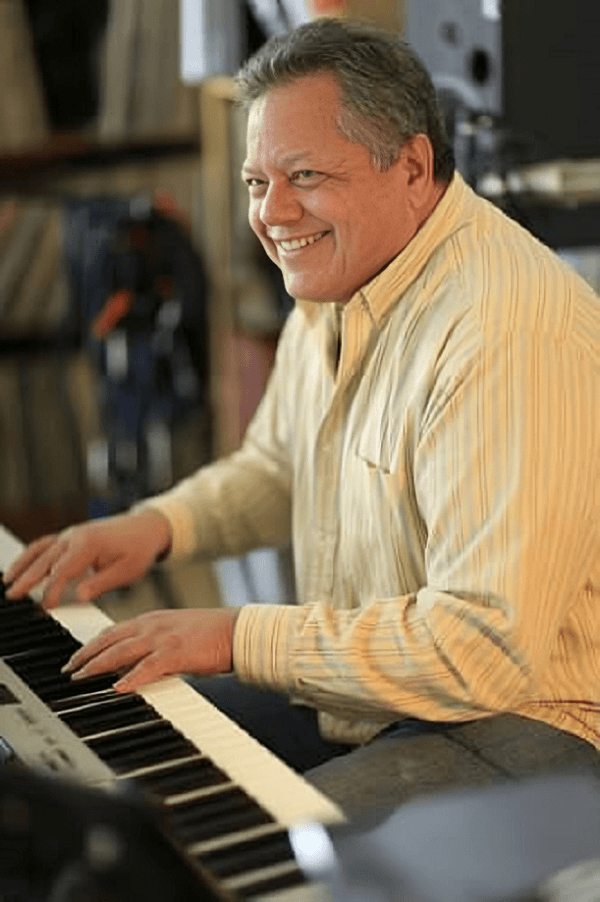
Colombia’s role in Israel’s career
Colombia has been key to Israel’s career for several reasons and one of them is that his most productive time of life was spent in the coffee-growing country. The artist had already traveled to that country to accompany artists such as Pete ”El Conde”, Marvin Santiago and Arabella, but the situation was different when he had to tour with the group Batacumbele. This tour was scheduled to last about 10 days, but it was prolonged for 10 years.
In those days, it turns out that he met by chance with Alexis Lozano, director of Orquesta Guayacán, who proposed him to stay in Colombia a longer time to produce the orchestra’s second album and he accepted. After this, he continued to receive proposals of this style and, almost without realizing it, he already had 10 years living in Colombia and more than 80 albums produced. In addition to Orquesta Guayacán, he worked with Grupo Niche, Cheo Acosta, Alfredito de La Fé and many more.
”My real professional growth took place in Colombia, but my love for production began in Puerto Rico from the hand of percussionist Roberto Roena, whose orchestra was led by me for about two years. When we were recrding the album ‘El Regreso’, I spent many hours with Roberto in the studio and, seeing how dedicated, detail-oriented and precise he was with every chord and note, I was inspired to do the same at some point. That’s how I accepted all the opportunities to produce that arose in Colombia some time later. I owe all of that to Roberto” Israel said about his time as a producer in the South American country.
In addition to his work side, Israel also says that Colombia means a lot to him on a personal level, since this country makes him feel at home and he has many friends there. Not to mention that his own wife is Colombian and one of his children was born there, so he is more than attached to that land for life.
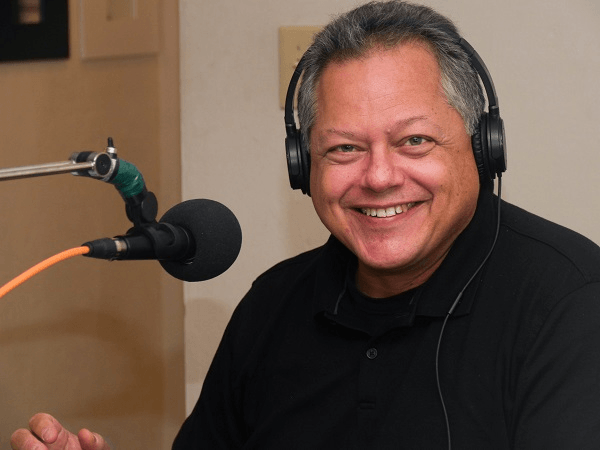
Life in Puerto Rico and Hawaii
In addition to Colombia, Israel also lived in Puerto Rico and Hawaii. He assures that from each of the places he has been, he has extracted something from their folklore and roots to add to his musical work. He says it is the best way to understand that country and the taste of its people.
”If you want to understand the people of a country, you have to go back to their folklore and assimilate it. I lived in Venezuela for about six months and, being there, I became familiar with the quitiplás (a typical percussion instrument of Venezuela), the sangueo, the llanera music and many other elements of the musical culture of that country” Israel said on this issue.
”I lived in Hawaii for almost three years, during which time I founded my first salsa orchestra. I served in the army with Quique Peña, a nephew of maestro Lito Peña, an eminence in Puerto Rico. The young man, whose classical training was extremely intense, taught me to transcribe what each instrument plays in detail. This was an invaluable lesson that served me well for what came later in my career. I also had the opportunity to study with maestro Eddie Palmieri, Papo Luca, José Milé, Jorge Milé, José Febles, among others. I transcribed music for all of them” Israel added on the issue.
Israel Tanenbaum & The Latinbaum Jazz Ensemble
”Impressions”, Latinbaum’s most recent album, was the result of an extensive musical stry that tells a wide experience with genres, styles and musicians of all kinds. Israel started this recording nine years ago, but he was always very busy with the rest of the recordings he was producing, so he always ended up abandoning this project.
Once he had the album ready, but one day Israel had a catastrophic loss of equipment and recordings that led him to practically start the album from scratch, from which he could only save a single song. In the end, he opted to tear up and throw away the arrangements he had in order to start all over again. It took about eight more months to have the album ready again, and today, the musician is grateful that things went down like this, since this material represents the artist he is today for being more current.
It is then when he sought out the artists and musicians who would accompany him in this new production, which would be his first solo album after having produced more than 100 other people’s albums.
From now on, he wants to release a Latin Jazz production with his own orchestra every year and all of them under his new label, Latinbaum Records.
Read also: Grupo Batachá, Houston’s Premier Latin band






| DIRECTORY OF NIGHTCLUBS | ||
|
|
|
|
|
|
|
|
|
|
|
|
|
|
|
|
|
|
|
|
|
|
|
|







| DIRECTORY OF NIGHTCLUBS | ||
|
|
|
|
|
|
|
|
|
|
|
|
|
|
|
|
|
|
|
|
|
|
|
|
Latin talent has been spreading across the United States over the years and every day more salsa bands and orchestras are becoming better known in states where we never would have imagined before. Such is the case of Grupo Batachá, known as ”Houston’s Premier Latin Band”, which is established in the state of Texas and whose director, Oscar Larrañaga, was kind enough to give us some minutes of his time to answer some questions regarding his career and the group lead by him.
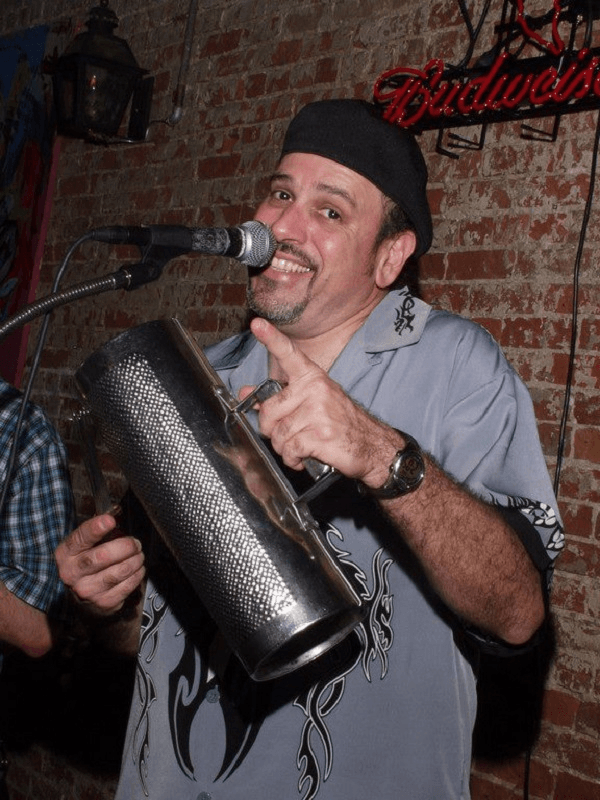
Oscar has told us that as a child he always knew he was meant to devote himself to music. Even since he was in preschool, he showed signs of how would be his future in music by showing interest in certain instruments and styles.
The musical figure who has inspired him most in his family was his great-grandfather, who was part of a philharmonic. Oscar heard many stories about the musician, the way he played and how good he was at what he did, which led his great-grandson to want to be like him someday.
It should be noted that, at all stages of his formation, he never obtained any academic training related to music. Everything he knows about the job he has learned on his own through constant practice and attention to everything he wanted to emulate.
However, it was in 1990 that his career officially began many years later in the United States. It was there when he finally decided to create a project with a few musicians he began to perform at Latino family events such as weddings, quinceañeras, birthdays, among other events. This gave him the necessary experience to know how an orchestra works on stage and, of course, fitted for what was to come next in his career.
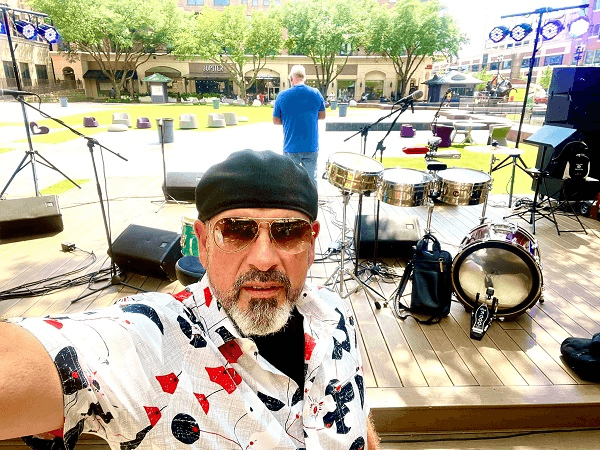
Oscar revealed to us that Grupo Batachá was founded in 1997 in Houston, Texas, and made up of the artist and four other members who joined him at that time. They all decided together that Oscar was the best choice to lead the band and chose him as their director, a position he still holds today. Many members have come and gone, but he has always managed to ”keep the ship afloat” at all times despite the changes.
He explained to us that the name ”batachá” is a term that comes from Cuba and its literal meaning is ”fun times”. In addition, when he was in his early twenties, Oscar met the members of a group with the same name in Guatemala and liked it very much from the first time he heard it. For him, ”batachà” is synonymous with fun and having a good time, things he sees represented in his work with the band. That is why his album is called ”Batachando” and would be something like ”disfrutando” in Spanish.
While it is true that Grupo Batachá makes music in several languages such as Spanish, English and Portuguese, Oscar wanted to make it very clear that everything he and his bandmates do is aimed at salsa influenced by the typical Cuban flavor that comes from drums and Yoruba culture, elements that are primarily handled in Spanish. This is why the main language of the group is and will continue to be Spanish.
In terms of clave, it is much easier for the group to get into the correct rhythm in Spanish for what we have explained above. For the same reason, English, Portuguese and any other language are not a priority for Batachá at this time.
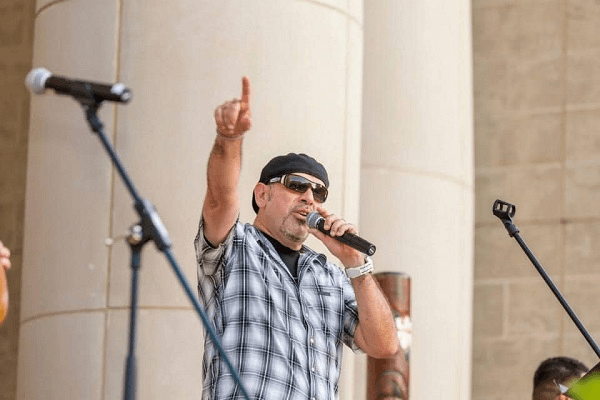
During the band’s 15-year trajectory, Grupo Batachá has performed at more than a hundred weddings, quinceañeras, birthday parties, anniversaries, corporate events, among others. In each and every one of these performances, Oscar and his bandmates have always stood out for their professionalism and great musical quality, so they have no problem to obtain contracts and clients of this kind very often.
As for the method the band uses to select their clients, there is not much to explain. Oscar simply gives priority to the client who agrees on a date first and then tries to reach an agreement with the one who makes his request later, although he emphasized that this does not happen very often.
About this, he said he feels very lucky to bring joy to different types of public with what he likes more than anything in the world, which is music. It makes him really happy to be able to live from what he loves and, by extension, to transmit that same happiness to those who have the opportunity to attend one of his shows.
Read also: Don Perignon and La Puertorriqueña are prides of Puerto Rico