• Skip to primary navigation
  • Skip to main content

International Salsa Magazine

  • HOME
  • Previous editions
    • 2026
      • ISM / March 2026
      • ISM / February 2026
      • ISM / January 2026
    • 2025
      • ISM / December 2025
      • ISM / November 2025
      • ISM / October 2025
      • ISM / September 2025
      • ISM / August 2025
      • ISM / July 2025
      • ISM / June 2025
      • ISM / May2025
      • ISM / April 2025
      • ISM / March 2025
      • ISM / February 2025
      • ISM / January 2025
    • 2024
      • ISM / December 2024
      • ISM / November 2024
      • ISM / October 2024
      • ISM / September 2024
      • ISM / August 2024
      • ISM / July 2024
      • ISM / June 2024
      • ISM / May 2024
      • ISM / April 2024
      • ISM / March 2024
      • ISM / February 2024
      • ISM / January 2024
    • 2023
      • ISM / December 2023
      • ISM / November 2023
      • ISM / October 2023
      • ISM – September 2023
      • ISM – August 2023
      • ISM July 2023
      • ISM Edition June 2023
      • ISM – May 2023
      • ISM April 2023
      • ISM March 2023
      • ISM February 2023
      • ISM January 2023
    • 2022
      • ISM December 2022
      • ISM November 2022
      • ISM October 2022
      • ISM September 2022
      • ISM August 2022
      • ISM July 2022
      • ISM June 2022
      • ISM May 2022
      • ISM February 2022
      • ISM January 2022
    • 2021
      • ISM December 2021
      • ISM November 2021
      • ISM October – 2021
      • ISM September 2021
      • ISM August 2021
      • ISM July 2021
      • ISM May 2021
      • ISM April 2021
      • ISM June 2021
      • ISM March 2021
      • ISM February 2021
      • ISM January 2021
    • 2020
      • ISM December 2020
      • ISM November 2020
      • ISM October 2020
      • ISM September 2020
      • ISM August 2020
      • ISM July 2020
      • ISM June 2020
      • ISM May 2020
      • ISM April 2020
      • ISM March 2020
      • ISM February 2020
      • ISM January 2020
    • 2019
      • ISM December 2019
      • ISM November 2019
      • ISM October 2019
      • ISM Septembre 2019
      • ISM August 2019
      • ISM July 2019
      • ISM June 2019
  • Download Salsa App
    • Android
    • Apple
  • Spanish

Search Results for: Legend

Alberto Crespo and Carlos Santos Release Their Latest Single “Narci” with Grupo Bacheo to the Latin Market

On November 7, 2025, the vibrant Latin music scene celebrates a stellar collaboration that promises to ignite dance floors.

The acclaimed Venezuelan pianist, arranger, and music producer Alberto Crespo joins legendary Puerto Rican sonero Carlos Santos and the talented Grupo Bacheo to present their latest musical track titled “Narci.”
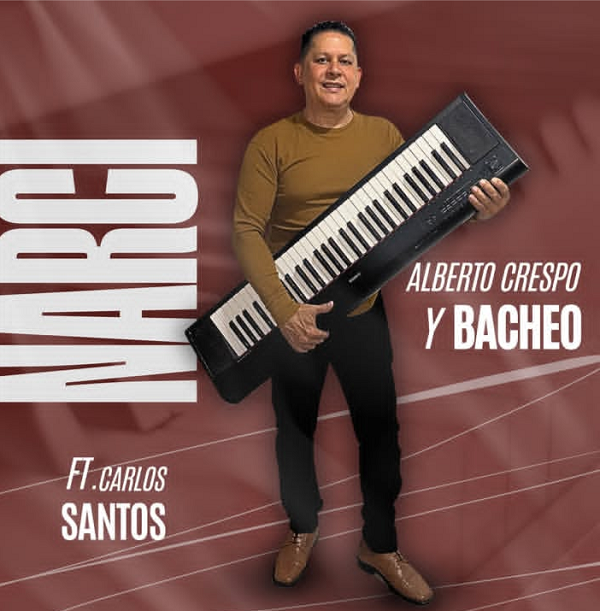
Alberto Crespo and Carlos Santos release their latest song, titled Narci, to the Latin market with Grupo Bacheo

This original composition by Ali Delgado and José Granados, featuring arrangements by Alberto Crespo himself, fuses a modern sound with the unmistakable rhythm of salsa, guaranteeing a musical experience that will delight dancers.

Alberto Crespo: A Piano Master with an International Career.

From his beginnings at the “José Ángel Lamas” Music Conservatory in Caracas, Alberto Crespo demonstrated exceptional passion and talent. His deep immersion in harmony, counterpoint, orchestration, and improvisation has established him as a versatile and well-rounded musician.

By age seventeen, he was already touring with renowned orchestras, sharing the stage with icons such as Naty y Su Orquesta, Celia Cruz, Bobby Capó, Carmen Delia Depini, Carlos Cano Estremera, Andy Montañés, Ismael Miranda, Pete Conde Rodríguez, and José Mangual Jr., among many others.

Alberto Crespo A Piano Master with an International Career

With over three decades of experience in salsa and Latin Jazz, Crespo has consolidated his reputation as a highly prestigious producer, arranger, and pianist. His impressive list of collaborations includes national and international artists such as Maikel Stuart, Frankie Morales (former singer for Tito Puente), Orquesta Bailatino, Grupo Mango, Herman Olivera, Rumberos de Callejón, Gilberto Santa Rosa, and Naty y Su Orquesta. His versatility has led him to be part of the most prominent musical groups in Venezuela.

Carlos Santos: A Classy Sonero with a Legendary Trajectory.

Born on March 13, 1946, in Cataño, Puerto Rico, Carlos Santos is a true sonero whose career took off with Joey Pastrana’s band. His powerful voice and unmistakable salsa flair led him to perform and record with emblematic salsa orchestras, including “Kako y su Trabuco,” “Los Kimbos,” “Conjunto Candela,” and Roberto Roena’s “El Apollo Sound,” in addition to special performances with Ray Barreto and El Conjunto Libre.

Santos has left classics for posterity such as “Chacaboom,” “Las cosas de la vida” and “Amor verdadero” with Joey Pastrana, as well as “Flores para tu altar” and “Me imagino” with Conjunto Candela. His voice also enriched productions by Eddie Palmieri and Los Kimbos with tracks like “Caridad” and “Todo el mundo.” During his time with El Apollo Sound, he garnered hits such as “El Progreso” and “Háblame ahora.”
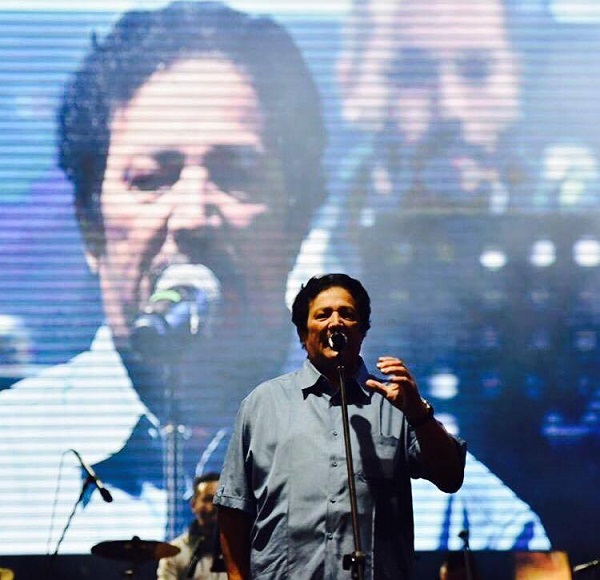
Carlos Santos Un Sonero con Clase y una Trayectoria Legendaria

Carlos Santos currently resides in Florida, United States, and continues to delight audiences with his international and local performances.

The union of these two pillars of salsa, under the production of Chongo Producción (from New York) and Juancho Producción (in Cali), promises to be a memorable event for Latin music.

Ali Delgado (Caracas) y Juancho Producción (Cali)

Note: “45 RPM is for sale in Cali by Juancho Producción, and will be presented with great fanfare on December 30 at 10:00 a.m. at the Meeting of Music Lovers and Collectors (Encuentro de Melómanos y Coleccionistas) of the Cali Fair, Colombia. 2025.”

Production Credits

General Production

  • Production: Alberto Crespo & Chongo Productions LLC

Musical Team

  • Composer: Ali Delgado / José Granados
  • Vocalist: Carlos Santos
  • Arrangements: Alberto Crespo

Musicians

  • Timbal: Carlitos Padrón
  • Tumbadoras (Congas): Manuel “Manny” Márquez
  • Bongó / Bell: Carlitos Padrón
  • Trumpets: Jorge Maestre “Pitufo”
  • Baritone Saxophone: José Antonio Fariñas
  • Bass: José Soto “Mortadelo”
  • Percussion: Carlitos Padrón, Carlos Crespo
  • Chorus / Background Vocals: Heyzer Cabrera & José Soto “Mortadelo”

Recording and Post-Production

  • Recording Studios:
    • Chongo Estudios (New York)
    • A Tempo Estudios (Caracas)
    • París Recording Estudios (USA)
  • Mixing: Heyzer Cabrera / Alberto Crespo
  • Mastering: Heyzer Cabrera

Important Note by Alberto Crespo:

I was working on the arrangement for the song NARCI, and when I reached the chorus, I wanted to find a beautiful melody with a different harmony, like a chorus of angels singing from heaven. I was pacing around my workspace and the areas near my house, searching for ideas.

My wife, Adriangela, was listening to what I was developing to achieve a final connection, and all of a sudden, she sang that beautiful melody to me. I immediately copied it and added the chords, and honestly, it was something magical, very spiritual… “Ya no estás más a mi lado, cómo te extraño, mi amor, cómo te extraño…” (You are no longer by my side, how I miss you, my love, how I miss you…) That final unison of the chorus is very subtle and sentimental.

Video

Video: Chongo Productions LLC

Carlitos Padron Director de Chongo Producción (desde New York)

Listen to “Narci” on YouTube:

Alberto Crespo y Bacheo

[email protected]

+58 4142521642

Also Read: The Conjunto Bailatino “La Resistencia Salsera” again “Antes los ojos del Mundo” and here, “No hay quinto malo”

Malia The Energy That Allows The Blues To Have A Soul, A Voice

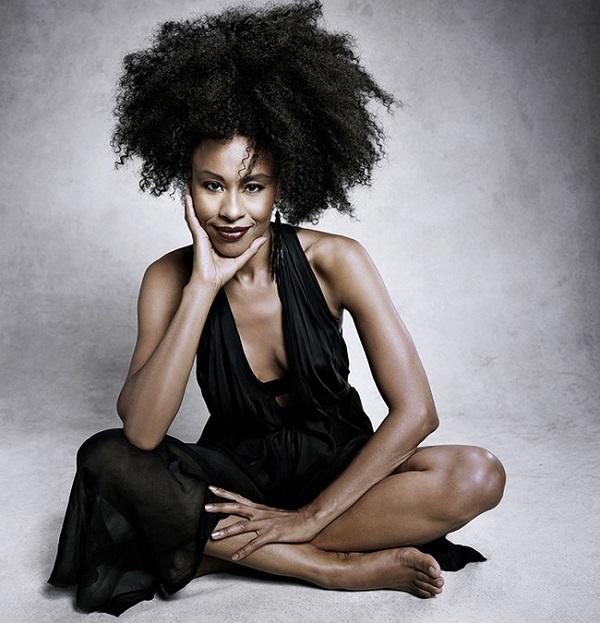
Malia (born in 1978) is a singer from Malawi. She has released seven studio albums. Her mother is Malawian and her father is from the United Kingdom. She moved to London in her teens.

After finishing school, Malia dedicated herself to music. She worked as a waitress while organizing a backing band, singing ballads and classic jazz in London bars and clubs.

During a visit to New York, she heard a pop-jazz track sung in French by vocalist Liane Foly, produced by André Manoukian. She contacted Manoukian to ask for his help, and they began working on her 2002 debut album, Yellow Daffodils. Although the release included English lyrics, it achieved recognition in France and Germany.

Malia (born in 1978) is a singer from Malawi

Her subsequent releases, Echoes of Dreams (2004) and Young Bones (2007), were highly acclaimed among jazz fans across Europe. Malia is known for her expressive voice. From the beginning, she found her way to the stage and her singing style flirted with sounds from the 1960s and 1970s.

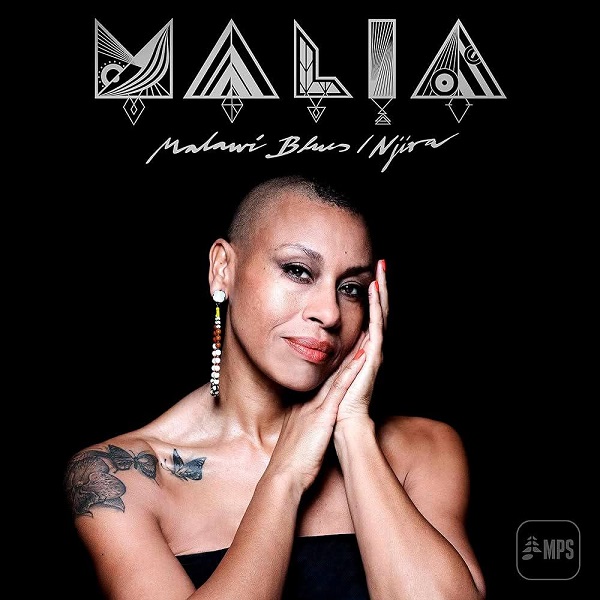
Her role models include Billie Holiday, Sarah Vaughan, and Nina Simone. In 2013, she received the Echo Jazz Award for “International Female Vocalist of the Year.” She explored her African roots in the album Malawi Blues/Njira, released on MPS in 2016. In her 2018 release, Ripples (Echoes of Dreams), Malia offers another perspective on her previous album, Echoes of Dreams. Her latest release, The Garden of Eve, is dedicated to the blues.

Malia is the energy that allows the blues to have a soul, a voice

“My heart beats for many things. I think that is because I come from a marriage of mixed heritage. I have never felt like I am one thing or the other; I am more of a fusion of both, and my music reflects that. I feel I am evolving as a human being, and although music is simply a medium for expression, I like the idea of resonating with it, if its rhythm suits me.

The blues has always been dear to my heart: it is a cathartic, precious, and profound experience, whether playing it or hearing it on the radio. When I first heard Billie Holiday sing ‘Blue Moon,’ I could feel it in every cell of my body.

She had a very powerful effect on me. Sentimental blues, originating in tragic situations, sometimes even reflecting my own experiences… No matter how bad family, friends, politics, lovers, governments, or society may be, they can never destroy the forces of good in this world.

And as time passes, I find more and more of the truth that is rooted in my soul. And I finally feel mature enough to understand this wonderful musical tradition, because the blues means life.”

And if the blues means life, Malia is the energy that allows the blues to have a soul, a voice. It has been a long time since a contemporary artist paid such a beautiful homage to the blues—a style that, in the year 2020, deserves to have the dust shaken off.

Marshall McLuhan’s once-futuristic idea of the “global village” became a reality long ago. Only now, in pop music, are we learning and experiencing, in many ways, what the legendary media theorist formulated in the early 60s. Thanks to digital technological advancements, most pop genres have acquired a global dimension.

Her mother is Malawian and her father is from the United Kingdom. She moved to London in her teens.

Hip-hop, blues, and jazz are evolving into hundreds of regional variants, far from their original roots. Malia’s music can undoubtedly be considered an impressive testament to this worldwide fusion.

After moving from the southern African republic of Malawi to London at age fourteen, the singer spent her adolescence in the UK capital (Note: the “Big Apple” is the nickname for New York, which contradicts having spent her adolescence in London. The original text was left, but the inconsistent use of the term is corrected).

Malia recorded three albums in France with André Manoukian: Yellow Daffodils (2002), Echoes of Dreams (2004), and Young Bones (2007), all created in Manoukian’s Parisian studio.

In 2010, she met Swiss producer Boris Blank, who, since the 80s as part of the avant-garde duo Yello (The Race, Bostich) with Dieter Meyer, has garnered great success. In 2012, Malia released a tribute to Nina Simone, Black Orchid, which won that year’s ECHO Jazz Award. In 2014, Boris Blank produced the eleven electronic-style songs for her album Convergence.

Malia’s sixth studio album, Malawi Blues/Njira, sees her clear, incisive voice amplified again in a soul-jazz context. “An album I’ve always wanted to make… I feel like the time is right now… I wanted songs that reflected my consciousness and my ancestry,” she summarizes the essence of the ten tracks on Malawi Blues/Njira.

The album features thoughtful, mostly slow-tempo original tracks, with sparsely orchestrated piano, accompanied by guitar and percussion, including an almost minimalist version of the classic ‘Moon River.’ From the outset, with Malawi Blues/Njira, Malia recalls the sound of her childhood.

The local vibes of the Kwela and Kwasa-Kwasa traditions are felt not only in the moving “Love Is Holding Both Our Hands.” “I humbly consider it my duty to pass on the rich traditions and stories, just as my ancestors did, as my grandparents and parents did when we would sit around the fire in the evenings in Malawi, eating nsima with pumpkin leaves and peanut sauce.” Of course, that is only one aspect of her rich work.

Her songs are characterized by artistic experiences and experiments, an amalgam that has shaped Malia’s life and a lasting effect of her time in the London club scene, where she was able to sharpen her sense of rhythm in small bars in front of reduced audiences. Here, she could always adjust her sets live, night after night.

This musical diversity now benefits her, when, in Chipadzuwa (a southern African colloquial term for a beautiful woman), she alternates between the regional language, Chichewa, and the universal language, English, with a mellifluous ease.

With the support of the virtuoso pianist Alex Wilson, a sound that is both fresh and warm emerges. Malia has arrived in a global musical world for which she works and fights. “To all the silent warriors in this world,” Malia concludes, “Malawi Blues/Njira is for you!” (mps-music)

Malia – Malawi Blues / Njira (2016)

Malia - Malawi Blues Njira (2016)
Malia – Malawi Blues Njira (2016)

Tracks:

  1. Malawi Blues / Njira
  2. Love Is Holding Both Our Hands
  3. Chipadzuwa
  4. Let Me Breathe
  5. Disgrace
  6. The Seed
  7. Black Widow
  8. Moon River
  9. Friendship
  10. Wonder Of The World
  11. Let Me Breathe (bonus track)

Musicians:

  • Malia (Vocals)
  • Alex Wilson (Piano, Programming)
  • Dimitris Christopoulos (Double Bass)
  • Edwin Sanz (Drums, Percussion)
  • Ahmed Fofana (Guitar on track #2, Instruments on track #9)

About Malawi, The Warm Heart of Africa

Malawi, known as the “Warm Heart of Africa” for the kindness of its people, is a landlocked country located in southeastern Africa. It is famous for its stunning natural landscapes, highlands, and, above all, the vast Lake Malawi, which covers approximately 20% of its territory.

Culture and History

  • Culture: Malawi’s culture is rich and diverse, with various tribes such as the Maravi, Nyanja, and Tumbuka. Each contributes particular aspects to the traditional masks, dances, music, and clothing. The people are known for their friendly nature and relaxed pace of life.
  • History: The territory was a British protectorate called Nyasaland until its independence on July 6, 1964. Subsequently, it became a one-party state under the authoritarian rule of Dr. Hastings Kamuzu Banda for decades, until the transition to a multiparty democracy in the 1990s.

Tourism and Nature The main tourist attraction is Lake Malawi, the third-largest lake in Africa, known for harboring more fish species than any other lake in the world, including about 1,000 species of cichlids. The country offers an authentic travel experience and is considered one of the safest countries in Africa for visitors.

🎤 Personal Data on Malia

  • Birth Name: Not commonly used publicly; she is known simply as Malia.
  • Year of Birth: 1978.
  • Place of Birth: Malawi, East Africa.
  • Nationality: Malawian and British (United Kingdom).
  • Family Origin: Her mother is Malawian, and her father is from the United Kingdom.
  • Musical Career: She was exiled with her family to London when she was a teenager (around age 14) due to political reasons. It was there that she discovered jazz and was inspired by singers like Billie Holiday, Sarah Vaughan, and Nina Simone.
  • Genres: Jazz, Soul, Blues, Pop, with African influences.
  • Recognition: She won the Echo Jazz Award for “International Female Vocalist of the Year” in 2013 in Germany.
  • Notable Discography:
    • Yellow Daffodils (2002) – Her debut album.
    • Black Orchid (2012) – A tribute to Nina Simone.
    • Malawi Blues/Njira (2016) – An album where she explores her African roots.


Collaboration:

L’Òstia Latin Jazz

Dj. Augusto Felibertt.

Also Read: Dave Valentin considered one of the most important Latin Jazz flutists in history, thanks to his technique and rhythm.

Spain is reborn in new Cuban music by Yalil Guerra

The immense Hispanic legacy is usually relegated to the background, while being a key part of our sound identity.

Reference Image about Spain
Reference Image
Yalil talking about Spain
Composer, bandleader, and Latin GRAMMY winner Yalil Guerra.
Image courtesy of RYCY Productions

By YALIL GUERRA

The birth of the Cuban nation, after gaining its independence from its former colonizer, Spain, marked a break that transcended political concerns and entered strongly in the cultural aspect. Cubans were “denaturalized” after the Treaty of Paris in 1898, leading to a profound metamorphosis of identity that was inevitably reflected in our music. Out of that process a fresh and powerful sound expression emerged: a vibrant fusion between European, African, and North American influences, something that had already begun in the 19th century but was driven by a growth music industry and the cultural magnet of its northern neighbor, the United States.

For years I have listened to, studied, and enjoyed Cuban popular music — both the old and contemporary— and what I notice is that most productions tend to highlight the folklore—especially the Afro-descendant roots and the imprint of jazz — while the immense Hispanic legacy is usually relegated to the background, while being a key part of our musical identity.

In Cuban music today, both on and off the island, the record business is committed to a modern and bold sound. Compositions explore contemporary harmonies, bitonality, and extended chords — resources that come from both classical music and jazz — entwined with surprising and refreshing harmonic cycles. In wind instruments, melodic lines and musical motifs reveal the virtuosity and creativity of a new generation of musicians and arrangers, who are raised in solid academic traditions but open to global influences. The percussion stands out for its polyrhythm and the number of sophisticated tutti that require a unique expertise, but the Spanish influence is quite absent or just present in the language.

In contrast, What caught my attention was the newest music of singer, composer, and multi-instrumentalist Alain Pérez on his new album Bingo, where Spain resonates powerfully and recognizably. I find this gesture very special, as it vindicates a Spanish legacy in Cuban music that is often forgotten or minimized. I also highlight the case of pianist and composer José (Pepe) Rivero and his new album Estampas y Raíces where he pays tribute to classical Spanish composers, mixing their works with his unique interpretive style, bringing it closer to the language of Cuban jazz that is so familiar to him.

What about the large mass of Cuban artists and musicians who do not pay homage to the mother country? It is that we lost our historical memory or has it been erased? Is the omission of certain elements of our Spanish traditions a symptom of what some call the “Spanish Black Legend,” a myth that has seeped into our musical history and present?

I remember when Juan Perón said:

“And through the figure and work of Cervantes, Argentina pays tribute to the mother country, fruitful, civilizing, eternal, and to all peoples who have emerged from its maternal womb.” “And through the figure and work of Cervantes, Argentina pays tribute to the mother country, fruitful, civilizing, eternal, and to all peoples who have emerged from her maternal womb.”

Cuba is no exception.

Over the years, in response to the previously exposed, I have tried to make Spain present in my work: incorporating harmonious colors, Andalusian cadences, and the Phrygian mode—so tied to the Iberian sound—creating compositions devoted specifically to Spanish culture, especially my new string quartet entitled “Noches de España”, following the line of our great composer Ernesto Lecuona, who knew how to bring to life both African and Spanish things. As for me, I seek to keep alive that heritage and project it onto 21st-century Cuban music, without forgetting our important African legacy.

Today, rescuing the Spanish heritage in Cuban music is not just an act of memory: it is also an opportunity to rediscover the richness of crossbreeding that continues to define who we are and how our history sounds. Contemporary Cuban music not only looks to the future: it sings to its African roots, but it also needs to reconnect with that other essential part of our identity. After all, we think, love, and communicate in Spanish. Every note, every guitar or lute that sounds, will evoke that heritage and bring us near to the fullness of what we are.

It does not matter the color our skin is, or whether our grandfather was from Asturias or the Congo: cultural fusion is what forged our identity and will remain the essence of Hispanic America. Mexican writer, philosopher, and politician José Vasconcelos said: “I am Hispanic, and nothing about Hispanic is alien to me.”

At this crucial time, Cuban music has the challenge—and the opportunity—to sing its entirety. And in doing so, it shows us that, beyond styles or labels, what unites us is the sound of a common history.

DMA Yalil Guerra

Read also: Yalil Guerra and the musical roots of his talent

The Williamsburg Salsa Orchestra: electrifying fusion and salsa flavored with indie rock

The Williamsburg Salsa Orchestra is an 11-member musical group that, as the name suggests, uses salsa as its foundation but also mixes it with other genres such as funk and indie rock to make its music distinct. This combination of beats has led the orchestra to be internationally recognized for its explosive arrangements, modern touches, and repertoire inspired by Anglo-Saxon artists.

Today we are here with arranger and percussionist Gianni Mano (founder) and Argentine singer Solange Prat (vocalist) to find out about their beginnings, the current situation of the orchestra, their roles in the project, and much more. 

Solange Prat and Gianni Mano
Argentine singer Solange Prat and American bandleader Gianni Mano

Gianni and Solange’s musical awakening

Gianni began his first address by sharing that his family had some musicians back several generations, but his own interest in music aroused in his childhood. It was then that his parents enrolled him in piano lessons, but his taste for Afro-Cuban and Afro-Caribbean music settled in when he was a teenager, recently moved to Miami to attend college.

In the late 1980s, he got a job at a nightclub, where he discovered hits from great artists who would inspire him in the future, such as Cuban musician and percussionist Carlos “Patato” Valdés. When he listened to the artist, Gianni could hardly credit how wonderful and different it was what captivated his ears.

By the time, the young man was studying percussion focused mainly on classical music, but the impact of those rhythms he had heard was such that he wanted to know much more about them. This led him to move to New York and hire private teachers to know more about salsa, Afro-Cuban, and Nuyorican music, because when heard them, he discovered that this was what he wanted to dedicate himself on an artistic level. He assured us that it is always best to learn music directly from those who play it, so it was the best decision he could take.

The musician assured us that, at that moment, he could not believe the world he was missing, but when he found it, he did not let it slide.

At this point, Solange joined us and said her interest in music began in her native Argentina, where her parents always listened to Gloria Estefan, Juan Luis Guerra, and other artists of this type. On her mother’s side of the family, some relatives played the guitar and a lot of Argentine folk music such as sambas and chacareras, so she had a lot of contact with that music and eventually started singing at a very young age.

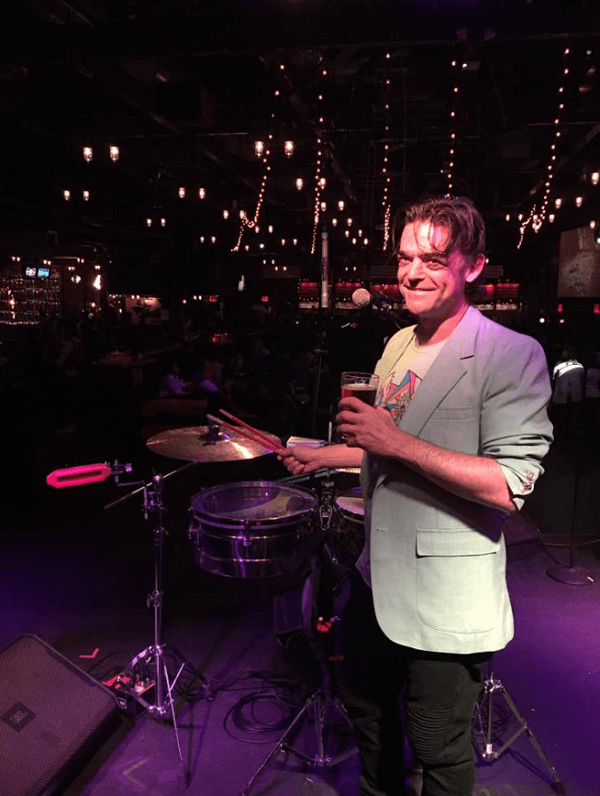
Gianni playing live
Gianni Mano playing live at Brooklyn Bowl

Since the girl used to sing all the time, her mother enrolled her in singing lessons until she got her first opportunity in a band at the age of 15. Added to that she spent about six months on a cruise in the Caribbean, and when she came back, she wanted to continue training on an artistic level, but with a focus on the music she had been listening to during her trip. 

Sometime later, she went to visit a friend in New York, and it was there that she met Gianni, who asked her to join The Williamsburg Salsa Orchestra, which was already founded. It was something very new for her, as she had never sung salsa before, but she accepted the challenge anyway, and Gianni served as a mentor for her at all times.

Gianni as an arranger

As for his role as an arranger, Gianni told us that, when he left his previous job to devote himself entirely to music, he spent oceans of time transcribing arrangements of other artists’ songs to see how they worked. He remembers that the first song with which he tried this was one by Tito Puente, but then he did the same thing with hundreds more.

For a long time, he listened to all these pieces hundreds of times to understand the form of a salsa-based song and how it needs to be structured for the enjoyment of the dancer on the dance floor. That is how he began to write his own arrangements, although acknowledging that they were not all that good at first, so he had to practice a lot.

His coexistence with groups of different genres and practice with various types of instruments helped him greatly to master this area in all styles.

Solange Prat singing
Solange Prat singing at the Sofar Sounds New York

The Williamsburg Salsa Orchestra

In 2009, Gianni was making some demos and garnered rave reviews, so he felt ready to start his own musical project, but obviously he could not do everything alone. He began to place ads in online newspapers to recruit artists to join his band, although there was a subject which worried him: language. He told us that he was looking for musicians who mastered both English and Spanish, and in that sense, Solange pleasantly surprised him with her singing ability in both languages. 

The orchestra’s first show was in 2010, which let it to gaining some popularity in the public of the city.

From Solange’s point of view, she describes her arrival in the orchestra as an unexpected event for her career, since in Argentina she had experienced a lot with soul, R&B, and funk. However, this would change with her move to New York, which is when she met Gianni and discovered a whole new world for her until then, but she loved it a lot.

So, she did his best to learn everything she could about this new music and keep up with required level. Gianni played a big role in this, as he taught her how to play certain instruments and gave him CDs from some of the great salsa legends to take them as a guide. 

She closed the subject by saying that moving to New York, meeting these musicians, and becoming part of this new music scene was great and inspiring.

Gianni, Solange, and the rest of the orchestra
From left to right: Angela Ortiz (piano), Rafael Gomez (bass), Jhohan Hernandez (congas), Felipe Fornier (bongo). Solange Prat (voice), Gianni Mano (Percussion), Alex Asher (trombone), John Challoner (trumpet), Jason Prover (trumpet), and Dimitri Modebacher (baritone sax)

How to maintain an 11-piece orchestra alive

Currently, the Williamsburg Salsa Orchestra has 11 members in total. At a time when bands and musical groups are getting smaller and smaller, we wanted to know what Gianni and his artists do to stay together in an environment that pushes them in the opposite direction. 

The percussionist says that one of his greatest dreams was to have a large salsa orchestra, and he has succeeded, but he admits that things were simpler before COVID-19. After that, far fewer people attended salsa dances or were willing to pay for such an event. Still, they have done everything humanly possible to keep the group together, since in the words of Gianni, an orchestra composed of six or seven people does not sound as good or as complete as one with nine or more musicians.

However, he does not deny that they have had some issues with certain venues due to the orchestra’s size, such as small stages or low ability to pay everyone, but in general, club owners and promoters just want a good show and for people to enjoy it. For this reason, they make an effort to hire bands like the Williamsburg Salsa Orchestra because they know what they have to offer.

Read also: Ania Bartelmus from La Candela Flamenco talks about her performance at the Hispanic Heritage Celebration

Latin America / November 2025

Carlos "Cano" EstremeraPromesa de ReyesAnthony CarrilloCharlie Sierra

70th Anniversary Sonora Ponceña

Events – November 2025

Venezuela circular flag
VENEZUELA
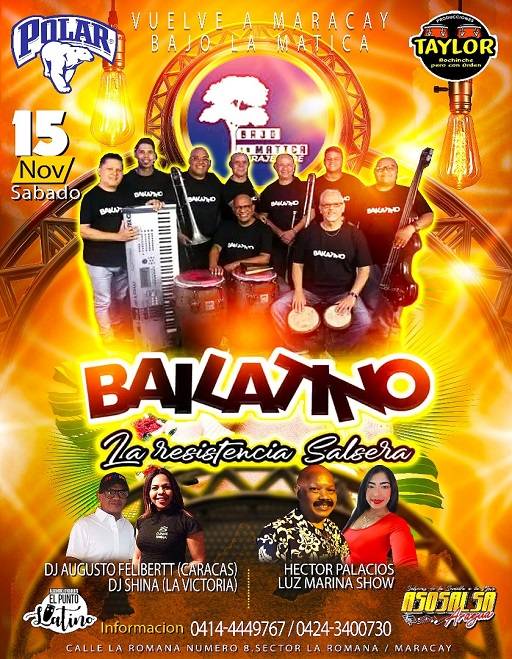
Bailatino

BAILATINO
La Resistencia Salsera

Nov 15, 2025

Bajo La Matica
2102, Maracay 2103
Aragua, Venezuela
+58 414 444-9767 / 424 340-0730

$ 10

Calibrated maracas

DIRECTORY OF NIGHTCLUBS

Argentina flag
ARGENTINA

Aruba circular flag
ARUBA

Belize circular flag
BELIZE

Bolivia circular flag
BOLIVIA

Brazil flag
BRAZIL

Chile circular flag
CHILE

Colombia
COLOMBIA

Costa Rica circular flag
COSTA RICA

Cuba circular flag
CUBA

Dominican Republic
DOMINICAN REPUBLIC

Ecuador circular flag
ECUADOR

Guatenala circular flag
GUATEMALA

Mexico Circular flag
MEXICO

Panama circular flag
PANAMA

Peru circular flag
PERU

Puerto Rico circular flag
PUERTO RICO

Venezuela circular flag
VENEZUELA


  • « Go to Previous Page
  • Page 1
  • Interim pages omitted …
  • Page 8
  • Page 9
  • Page 10
  • Page 11
  • Page 12
  • Interim pages omitted …
  • Page 56
  • Go to Next Page »

International Salsa Magazine (ISM) is a monthly publication about Salsa activities around the world, that has been publishing since 2007. It is a world network of volunteers coordinated by ISM Magazine. We are working to strengthen all the events by working together.