• Skip to primary navigation
  • Skip to main content

International Salsa Magazine

  • HOME
  • Previous editions
    • 2026
      • ISM / March 2026
      • ISM / February 2026
      • ISM / January 2026
    • 2025
      • ISM / December 2025
      • ISM / November 2025
      • ISM / October 2025
      • ISM / September 2025
      • ISM / August 2025
      • ISM / July 2025
      • ISM / June 2025
      • ISM / May2025
      • ISM / April 2025
      • ISM / March 2025
      • ISM / February 2025
      • ISM / January 2025
    • 2024
      • ISM / December 2024
      • ISM / November 2024
      • ISM / October 2024
      • ISM / September 2024
      • ISM / August 2024
      • ISM / July 2024
      • ISM / June 2024
      • ISM / May 2024
      • ISM / April 2024
      • ISM / March 2024
      • ISM / February 2024
      • ISM / January 2024
    • 2023
      • ISM / December 2023
      • ISM / November 2023
      • ISM / October 2023
      • ISM – September 2023
      • ISM – August 2023
      • ISM July 2023
      • ISM Edition June 2023
      • ISM – May 2023
      • ISM April 2023
      • ISM March 2023
      • ISM February 2023
      • ISM January 2023
    • 2022
      • ISM December 2022
      • ISM November 2022
      • ISM October 2022
      • ISM September 2022
      • ISM August 2022
      • ISM July 2022
      • ISM June 2022
      • ISM May 2022
      • ISM February 2022
      • ISM January 2022
    • 2021
      • ISM December 2021
      • ISM November 2021
      • ISM October – 2021
      • ISM September 2021
      • ISM August 2021
      • ISM July 2021
      • ISM May 2021
      • ISM April 2021
      • ISM June 2021
      • ISM March 2021
      • ISM February 2021
      • ISM January 2021
    • 2020
      • ISM December 2020
      • ISM November 2020
      • ISM October 2020
      • ISM September 2020
      • ISM August 2020
      • ISM July 2020
      • ISM June 2020
      • ISM May 2020
      • ISM April 2020
      • ISM March 2020
      • ISM February 2020
      • ISM January 2020
    • 2019
      • ISM December 2019
      • ISM November 2019
      • ISM October 2019
      • ISM Septembre 2019
      • ISM August 2019
      • ISM July 2019
      • ISM June 2019
  • Download Salsa App
    • Android
    • Apple
  • Spanish

Search Results for: Legend

Vinny Rivera release his latest single “Mientes”

North America / USA / Boston

Vinny Rivera. The #1 Latin Kizomba Artist in the World

Vinny Rivera
Vinny Rivera

Vinny Rivera ‘s new single “Mientes” coming off of his album “La Torre” takes Kizomba to the next level. Good friend Guelo Star who is currently writing for the likes of Don Omar, Ivy Queen, Jowell y Randy, De La Ghetto just to name a few originally wrote this song with the spirit of Kizomba and Vinny Rivera was the perfect voice to compliment the writing. This love song is sure to bring The #1 Latin Kizomba singer and songwriter towards new heights of world music.

Sound off the bongos & kick in the bass, Vinny Rivera is ready to hit the stage. One of the hardest working singer/songwriters, Victor “Vinny” Rivera, continues to shine in the music entertainment scene. Surrounded by great mentors and industry leaders such as world renowned international producers M&N Pro, Jorgie Milliano, Grammy award winning producer Richy Peña (Niña Bonita), and Universal Latino’s recording artist Yunel Cruz, Vinny’s sound has captured audiences all around.

The music of Vinny Rivera is refreshing and lends a sweet tuned voice to the likes of urban bachata Superstar Prince Royce mixed in with Latin Pop Superstars Luis Fonsi & Enrique Iglesias. Genres of music are no different. His voice as well as being multilingual lends itself to Salsa, Bachata, Kizomba, Mambo, Pop, R&B and many more musical genres.

Vinny Rivera - Mientes
Vinny Rivera – Mientes

On the other hand and recognizing musical legend “Jerry Rivera”, Vinny Rivera alongside longtime friend and producer Jorgie Milliano pay tribute to a tropical classic “Amores Como El Nuestro” by giving it a tasteful Kizomba twist that audiences everywhere are sure to enjoy.

Vinny Rivera is currently working on a new Latin Kizomba album that will continue to capture the hearts and ears of all Kizomba lovers.

Besides, Vinny’s talent for capturing audiences has exponentially increased his passion for performing and entertaining. Performing in festivals and special events, the demand has been genuine and stage performances continue to impact his listeners.

Musical Trajectory 

Victor Rivera, known artistically as Vinny Rivera, was born in Boston, Massachusetts, United States. Of Puerto Rican parents under the tutelage of his Dominican stepfather, he is one of the most hard working singers / composers to shine in the musical entertainment scene. Being influenced by the Boston city melting pot, he was exposed to a variety of musical genres including Reggae, Jazz, Soca, R & B and pop and the sounds of his native island and the neighboring Dominican Republic sounds the Salsa, Merengue, Bachata.

2- Vinny Rivera
2- Vinny Rivera

Completely addicted and forced by music and the desire to share his energy and healing skills, at the age of 16 he bought his first DJ set with his best friend Okland López and began playing music of all kinds of events. In that period he realized that he wanted to take the next step, to make music. He then began to study all kinds of music and finally was able to be comfortable enough to sing.

His friends encouraged him to record music and were associated as a trio together Loco Jow to pursue a career within the music industry. Although not signed with any record label they achieved a network of relationships around the world that got them heard everywhere, which allowed them to rank No.3 in a company of radio and distribution of popular music in South America.

Vinny continued to work with the group opening shows for world-renowned acts such as Don Omar, Wisin & Yandel, Zion & Lennox, Ivy Queen, Rakim & Ken-Y, Tony Dize, Alexis & Fido.

The group split because of four years of Vinny’s enlistment in the United States Air Force. Now a veteran of the Air Force from June 2004 to December 2014 Vinny learned that “Life is too short and you have to give everything you have.”

He started working and learning with Grammy-winning Producers such as Richy Peña who produced the hit “Niña Bonita” by Chino & Nacho and Lenny Santos recognized by the Bachata group “Aventura”. To then sing and write with Universal Billboard and Cuban artist Yunel Cruz. He also wrote a final hit for Jowell and Randy “Lo Que Quiero”, which reached # 11 on the charts, being remixed with Reggaeton Super Stars Arcangel, Farruko and Divino produced by his great friend Jorgie Milliano.

Vinny Rivera collash

His work and vocal skills have captured the respect and attention of the public around the world. The formula for Vinny Rivera’s latest plan is to use his music as a tool to address problems in the world. Until then he will continue to work diligently on making good music to enjoy.


Buika. The Multicultural Sensation

European Union
Buika
Buika

“It takes a lot of guts to expose your true self to others, and acclaimed singer, songwriter, poet, composer and music producer, Buika (pronounced BWEE-ka), does that every night she goes on stage. As plain as the tattoos on her skin, Buika bears her soul to her fans across the world, which she affectionately calls her “tribe.””

This summer, Buika continues her journey of storytelling across Europe and South America in support of her latest album, fittingly named Vivir Sin Miedo (To Live Without Fear). Her eighth album and one with the most English lyrics, Vivir Sin Miedo, co-produced by Grammy Award-winning Swedish producer, Martin Terefe (Mary J. Blige, Mutya Buena, Coldplay) features Grammy-winning singer-songwriter Jason Mraz, German neo-soul artist Meshell Ndegeocello, and Spanish underground flamenco legend Potito.

2- Buika
2- Buika

Born María Concepción Balboa Buika in Palma de Mallorca, Spain, Buika grew up immersed in Spanish culture with her African-born parents. Surrounded by multiple cultures throughout her life, Buika had a variety of musical influences, from jazz and flamenco to pop, soul and African polyrhythm. This eclectic upbringing shaped Buika’s ability to make music without limitations. During her 15-year recording career, her albums flow seamlessly between pop, jazz, soul, reggae, afro beat, R&B and flamenco. Equally diverse are her collaborators, which include Pat Metheny, Anoushka Shankar, Chick Corea, Niño Josele, Bebo and Chucho Valdés, Seal and Nelly Furtado.

Photo 2 - Buika
Photo 2 – Buika

“Filmmaker and longtime fan, Pedro Almodóvar, remarked about Buika, ‘Seeing her draw from such different genres…mix them all together with such grace and spontaneity, one cannot help but think that there is a brighter future as long as one can witness the boundless evolution of this infinite performer.'”

A brighter future did arrive for Buika with each new album. Her 2006 album, Mi Niña Lola (My Little Girl Lola), won Buika high praise from the US media, including The New York Times, The New Yorker, Miami Herald and NPR. She received two Latin Grammys, one for her 2009 album, El Ultimo Trago (The Last Drink) and for her 2013 album, La Noche Más Larga (The Longest Night), which also won a Grammy nomination for Best Latin Jazz album.

Photo 3: Buika
Photo 3: Buika

Other Latin Grammy nominations included Best Album and Best Production for Niña de Fuego (Girl of Fire, special 2-CD Edition, which included her first collection of poems – 2008), Record of the Year for her albums, Se Me Hizo Facil (2010) and La Nave del Olvido (2013) as well as the new Record of the Year nomination for Vivir sin Miedo for the song “Si volveré” (2016)

Buika knows no boundaries when it comes to language or geography. She has collaborated with musicians and singers in Spanish, Catalan, English, French, Portuguese, Iranian and Armenian. Her touring has spanned the globe, covering Europe, Latin America, the Caribbean Islands, Asia, Africa and the US.

A great music ambassador, she reaches any small or large crowd..i.e performed at the US Embassy in Madrid, Spain, on a great 4th of July or a year ago at the Spanish Embassy in DC, for a larger audiences at different music festivals, such as “La Notte della Taranta” Italy over or “Jazz al parque” Bogotá just a month ago.

Photo - Buika
Photo – Buika

She has no barriers in terms of artistic expression and rejects any kind of self-limitation, a business owner, singer / songwriter, producer and poet, whom on her time off immerses herself in the world of photography, some of her best portraits and self-portraits can be seen on any of her books, Niña de fuego (Girl of fire) “special edition” and -A los que amaron a mujeres difíciles y acabaron por soltarse (To those who loved difficult women and ended up letting go)

Buika singing
Buika singing

For Buika, her music is more than a career. She says, “I am music (…)!”

  • [email protected]
  • [email protected]
  • [email protected] 
  • [email protected]

What Adalberto Santiago represents for Latin music

Our great friend Adalberto Santiago is one of the biggest references of Latin music despite his long career, so it is always appropriate to remember the greatest moments of his career. Today, he is experiencing some health difficulties, so we hope he enjoys this article and it makes him feel better.

This is Adalberto Santiago
This is Puerto Rican composer and singer Adalberto Santiago many years ago

Adalberto Santiago’s beginnings in music

Adalberto Santiago Berríos was always possessor of an extremely powerful and deep voice, making him a lyric tenor and one of the best performers of Afro-Cuban music in the United States. Some of his most important influences from an early young age were Miguelito Cuní and Benny Moré, who served as a source of inspiration for what was to come in his future career.

The artist began in music by lending his voice to trios and playing the guitar and bass, although he often accompanied these activities with some dance steps. In the eyes of many, this makes him one of the first singers to play, dance, and sing in the same concert. In addition, in this early stage of his career, he was nicknamed “The Latin Elvis Presley” due to his tall stature, thick hair, blue eyes, and elegant demeanor. 

Turning point in his career

After having had the opportunity to play with great orchestras at the time, what really made his career take off was his joining Ray Barretto’s Orchestra, prompting him to go international with albums such as “Acid” and “Rican Struction.” These albums continue to be a reference for salsa and Latin music fans in general.

Johnny and Adalberto at the museum
Johnny Cruz and Adalberto Santiago at the Spaha Salsa Museum in New York

Some time later, Santiago and other members of the aforementioned orchestra created La Típica 73, but unfortunately time did not pass much when the artist and some of his colleagues split up again over religious differences with the rest of the members and founded Los Kimbos on their own. Along with this group, of which he was the lead singer, he recorded ”Los Kimbos” and ”This Big Kimbos With Adalberto Santiago” in 1977, the year in which he dared to release his first solo album called ”Adalberto”. 

One interesting thing about that album is that it was produced by Ray Barretto, who contributed two of his compositions to his old pupil.

Solo career 

From 1977 onwards, everything that came for Alberto was nothing more than success and recognition. One of those great successes was his famous participation in “Hommy, A Latin Opera,” a work produced and directed by Larry Harlow, which was an assured stamp of excellence. Soon after, he was asked to be one of the lead singers for “Louie Ramírez y sus Amigos.” He co-produced the song “Adalberto Featuring Popeye El Marino” with Ramírez and joined Barretto on “Rican/Struction.”

In the 1980s, Adalberto and Roberto Roena came together to release ”Super Apolo 47:50”, which included songs such as ”Yo Tenía Una Mujer” and ”Vigilándote”. Around the same time, he also co-produced the album ”Calidad” with Papo Lucca, who was also very involved in the musical direction. 

Adalberto and Johnny en un homenaje
Adalberto Santiago and Johnny Cruz during a tribute to the Puerto Rican singer

Another international explosion of popularity

Another milestone in his career was his salsa version of the classic “Sex Symbol,” which has since become a cult album for fans from many countries, including Colombia, Peru, and Venezuela. It turned out to be one of the most successful albums of his entire career and practically established a new style known as “salsa monga.”

The composer has also written songs for albums in which he himself has been involved as both a bandleader and singer, and his success has in no way prevented him from staying true to his Latin roots.

Adalberto Santiago’s current situation

We have learned that Adalberto Santiago was about to participate in a tour which aimed to pay tribute to him and other participants, but due to some complications with his health, this concert series will not be able to take place for the time being.

From International Salsa Magazine, we are very sorry for this situation, and the entire team hopes that this living legend of music will be able to get out of this situation and continue to give us joy with his talent.

Johnny Cru ISM corresponde in New York City


Read also: Cache Live Music puts Miami to dance to traditional Latin music

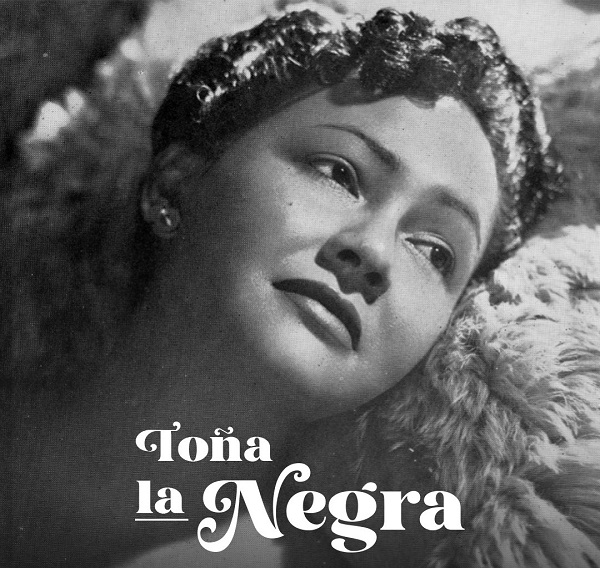
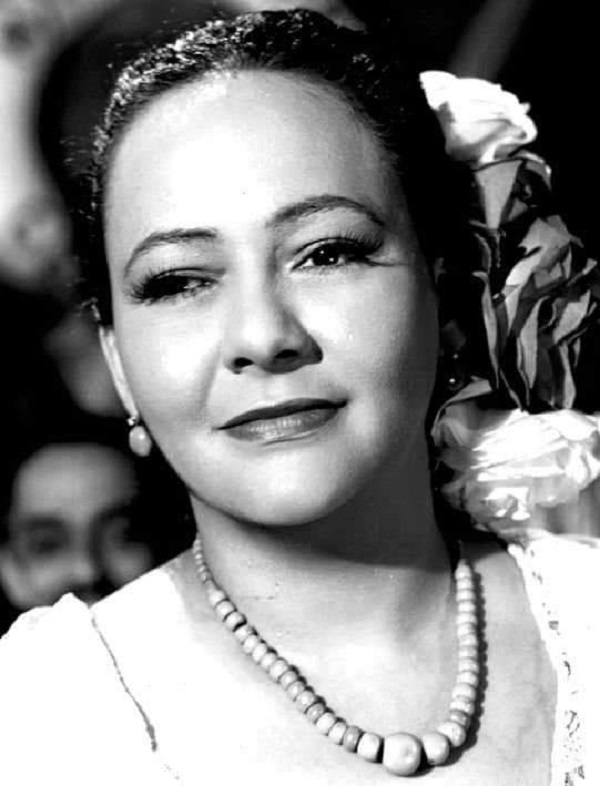
Toña La Negra The Unequaled Velvet Voice of Tropical Song

On November 19, 1982, in Mexico City, Antonia del Carmen Peregrino Álvarez, better known as “Toña La

Toña la Negra, passed away. She was a prominent Mexican singer and actress of African descent, famous for her interpretations of boleros and tropical songs by the composer Agustín Lara, who considered her “the greatest female singer of all time” due to her “highly personal style,” “the power of her expression, and the velvet of her privileged throat.”

Toña La Negra The Unequaled Velvet Voice of Tropical Song

Antonia Peregrino was born in the city of Veracruz, in the La Huaca neighborhood, on November 2, 1912.

Her father, Don Timoteo Peregrino Reyes, played the guitar and worked as a freight opener for the crates arriving at the port; he was also one of the founders of the Veracruz Port Commercial Loaders and Openers Guild.

Her mother, Doña Daría Álvarez Campos, sang at family gatherings.

Her paternal grandfather, Don Severo Peregrino, was Haitian and had emigrated to Mexico in the 19th century.

By 1927, she had married Guillermo Cházaro Ahumada, who took her to Mexico City with their first child, who was only forty days old.

On July 16, 1929, she debuted at the cabaret El Retiro. While performing there, where she was known as La Peregrina, she met Don Emilio Azcárraga Vidaurreta. It was Azcárraga, along with Enrique Contel, who christened her “Toña La Negra.”

On November 19, 1982, in Mexico City, Antonia del Carmen Peregrino Álvarez, better known as “Toña La Negra”, passed away.

She began to gain recognition with her interpretation of the song “Enamorada” (In Love) by Agustín Lara. Lara also produced tracks for her such as “Lamento Jarocho,” “Veracruz,” “Noche Criolla” (Creole Night), “Oración Caribe” (Caribbean Prayer), “Palmera” (Palm Tree), “La Clave Azul” (The Blue Key), and “La Cumbancha.” They presented these together in a musical revue at the Teatro Esperanza in December 1932, achieving such success that they had to extend their performances for a long time.

Her voice tone was rather deep, with a velvety and rounded sound, and impeccable vocal techniquecharacteristics that became her interpretive signature.

Azcárraga added her to the cast of the XEW radio station, where she sometimes performed accompanied by Lara and other times by the Alfredo Girón orchestra.

Shortly thereafter, her spectacular performances began at the Teatro Politeama, across from Las Vizcaínas and next to San Juan de Letrán street.

Her recordings for the RCA Victor label constitute one of the most precious musical legacies in the history of the bolero.

One of the first records she cut for this label contained the song «El Cacahuatero» (The Peanut Vendor); this recording dates back to the 1930s. For RCA Victor, she recorded several long-play albums, including Caleidoscopio musical con Toña la Negra (Musical Kaleidoscope with Toña la Negra), Noche Criolla, vol. II, and La Sensación Jarocha, vol. III (The Jarocha Sensation, vol. III).

In the mid-sixties, she signed an exclusive contract with Discos Orfeón, where she recorded the last albums of her career.

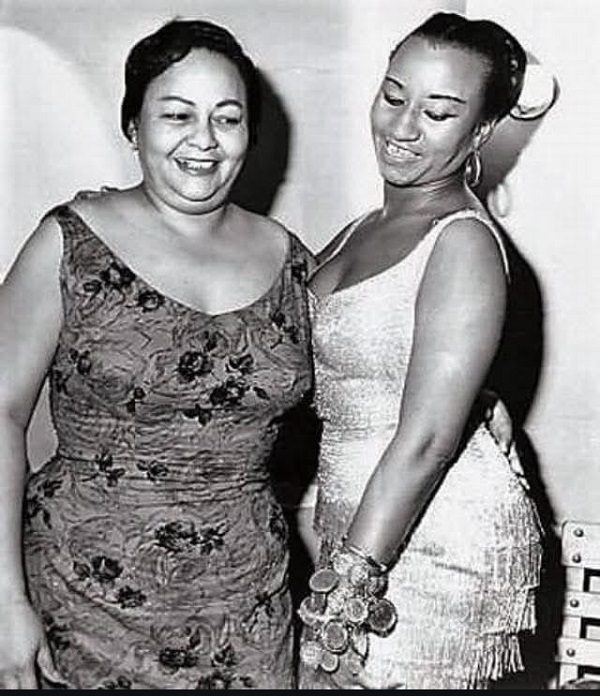
“Este amor salvaje” (This Wild Love), “Por qué negar” (Why Deny It), “Obsesión,” “Mentiras tuyas” (Your Lies), “Y sin embargo te quiero” (And Yet I Love You), “Noche criolla,” “Pesar” (Grief), “Vereda tropical” (Tropical Path), “Cada noche un amor” (A Love Every Night), “Angelitos negros” (Little Black Angels), “Lágrimas de sangre” (Tears of Blood), “Estás equivocado” (You Are Wrong), “De mujer a mujer” (From Woman to Woman), “Como golondrinas” (Like Swallows), “Diez años” (Ten Years), and “Cenizas” (Ashes) are some of her successful titles recorded on over 75 LP records, some of them for the Peerless label. Already famous for many years, she recorded two songs with the legendary Sonora Matancera in 1974.

Toña La Negra y La Reyna Celia Cruz

In her final years, due to some health issues, she gradually withdrew from the stage and recording.

Toña La Negra always maintained a very reserved personal life. With her first husband, the musician Guillermo Cházaro Ahumada, she had three children: Ramón (b. 1932), Guillermo (b. 1933), and Ernesto (1935–1979). Toña and Cházaro Ahumada separated in 1945.

Later, in 1955, she remarried the Veracruz-born bassist Víctor Ruiz Pazos, known as “Vitillo.” This marriage lasted until 1963. In an interview, Ruiz Pazos spoke about Toña’s artistic qualities:

Her commitment, her feeling when she sang, her style, the way she did it, how she expressed things musically; I have lived a long time, I have heard many fabulous singers, but none of them come close to Doña Toña.

The German filmmaker Christian Baudissin made a documentary about Toña La Negra for television in 1993, featuring interviews with her ex-husband, the musician Vitillo (Víctor Ruiz Pazos), and other artists who knew her during her lifetime.

Collaborators:

Los Mejores Salseros del Mundo

Dj. Augusto Felibertt

Also Read: Santa La Salsera and Diva of Mexico with her unique voice and style will continue to conquer us all

Cristobal Verdecia and his quartet Son Qba in Miami

As we all know, Cuba is an endless source of talent and never tires of proving it. Today, we are really honored to be able to talk to one of its greatest exponents in the city of Miami and it is arranger, producer, bandleader, and bassist Cristóbal Verdecia, who very kindly agreed to talk to us for a few minutes about his life and career both in Cuba and in the United States, his home for more than 10 years.

Cristobal with his basses
Cristobal Verdecia with his two basses

Cristóbal’s beginnings and inspirations for entering the world of music

The first reference that Cristobal had at a musical level was his uncle Israel “Kantor” Sardiñas, who was the vocalist, bassist, and pianist for the legendary band Los Van Van. The artist always wanted his nephew to learn to play instruments, more specifically the piano, but Cristóbal had other hobbies at the time and did not pay much attention to him. Then, in 1982, Sardiñas packed suitcases and left Cuba in search of better opportunities, but not before leaving his piano, bass, and guitar to the young Cristóbal to use them in his place.

It was then that he finally became truly interested in music, and the instrument that most caught his attention at the time was the bass. Seeing this sudden love for the instrument, Cristóbal’s father decided to enroll him in the Guillermo Tomás Music Conservatory when he was about 10 years old. He greatly improved his skills with the bass and began playing with local jazz bands, but his academic training was not yet complete. 

Some time later, he enrolled at the Ignacio Cervantes Conservatory, where his teachers, in his own words, were two of the best bassists to come from Cuba: Silvio Vergara, now deceased, and Carlos Del Puerto. At this institution, he studied electric bass and double bass.

From there, Cristóbal began playing with increasingly prestigious bands such as Pachito Alonso y Su Kini Kini, Paulo FG y Su Élite, Adalberto Álvarez y Su Son, Havana D’Primera, among many others. Being with Pachito, he had the opportunity to share with artists of the stature of Roberto Hernández “Robertón” (current Los Van Van singer), “El Lele,” the Mengual twins, among others. It was Robertón who gave him some advice about how to improve the quality and raise the level of his work.

Cristobal and his uncle
Cristobal Verdecia and his uncle Israel “Kantor” Sardiñas

In the case of Paulo G Y Su Élite, he had the opportunity to serve as musical director for about five years in the band, which provided great learning for the future. 

Subsequently, Alexander Abreu, director of Havana D’Primera, had the idea of forming his own band with the best musicians in Cuba and that each musician had a substitute. That was where Cristóbal joined and became part of the first album, “Haciendo Historias.”

Move to the United States

When Cristóbal made the decision to leave Cuba, the first country he visited was Mexico, where he spent about four years and also played with many other bands. However, the idea of forming his own project was already on his mind for some time.

When he finally turned this idea into reality, the artist and his band accompanied singers who arrived alone, which provided him the expertise to face the future professional challenges that awaited him.

Julio Cesar, Cristobal, Marciano, and Franklin
Guitarist Julio Cesar rodriguez, bassist Cristobal Verdecia, percussionist Marciano Hernandez and tresero Franklin Reytor

Once his cycle in Mexico concluded, he moved to Miami in 2012 to continue growing in music, as he believed that the city offered him an opportunity that his previous country of residence did not. One of the first things he wanted to do was to revive his quartet Son Qba, which he had started in Mexico, but he was advised to take the time to learn how everything worked there first and then follow the path he wished.

This is how Cristóbal also managed to play with several local artists and bands to understand the dynamics of the place, such as Tony Succar, Issac Delgado, Timbalive, Aymée Nuviola, Grupo Niche, Gonzalo Rubalcaba, Albita Rodríguez, Buena Vista All Stars, among others. All this path traveled finally led him to be able to resume Son Qba with the full works in 2019.

Today, Son Qba consists of our guest Cristóbal Verdecia, tresero Franklin Reytor, percussionist Marciano Hernández, singer and guitarist Julio César Rodríguez, and singer José “Pepito” Gómez.

Read also: Gabrielito Y La Verdad giving everything in Los Angeles and beyond

  • « Go to Previous Page
  • Page 1
  • Interim pages omitted …
  • Page 7
  • Page 8
  • Page 9
  • Page 10
  • Page 11
  • Interim pages omitted …
  • Page 56
  • Go to Next Page »

International Salsa Magazine (ISM) is a monthly publication about Salsa activities around the world, that has been publishing since 2007. It is a world network of volunteers coordinated by ISM Magazine. We are working to strengthen all the events by working together.