• Skip to primary navigation
  • Skip to main content

International Salsa Magazine

  • HOME
  • Previous editions
    • 2026
      • ISM / March 2026
      • ISM / February 2026
      • ISM / January 2026
    • 2025
      • ISM / December 2025
      • ISM / November 2025
      • ISM / October 2025
      • ISM / September 2025
      • ISM / August 2025
      • ISM / July 2025
      • ISM / June 2025
      • ISM / May2025
      • ISM / April 2025
      • ISM / March 2025
      • ISM / February 2025
      • ISM / January 2025
    • 2024
      • ISM / December 2024
      • ISM / November 2024
      • ISM / October 2024
      • ISM / September 2024
      • ISM / August 2024
      • ISM / July 2024
      • ISM / June 2024
      • ISM / May 2024
      • ISM / April 2024
      • ISM / March 2024
      • ISM / February 2024
      • ISM / January 2024
    • 2023
      • ISM / December 2023
      • ISM / November 2023
      • ISM / October 2023
      • ISM – September 2023
      • ISM – August 2023
      • ISM July 2023
      • ISM Edition June 2023
      • ISM – May 2023
      • ISM April 2023
      • ISM March 2023
      • ISM February 2023
      • ISM January 2023
    • 2022
      • ISM December 2022
      • ISM November 2022
      • ISM October 2022
      • ISM September 2022
      • ISM August 2022
      • ISM July 2022
      • ISM June 2022
      • ISM May 2022
      • ISM February 2022
      • ISM January 2022
    • 2021
      • ISM December 2021
      • ISM November 2021
      • ISM October – 2021
      • ISM September 2021
      • ISM August 2021
      • ISM July 2021
      • ISM May 2021
      • ISM April 2021
      • ISM June 2021
      • ISM March 2021
      • ISM February 2021
      • ISM January 2021
    • 2020
      • ISM December 2020
      • ISM November 2020
      • ISM October 2020
      • ISM September 2020
      • ISM August 2020
      • ISM July 2020
      • ISM June 2020
      • ISM May 2020
      • ISM April 2020
      • ISM March 2020
      • ISM February 2020
      • ISM January 2020
    • 2019
      • ISM December 2019
      • ISM November 2019
      • ISM October 2019
      • ISM Septembre 2019
      • ISM August 2019
      • ISM July 2019
      • ISM June 2019
  • Download Salsa App
    • Android
    • Apple
  • Spanish

Search Results for: Merengue

A walk through the history of Latin music in the United States

Latin music has been of great in­fluence for singers in training and, without a doubt, marked the lives of its pioneers. Some born in Spanish-speaking countries and others with descent from these lands have not been able to put aside the ­flavor that has been inherited to them. There are those who affirm that these tropical and Caribbean rhythms are carried in the veins and it is very difficult to get rid of these roots.

The arrival of Latinos in the United States also implied the arrival of their customs and culture. Latin music is considered to be a large number of genres, including: salsa, merengue, bachata, bolero, bossa nova, reggaeton, rumba, ranchera, cumbia, tango, among others.

Photo of Latinamerican Festival at Nagoya in Golden Week

Latinamerican Festival at Nagoya in Golden Week

How did Latin music begin to enter the United States?

Latin American music has in­fluenced American music, starting from jazz to country music. Many bands added congas, percussion, or maracas to their instruments as they were drawn to the result these elements brought.

Starting in 1940, the music of Latin America, which still did not have a specific term, covered a greater number of audiences in the United States; international radio networks broadcast different themes of the time. In addition, they featured different Mexican bolero musicians such as Alfredo Antonini, Néstor Mesta Chayres, Eva Garza and Juan Arvizu. In the 1940s the US also heard the “Calypso” with great acceptance.

It was not until the 1950s that the term “Latin music” became popular, seeking to establish a difference between Afro-American and Afro-Latin American rhythms. Some artists marked this musical fusion to a greater extent, making the best of Latin music known on American soil. During the 1950s, music brought to the north from the island of Cuba, such as mambo, cha-cha, and rumba, was very popular. As well as the famous Mexican songs: rancheras and mariachis.

Some Latino artists who marked the history of Latin music in the United States Tito Puente was an American percussionist with Dominican origins remembered for his participation in worldwide jazz, Cuban music and salsa. In 1950 he helped promote the genre of mambo and cha-cha. His album “Dance Manía” was considered the most famous by the artist, it was one of the most heard among the Latino community in the US The album also set a precedent by being recorded in Spanish, generally, Latin albums were in English or with instrumental songs. It was Tito Puente who broke with this tradition.

At the beginning of the 20th century, tango touched American soil. Then, in the 70s, the Argentine Astor Piazzolla gave something to talk about by demonstrating his passion for the genre and revolutionizing what was known until that moment. Piazzolla was born in Mar de Plata but lived in New York from a very young age. It definitely changed the way of looking at music that was long marginalized, it was considered the music of the working class. The singer made mixtures between tango, jazz and contemporary classical music. His songs were a great success and were famous in bars of the time.

It was not until the late 1960s and early 1970s that the term “salsa” began to become known. Afro-Caribbean musicians mixed Cuban dance with infl­uences from jazz, Caribbean music, and American rhythms. Although in previous decades it had already had its beginnings, it was in the streets of New York where it was consolidated as a commercial success.
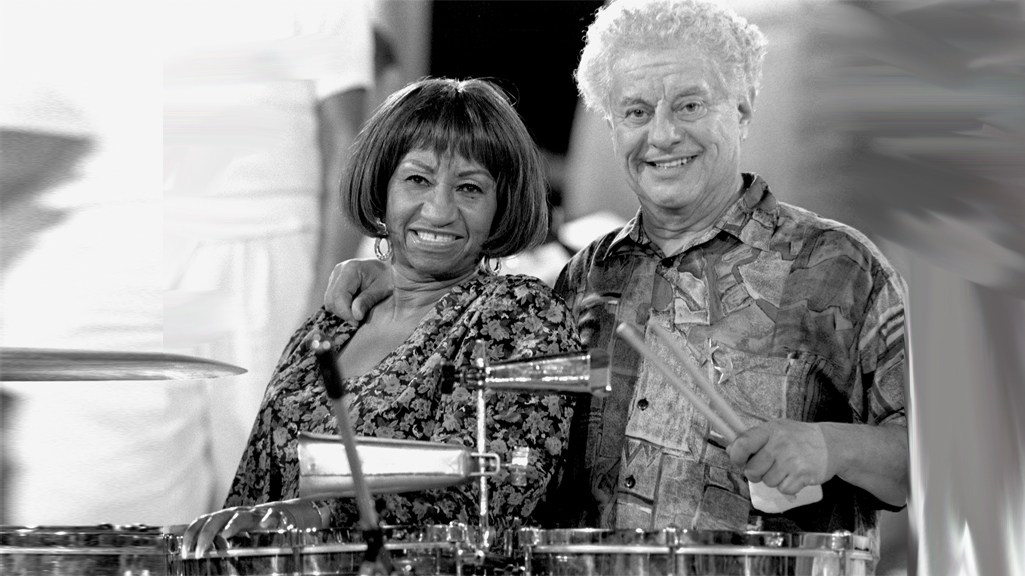
Photo by Celia Cruz and Tito Puente

Celia Cruz and Tito Puente – Latin music

Salsa launched artists who are now legends to stardom, such as: Celia Cruz, Willie Colón, Héctor Lavoe, Rubén Blades, Johnny Pacheco, among others.

Between the 1970s and 1990s, Dominican immigrants to the United States continued, especially to New York City, and promoted genres such as merengue and bachata. Juan Luis Guerra was one of the great exponents of both styles.

In the 90s, Selena mixed the Texan aesthetic with pop, giving her the title of the highest representative of the genre.

Entering the 2000s

In this decade, Latin rhythms continued to set the trend. Singers like Rubén Blades returned with songs that promised to be hits in the country.

At the end of 1999 Marc Anthony surprised his followers with an album of the same name. Although he was already known in the salsa genre, he decided to try other styles. With the intention of reaching the Anglo market, he is encouraged to sing in English. “I Need To Know” is a cha-cha song that quickly became popular in the United States. For eleven weeks it remained in the top North American positions, ranking in the Top 10 on the Billboard. The Spanish version won the Grammy for the best Latin song of the year 2000.

Marc Anthony was one of the artists who marked this decade in the US That same year a compilation of his best salsa songs went on sale, which he called: “Desde el principio”. With these successes to his credit within this country, he set out to make an important tour of the United States. Canada and Central America. Madison Square Garden in New York was over­flowing with fans who wanted to hear this American singer but who positioned himself as the leader of a Latin genre.
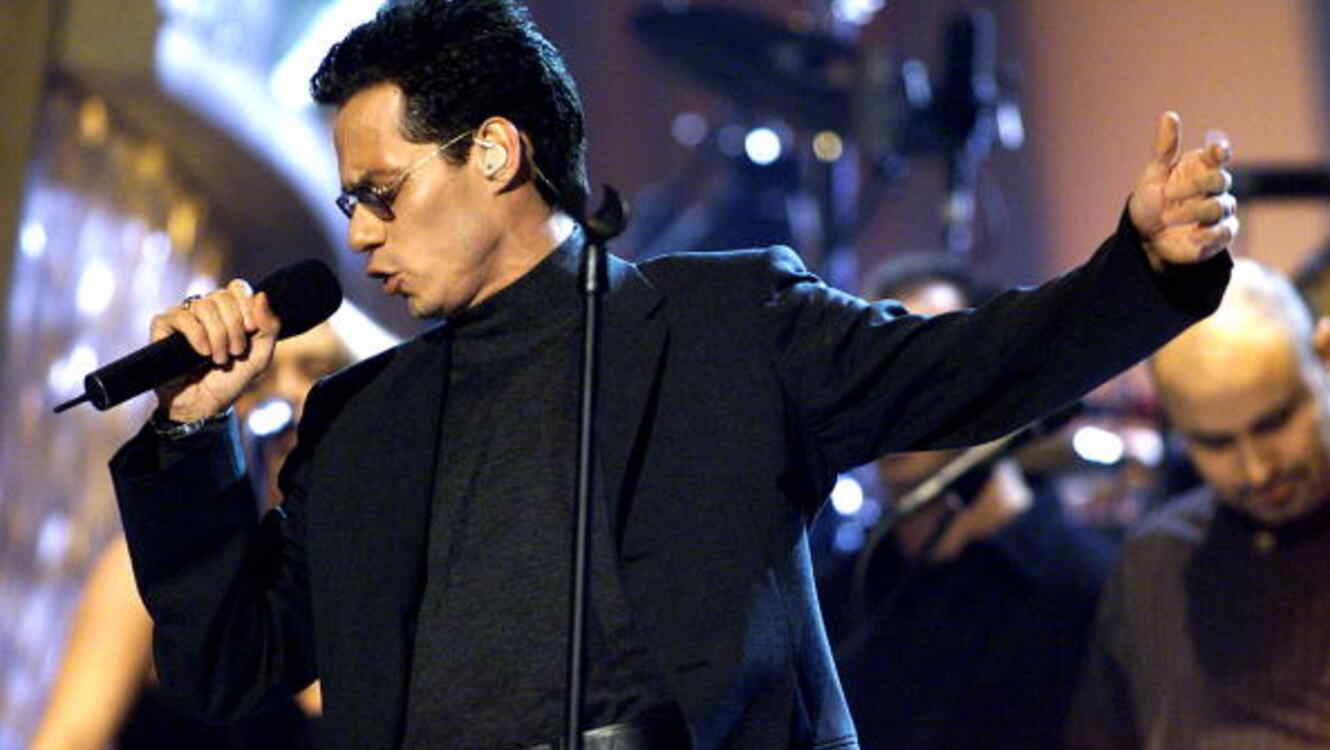
Photo by Marc Anthony

Marc Anthony

The opening of “I Need To Know” appeared in the Nissan Versa commercial in the United States and in 2009 it also featured in an American Dad chapter, an American television series; thus giving greater projection to this genre throughout the North American territory.

During this decade, salsa and Latin music in general ended up positioning themselves in the United States.

In 2002 Blades launched his album “Mundo”, becoming one of the most popular in the United States. In fact, it won a Grammy. The album contained a mix of various rhythms and instruments. The artist wanted to create a fusion of cultures and musicians from different countries. “Estampa” was a subject with great acceptance as it evoked the Afro-Cuban infl­uence in New York music.

By the year 2000, there were already music channels and with them the projection of emerging talents who in many cases did not speak the English language. The dynamics of these channels focused on the public, who chose which songs and videos were to be played, giving the opportunity to many young, little-known artists. They were also considered a springboard for the singers of the season and the Latin movement in general.

A movement that is here to stay

Latin music had come to continue making history and it was time to give it greater merit within the American spectacle.

Today, Latin singers, songwriters, and bands are innumerable. Latin music continues to gain space in the United States and more and more artists are achieving success within its borders. In addition, the endless awards that enhance their work in the industry.
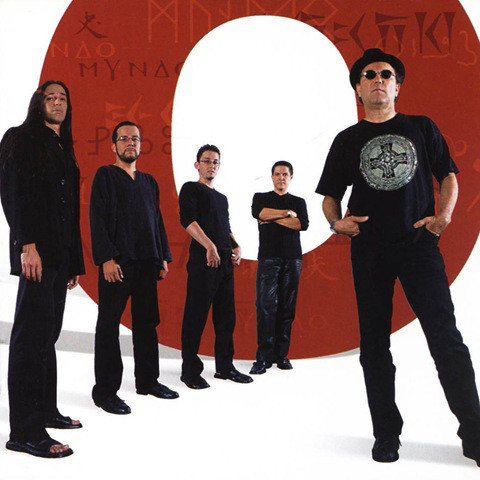
Ruben Blades - Mundo

Ruben Blades – Mundo

The consumption of these musical rhythms has increased throughout the American territory. Latinos and followers of this genre have gained space over the years; they can enjoy nightspots, live music, festivals, concerts and much more. Long live Latin America and its people! Long live the United States and the countries that have opened their doors to Latin music

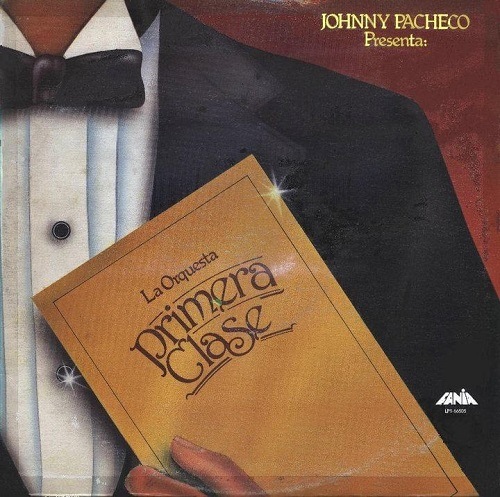
Johnny Pacheco, presents “Orquesta Primera Clase” from Maracay-Venezuela

The title of this album speaks for itself; the hand of the transcendental Dominican musician is introduced in this album.

El Zorro de Plata Pacheco appears as executive producer of the album, although we do not discard that he also participated in part of the musical production, due to the way the orchestra was structured and the style in which the arrangements were given; it is something that we can hardly notice when listening to the album, it is evident the great similarity to “Pacheco y su Tumbao”; four excellent trumpets with sonorous arrangements.

Johnny Pacheco, presents "Orquesta Primera Clase" of Maracay-Venezuela
Johnny Pacheco, presents “Orquesta Primera Clase” of Maracay-Venezuela

The predominance of Teo Hernandez (R.I.P)’s vocal style and register in the nasal coros, fits perfectly with the “Tumbao Añejo” that we have always been accustomed to from maestro Johnny Pacheco (R.I.P).

Although the album was backed by the Fania label and is loaded with a cheerful and swinging flavor, we think that it went somewhat unnoticed by the music-loving public.

The reasons could be several, we must remember that in those times in the 80’s the merengue rhythm was beginning to penetrate with a lot of strength.

Johnny Pacheco, presenta la Orquesta Primera Clase

Although we could also add the little interest that the public of the capital (Caracas) had for the groups of the regions or interior of the country, and although it seems ironic to say it.
Another possible reason could be linked to the inclusion of only unpublished songs (it is well known that in those times, they supported copies more than creativity); these are only conjectures of this server, however, they do not escape the reality of that time.

Teo Hernández (R.I.P)

As for the musical themes, we have already pointed out that all of them are original and very well compensated with their arrangement; In particular there are two songs that I like very much, one of them is “Negro Nací”, written and sung by Orlando Sanoja, is a very happy song dedicated to our black race of the danceable in his music, “Si negro nací nací nací, blanco no puedo ser”, The other song of my predilection is “El Sabio”, composition and lyrics by Jorge Compres and vocalized by Teo Hernández, with great diction, good phrasing and those tasty choruses that accompany him.

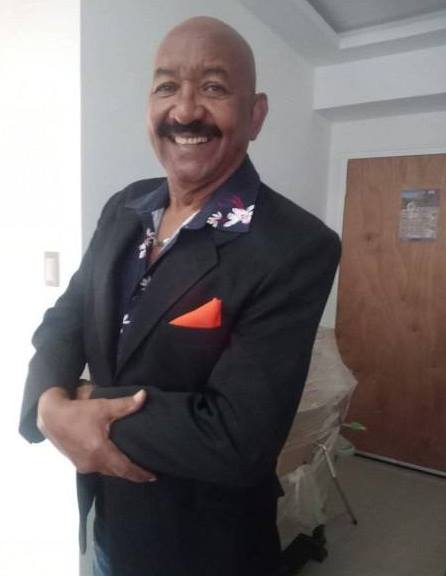
Orlando Sanoja
Orlando Sanoja

It is worth mentioning that the excellent La Orquesta Primera Clase is still in force with a musical staff of the new generation maintaining its original sound with its lead vocalist Orlando Sanoja.

It is another good Venezuelan album that you should have in your personal CD library.
Johnny Pacheco presents “La Orquesta Primera Clase” (1982) Fania LPS-66506

SIDE A

1.- NEGRO NACÍ (Orlado Sanoja) Sings: Orlando Sanoja/ Arrangements: Nicomedes López
2.- ME SIENTO MUY FELIZ (Al mMaro Ríos) Sings: Orlando Sanoja/Arrangements: Bolívar Javier
EL ANIMAL (Jorge Compres) Sings: Teo Hernández/Arrangements: Jorge Compres
4.- TODO TIENE SU FINAL (Bolívar Javier) Sings: Teo Hernández/Arrangements: Bolívar Javier
5.- LLEVAME CONTIGO (Almaro Ríos) Sings: Teo Hernández/Arrangements: Bolívar Javier

SIDE B

1.- EL SABIO (Jorge Compres) Sings: Teo Hernández/Arrangements: Jorge Compres
2.- A MARACAY (Orlando Sanoja) Sings: Orlando Sanoja/Arrangements: Jorge Compres
3.- EXTRANJERA (Phorto Jacquez) Sings: Teo Hernández/Arrangements: Jorge Compres
4.- VIVA MI GUAGUANCO (Jorge Compres) Sings: Teo Hernández/Arrangements: Gilberto Riera
AY QUE HUMANIDAD (Orlando Sanoja) Sings: Orlando Sanoja/Arrangements: Jorge Compres

Personnel:

Pastor Rodríguez (1st Trumpet)
Henry Kamba (2nd Trumpet)
Gustavo Nieves (3rd Trumpet)
William Fermín (4th Trumpet)
Armin Kail (Piano)
Carlos Fagúndez (Bass)
Harold Josef (Congas)
Edgar Aponte (Timbal)
Félix Benítez (Bongo)
Teo Hernández/Orlando Sanoja (Singers)
Bolívar Javier/ Nicomedes López/ Jorge Compres/ Gilberto Riera (Arrangements)
Teo Hernández/Orlando Sanoja/Edgar Aponte (Chorus)
Johnny Pacheco (Executive Producer)
Carlos Guerrero (Recording Technician)
Luis Arismendi (General Recording Supervision)
Recorded at Fidelis Studios
Alejandro Pérez (Art and Design)

Fanny Almenara better known in the salsa environment as “La Sonera del Callao”

Sonera of Callao, who maintains an impeccable musical career, loving music and recording numerous songs as a soloist and with various singers of first order of the Afro Latin Caribbean genre.

The salsa singer named Fanny Almenara, better known in the music scene as the Peruvian Sonera, was born in Callao, daughter of Don Hector Almenara and Carmen Barreto, the second of 9 siblings.

Fanny studied singing thanks to her mother, she met the best teacher, Mrs. Ana Maria Parodi and entered music at a very early age in the lyrical genre.

Juan Canevello: Percusionista, Antonio Cartagena: Cantante, Fanny Almenara: Cantante y Oscar Huaranga Bajista y Productor Musical

Her salsa collector father made her listen to the best of the best exponents such as Justo Betancourt, La Lupe, Candido Fabre, Benny More, Ismael Rivera, Los Papines, Irakere, Luis “Perico” Ortiz, etc.
At the age of 16 she fell in love with the genre called salsa and had the honor of singing with Junior Gonzales for the first time and alternated Grandes with Peruvian Orchestras such as Peru Salsa de Beto Villena, Las Estrellas de la Máquina de Boris Gómez, HIt Parade Latino del Callao, La Nueva Generación de Franco Crovetto.
She was chosen as the best new voice of the salsa genre in the 80s.

La cantante de salsa llamada Fanny Almenara mejor conocida en el ambiente como la Sonera Peruana

She made recordings for different groups, and also recorded an unpublished song of her own entitled “Yo te Espero”.

Between the 70s and 80s came to Peru Las Leyendas Latinas with Ray Barreto and Adalberto Santiago, gave him the great opportunity to sing with them Quítate la Máscara.

Then with Linda Caballero (lLa India), the song Mi Primera Rumba, then with the pharaoh of salsa Oscar D’ León the song Toro Mata, also with the great Hermanos Lebrón the song sin negro no hay guaguancó.
With the owner of Soneo Carlos “El Cano” Estremera the theme Ámame en Cámara lenta, with Frankie Vázquez the theme Cuarto de Tula, with Yolanda Rivera the theme Rumba en el Patio, Vity Ruiz brother of Frankie Ruiz the theme La Cura, with Aldalberto Santiago the theme Nadie se salva de la rumba.

Primera sonera del Callao, que mantiene una carrera musical impecable

And so with her imposing voice Fanny captivated the attention of the greats of salsa, representing Callao and for which the people of Chalaco named her “La Sonera del Callao” (The Sonera of Callao).
For her vast artistic career she was awarded by different musical associations and by the company Pilsen Callao.
(H3) Asocosalsa Peru (Tite Curet Ceremony, Hector Lavoe Bust, Charlie Palmieri and 25th anniversary of artistic life (Okonkolo Association).
Fanny Almenara, continues her impeccable musical career, loving music and recording a song entitled Amor de Mis Amores, salsa version with the Orquesta Ng del Callao director Franco Crovetto.
Although she was in a halt due to the pandemic, she recorded a Challenger “El Virus Se Mata Con Musica” invited by a Cuban musician, which was also recorded by Cuban artists in different parts of the world.

Fanny Almenara
Fanny Almenara

After her voice reached Cuban websites such as “Benny More” “Un Millón De Adalsoneros” “Al Son Del Pinar Del Rio” she was invited to the “Son 8 de mayo” days led by the gentleman of the son Adalberto Alvarez.
Then she also recorded a song written by the King of merengue Milly Quezada “Gracias A Ti” dedicated to those who are always on the front line as doctors and nurses in the Covid 19 and the last thing she has recorded the production of the song La Sitiera Tribute to the diva of Cuba Omara Portuondo in which in that production participated Nelson Gonzales in the tres: Eddie Montalvo on congas, Nohelia Zambrano on violin and Luis Perico Ortiz on trumpet.

Website: Fanny Almenara Oficial

Major Latin radio stations in New York

The current radio

Radio has always been present in a very important part of our lives, which is information and communication. Over time, it has also been a bridge for the most deprived to go public with their complaints and for new artists to make their work known. After the emergence of the internet, traditional radio stations had to adapt to the new era and air their content through the diverse digital platforms that have appeared in recent years. This is how all these shows have avoided their possible disappearance due to the lack of traditional radio listeners.

New York is one of the cities that has several of the most important radio stations in the United States whose content can be easily found in the web search engines. In view of the importance of radio and locution in entertainment and treatment of sensitive topics in society today, we consider it appropriate to name some of the main Latin radio stations in New York for the public to get to know them.

El Vacilón de La Mañana
El Vacilón de La Mañana team consisting of DJ Ash, Gerpis Correa, Natalia ”Vacilón”, Francis Mendez, Jessica Pereira and DJ New Era

Mega 97.9

Mega 97.9 is a radio station operating in New York City whose tropical format offers musical genres such as salsa, merengue, reggaeton, and bachata. Its official name is WSKQ FM and its headquarters is located in the Empire State Building, as it is the case with many other stations.

It was created in 1951 under the name WEBD FM and its programming consisted of pop and jazz music of the time, but that was slowly changing. There were many changes of names, personnel, directors, presidents and much more, so the current programming is radically different from that of past times. In 1993, its name changed to Mega 97.9 and its content became based on tropical and Latin genres, which caused a revival of the station and a very considerable increase in the audience that it had until that year.

Among its most watched programs, we can mention the now defunct ”El Vacilón De La Mañana” and ”On Fuego: The Daddy Yankee Show”.

El Palo Con Coco
El Palo Con Coco team consisting of Tony Sanchez ”El Tiburón”, Coco Cabrera and Diosa Fernández

WXNY X96.3

WXNY X96.3 is a station mainly focused on contemporary adults whose main language is Spanish and is broadcast on the frequency 96.3 FM. The programming focuses on providing the biggest hits of the moment in terms of Latin rhythms and some entertainment programs that address contemporary issues in the entertainment world. Two of the most popular shows are ”La Gozadera” and ”El Palo Con Coco”.

Radio Puerto Rico

Radio Puerto Rico offers the most popular music from both the present and the past in the salsa genre. It streams Latin music of all genres such as salsa, reggaeton, merengue, vallenato, among others. At any time of the day, listeners can tune in and listen to El Gran Combo de Puerto Rico, Marc Anthony, Ismael Miranda, Ismael Rivera, Marc Anthony, Daddy Yankee, Don Omar and many others. Some of its shows are ”Al Son de Harold Montañez”, ”La música de tierra adentro”, ”Música Tropical” and ”Repartiendo su fortuna”.

Havana Club Radio
Havana Club Radio’s logotype

Havana Club Radio

As the name suggests, Havana Club Radio is a radio station that seeks to unite all Cubans around the world in becoming one voice. Its waves play the island’s typical genres such as salsa, salsatón, rumba, danzón and more. It has very good ratings in several major cities in the United States and gives Cubans and Latinos in general the opportunity to connect with their homelands, even if they are far away.

Read also: Interview with Colombian singer-songwriter Potty Lozano

Alberto Beltrán “A mí me llaman el negrito del Batey” and Bailar medio apreta’o con una negra bien sabrosa

Alberto Amancio Beltrán (Palo Blanco, La Romana, May 5, 1923 – Miami, February 2, 1997) was a Dominican singer, known in the Latin American musical world as “El Negrito del Batey”.

Early years

Beltrán was born in the town of Palo Blanco, in the province of La Romana. As a child, he barely had a basic education because his family’s economic situation forced him to sell candy on the streets. At the age of fourteen he was attracted to music and debuted as an amateur singer on the radio. This first artistic incursion led him to take singing lessons.

Alberto Beltrán “A mí me llaman el negrito del Batey”

From 1946 to 1951 he belonged to several groups in his country, such as “Brisas de Oriente”. Later, he formed his own group called “Dominican Boys”.

International projection

In 1951 he emigrated to Puerto Rico. There, he recorded with “Los Diablos del Caribe”, a group led by Mario Hernández, the song “El 19”.

 He then traveled to Cuba, first to Santiago and then to Havana on July 15, 1954, to work with the Puerto Rican composer and singer Myrta Silva on Radio Mambí.

On August 16 of that same year, he was requested by the Sonora Matancera and recorded the composition Ignoro tu existencia by Rafael Pablo de la Motta and Aunque me cueste la vida by the Dominican Luis Kalaff. Both songs, in bolero rhythm, were recorded on the same 78 rpm disc.

On November 16, he recorded the merengue El negrito del batey composed by Medardo Guzmán, which catapulted him internationally as it became a sales hit.

From there came the nickname with which he became popular. That same day he also recorded the boleros Todo me gusta de Ti by Cuto Esteves, Enamorado de la inspiración by José Balcalcer and, for the second time, El 19 by Radhamés Reyes Alfau.

Beltrán nació en la localidad de Palo Blanco en Cuba

On January 18, 1955 he recorded his last pieces with the Orquesta Sonora Matancera. Then, he spent some time in Venezuela where he left phonographic records with the orchestras “Sonora Caracas”, Los Megatones de Lucho and the Orquesta de Jesús “Chucho” Sanoja.

Alberto Beltrán
Alberto Beltrán


Hired by the Dominican musician settled in Venezuela, Billo Frómeta, he participated in two albums recorded in Cuban studios: “Evocación” (1956) in which he performed as a soloist and “La Lisa-Maracaibo”, in which he shared credits with the Cuban singer Carlos Díaz.

What does El negrito del batey mean?

In the Dominican Republic the batey smells of black and the black often smells of batey. Both evoke in their generality misery and human abandonment, fruit of injustice and discrimination. This is so, although it pains us to say it


The Negrito of the Batey

They call me the little black man of the batey

Because work for me is an enemy

To work I leave everything to the ox

Because work was made by God as a punishment

I like the merengue apambicha’o

With a black woman who is a retrechera and a good girl

I like to dance de medio la’o

I like to dance half tight with a tasty black girl

Hey!

Get your ass out of here!

There!

They call me the little black guy from the batey

Because work for me is an enemy

To work I leave everything to the ox

Because God made work as a punishment

I like the merengue apambicha’o

With a black woman who is a retrechera and a good girl

I like to dance de medio la’o

I like to dance half tight with a tasty black girl

Hey, there!

And you tell me if it’s not true

Merengue much better

And you say if it’s not true

Merengue much better

Because that of working

It’s a pain for me

Because that of working

To me it causes me pain, it sounds!

The meek ox works hard

But he never gets dengue fever

The meek ox works hard

But he never gets the dengue

I’ll dance with a good black woman

I’ll dance to a good merengue

But I never get tired

To dance a good merengue, it sounds!

There, candela!

Finbroso, hey!

The gentle ox works hard

But he never gets the dengue

A lot of work the gentle ox works hard

But he never gets the dengue

But I never get tired

Of dancing a good merengue

But I never get tired

Of dancing a good merengue, it sounds!

There!

Dominicanize!

Alberto Amancio Beltrán

Sonora  Matancera

Read also: International Salsa Magazine presents Alexander Abreu and his Habana de Primera

  • « Go to Previous Page
  • Page 1
  • Interim pages omitted …
  • Page 22
  • Page 23
  • Page 24
  • Page 25
  • Page 26
  • Interim pages omitted …
  • Page 44
  • Go to Next Page »

International Salsa Magazine (ISM) is a monthly publication about Salsa activities around the world, that has been publishing since 2007. It is a world network of volunteers coordinated by ISM Magazine. We are working to strengthen all the events by working together.