• Skip to primary navigation
  • Skip to main content

International Salsa Magazine

  • HOME
  • Previous editions
    • 2026
      • ISM / April 2026
      • ISM / March 2026
      • ISM / February 2026
      • ISM / January 2026
    • 2025
      • ISM / December 2025
      • ISM / November 2025
      • ISM / October 2025
      • ISM / September 2025
      • ISM / August 2025
      • ISM / July 2025
      • ISM / June 2025
      • ISM / May2025
      • ISM / April 2025
      • ISM / March 2025
      • ISM / February 2025
      • ISM / January 2025
    • 2024
      • ISM / December 2024
      • ISM / November 2024
      • ISM / October 2024
      • ISM / September 2024
      • ISM / August 2024
      • ISM / July 2024
      • ISM / June 2024
      • ISM / May 2024
      • ISM / April 2024
      • ISM / March 2024
      • ISM / February 2024
      • ISM / January 2024
    • 2023
      • ISM / December 2023
      • ISM / November 2023
      • ISM / October 2023
      • ISM – September 2023
      • ISM – August 2023
      • ISM July 2023
      • ISM Edition June 2023
      • ISM – May 2023
      • ISM April 2023
      • ISM March 2023
      • ISM February 2023
      • ISM January 2023
    • 2022
      • ISM December 2022
      • ISM November 2022
      • ISM October 2022
      • ISM September 2022
      • ISM August 2022
      • ISM July 2022
      • ISM June 2022
      • ISM May 2022
      • ISM February 2022
      • ISM January 2022
    • 2021
      • ISM December 2021
      • ISM November 2021
      • ISM October – 2021
      • ISM September 2021
      • ISM August 2021
      • ISM July 2021
      • ISM May 2021
      • ISM April 2021
      • ISM June 2021
      • ISM March 2021
      • ISM February 2021
      • ISM January 2021
    • 2020
      • ISM December 2020
      • ISM November 2020
      • ISM October 2020
      • ISM September 2020
      • ISM August 2020
      • ISM July 2020
      • ISM June 2020
      • ISM May 2020
      • ISM April 2020
      • ISM March 2020
      • ISM February 2020
      • ISM January 2020
    • 2019
      • ISM December 2019
      • ISM November 2019
      • ISM October 2019
      • ISM Septembre 2019
      • ISM August 2019
      • ISM July 2019
      • ISM June 2019
  • Spanish
  • Download Salsa App
    • Android
    • Apple

Search Results for: Music Awards

Veruska Verdu

Latin America / Lima / Peru

Veruska Verdu “The only formula to keep the Salsero genre alive is to give support and credibility to the next generation”

Veruska Verdu
Veruska Verdu

Despite her youth, Veruska Verdu knows where she is going, without forgetting the roots where she comes from, this young woman has an interpretative strength and intensity that made her be considered by Peruvian critics as “The new Voice of Venezuela”, we do not doubt it , sings salsa and bolero very well, in addition to strolling through Afro-Venezuelan rhythms. In Venezuela, we enjoyed many of his presentations with the different orchestras with which he worked, and we witnessed how he left his soul in each one of his presentations and performances.

His greatest musical influence has been Celia Cruz and Oscar de León in terms of the salsa genre, and in the Afro-Venezuelan genre he admires Betsayda Machado and the Experimental group “Vasallos de Venezuela”. She tells us that, “in her family there are no musicians”, her grandmother and grandfather were rumberos and she believes that the musical vein comes from there, thanks to her grandparents, and to have the unconditional support of her parents and relatives, who have helped him get to where he is.

From Afro-Venezuelan music to salsa, from Barlovento to Caracas, from Venezuela to internationalization, this is how her career goes, in constant growth and evolution, nothing stops her from demonstrating her artistic quality and continuing to establish herself in this tough market.

Barlovento has a rich folk manifestation, all this mix of rhythms is in Veruska’s blood, therefore, she likes rumba, partying, music.

“What a black rock, how does she get into the rumba”

Veruska Verdu - Photo
Veruska Verdu singing in a concert

How were your musical beginnings?

“In my town of La Balsa, in the Panaquire parish, it was there that I began to sing music of the Afro-Venezuelan genre, thanks to Professor Adrián Méndez, I began to participate in the “Canta Claro” Festivals, in the cultural activities that were held, They invited me and I went, I had great support from my teacher, my school teachers, my family and the residents of the town”.

“I continued with my popular singing training at the high school, I participated in the high school voice representing my municipality Acevedo and the high school where I studied, I met my guide teacher Richard Rivero, who invited me to participate in the Afro-Venezuelan music group “Ritual Negro de Barlovento”, where I had the opportunity to travel and learn more about this beautiful genre that identifies us as Venezuelans”.

After this beginning, how was your evolution?

“I went to Caracas to work with other groups, among them are; Drum Show from Venezuela, Caña y Miel, Autochthonous from La Vega, Freddy Madera, Grupo Cosecha, Grupo la Calenda, among others”. “I received an invitation from some friends whom I love Miroslava Torres and Fernando Mozas very much, they encouraged me to join the Venezuelan Orchestra “Simón Bolívar”, I took them at their word, I auditioned and stayed, I participated for a time with the orchestra, I learned much more of our genre, stepped on stages that I had no idea I could step on”.

“Then my singing teacher Corina Peña motivated me to participate with the “Latino Caribeña Simón Bolívar” Orchestra, thank God I auditioned and I also stayed.”

Tell us about your time with the “Simón Bolívar” Latin Caribbean Orchestra?

“The teacher Alberto Vergara saw my interest in belonging to the orchestra, just that day the Venezuelan lyrical singer Iván García was arriving, who was going to sing in a musical project called “Negrísimo”, the teacher gave me the opportunity to be participated. of this great concert with García”.

“Later came more concerts with the orchestra, many learnings with maestro Vergara, for me he is number one, he is super important in my life, he helped me open my senses towards the music of the Latin Caribbean genre, love it, respect it, I give it thank you for giving me the opportunity to belong to the orchestra, for being part of the row of singers”.

“With the “Latino Caribeña” Orchestra, I stepped on incredible stages just like with the Afro-Venezuelan one, but here it was another level, another feeling, feeling the euphoria of the public that likes salsa, moving so many people, transmitting to so many people, thanks to the orchestra many people have known me and support me”.

So the “Simón Bolívar” Latin Caribbean Orchestra has been a springboard for his career.

“Of course, it has been the showcase to show the gift that God gave me, to all those who value this beautiful feeling and support me, I must thank all the teachers, all those who have been there for my musical growth, the orchestra It will never cease to be present in my career, in my present, in my future, I will always be grateful for it, thanks to it I met the teacher Alfredo Naranjo and his Guajeo, who took me into account to participate in his project”.

How did you feel working alongside Alfredo Naranjo?

“With Maestro Naranjo I got the proposal to do my first concert, which was called “Caminando”, this was in the Experimental room of the “Bod Cultural Center”, he likes things to go well, he left me a great learning to work with his side”. “The concert was super nice, I had as a guest Alfredo, my godfather Rodrigo Mendoza and my great brother musician par excellence and multi percussionist “Patatín” Guacaran, I also had the opportunity to meet Edgar “Dolor” Quijada, Soledad Bravo and Rafael “The “Chicken” Brito”.

Your career has been constantly on the rise, how has your time in the different groups been?

“I participated in a project called “Ellas son Boleros”, with Anais Torrealba, Gisela Guedez, with professor Corina Peña, I was with all those bolero ladies in Venezuela, this was under the production of David Peña “Zancudo”. “On the other hand, Carlos Padrón was there, he called me to participate in the 10th anniversary of Rumberos del Callejón, I feel very happy, because Domingo Quiñones, Maelo Ruiz, Gilberto Santa Rosa, Luis Fernando Borjas, Memo Arroyave, Gonzalo Díaz participated there. , wow!, a lot of people who have years of experience and I am like the puppy of the project, and look, however, Carlos believed in my talent and made me be part of his production”.

“I was with the Sopranos for a while, on the album that won the Pepsi Music Awards (Decade), my choirs are out there, with Sonero Clásico del Caribe, a Son institution in our country.”

How have you felt taking on these challenges?

“It has been tremendous, to have the support of some tremendous musicians who are legends, “Nene” Quintero, the pianist par excellence Pedro Pérez, very cool, in all those groups that I have been thanks to the projection I had with the Latin Caribbean Orchestra and my commitment day by day to all this”.

Veruska Verdu
Veruska Verdu

Apart from singing, do you play any instrument?

“I had a short time at the Bigott Foundation, they taught me certain things to learn to compose, I like to play the guitar, and now I am dabbling in the bass”.

From Afro-Venezuelan music to salsa, how was that transition?

“We are not very far away, remember that Afro music its main root is the drum, just like in the Caribbean genre, in salsa, the root is the percussive, the blows, the leather, the key, the swing, that taste, that sense of enjoying what you do, rather the Afro-Venezuelan genre helped me a lot because of the free way of singing.”

“I feel freedom when singing salsa, because I learned in Afro-Venezuelan music how to improvise, to have that ability, I have enjoyed it, in some shows I remember any verse from some party or ass e` puya and singing salsa I say it, it is “cheveroski” as they say around here”.

Did you ever think that being so young you would be next to many who have years of musical career and are already recognized in this medium?

“I never imagined it, it is a blessing from heaven, I am just starting out on the path of music, I still have a long way to go, God has given me the blessing and joy of being able to share the stage with El “Pollo” Brito, Edgar “Pain” Quijada, Alfredo Naranjo, Francisco Pacheco, meeting Betzayda Machado, being with Sonero Clásico, Canelita Medina, I feel happy that in my short time I have met wonderful people and been able to share the stage with them, just like here in Peru”.

What do you think of the support for national talent in Venezuela?

“It has been excellent, I feel that right now they are giving credibility to the successor generation, it is very important to give support, it is the only formula for the genre to remain alive, credibility must be given to the one who is being born and has the ability to make music”. “In Venezuela they have given the artist great support.”

You continue to be “Enchanted with life” despite the regrets…

“If everything was placed on a silver platter, there would be no achievements, the greatest satisfaction is hard work and discipline, I am living my experience that seems spectacular to me, I am enjoying my moment, I am learning things that I did not know in its entirety, I am maturing as an artist and as a person.

“All things go through a moment of difficulty, we must always highlight the good things.”

Its jump to Peru a market that is in the musical arena, the critics baptized it as “The new Voice of Venezuela”, What do you think of this?

“I am grateful that in Peru they have that appreciation of me, it feels super good, on each platform that I mount I will give my best, my tricolor goes with me upstairs.”

How has the receptivity of the Peruvian public been?

“It is not easy to arrive in a country and start from scratch, however, it is a matter of continuing to work, to continue showing what we are made of and to make good music, to do a job like a ant, things have flowed in a very good way, I have participated in productions of the master Tito Manrique, Manongo Mujica, I met the people of a group that I greatly admire Peru Negro, they play Afro-Peruvian music, I did concerts with Carlos Mosquera, a super singer, incredible, a blessing from heaven.

“The support of the Peruvian public is always present, what should Veruska do, continue working constantly, I must thank you for having been very receptive to the work that I am doing.”

In Peru they also have payola?

“In the whole world there is payola, this market is managed like this, salsa, merengue, joropo, tango, pop, jazz, reggaeton, you have a good product, but many times you have to “encourage” the person to show it.”

How do you see the salsa movement at the moment?

“It is a good time to continue highlighting our genre, we are in the here and now, ah! which is not the same as in the past, those times do not compare, for me this is a super excellent moment, many people are doing their work, Víctor Cardona, Carlitos Padrón, Pumaband, La Latino Caribeña, right here in Peru, how many new artists they have, all these people have been promoting salsa”.

Tell us about your solo career.

“It has not been easy, but I continue to give my all, thanking the people who have supported me even without knowing me, I must thank Mr. Alberto Vale who has joined this Veruska project and tells me; -black let’s go forward, everything will be fine, -let’s do this, that-”.

Your first musical production “Fusion -Venezuela – Mundo”, which musicians participate in it?

“Sabrosito Así”, is the promotional theme, we wanted to make a very cool fusion, which was reflected there, thanks to Juan Carlos Linares who gave us all the support to materialize this single and that people knew it, I had excellent musicians; Mario Pasmiño as Musical Director, in addition to Patatín Guacaran, Gisel Brito, Gray Peña, Aarón Cabrera, Ángel Peña, Jeison Ascanio and Darwin Latan”. “This experience was great, beautiful, in the Velvet studio.”

Define yourself in one sentence

“Feeling and rumba, I like the alegríadera”.

Venezuela in one sentence

“Good people, hardworking, like my people none.”

Veruska Verdu Orquesta Son Desangrado

Translated by: Thisby Ferrara


By Eiling Blanco, Correspondent for Latin American


Will Phillips

North America / United State / Los Angeles

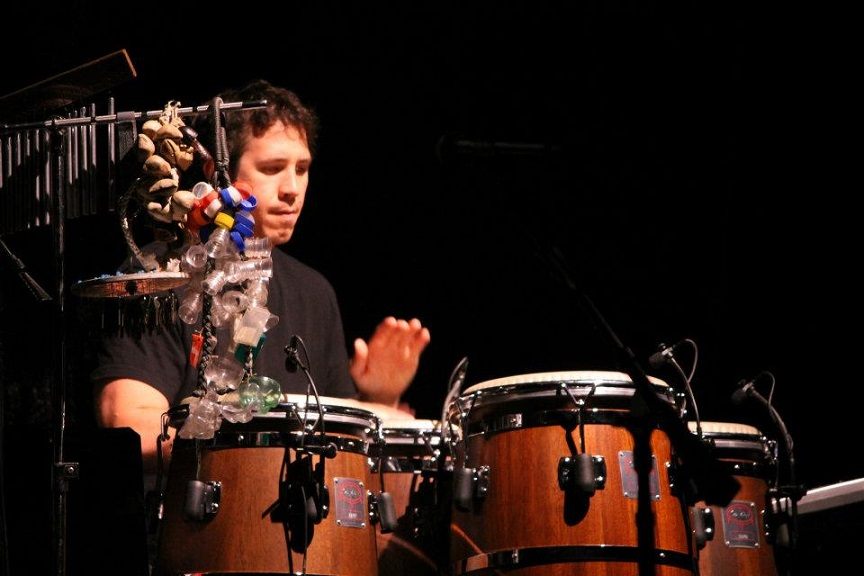
Will Phillips is an endorsee of Gon Bops Percussion & also endorses products from Innovative Percussion and Timbra Top Percussion.

Will Phillips
Will Phillips

Will Phillips born and raised in Texas and having relocated to Los Angeles, Will Phillips is rapidly gaining a reputation as an in-demand percussionist.

Captivated by Brazilian music, he’s spent extensive time living in Brazil studying with Brazilian masters and deepened his knowledge of the style.

Will has also recorded on a number of TV jingles during his time in Brazil. Inspired by this deep experience, Will now enjoys the continual journey of adapting Brazilian percussion to all styles of music.

In 2011

Will was presented with a Latin Grammy Certificate of Nomination for his performance on Claudia Brant’s album “Manuscrito”.

He has appeared on TV mega-hits like The Voice, American Idol, and MTV Brazil and was the house percussionist for the 2010 American Music Awards Red Carpet Gala.

He has recorded and performed with some of today´s finest artists, such as will I am, Ellis Hall, Persian superstar Googoosh, Michel Teló multiplatinum selling Brazilian artist, Academy/Grammy Award-winner Jamie Foxx, NBC´s The Office/original member of The Grass Roots, Creed Bratton and many more.

Phillips has toured extensively around the world and feels blessed to have worked with musicians who are not only a constant source of inspiration, but also who he counts as friends.

Renowned percussionists Luis Conte, Kevin Ricard, Michael Shapiro, Adam Topol, Randy Gloss and Jimmy Paxson have all sung Will’s praise, considering him to be one of LA’s up-and-coming percussion artists.

Some of Will’s most recent projects include playing on a recording project featuring Jackson Browne and Ozomatli entitled “Como Ves” and a soon-to-be released album from Andrea Day.

He also been touring with American punk rock band The Offspring. Will Phillips is an endorsee of Gon Bops Percussion, having a Signature product with them, and also endorses products from Innovative Percussion and Timbra Top Percussion.

Jay Ruiz, singer-songwriter, From the Sultana del Oeste, Mayagüez – Puerto Rico

North American / Puerto Rico / Puerto Rico 

Jay Ruiz is the stage name of Jonathan Camacho Ruiz, a singer-songwriter born in La Sultana del Oeste, Mayagüez, but raised in the Pueblo de Rincón neighborhood, the westernmost municipality of La Isla Del Encanto.

Jay Ruiz Photo
Jay Ruiz Photo

Among his ancestors, Jay Ruiz, highlights his paternal grandfather Antonio Camacho who was a musician and troubadour, in his native Rincón.

Jay Ruiz’s musical beginnings date back to his short 5 years, when he sang in the choir of the Presbyterian church he attended. However, he would later become involved in sports, which would keep him away from music until he was 11 years old, when at the middle school where he was studying, the teacher promoted him as a soloist in a 24-member choir group.

Jay Ruiz and his team

He also stands out as a percussionist, performing skillfully on the bongo, the congas and the drums; instruments that he would learn to play by ear when he was 8 years old.

When he turned 12, the guitar and the bass would be the instruments that would captivate him and to which he would dedicate his time.

When he turned 15, he decided to form his own Christian music group: this is how the New Creation group was born, in which he developed as a drummer and singer.

A year later, while he was a member of the baseball team that represented Puerto Rico, he was about to be signed by the University of Cleveland, but in the process he was diagnosed with neck and throat cancer.

Jay Ruiz photo
Jay Ruiz photo

He traveled to Maryland to undergo exhaustive examinations at the John Hopkins Hospital, the same ones that would determine that he would undergo six months of chemotherapy and subsequent radiotherapy, treatments that he would receive at the San Jorge Children’s Hospital (Santurce, Puerto Rico).

Before the radiation treatment he was warned that he would lose 85% of his vocal abilities, however, the story was different: August 12, 2001, he would finish the treatment for his illness and five days later, for his birthday, he meets in his town -Rincón- to the entire community in a musical activity in which he would play, sing and give testimony of his case.

Jay Ruiz
Jay Ruiz

Thinking about his future, he studies at the Interamerican University, San Germán Campus, where he obtains a bachelor’s degree as a Physical Education teacher for children with disabilities.

The illness of his father, who lived in New York, forces him to cross the pond to take care of him, until his death, five years later.

In 2011 he returned to Puerto Rico, and enrolled in the Ponce Paramedical College at the Mayagüez Medical Center, to continue studying Physiotherapy, however, he became involved again in music participating in the famous franchise IDOL PUERTO RICO, ranking among the 32 last finalists. He continues his academic life and at the same time, works as a chef in a restaurant, a situation that would lead him to serve a musical entrepreneur based in New Jersey (United States) who was visiting the island, and with whom he would start a friendly relationship first, that would turn into work a few months later, when the businessman invited him for an audition in the neighboring municipality of Cabo Rojo.

Jay Ruiz boards the flight

After that meeting, in 2014, Jay Ruiz would pack his bags again to settle in Newark (New Jersey, USA) from where he would launch his career as a performer of the bachata genre, and that he would have on the songs “Ven A Mí , Girl” and “Culpables” two singles of wide diffusion and consideration in the international radio circuits, to the point of having disputed with the last mentioned cut, the category of Favorite Tropical Song of the Latin American Music Awards between great personalities of the music like Víctor Manuelle, Prince Royce and Gente de Zona (feat. Marc Anthony).

Jay Ruiz
Jay Ruiz

In 2017 he becomes independent, returns to Puerto Rico and decides to promote his career, but this time as a salsero, recording the single “Lo Sé”, of his own, under the production of maestro Nino Segarra.

Two years later, he brings us this new single, of which he is also the author, both of the lyrics and the melody.

Jay Ruiz
Jay Ruiz

The following staff participate in this single:

Lyrics, Melody & Interpretation: Jay Ruiz

Arrangement: Ceferino Caban

Complete Percussion: Rafael “Tito” de Gracia

Bass: Alexis Perez

Trumpets: Luis Aquino

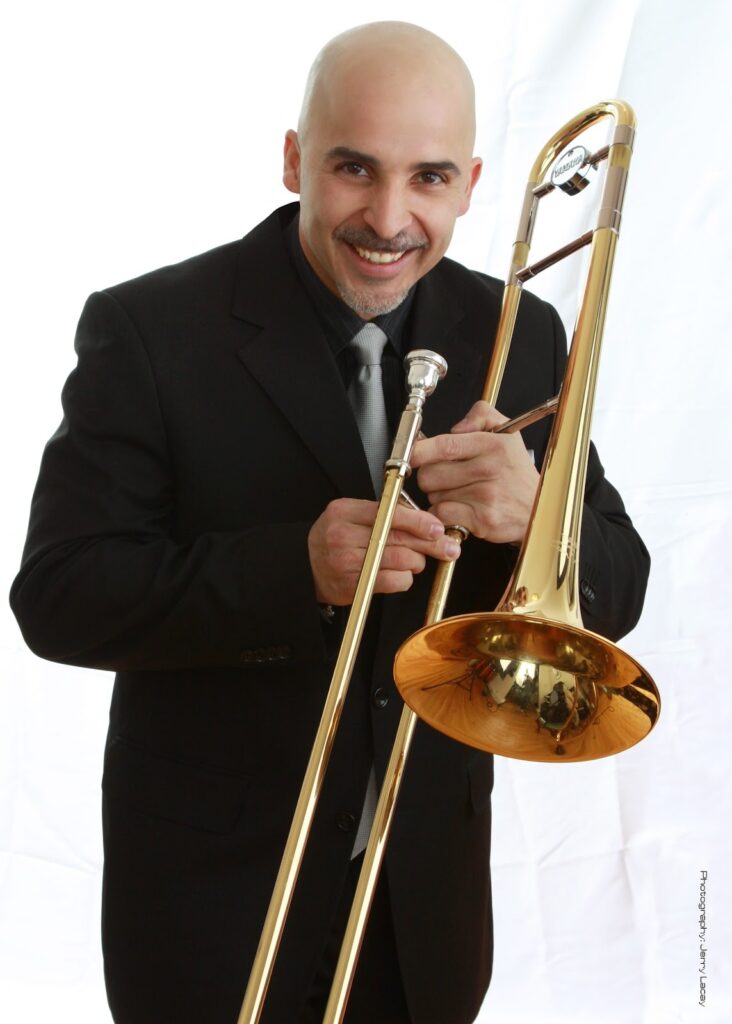
Trombones: Jorge Dobal

Choirs: Norberto Vélez Curbelo, David Carrero & Ceferino Caban

Piano & Keyboards: Ceferino Caban

Mastering: Esteban Piñero

Jay Ruiz
Jay Ruiz

AQUILES BÁEZ

Swing And Tradition Of A Distinguished Venezuelan Artist

Chapter I: Aquiles’ Farewell

Aquiles Báez
Aquiles Báez began to flow within the Jazz and Latin American rhythm during his stay in New York (USA).

“With all the pain in my soul, I must publicly communicate that my friend, my brother, my accomplice Aquiles Báez passed away this morning at 5 in the morning in the city of Aachen, Germany. Aquiles was in the middle of a concert tour here in Europe. He flies high gordito.” Ramón Arturo Aular (Báez’s friend, musician, and professor at the Aachen Conservatory of Music) informed the community through his Twitter account the Monday, September 12th.

The virtuoso musician, noble guitarist, arranger, and excellent composer died of a sudden heart attack at the residence of his friend Ramón Aular. His last concert was held in the city of Cologne located in western Germany as part of his 2022 European tour, the first he did after the cessation of activities due to the Covid-19 pandemic.

The noble 58-year-old artist had already performed in Spain and was preparing to present his music in some German cities such as Berlin, Tubingen, and Hamburg, before finishing his tour in France and Portugal.

“I think it is important to project the work that one has been developing in other latitudes. This is very interesting because I realize that the music I make is universal, it is not limited only to playing for the Venezuelan diaspora, which of course also provides an audience”. Báez expressed this to an international media.

During his artistic career, he recorded 17 albums and collaborated on more than 150 recordings with other artists. Báez was a professor at the Berklee College of Music (Boston, Massachusetts) and was recognized for his mastery of the guitar with “elements of mixed Caribbean and Afro-Venezuelan cultures with classical music and Jazz.” Fragment extracted from his biography.

In life, he shared stages with artists such as Paquito D´ Rivera, John Patitucci, Romero Lubambo, C4 Trío, Ilan Chester, Simón Díaz, Huáscar Barradas, Worlds of Guitars, Aquiles Machado, Serenata Guayanesa, Iván Pérez Rossi, Fareed Haque, Dawn Upshaw, Richard Bona, Luisito Quintero, Solo Razaf, Marco Pereira, Oscar Stagnaro, and Ensamble Gurrufío.

Before passed away, Aquiles Báez was preparing the publication of two studio albums and the creation of five more. He was also in charge of making the music for the Venezuelan play Mi último delirio, which premiered on September 2nd with the lead role of his friend Héctor Manrique and with great reception from the public and specialized critics.

Chapter II: Getting to know the musicians’ Master to the rhythm of the compass

Julio, was the one who instilled in him a love for music by giving him his first instrument, the Cuatro.
His older brother, Julio, was the one who instilled in him a love for music by giving him his first instrument, the Cuatro.

Aquiles Báez was always an irreverent musician who made the type of music that he felt. “It is important to make music from what one feels it is, from that forceful energy that is the act of creating…Lately, I have been respected. It was hard to get that position. They have not always respected me, perhaps because of my way of being, irreverent. The people who manage cultural spaces have always taken me as an anarchist… I consider myself someone accessible, the teacher thing hasn’t gotten to me, seeing everyone below me, that seems pathetic to me…” Aquiles expressed this to a Venezuelan media.

“Throughout his career, Aquiles has received various awards and recognitions. These include Pepsi music awards and the William Leavitt award given by the Berklee College of Music; In addition, he has stood out with more than a dozen awards as a composer of music for film, theater, and dance. Extracted from his biography.

In 1996, at the age of 32, Aquiles decided to move to the United States to study at the Berklee College of Music in Boston. After two semesters he dropped out, considering that he was “learning the same thing but in another language.” And that was not only his thinking, but also what he demonstrated during his stay as a student at the academic campus, so shortly after he entered the Berklee College of Music again, but this time as a professor.

On this academic campus, he gave “clinics, workshops, and seminars at different universities and musical institutions such as Indiana University, Temple University, Queen College, Krems Summer camp, Curitiba Music Office, The Jazz School in San Francisco, among others, in Europe and the United States”, according to his biography.

Shortly after, he participated as a guest musician on the albums of Panamanian artist Danilo Pérez: Central Avenue (1998) and Motherland (2000), both albums nominated for Grammys.

Aquiles Báez was a founder and member of the board of directors of Guataca productions. In this space, they continue to support emerging Venezuelan artists. Báez’s methodology for finding new talent was to research, listen to them live and contact them. “Why not support those guys who come after you? Why not make life more pleasant for them? Or a lighter path than one had. This road is not easy at all, it has been very hard, and it continues to be hard. And one continues and believes that he has acquired a certain reputation…” Báez expressed this in an interview conducted by a Venezuelan media outlet.

Chapter III: Anecdotes of a famous life

Last night sharing with the beloved Maestro Carlos Cruz Diez (Panama. October 29, 2016)

Countless artists expressed their affection and grief for Aquiles’ departure, expressing testimonies of a life full of joy, love, and passion for musical colors.

“One of the artists who has inspired me the most and a great human being. He made it possible for us to make our first album, the tour of the United States and opened the doors of his home for us. We made a lot of beautiful friends with Aquiles. D.E.P, Maestro,  compaíto Aquiles Báez”. Jorge Glem (Cuatrista and member of the group C4 Trio).

“The wonderful Aquiles Báez was a musician capable of playing all Venezuelan music of all genres“. Alfredo Naranjo (Vibraphonist)

“Dismayed by the sudden death of my dear friend Aquiles Báez, one of the great musicians of our country, guitar teacher, and eternal officiant of humor and simplicity”. Leonardo Padron (Writer)

“Today we are less. I have just been informed that our admired and beloved musician and my dear friend, Aquiles Baez, has passed away. This news is heartbreaking and unfair. Aquiles is one of the most creative and generous people I have ever met”. Héctor Manrique (Director and theater actor)

“Thank you for being an inspiration in music and a big brother in life. Without your unconditional support, I would not have even reached the corner”. Álvaro Paiva Bimbo (Guitarist and 2022 Oscar nominee for the soundtrack of the Disney movie “Encanto”)

“How can we forget this great friend and fellow adventurer”. Claudio Nazoa (Comedian)

“I was left with the desire to carry out the project we had to record an album together. What profound sadness!” Miguel Delgado Estévez (Musician, arranger, and producer)

Finally, the Venezuelan percussionist Omar Ledezma Jr. expressed his sorrow for the death of Báez.

LENTEJAS. That’s what the gordo called me. 7 years of my life I played and toured the world with Aquiles Báez. We met at one of his concerts at the Bellas Artes thanks to my dear Carlos Reyes, another great guitarist from our country, at the time I worked at the MACCSI. Years later, arriving in Boston, he called me to be in his group and I couldn’t believe it. The gordo was my musical hero thanks to his Platabanda and the number of times I saw him accompanying great singers. He was the one who told me to grab El Cajón and start putting in the merengue and the gaitas. I knew his bad jokes by heart: “Vamos a tocar la canción de DC: Di si encontraste…”, with him, I learned to be a person first, then a musician, I learned not to make ugly faces if I made a mistake, with him, I had to press on reading, to be punctual, to put my batteries.

Anyway… with the gordo I learned to be a professional musician, because with his virtues and defects, for me, he was the best.

I love you my gordo, wherever you are. Thanks. #aquilesbaez”.

You can continue reading the article about Omar Ledezma Jr. From The Venezuelan Melody To The Caribbean Rhythm.

Here is a small excerpt from this interview of 2021:

Years later, and with experience acquired in presentations, and groups, Omar Jr. met his first mentor, Aquiles Baez, a famous Venezuelan artist, guitar virtuoso. Together with Aquiles, he made his first international tour of the United States. “With Aquiles, I had the pleasure of playing Venezuelan music. We play with many artists in the United States… Thanks to him I developed percussion (Non-autochthonous element) in Venezuelan music”. Ledezma Jr. commented.

“Fall in NY. How beautiful are the colors of Autumn in NYC. Enjoying that watercolor of nature”. Aquiles Baez (November 8, 2018)

Puerto Rican singer Wito Rodríguez talks about his success and career

How his career starts

We are here with the very talented Irwin Wito Rodriguez (https://www.facebook.com/nmjrecords). Pleased to meet you, Mr. Rodriguez, such a pleasure to have you here. How are you?

Thank you very much, Karina. Thank you for the invitation. Quite well, thanks to God. I am in Florida at the moment, where the temperature is very pleasant.

Talented Puerto Rican singer Wito Rodríguez

Your beginnings in the musical world occured in a rock band, which is very common in many of your colleagues. Many of them start as boleristas and rockers. How did you go from a rock band to singing salsa and other genres like this?

I was born in Chicago and my parents are Puerto Rican, so I was raised American and tended to speak more English than Spanish. I listened only to music in English, but I also listened to Daniel Santos, Los Panchos and Tito Rodriguez at hore since I was a little boy. However, they were my parents’ favorite artists, not mine. As the years went by, my dad bought me my first guitar, so I joined a rock band of four or five kids and we started playing very cool songs. This lasted until I was 14 years old, when my father decided to send us to Puerto Rico and it was a very drastic change for me because now I was going to be in a school where Spanish is spoken and my Spanish was very bad. When I arrived in Puerto Rico, it was very nice to see the island in person because I only knew it from what my dad told me.

Five or six months after I arrived in Puerto Rico, I started singing with another rock band until I turned 16, which was when a very famous percussionist named Chacón (he had a band called Chacón Y Sus Batirítmicos) heard me sing and told me that he would like me to sing with them. He lived near me, so I could go to his place. I started going about twice a week to learn to play the conga and the clave. Around that time, I started learning everything related to salsa and typical Puerto Rican rhythms.

So I started playing in a nightclub, but I wasn’t supposed to do that because I was still 16 years old. So, they got me a jacket, hid me and I started singing there. When I turned 17, I moved to Chicago to finish school and speak English again. Three months later, I started singing salsa with the first orchestra in Chicago whose name was La Orquesta La Justicia from 1971.

So, you didn’t like salsa, but you developed a taste for it.

That’s correct. I didn’t have the joy of attending music school, so I just tried to learn as much as I could from what I saw. If I saw someone playing on a stage, I would approach the musicians, ask questions and clear my doubts. I learned a lot of things on my own.

Image taken from his video clip You’ll Never Find Another Love Like Mine

Military service and his first orchestra

You were part of the German orchestra Conexión Latina while serving in the army. How did the idea of starting a Latin music group in such a country arise?

When I was in the Orquesta La Justicia, I met many salsa stars like La Lupe, Ismael Rivera, Larry Harlow, Ray Barreto, El Gran Combo de Puerto Rico, La Sonora Ponceña and many others. All these artists helped me and taught me many things.

When I joined the U.S. Army, I had the opportunity to sing with an orchestra in Puerto Rico, but I was in Chicago. I accepted and prepared everything to return to the island, but the orchestra had already gone on tour when I arrived and they didn’t take me. It was very sad for me because I left everything in Chicago, since I wasn’t thinking of returning.

From there, I decided to join the U.S. Army and wanted to be sent as far away as possible. A week later, I reveived word that I passed the test and that I would be sent to Germany. That’s when I started a band called Wito Y Su Conjunto Sabor in 1977 along with other Puerto Ricans who also sang or played instruments. We were the only salsa band in Germany at that time. In 1981, I already had an orchestra called La Sonora Antillana and we played for the German audience, which was very tough.

In 1983, I left the army. Then, Luis García, an excellent tres player, and Cano Robles from Conjunto Canayon, Puerto Rico, made my first album called Calorcito. The following year, I released my first album and it was awesome because it led me to release another record production that took me to tour all around Europe.

In 1992, I went back to Tampa, where my dad lived. I came back to be in need because nobody knew who I am there. It was very difficult, so I had to start working until I returned to the Army and was sent to Pennsylvania. In 2007, I finally retired with 30 years of service.

In 2013, I started making my first solo album whose name was Qué Mundo Maravilloso. In 2016, I moved to Orlando, where I finished my other three albums I released later.

Art for the song Qué Mundo Maravilloso

You took opera classes. How did this help you in salsa?

Those classes taught me how to stabilize my voice, know how to modulate, know how to breathe, know how to feel the tone in one part of the body (under your nose), know what tone comes after the previous one and all kinds of things. I also learned some very good exercises to warm up my voice.

Another thing these classes taught me was resistance. Spending an hour singing on stage is not easy.

A lot of singers have a good voice, but they don’t have the necessary training to get to the right tone for them and avoid singing off-key.

I read that you have been nominated for the Hollywood Media Music Awards and the Miami Fox Music Awards for both English and Spanish songs. Which songs are the most successful? English or Spanish?

I try to include even a salsa song in English in all my albums. My last song focuses more on the American audience than the Latin audience. It was a good choice because the video has about 42,000 views on YouTube, which means it attracks more attention than my other work.

One of the things that has done musicians in general most harm has been Covid-19. Many are recovering, but others had to get a job because they could no longer make a living from music.

Many of his songs are related to his Puerto Rican roots

  • « Go to Previous Page
  • Page 1
  • Interim pages omitted …
  • Page 7
  • Page 8
  • Page 9
  • Page 10
  • Page 11
  • Interim pages omitted …
  • Page 37
  • Go to Next Page »

International Salsa Magazine (ISM) is a monthly publication about Salsa activities around the world, that has been publishing since 2007. It is a world network of volunteers coordinated by ISM Magazine. We are working to strengthen all the events by working together.