• Skip to primary navigation
  • Skip to main content

International Salsa Magazine

  • HOME
  • Previous editions
    • 2026
      • ISM / March 2026
      • ISM / February 2026
      • ISM / January 2026
    • 2025
      • ISM / December 2025
      • ISM / November 2025
      • ISM / October 2025
      • ISM / September 2025
      • ISM / August 2025
      • ISM / July 2025
      • ISM / June 2025
      • ISM / May2025
      • ISM / April 2025
      • ISM / March 2025
      • ISM / February 2025
      • ISM / January 2025
    • 2024
      • ISM / December 2024
      • ISM / November 2024
      • ISM / October 2024
      • ISM / September 2024
      • ISM / August 2024
      • ISM / July 2024
      • ISM / June 2024
      • ISM / May 2024
      • ISM / April 2024
      • ISM / March 2024
      • ISM / February 2024
      • ISM / January 2024
    • 2023
      • ISM / December 2023
      • ISM / November 2023
      • ISM / October 2023
      • ISM – September 2023
      • ISM – August 2023
      • ISM July 2023
      • ISM Edition June 2023
      • ISM – May 2023
      • ISM April 2023
      • ISM March 2023
      • ISM February 2023
      • ISM January 2023
    • 2022
      • ISM December 2022
      • ISM November 2022
      • ISM October 2022
      • ISM September 2022
      • ISM August 2022
      • ISM July 2022
      • ISM June 2022
      • ISM May 2022
      • ISM February 2022
      • ISM January 2022
    • 2021
      • ISM December 2021
      • ISM November 2021
      • ISM October – 2021
      • ISM September 2021
      • ISM August 2021
      • ISM July 2021
      • ISM May 2021
      • ISM April 2021
      • ISM June 2021
      • ISM March 2021
      • ISM February 2021
      • ISM January 2021
    • 2020
      • ISM December 2020
      • ISM November 2020
      • ISM October 2020
      • ISM September 2020
      • ISM August 2020
      • ISM July 2020
      • ISM June 2020
      • ISM May 2020
      • ISM April 2020
      • ISM March 2020
      • ISM February 2020
      • ISM January 2020
    • 2019
      • ISM December 2019
      • ISM November 2019
      • ISM October 2019
      • ISM Septembre 2019
      • ISM August 2019
      • ISM July 2019
      • ISM June 2019
  • Download Salsa App
    • Android
    • Apple
  • Spanish

Search Results for: New York

Ray Barretto: Rican/Struction of a Master for the year 1979

“Rican/Struction” is the most representative album of Ray Barretto’s career, not only for its innovative character but also for its immense personal significance.
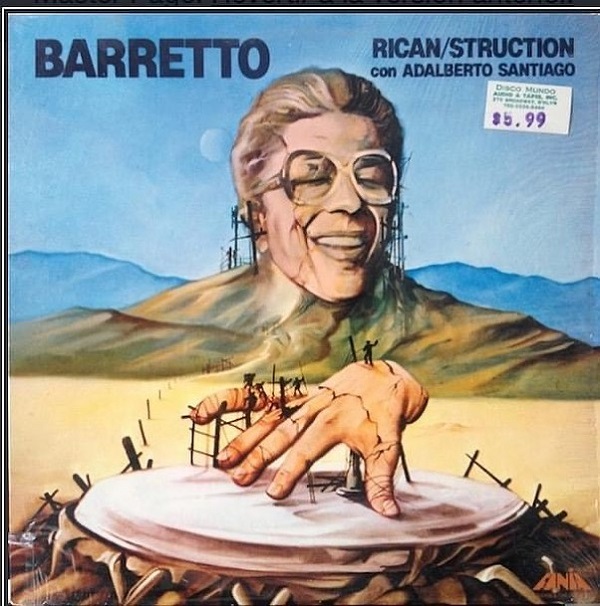
RicanStruction is the most representative album production in Ray Barretto's career
RicanStruction is the most representative album production in Ray Barretto’s career

In 1978, Ray Barretto was struggling to cope with the poor reception of his recent album, “Can You Feel It?” (1978), which he had recorded a year earlier with Atlantic Records. Despite its quality, the album went largely unnoticed by the public, causing Barretto great frustration and disappointment.

For a few years, Barretto had been tired of playing the same old repertoire. To give his career a fresh start, his manager, Jerry Masucci, sold his contract to Atlantic, intending for him to record a more commercial jazz fusion and funk album. However, the plan didn’t work out as they had hoped. During this time, the percussionist spent his days feeling pensive and worried, convinced that signing with Atlantic had been a mistake because the label gave his last two albums very little promotion.

One morning, while driving and lost in thought, Barretto slammed on his brakes to avoid hitting a car that suddenly appeared. The abrupt maneuver caused another vehicle to rear-end him. The collision resulted in several injuries, the most serious being severe damage to the tendons connecting his thumb to the rest of his right arm. Doctors “gave up on him,” claiming he would never be able to play again.

The news plunged the musician into a deep depression. Doctors recommended surgery, but Barretto refused, fearing his hand would never be the same. He sought second opinions in Los Angeles and San Francisco, but every specialist gave him the same diagnosis and the same solution: surgery.

They say Barretto would visit clubs with a palpable sadness and bitterness because he couldn’t play. Many people in the industry said his career was over until one night, an old friend and fellow musician told him about the benefits of acupuncture, a traditional Chinese medicine that had helped several people with similar problems.

Barretto underwent a long and painful treatment for almost two years, gradually restoring movement to his right hand. Once he was nearly recovered, he decided it was time to return to music.

He broke his contract with Atlantic, sought out Adalberto Santiago (who had left his band in 1972 to form La Típica 73), and re-signed with Fania Records. With them, he produced the album “Rican/Struction” (1979), his most representative work, not only for how progressive it was but also for the immense personal value it held.
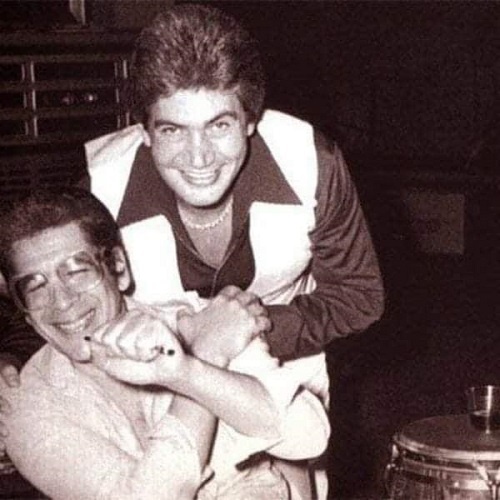
Adalberto Santiago y Ray Barretto

The production was a resounding success, and a year later, it earned him the titles of “Musician of the Year” from Latin New York magazine. In this way, the master Ray Barretto demonstrated his great strength and tenacity to the world.

Did you know…?

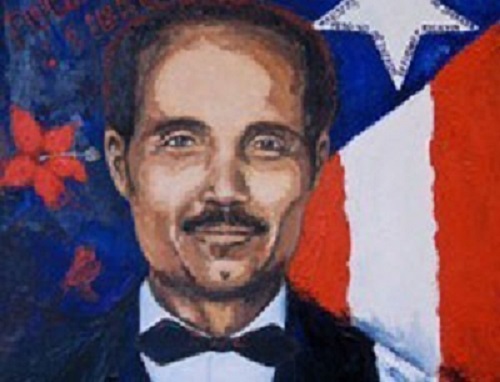
  • The song “Al Ver Sus Campos” from the album Rican/Struction is a tribute to the Puerto Rican patriot Pedro Albizu Campos. Composed by Johnny Ortiz and arranged by Oscar Hernández, the song, sung by Adalberto Santiago, captures the feeling of Albizu’s resistance as he fought to liberate his homeland from foreign invading forces.

  • Albizu Campos was a jibarito, a legend who existed under the burning Puerto Rican sun.
    Albizu Campos was a jibarito, a legend who existed under the burning Puerto Rican sun.
  • According to Adalberto Santiago, “the Rican/Struction album is a musical gem because, in New York, no musician buys records, and this one was bought by the entire salsa community.”

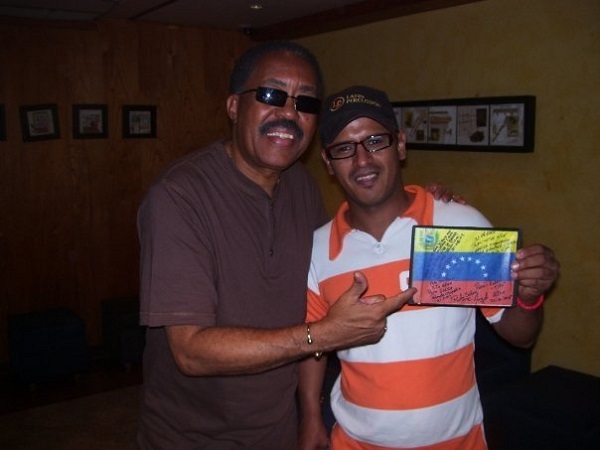
  • Dj. Augusto Felibertt y Adalberto Santiago
    Dj. Augusto Felibertt y Adalberto Santiago

Vocalists for Ray Barretto and La Típica 73

  • Adalberto Santiago was in Ray Barretto’s band from 1966 to 1972. When he left to join La Típica 73, he was replaced by Tito Allen, who recorded the album Indestructible with Barretto in 1973.
  • Tito Allen y Dj. Augusto Felibertt
    Tito Allen y Dj. Augusto Felibertt
  • When Adalberto Santiago left La Típica 73 to form Los Kimbos, his replacement in the group was once again Tito Allen. With them, Tito recorded the album Rumba Caliente (1976). Then, in 1977, La Típica 73’s vocalist was the late Camilo Azuquita for the album The Two Sides of Típica 73.

By:

Los Mejores Salseros del Mundo

Dj. Augusto Felerttib

Also Read: Raymundo “Ray” Barretto Pagan was born in Brooklyn, New York on April 29, 1929
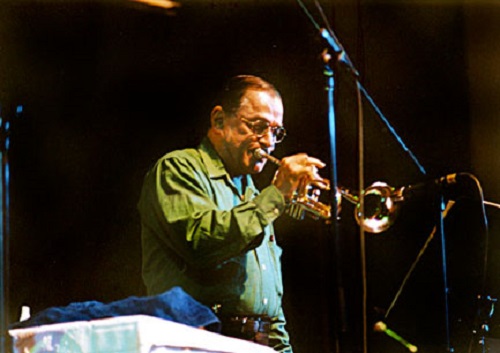
Juancito Torres: The National Trumpet of Puerto Rico

We present the musical life of one of the greatest trumpeters in Latin music, the master Juan “Juancito” Torres Vélez, known as “The National Trumpet of Puerto Rico.”

La Trompeta Nacional de Puerto Rico Juan Torres Vélez

Born on January 14, 1936, in Caguas, Puerto Rico, to Justina Vélez Vázquez and Félix Torres Varcárcel, he began his musical journey playing the violin in his hometown. He joined the Municipal Band, where he was taught by Adrián Benjamín and Carlos Julio Bosch, who also taught him the intricacies of the trumpet.

Juancito was a fan of Placido Acevedo, the trumpeter and director of the Mayarí quartet, and Acevedo was his biggest influence for his development as a professional trumpeter. At the age of fourteen, he studied at the Escuela Libre de Música. In 1952, he joined the orchestra of jazz musician Ramón “Moncho” Usera Vives and stayed with him for a year before joining his teacher Miguelito Miranda’s band.

In 1955, he traveled to New York, where he worked with Xavier Cugat, Noro Morales, and the Lecuona Cuban Boys. It is also said that he was part of the orchestras of Pupy Campo and Tito Rodríguez and that he recorded with René Touzet, Dámaso Pérez Prado, and Eddie Cano.

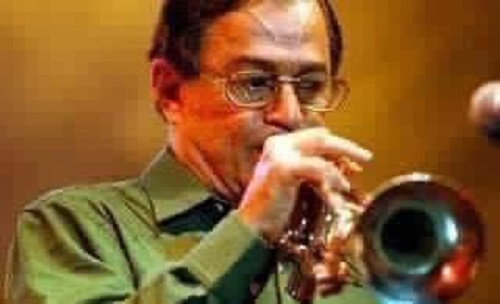
Juancito Torres Primera Trompeta de Fania All Stars

Juancito returned to Puerto Rico in 1960 and enrolled at the Puerto Rico Conservatory to further his musical knowledge. In 1965, he appeared on the list of musicians who recorded the album Bobby Capó and His Orchestra with the great Bobby Capó. In the late 1960s, Juancito joined master Bobby Valentín’s orchestra, recording five albums with them between 1969 and 1975. During the 1970s, he recorded with Frank Ferrer, Justo Betancourt, Puerto Rico All Stars, and Marvin Santiago.

In 1979, Juan began his participation in recordings, concerts, and international tours with the Fania All Stars. He appeared as a member of the Pacheco and Masucci collective on at least ten albums between 1979 and 1997. These include Habana Jam, Commitment, Latin Connection, Lo que Pide la Gente, “Live”, Viva Colombia, and Bravo 97.

Juancito’s extraordinary musical career and great talent also allowed him to participate in recordings for many singers, musicians, and groups such as Cheo Feliciano, Tommy Olivencia y su Orquesta, Adalberto Santiago, Roberto Roena, Sonora Ponceña, Eddie Palmieri, Tito Rojas, Pedro Arroyo, Descarga Boricua, Lalo Rodríguez, and Ray Barreto, among many others. “The National Trumpet of Puerto Rico” also participated in recordings by musicians and singers of other rhythms and musical genres such as Pop, Tropical, Jazz-Rock, Progressive Metal, Rock, Reggae, and Funk/Soul.

Juancito Torres
Juancito Torres

Regarding our music, we remember some of the tracks in which our great musician from Caguas recorded immortal trumpet solos: “Cuando Te Vea” with Bobby Valentín, “Dime,” “Menéame La Cuna,” “Quítate La Máscara,” and “Puerto Rico/Adoración” with Fania, “Amada Mía” and “Salí Porque Salí” with Cheo Feliciano. “Pedregal” with Justo Betancourt, “Canto A Borinquen” and “Alianza De Generales” with Puerto Rico All Stars, and “Palo Pa’ Rumba,” “Prohibición de Salida,” and “Solito” with Eddie Palmieri.

Through this work on Juancito Torres’ artistic life, we want to pay a small but well-deserved tribute to one of the ambassadors of Puerto Rican music. Juan Torres Vélez’s musical career spanned half a century, during which he participated in more than a hundred albums in our music alone, which was named Salsa from the beginning of the 1970s. The National Trumpet of Puerto Rico will live forever in the hearts of Salseros around the world.

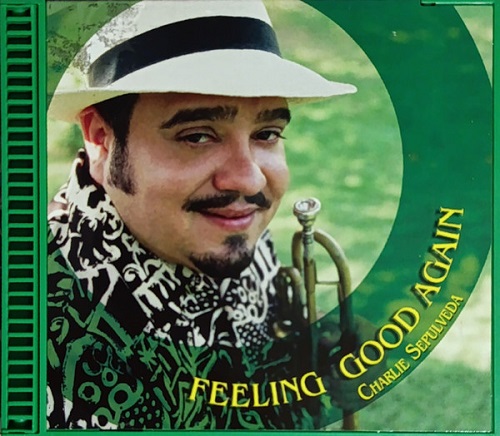
The trumpeter and producer Charlie Sepúlveda presented his new musical work titled Feeling Good Again, a jazz album released in 2003 on the Metrix label, which included our Juancito Torres on flugelhorn. Los Licenciados is the name of an album published by the Duque Records label and Omar Duque y su Orquesta. The recording year for this album is not specified, but Juancito Torres also participated as a trumpeter.

Charlie Sepulveda Feeling Good Again, Lanzado en 2003

Juancito Torres suffered from high blood pressure and bronchial asthma. Unfortunately, he passed away from a heart attack while sleeping at his home in Carolina on July 26, 2003. We will always remember him.

Long Live Music! Long Live Salsa! Long Live Juancito Torres!

By:

The Best Salseros in the World

Dj. Augusto Felibertt

Read Also: Luis “Perico” Ortiz: six decades of impeccable musical trajectory

Marcus’s Dance Studio

North America / USA / New Jersey’s

Marcus Nieves, owner and Instructor of the dance studio

Marcus Nieves started dancing in 1998 while out clubbing in one of New Jersey’s hot spots at the time, “Foxes”. He was intrigued by the various turn patterns and energy that the local dancers displayed on the dancer floor. That sparked his interest in Salsa and he began taking dance lessons with Kenny Lopez. In 1999 Marcus was approached by Luis Zegarra to take part in his dance company “Fuerza Latina.”

Marcus Nieves, owner and Instructor of the dance studio

There he gained most of his experience as a salsero, performing in many events around the tri-state area, which provided him the exposure he needed to be recognized in the dance scene. In 2000, Marcus began dancing under Nelson Flores and his dance team “Descarga Latina” which opened the opportunity for him to take part in the off-Broadway show “Latin Madness”. 

In late 2002 Marcus worked as one of the “Copa Boys” for the world famous “Copacabana” and in 2003 he fulfilled his dancing goal of the “Eddie Torres Dance Company” for which he dance and toured around the world. He then joined several of his old dance partners from the ET dancers in a collaboration team called “Latin Soul Dancers” which he performed with all of 2007. Today he is also the dance instructor at his own MDN Latin Dance Studio in New Jersey

Diana Osorio Instructor

Diana started her life on stage at the young age of 9, as a saxophonist and vocalist, performing at local events. A graduate of the first performing art school in the nation, Art High School in New Jersey, Diana is known for her versatility in the Art.

Diana Osorio Instructora

At the age of 13 she began competing in the Emmy Awar winning show, NJN Hispanic Youth showcase, as a vocalist. Not long after her crave for competition began, a family member introduced Diana to MDN Latin Studio in 2005 at the age of 15. She began to learn Salsa On2 for the first time, and made dance one for her new talents, and made dance one of her new talents, and strengths. After 4 years of competing, in 2009, she finally gained victory in the Teen Dance category as a soloist in her last year eligible to compete.

In 2005 her vocals were put to the test, she sang with living legend, and prodigy, Paquito D’ Rivera. February of 2007, Diana was given the opportunity to show her ability to be on camera and interviewed Grammy award winner Victor Manuelle, Don Omar, Eddie Palmieri, and TV News host from elemundo, at Victor’s first concert at Madison Square Garden, El Conciero de Amor.

She was only 15 years old. At the age 16, she was asked to be the lead roll in an NJN (New Jersey) Network) documentary special, THE GOLDEN AGE OF DANCE, playing the roll of the late Mambo Queen, Mille Donay. Through this documentary she was able to give tribute to those of the past, and find her style as one of the class and elegant ladies of today.

In 2007 Diana became an advocate for against Teen Drinking and Driving, and one of the opening acts for “El Gran Combo at the Puerto Rican Day Parade.

In 2008 through 2009, Diana worked for the Newark Boys and Girls Club of America, instructing their First Salsa Dance Class for the kids, making the front page of the Star Ledger with her students.

Marcus Nieves and Diana Osorio

In the summer of 2009, she performed at the New York International Salsa Congress, dancing on stage for the first as Marcus Nieves’s partner with the New York/ Italy dance team, Latin soul Dancers (LSD) directed by World Renowned Instructor and Former Eddie Torres Dancer, Adolfo Indacochea. In March of 2010 Marcus Nieves and Diana continued their journey together as partners at the first New Jersey International Salsa Congress.

In the summer of 2010, Marcus and Diana returned to the NYISC only to compete. With an unfortunate loss, they worked harder and won first place in November of 2010 In NYC’s Club Cache during the qualification round for the World Latin Dance Cup On2 division.

Class Schedule (Marcus’s Dance Studio)

  • Monday: Intermediate 7 pm – 8:30 pm, Advanced Beginner Level 1 8:30 pm – 10 pm.
  • Tuesday: Beginner 7 pm – 8:30 pm, Avanced Level 1 8:30 – 10 pm.
  • Wednesday: Intermediate 7 pm – 8:30 pm
  • Thursday: Advanced Beginner Level 1 7 pm – 8:30 pm, Advanced Beginner Level 2 8:30 pm – 10 pm
  • Saturday: Intermediate 12 pm – 1:30 pm, Advanced Beginner Level 2 1:30 – 3 pm, Advanced Beginner Level 1 3 pm – 4:30 pm, Beginners 4:30 pm – 6 pm.

If you want to know about the types of services and pricing visit http://www.marcusnieves.com and register

Argentine tango bassist and Latin Grammy winner Pedro Giraudo returned to his roots

Latin Grammy winner Pedro Giraudo spoke exclusively to us for International Salsa Magazine, so we are very pleased to bring you the best of our conversation with the Argentinian bassist and composer. Next, these are the highlights of his beginnings and his exciting career in his native country and in the United States, where he currently resides.

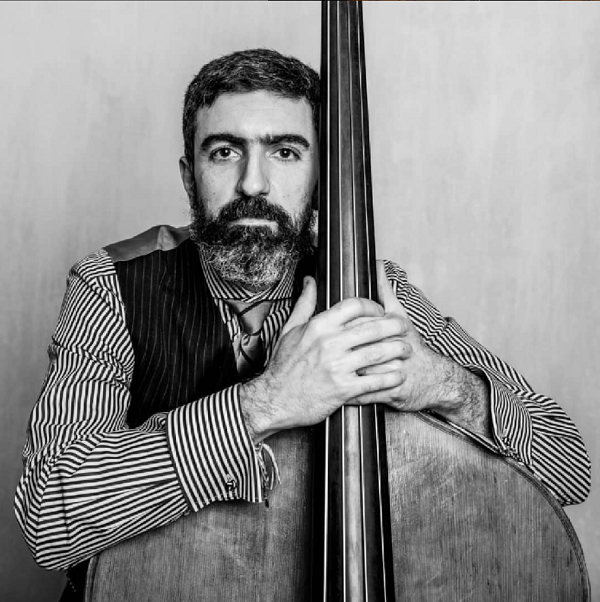
Pedro Giraudo posing
Argentine bassist Pedro Giraudo posing for the camera

Pedro’s beginnings in music

Pedro comes from a family of musicians. In fact, his father was a bandleader and his mother sang in a choir, so he was surrounded by music practically since he was born. He has memories of him watching his parents rehearse and play instruments when he was very young, so he was always very familiar with this kind of thing.

During his adolescence, he performed recitals with various ensembles, some of which played classical music, jazz, and tango. His professional advancement was very gradual, but he was doing some activities that prepared him for what was to come years later.

His love for this world grew so big that, once he turned 19, he moved to the United States precisely to study music and learn everything he could about what can be expressed through it. His musical interests initially focused on jazz, but that changed over time. 

Already at the end of his last year in college in New York, he was working regularly with various groups of different genres.

Interest in tango

Although, as we have said, Pedro comes from Argentina, he had not been particularly interested in tango at first, but his numerous trips around the world made him feel a little uprooted and detached from his beginnings. For this reason, nostalgia made him reconnect with the traditional music of his homeland. In addition, the fact that he was Argentinean encouraged many groups to call him, even though his knowledge of tango was not yet very deep at that time.

After giving himself the opportunity to play tango more formally, he also set to work to study it much more to learn about its most famous composers, its various styles, its ways to write music in the genre, among other things. In addition to that, he started to transcribe a lot of music to know what it sounded like in different styles and to gain practice. 

This path eventually led the artist to become part of many tango bands and even to lead some ensembles.

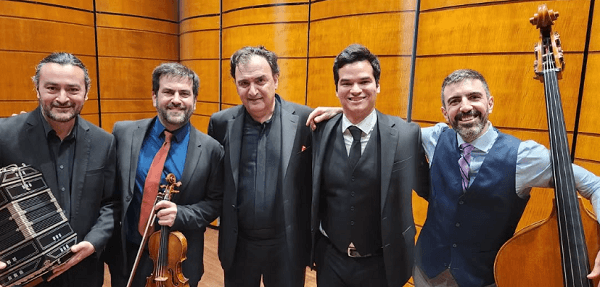
Pedro and friends
Pedro Giraudo, pianist Ahmed Alom, symphonic director Sergio Alessandro Bušlje, violinist Sami Merdinian, and accordionist Javier Sanchez

Groups Pedro was in

Pedro’s main goal in arriving in the United States was to become a double bassist, and after finally achieving it, he graduated from college and started to explore his role as a composer and leader of his own ensemble. From there, the band varied for characteristics and changed members and in size over the next 15 years. The last thing was a 17-piece big band.

Then, in the year 2014, due to the death of a great friend, Argentine pianist Octavio Brunetti, the Lincoln Center for The Performing Arts asked him to lead an event to celebrate his life and music. Therefore, in 2015, the musician started his tango project, which he would name Pedro Giraudo Tango Quartet, taking this request as a starting point. 

Today, he focuses all his efforts on tango ensembles, although he does recognize that he is increasingly angling for the classical side. For example, for his latest album, Pedro used a symphony orchestra, and since the last few months, he has been conceiving his next project with a chamber orchestra. 

Great collaborations in his career

Throughout his career, Pedro has been able to work with great music glories such as Paquito D’ D’Rivera, Rubén Blades, Pablo Ziegler, William Cepeda, and many others. One of the nicest things about this work for the Argentine is that he is always surrounded by very talented people from whom he can learn a lot.

One of them was bandoneonist Hector Del Curto, who was one of the first people Pedro started playing tango with in New York. Del Curto, in turn, had the great honor of playing with the greats of the golden age of Argentine music, such as Osvaldo Pugliese. 

It was through Hector that Pedro was able to meet and play with Pablo Ziegler, who was the principal pianist of Astor Piazzolla’s Second Quintet and greatly influenced the way tango is played on the piano. In fact, playing along with him on the double bass was an experience of which he learned so much, which he appreciated. 

Pedro and his Grammy
Pedro Giraudo holding his Latin Grammy in Las Vegas

In the case of William Cepeda, the artist made some arrangements for him and he received many valuable lessons from him, such as the importance of keeping musicians engaged with sheet music to prevent them from getting too lax. It was also with Zepeda that he made his first arrangements for a symphony orchestra.

On the other hand, Paquito taught him how to be a practical musician and to make perfect, well done arrangements for any occasion. 

Latin Grammy winner

Pedro is fortunate to be a Latin Grammy winner thanks to his album “Vigor Tanguero” in the category Best Tango Album in 2018. When we asked him about his experience, the double bassist said that there are some details he does not fully understand, such as the elements taken into consideration when voting for an artist in a category. However, that did not overshadow the joy of winning such an important award.

He says his victory was a surprise. At the time, he remembers being on tour with Pablo Ziegler, and after a four-hour rehearsal, his phone had about 40 missed calls congratulating him, while he did not even know that the nominations were being announced that day. To his amazement, he was included.

The final event was in Las Vegas, where Pedro finally heard his name and felt a total joy and pride for all he had achieved. In this respect, he said, “I’m not a person who collects awards, but this is a recognition I’m very proud of, to be honest.”

Read also: French flamenco dancer Fanny Ara lets us know the most important details of her career

North America / September 2025

Thumbnail Ali BelloThumbnail Pedro GiraudoElle JayOsmay calvoPBSCanto Tropical KPFKThumbnail about the salsa museum

Las Maracas promo

Martinez attorney

Directory of North American nightclubs

Canada flag
CANADA

Ontario, Canada
ONTARIO

Canada, Vancouver
VANCOUVER

United States flag
UNITED STATES
California US circular flag

CALIFORNIA

Florida circle flag
FLORIDA
Illinois circle flag

ILLINOIS

Michigan Circle flag

MICHIGAN

NJ circle flag

NEW JERSEY

New York Cicle flaga

NEW YORK

Ohio State
OHIO

Pennsylvania Circle Flag
PENNSYLVANIA

tEXAS CIRCULAR FLAG
TEXAS

Virginia Cirular Flag
VIRGINIA

Washington DC circle flag
WASHINGTON DC


  • « Go to Previous Page
  • Page 1
  • Interim pages omitted …
  • Page 20
  • Page 21
  • Page 22
  • Page 23
  • Page 24
  • Interim pages omitted …
  • Page 116
  • Go to Next Page »

International Salsa Magazine (ISM) is a monthly publication about Salsa activities around the world, that has been publishing since 2007. It is a world network of volunteers coordinated by ISM Magazine. We are working to strengthen all the events by working together.