• Skip to primary navigation
  • Skip to main content

International Salsa Magazine

  • HOME
  • Previous editions
    • 2026
      • ISM / April 2026
      • ISM / March 2026
      • ISM / February 2026
      • ISM / January 2026
    • 2025
      • ISM / December 2025
      • ISM / November 2025
      • ISM / October 2025
      • ISM / September 2025
      • ISM / August 2025
      • ISM / July 2025
      • ISM / June 2025
      • ISM / May2025
      • ISM / April 2025
      • ISM / March 2025
      • ISM / February 2025
      • ISM / January 2025
    • 2024
      • ISM / December 2024
      • ISM / November 2024
      • ISM / October 2024
      • ISM / September 2024
      • ISM / August 2024
      • ISM / July 2024
      • ISM / June 2024
      • ISM / May 2024
      • ISM / April 2024
      • ISM / March 2024
      • ISM / February 2024
      • ISM / January 2024
    • 2023
      • ISM / December 2023
      • ISM / November 2023
      • ISM / October 2023
      • ISM – September 2023
      • ISM – August 2023
      • ISM July 2023
      • ISM Edition June 2023
      • ISM – May 2023
      • ISM April 2023
      • ISM March 2023
      • ISM February 2023
      • ISM January 2023
    • 2022
      • ISM December 2022
      • ISM November 2022
      • ISM October 2022
      • ISM September 2022
      • ISM August 2022
      • ISM July 2022
      • ISM June 2022
      • ISM May 2022
      • ISM February 2022
      • ISM January 2022
    • 2021
      • ISM December 2021
      • ISM November 2021
      • ISM October – 2021
      • ISM September 2021
      • ISM August 2021
      • ISM July 2021
      • ISM May 2021
      • ISM April 2021
      • ISM June 2021
      • ISM March 2021
      • ISM February 2021
      • ISM January 2021
    • 2020
      • ISM December 2020
      • ISM November 2020
      • ISM October 2020
      • ISM September 2020
      • ISM August 2020
      • ISM July 2020
      • ISM June 2020
      • ISM May 2020
      • ISM April 2020
      • ISM March 2020
      • ISM February 2020
      • ISM January 2020
    • 2019
      • ISM December 2019
      • ISM November 2019
      • ISM October 2019
      • ISM Septembre 2019
      • ISM August 2019
      • ISM July 2019
      • ISM June 2019
    • 2016
      • ISM December 2016
  • Spanish
  • Download Salsa App
    • Android
    • Apple

Search Results for: Nightclub

The 5 most famous Latin music DJs in USA

Latin music is characterized by its incomparable rhythm. Those who have Latin blood vibrate when listening to songs that remind them of their roots. However, Latinos are not the only ones who enjoy them, audiences of all ages and nationalities end up trying to dance to the tune of salsa, merengue or bossa nova.

Its growth has been increasing over the years and more and more Latino artists are performing on large stages; Important events in the United States and become the favorites of non-Hispanic people.

For this reason, it is very common to listen to these types of songs in different bars and clubs. Some DJs based in the US have wanted to enhance their roots and, even when they dabble in other genres, they are still famous for their Latin mixes .

Famous DJs of Latin music

DJ Deorro

Erick Orrosquieta, is a DJ and music producer, born in California but to Mexican parents. It is characterized by its inclination towards electro house. However, it does not neglect the Latin music sets. To his credit he has pieces such as “Bailar” with Elvis Crespo, where he did not hesitate to place his personal stamp.

Dj Deorro
Dj Deorro

He is working on a new album where he plans to gather more Latin songs and songs in Spanish. Even when he tours different countries, he always plays in his native USA again.

“I want to grab the sounds we used to hear when we were little, cumbia, merengue, mariachi, everything, in order to give them new music”

DJ Louie Vega

Luis Ferdinand Vega Jr. is an American with Puerto Rican roots. His uncle was nothing more and nothing less than the famous singer Héctor Lavoe. Little Louie Vega, as he is also known, grew up surrounded by Latin music. For this reason, his training and his passion for music of this style have always been noticed.

Dj Louie Vega
Dj Louie Vega

He is one of those artists who enjoy each show and immerse themselves in what they do. Dj Louie had his beginnings at parties in the Bronx and has not neglected his Hispanic side. Making different Latin mixes that he does not stop taking advantage of in many of his presentations. One of his most requested songs is “My people by Héctor Lavoe”. He has also participated in songs with a tropical rhythm like “Starring” with Roberto Roena and performed live with the accompaniment of different percussionists.

“Music comes from our hearts and we try to express it. We don’t look at the others, we just follow what we think is our path, ”  he told ­estaybullshit.com.

DJ Buddha

Dj Buddha
Dj Buddha

Urals Vargas, born in the United States, is a renowned DJ, songwriter, producer and music publisher who has earned a good place in the industry. Recognized for including Latin music and dancehall among his mixes. He is one of the critics’ favorites and remains in constant innovation. DJ Buddha has an album called “Ultra Latino” that contains some of his most requested Latin tracks. In addition, it has countless tracks produced, remixed or written that today belong to renowned Latino artists.

“For me, success has been not putting myself alone in a genre because I make electronic music, … and yet, I have also made songs in the Latin market,” he said in an interview with Deyanira Martínez.

DJ Alex Sensation

Dj Alex Sensation
Dj Alex Sensation

He is a Colombian who grew up in the United States and from an early age began mixing at nightclubs. He also worked at the station La Mega 97.9 Fm, walking through different musical genres but not forgetting where he came from.

“I grew up listening to salsa and cumbia because of my roots. One of the fi­rst clubs where he played on the weekends was a Dominican club. There, I learned about the Dominican culture Bachata, Merengue, typical merengue when I was still very young. I made many Dominican friends and fell in love with their culture. I mix everything under that genre,” he commented for an interview.

He is considered a very valuable artist for music. In fact, he has participated in different festivals, parades in the Dominican Republic and Puerto Rico and has been awarded the ACE, an award from the Association of American Entertainment Critics.

DJ Cristhian Terán

Dj Cristhian Terán
Dj Cristhian Terán

This is a Venezuelan who has positioned herself in the city of the sun. Its proposal is based on Latin rhythms and is the favorite of most nightclubs. He has a history that has accompanied her since its inception in Venezuela. Caramelos de Cianuro, Chyno, Nacho and Guaco are some of the artists from her country with whom she has shared the stage. However, he has also managed to rub shoulders with singers such as Maluma, Alexis and Fido and Arcangel. Cristhian is one of the DJs who has managed to get the most out of the Latin genres and keep them present in the United States. His music is usually heard in the different clubs in Miami.

Directory North America

Santa Mónica,  California Los Ángeles Santa Clarita, California Los Ángeles
Rancho Cucamonga, California San Bernardino Pomona, California Pomona Oceanside, California San Diego

San Diego, California San Diego

Rancho Mirage, California Rancho Mirage Santa Barbara, California Santa Barbara Salinas, California Salinas

Santa Ana, California Santa Ana

Seaside, California Seaside

San Francisco, California San Francisco

Alameda, California Oakland

California – Contra Costa

California – Los Ángeles

California – Marin California – Salinas California – Seaside

California – Orange


Franky Swing

Latin America / Venezuela / Caracas

Franky Swing: From Venezuela Triumphed in Latin America

Franky Swing was born in Caracas-Venezuela, on December 3, from a humble family, as the main musical reference we will find his older brother, from a very young age his interest in singing was noted, he sang whenever he could, his father encouraged him to do it in family gatherings performing very naturally. During his childhood he belonged to the choir and the marching band at his school, his singing teacher saw great potential in him and advised him to dedicate himself to music.

Franky Swing
Franky Swing

Franky grew up, and could not devote himself to singing academically, because, to support his family, he worked at a nightclub where he only had one day off a week.

One day he had the opportunity to sing in another nightclub, where his brother worked, and it was there that he discovered that what really moved his life was music.

The night witnessed his first musical experiences, and thus, between clubs, events and private parties he was making himself known musically among friends, neighbors and clients; without losing sight of his desires: to soon realize an important musical project.

In 2007, he began as a soloist, a great professional experience that did not transcend beyond personal enrichment, then he became the vocalist of the LYRI-K group with which he was able to make himself known with more projection at a national and international level, and thus embarking on that artistic path that he longed for so much.

Songs such as “GUARAPO Y MELAO”, “LATINOS” and “REGRESA A MI” sounded throughout the national territory, the latter achieving position No. 8 in the record report on the country’s radio stations. LYRI-K was a good professional experience that Franky Swing had, because with it he not only gained great national exposure, but also managed to cross borders showing his talent in countries like Ecuador.

Additionally, with LYRI-K he participated in national events of great impact such as the Solid Fest (2011) and social concerts, being the image of the SENOSALUD FOUNDATION.

Franky Swing in concert

At an academic level, Franky attended speech workshops to acquire more knowledge about this exciting world, managing to participate in radio commercials for different brands and companies.

After his departure from LYRI K, FRANKY SWING undertakes a new solo project and comes with a romantic song entitled “NADA SIN TI”, lyrics and music by Ramón Montes, arrangements by Leo Gonzalez and Lino Paz, an excellent single to conquer the heart of the international public with his warm voice, covered in ballads and merengue.

Franky Swing continues to reap successes now with new songs that have crossed borders, currently in Mexico presenting songs like “Mi vecina me tiene loco”, “Olvidarme de ti” this particular single was recorded in Mexico and Venezuela, by the hand of Lois and Blackie and the Cuban Yumar Bonachea, can be enjoyed in two versions: Batucada and Electronic Merengue; also the single “Quiero”, authored by Francisco Figuera produced in Electronic Merengue.

Franky Swing - Photo
Franky Swing – Photo

The single “Llorando Fue” recorded in Venezuela, in the same Electronic Merengue vein as the album “Mira como es“, reaching important positions in the top 45 of Argentina called Elegidos 45.

In 2015, a new single titled “Una y Otra Vez” recorded in Venezuela, by Jhosir Córdoba, brings freshness in tropical Merengue with an urban touch, the lyrics and music are by Venezuelan Ottoniel Poveda.

Promoted in all social networks with a lot of focus on Latin America, particularly in Mexico City and in the important media in the country to infect everyone with his dance music.

Franky also took on the task of participating in humanitarian social works such as HELP IS, THE NIGHT OF DREAMS INFINITE LOVE AND I LEND YOU MY VOICE.

On the other hand, the recognitions received by FANTASIA TV THE PROGRAM, FINALLY THE END, HAYEK INTERNATIONAL HUMANITARIAN MERIT AWARDS, RECOGNITION AS A SINGER BY THE OAXAQUE BOARD OF POPULAR CULTURE A.C., THANKS IN THE EL LAVADIARIO PROGRAM, RECOGNITION BY THE NATIONAL ASSOCIATION OF MEXICAN ANNOUNCER C , AWARDED WITH THE RAY TICO PRIZE OF THE COSTA RICAN COMMUNITY B. AWARDED AT THE INMORTAL AWARDS AS A TROPICAL MUSIC SINGER Already living in Mexico in 2017, he joins the group “INTERSALSA ORQUESTA“, where he had the opportunity to record several singles in which is the promotional “DILE A ELLA“, this theme was written by the Venezuelan Wilmer Hernández and musical arrangement by the Venezuelan Taylor Aranguren.

Franky Swing
Franky Swing

Among the musical themes we can highlight “TU NO SABES QUERER”, “ADIOS AMOR” a version of Mr. Cristian Nodal adapted to the salsa genre, collaborations in feautiring in the “GIGANTES DE LA CUMBIA” project with the song “UN SUEÑO” original theme of the group “LOS ANGELES DE CHARLY” duet with the singer “JUAN SOLO” the singles where Franky has been involved with his voice have been happy songs that have made the whole world enjoy, Franky Swing with his charisma, flavor and excellent voice gives him that authentic touch to each song he has recorded.

Franky Swing in 2018, presented us with his new single entitled “DAME UNA OPORTUNIDAD”, lyrics and music by Francisco Figuera and arrangements by Mauricio Jiménez, with the participation of Dante Vargas on trumpet, this song came to stay in the salsa genre and thus continue giving rumba joy and flavor to the international public.

All of us at some point in our lives have made mistakes, which perhaps have hurt someone’s feelings, it can be your partner, a friend, or in any life situation where the beings we appreciate are involved, and at Recognizing that we have failed, we seek forgiveness and try to correct the mistake, doing everything possible to put ourselves in the other person’s place and feel their pain.

Brief synopsis of the single “DAME UNA OPORTUNIDAD” Currently, Franky Swing follows the path of this tropical genre and this time comes with the theme “SABOR A NADA” a very interesting proposal, this arrangement was made in Venezuela by the hand of Wuilmer Herrera , where a fresh concept was shaped to continue giving good music to the international public, it should be noted that the lyrics and music of this single go hand in hand with the Venezuelan composer Jhon Semeco.

Franky Swing
Franky Swing

Sabor a Nada is the name of Franky Swing’s new single, this single is about those loves that are not consummated, where there are promises that are not kept, loves that are adrift and that fail to have a story, love without color without flavor, that’s what this great single by the great Venezuelan singer Franky Swing is about, who little by little continues to bring joy to Latin America.

If you want to know more about Franky Swing, I invite you to follow him on all his social networks Contacts: Frank Figuera:+52 155-6444-2153 / 55-7410-5180

Youtube: https://www.youtube.com/c/frankyswing

Videoclip https://youtu.be/M7B2wJ4fKIo

Video lyrics https://youtu.be/ltee6FSIQYg

Plataformas digitales: Spotify:

https://open.spotify.com/artist/4tvKmZc3DNOLW6bcOwFgFc

Sabor a nada iTunes https://itunes.apple.com/us/album/sabor-a-nada-single/1449554732

Deezer: https://www.deezer.com/en/artist/14789867

G o o g l e p l a y: h t t p s : / / p l a y . g oo g l e . c o m / s t o r e / m u s i c / a l b u m /

Franky_Swing_Mira_Como_Es?id=Bw2svrdawij6iyvk3grloe3eqc4

Itunes: https://itunes.apple.com/mx/album/mira-como-es/1386202738

Twitter: @franky_swing

Instagram: @FRANKY_SWING

Fan page Facebook: Franky Swing

Youtube: Franky_swing

Rebernation: Franky Swing

WebSite: www.frankyswing.com

Webwix: http://frankyswing362.wix.com/frankyswing1

Email: [email protected]

Influence of Latin Music in Europe and Vice Versa


European union 


When we refer to any Latin element that has been influential at the European continent or vice versa, it is almost inevitable that we think back to the Discovery of the Americas on the part of Christopher Columbus.

It was about this time when various instruments present in cumbia and salsa started to be used. No wonder we attach so much importance to this event, as this is how Spanish and the Portuguese arrived in the so-called New World. It is no coincidence that these languages are the protagonists of these rhythms at this time.

While it is true that Europe gave its languages to Latin music, we cannot fail to mention that the African slave trade played a major role in this context. Its beats and drums closely tied to religious ceremonies were inspirational for salsa, bachata and samba and African-American music, in which the famous Jazz may be included.

Neither can we leave out the fact that many pre-Colombian civilizations created many types of percussion music instruments, which are very present in Andean music and its very traditional flute-like sounds.

 What has led Latin American music to become so popular in recent times?

There is no denying that Latin music has achieved a tremendous global reach in recent years, but things were not always like this. In the past, it was ballads of love with heartbreaking lyrics that dominated this market and its primary target audience was female.

With the passing of years, this reality radically changed. We can see it in the emergence of an encouraging number of commercial songs and very simple to dance like La Macarena by Los Del Rio, Livin La Vida Loca by Ricky Martin, A Dios Le Pido by Juanes, among others. These pieces of theme music were the ones that broke the barrier of traditional radio in due course.

Later, hip hop and R&B gave origin to other urban rhythms that took hold of everyone’s attention

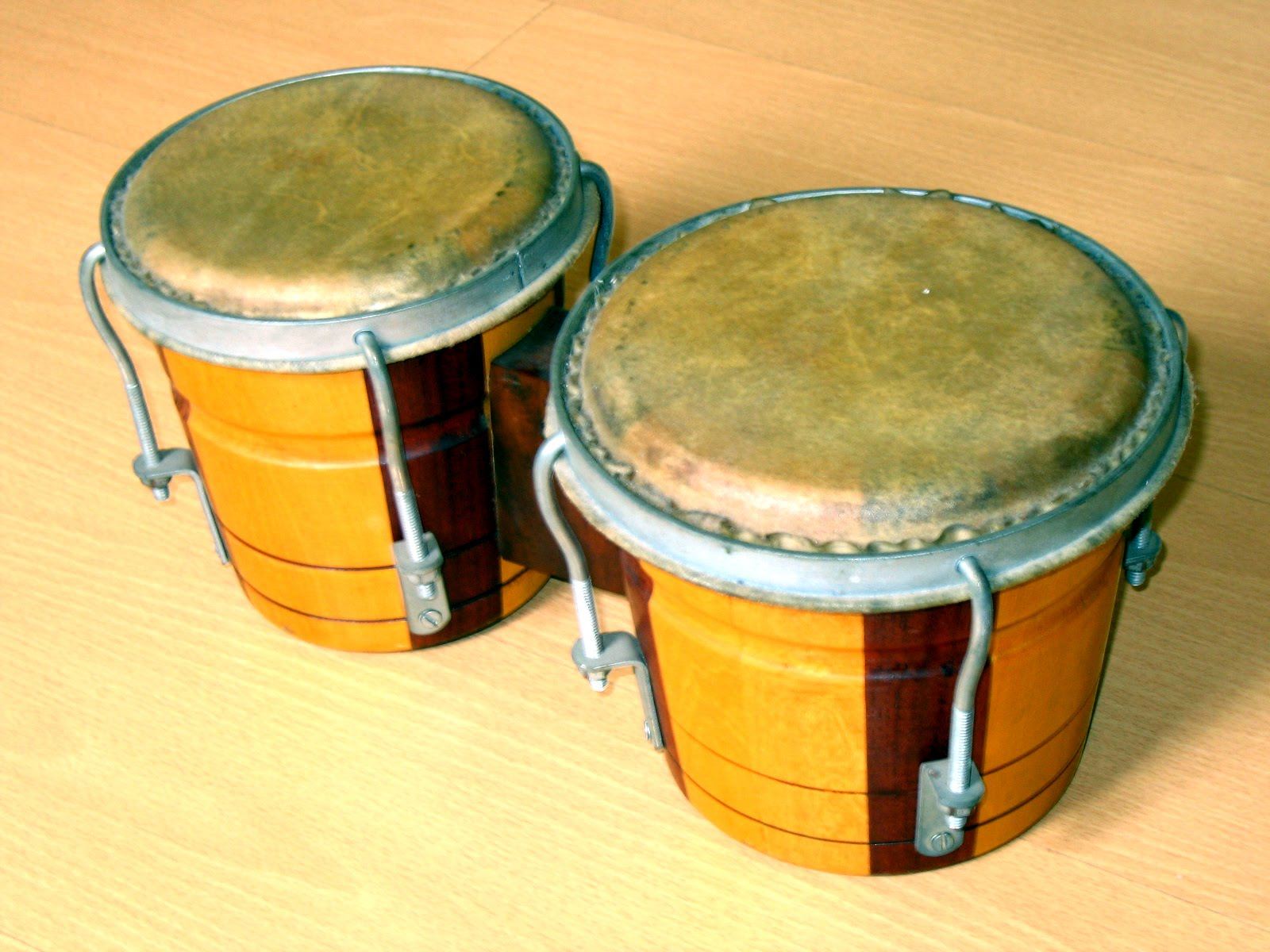
Bongos
Bongos


Latin music for some time now

That mode of nightclubs of Latin origin that have been inaugurated  the length and breadth of the old continent is nothing new. What is new though is the type of attendees received in these places in recent years. There’s a very large audience of all ages who show real interest in rhythms whose language they don’t even know, but they do not seem to care at all. In fact, this peculiarity seems to give an extra touch of excitement to the point. They see Latin music as an array of sounds and rhythms that may not understand, but that simply cannot stop dancing them.

When making a comparison of the monotonous pop style with this recent wave of Latino artists that have been conquering hearts throughout the world, it is evident that things are different now and did not seem to go back to the way they were. What is true is that traditional styles have been overthrown surprisingly.

It is not a secret that singers such as Shakira or Ricky Martin became immensely popular in the late nineties and the early 200All Posts0s, but now things go much further. We are saying that there is a very important number of musicians in these genres that have drawn the attention of all audiences of all ages and countries.

Further, there is a lot of Americans who have appropriated these styles and the Spanish language to give a lot of freshness to their musical projects. A telling example is the Canadian Justin Bieber who has worked with Luis Fonsi and other artists from Latin America, giving as a result a fan base that became interested in these genres and the Spanish language.

It looks like musical lyrics no longer need to be in English to reach all corners of the globe and make everyone dance. In fact, many people look for this type of music to enjoy it, even if they understand little to nothing about it.

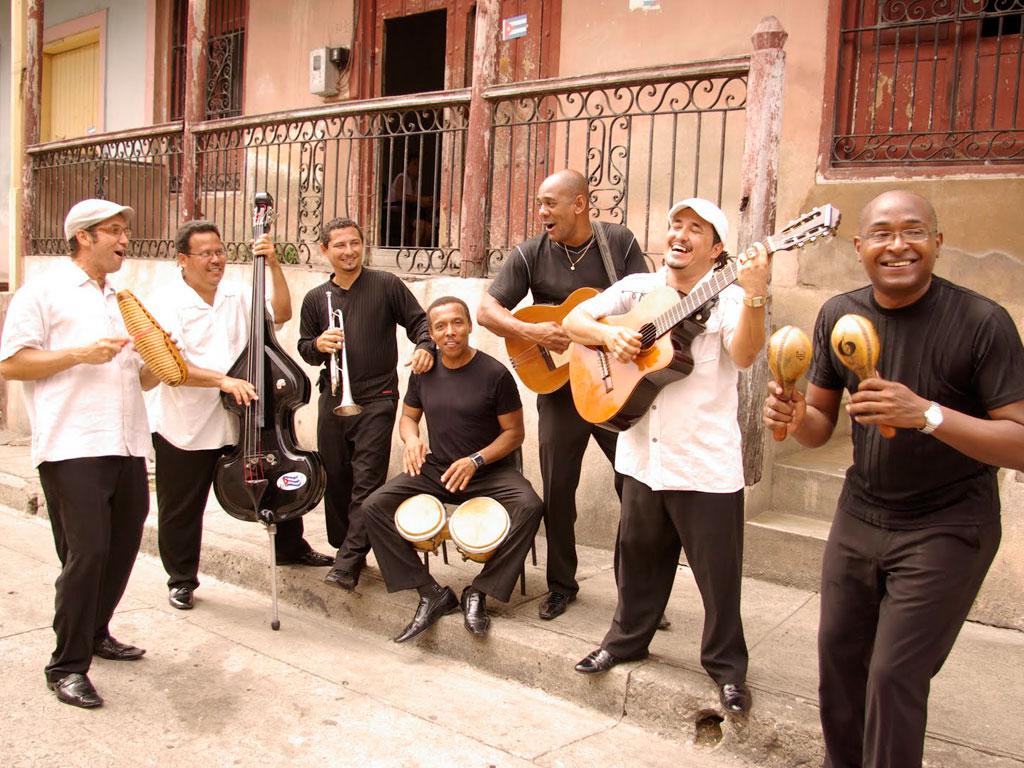
Orchestra Latin music playing in the roads

What can we deduce from all this?

After having analysed all these data, we can say that Latin music is a very rich and intense mix of a cluster of cultures that were linked up between them until we find the heterogeneity that we see today. Undeniably, this whole process of miscegenation between so many rhythms would not have been possible under the influence of pre-Columbian, African and European culture. However, the same can be said in the opposite case.

Yes, this also occurs in the contrary case. Europeans’s musical tastes are no longer those of a few decades ago. Nowadays, there are many adults and young people who cannot stop dancing when they listen to certain salsa or merengue songs that have gone across all possible borders.

In short, we are talking about a continuous feedback loop between both cultures that keeps going until now. No musical rhythm is completely pure and Latin rhythms are the perfect example.

Image source 1: http://nuevacaravana.blogspot.com/2010/08/bongo.html

Image source 2: https://presencia.unah.edu.hn/noticias/los-origenes-de-la-musica-y-la-identidad-en-america-latina-4-de-4/

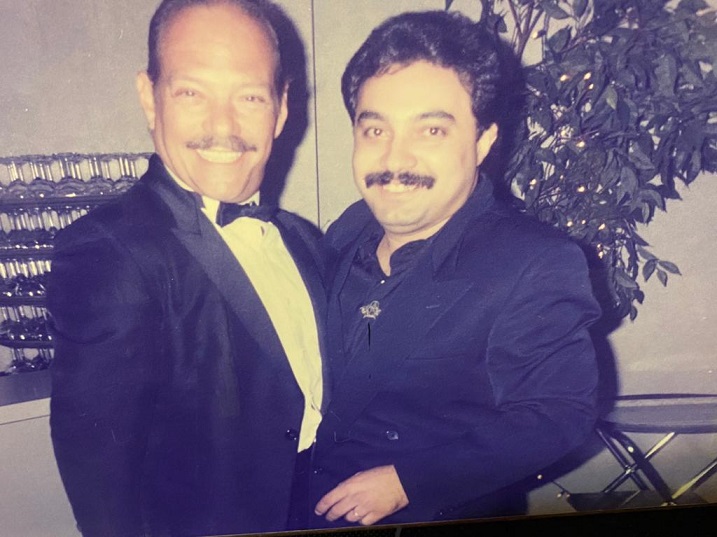
Image source 3: https://www.correo.ca/2015/07/willie-colon-la-clave-es-la-experimentacion/

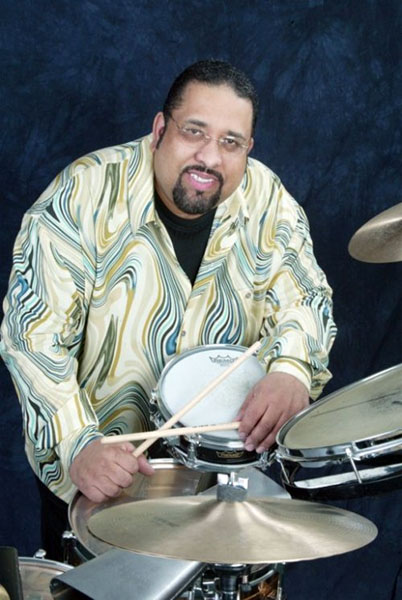
Image source 4: https://www.youtube.com/watch?v=QH_3h43nGf4


Honor to whom honor is due – Johnny Cruz

Johnny Cruz
Johnny Cruz

This month I hope to be able to pay tribute to great figures of our Latin music, who have worked tirelessly for years to make our music very high.

I want to greet my great friend Larry Harlow and wish him a speedy recovery. Larry Harlow is an American artist and performer, composer and producer of Cuban son, Montuno, Afro-Cuban jazz, mambo, guaracha, cha-cha, and salsa, hailing from Brooklyn, New York. Harlow, who is known for his mix of Afro-Cuban jazz and piano playing styles, studied music in the 1950s in Cuba, but was unable to complete his studies before the 1959 Cuban Revolution, forcing him to leave the island.

Larry Harlow y Johnny Cruz

The Harlow Orchestra was the first to sign with Fania Records, Harlow has also produced more than 106 albums by various artists and more than 50 albums of his own authorship, in addition to those he produced for Fania. Among his most popular albums were “Abran Paso” and “Tributo a Arsenio Rodríguez” with Ismael Miranda as the vocalist. He also appeared with La Fania All-Stars, in the film, Nuestra Cosa Latina.

Harlow recorded one of his most momentous albums in just two days. Under the simple title of Salsa, it pays homage to the Cuban roots of tropical music, combining the sound of trumpets and trombones with two violins that evoke the aesthetics of the charanga of groups such as Orquesta Aragón.

With “The portfolio”, a version of a song by Arsenio Rodríguez, Harlow finds his greatest success. Thanks to the singers Adalberto Santiago and Junior González, the nickname “the wonderful Jew” arises. In 1972, salsa was in full swing. Larry Harlow, meditates on a musical concept for the Afro-Caribbean music market. Inspired by the success of the Anglo-Saxon opera, “Tommy”, Harlow was preparing for the launch of a similar concept, aimed at the salsa market.

For 1973 the opera Hommy, using the lyrics of Heny Álvarez, tells the story of a boy who, although blind and deaf, had a great talent for percussion. The outstanding musicians of the time and singers such as Justo Betancourt, Cheo Feliciano, Adalberto Santiago, Junior González, Pete “El Conde” Rodríguez and Celia Cruz joined.

The combination of musicians and voices achieved its goal with a recording that established a lecture in the history of Afro-Caribbean music with a radiant exhibition that captured the airwaves and the imagination of the salsa audience. The songs “Es un Varón”, “El Día De Navidad”, “Quirinbomboro”, “Gracia Divina”, “Cari-Caridad” and “Soy Sensacional” were undoubted radio hits that became themes of dance and discussion among all the salseros.

It was the first time that an opera, Spanish-speaking, and in the salsa guild, was directed to the populace. Salsa got dressed up and that legacy opened the doors for the Afro-Caribbean musical tradition to now visit the most prestigious venues in the world.

That is the legacy of “Hommy”, one of the best recordings of the time, which brought together the best musicians of the moment in an expression that transcended time; and, in turn, he brought Celia Cruz to the salsa market and placed her in a seat of honor which she never left. But more importantly, “Hommy” took Salsa to a new place among audiences. What a contribution from Larry Harlow!

Ralph-Irizarry
Ralph-Irizarry

I also want to send my regards and appreciation to Ralph Irizarry. Recognized as one of the timpanists with the greatest “swing”, Ralph Irizarry has a distinctive style that has allowed him to leave an indelible mark in the groups where he has played. Born in Harlem Latino New Yorker, Ralph is a self-taught musician who learned his trade by listening to his brother’s records and the music of his idols in nightclubs, where he used to sneak into when he was 16 years old.

His family moved to Puerto Rico when Ralph was in his teens; There he acquired his first professional experiences with La Terrífica, El Gran Combo, La Sonora Ponceña and many other groups. After three years on the island, Ralph returned to New York, where he began playing with local groups.

One winter night in 1978, he met the legendary Ray Barreto at Manhattan’s Corso Nightclub and began a productive working relationship that would result in five extraordinary recordings. Ralph has recorded with David Byrne, Paul Simon, Harry Belafonte, Earl Klugh, Juan Luis Guerra, Cachao, Celia Cruz and Yomo Toro, although he is widely recognized for his musical relationship with Rubén Blades and Seis Del Solar, with whom he remained. recording and performing internationally for 13 years.

His musical contributions have also been fundamental in the recording of two Latin jazz albums made by Seis del Solar for the Messidor Records label. Currently, he is one of the most sought after musicians who has kept working on commercials and film and television soundtracks.

His charisma also allowed him to develop an unexpected acting career: he acted in The Mambo Kings, playing the role of Pito Fernández. In the summer of 1996, Ralph participated along with Tito Puente in the show Master Timbaleros, presented at S.O.B.’s in New York. This historic concert was the culmination of 26 years of dedication, practice, and love of music. He founded the group Timbalaye, a septet with a strong big band sound.

The group combines contemporary Latin jazz with diverse tropical rhythms (timba and songo) and traditional Afro-Cuban rhythms (bomba, cha cha chá and son montuno). Their innovative sound has allowed the group to perform weekly at various venues in New York. Among his most recent projects is a recording at Birdland for a compilation to be released by the RCA Records label. Timbalaye is considered the force of Latin jazz. My hug and respect to you Ralph!

I am happy to express my gratitude and admiration to a powerful woman, Director of Taínos Tower and Vice President of the Museum of Salsa: María Cruz.

Johnny Cruz and Mrs. María Cruz

María Cruz was born in Carolina, Puerto Rico. In 1966 she came to New York looking for new opportunities. While studying at Manhattan Community College, she began working with the East Harlem Pilot Block Redevelopment Project. Although she may have had no idea at the time, that job was the beginning of her career as a community activist and advocate for social services. As a community worker at the East Harlem Pilot Block, she helped design and offer a tenant orientation in preparation for the occupation at Taino Towers.

Later, she became a Building Representative and worked with tenants regarding apartment issues, rent, social service issues, and Section 8. Maria Cruz has been involved in many community activities:

From 1984 to 1989; She served as president of the Tenants Association of her apartment building. She was vice president of the East Harlem Little League Baseball organization. In her spare time, she organized bus trips for neighborhood children to amusement parks and ball games. Encouraged and assisted several tenants to return to school and continue their education, so that they can be trained and empowered to return to the workforce and leave Public Assistance. Ms. Cruz earned her RAM (Registered Apartment Manager) certificate from NYU and is registered as a Certified Leasing Professional.

Currently, Ms. Cruz is the Executive Director of ARCO Management Inc. / Taino Towers. She has always been a strong activist for the community. In the summer of 1999, Ms. Cruz organized the first annual Taino Family Day. Day in which all residents and members of the East Harlem community participate and celebrate a day of unity. On Taino Family Day, residents rent “kioscos” food stalls and sell various ethnic foods, dance to the rhythm of various musical bands, and children enjoy activities such as face painting, puppet theater, and a petting zoo.

Each year, Ms. Cruz focuses on a different topic such as: education, music, tributes, and family values. As Executive Director, one of her greatest accomplishments was the renovation of the Touro College building. She is currently a board member of the East Harlem Council for Human Services and works closely with local politicians and representatives.

In 2002, Ms. Cruz along with Irving “Magic” Johnson opened the Magic Johnson Computer Learning Center. This program provides computer classes to Taino Towers and the East Harlem Community. As Executive Director, she was also able to oversee the completion of the Senior Park at Taino Towers.

In the summer of 2003, voted by the majority of the tenants, the Park for the elderly was renamed the Maria Cruz Park for the elderly. In September 2019, she was honored with the Eugenio María de Hostos Award from the Puerto Rican National Association for her commitment to the East Harlem Community. People like Mrs. Cruz are exemplary citizens of the Latino community in the United States, and in New York.

Papo Rosario and Isidro Infante

Do not stop listening to the new single: “Gracias”, and the first solo production of Papo Rosario, produced by the arranger and musician Isidro Infante. Rosario is grateful to be alive and to be able to walk after being bedridden as a result of a car accident. Papo Rosario is a world-class artist who has put the name of Puerto Rico high. Rosario, withdrew in 2019 from the group considered the “university of salsa”, El Gran combo de Puerto Rico, after having an accident and presenting health problems. Now, he affirms that he already feels ready to resume his musical career with the launch of his first solo production by producer Isidro Infante. Much success in this new stage.

I highly recommend that you follow the track of Quintero’s Salsa Project, a Venezuelan salsa group based in New York, nominated for a Latin Grammy and led by cousins ​​Luisito and Roberto Quintero, released an album in which they pay tribute to the work of La Dimensión Latina, the orchestra that represented a before and after in the history of this musical genre in Venezuela.

Quintero´s Salsa Project

The band wanted to go back to the 60s to remember that particular style with which La Dimensión Latina championed Venezuelan salsa: “Many of the world’s salsa players and Venezuelans identify with this rhythm. We, the Quintero, have always been loyal fans of these great teachers. With this album we wish to pay tribute to those who today are a world icon of salsa ”, they said through their networks. “Ya tú lo verás”, promotional single from the album composed by Oscar D’León, was arranged by the legendary trombonist and director of La Dimensión Latina, César Monges, better known as “Albóndiga”.

The album is the second released by Quintero’s Salsa Project, following their debut project, Nuestro Hogar, which was nominated for the 2019 Latin Grammy for Best Salsa Album. In that same ceremony, Luisito Quintero, one of the great Venezuelan percussionists who make a professional life in the United States, received the gramophone as a member of the Spanish Harlem Orchestra, which was recognized for his Anniversary album as Best Latin Tropical Album. Quintero is also a member of the group of the great pianist Chick Corea. Do not miss it!

The invitation to tune in to the new Fm / Internet radio station on Live365.com continues: Salsagallery. Good music, interviews with the artists and much more.

Johnny Cruz on the Radio

At the Spanish Harlem Salsa Gallery Museum we are happy to say that we are gradually returning to our activities and we will be opening the gallery sporadically. We do not stop, we continue to work for our music and we will always keep you informed through our social networks. We hope to have more news shortly and that we can return to normal soon.

By Johnny Cruz, ISM Correspondents, New York, New York City

  • « Go to Previous Page
  • Page 1
  • Interim pages omitted …
  • Page 51
  • Page 52
  • Page 53
  • Page 54
  • Page 55
  • Interim pages omitted …
  • Page 63
  • Go to Next Page »

International Salsa Magazine (ISM) is a monthly publication about Salsa activities around the world, that has been publishing since 2007. It is a world network of volunteers coordinated by ISM Magazine. We are working to strengthen all the events by working together.