• Skip to primary navigation
  • Skip to main content

International Salsa Magazine

  • HOME
  • Previous editions
    • 2026
      • ISM / March 2026
      • ISM / February 2026
      • ISM / January 2026
    • 2025
      • ISM / December 2025
      • ISM / November 2025
      • ISM / October 2025
      • ISM / September 2025
      • ISM / August 2025
      • ISM / July 2025
      • ISM / June 2025
      • ISM / May2025
      • ISM / April 2025
      • ISM / March 2025
      • ISM / February 2025
      • ISM / January 2025
    • 2024
      • ISM / December 2024
      • ISM / November 2024
      • ISM / October 2024
      • ISM / September 2024
      • ISM / August 2024
      • ISM / July 2024
      • ISM / June 2024
      • ISM / May 2024
      • ISM / April 2024
      • ISM / March 2024
      • ISM / February 2024
      • ISM / January 2024
    • 2023
      • ISM / December 2023
      • ISM / November 2023
      • ISM / October 2023
      • ISM – September 2023
      • ISM – August 2023
      • ISM July 2023
      • ISM Edition June 2023
      • ISM – May 2023
      • ISM April 2023
      • ISM March 2023
      • ISM February 2023
      • ISM January 2023
    • 2022
      • ISM December 2022
      • ISM November 2022
      • ISM October 2022
      • ISM September 2022
      • ISM August 2022
      • ISM July 2022
      • ISM June 2022
      • ISM May 2022
      • ISM February 2022
      • ISM January 2022
    • 2021
      • ISM December 2021
      • ISM November 2021
      • ISM October – 2021
      • ISM September 2021
      • ISM August 2021
      • ISM July 2021
      • ISM May 2021
      • ISM April 2021
      • ISM June 2021
      • ISM March 2021
      • ISM February 2021
      • ISM January 2021
    • 2020
      • ISM December 2020
      • ISM November 2020
      • ISM October 2020
      • ISM September 2020
      • ISM August 2020
      • ISM July 2020
      • ISM June 2020
      • ISM May 2020
      • ISM April 2020
      • ISM March 2020
      • ISM February 2020
      • ISM January 2020
    • 2019
      • ISM December 2019
      • ISM November 2019
      • ISM October 2019
      • ISM Septembre 2019
      • ISM August 2019
      • ISM July 2019
      • ISM June 2019
  • Spanish
  • Download Salsa App
    • Android
    • Apple

Search Results for: Orchestra

The story of how Oscar D’León’s “La Salsa Mayor” came about

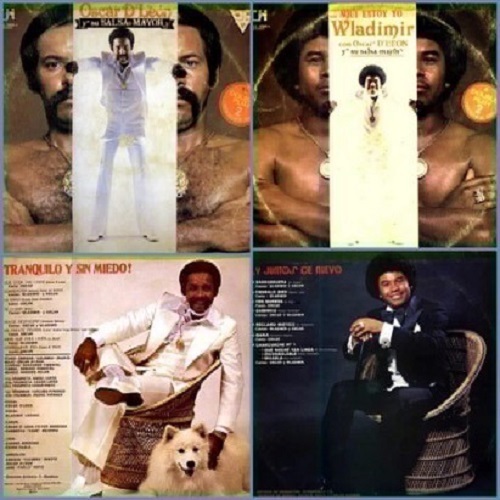
How Oscar D’ León’s “La Salsa Mayor” came about, is a story that has already been commented on, including the subsequent separation of musicians that the aforementioned orchestra had, which gave way to the formation of another well-known group (Nuestra Orquesta la Salsa Mayor), is also a well-known story, but one as a good music lover always wants to continue to investigate and whenever the opportunity arises to make a healthy discussion about the subject in question, one does so without any qualms.

That is why it is never too much to remember some interesting facts that adorn this story, such as the headline that appeared on the front page of Swing Latino magazine in November 1977, which read: “KO a la Dimensión? OSCAR D’LEÓN after signing WLADIMIR.

In summary, the article said that Wladimir had intentions of leaving Dimension because of an alleged refusal of a loan request, a situation that induced the vocalist to want to sign with another orchestra. Another excerpt of the article says that Oscar D’León in his eagerness to have Wladimir in his orchestra, would have given him the money to satisfy his economic needs, but in exchange he would have signed a contract with the orchestra.
“La Salsa Mayor“de Oscar D’León

In short, by that time in November 1977, these were only speculations, of course, as it is also mentioned in the article in a jocular way “When the river sounds it is because it brings stones”.

The truth is that the year 1978 arrived and in the Swing Latino of March another headline appeared on the front page “¡LA DIMENSIÓN LATINA SE VA DE VENEZUELA! pero Wladimir se queda con Oscar”, which clearly shows that those speculations or rumors that were made in the salsa milieu at that time were a reality that quickly materialized.

“Last February 20, the bolerista presented his resignation to Dimensión Latina and began to work his notice period. In the meantime, he has already begun his rehearsals with Salsa Mayor and will soon be fully incorporated into this group that already threatens to become a real monster not only nationally but also beyond our borders, which we have no doubt he will now achieve with this valuable acquisition” (Swing Latino. March 1978).

Now, only a month had passed when another news about the orchestra of the dancing bass shakes the salsa milieu, “¡SE DISOLVIO LA SALSA MAYOR!”, headline that appeared in Swing Latino for May 1978 and stating: “Seven of the ten musicians that made up the prestigious group of Oscar D’León, left the orchestra for economic reasons”.

The rest is already known history, the negrito from Antimano reassembled his orchestra with some musicians from “La Critica” and others who came from the orchestra “La Renovación”, which at the same time also dissolved and the rumba continued.
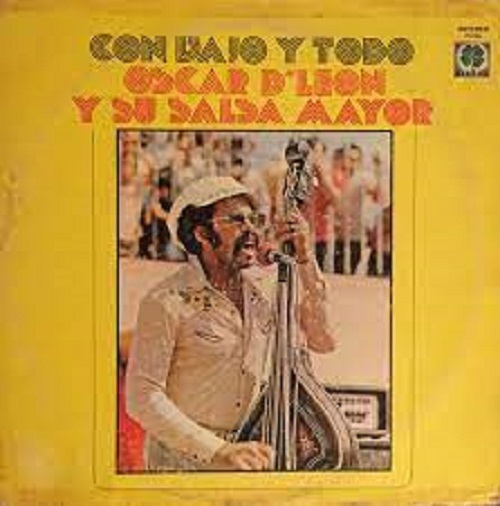
Con Bajo y Todo  Oscar D' León's "La Salsa Mayor"
Con Bajo y Todo  Oscar D’ León’s “La Salsa Mayor”

In August of that year 1978, Oscar D’León’s last album was announced under the name of “LA SALSA MAYOR”, a fabulous double LP, that just by looking at its cover you could already feel the strength with which the sonero from Caracas was coming along with the diminutive in stature but great with his voice, Wladimir Lozano.

The internal title of the album spoke for itself, “TRANQUILO Y SIN MIEDO”, this makes us think that the phrase had a double meaning, remember that the musicians who defected to form the other Salsa Mayor, recorded that famous song: “Fuimos Amigos”, where they throw a few puns at Oscar and this “calm and fearless”, returns them in the song: “La Mano”… “Why did not you follow me when I gave you my hand?”Now it weighs on you, you fell in the mud”… Chorus: “Que te vaaaya bien”.

The album is excellent as almost all the ones published by D’León in those past decades, all the songs are good, but I can’t help but comment and recognize that the song that I liked and still like the most from this double album is “MARIA”, maybe because in every man’s life there has always been a Maria…My respects and salsalutation to all of you.

Enrrique “Culebra” Irierte y Dj. Augusto Felibertt

Oscar D’León y su Salsa Mayor (double play) (1978) ths-1225

Disc 1 – Side A

  1. Que cosa tan linda (Oscar D’León) Singer: Oscar D’León
  2. Consentida (Alfredo Nuñez de Borbón) Singers: Wladimir and Oscar
  3. La mano (Sandy Omar González) Sung by: Oscar
  4. Te llamo (D.D.) Sing: Wladimir and Oscar

Disc 1 – Side B

  1. Dulce desengaño (Armando Beltrán) Sung by: Oscar and Wladimir
  2. De frente Panamá (L: Andrés Vega, M: José Zamora) Sung: Oscar D’León
  3. Mira que eres linda (J. Brito) Sung by: Wladimir Lozano
  4. Consígueme eso (Pedro N. Perez) Sings: Oscar D’León

Disc 2 – Side A

  1. Sandunguera (M. Guerra) Sung by: Wladimir and Oscar.
  2. Piénsalo bien (Agustín Lara) Sings: Wladimir Lozano
  3. Ven morena (R. Paz) Sing: Oscar D’Leó
  4. Ausencia (Rafael Hernández) Sing: Oscar and Wladimir

Disc 2 – Side B

  1. Reclamo místico (M. Matamoros) Sing: Wladimir y Oscar

María (Florentino Padrón) Sing: Oscar D’León

  1. Chancunche No. 1: Sing: Wladimir and Oscar

*Que noche tan linda (B. Diez, A. M. Romeu)

*Inconsolable (Rafael Hernández)

*Micaela (Raúl Guillaume)]

Musicians:

Enrique “Culebra” Iriarte (Piano).

Oscar D’León (Bass)

Rhadames Pimentel (Congas)

Edward Pimentel (Timbal)

Hungary Rojas (Bongo)

Ángel López (1st Trumpet)

César López (2nd Trumpet)

César Pinto (3rd Trumpet)

Tarcisio Piñango (1st Trombone)

Pedro Piñando (2nd Trombone)

Andrés Mendoza / Pedro Vilela (Tres)

Oscar D’León (Vocal)

Wladimir Lozano (Vocal)

Oscar D’León / Víctor Mendoza / Humberto “Tigre” Becerra (Backing Vocals)

Enrique Iriarte / Oscar D’León / José “Cholo” Ortiz (Arrangements)

Other Credits:

Intersonido C.A. Recording Studios.

Sound Technicians: Agustín Verde and Carlos Guzmán

Mixing: Rafael Hernandez

Art Direction: Víctor Mendoza

Idea, Design and Album Art: Drago Fernández

Photos: All Freddy.

Source:

José “Cheo” Guevara

Enrrique “Culebra” Iriarte

Enrrique “Culebra” Iriarte

You can read: Víctor Porfirio Baloa Díaz, more commonly known as Porfi Baloa

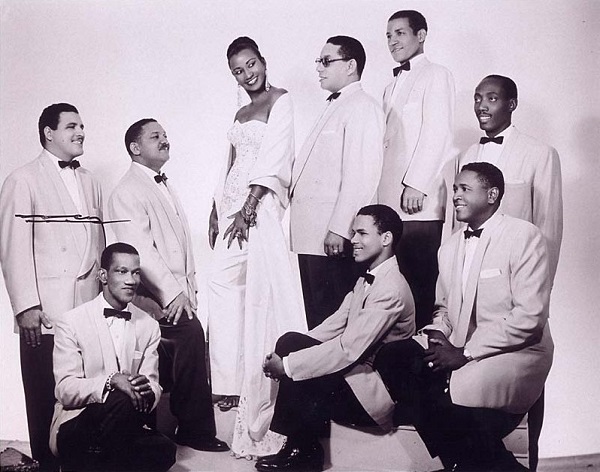
La Sonora Matancera musical congregation of long trajectory and its sound quality, is one of the most popular in the Caribbean island “Cuba”

It was founded in Matanzas in 1924 under the name of La Tuna Liberal.

Its first members were: Valentín Cané, director and tres player, Manuel Valera, guitar and second voice, Manuel Sánchez (Jimagua), timbal, Ismael Governa, cornetín, Pablo Vázquez Govín (Bubú), double bass, Domingo Medina, guitar, Ismael Goberna, cornetín, Julio Govín, guitar, José Manuel Valera, guitar, Juan Bautista Llopis, guitar.

In 1926 Carlos Manuel Díaz Alfonso (Caíto), falsetto voice and maracas, and Rogelio Martínez Díaz (El Gallego), guitar, joined the group and it adopted the name Sexteto Soprano.

On January 12, 1927, under the name of Estudiantina Sonora Matancera, they moved to Havana. In November of that year they recorded their first two recordings for the Victor label: Fuera, fuera, chino, by José Manuel Valera, and El porqué de tus ojos, by Valentín Cané.

With the definitive name of Conjunto Sonora Matancera, it began its transmissions on the radio station El Progreso Cubano (later Radio Progreso). At that time it appeared on Radio Atwater Kent; in 1932, at the suggestion of Rogelio Martínez Díaz, it took the name of Sonora Matancera, and began its performances in the Havana Sport dance academies, and later in Marte and Belona, and later became part of the cast of CMQ Radio. In 1935, trumpeter Calixto Leicea joined the group; in 1939, composer, pianist and orchestrator Severino Ramos, who gave the Sonora its distinctive sound with his orchestrations.

La Sonora Matancera congregación musical de larga trayectoria y su calidad sonora, es una de las más populares en la isla caribeña “Cuba”

In 1944 pianist Lino Frias and trumpeter Pedro Knight Caraballo joined the group, who with Calixto Leicea formed the most interesting trumpet duo in the history of Cuban ensembles; in 1945 singer Bienvenido Granda Aguilera; in 1948, Angel Alfonso Furias (Yiyo), tumbadora. At this time the Sonora Matancera was formed by Rogelio Martínez Díaz, director, guitarist and chorus; Pablo Vázquez Govín (Bubú), double bass; José del Rosario Chávez (Manteca), timbal; Ángel Alfonso Furias (Yiyo), tumbadora, who replaced Valentín Cané; Calixto Leicea, first trumpet; Pedro Knight Caraballo, second trumpet; Lino Frías, pianist; Carlos Manuel Díaz Alfonso (Caíto), falsetto voice and maracas; Bienvenido Granda, singer and claves; and Celia Cruz, who soon became the stellar singer we knew and the mainstay of the Sonora Matancera hits. Thus began a period that critics have called the golden age of the Sonora.

In 1950, with the advent of television, the Sonora Matancera was one of the first musical groups to perform on this medium. It also signed a contract with the Seeco record company, with whose recordings it made a name for itself in the international market. In 1952, Raimundo Elpidio Vázquez replaced his father, Pablo Vázquez, on double bass (when Rogelio Martínez Díaz died in 2001, he took over the leadership of the group).

In 1926, it changed its name to “Septeto Soprano”. That same year, Carlos M. Díaz “Caíto” accompanied Eugenio Pérez in the choir.

Later in 1927, on Caíto’s recommendation, Rogelio Martínez joined the group and the name of the group was changed to Estudiantina Sonora Matancera.

Sonora Matancera
Sonora Matancera

With a great desire to improve the group travels to Havana where they get in touch with the record company “RCA Victor” and make their first recording on January 12, 1928.

At the beginning of the thirties, the group began to adapt to the new rhythms that were appearing at that time as well as adapting new instruments, such as the grand piano, which was played for the first time in the group by Dámaso Pérez Prado, who years later would become the “King of the Mambo”.

But it was in 1935 when the group took the name La Sonora Matancera, and with this change it introduced a new trumpet player: Calixto Leicea, who replaced Ismael Goberna, who died a few months later due to health problems.

The unforgettable José Rosario Chávez “Manteca”, who replaced the resigned “Jimagua”, also joined the band. Humberto Cané joined the group playing the tres and his father Valentín Cané began playing the tumbadora.

In 1938, Dámaso Pérez Prado retired and left the vacant piano position to Severino Ramos, who soon after became the musical arranger of the group.

During the first years of the forties they made presentations in dance academies, cabarets and in Radio Progreso Cubano, they also included in their repertoire: guarachas, montunos.

On January 6, 1944, two musicians from Arsenio Rodriguez’s group joined the group: Lino Frias (author of the popular song Mata Siguaraya) who began to play the piano and Pedro Knight who became the second trumpet player of the Sonora Matancera.

In the month of December, Bienvenido Granda enters the band recommended as vocalist, being his first recording “La Ola Marina” by Virgilio González, and with him they sign a contract with the nascent record label Panart Records. Valentín Cané, Israel del Pino, Caíto and Humberto Cané made recordings with this label.

In the middle of 1946 the founder Valentín Cané suffers asthmatic problems that force him to leave the group, dying two years later. Before the group joined Panart Records, it recorded other songs for the “Varsity” label, without the name of the Sonora Matancera appearing on the labels, here the first version of “Se Formó la Rumbantela” by Pablo Cairo, “Tumba Colorá”, “El Cinto De Mi Sombrero”, Bienvenido Granda and Humberto Cané participated in these numbers.

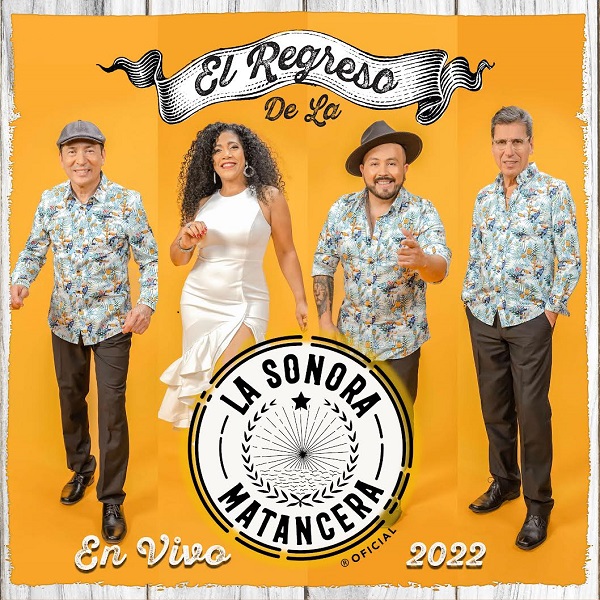
El Regreo de La Sonora Matancera 2022 2023

Members

Trumpets: Calixto Leicea and Pedro Knight

Double Bass: Elpidio Vázquez, replacing his father Pablo Vázquez, “Bubu”.

Piano: Lino Frías

Timbales, Bongó and Campana: José Rosario Chávez “Manteca” Chávez

Tumbadora: Ángel Alfonso Furias “Yiyo”.

Guitar and Choir: Rogelio Martínez

Maracas and Chorus: Carlos Díaz Alonso “Caíto”.

Claves and Choir: Bienvenido Granda.

Last January 13, 2023 they turned 99 years old and are still going strong from generation to generation.

Source:

Enrrique “Culebra” Iriarte, Venezuelan pianist, arranger and orchestra conductor.

Bibliography: Ecured Cuba

La Sonora Matancera 

You can read: Carlos “Patato” Valdés one of the best percussionists in the history of Latin Jazz

North America – February 2023

Thumbnail for Johnny Cruz and all his articles

Latin America – February 2023

Goodbye to El Canario de Carolina

Music in mourning

The world of music, more specifically salsa, has lost one of its greatest stars later this year 2022 and is none other than the unforgettable Lalo Rodriguez, who leaves a huge void after his unfortunate departure. In view of the unfortunate things that happened to the humanity of the great artist, we want to take this opportunity to remember the most important of his musical work and the importance of the legacy left by him.

A little of his biography

Ubaldo Rodríguez Santos, better known as Lalo Rodríguez, was born in Río Piedras, Puerto Rico on May 16, 1958 in the family formed by his parents José Rodríguez and Magdalena Santos. As a child, he soon started singing in music festivals and radio and television shows, in which he already showed the great talent that would carry him for the rest of his life. So much so that, a few years later, he was already part of his first musical group, the Tempo Moderno Orchestra.

Lalo Rodríguez was found dead on December the 13th

When he was 15 years old, he received the necessary support to move to New York City, a place where some of the biggest salsa stars of the time were located. While there, he joined Eddie Palmieri‘s band and provided vocals for several songs on the album ”Sun of Latin Music”, which became the first salsa album to win a Grammy. The following year, the artists would team up again to create ”Unfinished masterpiece”, which got a nomination for the aforementioned awards. At that time, it was Palmieri himself who named him ”Lalo” for the first time.

After walking away from Palmieri, he participated in the Machito Grillo’s orchestra, with whom he recorded the album ”Fireworks”. Incredibly, this album also got a Grammy nomination, which represented fabulous numbers for Lalo. Upon coming of age, he already had three albums, a Grammy won and two Grammy nominations.

1980s

During these years, Lalo recorded a significant amount of albums and was beginning to be considered as one of the precursors of romantic and erotic salsa, a subgenre that was beginning to gain much more notoriety in those years. One of the biggest hits of his entire career was the song ”Ven devórame otra vez”, which won him a Lo Nuestro Award in the category of Tropical Song Of The Year and reached very good positions in the Latin Music charts.

Lalo Rodríguez and Eddie Palmieri

1990s

In the 1990s, he continued working hard in his career, resulting in the albums ”Nací para cantar” and ”Estoy aquí”, with which he won gold and platinum records due to the large number of copies sold. These were the last record productions of the artist to be released to the public.

Recent years

Lalo never stopped being active on stages of all types, both in his native Puerto Rico and in other countries around the world. In 2020, it was announced that he was going to release a new album and already had a song selection to include in the material, although no further details had been offered.

Unfortunately, fate would not allow him to go forward with his plans and he was found dead near a basketball court in Carolina, Puerto Rico. One of the first relatives to make an appearance was his road manager.

Lalo Rodríguez and Johnny Cruz

After knowing that Lalo was found dead, his road manager Francisco Pérez, who had been working with the artist for several years. He indicated that he had communicated with him that same day and they had agreed to meet, but instead, he received the unfortunate news about his death.

During the following days, many artists expressed their sorrow for the departure of the singer and highlighted his great talent in life, such as Víctor Manuelle, Elvis Crespo, Arnaldo Vallellanes, among many others.

Read also: This is the story of Percussionist Joe González

        By Johnny Cruz, ISM Correspondents, New York, New York City

  • « Go to Previous Page
  • Page 1
  • Interim pages omitted …
  • Page 98
  • Page 99
  • Page 100
  • Page 101
  • Page 102
  • Interim pages omitted …
  • Page 155
  • Go to Next Page »

International Salsa Magazine (ISM) is a monthly publication about Salsa activities around the world, that has been publishing since 2007. It is a world network of volunteers coordinated by ISM Magazine. We are working to strengthen all the events by working together.