• Skip to primary navigation
  • Skip to main content

International Salsa Magazine

  • Home
  • Previous editions
    • 2025
      • ISM / November 2025
      • ISM / October 2025
      • ISM / September 2025
      • ISM / August 2025
      • ISM / July 2025
      • ISM / June 2025
      • ISM / May2025
      • ISM / April 2025
      • ISM / March 2025
      • ISM / February 2025
      • ISM / January 2025
    • 2024
      • ISM / December 2024
      • ISM / November 2024
      • ISM / October 2024
      • ISM / September 2024
      • ISM / August 2024
      • ISM / July 2024
      • ISM / June 2024
      • ISM / May 2024
      • ISM / April 2024
      • ISM / March 2024
      • ISM / February 2024
      • ISM / January 2024
    • 2023
      • ISM / December 2023
      • ISM / November 2023
      • ISM / October 2023
      • ISM – September 2023
      • ISM – August 2023
      • ISM July 2023
      • ISM Edition June 2023
      • ISM – May 2023
      • ISM April 2023
      • ISM March 2023
      • ISM February 2023
      • ISM January 2023
    • 2022
      • ISM December 2022
      • ISM November 2022
      • ISM October 2022
      • ISM September 2022
      • ISM August 2022
      • ISM July 2022
      • ISM June 2022
      • ISM May 2022
      • ISM February 2022
      • ISM January 2022
    • 2021
      • ISM December 2021
      • ISM November 2021
      • ISM October – 2021
      • ISM September 2021
      • ISM August 2021
      • ISM July 2021
      • ISM May 2021
      • ISM April 2021
      • ISM June 2021
      • ISM March 2021
      • ISM February 2021
      • ISM January 2021
    • 2020
      • ISM December 2020
      • ISM November 2020
      • ISM October 2020
      • ISM September 2020
      • ISM August 2020
      • ISM July 2020
      • ISM June 2020
      • ISM May 2020
      • ISM April 2020
      • ISM March 2020
      • ISM February 2020
      • ISM January 2020
    • 2019
      • ISM December 2019
      • ISM November 2019
      • ISM October 2019
      • ISM Septembre 2019
      • ISM August 2019
      • ISM July 2019
      • ISM June 2019
      • ISM May 2019
      • ISM April 2019
      • ISM March 2019
      • ISM February 2019
      • ISM January 2019
    • 2018
      • ISM December 2018
      • ISM November 2018
      • ISM October 2018
      • ISM September 2018
      • ISM August 2018
      • ISM July 2018
      • ISM June 2018
      • ISM May 2018
      • ISM April 2018
      • ISM March 2018
      • ISM February 2018
      • ISM January 2018
    • 2017
      • ISM December 2017
      • ISM November 2017
      • ISM October 2017
      • ISM September 2017
      • ISM August 2017
      • ISM July 2017
      • ISM June 2017
      • ISM May 2017
      • ISM April 2017
  • Download Salsa App
    • Android
    • Apple
  • Spanish

Search Results for: Oscar D'Leon

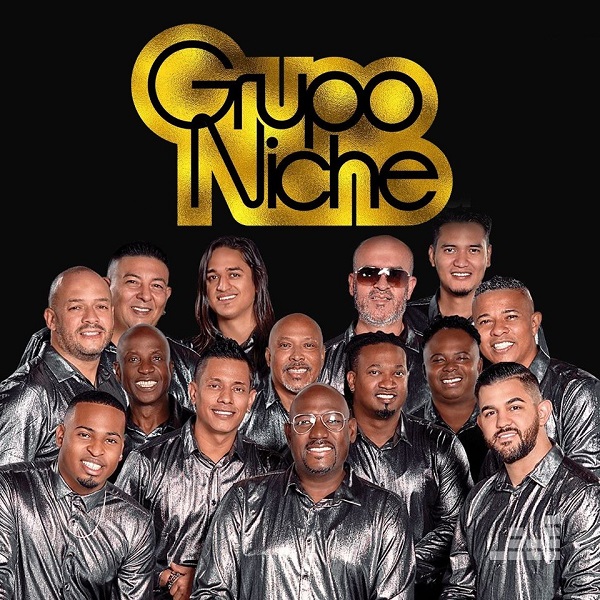
Colombia’s legendary Grupo Niche and its founder Jairo Varela

Grupo Niche was founded in 1979 in Bogotá, Colombia, by Jairo Varela, born on December 9, 1949 in Quibdó, Chocó, and Alexis Lozano, who played trombone and was an arranger, later leaving Grupo Niche to form Orquesta Guayacán de Colombia.

That same year, the group released its first album under the Daro label, entitled Al Pasito, with Jairo Varela and Alexis Lozano as directors, Nicolás Cristancho “Macabí” on piano, Francisco García on bass, Luis Pacheco on congas and singers Jorge Bazán, Saulo Sánchez and Héctor Viveros.

Two years later, Niche’s second production, Querer es poder, was released. The song “Buenaventura y Caney”, included in the album, became the first composition of the group to become a hit in Colombia, said Jairo Varela.

The legendary Grupo Niche of Colombia 2023

In 1983 After a tour of the United States in which they performed before several colonies of Colombians and a short stay in Buenaventura, the group decided to settle in Cali in 1983.

In 1984 and after releasing the albums Prepárate (1982) and ¡Directo desde Nueva York! (1983), Jairo Varela composed and produced the song “Cali Pachanguero”, which brought the group to national and international stardom.

The song, included in the 1984 album No hay quinto malo, was chosen as the official song of the Cali Fair.

After the success of No hay quinto malo, the group began to tour constantly throughout Colombia and other Latin American countries, becoming the most important orchestra in Colombia.

The album Triunfo, Niche’s sixth discographic production, was released in

1985 The song “Ana Milé”, sung by Jairo Varela, became a radio hit. A year later the group incorporated the renowned Puerto Rican singer Tito Gómez, who had previously worked with La Sonora Ponceña and Ray Barretto, the godfather of Latin jazz.

The inclusion of Gómez further boosted the group’s career throughout Latin America. That same year the album Me huele a matrimonio was released, with Gómez and Varela sharing the lead vocal duties.

Colombia's legendary Grupo Niche 2020
Colombia’s legendary Grupo Niche 2020

Later, another Puerto Rican joined the group, pianist Israel Tanenbaum, who would eventually leave the group to join a parallel group to Niche, Orquesta Guayacán.

Taking advantage of the group’s growing popularity, in 1987 an album of new versions of songs previously released by the group entitled Historia Musical was released.

That year, the director Jairo Varela fired a group of musicians due to their claims for high fees.

Varela hired some new musicians and recorded the album Tapando el hueco, a production that became an instant hit especially for the songs “Nuestro sueño” and “Cómo podré Disimular”.

After the release of the album, Grupo Niche became a sensation in Latin America, especially in countries such as Venezuela and Peru.

In 1989, the group gave a concert at the Campo de Marte in Lima, where it attracted more than one million people, a record number in that country.

To thank the Peruvian people for their incredible welcome, the band released the album Me sabe a Perú that same year.  1989 also saw the release of the album Sutil y contundente, a production that revalidated the group’s good form, especially with songs such as “Mi hijo y yo” and “Miserable”.

In 1990, after the departure of singer Tito Gómez, the group released the album Cielo de tambores, Grupo Niche’s most successful production to date. The same year of its release, Cielo de tambores ranked third on Billboard magazine’s tropical music chart in the United States.

The album’s success was based on the quality of compositions such as “Busca por dentro”, “Sin sentimiento”, “Debiera olvidarla” and “Cali ají” and the massive popularity of the song “Una aventura”. Charlie Cardona and Javier Vásquez provided the vocals for the album.

From that moment on, the group enjoyed international popularity, touring constantly in countries such as the United States, Peru, Mexico and Colombia, as well as making some presentations in Europe.

In 1992 the group released another successful album entitled Llegando al 100% with Charlie Cardona as lead vocalist. The songs “Hagamos lo que diga el corazón” and “No tuve a quién decirle amor” stand out from this production.

After the release of two compilation albums, the group released Etnia, an album recognized especially for the compositions “La Canoa ranchá” and “La magia de tus besos”. The vocalists on this production were Willy García, Álvaro Granobles and Javier Vásquez.

Jairo Varela was captured and imprisoned in 1995 after returning from a tour of the United States.

The musician was accused of front man and illicit enrichment for allegedly receiving payments from the account of a sister of drug trafficker Miguel Rodríguez Orejuela, corresponding to the presentations of Grupo Niche at the Caseta Carnaval del Norte, an event where artists such as Sergio Vargas and Oscar D’León el sonero del mundo also performed.

His experience in jail was reflected in the lyrics of several songs on the next Niche album. 1997’s A prueba de fuego became another commercially successful production for the group.

Colombia's legendary Grupo Niche 2015
Colombia’s legendary Grupo Niche 2015

The song “Eres”, sung by Willy García, achieved strong radio airplay and its video clip was equally popular.

A year later the album Señales de humo was released, which could not match the success of the previous production.

The group closed the 1990s with the release of the album A golpe de folklore, an album in which the group returned to its musical roots, exploring the folklore of the Pacific coast and emphasizing the “salsa brava dura”.

In 2001, Jairo Varela decided to move Grupo Niche’s headquarters to Miami in order to better focus on the group’s international touring demands.

That year the group published Propuesta, an album that was nominated for a Latin Grammy in the “Best Salsa Album” category, along with productions by prominent artists such as Isaac Delgado, Oscar D’León, Tito Puente, Gilberto Santa Rosa and Tito Rojas, great salsa artists.

In 2005 the group performs for the first time in Japan. That same year the album Alive was released.

In 2007 Varela suffers a heart attack that forces him to quit smoking. Two years later he released a new album entitled Robando sueños, promoted by the single “Un día después” with Elvis Magno on lead vocals. Jairo Varela stated that it was the best song he had ever written in his life.

The death of Jairo Varela.

On August 8, 2012 Jairo Varela suffered another heart attack in his apartment in southern Cali, dying at the age of 62, while he was writing a novel titled “Luces negras”, a story based on the Colombian Pacific that he was unable to finish.

Jairo Varela Founder of Grupo Niche in Colombia

After his death, a large number of songs were recorded on demos and written down on sheets of paper.

Some of these compositions were recorded and included in the posthumous 2013 album Tocando el cielo con las manos.

Yanila Varela, Jairo’s daughter, succeeded him as the group’s director.

At the end of 2014, the group shared the stage with the Gran Combo de Puerto Rico at Madison Square Garden in New York City.

In August 2015 José Aguirre took over the musical direction of Grupo Niche replacing Richie Valdés. That same year the idea of releasing an album with songs composed by Varela that failed to become hits arose.

The idea was finally embodied in a new record production released on October 2, 2015 titled 35 Aniversario, promoted with the single “Niche como yo”, a song composed by Jairo Varela in 1978.

The album received a Grammy nomination for Best Traditional Tropical Latin Album, a Latin Grammy nomination for Best Salsa Album and a Lo Nuestro Award nomination for Album of the Year in the Tropical category.

New stage 2020

Grupo Niche is currently formed by singers Alex Torres, Luis Araque and Alejandro Iñigo, percussionists Juanito Murillo, Fabio Celorio and Diego Camacho, pianist Víctor González, bassist Sergio Munera and musicians Edgardo Manuel, Edward Montoya, Carlos Zapata, Oswaldo Salazar and Paul Gordillo on wind instruments, under the direction of José Aguirre. At the end of the year, Grupo Niche won a Latin Grammy award for the best salsa album of 2020 with “40” and in March 2021 they will win the Anglo Grammy.

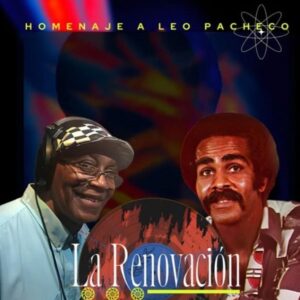
Also Read: Leo Pacheco Sonero del barrio and beloved example of father and friend was lead vocalist of the Orquesta Renovación under the direction of the tumbador Nico Monterola.

Leo Pacheco Sonero del barrio and beloved example of father and friend was lead vocalist of the Orquesta Renovación under the direction of the tumbador Nico Monterola.

On May 17, 1948, Alejo Veliz Pacheco was born in Las González, Miranda State.

Under the musical influence of his father, an outstanding Afro-Venezuelan drummer, his debut as a professional took place in 1973, when he became the lead vocalist of the Renovación, after the departure of Orlando Castillo “Watussi” to the orchestra of Porfi Jiménez.

Leo Pacheco Sonero del barrio and beloved example of a father and friend

An advanced group, which emerged on February 6, 1973, under the musical influence of Harlow y la Perfecta, became the ideal competition to the “Galician” Dimensión Latina.

Under the direction of tumbador Nico Monterola, La Renovación, despite not having much luck, presented in its ranks timbalero Alfredo Cutuflá, (great Venezuelan timbalero, with a brilliant career in France), then Cheo Navarro (Director of Bailatino), the future trombonists of Oscar D’ León, the Piñango brothers: Nené and Taito.

This is the first recording for the album of La Renovación, one of the best Venezuelan salsa groups of the 70s. La Renovación since its foundation had in its ranks a select group of musicians that in the future would make a brilliant career in our salsa, needless to say that this group in its different stages has always tried to maintain a very fat and hard sound in the style of the good bands of New York”.

Orquesta Renovación under the direction of the tumbador Nico Monterola

This LP gathers many good songs but there is one in particular that I like very much and it is “Guaguancó a Barlovento”, authored by Orlando Watussi, who was also founder of this group, but he left before the recording of this first album.

Rafael García on bass, Félix Suárez “Shakaito” (future director of the Bronko), Hungria Rojas (later Oscar D’ León’s bongos player) and the vocalization of Leo Pacheco, who recorded with them, (5) Cinco Producciones: Echa Pa’ lante (1974); Llegó la Renovación (1975); Pare Cochero (1975); Lo máximo es Renovación (1976) and A todo el mundo le gusta (1976).

Due to some problems he left La Renovación and went on tour to Colombia with Nelson Henríquez, commitments that prevented him from joining the newly formed orchestra of Oscar D’ León, who observed in Leo his great conditions to do the chorus and second voice, (as a substitute for the work done by Wladimir Lozano in Dimensión Latina), and in a nightclub, Oscar told him: “Leo was looking for you, because the two of us, for whatever comes out …”, “here there is nothing else…”, “here we are going to bust everybody…”.

In fact, after Rodrigo Mendoza’s departure in March 1977, the band replaced him thanks to Leo Pacheco’s very special timbre to do the chorus and second voice, with some songs that served as witnesses, such as the unforgettable: Juramento, Fuego de Amor, Capullito de Azucena, Cruel Desilusión (Con la Crítica de Oscar), among others.

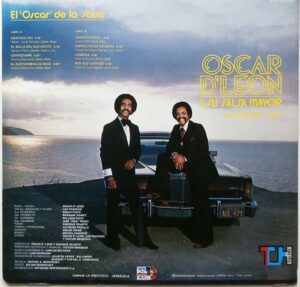
Oscar D'Leon Y Su Salsa Mayor El Oscar De La Salsa
Oscar D’Leon Y Su Salsa Mayor El Oscar De La Salsa

The last days of May 1977, the breakup of Oscar D’ León’s Salsa Mayor is announced, where the bassist-singer in record time reassembles his orchestra dismantling the Renovación itself, while Leo Pacheco, together with the timbalero Alfredo Padilla, Henry Camba, William Puchi, Miguel Pacheco, José “Pipo” Pérez form: “Nuestra Orquesta La Salsa Mayor”, with whom he recorded three anthological albums: De frente y luchando (1978); Strong & Hots (1979); Sello de garantía (1979).

He continued his musical activity in the following years with La Crítica, Combo Venezuela and other groups.

“There was a lot of history left to tell, impossible to tell in this opportunity for reasons of space, although we hope it will be the beginning of a series of works on Venezuelan Salsa, which unfortunately we begin with the sad news of the death of Leo Pacheco, who left us with the fullness of his vocal cords and strength, which impressed the doctors on the day of his death when he resisted 8 hours with a heart attack while driving home in Ocumare del Tuy in his native Miranda state”.

For July 2023 the Lutier, Percussionist and friend Maestro Nico Monterola made a well-deserved tribute with a single titled:

“Tribute to Leo Pacheco”.

Sonero of the neighborhood and beloved example of father and friend.

Leo Pacheco Sonero del barrio and beloved example of a father and friend


Source: Jose “Cheo” Guevara of Asocosalsa 74

Also Read: “Canelita Medina” Caribbean popular music loses one of its best exponents

Argenis Carruyo is known in the music scene as “El Volcán de América” (The Volcano of America) due to the power of his voice

Carruyo He was born in Maracaibo on August 22, 1953 at the Chiquinquira Hospital in Maracaibo, located in the same sector where he grew up.

Argenis Carruyo he had the good fortune of being a neighbor of Los Blanco, who 12 years after his birth hired him as an instrument picker, an experience that served to awaken in him the love for music, a feeling that was nurtured when he discovered in him an unmistakable talent to make singing his life support.

“The Volcano of America” because the power of his voice makes the senses of those who have the opportunity to listen to him rumble; so sings Argenis Carruyo, from Zulia, who from a very young age began to demonstrate the vocal quality that characterizes him.

Argenis Carruyo is known in the music scene as "El Volcán de América" (The Volcano of America) due to the power of his voice
Argenis Carruyo is known in the music scene as “El Volcán de América” (The Volcano of America) due to the power of his voice

He has stood out as an interpreter of the gaita zuliana and during the 1970s and 1980s belonged to the Dimensión Latina.

The 80’s was a very busy decade for this multifaceted character; he sang with Orlando y su Combo, and did a duet with Ender Carruyo in the orchestra “Los Hermanos Carruyo” and then again with the Super Combo Los Tropicales, until 1985 when he decided to found his own group called “Argenis Carruyo y su Orquesta”.

He began his musical career with the youth group Los Larkings. Later, he was part of Los Juglares and Los Casinos.

In 1973, he joined the ranks of Súper Combo Los Tropicales and in 1977 he was recruited by Dimensión Latina, with whom he sang until 1981. Later he joined the group Los Melódicos.

During the 1980s he had an intense artistic activity in which he sang with Orlando y su Combo, duetted with Ender Carruyo in the orchestra Los Hermanos Carruyo, worked again with the Súper Combo Los Tropicales and, in 1985, formed his own group: Argenis Carruyo y su Orquesta.

Argenis Carruyo and his Orchestra

Sabor a Gaita:

Apart from his work with rhythms such as guaracha and salsa, Carruyo has also performed the gaita zuliana.

The Volcano of America has not only stood out among the great interpreters of the Caribbean for playing rhythms such as the guaracha, he has also honored his land by making famous great gaita compositions.

During his time in the genre he worked with groups such as El Número Uno, Rincón Morales, Guaco, Los Morillo and Gaiteros de Pillopo.

He owes part of his fame to the gaita, because the Zulian melody accompanied him on stages and still accompanies him in his veins as it does to anyone who appreciates being a worthy Maracaibero.

During his artistic life he has received numerous recognitions, as well as the publication of a book with his biography.

In 1975 he won the Festival de Cantantes y Compositores Zulianos and has received the Mara de Oro (1993, 1994, 1995) and Gran Cacique de Oro awards as best singer, the Gran Aguila de Venezuela as best singer and dance orchestra (1995, 1996, 1997, 1998, 1999, 2001), and the Catatumbo de Oro as best popular singer (1993) among others.

"The Volcano of America"
“The Volcano of America”

His orchestra received the Orden Ciudad de Maracaibo in its first class as best dance group.

He has performed in the most important nightclubs in Maracaibo, the country and abroad, alternating with the most recognized figures of the song, which is why he is considered one of the most genuine interpreters of tropical Caribbean genres in the Zulian region, such as salsa, guaracha, cumbia, merengue and bolero.

With a prolific career of more than twenty-five years that has served to demonstrate his talents as a vocalist and his own characteristic style, which gives him his most authentic identity.

Argenis Carruyo, with pride from Maracaibo, proclaims that he owes to Zulia the success and fortune that always accompanied him since he discovered the enormous talent he carried in his blood, his homeland became his main fan, to Maracaibo he owes his life and to its inhabitants the affection and the memory that will always keep him alive through his songs.

For 2023 Argenis was specially invited to participate in the excellent group Quintero’s Salsa Project – Tributo A La Dimension Latina directed by New York based percussionists Luisito Quintero and Robert Quintero.

Luisito Quintero grew up in the Latin and African percussion tradition. His father is as percussive as his uncle Carlos Nene Quintero and cousin Roberto Quintero. He became a member of the Venezuelan Symphony Orchestra, but soon joined ensembles such as Grupo Guaco and El Trabuco Venezolano and toured with Oscar D’León.

He then moved to New York, where he met Latin jazz musicians like Willie Colon, Eddie Palmieri, Tito Puente and Celia Cruz worked. He then turned to the fusion of jazz, funk, salsa and African music and played with George Benson, Herbie Hancock, Ravi Coltrane and Toshiko Akiyoshi, but also with pop musicians such as Gloria Estefan and Marc Anthony. Louie Vega produced his first album with him.

Quintero’s Salsa Project – Tribute To The Latin Dimension

Tracks: Ya Tu Lo Véras; Sin Tu Cariño; Cara de Guabina; Sigue Tu Camino; Irimo; Dulce Cantar; De Quintero a Dimensión; Ahi Nama; Te Conocí; Parampampam; Arroz Con Manteca; Frutas del Caney.

Musicians: Argenis Carruyo; Jimmy Bosch; Marcial Istúriz; Roberto Quintero, Luisito Quintero.

Record labels in which Argenis Carruyo has participated.

Top-Hit (TH), Maracaibo Record’s, Argenis Carruyo, Discos VRZ, SonoVen Records, L. G. Record’s C. A; iMusician | EDGARSARMIENTO, Palacio, among others.

Argenis Carruyo y Dj. Augusto Felibertt

Sources:

La Buena Musica: Argenis Carruyo

La Salsa es mi vida: Quintero´s Salsa Project – Tributo A La Dimension Latina

Also Read: Víctor Porfirio Baloa Díaz, more commonly known as Porfi Baloa

Mayito Rivera “El Poeta de la Rumba” was the distinctive voice of Los Van Van de Cuba

Mario ‘Mayito’ Rivera is, without a doubt, one of Cuba’s most outstanding contemporary singers.

For more than 20 years he was the distinctive voice and recognizable face of Cuba’s most famous musical group, Los Van Van.

Regardless of the musical genre he performs -rumba, son, salsa, bolero or timba, modern or traditional style, with strength and dynamism or with delicacy and tenderness, Mayito Rivera’s performances, with passages adorned with tremors and coloraturas, are always stellar.

Mayito Rivera “El Poeta de la Rumba”

Mario Enrique Rivera Godínez was born on January 19, 1966 in Pinar del Río, a province located in the westernmost part of Cuba and famous for its handmade Havana cigars.

It was there that ‘Mayito’ began his musical training as a child. Later, he moved to Havana, where he studied percussion at the renowned National School of Art (ENA), which he later extended with advanced studies at the Higher Institute of Art (ISA).

After completing his training, which lasted a total of 15 years, Mayito Rivera joined the musical ensemble of the well-known Cuban singer Albita Rodríguez.

Later, he played bass in the Moncada Group, a formation belonging to the Nueva Trova Cubana movement, whose renovating spirit is firmly rooted in traditional Cuban rhythms.

At the age of 26, Mayito was discovered by Juan Formell, the director of Los Van Van, an orchestra that by then had already become a legend. Initially hired to play bass and sing backing vocals, he soon established himself as the group’s lead vocalist.

Over the next 20 years, Mayito Rivera, more than any other musician, put his stamp on Los Van Van.

He burst onto the scene as the representative of a new generation of musicians, and his fresh style contributed to the group’s endurin Singer of the group’s countless salsa hits that were played in the discotheques, he has been nominated twice for a Grammy and won it once.

Mario ‘Mayito’ Rivera es, sin duda, uno de los cantantes contemporáneos más destacados de Cuba

At the same time, he was also working on other projects: in 1999 he released his first solo album, Pa’ bachatear.

Chappotín, in which he transports the past to our days with a brilliant interpretation of traditional Conjunto Chappotín songs.

But Mayito Rivera is not only a singer and percussionist. In 2005, he released Negrito Bailador, his second solo album, produced by the Timba label of the German music publisher Termidor, in which he performs only songs of his own composition.

The music, with a rumbero tinge, is fresh, lively and of timeless quality. Subsequently, Negrito bailador was marketed in the United States under the title Llegó la hora and was immediately nominated for a Grammy in the Best Salsa Album of the Year category.

Mayito Rivera is probably the most requested special guest by other Cuban orchestras; so much so, that in recent years he has sung with almost all of Cuba’s star casts.

Nor has his career suffered any interruptions since he left Los Van Van in 2011: currently, Mayito Rivera tours the whole world relentlessly, giving concerts in countries as diverse as the United States, Canada, Venezuela, Colombia, Mexico, Peru, Argentina, France, Germany, Denmark, Spain and Italy.

The great popularity and multiple talents of this ‘poet of rumba’ are reflected in his performances as guest singer for salsa greats such as Oscar D’Leon, Gilberto Santa Rosa, Issac Delgado, Adalberto Alvarez, Mayimbe, Son Como Son, Timba Live, Pupy y Los que Son Son, Charanga Latina, Havana D’Primera, Tumbao Habana and Elio Reve Jr, to name just a few.

In 2012, Mayito Rivera established himself as a permanent member of Los Soneros de Verdad, the most successful orchestra of the moment dedicated to son and its related rhythms, led by singer Luis Frank Arias.

Two sold-out world tours of three months each in Europe, Asia, Russia and the United States attest to the high quality and great interest in this amalgam of traditional son and the vocal artistry of Cuba’s most dynamic rumbero.

Mayito Durante más de 20 años fue la voz distintiva y el rostro reconocible del más famoso grupo musical cubano, Los Van Van

In 2014, the superstar will be touring with his own orchestra. But before that, from June to September 2013, he will give a series of concerts with Los Soneros de Verdad performing songs from his as yet unreleased album Alma de Sonero.

During this project he will return to his musical roots: son and rumba, bolero and guaguancó, both in their traditional interpretation and in their more modern variants.

The album Alma de sonero includes 11 tracks and will be released in September 2013 worldwide success.

The musicians include Alexander Abreu (Havana D’Primera) on trumpet, San Miguel Pérez on tres and Luis A. Chacón ‘Aspirina’ Bruzón on bongos and cajón.

Website: Mayito Rivera

Read Also:   Carlos “Patato” Valdés one of the best percussionists in the history of Latin Jazz.

La Dimensión Latina is a Venezuelan salsa group founded in 1972 and still going strong today

The original members Oscar D’ León, César Monges “Albóndiga”, José Antonio Rojas “Rojitas” , José Rodríguez “Joseíto”, Elio Pacheco Jesús “Chuito” Narváez (R.I.P). And later Carlos Guerra.

César Monge, trombone player, after graduating from the Escuela de Bandas Militares, was part of the orchestras “La Tropicana de Eldy Tor” and “Los Mundiales” and “Swing Latino”.

Victor Cuica, a saxophone player, knew him from those musical steps.

Oscar León had just bought a car with which he used to be a cab driver, but with a great love for music.

León wanted to create a musical group and gave Cuica the task of recruiting musicians from the Escuela Superior de Música, where Cuica was studying.

La Dimensión Latina es una agrupación de salsa venezolana fundada en 1972 y sigue vigente

That orchestra was called “Oscar y sus estrellas”. César Monge played in that orchestra for a while, until musician Federico Betancourt, director of his group “Federico y su Combo”, hired him.

From there, Monges moved on to the orchestra “Los Dementes” of musician Ray Pérez and later to “Los Satélites” of “Cheché” Mendoza.

While playing with this orchestra, in the Caracas night club La Distinción in the urbanization El Rosal, a disagreement arose between the owner of the orchestra and the owner of the club.

León took advantage of the incident and decided, together with Cuica and Monge, to reestablish his group. Cuica, inspired by the name of the successful American group The 5th Dimension, suggested calling it Dimensión Latina.

La Dimensión Latina es una agrupación de salsa venezolana

Then León took a square and drew the logo with which the group was launched.

It was formally created on March 15, 1972 in a first rehearsal in La Guaira, at the home of the pianist Enrique (Culebra) Iriarte. It was formed by Iriarte on piano, César Monge (Albóndiga) and José Antonio Rojas (Rojitas) on trombones, José (Joseíto) Rodríguez on timbales and bongo, Elio Pacheco on tumbadoras and Oscar León, renamed Oscar D’León on bass and in the role of singer.

They made their debut as Dimensión Latina at the same venue La Distinción. The repertoire was based on songs by Mon Rivera, Eddie Palmieri and Willie Colón.

Several nights the establishment was frequented by Victor Mendoza, singer and musician founder of Trio Venezuela and by then hired as music producer by the Top Hits record label, who had a band called “El Clan de Victor”, which had to produce an album per year. Mendoza motivated the musicians and they did two musical auditions.

José Rodríguez, who had some money saved due to his work as a musician and motorcyclist, arranged for the recording at Estudios Fidelis with a song by Elio Pacheco and another by Oscar León. These tests were not to the liking of the label owner.

This discouraged Enrique Iriarte, who promptly left the group. His place was taken by pianist Jesús “Chuíto” Narváez. Despite the label’s refusals, Víctor Mendoza wanted to record them and decided to include them in his production of “El Clan de Víctor” in 1972.

Dimensión Latina Patrimonio Nacional

The sextet’s first hit was “Pensando en ti”. Mendoza then suggested Oscar León the artistic name of Oscar D’León.

During 1973 they recorded their second album, called “Dimensión Latina” where he gained recognition and participated in important events, such as tours of Curacao and the carnival of Maracaibo, launching their third album “Triunfadores” from which the second hit of the orchestra “Qué Bailen Tós” was released.

In 1974 the bolerista from Caracas Wladimir Lozano joined the orchestra, who had been working in night clubs in Caracas along with the harpist Ramón Hernández.

Wladimir gave the group more interpretative depth, achieving the duo Oscar and Wladimir, which gave birth to important interpretations and commercial successes that earned the band international recognition.

The highlight of Lozano’s entrance was “La Piragua”, a song that reached the top of the radio charts.

By 1975, La Dimensión Latina enjoyed the support of the public, who enjoyed their performances on television and being the image of commercial products.

A new album arrived, “Dimensión Latina ’75”, and with it came their consecration, for some critics the most successful and iconic. It included songs of extraordinary commercial success such as “Taboga”, “Parampampam”, “Mi Adorada”, “Cañonazo”, and a song by Oscar that was included as filler but would become the best-selling single in their history, “Llorarás”.

This album catapulted the orchestra’s career and gave it a place of recognition in the salsa world that, at that time, was almost reserved for the orchestras of the New York salsa boom.

Musician Carlos Guerra joined the orchestra on trombone, increasing the number of trombonists to three.

Subsequent productions included new commercial and interpretative achievements such as “Dolor cobarde”, “El frutero” and “Dormir contigo”. After their presentation in the United States, La Dimensión produced the album “La Dimensión Latina en Nueva York” (1976), which would be the seventh and last album of the orchestra with Oscar D’León, who would leave the group to start a successful solo career.

In the absence of Oscar, La Dimensión Latina calls, at the suggestion of Joseíto Rodríguez, the well-known guarachero and gaitero from Zulia Argenis Carruyo, who had been a member of Super Combo Los Tropicales and Guaco, for the recording of the album “La Dimensión Latina ’77 Internacional” and bassist Gustavo Carmona.

That same year, thinking of continuing to blaze trails abroad, they thought of a voice of international stature, and it was the Puerto Rican musician Roberto Roena who suggested the famous Puerto Rican singer Andy Montañez, lead singer of the Gran Combo de Puerto Rico.

Montañez was tempted by an extraordinary contract. Along with Montañez, the Zulian singer and sonero Rodrigo Mendoza joins the band and for the first time La Dimensión has three voices in its cast.

On November 11, 1977, La Dimensión Latina headlines the “Salsa International” festival at Madison Square Garden in New York, organized by Ralph Mercado and with the presence, among others, of Wilfrido Vargas and Cheo Feliciano.

Andy Montañez remained with the orchestra until 1980, recording eight albums, including hits such as “El Eco de un Tambor” by maestro Tite Curet Alonso, “Linda Minerva” sung as a duet with Argenis Carruyo, “Ave María Lola”, “Por el Camino”, “Mi Bombolaye”, and Puerto Rican contributions such as “Cantante Errante” by composer Johnny Ortiz and “Quisiera Saber”.

Rodrigo Mendoza managed to create hits such as “Fanfarrón”, “Córreme guardia” and “Suena el cuero”.

The orchestra also included Colombian pianist Samuel del Real, percussionists Carlos (Pacusso) Guillén and Luís Machado and the voices of Cheo Valenzuela, Alexis Martínez, Luis Arturo Guaramato and Alex “Mostaza” Vargas.

Cuatro décadas después y unidos por la salsa el Reencuentro del año Oscar D’ León y La Dimensión Latina

Four decades later and united by salsa, the reunion of the year Oscar D’ León and La Dimensión Latina.

Poliedro de Caracas

Only Invershow makes it possible

Venezuela this May 12, 2023 we will live something “HISTORIC”, and you can be present at this iconic reunion.

From seeing them together again to dancing and singing to the rhythm that only they can achieve.

It will be an unprecedented concert, don’t let them tell you about it and buy a ticket to live it YOU.

Será Un concierto sin precedentes, no dejes que te lo cuenten y compra una entrada para vivirlo TÚ

“The important thing is to maintain the style of the orchestra. The singer here has to adapt to the orchestra, not the orchestra to the singer. Whoever comes to sing has to adapt to the repertoire and to our way of doing salsa, which is very peculiar. We have a unique sonority”. 

César Monge, Albóndiga.

Visit: La Dimensión Latina S.R.L

Read also: Freddy de Jesús Ortega Ruiz “Coco & su Sabor Matancero”

  • « Go to Previous Page
  • Page 1
  • Interim pages omitted …
  • Page 3
  • Page 4
  • Page 5
  • Page 6
  • Page 7
  • Interim pages omitted …
  • Page 10
  • Go to Next Page »

International Salsa Magazine (ISM) is a monthly publication about Salsa activities around the world, that has been publishing since 2007. It is a world network of volunteers coordinated by ISM Magazine. We are working to strengthen all the events by working together.