• Skip to primary navigation
  • Skip to main content

International Salsa Magazine

  • HOME
  • Previous editions
    • 2026
      • ISM / August 2026
      • ISM / July 2026
      • ISM / June 2026
      • ISM / May 2026
      • ISM / April 2026
      • ISM / March 2026
      • ISM / February 2026
      • ISM / January 2026
    • 2025
      • ISM / December 2025
      • ISM / November 2025
      • ISM / October 2025
      • ISM / September 2025
      • ISM / August 2025
      • ISM / July 2025
      • ISM / June 2025
      • ISM / May2025
      • ISM / April 2025
      • ISM / March 2025
      • ISM / February 2025
      • ISM / January 2025
    • 2024
      • ISM / December 2024
      • ISM / November 2024
      • ISM / October 2024
      • ISM / September 2024
      • ISM / August 2024
      • ISM / July 2024
      • ISM / June 2024
      • ISM / May 2024
      • ISM / April 2024
      • ISM / March 2024
      • ISM / February 2024
      • ISM / January 2024
    • 2023
      • ISM / December 2023
      • ISM / November 2023
      • ISM / October 2023
      • ISM – September 2023
      • ISM – August 2023
      • ISM July 2023
      • ISM Edition June 2023
      • ISM – May 2023
      • ISM April 2023
      • ISM March 2023
      • ISM February 2023
      • ISM January 2023
    • 2022
      • ISM December 2022
      • ISM November 2022
      • ISM October 2022
      • ISM September 2022
      • ISM August 2022
      • ISM July 2022
      • ISM June 2022
      • ISM May 2022
      • ISM February 2022
      • ISM January 2022
    • 2021
      • ISM December 2021
      • ISM November 2021
      • ISM October – 2021
      • ISM September 2021
      • ISM August 2021
      • ISM July 2021
      • ISM May 2021
      • ISM April 2021
      • ISM June 2021
      • ISM March 2021
      • ISM February 2021
      • ISM January 2021
    • 2020
      • ISM December 2020
      • ISM November 2020
      • ISM October 2020
      • ISM September 2020
      • ISM August 2020
      • ISM July 2020
      • ISM June 2020
      • ISM May 2020
      • ISM April 2020
      • ISM March 2020
      • ISM February 2020
      • ISM January 2020
    • 2019
      • ISM December 2019
      • ISM November 2019
      • ISM October 2019
      • ISM Septembre 2019
      • ISM August 2019
      • ISM July 2019
      • ISM June 2019
      • ISM May 2019
      • ISM April 2019
      • ISM March 2019
      • ISM February 2019
      • ISM January 2019
    • 2018
      • ISM December 2018
      • ISM November 2018
      • ISM October 2018
      • ISM September 2018
      • ISM August 2018
      • ISM July 2018
      • ISM June 2018
      • ISM May 2018
      • ISM April 2018
      • ISM March 2018
      • ISM February 2018
      • ISM January 2018
    • 2017
      • ISM December 2017
      • ISM November 2017
      • ISM October 2017
      • ISM September 2017
      • ISM August 2017
      • ISM July 2017
      • ISM June 2017
      • ISM May 2017
      • ISM April 2017
      • ISM March 2017
      • ISM February 2017
      • ISM January 2017
    • 2016
      • ISM December 2016
      • ISM November 2016
      • ISM October 2016
      • ISM September 2016
  • Spanish
  • Download Salsa App
    • Android
    • Apple

Search Results for: Oscar D'Leon

Ezequiel Lino Frías Gómez was an excellent musician, pianist, arranger and composer.

Ezequiel Lino Frías Gómez was born on April 10, 1915 in Havana, Cuba.
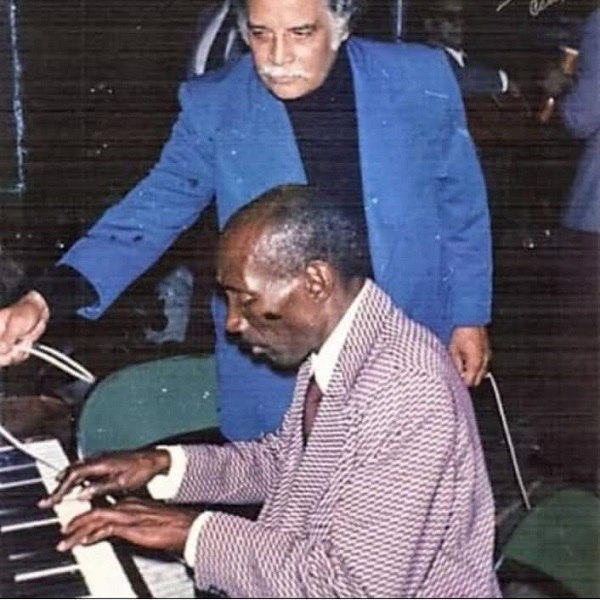
Lino Frías y Daniel Santos

Musician, Pianist, Arranger, Composer. He began his artistic career in the early 30’s, working with singer and composer Joseito Fernandez, in the orchestra of Raimundo Pla.

Later he became part of the Fantasía Orchestra.

At the end of the decade he worked with the Septeto Carabina de Ases.

Some time later he joined Arsenio Rodríguez’s Conjunto Todos Estrellas in September 1940, remaining in it until November 1943, leaving his place to Adolfo Oreilly Panacea, to join the Sonora Matancera in 1944, until 1976, where he contributed in an important way both in the composition and musical arrangements, imposing his particular piano solos.

In 1974 he helped found with Armando Sánchez the Conjunto Son de la Loma.

Upon his retirement from La Sonora Matancera, the Puerto Rican producer René López invited Lino, together with Israel “Cachao” López, to revive the descargas he had already recorded in the fifties, assembling a Típica together with “Cachao”.
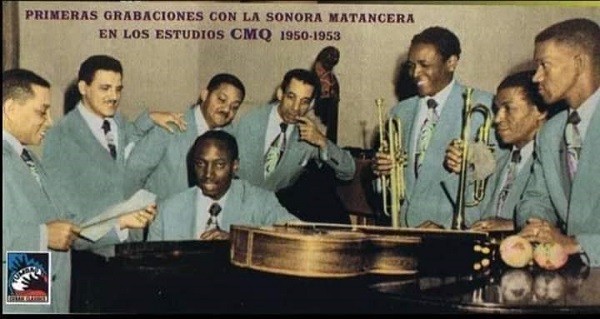
Sonora Matancea
Sonora Matancea

In his independent years Lino worked with Johnny Pacheco and Carlos “Caito” Diaz.

He accompanied great artists in recordings, in that period in New York, such as La Lupe, Olga Guillot, Daniel Santos, Carmen Delia Dipini, Bobby Capo, among others.

He died on May 22, 1983 in New York, USA.

Lino Frías, who for twenty-two years was the pianist of the Sonora Matancera, composed the very popular Mata Siguaraya in 1951.

One of the most popular photos of the Sonora Matancera.

In it we can see Lino Frías from his piano looking at Celia Cruz, great interpreter of Mata Siguaraya, together with Benny Moré and Oscar D’León.

Ezequiel Lino Frías Gómez was born in Havana and died in New York in 1983.

Lino studied piano at the Havana Conservatory. For a time, in the 1930s, he played in the Raimundo Pia y Rivero Orchestra, whose singer was Joseito Fernandez. He would later play in the Orquesta Fantasía.

In 1939 he joined the Septeto Carabina de Ases, led by Mariano Oxamendi, guitarist and second voice, and with Bienvenido Grande, singer and harpsichord player, Nilo Alfonso, double bass, José Bergerey, maracas and third voice, Ramón Liviano Cisneros, tres player, Florencio Coco Morejón, bongos player, and Félix Chappotín, trumpet player.

In 1944, Lino joined the Sonora Matancera as a pianist, where he remained until 1976.

In the 1960s, Frías joined the movement that created the so-called salsa music, alongside Fania All Stars, Johny Pacheco, Bobby Rodríguez, Carlos Patato Valdés y Caíto, Carlos Manuel Díaz (Matanzas 1905-New York 1990), among others.

Don Adolfo, a Puerto Rican timbalero, worked with Lino Frías in a group that included some of the most renowned musicians and singers of the 1950s and 60s: Olga Guillot, Daniel Santos, Lucecita Benítez, Bobby Capó, Marco Antonio Múñiz, Carmen Delia Depiní, Chucho Avellaneda, Sergio González Siaba and La Lupe, among others.

In 1974, parallel to his work as a pianist in the Sonora Matancera, Lino Frías created the ensemble Son de la Loma, with the participation of Cuban-Niuyorquinos such as Marcelino Guerra, Rapindey (Cienfuegos 1914-Spain 1996), author of Convergencia, and Pedro Rudy Calzado (Santiago de Cuba 1929-New York 2002).
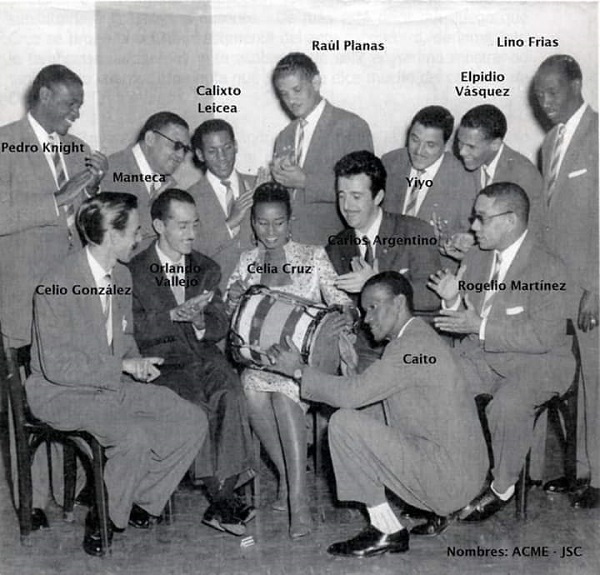
Celia Cruz y La Sonora Matancera

Due to arthritis, in 1976 Lino left the Sonora. His place is taken by Javier Vázquez, (Matanzas 1936), son of the double bass player Pablo Vázquez.

It is said that the death of Lino Frías, in 1983, was a hard blow for his great and faithful friend Celia Cruz (Havana 1925-New Jersey 2003).

In addition to Mata Siguaraya, Lino Frías composed Pan de piquito, Óyela, gózala, Vamos todos de panchanga, Cañonazo, Vive la vida hoy, Suena mi bajo, Convencida, Afecto y cariño, Has vuelto a mí, Baila Yemayá.


Also Read: Israel “Cachao” López Sobrado en fama y respeto en los años setenta se dedicó a mantener la tradición a nivel supremo

Wilmer Lozano from a very young age his mother saw in him the desire to be a musician

Wilmer Lozano is a Venezuelan singer and composer. He was born in Caracas, Venezuela, on October 7.

Wilmer Lozano Yenyere

When talking about successful Latin singers and good salsa, one has to talk about Wilmer Lozano, one of the greatest exponents of Latin music in the world, who has made millions of people around the world dance.

Among his musical hits are: “Me marcharé”, “Aún estoy de pie”, “Si acaba bien”, “Descarga pa ti”, “Se me pasó la mano” and “Igual que yo”.

Childhood, Youth and Family Life.

Wilmar Lozano’s mother saw in him the desire to be a musician since he was a child.

Every night before going to sleep and saying his prayers, he would dedicate himself with his grandfather Lino Lozano to practicing décimas, which would be very useful in his career as a sonero.

Wilmer Lozano’s Beginnings in Music.

Wilmer Lozano’s career began when he was in school, participating in all the events that took place there.

He got his first singing lessons at the Casa de la Cultura Germán Lira and that’s how he arrived at a very popular radio program for the time, rumbos, coplas y canciones directed by the great Venezuelan Simón Díaz.

Jose Hidalgo y Wilmer Lozano

Wilmer Lozano and his union with different groups.

Soon after, he belonged to an orchestra in the block where he lived and shared his studies with music. Little by little he belonged to orchestras based in Caracas, such as: Grupo Autana, Grupo Rayta, La Quinta Galaxia, Quinteto Visa, Conjunto Sensación, Sonora Habanera, Hildemaro y su Orquesta, Orquesta Selecto, Marianela y su Orquesta, Orquesta Vía de Escape and Orquesta La Júnior.

He later joined the ranks of the Dimensión Latina Orchestra. With this orchestra he has the privilege of sharing with the excellent bolerista Wladimir Lozano and the sonero Rodrigo Mendoza, both recognized nationally and internationally, with whom he further nurtured his knowledge as an interpreter and sonero.

He also formed part of the youth orchestra called Los Adolescentes, where he is a key piece of it, standing out as a leading artist.

With this project he recorded two productions where he performed several hits, with which he became known worldwide.

Musical genre.

Wilmer Lozano is a performer who is considered one of the best salsa singers due to his graceful voice register.

Career and Legacy

Wilmer Lozano has managed to place eleven songs in the first place of the Hit Parade. According to information provided by the company Record Report, besides being the only Venezuelan singer, who in two opportunities being in the first place, is incorporated again to the same place of honor with the same interpretations.

Wilmer Lozano, Tuky Torres, Dj. Augusto Felibertt y Rey Torcatt

Then his artistic life assumes another challenge, which he achieves with great professionalism, since his talent exceeds many expectations. Proof of this was his record production “Wilmer Lozano Original”, where he took the opportunity to launch himself as a soloist.

In this work he shows all the experience he has acquired during his artistic career, with the help of producer Thomas Bernal.

He achieves an excellent production, with very varied Latin rhythms and social themes. This album has the participation of the composers: Thomas Bernal, Ruby Pérez, José Luis Perales, Amaury Gutiérrez, Ángel Flores and Pedro Vargas, among others.

Among the hits of his debut are: “Me han contando que existe un paraíso”, “Me marcharé”, “Se me pasó la mano”, “Completamente” and “Sueño guaireño”, this last one was dedicated to the people who had something to do with the tragedy of La Guaira, Vargas, Venezuela.

In many of his songs he also talks about the social content, as well as the concern of many people to move forward beyond their borders.

He has also collaborated with renowned interpreters of the salsa genre, such as: Tito Puente, Tito Rojas, Rey Ruiz, Victor Manuel, Cheo Feliciano, Gilberto Santa Rosa, Tony Vega, Celia Cruz and Oscar D’León.

Wilmer Lozano is a salsa performer who has achieved musical success. His career has excelled nationally and internationally, with his arduous talent that has characterized him.

His tours have taken him to Latin America, the United States, Asia and Europe.

Theme: Se me paso la mano

Album: Wilmer Lozano “Original”.

Composition and Arrangement: Tomas “Monchy” Bernal (RIP)

Year: 2001

Label: Plátano Record

“I don’t know what I’m going to do with me, today I’m destroying myself little by little, I was wrong I lost my way because of her my destiny is transformed, because I don’t know what to do with this love that makes me run amok, she makes me see everything differently”.

Sources: Buena Música

Also Read: If you want to listen to Tasty Salsa tune in to Ritmo Sabor y Salsa with Nesmary J. Gómez

Julio Vilchez and his orchestra conquer Miami

Peru continues to give us something to talk about thanks to all the salsa talent coming out that country in recent years and today we had the opportunity to talk with one of them, which is the producer, composer and singer Julio Vilchez. 

After we communicated with Vilchez via email and WhatsApp to schedule an interview, we have managed to have a great conversation in which we knew a little more about the artist’s beginnings in this fascinating world that is music.   

singer Julio Vilchez
This is Peruvian producer, composer and singer Julio Vilchez

Childhood and musical roots in the Vilchez family 

It is not surprising that Vilchez took that parth of life considering that his father, Juan José Vilchez Sanchez, was a talented actor, comedian and professional dancer who carried music in the blood and ran some of the most famous salsa clubs in the city of Lima, which served as a stage for important national and international groups and singers of all genres.   

Having referred with admiration to his father because of all that he achieved in life thanks to music, he assured that music definitely ran through the veins of his family and had always been a very important part of his childhood and youth. 

Seeing all this, the years were not many when Vilchez became interested in musical instruments such as maracas, the bongo bell and the güiro, which led him to participate in groups such as Raíces, La Fragua and Soy Calidad.   

Salsa and other genres 

A large majority of Peruvian artists whom we had the honor to interview have typically ventured in Peruvian Creole music before getting involved in salsa, but not Vilchez. In fact, he pointed out to us that his country was heavily influenced by Cuba musically speaking and there used to be a time when groups from the island visited Peru such as La Sonora Matancera and Los Compadres. Peru also received influence from Colombia, Venezuela and Puerto Rico, although to a lesser extent. 

The artist also remembers that, at home, he and his family always used to listen to Venezuelan singers and orchestras such as La Dimensión Latina, Oscar D’ León, Luisito Quintero, Nati Y Su Orquesta, among others. In the case of Puerto Rico, of course Vilchez and his family used to listen to La Fania All Stars.  

Vilchez was part of Raíces, La Fragua and Soy Calidad
Julio Vilchez was part of groups such as Raíces, La Fragua and Soy Calidad

Formal beginnings of Julio Vilchez in music 

In the neighborhood Vilchez and his family lived in, the singer made friends with other local boys and met up with them to sing in a completely amateur way. In addition to that, he liked to participate in school talent shows, in which he delighted the crowd performing songs from Oscar D’León, Rubén Blades and Willie Colón. 

After attaining the age of 17, he began working alongside his father in the business of running clubs, which gave him the opportunity to spend time with the members of the orchestra La Progresiva del Callao, who performed on Tuesdays, Wednesdays and Thursdays in one of those places.   

Since Vilchez loved to dance and the orchestra focused a lot on its choreographies, the young man identified himself a lot with the group and began to learn the steps the singers performed on stage. One day, the boys saw him dancing and invited him to sing with them in one of their shows, in which he danced very well, but he did not sing in the best way. For this reason, he got the opportunity to stay permanently in the orchestra, but only as a dancer for the moment.   

Over time, he was grabbing experience on stage and getting over stage fright until he managed to keep up with the rest of his orchestra fellows with the passing of days.  

Julio Vilchez with Cano Estremera
Julio Vilchez with Puerto Rican salsa singer Cano Estremera

Vilchez’s time in Venezuela 

Vilchez made friends with a group of Venezuelan musicians who accompanied Oscar D’ León in one of his concerts and invited him to travel with them to Venezuela because they wanted him to be part of the sextet they were going to create, which was meant to perform at a tavern in Caracas. 

Seeing that things were going well in Venezuela at that time, Vílchez decided to accept the invitation and immigrate to the South American country to try his luck. Once there, he spent a lot of time alone because the boys from the sextet traveled a lot, something which took advantage to get to know other groups, one of them being La Selecta de Cúa. One day, Vilchez was walking down the street and heard this orchestra rehearsing, but it needed a singer. That is when Vilchez proposed himself as an option, was admitted and worked for about two years in this orchestra. 

Although he did well in Venezuela, he ended up returning to his native country because he missed his homeland and his father could not get used to having him away, so he packed suitcases and decided to return.   

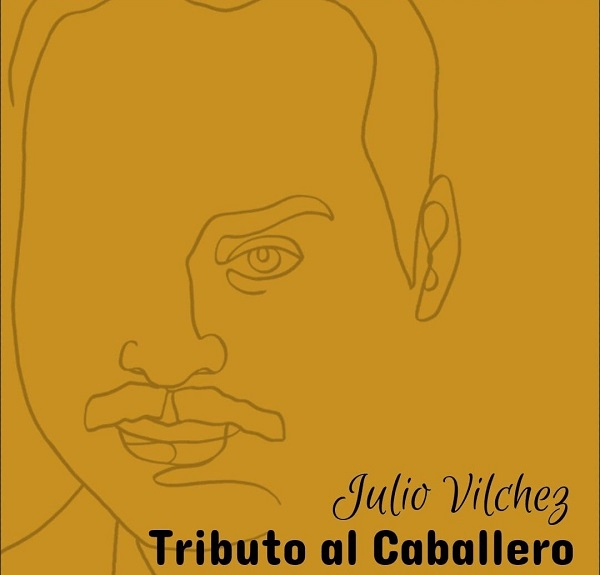
Tributo al Caballero by Julio Vilchez
Cover of the album Tributo al Caballero by Julio Vilchez

Life in the United States 

One of the songs he released in 1995 led him to make a video clip, which started to become very popular on music channels and shows, giving him the recognition Vilchez aimed for so long.  

Since things were not going as he expected on his solo career, he joined the Orquesta La Novel to continue working on music for the next two years. Although his name was not as well known as Vilchez needed it to be, his song was still sounding loud internationally for quite some time, which led him to receive a proposal to perform eight shows with his orchestra in the United States in 2000. 

When Vilchez and the rest of the musicians traveled to Miami, about nine members of the orchestra received proposals to stay in the country and decided to accept. It was there where the artist gathered his courage and says to himself ”I’m staying too”. That was over 24 years ago now.   

At that point, the Peruvian had to look for other musicians to replace the others in order to finish the concert tour they had scheduled. It was then when he contacted José Alberto ”El Canario” through a Peruvian colleague of his to use his band for the remainder of the tour and so he did. Vilchez did two or three shows with this band and stayed in Miami from 2001 to 2004.   

Given the lack of musical proposals, he spent a few years in New York, but returned to Miami some time later to work both with music and with a business sector linked to gastronomy, since living only from music is complicated. In addition to that, his children live in Miami and he wanted to spend more time with them, so this was also a powerful reason to return.   

Read also: Argentine-American composer and guitarrist Alejandro Meola kindly talked to us 

José Alberto “El Canario” and his orchestra enjoy a great international reputation in the Latin music scene.

His start in music was as a drummer, then as a bongo player, with some 48 years in Latin music and as a sonero, today in International Salsa Magazine through www.salsagoogle.com, José Alberto Justiniano Andújar, better known artistically as José Alberto El Canario, was born on December 22, 1958 in Villa Consuelo in Santo Domingo Dominican Republic.

José Alberto El Canario

El Canario began to have a passion for music from a very young age, first playing drums, bongo and timbales, at the age of 7 his mother Adalgisa, recognized dancer of the golden age of “Radio-Televisión Dominicana”, took him to live on the island of Puerto Rico, as a professional dancer she had to perform in important international theaters.

El Canario began to study in a military school in Las Antillas, then in 1970 he moved with his father to New York, where he began to sing with several orchestras, receiving international attention as the leader of the Típica 73 in October 1977, where he earned 25 dollars for each presentation and recognized it as his university in the life of art.

José Alberto credits his compadre Roberto Geronimo for his successful artistic career. Geronimo discovered him as an artist and managed him for many years. El Canario also sang merengue at the onset of his musical journey.

In 1983, José Alberto established his own band and gained fame as a major Latin star after his debut album Noches Calientes released in 1984.

Jose Alberto is a renowned singer who has recorded numerous chart-topping hits, including “Sueño Contigo”, “Hoy Quiero Confesar”, “Te Voy a Saciar de Mi”, “A Gozar”, “Es Tu Amor”, and “Quieres Ser Mi Amante”, among others, for his 1988 album Sueño Contigo and several others.

His inimitable voice and unmatched improvisational skills have earned him international acclaim. Jose Alberto has collaborated with several contemporary artists such as Johnny Rodriguez, Mario Rivera, Nicky Marrero, Oscar D’Leon, and Celia Cruz.

El Canario began to have a passion for music at a very young age, first playing drums, bongo drums and timbales.

José Alberto “El Canario” has earned multiple gold and platinum records due to his high number of album sales.

He has achieved success not only in the United States and Europe but also throughout Latin America, including his native Dominican Republic, Puerto Rico, Peru, Venezuela, Panama, Colombia, Ecuador, and Costa Rica.

The nickname “El Canario” was bestowed upon him by a New York disc jockey who christened him so in a disco due to his improvisational skills; “Canta canario” was the catchphrase he would belt out through the control microphone.

José Alberto ‘El Canario’ and his Orchestra have gained immense international recognition in the Latin music industry.

His musical prowess and captivating voice make his live shows some of the most thrilling performances.

El Canario, winner of the “Congo de oro” in 2005 – an award given to the best musical groups presented at the Festival de Orquestas del Carnaval de Barranquilla – and of three Latin Grammys in 2013, 2015 and 2018, is one of the undisputed artists of Latin music with a career spanning some 48 years.

Arturo Sandoval, Oscar D' Leon y El Canario
Arturo Sandoval, Oscar D’ Leon y El Canario

Throughout his career, José Alberto El Canario has gained international recognition for his unique voice and style, but also, according to his biographies, for his improvisations on stage.

José Alberto El Canario y su Orquesta enjoys great international renown in the Latin music scene.

Also Read: Jimmie Morales a conguero for the history of Afro-Caribbean music

Colombia’s legendary Grupo Niche and its founder Jairo Varela

Grupo Niche was founded in 1979 in Bogotá, Colombia, by Jairo Varela, born on December 9, 1949 in Quibdó, Chocó, and Alexis Lozano, who played trombone and was an arranger, later leaving Grupo Niche to form Orquesta Guayacán de Colombia.

That same year, the group released its first album under the Daro label, entitled Al Pasito, with Jairo Varela and Alexis Lozano as directors, Nicolás Cristancho “Macabí” on piano, Francisco García on bass, Luis Pacheco on congas and singers Jorge Bazán, Saulo Sánchez and Héctor Viveros.

Two years later, Niche’s second production, Querer es poder, was released. The song “Buenaventura y Caney”, included in the album, became the first composition of the group to become a hit in Colombia, said Jairo Varela.

The legendary Grupo Niche of Colombia 2023

In 1983 After a tour of the United States in which they performed before several colonies of Colombians and a short stay in Buenaventura, the group decided to settle in Cali in 1983.

In 1984 and after releasing the albums Prepárate (1982) and ¡Directo desde Nueva York! (1983), Jairo Varela composed and produced the song “Cali Pachanguero”, which brought the group to national and international stardom.

The song, included in the 1984 album No hay quinto malo, was chosen as the official song of the Cali Fair.

After the success of No hay quinto malo, the group began to tour constantly throughout Colombia and other Latin American countries, becoming the most important orchestra in Colombia.

The album Triunfo, Niche’s sixth discographic production, was released in

1985 The song “Ana Milé”, sung by Jairo Varela, became a radio hit. A year later the group incorporated the renowned Puerto Rican singer Tito Gómez, who had previously worked with La Sonora Ponceña and Ray Barretto, the godfather of Latin jazz.

The inclusion of Gómez further boosted the group’s career throughout Latin America. That same year the album Me huele a matrimonio was released, with Gómez and Varela sharing the lead vocal duties.

Colombia's legendary Grupo Niche 2020
Colombia’s legendary Grupo Niche 2020

Later, another Puerto Rican joined the group, pianist Israel Tanenbaum, who would eventually leave the group to join a parallel group to Niche, Orquesta Guayacán.

Taking advantage of the group’s growing popularity, in 1987 an album of new versions of songs previously released by the group entitled Historia Musical was released.

That year, the director Jairo Varela fired a group of musicians due to their claims for high fees.

Varela hired some new musicians and recorded the album Tapando el hueco, a production that became an instant hit especially for the songs “Nuestro sueño” and “Cómo podré Disimular”.

After the release of the album, Grupo Niche became a sensation in Latin America, especially in countries such as Venezuela and Peru.

In 1989, the group gave a concert at the Campo de Marte in Lima, where it attracted more than one million people, a record number in that country.

To thank the Peruvian people for their incredible welcome, the band released the album Me sabe a Perú that same year.  1989 also saw the release of the album Sutil y contundente, a production that revalidated the group’s good form, especially with songs such as “Mi hijo y yo” and “Miserable”.

In 1990, after the departure of singer Tito Gómez, the group released the album Cielo de tambores, Grupo Niche’s most successful production to date. The same year of its release, Cielo de tambores ranked third on Billboard magazine’s tropical music chart in the United States.

The album’s success was based on the quality of compositions such as “Busca por dentro”, “Sin sentimiento”, “Debiera olvidarla” and “Cali ají” and the massive popularity of the song “Una aventura”. Charlie Cardona and Javier Vásquez provided the vocals for the album.

From that moment on, the group enjoyed international popularity, touring constantly in countries such as the United States, Peru, Mexico and Colombia, as well as making some presentations in Europe.

In 1992 the group released another successful album entitled Llegando al 100% with Charlie Cardona as lead vocalist. The songs “Hagamos lo que diga el corazón” and “No tuve a quién decirle amor” stand out from this production.

After the release of two compilation albums, the group released Etnia, an album recognized especially for the compositions “La Canoa ranchá” and “La magia de tus besos”. The vocalists on this production were Willy García, Álvaro Granobles and Javier Vásquez.

Jairo Varela was captured and imprisoned in 1995 after returning from a tour of the United States.

The musician was accused of front man and illicit enrichment for allegedly receiving payments from the account of a sister of drug trafficker Miguel Rodríguez Orejuela, corresponding to the presentations of Grupo Niche at the Caseta Carnaval del Norte, an event where artists such as Sergio Vargas and Oscar D’León el sonero del mundo also performed.

His experience in jail was reflected in the lyrics of several songs on the next Niche album. 1997’s A prueba de fuego became another commercially successful production for the group.

Colombia's legendary Grupo Niche 2015
Colombia’s legendary Grupo Niche 2015

The song “Eres”, sung by Willy García, achieved strong radio airplay and its video clip was equally popular.

A year later the album Señales de humo was released, which could not match the success of the previous production.

The group closed the 1990s with the release of the album A golpe de folklore, an album in which the group returned to its musical roots, exploring the folklore of the Pacific coast and emphasizing the “salsa brava dura”.

In 2001, Jairo Varela decided to move Grupo Niche’s headquarters to Miami in order to better focus on the group’s international touring demands.

That year the group published Propuesta, an album that was nominated for a Latin Grammy in the “Best Salsa Album” category, along with productions by prominent artists such as Isaac Delgado, Oscar D’León, Tito Puente, Gilberto Santa Rosa and Tito Rojas, great salsa artists.

In 2005 the group performs for the first time in Japan. That same year the album Alive was released.

In 2007 Varela suffers a heart attack that forces him to quit smoking. Two years later he released a new album entitled Robando sueños, promoted by the single “Un día después” with Elvis Magno on lead vocals. Jairo Varela stated that it was the best song he had ever written in his life.

The death of Jairo Varela.

On August 8, 2012 Jairo Varela suffered another heart attack in his apartment in southern Cali, dying at the age of 62, while he was writing a novel titled “Luces negras”, a story based on the Colombian Pacific that he was unable to finish.

Jairo Varela Founder of Grupo Niche in Colombia

After his death, a large number of songs were recorded on demos and written down on sheets of paper.

Some of these compositions were recorded and included in the posthumous 2013 album Tocando el cielo con las manos.

Yanila Varela, Jairo’s daughter, succeeded him as the group’s director.

At the end of 2014, the group shared the stage with the Gran Combo de Puerto Rico at Madison Square Garden in New York City.

In August 2015 José Aguirre took over the musical direction of Grupo Niche replacing Richie Valdés. That same year the idea of releasing an album with songs composed by Varela that failed to become hits arose.

The idea was finally embodied in a new record production released on October 2, 2015 titled 35 Aniversario, promoted with the single “Niche como yo”, a song composed by Jairo Varela in 1978.

The album received a Grammy nomination for Best Traditional Tropical Latin Album, a Latin Grammy nomination for Best Salsa Album and a Lo Nuestro Award nomination for Album of the Year in the Tropical category.

New stage 2020

Grupo Niche is currently formed by singers Alex Torres, Luis Araque and Alejandro Iñigo, percussionists Juanito Murillo, Fabio Celorio and Diego Camacho, pianist Víctor González, bassist Sergio Munera and musicians Edgardo Manuel, Edward Montoya, Carlos Zapata, Oswaldo Salazar and Paul Gordillo on wind instruments, under the direction of José Aguirre. At the end of the year, Grupo Niche won a Latin Grammy award for the best salsa album of 2020 with “40” and in March 2021 they will win the Anglo Grammy.

Also Read: Leo Pacheco Sonero del barrio and beloved example of father and friend was lead vocalist of the Orquesta Renovación under the direction of the tumbador Nico Monterola.

  • « Go to Previous Page
  • Page 1
  • Interim pages omitted …
  • Page 3
  • Page 4
  • Page 5
  • Page 6
  • Page 7
  • Interim pages omitted …
  • Page 11
  • Go to Next Page »

International Salsa Magazine (ISM) is a monthly publication covering salsa activities around the world and has been publishing since 2007. It is a worldwide network of volunteers coordinated by ISM Magazine. Together, we work to strengthen salsa events around the world.