• Skip to primary navigation
  • Skip to main content

International Salsa Magazine

  • HOME
  • Previous editions
    • 2026
      • ISM / March 2026
      • ISM / February 2026
      • ISM / January 2026
    • 2025
      • ISM / December 2025
      • ISM / November 2025
      • ISM / October 2025
      • ISM / September 2025
      • ISM / August 2025
      • ISM / July 2025
      • ISM / June 2025
      • ISM / May2025
      • ISM / April 2025
      • ISM / March 2025
      • ISM / February 2025
      • ISM / January 2025
    • 2024
      • ISM / December 2024
      • ISM / November 2024
      • ISM / October 2024
      • ISM / September 2024
      • ISM / August 2024
      • ISM / July 2024
      • ISM / June 2024
      • ISM / May 2024
      • ISM / April 2024
      • ISM / March 2024
      • ISM / February 2024
      • ISM / January 2024
    • 2023
      • ISM / December 2023
      • ISM / November 2023
      • ISM / October 2023
      • ISM – September 2023
      • ISM – August 2023
      • ISM July 2023
      • ISM Edition June 2023
      • ISM – May 2023
      • ISM April 2023
      • ISM March 2023
      • ISM February 2023
      • ISM January 2023
    • 2022
      • ISM December 2022
      • ISM November 2022
      • ISM October 2022
      • ISM September 2022
      • ISM August 2022
      • ISM July 2022
      • ISM June 2022
      • ISM May 2022
      • ISM February 2022
      • ISM January 2022
    • 2021
      • ISM December 2021
      • ISM November 2021
      • ISM October – 2021
      • ISM September 2021
      • ISM August 2021
      • ISM July 2021
      • ISM May 2021
      • ISM April 2021
      • ISM June 2021
      • ISM March 2021
      • ISM February 2021
      • ISM January 2021
    • 2020
      • ISM December 2020
      • ISM November 2020
      • ISM October 2020
      • ISM September 2020
      • ISM August 2020
      • ISM July 2020
      • ISM June 2020
      • ISM May 2020
      • ISM April 2020
      • ISM March 2020
      • ISM February 2020
      • ISM January 2020
    • 2019
      • ISM December 2019
      • ISM November 2019
      • ISM October 2019
      • ISM Septembre 2019
      • ISM August 2019
      • ISM July 2019
      • ISM June 2019
  • Download Salsa App
    • Android
    • Apple
  • Spanish

Search Results for: Oscar D'Leon

Oscar D’León’s La Crítica was founded in Caracas in 1978

La Critica by Oscar D’León

We had just returned from New York when “Chiquitín,” Oscar D’León’s longtime secretary, called us at the office to let us know there was a commotion in the “Faraón de la Salsa’s” office.

Oscar D'León's La Crítica was founded in Caracas in 1978
Oscar D’León’s La Crítica was founded in Caracas in 1978

It was about the defection of some musicians from the Orquesta La Salsa Mayor. Indeed, Leo Pacheco, Felipe Blanco, and other musicians had decided to leave for financial reasons.

The news caused a stir; Oscar had already achieved a very special sound. He had moved away from the trombones that characterized his style and had incorporated a brass section with trumpets that made a difference. Suddenly, he was without his powerful machinery. Leo and his group formed what was called Nuestra Orquesta La Salsa Mayor, and Oscar, without a second thought, reassembled his group alongside Enrique “Culebra” Iriarte.

La Crítica

No one should doubt that Oscar had a tough time, but the prestige he had gained and the popularity of the sonero allowed him to come out on top.

Paul González, the son of “El Guajiro” González, a veteran guarachero and who at the time served as manager for the now-called “Sonero del Mundo,” devised the orchestra known today as La Crítica to avoid future setbacks and to have an orchestra on hand to alternate in scheduled dances.


La Critica de Oscar D’ León

The project’s formation brought together pianist and arranger Mauricio Silva, percussionist Radamés Pimentel, and Teo Hernández, who would serve as vocalist.

Since 1978, La Crítica emerged as an exceptional group. The jazz influences infused by Mauricio Silva from the very beginning were crucial for the public to accept the band as a favorite. In that “beginning,” other significant names included “Cheo” Navarro and Gustavo Quinto, who were already known from their time with Grupo Mango.

It could be said that Teo Hernández was the newest to the scene, as he had only been “toiling” in the world of salsa for five years, although he already had a “summa cum laude” after recording with maestro Ray Pérez and his Dementes. A female voice would debut with the orchestra: Gladys Torres.

40 Years of La Crítica

There have been many setbacks and successes over 40 years.

The musicality of this successful group is to be celebrated this Saturday, June 16, at the BOD Cultural Center. The event is at 5:00 in the afternoon, when the salsa public will gather en masse.

La musicalidad de esta exitosa agrupación ha de ser celebrada este sábado 16 de junio en las instalaciones del Centro Cultural BOD.

Jorge Collazo, who was Oscar D’León’s press chief and now is La Crítica’s on their return, tells us that a spectacular night is being prepared, “an evening to remember, a show that no salsero should miss.

The original singers will be there: the sonero Teo Hernández and Gladys Torres, who will take the stage accompanied by top-tier musicians and luxury guests to celebrate, dance, and sing the well-known hits of the moment, we are talking about ‘Se necesita rumbero,’ ‘Amada ven,’ ‘La merenguita,’ ‘Madre,’ ‘Rumba rumbero,’ ‘No lloraré,’ ‘A él,’ and ‘Cruel desilusión,’ among others.”

La musicalidad de esta exitosa agrupación ha de ser celebrada este sábado 16 de junio en las instalaciones del Centro Cultural BOD.

The prestige gained by La Crítica allowed it to accompany great international soneros such as Justo Betancourt, Héctor Lavoe, Ismael Miranda, Ray de la Paz, Daniel Santos, and the legendary Celia Cruz.

This is part of La Crítica.

Also Read: Cheo Linares is a Singer, Composer, Sonero, Poet and Caraqueño
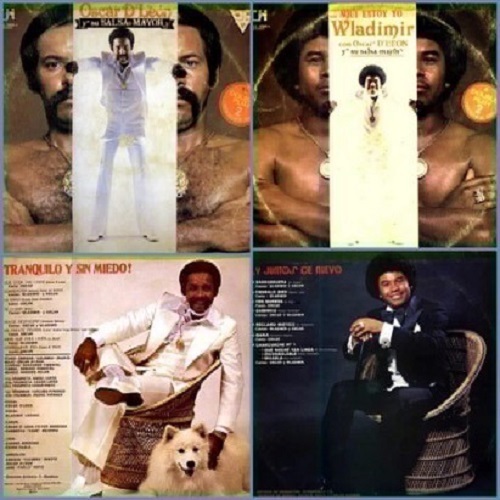
The story of how Oscar D’León’s “La Salsa Mayor” came about

How Oscar D’ León’s “La Salsa Mayor” came about, is a story that has already been commented on, including the subsequent separation of musicians that the aforementioned orchestra had, which gave way to the formation of another well-known group (Nuestra Orquesta la Salsa Mayor), is also a well-known story, but one as a good music lover always wants to continue to investigate and whenever the opportunity arises to make a healthy discussion about the subject in question, one does so without any qualms.

That is why it is never too much to remember some interesting facts that adorn this story, such as the headline that appeared on the front page of Swing Latino magazine in November 1977, which read: “KO a la Dimensión? OSCAR D’LEÓN after signing WLADIMIR.

In summary, the article said that Wladimir had intentions of leaving Dimension because of an alleged refusal of a loan request, a situation that induced the vocalist to want to sign with another orchestra. Another excerpt of the article says that Oscar D’León in his eagerness to have Wladimir in his orchestra, would have given him the money to satisfy his economic needs, but in exchange he would have signed a contract with the orchestra.

“La Salsa Mayor“de Oscar D’León

In short, by that time in November 1977, these were only speculations, of course, as it is also mentioned in the article in a jocular way “When the river sounds it is because it brings stones”.

The truth is that the year 1978 arrived and in the Swing Latino of March another headline appeared on the front page “¡LA DIMENSIÓN LATINA SE VA DE VENEZUELA! pero Wladimir se queda con Oscar”, which clearly shows that those speculations or rumors that were made in the salsa milieu at that time were a reality that quickly materialized.

“Last February 20, the bolerista presented his resignation to Dimensión Latina and began to work his notice period. In the meantime, he has already begun his rehearsals with Salsa Mayor and will soon be fully incorporated into this group that already threatens to become a real monster not only nationally but also beyond our borders, which we have no doubt he will now achieve with this valuable acquisition” (Swing Latino. March 1978).

Now, only a month had passed when another news about the orchestra of the dancing bass shakes the salsa milieu, “¡SE DISOLVIO LA SALSA MAYOR!”, headline that appeared in Swing Latino for May 1978 and stating: “Seven of the ten musicians that made up the prestigious group of Oscar D’León, left the orchestra for economic reasons”.

The rest is already known history, the negrito from Antimano reassembled his orchestra with some musicians from “La Critica” and others who came from the orchestra “La Renovación”, which at the same time also dissolved and the rumba continued.

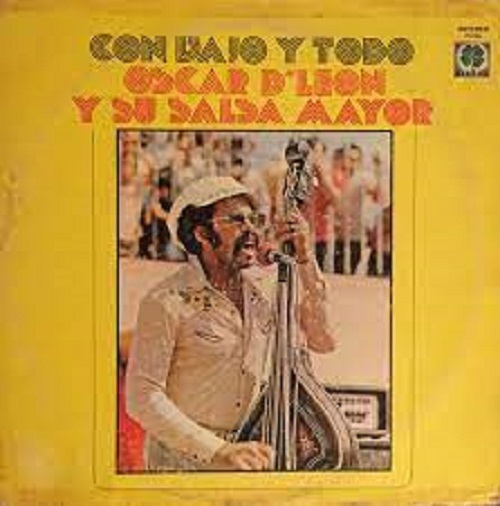
Con Bajo y Todo  Oscar D' León's "La Salsa Mayor"
Con Bajo y Todo  Oscar D’ León’s “La Salsa Mayor”

In August of that year 1978, Oscar D’León’s last album was announced under the name of “LA SALSA MAYOR”, a fabulous double LP, that just by looking at its cover you could already feel the strength with which the sonero from Caracas was coming along with the diminutive in stature but great with his voice, Wladimir Lozano.

The internal title of the album spoke for itself, “TRANQUILO Y SIN MIEDO”, this makes us think that the phrase had a double meaning, remember that the musicians who defected to form the other Salsa Mayor, recorded that famous song: “Fuimos Amigos”, where they throw a few puns at Oscar and this “calm and fearless”, returns them in the song: “La Mano”… “Why did not you follow me when I gave you my hand?”Now it weighs on you, you fell in the mud”… Chorus: “Que te vaaaya bien”.

The album is excellent as almost all the ones published by D’León in those past decades, all the songs are good, but I can’t help but comment and recognize that the song that I liked and still like the most from this double album is “MARIA”, maybe because in every man’s life there has always been a Maria…My respects and salsalutation to all of you.

Enrrique “Culebra” Irierte y Dj. Augusto Felibertt

Oscar D’León y su Salsa Mayor (double play) (1978) ths-1225

Disc 1 – Side A

  1. Que cosa tan linda (Oscar D’León) Singer: Oscar D’León
  2. Consentida (Alfredo Nuñez de Borbón) Singers: Wladimir and Oscar
  3. La mano (Sandy Omar González) Sung by: Oscar
  4. Te llamo (D.D.) Sing: Wladimir and Oscar

Disc 1 – Side B

  1. Dulce desengaño (Armando Beltrán) Sung by: Oscar and Wladimir
  2. De frente Panamá (L: Andrés Vega, M: José Zamora) Sung: Oscar D’León
  3. Mira que eres linda (J. Brito) Sung by: Wladimir Lozano
  4. Consígueme eso (Pedro N. Perez) Sings: Oscar D’León

Disc 2 – Side A

  1. Sandunguera (M. Guerra) Sung by: Wladimir and Oscar.
  2. Piénsalo bien (Agustín Lara) Sings: Wladimir Lozano
  3. Ven morena (R. Paz) Sing: Oscar D’Leó
  4. Ausencia (Rafael Hernández) Sing: Oscar and Wladimir

Disc 2 – Side B

  1. Reclamo místico (M. Matamoros) Sing: Wladimir y Oscar

María (Florentino Padrón) Sing: Oscar D’León

  1. Chancunche No. 1: Sing: Wladimir and Oscar

*Que noche tan linda (B. Diez, A. M. Romeu)

*Inconsolable (Rafael Hernández)

*Micaela (Raúl Guillaume)]

Musicians:

Enrique “Culebra” Iriarte (Piano).

Oscar D’León (Bass)

Rhadames Pimentel (Congas)

Edward Pimentel (Timbal)

Hungary Rojas (Bongo)

Ángel López (1st Trumpet)

César López (2nd Trumpet)

César Pinto (3rd Trumpet)

Tarcisio Piñango (1st Trombone)

Pedro Piñando (2nd Trombone)

Andrés Mendoza / Pedro Vilela (Tres)

Oscar D’León (Vocal)

Wladimir Lozano (Vocal)

Oscar D’León / Víctor Mendoza / Humberto “Tigre” Becerra (Backing Vocals)

Enrique Iriarte / Oscar D’León / José “Cholo” Ortiz (Arrangements)

Other Credits:

Intersonido C.A. Recording Studios.

Sound Technicians: Agustín Verde and Carlos Guzmán

Mixing: Rafael Hernandez

Art Direction: Víctor Mendoza

Idea, Design and Album Art: Drago Fernández

Photos: All Freddy.

Source:

José “Cheo” Guevara

Enrrique “Culebra” Iriarte

Enrrique “Culebra” Iriarte

You can read: Víctor Porfirio Baloa Díaz, more commonly known as Porfi Baloa

Oscar D’León celebrates 50 years of career in Caracas “International Salsa Magazine says present”

In September, the greatest exponent of Venezuelan salsa in the world will celebrate five decades of brilliant artistic career with an international tour that will have as its main event, an impressive and awaited symphonic gala at the Teresa Carreño Theater. And for september 22 at the Forum in Valencia.

Miami, May 19, 2022. Undisputed legend of Caribbean music, Oscar D’León, the Sonero of the World, celebrates 50 years of successful artistic career with an international tour that will take him to different locations in the Americas and Europe this summer.

This tour, which will begin on June 20 in Mexico City, will continue in July with the “50th Anniversary Europa Tour 2022”, culminating in a spectacular symphonic gala at the iconic Teresa Carreño Theater, which, during two performances on September 16 and 17, will give his audience the opportunity to sing and dance to the music that has made him the most recognized and admired Venezuelan artist in the world over the course of five decades.

Acapulco, Arequipa, Santiago de Chile, Miami, Frankfurt, Munich, Berlin, Paris, Amsterdam, Madrid, Tenerife, London, Istanbul are some of the cities that will live the energizing experience of seeing him on stage, a real party for music lovers.

Deserving of hundreds of awards and recognitions, including five Latin Grammys, D’León has been nominated nine times for the U.S. Grammy, being the first Venezuelan to obtain such a statuette. He did it in 2001 thanks to the song “Cielito Lindo, La Negra Mariachi Medley” Featuring-Oscar D’Leon, included in a collection album: “Masterpiece/Obra Maestra de Tito Puente y Eddie Palmieri”.

In 2013, he received the Award for Musical Excellence, a special recognition granted by vote of the Board of Trustees of the Latin Recording Academy to artists who have made creative contributions of exceptional artistic importance in the field of recording during their careers.

A true prophet in his own land, this global artist who began writing his formidable musical history in 1972, at the age of 28, when he formed the Dimensión Latina Orchestra, promises to celebrate his half-century of career with an unforgettable show at the Teresa Carreño Theater, the most important in Caracas, organized by the Venezuelan companies Imagen Producciones and Oz Show, in alliance with the National Orchestra System of that country.

Important Notes

Venezuelan musician who is among the most outstanding authors and performers of salsa and Caribbean music in general. Oscar D’León’s professional career began late: legend has it that one night, while visiting a nightclub in 1973, he heard that the band playing there had been fired. Oscar seized the opportunity and offered his own band to replace the one that had left.

The owner accepted and hired him to start playing a few days later. There was only one problem: the band at that time consisted only of D’León himself. He quickly got in touch with trombonist César Monge, told him what had happened and both got down to work to put together a line-up.

The band was finally formed by Oscar (vocals and bass, an instrument he had taught himself to play), César Monge (trombone), José Rodríguez (percussion), Enrique Iriarte (piano) and José Antonio Rojas (trombone).

Thus was formed La Dimensión Latina, Oscar D’León’s first orchestra. “Pensando en ti” was the first of the orchestra’s long list of hits. Four years later, Óscar left the band and was replaced by Puerto Rican Andy Montáñez, a vocalist who sang with the Gran Combo de Puerto Rico. Óscar returned with his own orchestra, La Salsa Mayor, with which he recorded his first album, titled after the group’s name: La Salsa Mayor (1977). The work was a great success in his country, and little by little his name began to be heard on an international scale. The following year he recorded the album El Más Grande, which contained the songs “El baile del suavecito” and “Mi bajo y yo”, and shortly afterwards he made his first visit to New York to offer live performances.

Aside from being a great sonero, Oscar D’León is also an extraordinary showman. Almost always accompanied by his bass, with which he plays and dances as if they were a couple, Óscar moves around the stage with great skill. In Venezuela, Óscar D’León is an idol, not only as a singer and musician, but also as a model of a self-made man who, from a very humble position, achieves fame and success on an international scale.

He is considered one of the best interpreters of Afro-Latin music of all times and is undoubtedly among the Venezuelan artists with more projection abroad.

Despite having gone through several stages in the development of Latin music, Oscar D’León’s style, always unmistakable, has maintained some constants that have allowed him to ensure the loyalty of his wide audience. D’León has recorded with the most outstanding salsa stars; among his collaborations, which can be traced in more than fifty albums, stands out his participation in The Mambo King, the hundredth full-length album by the legendary Tito Puente.

Corresponsal: Lida. María Fernanda León

www.Sanjuanproducciones24.blogspot.com

Oscar Rojas Oscar Rojas has 54 years of musical career full of passion, rhythm and flavor

Oscarcito Rojas and his unmistakable lump.

In Venezuela, during the years 53-54, there were cold and humid nights in the home of the Rojas Mendoza Family, located in a high area of ​​the Pastora of beautiful Caracas, there the furniture that was outside would wake up damp, particularly a child’s chair with a colonial design, which had the back and seat made of cattle leather, which when heated by the heat of the sun became warm like the leather of a coastal drum.

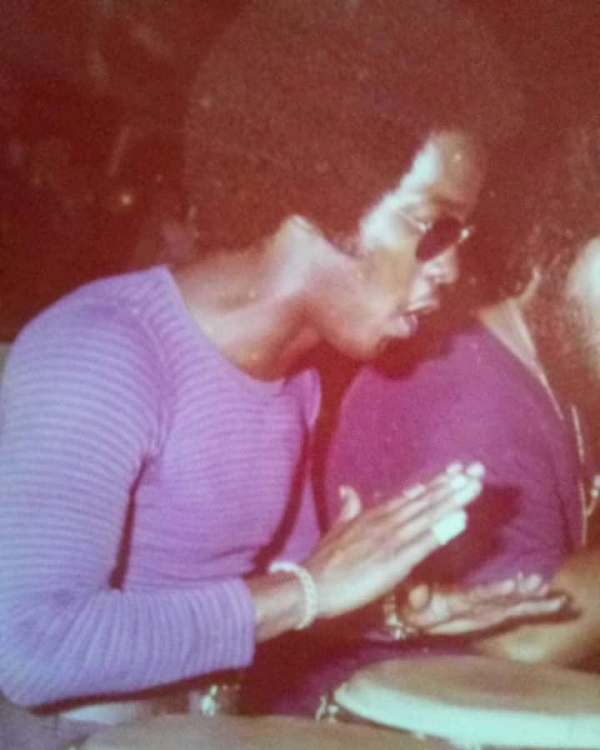
That is when the restless child Oscar, barely 7 years old, discovered the sounds produced by that cured leather and began that love relationship with percussion without realizing that this would be his life; his livelihood; his passion; his everything.

Oscar Rojas has 54 years of musical career full of passion, rhythm and flavor

He also devised a pair of congas with two milk cans of different sizes, and thus achieve different sounds in his new instrument.

By the 70s, being a talented young man and wanting to earn his own living, Oscar bought a motorcycle to work as a messenger. Unfortunately, he had an accident on it, which led to his resignation from the company. With the money he generated from the liquidation, he bought a drum kit that belonged to the illustrious Pavo Frank. This is how his foray into rock began.

Later, due to the fractures he suffered in the motorcycle accident, he could not continue playing drums, but he got involved in percussion without a drumstick, which is to say, by hand, and he started playing congas.

Óscar Eduardo Rojas Mendoza is one of the most beloved and respected conga players in the country. He is the third of five siblings (Jaime; Yolanda; Óscar; Freddy and Leibia), son of Óscar Benito Rojas (musician and cabinetmaker) and Cira de los Santos Mendoza (dressmaker).

Loved by all his family, especially by his sons Gabriel ☦️ Osduare☦️ and Enrique; and his granddaughters Gabriela and Daniela.

Familia Rojas Mendoza: Liebia, Freddy, Oscar, Yolanda y Jaime

Born in Caracas on October 18, 1946, he began his musical career in 1970 with Ramón Hernández, continuing with a trail of figures such as: Pablo Schneider, Vytas Brenner, Victor Cuica, Oscar Maggi, Soledad Bravo, Lilia Vera, Frank Hernández (El pavo Frank), Oscar D’Leon, Chuchito Sanoja, Professor Juan Carlos Núñez, Alfredo Naranjo.

He has participated in the best Jazz festivals in the world and in the country such as the Memphis in May International Festival (Tennessee), Varadero International Festival (Cuba), V International Festival of Montreal (Canada), Festival D’te de Québec (Canada), 10 International Festival of Montreal (Canada), Mar de Plata Jazz Festival (Argentina), Curacao International Festival where he was invited by the great saxophonist Paquito D’ Rivera, in the Venezuela Jazz Festival, in the 4 Caracas Jazz Festivals, in the Jazz Festival in El Hatillo editions IV, V and VII, and in festivals in the interior of the country.

He was an active founder of salsa groups such as Oscar D’Leon, where he participated in the recording of the first 3 albums, the group Caribe Libre, Gerardo Lugo’s Incorregibles, Alfredo Naranjo’s El Guajeo, Nano Grant’s Ensemble ll, Pavo Frank and his Orchestra. He was also part of the jazz groups Oscar Maggi (Macoya), Pedrito López, Otmaro Ruiz and Víctor Cuica.

Oscar Rojas y Djane Shina Rojas

Among the national and foreign artists he has accompanied are: Trino Mora, Chucho Avellanes, Mirtha Pérez, Estelita del Llano, María Rivas, Nancy Ramos, Nancy Toro, Cheo Feliciano, Ted Cordón, Paquito de Rivera, Eddie Sansson, Aldemaro Romero, Chuchito Sanoja, Jimmy Bosch, the Venezuelan Symphony Orchestra, the Municipal Symphony Orchestra of Caracas, among others. He was the founder of the La Calle Group and the Ensemble de la Calle, ReNueve (rock group), Negros and Aparte.

He currently works as a percussionist for Maigualida and his Ensemble. He also rehearses every Wednesday at Juan Sebastián Bar “El Templo del Jazz y La Salsa” with the new Ensamble de la Calle.

He has been in a musical career for 54 years, full of passion, rhythm and flavor.

Oscarcito Rojas y su mazacote inconfundible

Research Sources: 

Djane. Shina Rojas

Jaime Rojas

Lutier: Freddy Rojas

Also Read: Djane Shina Rojas a Passion Turned into Reality

Let’s meet the Pharaoh of Salsa, who is he? Oscar D ‘Leon .

Biography of Oscar D ‘Leon

Óscar Emilio León Simosa, was born in the populous Antimano parish in Caracas -Venezuela, on July 11, 1943, known in the artistic world Óscar d ‘León, son of Carmen Dionisia Simoza and Florentino Padrón. However, he did not recognize him at the time of birth, so the marriage of Carmen Simoza and Justo León decided to take care of the child.

From an early age, little Oscar enjoyed the popular parties that were held in Antímano and listened to the music of great orchestras such as La Sonora Matancera, the Billo’s Caracas Boys Orchestra, the Matamoros Trio, and two of his greatest musical inspirations, Celia Cruz. and Benny Moré.

He began his musical career relatively late, at 28 years of age, after having carried out two jobs totally unrelated to music, such as taxi driver and mechanic; He was educated academically as a surveyor, but never practiced that profession.

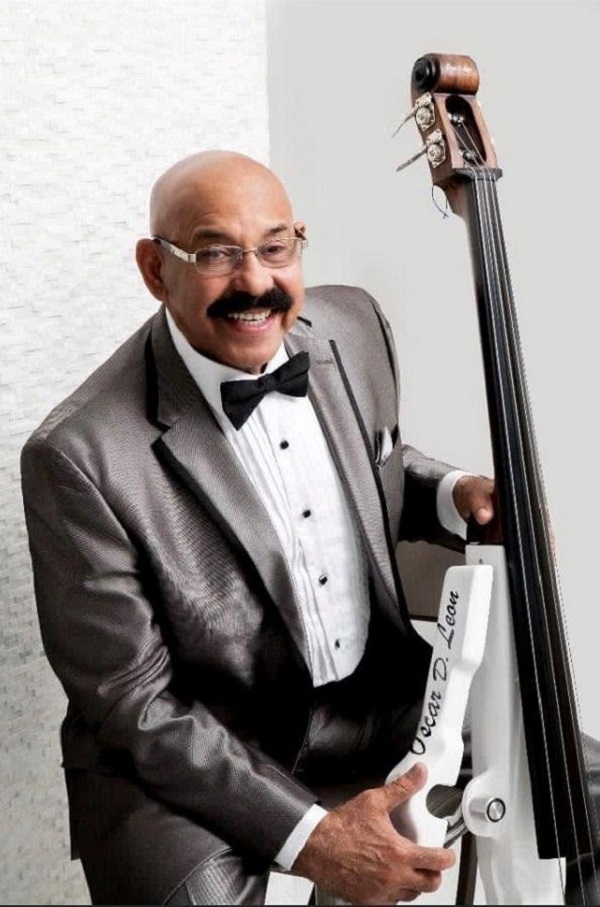
Oscar D' Leon
Oscar D’ Leon Photo

Oscar learned to play bass empirically, his innate talent for music was so extraordinary that it allowed him to earn a position in one of the orchestras that played in a renowned nightclub in the city of Caracas. There Oscar also did the choirs, but he did not interpret any song as a soloist.

His life changed when the lead singer of the orchestra was absent from one of the presentations and Oscar proposed to fill that vacancy and he did it in a great way, so much so that he received the approval of all those present.

In 1972, the owner of “La Distinción” told him that he would dispense with his services, since he would require an orchestra of higher quality and experience. Oscar offered his group to the owner of the premises, although he did not have it. It was here that D ’León went, together with the trombonist César Monges, from door to door looking for some musicians with whom he considered he could put together a group with which the venue could get out of trouble. It is there where they meet the percussionists Elio Pacheco and José Rodríguez, the trombonist José Antonio Rojas (Rojita) and the pianist Enrique “Culebra” Iriarte (who would later be replaced by Jesús Narváez). At this moment the project to create the Latin Dimension is accelerating.

They premiered on March 15, 1972, in a rehearsal at the home of “Culebra” Iriarte in La Guaira and debuted in “La Distinción”. In that same 1972 the orchestra recorded their first full-length album and obtained their first hit, the song “Pensando en ti”. This first success led them to be hired to participate in the Maracaibo carnival festivities. We must emphasize that Víctor Mendoza was the one who suggested using his stage name as “Oscar D´León”. There were many songs that Oscar hit with the Latin Dimension, “Llorarás”, “Taboga”, “El Frutero”, “Mi Tierra”, among many more.

In 1976, at the highest point of popularity, Oscar D’León confronted differences with the rest of the members of the group, for which he separated from the Latin Dimension and formed his own orchestra; “La Salsa Mayor” recording his first LP titled “Con Bajo y Todo”.

After some legal problems that momentarily led him to remain briefly detained and deprived of liberty and to be questioned in the media, he decided to change his image and presence, dispensing with the qualifier “El Diablo de la salsa” that had been given to him in Panama.

In 1986 he relapsed into acting, this time in the Venezuelan film “Hell is sure.” Later, he began his international leap, taking his music to countries such as Japan and to stages such as Madison Square Garden in New York, the Poliedro de Caracas and the Teresa Carreño Theater. At this stage, he alternates and records with those who had been his youth idols: Celia Cruz, Eddie Palmieri and Tito Puente.

He also presented himself as the companion for singers of the new salsa generation who was part, like him, of the label belonging to Ralph Mercado “RMM”: La India with whom he would record the song “Hazme el amor” or José Alberto “El Canario” with who would record “The flavor arrived.”

Oscar D' Leon Photo
Oscar D ‘Leon smiling for the photo

Oscar D´León has received numerous awards and honors. In 1996, with the album “Sonero del Mundo” in collaboration with the Cuban musician Willy Chirino makes him obtain the nomination for the Grammy.

On March 15, 1998, the city of New York honored him by naming that date as Oscar D’León Day.

On December 20, 2009, he was admitted to the Intensive Care Unit of a Caracas clinic after suffering a heart attack in Martinique, from which he recovered after undergoing catheterization.

On November 21, 2013 he received the Latin Grammy Award for Excellence for his musical career, thus recognizing the impact of his performance in the world, also that same year he would receive the Grammy Award.

Today, Oscar continues to delight us with his wonderful musical talent …

  • Page 1
  • Page 2
  • Page 3
  • Interim pages omitted …
  • Page 11
  • Go to Next Page »

International Salsa Magazine (ISM) is a monthly publication about Salsa activities around the world, that has been publishing since 2007. It is a world network of volunteers coordinated by ISM Magazine. We are working to strengthen all the events by working together.