• Skip to primary navigation
  • Skip to main content

International Salsa Magazine

  • HOME
  • Previous editions
    • 2026
      • ISM / May 2026
      • ISM / April 2026
      • ISM / March 2026
      • ISM / February 2026
      • ISM / January 2026
    • 2025
      • ISM / December 2025
      • ISM / November 2025
      • ISM / October 2025
      • ISM / September 2025
      • ISM / August 2025
      • ISM / July 2025
      • ISM / June 2025
      • ISM / May2025
      • ISM / April 2025
      • ISM / March 2025
      • ISM / February 2025
      • ISM / January 2025
    • 2024
      • ISM / December 2024
      • ISM / November 2024
      • ISM / October 2024
      • ISM / September 2024
      • ISM / August 2024
      • ISM / July 2024
      • ISM / June 2024
      • ISM / May 2024
      • ISM / April 2024
      • ISM / March 2024
      • ISM / February 2024
      • ISM / January 2024
    • 2023
      • ISM / December 2023
      • ISM / November 2023
      • ISM / October 2023
      • ISM – September 2023
      • ISM – August 2023
      • ISM July 2023
      • ISM Edition June 2023
      • ISM – May 2023
      • ISM April 2023
      • ISM March 2023
      • ISM February 2023
      • ISM January 2023
    • 2022
      • ISM December 2022
      • ISM November 2022
      • ISM October 2022
      • ISM September 2022
      • ISM August 2022
      • ISM July 2022
      • ISM June 2022
      • ISM May 2022
      • ISM February 2022
      • ISM January 2022
    • 2021
      • ISM December 2021
      • ISM November 2021
      • ISM October – 2021
      • ISM September 2021
      • ISM August 2021
      • ISM July 2021
      • ISM May 2021
      • ISM April 2021
      • ISM June 2021
      • ISM March 2021
      • ISM February 2021
      • ISM January 2021
    • 2020
      • ISM December 2020
      • ISM November 2020
      • ISM October 2020
      • ISM September 2020
      • ISM August 2020
      • ISM July 2020
      • ISM June 2020
      • ISM May 2020
      • ISM April 2020
      • ISM March 2020
      • ISM February 2020
      • ISM January 2020
    • 2019
      • ISM December 2019
      • ISM November 2019
      • ISM October 2019
      • ISM Septembre 2019
      • ISM August 2019
      • ISM July 2019
      • ISM June 2019
    • 2016
      • ISM December 2016
  • Spanish
  • Download Salsa App
    • Android
    • Apple

Search Results for: Pianist

70th Anniversary of the Sonora Ponceña at the Roberto Clemente Coliseum

Major guests joined the historic Sonora Ponceña concert, which was held on Saturday, November 1, 2025, at the Roberto Clemente Coliseum in San Juan, Puerto Rico, to mark the 70th anniversary of the musical career of one of the most important orchestras in the salsa scene.

The concert kicked off with a performance by the virtuoso timbalero, singer, and orchestra director Manolito Rodríguez. His orchestra, La Zónika, set the venue on fire with refreshing versions of ‘Encántigo’, ‘Sin tu cariño’ (Without Your Love), ‘Nina’, ‘Antillana’, ‘Maestro de rumberos’ (Master of Rumba Dancers), and ‘Piano man’. It’s worth noting that Manolito was part of “La Ponceña” from 2004 until the end of 2007.

Once La Zónica had warmed up the coliseum stage, the Sonora Ponceña began to deliver its repertoire, which included ‘Prende el fogón’ (Light the Stove), ‘Ñáñara cai’, ‘Ramona’, ‘Boranda’, ‘El rincón caliente’ (The Hot Corner), ‘Tumba Mabó’, and ‘Las mujeres son de azúcar’ (Women Are Made of Sugar) sung by Daniel Dávila; ‘Como amantes’ (Like Lovers), ‘Como te quise yo’ (How I Loved You), ‘Sigo pensando en ti’ (I Keep Thinking of You), ‘Timbalero’—which allowed the timbal player to dedicate himself to the instrument with a spectacular solo, ‘Fuego en el 23’ (Fire in ‘23), and ‘Luz negra’ (Black Light) performed by Darvel García. In fact, shortly after Darvel performed ‘Como amantes’, he was in charge of welcoming the pianist, composer, arranger, and director of the Sonora Ponceña, Papo Lucca, who enjoyed the concert from the stage in a wheelchair.

Omar Ledée, uno de los invitados de la Sonora Ponceña Foto By Conrado Pastrano

The rotation of the repertoire allowed for a dynamic interspersing of performances by the guests whom the concert production granted access to the celebration.

With 90 years of sabor (flavor/soul) and salsa, Luigui Texidor, who left the Sonora Ponceña in 1973, returned smiling and grateful. Texidor, who recently received the welcomed honor of seeing his name mark the street leading to Colonia Las Flores in Santa Isabel, his hometown, sang ‘El pío pío’, ‘Bomba carambomba’, and ‘Noche como boca de lobo’ (Night Like a Wolf’s Mouth / Pitch-Black Night).

Sharing that same celebratory vibe, one of the most remembered voices of “Los gigantes del sur” (The Giants of the South), Yolanda Rivera, who was part of “La Ponceña” until 1982, was heard. Rivera proudly recalled her seven years as a member of the orchestra while thanking the invitation to the historic concert, where she performed ‘Hasta que se rompa el cuero’ (Until the Skin Breaks), a track that featured a powerful bongo solo.

Omar Ledée performed ‘Remembranzas’ (Remembrances), originally recorded in the voice of his father, the late and ever-remembered Toñito Ledée, whom Omar represented in a heartfelt posthumous tribute.

Another fan favorite of the Sonora Ponceña followers is Pichie Pérez, who joined the group in 1983 “in substitution of Miguelito and Yolanda.” The singer performed ‘Te vas de mí’ (You Leave Me) and the updated version of an emblematic track, which for the celebration was titled ‘Jubileo ‘70’ (Jubilee ‘70), and which Pichie himself describes as “one of ‘La Ponceña’s’ iconic tracks and the first unreleased track I recorded.” The vocalist was associated with the orchestra for three decades, from 1983 to 2013. Since his departure, he has been promoting his solo career, making this the first time in 12 years he was heard live with his “alma mater” orchestra.

Orquesta La Zónika de Manolito Rodríguez, abriendo el espectáculo Foto By Conrado Pastrano

Wito Colón, who left the Sonora Ponceña 15 years ago, arrived ready to sing ‘Hachero pa’ un palo’, ‘Vas por ahí’ (You Go Around), ‘Yaré’, ‘Yambeque’which interspersed a powerful tumbadora (conga) solo, and ‘Sola Vaya’ (Go Alone), the latter song performed with Daniel Dávila and Darvel García. The vocalist was hailed by concertgoers as “the champion of the night” for his vocal power, as well as his charisma before the ardent audience.

Undoubtedly, it was an unforgettable night.

Bella Martinez Puerto Rico


Also Read: Bella Martinez, the irreverent Salsa writer

Spain is reborn in new Cuban music by Yalil Guerra

The immense Hispanic legacy is usually relegated to the background, while being a key part of our sound identity.

Reference Image about Spain
Reference Image
Yalil talking about Spain
Composer, bandleader, and Latin GRAMMY winner Yalil Guerra.
Image courtesy of RYCY Productions

By YALIL GUERRA

The birth of the Cuban nation, after gaining its independence from its former colonizer, Spain, marked a break that transcended political concerns and entered strongly in the cultural aspect. Cubans were “denaturalized” after the Treaty of Paris in 1898, leading to a profound metamorphosis of identity that was inevitably reflected in our music. Out of that process a fresh and powerful sound expression emerged: a vibrant fusion between European, African, and North American influences, something that had already begun in the 19th century but was driven by a growth music industry and the cultural magnet of its northern neighbor, the United States.

For years I have listened to, studied, and enjoyed Cuban popular music — both the old and contemporary— and what I notice is that most productions tend to highlight the folklore—especially the Afro-descendant roots and the imprint of jazz — while the immense Hispanic legacy is usually relegated to the background, while being a key part of our musical identity.

In Cuban music today, both on and off the island, the record business is committed to a modern and bold sound. Compositions explore contemporary harmonies, bitonality, and extended chords — resources that come from both classical music and jazz — entwined with surprising and refreshing harmonic cycles. In wind instruments, melodic lines and musical motifs reveal the virtuosity and creativity of a new generation of musicians and arrangers, who are raised in solid academic traditions but open to global influences. The percussion stands out for its polyrhythm and the number of sophisticated tutti that require a unique expertise, but the Spanish influence is quite absent or just present in the language.

In contrast, What caught my attention was the newest music of singer, composer, and multi-instrumentalist Alain Pérez on his new album Bingo, where Spain resonates powerfully and recognizably. I find this gesture very special, as it vindicates a Spanish legacy in Cuban music that is often forgotten or minimized. I also highlight the case of pianist and composer José (Pepe) Rivero and his new album Estampas y Raíces where he pays tribute to classical Spanish composers, mixing their works with his unique interpretive style, bringing it closer to the language of Cuban jazz that is so familiar to him.

What about the large mass of Cuban artists and musicians who do not pay homage to the mother country? It is that we lost our historical memory or has it been erased? Is the omission of certain elements of our Spanish traditions a symptom of what some call the “Spanish Black Legend,” a myth that has seeped into our musical history and present?

I remember when Juan Perón said:

“And through the figure and work of Cervantes, Argentina pays tribute to the mother country, fruitful, civilizing, eternal, and to all peoples who have emerged from its maternal womb.” “And through the figure and work of Cervantes, Argentina pays tribute to the mother country, fruitful, civilizing, eternal, and to all peoples who have emerged from her maternal womb.”

Cuba is no exception.

Over the years, in response to the previously exposed, I have tried to make Spain present in my work: incorporating harmonious colors, Andalusian cadences, and the Phrygian mode—so tied to the Iberian sound—creating compositions devoted specifically to Spanish culture, especially my new string quartet entitled “Noches de España”, following the line of our great composer Ernesto Lecuona, who knew how to bring to life both African and Spanish things. As for me, I seek to keep alive that heritage and project it onto 21st-century Cuban music, without forgetting our important African legacy.

Today, rescuing the Spanish heritage in Cuban music is not just an act of memory: it is also an opportunity to rediscover the richness of crossbreeding that continues to define who we are and how our history sounds. Contemporary Cuban music not only looks to the future: it sings to its African roots, but it also needs to reconnect with that other essential part of our identity. After all, we think, love, and communicate in Spanish. Every note, every guitar or lute that sounds, will evoke that heritage and bring us near to the fullness of what we are.

It does not matter the color our skin is, or whether our grandfather was from Asturias or the Congo: cultural fusion is what forged our identity and will remain the essence of Hispanic America. Mexican writer, philosopher, and politician José Vasconcelos said: “I am Hispanic, and nothing about Hispanic is alien to me.”

At this crucial time, Cuban music has the challenge—and the opportunity—to sing its entirety. And in doing so, it shows us that, beyond styles or labels, what unites us is the sound of a common history.

DMA Yalil Guerra

Read also: Yalil Guerra and the musical roots of his talent

Yerba Buena Gardens Festival 2017 in San Francisco

North America / USA / San Francisco

2017 Yerba Buena Gardens Festival (YBG Festival) proudly announces the lineup for its:

2017 Yerba Buena Gardens Festival - Free out doors fresh
2017 Yerba Buena Gardens Festival – Free out doors fresh

17th Season, which continues its tradition of bringing entertainment to downtown in San Francisco. May 7 – Oct 29, 2017, 760 Howard St. San Francisco, CA 94103

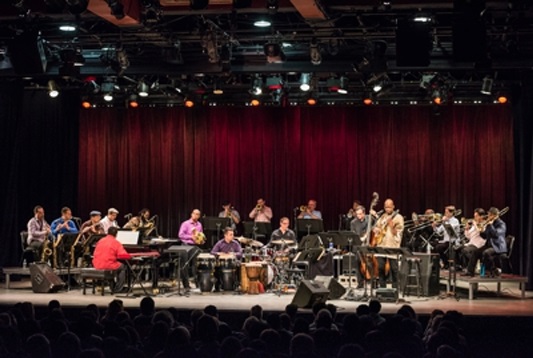
To kick off the new season, the Grammy-winning Arturo O’Farrill & the Afro Latin Jazz Orchestra + VNote Ensemble will open the Festival on Sunday, May 7, the first of this year’s 100 admission-free events. The very popular series Let’s Go Salsa@Jessie also will be present with the best artists. YGB Festival offers you free music, theater, circus, dance, poetry, and children’s programs with artists from the Bay Area and around the world.

Named one of the Best Urban Green Spaces in North America by USA Today, Yerba Buena Gardens is a world-renowned cultural destination for Bay Area residents, families, workers, and tourists alike. Yerba Buena Gardens is located between Mission Street and Howard Street and 3rd and 4th Streets in downtown San Francisco. Visit www.ybgfestival.org or call (415) 543-1718 for more information and complete 17th Season schedule.

Yerba Buena Festival’s exciting 17th Season promises an exceptional array of talent to please all audiences.

YBG Festival Executive/Artistic Director Linda Lucero says, “Everyone needs the spiritual sustenance, inspiration, and communal experience that only live performance offers. This summer, you’ll find your joy at Yerba Buena Gardens Festival!”

2017 Yerba Buena Gardens Festival

The Grammy-award winning Afro Latin Jazz Orchestra (ALJO), led by pianist, composer, and director Arturo O’Farrill, kicks off the Festival on Sunday, May 7 at 1:00pm. The ALJO brings together the drama of big band jazz, the culture of Latin music, and the virtuosity of eighteen of the world’s most accomplished solo musicians. Twelve years of critically acclaimed performances internationally have firmly established the ALJO as the standard-bearer for creative interpretation of Latin jazz greats such as Tito Puente, Frank “Machito” Grillo, and Chico O’Farrill, as well as the driving force behind new commissions from Latin music’s most talented composers and arrangers.

Arturo O’Farrill & the Afro Latin Jazz Orchestra + VNote Ensemble

Yerba Buena Gardens Festival includes the very popular Let’s Go Salsa@Jessie dance series, the family-friendly Children’s Series, Poetic Tuesdays with Litquake, and Thursday Lunchtime Concerts. Each and every week and weekend, the Festival has curated a lineup of musicians, dancers, poets, and actors from around the world including the Bay Area’s Kitka Women’s Vocal Ensemble on May 13, Brass Convergence II: Protest Brass on May 20, Richard Howell & Sudden Changes on May 27, NEA Heritage Fellows Michael Doucet and Tom Rigney with Flambeau on June 3, Festival-commissioned YBG ChoreoFest, a three-day site-

specific dance festival featuring 9 contemporary dance companies on June 9–11, NYC’s own M.A.K.U. Soundsystem on June 17, Circus Bella on June 23–24, AXIS Dance Company’s The Garden Project on July 1–2, Festival-commissioned Theatre Rhinoceros’ Lear! on July 7–9, Ensemble Mik Nawooj‘s premiere of Death Become Love on July 15, San Francisco Mime Troupe on July 23, SF Uke Jam Summer Uke-splosion! with Ukulenny and Cynthia Lin on July 29, Daymé Arocena + Latin Jazz Youth Ensemble on August 19, Paula West on August 26, Kugelplex with special guest Linda Tillery on September 2, Alsarah & the Nubatones on September 9, and Brooklyn Raga Massive with Classical Revolution performing Terry Riley’s In C on September 16.

Yerba Buena Gardens concert

The Festival closes with the 17th Annual Halloween Hoopla Sunday, October 29.

The popular series Let’s Go Salsa@Jessie, the open-air salsa dance party in Jessie Square (near the Contemporary Jewish Museum), takes place on the third Thursday of each month from May to September from 6:00 pm – 7:30 pm. Performers are Changuí Majadero on May 18, La Mixta Criolla on June 15, Somos el Son on July 20, Bobi Céspedes on August 17, and the Festival return of Ricardo Lemvo & Makina Loca on September 21.

The Festival offers the delightful Children’s Series, interactive performances specially designed for kids and families every Friday from June to August in Yerba Buena Gardens. The series presents performances by kid favorites: Caterpillar Puppets, Ka-Hon, Red Panda Acrobats, Pi Clowns, Venezuelan Music Project, Crosspulse, Unique Derique, and Non Stop Bhangra. The series ends with the wildly popular 17th Annual Halloween Hoopla on Sunday, October 29.

Yerba Buena Gardens Festival Commissions and Special Projects have commissioned the following projects to celebrate in June: Yerba Buena Gardens ChoreoFest, a brand new 3-day dance festival, June 9-11. Playwright/director/actor John Fisher writes and directs Lear!, a site-specific satirical musical based on Shakespeare’s King Lear for Theatre Rhinoceros, the nation’s, and likely the world’s, first queer theater on July 7-9 and Circus Bella on June 23 and 24. Conceived and directed by Abigail Munn and Joel Baker for Circus Bella, the show will feature high level, local and guest circus artists and includes static trapeze, rope walking, juggling, contortion, unicycle, original clowning, acrobatics, and more.

2017 Yerba Buena Gardens Festival - Photo
2017 Yerba Buena Gardens Festival – Photo

The Yerba Buena Gardens Festival also co-presents a series of admission-free outdoor programs with Union Square Live to be announced in April.

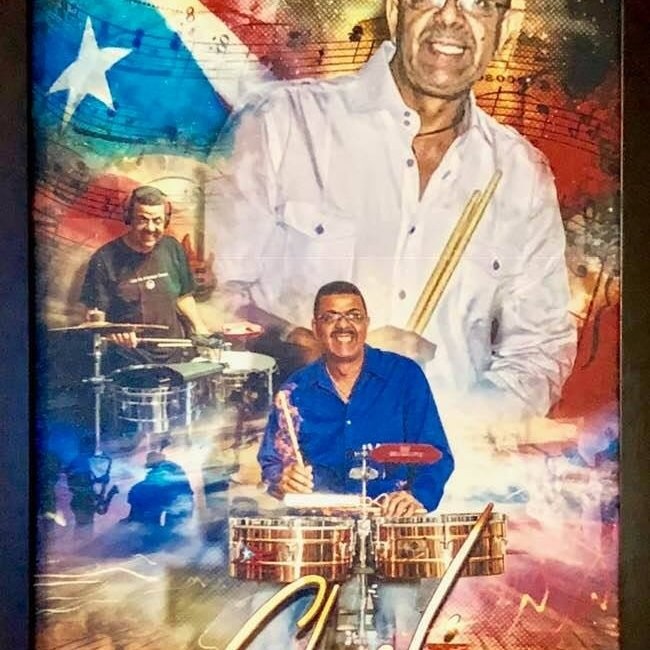
Charlie Sierra was a prominent Puerto Rican timbalero, recognized for his long musical career and virtuosity on the instrument

Carlos Manuel Sierra Sánchez, better known in the music world as “Charlie Sierra,” was born on October 10, 1956, in Vega Baja, Puerto Rico.

Charlie Sierra fue un destacado timbalero puertorriqueño

An excellent percussion musician from Barrio Sabana, Charlie Sierra recorded with important figures in music such as Don Mario Ortiz, Andy Montañez, Raphy Leavitt, Marc Anthony, Oscar D’León, Julito Alvarado, and many others. He even recorded the album Bravo by the Fania All-Stars in 1997.

To the worldwide community of salsa fans (salsómanos), he was a member, along with Chago Martínez, Tito De Gracia, Edgardo Morales, and Edwin Clemente, of the Gran Cumbre de Timbaleros (Great Summit of Timbaleros) that emerged in Puerto Rico’s rumbero (Afro-Cuban rhythm/rumba) scene during the penultimate decade of the 20th Century.

Charlie Sierra fue un destacado timbalero puertorriqueño reconocido por su larga trayectoria musical y su virtuosismo en el instrumento

Among these five virtuosos, the majority of the recording sessions in the Puerto Rican market were divided. The others were, practically, second choices for producers.

This fortunate circumstance allowed him to develop an impressive discography as a session musician, which includes the most stellar names in salsa. Likewise, he traveled across a large part of the globe as a member of the backing bands for many of those stars.

Our biographical subject was a child when he began, without a teacher, to learn the bongos and drums which he also played on recordings and on stage and the timbales, leading him to be identified as a fundamentally intuitive musician.

At the age of thirteen, he moved with his family to Bayamón, and it was during his time as a student at the Nuestra Señora del Rosario School that he began to show signs of his talent.

At fourteen, he enrolled in the Ernesto Ramos Antonini Free School of Music (Escuela Libre de Música), where he was a disciple of the Argentine master Samuel Lipchik.

During that time, he also advanced his knowledge of the flute, guitar, and piano, instruments he would never cultivate professionally, as percussion was always his great passion.

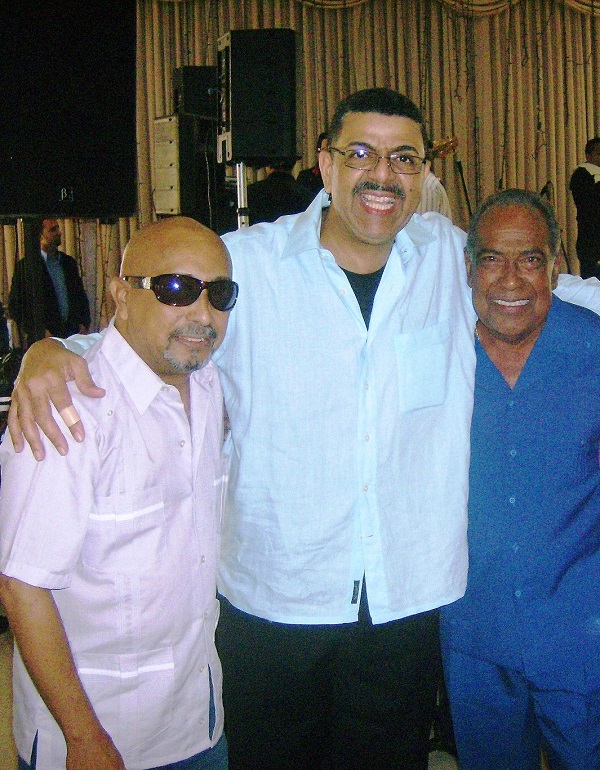
Papo Lucca, Charlie Sierra y Cheo Feliciano

However, his time at the Free School of Music was relatively brief (1972-1974). He soon began his professional career, gaining his first experiences with the Orquesta Rica and the Orquesta Tabú.

During this period, he received private lessons from the renowned professor Raúl Berríos Sánchez.

Fully immersed in the music scene, his name began to gain relevance in the salsa world following his tenure with the original Orquesta Mulenze, led by bassist Edwin Morales, during the 1976-1978 period.

At that time, this organization focused its work on providing accompaniment to solo singers affiliated with the genre, both national and foreign, who visited the island. He had the opportunity to travel with several of them: Santos Colón, Celia Cruz, Cheo Feliciano, Chivirico Dávila, Pellín Rodríguez, Yayo El Indio, etc.

From the Orquesta Mulenze, he moved to the lineup of Raphy Leavitt & La Selecta (1978-1979), with whom he had the opportunity to record hits like “La cosquillita,” vocalized by Tony Vega. He later worked with the orchestra led by pianist Tito Valentín, which featured Marvin Santiago as the vocalist.

He then joined trumpeter Mario Ortiz’s orchestra (1982-1984); he collaborated in the founding of the backing bands for the great sonero (Cuban son singer) Carlos «Cano» Estremera (1984) and the equally admired Tony Vega (1988).

In the interim, he worked independently and constantly recorded with other groups and a large number of soloists. He maintained this intense work routine until the present.

In 2009, Charlie Sierra organized his own orchestra, Paso Nivel, with which he recorded the album Ganas de bailar (Paso Nivel, CD-10692).

The album prominently features singer Efraín «Pichi» Gaetán, and included special guests such as Cheo Feliciano, Ismael Miranda, Andy Montañez, and Gilberto Santa Rosa, as well as Primi Cruz, Darvel García, and Héctor Luis «Pichie» Pérez.

Charlie Sierra was a distinguished Puerto Rican salsa timbalero, recognized for his long musical career and his virtuosity on the instrument.

He passed away on October 23, 2024, at the age of 67. Throughout his career, he collaborated with artists of the stature of Andy Montañez, Celia Cruz, Cheo Feliciano, and Bobby Cruz.

Musical Career: He began his career with the Orquesta Mulenze in 1970 and later joined Raphy Leavitt & La Selecta’s band.

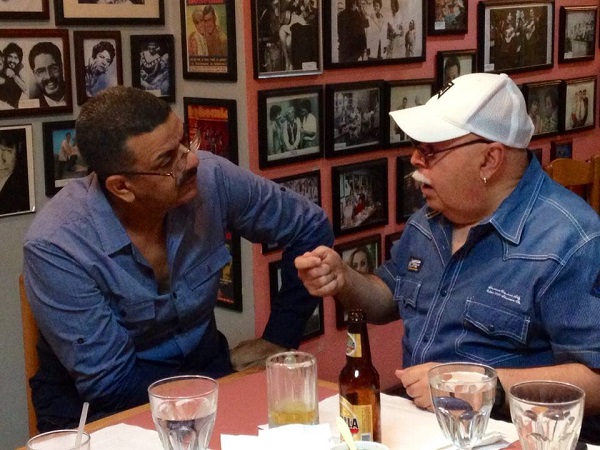
Charlie Sierra y Orestes Vilato

Notable Collaborations:

He worked with Andy Montañez for over 25 years, being a key piece in his orchestra. He also collaborated with artists like Celia Cruz, Cheo Feliciano, Gilberto Santa Rosa, Bobby Cruz (on the hit “Sonido Bestial”), Tito Valentín, among others.

Own Orchestra: In 2009, he founded his own orchestra called Paso Nivel, with which he recorded the album “Ganas de bailar” (Desire to Dance).

 Collaborators:

L’Òstia Latin Jazz

Also Read: Orestes Vilato. Cuban multi-percussionist.

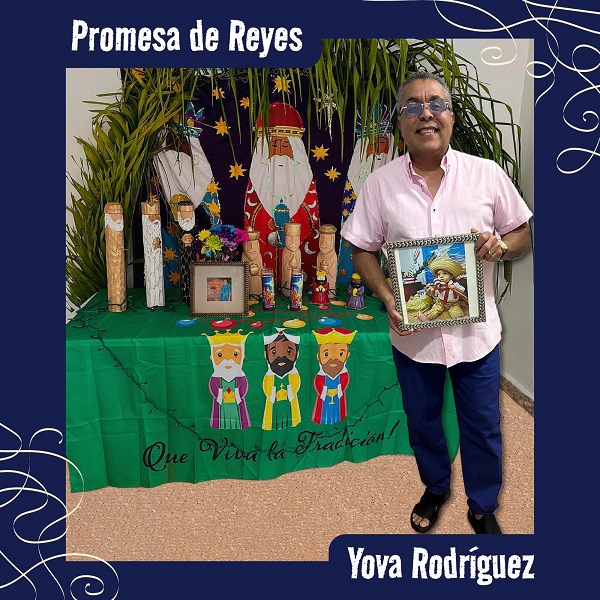
“Promesa de Reyes” from the pen of Yova Rodríguez “The Jibarito of Mayagüez in New York”

International Salsa Magazine, through salsagoogle.com, has the privilege and immense honor of presenting the most recent musical work titled “Promesa de Reyes” from the pen of the Puerto Rican singer-songwriter Yova Rodríguez “El Jibarito de Mayagüez.”

Promesa de Reyes de la pluma del Yova Rodríguez “El Jibarito de Mayagüez en New York”

The most recent track, titled “Promesa de Reyes,” is something I’ve wanted to do for a long time. I have to tell you that producing a Christmas production is a bit difficult because the season is so short, and it’s hard to develop the theme as it should be. But I was determined to do it because it’s a gift or tribute to the memory of my mother, Doña Delia Ruiz.

The inspiration for “Promesa de Reyes,” in reality, when you listen to the song, what you’ll realize is that it’s a narration. That is, in this track, I’m going to describe, from when I was a child, how I used to watch my mom carry out the process of her “Promesa de Reyes,” from the time they sent someone to cut the palm leaves to make the altar, until that altar with the Three Wise Men was completed, and the next day, well, we knew we had the party.

I’ve been incredibly lucky because the track was arranged by Leo Morales, originally from Colombia. It turns out that Leo is influenced—he learned to play the trombone and became a musician because of Willy Colón’s Asalto Navideño records. So, he told me that since then, he started studying the authentic, folk music of Puerto Rico to find out where Willy got those kinds of ideas. This is a very special track because we managed to include Puerto Rican danza (dance), Puerto Rican bomba (drumming and dance), and salsa.

It’s a track that gathers a lot of little things, and obviously, we added the music of the Puerto Rican countryside (música del campo). It starts with different rhythm changes, and you’ll hear one part that has Puerto Rican danza, another that has Puerto Rican bomba, and another that has salsa.

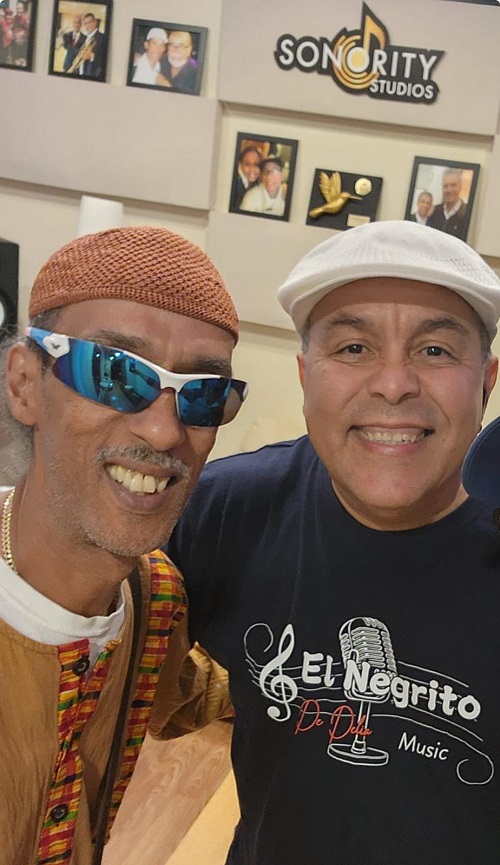
Anthony Carrillo y Yova Rodriguez

I sing and I wrote the song. On piano is Vicente Báez, the current pianist for Sonora Ponceña. On bass is Puri Matos, a master based in New York. He was recommended by Anthony Carrillo and has been doing all my projects with me for two years. Anthony Carrillo did all the percussion. On trumpet is Agustín Someillan from the Cuban National Sextet. The chorus singers are Nino Segerra, Danny Dávila, and Caneca Rosa. Manny Trinidad, recommended by Nino Segarra, played the Puerto Rican cuatro.

The recording studio was Nino Segarra’s. This is about the fourth or fifth track we’ve done there in his studio with Nino.

Nino, besides being a singer, is a professional teacher. He’s an expert who knows how to guide you, how to explain things the way they should be; he doesn’t pressure you; he lets you develop. In other words, I feel extremely comfortable working with Nino; the experience of working with Nino is very satisfying.

People tell me, “Yova, you’re crazy. You get on a plane just to go record a voice track,” and I tell them yes, for two reasons:

First, because I feel secure. And second, because I know I won’t fail with Nino, so the sacrifice is worth it. Recording with Nino was thanks to Herman Olivera, my compadre, who told me, “Look, Yova, I’ve been recording with Nino for two years, and I’m not recording with anyone else.” And look, I got on the plane, I did it, and now I have five productions with Nino Segarra.

Nino Segarra y Yova Rodriguez en Puerto Rico

Yova, the time in the studio to make the track is very important. Talk a little about that.

Look, Augusto, remember that depends on the type of musician you have there, right? There are musicians who are sight-readers of the first caliber.

These musicians tell you, “Send me the charts two days before,” they skim them. When they get to the studio, they’re done with their part in half an hour, 20 minutes, 15. But there are others who you have to take at a slower pace. For example, in Anthony’s case, Anthony told me, “Send me the demo, and I’ll listen to it.”

But Carrillo is from another planet. I send him his demo; he listens for two days beforehand. And he tells me, “Let’s go to the studio.”

And Anthony recorded flawlessly. Anthony didn’t take three hours to do four instruments; he did it in about two hours, and everything was excellent.

The track’s release? The video will be released on Friday, October 31st. The track will also be launched on radio stations that same Friday, confirmed in Venezuela, Colombia, Peru, Florida, and Puerto Rico.

Danny Dávila, Yova Rodriguez y Caneca Rosa

Yova, you brought in a Venezuelan graphic designer for this, your most recent track. How was it working with that graphic designer? The good thing about Victoria is that she listens, right? Sometimes you work with not only the graphic designer—it often happens even with the arrangers; I compare them. They do something, and you tell them, “No, wait, wait, that’s not what I want, this is.” “Oh, but no, I think that’s what should be.”

Victoria listens to you and works with what you ask for. The experience with her was excellent, and I hope it continues to happen many more times.

“Promesa de Reyes”

Piano: Vicente Báez

Bass: Puri Matos

Puerto Rican cuatro: Manny Trinidad

Conga: Anthony Carrillo

Bongó: Anthony Carrillo

Snare Drum (Redoble): Anthony Carrillo

Puerto Rican güiro: Anthony Carrilllo

Cuban güiro: Edwin Caneca Rosas

Trumpets: Agustín Someillan

Chorus: Nino Segarra, Edwin Caneca Rosas, Danny Dávila

Singer: Yova Rodríguez

Studios: Sonority in New Jersey (Recording of all Percussion). Engineers: Nino Segarra

Mix: Héctor Mora, HM

Producción Medellín Colombia

Arrangement: Leo Morales

Video Production: Jhonatan Chávez

Composition: Yova Rodríguez.

Graphic Designer: Victoria Rivas Rojas. 

Also Read: Yova Rodríguez. The jibarito of Mayagüez

  • « Go to Previous Page
  • Page 1
  • Interim pages omitted …
  • Page 7
  • Page 8
  • Page 9
  • Page 10
  • Page 11
  • Interim pages omitted …
  • Page 55
  • Go to Next Page »

International Salsa Magazine (ISM) is a monthly publication about Salsa activities around the world, that has been publishing since 2007. It is a world network of volunteers coordinated by ISM Magazine. We are working to strengthen all the events by working together.