• Skip to primary navigation
  • Skip to main content

International Salsa Magazine

  • HOME
  • Previous editions
    • 2026
      • ISM / August 2026
      • ISM / July 2026
      • ISM / June 2026
      • ISM / May 2026
      • ISM / April 2026
      • ISM / March 2026
      • ISM / February 2026
      • ISM / January 2026
    • 2025
      • ISM / December 2025
      • ISM / November 2025
      • ISM / October 2025
      • ISM / September 2025
      • ISM / August 2025
      • ISM / July 2025
      • ISM / June 2025
      • ISM / May2025
      • ISM / April 2025
      • ISM / March 2025
      • ISM / February 2025
      • ISM / January 2025
    • 2024
      • ISM / December 2024
      • ISM / November 2024
      • ISM / October 2024
      • ISM / September 2024
      • ISM / August 2024
      • ISM / July 2024
      • ISM / June 2024
      • ISM / May 2024
      • ISM / April 2024
      • ISM / March 2024
      • ISM / February 2024
      • ISM / January 2024
    • 2023
      • ISM / December 2023
      • ISM / November 2023
      • ISM / October 2023
      • ISM – September 2023
      • ISM – August 2023
      • ISM July 2023
      • ISM Edition June 2023
      • ISM – May 2023
      • ISM April 2023
      • ISM March 2023
      • ISM February 2023
      • ISM January 2023
    • 2022
      • ISM December 2022
      • ISM November 2022
      • ISM October 2022
      • ISM September 2022
      • ISM August 2022
      • ISM July 2022
      • ISM June 2022
      • ISM May 2022
      • ISM February 2022
      • ISM January 2022
    • 2021
      • ISM December 2021
      • ISM November 2021
      • ISM October – 2021
      • ISM September 2021
      • ISM August 2021
      • ISM July 2021
      • ISM May 2021
      • ISM April 2021
      • ISM June 2021
      • ISM March 2021
      • ISM February 2021
      • ISM January 2021
    • 2020
      • ISM December 2020
      • ISM November 2020
      • ISM October 2020
      • ISM September 2020
      • ISM August 2020
      • ISM July 2020
      • ISM June 2020
      • ISM May 2020
      • ISM April 2020
      • ISM March 2020
      • ISM February 2020
      • ISM January 2020
    • 2019
      • ISM December 2019
      • ISM November 2019
      • ISM October 2019
      • ISM Septembre 2019
      • ISM August 2019
      • ISM July 2019
      • ISM June 2019
      • ISM May 2019
      • ISM April 2019
      • ISM March 2019
      • ISM February 2019
      • ISM January 2019
    • 2018
      • ISM December 2018
      • ISM November 2018
      • ISM October 2018
      • ISM September 2018
      • ISM August 2018
      • ISM July 2018
      • ISM June 2018
      • ISM May 2018
      • ISM April 2018
      • ISM March 2018
      • ISM February 2018
      • ISM January 2018
    • 2017
      • ISM December 2017
      • ISM November 2017
      • ISM October 2017
      • ISM September 2017
      • ISM August 2017
      • ISM July 2017
      • ISM June 2017
      • ISM May 2017
      • ISM April 2017
      • ISM March 2017
      • ISM February 2017
      • ISM January 2017
    • 2016
      • ISM December 2016
      • ISM November 2016
      • ISM October 2016
      • ISM September 2016
  • Spanish
  • Download Salsa App
    • Android
    • Apple

Search Results for: Puerto+Rico

Yova Rodríguez

Latin America / Puerto Rico

Yova Rodríguez. The jibarito of Mayagüez.

Giovanni Yova Rodríguez Ruiz, was born in Mayagüez, being the youngest of six siblings, raised alone by his mother Doña Delia Ruiz Crespo. At the age of 7 he started in music singing Christmas bonuses and influenced by his maternal uncle José Ruiz Crespo ¨Pipo El Indio¨ and his great-uncle Antonio ¨Toño Ruiz who played Puerto Rican cuatro.

Yova Rodríguez
Yova Rodríguez

At the age of fifteen, he began his studies at the Ernesto Ramos Antonini Free School of Music in Mayagüez, Puerto Rico.

It is here that he began his singing career and minor percussion and at the age of 16 he became the singer of the school band. In 2004 the project ¨Yova Rodríguez & his group Sakao – Akà, Homage to Polo Montañez¨ began.

Since the release of her musical work, Yova Rodríguez, the ensemble Sakao – Akà, has become one of the most sought-after ensembles in Puerto Rico, Colombia, Venezuela and New York, since 2010 she has resided in The Big Apple, La Babel de Hierro N.Y. working on the musical composition for singers of the stature, Danny Rivera, Herman Olivera, Marcial Isturiz, Orquesta Boricua Legends, and the great Andy Montañez among others and to mention a few and traveling through several Latin American countries along with most of the artists already mentioned.

Yova Rodríguez - Photo
Yova Rodríguez – Photo

In 2016 he starts with his promotional song ¨Me Quedaré¨ with arrangements by trumpeter Nelson Jaime Gazu, a song dedicated to the thousands of Boricuas who have left their beloved Puerto Rico.

In 2017 he composes the song ¨Mi Barrio¨ dedicated to his native neighborhood and was presented in Mayagüez, at the same time Mayor José Guillermo Rodríguez gives him the keys to the city and a recognition, in the same year he composes the song ¨ Borinquén se Rivanta¨ where great luminaries of La Salsa participated in New York such as:

El Pulpo Colon, Jhon Benítez, Luis Mangual, José Dávila among others and by the hand of the Cuban trumpeter and arranger Agustín Someillan Garcia, in January 2018 it is presented in Medellín-Colombia in the prominent venue Son-Habana, returns to New York and composes the theme Medellín, it is presented on June 23 with a resounding total success in the event one day of Salsa for Medellín.

Yova Rodríguez himself informs me that he is already preparing his fourth record production by the hand of the pianist, arranger Arturo Ortiz. And at the same time he belongs to the board of directors of the Galería de La Salsa in Spanish Harlem in New York.
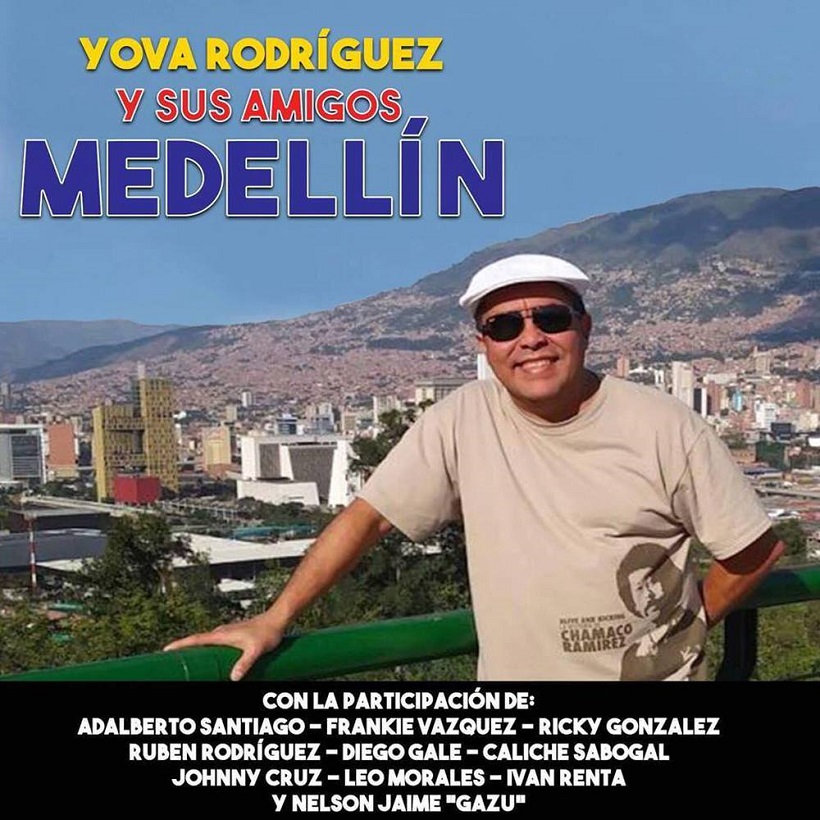

Yova Rodríguez - flyer
Yova Rodríguez – flyer

Salsa y Punto Dance Company! 2001 – 2017

Europe / España

Salsa y Punto Dance Company. Proud to carry their flag around the world

Salsa y Punto has more than 15 years of experience teaching Caribbean rhythms. We cordially invite you to meet them so you can experience the heat and the guaguancó.

Here you will find teachers with great international experience who will teach you and help you improve your dance style. Starting in September, they will be launching new facilities: 2 open-plan rooms with air conditioning, showers and toilets, as well as free parking.

Just 8 minutes from the center of Valencia, in the Alfafar Business Center, surrounded by restaurants and entertainment areas and enjoy between the MN4 Shopping Center and Carrefour.

Without a doubt, it will be your best choice!

Dancers of Salsa y Punto Dance Company

Salsa y Punto was born in Caracas Venezuela in 2001, directed by the musician and dancer Jhonny Sánchez and the dancer and choreographer Carmen González.


They are the first dancers to present the Salsa L.A Dance (online) with acrobatics in Venezuela, since at that time the existing dance groups ventured into other dance styles.


Starting in 2001, Jhonny & Carmen show their first Choreographies as a couple to the Venezuelan Salsero public. In previous years they had the opportunity to work in Venezuela and visit Puerto Rico with the Latin Image Group in 2000 and 2001.


Jhonny and Carmen are the pioneers in this style of dance and this is demonstrated by the significant number of presentations and videos for more than 15 years, in which they have managed to forge their own original style over time, “Salsa A3” (3 dancers), since 2003.


They have walked through the best stages in Venezuela, in addition to participating in the most important concerts in Caracas.


They toured their country of origin with the Orquesta Dimensión Latina “2001-2002” and participated in television programs such as: Sabado Sensacional, the Carolina Gómez Show, De Todo Un Poco and De Par en Par.


They were the exclusive couple to represent Venezuela at the World Salsa Congress in Puerto Rico 2002, and in turn managed to be finalists among the best 8 couples in the world at the 1st World Dance Championship “Salsa Open”, Puerto Rico 2002.


In 2003 they visited Spain, as guests at the World Salsa Congress in Valencia, where they were “a revelation as a dance company.”


Due to the great success, and the number of presentations offered by promoters from different festivals, they decided to stay in Valencia, the city that received them for the first time in Europe.

Teachers of Salsa y Punto Dance Company

Currently, they direct the Salsa y Punto academy, through which a large number of students from the Valencian Community have passed, and have trained dancers who today work as dancers and teachers.


Since 2002, they have performed at the most important dance festivals in the world and have been the forerunners of Kizomba in Valencia since 2011. In 2013 they managed to be World Runners-up in the Kizomba Open, and Kizomba Champions in Switzerland 2015.

They were finalists of the television program “Tú si que vales 2011”.


To date, they run their dance companies Salsaypunto Dance Company, Salsaypunto Amateur, Kizombaypunto and Bachataypunto.


Proud to carry the flag of Venezuela and Spain around the world.


Nanette Hernández promotes the bomba and plena in New Jersey

We know that the most of our Latin countries have historically become known for genres such as salsa, merengue, bachata and more recently reggaeton and trap. However, the popularity of the aforementioned genres made us leave aside other more local rhythms that also deserve exposure.    

On this occasion, we wanted to talk about the bomba and plena, so we resolved to interview Nanette Hernandez, who is one of its main proponents here in the United States, more specifically in New Jersey.   

This is Nanette
This is Nanette Hernández, who is a great promoter of the bomba and plena


How Nanette became interested in the bomba and the plena 

Nanette began by telling us that her interest in music was born thanks to her parents, who are Puerto Rican and moved to the United States, Pennsylvania, during the 1950s to continue their life in this new country. However, his home was built based on Puerto Rican culture and, of course, that included language and music. Her father had an ensemble that played jibaro music and Nanette grew up watching this, so this musical environment was always very familiar to her.   

As she grew up, Nanette also became very interested in dancing and discovered that she really liked salsa when she was just a teenager. She remembers listening to Celia Cruz, Johnny Pacheco, El Combo de Puerto Rico and many of the most popular groups and musicians of the time, who also inspired her to keep dancing. She felt that she was encouraged just by dancing, so she continued to do so over the years, but not professionally.   

After marrying Juan Cartagena and seeing that she and her husband shared a taste for Latin music, they began to frequent places where Puerto Rican music groups performed. That is how they were in a show of the dance and drum ensemble ”Los Pleneros de la 21”. They were so fascinated by what they saw and heard that both Nanette and Juan began to study the plena and bomba because they wanted to know everything about these rhythms. Their interest was such that they were even in contact and consistently et with the Cepeda family, which is a cultural institution with many years of experience in everything to do with the bomba and plena.   

She also mentions that Roberto Cepeda, part of the aforementioned family, was very important in her decision to devote herself to promoting the bomba and plena and feels that he saw something in her that even herself was not able to see, so she decided to search for expert teachers in these genres to become more professional in the dancing and instrumental part in order to be able to teach them to others.   

Nanette dancing
Nanette dancing bomba and plena

Differences between the bomba and plena  

When we asked Nanette about the differences between the bomba and plena, she made it very clear that people often think that they are almost the same, but they are not. They are extremely different and have many differences from each other.   

In the case of the bomba, it has re than 400 years of existence and originated in Africa. The genre arrived in America along with the slaves who were brought to the New Continent and the new inhabitants of these lands brought their improvised instruments with them such as the so-called ”barrels”, which have a great resemblance to drums. They are often accompanied by maracas.    

In the case of the plena, this rhythm uses the pandero, the güiro and other smaller hand instruments with which they make a completely different sound from the bomba. To complement what Nanette told us, we can also say that the plena is believed to originate in Ponce, Puerto Rico, and its lyrics are very focused on comedy, activism and denunciation. In addition, it is also seen as a very peculiar mix between African and European music. 

Another difference between the bomba and plena is that, in the bomba, it is the dancer who leads and guides the musicians, while in plena the opposite happens. These genres are very different from each other, but that does not change the fact that both complement each other perfectly well in any show or class.   

Nanette next to her husband Juan Cartagena, Segunda Quimbamba's founder 
Nanette next to her husband Juan Cartagena, Segunda Quimbamba’s founder

How Segunda Quimbamba came about    

Segunda Quimbamba is a project initiated in 1989 by Juan Cartagena, Nanette’s husband, which was born as a result of the couple’s interest in promoting two of the most important ancestral rhythms from Puerto Rico and preserving the most important musical traditions on the Island of Enchantent, such as the ”parrandas”. A few years later, they began introducing the bomba and plena until they became the center of the project. 

In 1997, Nanette and Juan founded the Segunda Quimbamba Folkloric Center, which is a non-profit arts organization that seeks to promote the bomba and plena in New Jersey and the rest of the United States so that those interested can learn more about Puerto Rican music and culture in general. The organization also seeks to offer music and dance workshops at solidarity prices and even for free at times.   

Nanette and Juan have been invited to participate in numerous events and have been recognized for the role they have played in promoting Latin music, especially that of Puerto Rico. For example, in 2023, The New Jersey State Council of The Arts recognized the couple with the New Jersey Heritage Fellowship Award in honor of what they have accomplished with this wonderful and ambitious musical project. 

Read also: Edwin Ortiz y La Mafía del Guaguancó is present in ISM 

The son montuno was born in the area of Santiago de Cuba

It was constituted by a mixture, in perfect harmony, of the African sonorous roots with the metric and the style of versification of Spanish origin. Although it presents a rhythmic base similar to the son, they do not have a common origin.

This rhythm is a product of the same phenomenon of transculturation that other genres of the Cuban traditional music have undergone by the hybridization of cultures.

Uncertainties about the origin of son montuno

According to Fuentes Matons himself, he is only a compiler of the verses and the authors were the sisters Micaela and Teodora Ginés, who wrote the lyrics in Santiago de Cuba around 1560.

The son montuno was born in the area of Santiago de Cuba

But this story does not have sufficient evidence, and may be the result of the author’s modesty, the oldest son montuno that is collected is that of Ma’Teodora, from 1893.

Many authors assure that the real author is Fuentes Matons, in an attempt to validate the musical roots of the Island. What is certain is that the expansion of this rhythm from the 18th century in Cuba was very fast.

In addition, due to the migration of Caribbean people to Cuba, the mixture with sonorities coming from Haiti, Santo Domingo and Puerto Rico became more and more frequent Haiti, Santo Domingo and Puerto Rico.

Evolution and popularity of son montuno in the 20th century.

From the 19th century onwards, migration from East to West was significant.

This was due to the wars of independence that had taken place in the eastern part of the island.

This migration brought as a consequence that the rhythm also expanded and mixed with the rhythms that already existed in the West.

In the western provinces, mainly in Havana and Matanzas, there was the concept of a band composed of six or seven members, which favored the new genre.

Arsenio Rodríguez (1911-1970), known as “el ciego maravilloso” (the wonderful blind man), was one of the great musicians who brought this sonority to the forefront.

Among his most popular works are “Papa upa”, “Mami, me gustó”, “La vida es sueño”, “La yuca de Catalina”, among many others.

The lyrics are characterized by the picaresque jocularity, the simplicity of the message, the easy to memorize refrains and the exchange with the public in occasional interpretations.

The orchestra, on the other hand, does perform complex improvisations and virtuoso musical combinations. Arsenio Rodríguez popularized the rhythm worldwide, opening a space for traditional Cuban music in the 1950s.

Arsenio Rodríguez (1911-1970), known as “el ciego maravilloso”, was one of the great musicians who brought this sonority to the forefront.

Legacy of Son montuno

The legacy of this Cuban rhythm is present in genres such as Latin salsa, mambo, Latin jazz, timba and chachachá. Some outstanding musicians kept its rhythmic base and incorporated their own melodic creations.

Among these are: Benny Moré, Pío Leyva, Roberto Faz, among many others.

The primitive instruments of the Cuban son are the Cuban tres, the bongo, the maracas, the claves and the marimbula.

The Cuban tres is a kind of guitar with three pairs of strings. The bongo constantly improvises. The maracas and claves accompany the guitar and the bongo.

The marimbula was used as a bass in the traditional Cuban son.

Later, other instruments such as the guitar, double bass, trumpet and timbales were added.

What kind of instruments did the African slaves bring to Cuba?

Among the typical instruments we find the chekeré, the güiro and the batá drums. The chekeré in Cuba is also known as ágbe.

The basic instrumental ensemble is made up of a series of string instruments (jarana, requinto or son guitar, leona) and percussion instruments (pandero, quijada de burro, marimbol, tarima for zapateado), to which other instruments have been added in recent experiments (violin, double bass, cajón, etc.).

What is the national instrument of Cuba?

The Cuban BongóThis small double drum is considered by many to be the most characteristic instrument of Cuba
The Cuban Bongó
This small double drum is considered by many to be the most characteristic instrument of Cuba

The Cuban bongo

This small double drum is by many considered the most characteristic instrument of Cuba.

It is easy to identify the bongo at first glance as it has been used and popularized in countless celebrations until it has become an indispensable instrument.

Also Read: Israel “Cachao” López Sobrado en fama y respeto en los años setenta se dedicó a mantener la tradición a nivel supremo

Thank you Rafael for all you have done for Salsa. Without you many of us would not be salseros

On August 29, 1926, Rafael Ithier was born in Rio Piedras, Puerto Rico. Brilliant and talented pianist, composer, arranger, producer and founding director of the University of Salsa “El Gran Combo de Puerto Rico”.

Thank you Rafael for all you have done for Salsa.

Former member of Cortijo y su Combo. Don Rafael Ithier is by his own merit an authentic living legend of salsa worldwide.

The Korean War was imminent. The young Puerto Rican soldier Rafael Ithier, in the service of the U.S. Army, feared being sent to the battlefield. Music was his thing.

He had been a pianist in several ensembles in his native San Juan before his military service.

His mission at that time (1950) was to organize an orchestra to liven up the parties at the military base.

But the group did not progress because the soldier with the soul of a musician did not hurry the coupling of the incipient band.

He wanted to buy time. “Sorry, sergeant, the band is not ready to perform,” Ithier would say every time he was called upon. In the end, his cunning saved him from war. Several of those musicians would later form the Borinqueña Mambo Boys band. From then on, Ithier would earn his living at the piano.

With that same astuteness, and after six glorious years and a painful separation from Combo de Cortijo, one of the most successful groups in West Indian music, this self-taught musician founded El Gran Combo de Puerto Rico.

He called several of the best musicians of the defunct Combo and two very young singers: Andy Montañez and Pellín Rodríguez.

May 26, 1962 marks the birth date of the orchestra, which today has become a living legend of the genre, with 48 years in the salsa music scene and 57 recordings.

Since its first presentation at the Rock and Roll saloon in Bayamón (Puerto Rico), the Gran Combo revolutionized West Indian music with an innovative clave rhythm for that time, which was aimed at the dancer’s ear.

The jocular lyrics of their songs with Andy Montañez’s and Pellín Rodríguez’s strong voices made an immediate impact.

In addition, the band’s fresh image and colorful choreography soon gave the band its own identity, at a time when orchestras were proliferating.

For its founder, “fidelity to an original style, but at the same time adaptation to musical evolution and group discipline have allowed us to get to where we are today,” says the 84-year-old bandleader. With this formula they survived the difficult times of the industry, the genre and the passing of the years and fashions.

Thank you Rafael for all you have done for Salsa. Without you many of us would not be salseros

One of the difficult moments that Ithier remembers was when the two flagship voices of the group left in the seventies. According to the musician, “many decreed the death of the Gran Combo”.But once again, the director’s wisdom came to the fore when he found two voices that matched the band’s style.

The arrival of the new singers (Jerry Rivas and Charlie Aponte) reflected Ithier’s knowledge and leadership in managing his orchestra. When Rivas, white and blond, was introduced to replace the stellar Andy Montañez, the other musicians, most of them dark-haired, looked at him with suspicion. Ithier, with his traditional good humor, responded: “You can rest assured, he’s a black man painted white”.

On the cusp of success today few remember the vicissitudes to consolidate, after the disintegration of Cortijo y su Combo (due to indiscipline of the musicians, among them Ismael Rivera), from where the base of musicians of the Gran Combo came from. Ithier recalls how they were branded as “traitors” by the public and the musical milieu.

“Several times we were hired in clubs and when we arrived to play and they saw us, they closed the doors. Those were difficult times, we didn’t even have a place to rehearse”. The orchestra was on the verge of disappearing, says its director, who, disillusioned, locked himself in his house, determined to give up music.

Rafael Ithier received Honorary Doctorate Degree

“The musicians came looking for me and after begging me to conduct for a while, I returned. The truth is that with so many problems I thought the group would last one or two years at most and look where we are now,” confesses Ithier.

But the constancy, the iron but friendly discipline and the virtuosity of the 14 members of the group paid off. In 2005 alone, they performed in 137 shows around the world.

Los Mulatos del Sabor, La Bandera Musical de Puerto Rico or La Universidad de la Salsa, nicknames by which the legendary group is known, are now in their 48th year.

The successful musical life of El Gran Combo de Puerto Rico is linked in every musical note to the style andpersonality of its director and founder Rafael Ithier. This pianist describes himself as a self-taught musician who never attended a conservatory.

His musical school was the street and his discipline to learn from the musicians of his time. Ithier, born in Rio Piedras, Puerto Rico, in 1926, has proven throughout his 63-year career to be a visionary of Latin music. In the 1960s, when he founded the group, he cemented his own style based on the rhythms that dominated the music scene of the time, such as bogaloo, jala-jala, bomba and plena. As for him, he was always a classical pianist.

In the seventies he understood the new direction that West Indian music was taking, already known as salsa, and he adapted to the changes.

He introduced the trombone to the brass section to give it a modern sound. Thirty years later, when the romantic salsa trend emerged, the Gran Combo knew how to stay current and worked in this line, without losing its style, but even so, the critics came.

“Music evolves like everything else and we adapt to the changes. Many orthodox of the genre do not accept it and criticized us, but for this reason many orchestras disappeared”. However, Ithier is one of the defenders of classic salsa and a critic of the so-called salsa monga (romantic), today in decline due to the resurgence of salsa dura.

“Those little guys missed the formula. They didn’t know what the clave was and they took away all the flavor of our music, they all did the same thing and that scared the dancer away. They even said that the clave was a delay in the music”.

In Latin music industry and genre circles, his influence is more than recognized.

It was Ithier who Gilberto Santa Rosa sought out for advice and support to become a soloist after having played with orchestras such as Willie Rosario’s. At present, Rafael Ithier continues in the direction of the Gran Combo and has no plans to retire, although he has not sat at the piano for three years due to hearing loss, according to himself, “due to an illness poorly cared for by not stopping traveling with the orchestra.”

Source: Alejandro-Gonzalez Teodoro (Dr Ted Alejandro Jr)

Also Read: The Royalty of our Latin Music Pete “El Conde” Rodríguez first singer signed by Fania Records label

  • « Go to Previous Page
  • Page 1
  • Interim pages omitted …
  • Page 40
  • Page 41
  • Page 42
  • Page 43
  • Page 44
  • Interim pages omitted …
  • Page 105
  • Go to Next Page »

International Salsa Magazine (ISM) is a monthly publication covering salsa activities around the world and has been publishing since 2007. It is a worldwide network of volunteers coordinated by ISM Magazine. Together, we work to strengthen salsa events around the world.