• Skip to primary navigation
  • Skip to main content

International Salsa Magazine

  • Home
  • Previous editions
    • 2026
      • ISM / January 2026
      • ISM / February 2026
    • 2025
      • ISM / December 2025
      • ISM / November 2025
      • ISM / October 2025
      • ISM / September 2025
      • ISM / August 2025
      • ISM / July 2025
      • ISM / June 2025
      • ISM / May2025
      • ISM / April 2025
      • ISM / March 2025
      • ISM / February 2025
      • ISM / January 2025
    • 2024
      • ISM / December 2024
      • ISM / November 2024
      • ISM / October 2024
      • ISM / September 2024
      • ISM / August 2024
      • ISM / July 2024
      • ISM / June 2024
      • ISM / May 2024
      • ISM / April 2024
      • ISM / March 2024
      • ISM / February 2024
      • ISM / January 2024
    • 2023
      • ISM / December 2023
      • ISM / November 2023
      • ISM / October 2023
      • ISM – September 2023
      • ISM – August 2023
      • ISM July 2023
      • ISM Edition June 2023
      • ISM – May 2023
      • ISM April 2023
      • ISM March 2023
      • ISM February 2023
      • ISM January 2023
    • 2022
      • ISM December 2022
      • ISM November 2022
      • ISM October 2022
      • ISM September 2022
      • ISM August 2022
      • ISM July 2022
      • ISM June 2022
      • ISM May 2022
      • ISM February 2022
      • ISM January 2022
    • 2021
      • ISM December 2021
      • ISM November 2021
      • ISM October – 2021
      • ISM September 2021
      • ISM August 2021
      • ISM July 2021
      • ISM May 2021
      • ISM April 2021
      • ISM June 2021
      • ISM March 2021
      • ISM February 2021
      • ISM January 2021
    • 2020
      • ISM December 2020
      • ISM November 2020
      • ISM October 2020
      • ISM September 2020
      • ISM August 2020
      • ISM July 2020
      • ISM June 2020
      • ISM May 2020
      • ISM April 2020
      • ISM March 2020
      • ISM February 2020
      • ISM January 2020
    • 2019
      • ISM December 2019
      • ISM November 2019
      • ISM October 2019
      • ISM Septembre 2019
      • ISM August 2019
      • ISM July 2019
      • ISM June 2019
      • ISM May 2019
      • ISM April 2019
      • ISM March 2019
      • ISM February 2019
      • ISM January 2019
    • 2018
      • ISM December 2018
      • ISM November 2018
      • ISM October 2018
      • ISM September 2018
      • ISM August 2018
      • ISM July 2018
      • ISM June 2018
      • ISM May 2018
      • ISM April 2018
      • ISM March 2018
      • ISM February 2018
      • ISM January 2018
    • 2017
      • ISM December 2017
      • ISM November 2017
      • ISM October 2017
      • ISM September 2017
      • ISM August 2017
      • ISM July 2017
      • ISM June 2017
      • ISM May 2017
      • ISM April 2017
      • ISM March 2017
      • ISM February 2017
  • Download Salsa App
    • Android
    • Apple
  • Spanish

Search Results for: Radio

Eddie Ortiz & Son Caribe here in ISM

Eddie and his story 

Latin talent has expanded all over the world to the point that there is a significant presence of these groups in Hawaii. Today we have talked to Eddie Ortiz, one of its leaders, who tells us his interesting story. 

Eddie Ortiz, a New Yorker of Puerto Rican descent, began his journey through music when still a child, which led him to become the musical director of one of the main Latin orchestras in Honolulu.  

The following are the most salient aspects of his life and musical career.   
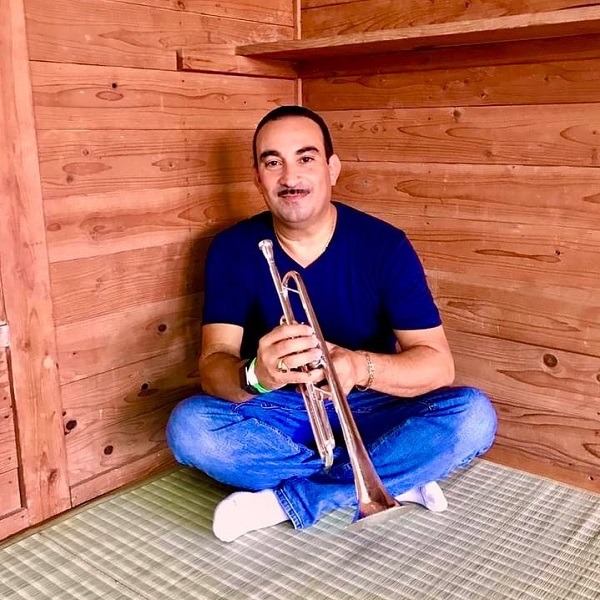
Eddie and his trumpet
Eddie Ortiz with his trumpet

The Armed Forces and moving to Hawaii   

Eddie’s first contact with music was in school, when he began taking trumpet lessons for a few years until he moved with his family to Tampa, Florida, where his life would change radically.   

While there, he joined the Navy and served for more than 20 years, time in which the artist took the opportunity to join the Marine band and hone his skills as a musician. 

It was in those years he served as a trumpet player and played for several military bands being in the armed forces.   

During his military career, he was forced to visit many countries and Hawaii was his last stop. About three years before retiring, he decided to create Eddie Ortiz & Son Caribe, a group he still plays with today.    

As for Hawaii, he liked the place, the weather and the people so much that he did not want to return to the United States. That was over 27 years in total. He still thinks it was the best decision he could have made personally and professionally.    

Eddie Ortiz & Son Caribe 

Something very interesting about Eddie Ortiz & Son Caribe is that they play Latin music, but most of the members are not Latino. The group has people from Japan, China, Portugal and Hawaii. In fact, some of them were with Eddie in the navy and, today, support him in this great project.   

A very particular case is that of Cynthia Romero, the band’s vocalist, who was born in Manila, Philippines, and speaks six languages, but Spanish is not one of them. However, she is perfectly capable of singing in that language without any problem, since she practices a lot the songs at the phonic level to avoid mistakes.   

Whenever there are original songs, Cynthia usually asks Eddie what a song is about and he explains it to her in detail so she can perform it and live out it properly. She also takes the trouble to translate all the content and learn it to avoid any failure in the studio or on stage.    

In the case of the genres, a different level of preparation for each one is always required, so Eddie and Cynthia always rehearse alone at first, while the musicians prepare themselves separately. It is then that they all join together to see how the band sounds as a whole.    

Eddie in a studio
Eddie Ortiz playing his trumpet in a studio

Learning from other artists on stage 

The members of Eddie Ortiz & Son Caribe have had the opportunity to share the stage with Ismael Miranda, Celia Cruz, Johnny Polanco, Tito Puente Jr, Luisito Rosario, and many more. When asked what he and his musicians have learned from these great artists, Eddie replied that the opportunity to accompany these personalities and open their shows have been a blessing and an immense honor.   

”Each one of these artists has a very unique style and, whenever we accompany one of them, there are always new things to learn in order to be able to interpret those styles in the future. All of these things that we see in others are incorporated into our own music as we see fit” said Eddie.   

The media’s role in his career   

With respect to the media, Eddie Ortiz & Son Caribe has had a presence in various magazines and channels such as Honolulu Magazine, KS TV, 88 Tee, University of Hawaii Sports Television, among others.    

Eddie said they did not expect this media exposure, but it has been very well received. They have been asked to make music for one or two radio stations or channels, which has given them the opportunity to demonstrate their talent and be known among a wider audience.   

The best thing is that this gave them the opportunity to explore other genres, as the aforementioned media have asked for pop, traditional Hawaiian music and other genres requested at that time.    

Original music and covers 

Eddie also told us that his band usually performs live on various entertainment places about four times a week, so they should try to have a repertoire as different as possible every night so as not to bore the audience. 

Regarding covers, there are always certain songs that people usually ask for, so the band always takes them into account to satisfy those attending. 

They also try to make a balance of all the genres they play such as salsa, bachata, merengue, cha cha chá, cumbia, Latin pop and many more.   

Eddie and his band
This is Eddie Ortiz & Son Caribe, the whole band

Tours 

Although the band’s strength is in Hawaii, their audience is not centred on the island and they have also managed to tour Asian countries such as Japan, Korea and the Philippines. In those places, the reception of the public towards Eddie Ortiz & Son Caribe has been phenomenal because there are many lovers of Latin music and culture in general there.   

Because of this, these countries usually have relatively large salsa events and festivals where they always take this band and other groups of this kind into account. Of course, they are also supported by dancers and DJs in order to liven up the atmosphere even more.   

Eddie remembers attending an event called ”Isla De Salsa”, which featured El Gran Combo De Puerto Rico, Juan Luis Guerra, Havana De Cuba and many others. This shows how much Latin music is valued in those places and the large number of followers it gathered. 

To end the conversation, Eddie pointed out that they have a large audience in Colombia, Ecuador and Mexico, so they also have plans and are making the appropriate arrangements to go there soon and meet their fans. They will also perform an anniversary concert to celebrate the 25th anniversary of the foundation of the orchestra and will have Luisito Rosario as a guest. 

Read also: Jimmy Rodríguez ”El Salsero Mexicano” talked to ISM about his career 

Tempo Latino: Creating Connections Through Music

An Interview with Eric, Founder of Europe’s Premier Latin Music Festival

On the last week-end of July, a festival celebrates Latin and Afro-Cuban music and brings thousands of music lovers to a small town in France. Eric, the festival’s creator, shares its origins, inspirations, and evolution.

Interview with Eric Duffau
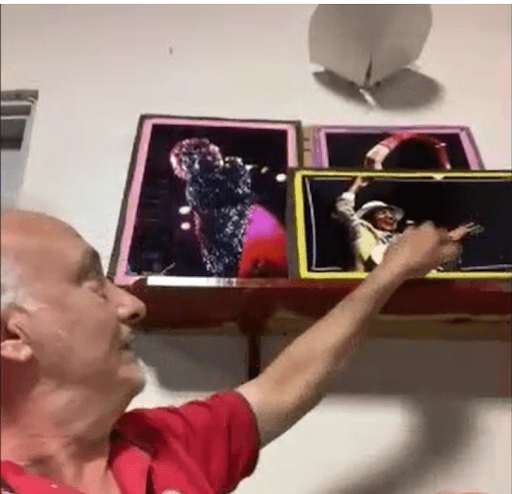
Eric Duffau showing a photo of Compay Segundo

Since its inception in 1994, the Tempo Latino festival has welcomed incredible artists to this small town in the Southwest of France.

Creating a Musical Oasis in Vic-Fezensac

Having lived across France, Eric settled in Vic-Fezensac, where he felt the need to create something beyond work. His passion for Latin and Afro-Cuban music led him to start Tempo Latino, aiming to provide what he missed – concerts of these genres.

A Journey of Music and Discovery

Eric’s radio inspiration and his love for vibrant rhythms ignited the idea for a music festival. He yearned to introduce others to the music he cherished, giving birth to Tempo Latino in 1994. The inaugural edition featured Fatal Mambo and Mambomania, attracting 2,800 attendees. Now the festival attracts over 10,000 people.

Eric’s selection process for artists is fueled by genuine connections, resulting in a diverse lineup that weaves different styles into a harmonious experience. His curation creates unique narratives each night. Pairing artists with contrasting energies, like Lila Downs and Cimafunk, creates a captivating tapestry that reflects the festival’s essence. Eric’s journey involves tireless pursuit and strong artist relationships. From Bernard Lavilliers to Excelencia, his commitment to music’s magic and meaningful collaborations remains steadfast.

A Melodic Journey Unfolds

The festival’s theme guides its trajectory, from Africa’s heart to New York’s energy. Lavilliers’ Paris and the Caribbean’s vibrancy unite through music, creating a diverse yet cohesive experience.

In a digital era, Tempo Latino reminds us of music’s power to unite. Eric’s dedication and knack for blending genres into harmonious narratives continue to resonate.

Tempo Latino: 28 Years of Latin Rhythms, Community, and Artistry

The charm of Vic-Fezensac, a small town in France, transforms every year as over fifty thousand people gather for the renowned Tempo Latino Festival. In an exclusive interview, Eric, the festival’s creator, discusses the intricacies of managing such an event in a local community and the relationship it shares with the town.

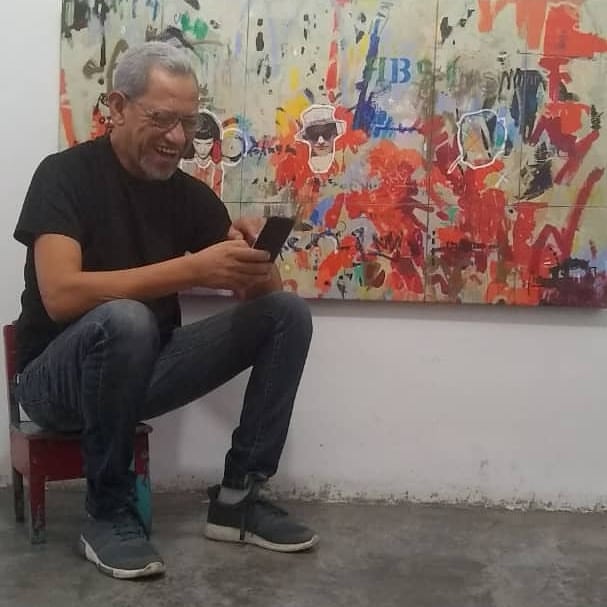
Mural for the entrance of the 2023 Festival, by Martin, a local graffiti artist.
Martin, the local graffiti artist, putting the final touches on the entrance mural.

Local Community and Involvement

Eric sheds light on the local engagement, emphasizing that while not everyone participates, the festival is supported by some local partners. What brings him contentment is the transformation he witnesses each year as the town welcomes an eclectic crowd of festival-goers. The festival’s vibrant audience, composed of diverse backgrounds, gives life to the town’s streets and squares in ways that were once unimaginable.

Eric reminisces about the support he received from the former mayor, Jean Arnaud, whose open-mindedness and appreciation for the festival’s diverse attendees left a mark. Jean Arnaud’s encouragement and acknowledgment of the festival’s contribution to cultural diversity added an emotional connection between the festival and the town.

Fostering Relationships with Artists

Eric’s dedication to music and fostering connections with artists has been at the heart of the festival’s growth. He shares anecdotes about musicians like Oscar D’Léon and Celia Cruz, who have left an indelible mark on the festival’s history. These relationships, he emphasizes, are more than business; they’re rooted in mutual respect and genuine affection.

Celia Cruz – Yuri Buonaventura
Oscar D’Léon – Cachao

Overcoming Challenges

Throughout its 28 editions, the festival has faced numerous challenges, both financial and logistical. Eric reflects on early deficits, weather-related disruptions, and organizational intricacies. Each year’s success has hinged on meeting these challenges head-on, often pushing the festival to its limits.

The Ever-Evolving Vision

Eric’s vision for the festival’s future remains unwavering – bringing together people from diverse backgrounds through music. He acknowledges the changing landscape of music and dance styles, highlighting the importance of maintaining a balance between cultural integrity and evolving tastes.

Looking Ahead

With the 30th edition approaching, Eric envisions continued growth while staying true to the festival’s roots. He expresses his desire to bring acclaimed artists like La India and Carlos Santana to the stage, continuing the legacy of diverse and passionate musical experiences.

In the grand tapestry of the Tempo Latino Festival, Eric’s passion, dedication, and genuine relationships have woven together a cultural masterpiece. The festival remains a beacon of unity, showcasing the power of music to transcend boundaries and create shared experiences. As the festival moves towards its next milestone, it stands as a testament to Eric’s unwavering commitment and the enduring magic of Latin and Afro-Cuban rhythms.

Mark your calendar and plan your trip for the 2024 Tempo Latino on the last weekend of July 25 to 28, 2024.

Visit for more information

[Read more…] about Tempo Latino: Creating Connections Through Music

José Madera Niño & his 3rd his World

Latin América / Venezuela / Caracas

José Madera Niño “The records and the radio were my first teachers”

Soon he will premiere his second production entitled Matices, with the promotional song Canta Sonero.

José Madera Niño
José Madera Niño

A creator, a great human being, this is José Madera Niño, this Colombian-Venezuelan musician, self-taught, percussionist, composer and plastic artist; who after participating in different groups decides to form his own Orchestra, José Madera Niño & 3er Mundo, assures that his passion for music began when he was very young, following the example of his father, uncle and his older brothers, defines his songs as “simple and diaphanous”. He confesses that our salsa genre, “needs to feed on new things, unpublished songs, in short, proposals, and that the music lover is the one who decides if it is good or not”; As the chorus of one of their songs says, let them be the ones to speak and express their emotions.


His first record production De amor, desamor y rumba, contains 8 songs, of which 6 are his own, with the participation of leading Venezuelan musicians; in this work he presents us with an innovative style, where he sings to love, to spite and invites us to dance to the rhythm of the conga that is in fashion. In each composition, everyday life is reflected, the adventures and misadventures that music lovers make their own, a work made of guava trees and poetic joys.

Soon he will launch his second record production with a very striking name; Nuances, something that in his words “makes him very happy”, where there is no doubt, his gift as an artist will be present and a motley of musicians with a great career who will put the final touch on his new production.


How did you start in music?


“I remember that at the age of seven, I was drawing a lot, on paper, on the walls and on whatever came my way. My older brothers already showed an interest in music, so instruments began to arrive at the house. While I drew they practiced and when they went to school I took possession of a drum and a radio, I tried to accompany all the rhythms I heard on the stations”.

Was your training professional or are you a self-taught musician?


“Autodidact. I entered the school of plastic arts, to study drawing and painting, at the age of fourteen. There I saw nine subjects, also I started at the high school where I saw nine more subjects, so there was no space to study music. I listened to a lot, yes. Records and the radio were my first teachers”.


Tell us about your experience with Orlando Poleo?


“In a self-taught way, almost without realizing it, I began to play with different groups and orchestras, I was already in trouble, so on the fly, I decided to take theory and solfeggio classes at the headquarters of the Musical Association. On a Caracas night I was playing with La Orquesta Ideal and there I met Williams Hernández -Percussionist and manufacturer of Latin percussion instruments-. It was he who recommended that I attend the workshop in Sarria where the teacher Orlando Poleo taught. The experience there at the beginning was a bit traumatic because although I already had time playing congas, I didn’t have the ideal technique. I had to get rid of what I learned on my own and put new ways into practice. It was not easy but I am very grateful to have passed through the school of Grand Master Poleo”.


Where does your musical vein and passion for painting come from?


“My father was a bolero singer back in his native Colombia, my uncle was a guitarist. That’s where the taste for music comes from.”


What motivated you to make your first production, in a market so Competitive and often poorly supported by the media?


“I was motivated by a passion for music and by that need to contribute at least one point of view, a way of doing things. For example, I think that this genre that we love, called Salsa, needs to feed on new things, unpublished songs, in short, proposals and that it is the music lover who decides if it is good or not”.


What is the reason for the name of the group; 3rd world?


“That’s where we are, that’s where we come from. This is how they classified the countries of our region and we assumed them without complexes or pride. I think it’s just a title that doesn’t detract from our ability to do great things. Baptizing the band with that name was an act of rebellion, it shows a little that despite many limitations we are capable of making quality music”.


Why the name De Amor, Desamor y Rumba?


“There were many hours of recording, then editing, then came the art of the album and when we were already finalizing details, a doubt assailed me, I thought: Isn’t the selection going to be very rockolera? I started to review the production and I realized that it was balanced. We sing to spiteful love and I think it’s very danceable. From there the title was born: “Of love, lack of love and rumba”.


What inspired you to write 6 songs of your first production?


“The need to do unpublished things, on the other hand I didn’t know so many composers who wanted to risk their songs in a novel production. The language of my songs is simple and diaphanous”.


Which of the themes do you identify with, and why?


I like them all.


How would you define the 3rd world style and how do you get there?


“It’s just Salsa, without a “surname”, as it was before. It’s not erotic Salsa or hard Salsa or Nothing Salsa… Just dance music”.


Any relationship with the percussionist José Madera -the one from Tito Puente-?


“Only immense admiration for his work and the fact that like him I play percussion and have the same first and last name.”


Have you ever been interested in another musical style?


“I listen to almost everything and in my career I have had the opportunity to play other popular music rhythms such as merengue, cumbia, vallenato.”


An artist you admire?


“There are many whom I admire, it would be unfair to name just one.”


What inspires you to write a song about love or heartbreak?


“Both, in addition to the simple, everyday things.”


Define yourself in one sentence?


Creator


How does the soul see through painting or music?


The soul sees and manifests itself in the purest and most honest way through art. Call it painting, music or another related manifestation.


Tell us about your 2nd production, who participates in it?


This is something that makes me very happy because we are giving the last brushstrokes, soon, very soon my dear friends will know about this work. There are many guests.


Why nuances?


Precisely because of the variety of its guests.

Health Benefits of Dance

Europe / Romania / Galati

Health Benefits of Dance

Studies show that dance can help to lose weight, stay flexible, reduce stress, make friends, and much more. Discover the advantages of health and DANCE!

Many love to dance and follow the rhythm of the music on the radio. Others enjoy watching others dance.

The truth is, that dancing really has many benefits for health and well-being. Adopting a lifestyle where there are music and dancing is definitely healthy. But why?

Learn about the health benefits of dancing

Let us show you!


1.-  Reduce stress

If you’re feeling stressed out or anxious, you perfectly might want to invite a partner, turn up the music, and Salsa! Researchers have found that partner dance and musical accompaniment can help bring about stress relief.


2.- Boost memory

According to studies, dancing may boost your memory and prevent you from developing dementia as you get older. Science reveals that aerobic exercise can reverse volume loss in the hippocampus, the part of the brain that controls memory. The hippocampus naturally shrinks during late adulthood, which often leads to impaired memory and sometimes dementia.


3.- Improve flexibility

Those plies and arabesques that ballet dancers practice aren’t just for aesthetics — they also increase flexibility and reduce stiffness. You can skip the ballet slippers and still reap the benefits of ballet by practicing some simple stretches at home. Increasing your flexibility will help ease joint pain and post-exercise soreness.


4.- Help your heart

Dance is a great activity for those at risk for cardiovascular disease. People with heart failure who took up waltzing improved their heart health, breathing, and quality of life significantly compared to those who biked or walked on a treadmill for exercise, noted an Italian study.


5.- Diminish depression

Dancing really does lift your spirits, according to a study that tested the effects of dancing on people with depression. Patients who participated in an upbeat group dance showed the fewest depression symptoms and the most vitality. Got the blues? Grab a friend and go out dancing tonight.


6.- Balance better

If you are nervous about falling as you get older, some dance lessons might help ease your worries. Dancing requires a lot of fast movement and good posture, so frequent dancing will help you stabilize and gain better control of your body.

With info a Salud Cotidiana.

“Trayectoria de Clásicos” – Johnny Cruz and Adalberto Santiago

North America / United State / New York

Johnny Cruz releases his new Salsa album “Trayectoria de Clásicos” with Adalberto Santiago to the musical arena

The famous Timbalero and musical producer presents a CD tribute to all the Puerto Rico and the world’s Soneros, along with one of the most privileged voices of Latin music and Fania All-Stars’ vocal ex-leader: Adalberto Santiago.

"Trayectoria de Clásicos" - Johnny Cruz and Adalberto Santiago
“Trayectoria de Clásicos” – Johnny Cruz and Adalberto Santiago

Johnny Cruz “El Señor del Timbal” launches his second historical compilation “Trayectoria de Clásicos” directed to all the Salseros lovers of the whole world, which can relive in a single album ten great classics of this tropical genre in the interpretation of the vocal versatility most famous of six decades, Adalberto Santiago.

This four-years recording album involved more than 20 Latin music personalities, including: Jason Villamar, Louis Perieda and the special guest: Richi Ray (Piano), Rubén Rodríguez and Freddy Rivera (Bass), Johnny Rodríguez, Pedro Segundo and Luisito Rodríguez (Bongos), Eddie Montalvo and Erick Vélez (Congas), Jerry Rivas and Luisito Rodríguez (Three), Nelson Jaime Gazu (Trumpet), Johnny Cruz (Timbales), Moisés Noguera (Trombones), Freddy Miranda (Baritone), Jerry Rivas, Adalberto Santiago and Frankie Vásquez in the choirs and Adalberto Santiago as Leader Vocal.

Each track of this Salsa flagship CD was chosen with special attention for being emblems of the salsa movement of the 60s, 70s, and 80s popularized by great artists and orchestras, such as: Fania All-Stars, El Gran Combo de Puerto Rico, Cheo Feliciano, Tommy Olivencia, Adalberto Santiago, and Justo Betancourt.

Johnny Cruz and Adalberto Santiago

“Trayectoria de Clásicos” comes with the differentiating touch of musical arrangements of extreme sonority concerning their original compositions. “Anacaona” (1971) by Cheo Feliciano with the Fania All-Stars, “El Swing” (1965) and “Un Verano en New York” (1975) by El Gran Combo de Puerto Rico and “Hipocresía”, the work of the Cuban master: Adalberto Álvarez are interpreted by the legendary vocalist Adalberto, who at 82 years of age keeps his voice intact and dominates a wide range of tones. This former member of the Chuíto Vélez orchestra, Ray Barretto, Típica 73 and Los Kimbos has one of the most prominent careers in the music industry, which has allowed him to share stage and recording with almost all the world-famous Salseros.

In this Salsa compilation, the New Yorker Cruz, also included the six singles: “Planté Bandera” (1975) whose original composition is Tommy Olivencia, “No hago más Na” (1973) belonging to El Gran Combo de Puerto Rico, “Pa’ Bravo Yo” (1972) by Justo Betancourt, and “Imposible ha de Ser” (1977), “Más Sabroso” (1985) and “Mañoño” (1973) with Típica 73 by Adalberto Santiago.

Undeniably, it’s an album that was worth every year of waiting. “Trayectoria de Clásicos” is of incomparable quality and a super Salsera production highly recommended.

Waiting for the big concert in the city of New York for all lovers of the genre this year!

Release: 2019

Label: Cruz Music Inc.

“Salsa music means everything to me. It’s a passion that goes hand in hand with my culture and roots… I have been playing it for 40 years as a musician and love it dearly”. Johnny Cruz

Johnny  Cruz “El señor del Timbal”

The New Yorker musician, CEO, businessman, audio engineer, producer and broadcaster of radio and television, Johnny Cruz since 20 years ago has had one of the most important programs of the five counties of the city of New York dedicated to Salsa, “The Johnny Cruz Show”. This program seeks to enhance the genre, raise awareness and make a difference to what has already been established with interviews with Salsa Mainstays and emerging artists. “The Johnny Cruz Show” ​​is already part of the New York Latino culture and you can enjoy it on public access television every Saturday from 3:30 PM to 4:30 PM and also through www.mnn.org  and https://www.youtube.com/channel/UCNT-nQee0t_uiDvUGlyh5dA

Johnny Cruz
Johnny Cruz

Likewise, Cruz is also the host of the digital radio program “Galería de la Salsa” dedicated entirely to this tropical rhythm, concentrating on the biggest hits of all times and salsa styles, as well as presenting outstanding live interviews. “Galería de la Salsa” is broadcasted all over the world online at www.miradio.fm.us

This humble, sincere, and successful multifaceted artist told us that among his plans are to make great concerts in his hometown and the rest of the world.

“My legacy rests on what I have created like the SPAHA Salsa Gallery, my radio show, my TV show and all of my musical productions. I hope future generations look at my work here and are inspired to continue the Salsa tradition”. Johnny Cruz

Johnny Cruz Timbal: https://www.facebook.com/profile.php?id=100028301633677

Adalberto Santiago:

https://www.facebook.com/adalberto.santiago.1401

Balazo Destacado:

Johnny Cruz releases his new Salsa album “Trayectoria de Clásicos” with Adalberto Santiago

  • « Go to Previous Page
  • Page 1
  • Interim pages omitted …
  • Page 24
  • Page 25
  • Page 26
  • Page 27
  • Page 28
  • Interim pages omitted …
  • Page 63
  • Go to Next Page »

International Salsa Magazine (ISM) is a monthly publication about Salsa activities around the world, that has been publishing since 2007. It is a world network of volunteers coordinated by ISM Magazine. We are working to strengthen all the events by working together.