• Skip to primary navigation
  • Skip to main content

International Salsa Magazine

  • HOME
  • Previous editions
    • 2026
      • ISM / March 2026
      • ISM / February 2026
      • ISM / January 2026
    • 2025
      • ISM / December 2025
      • ISM / November 2025
      • ISM / October 2025
      • ISM / September 2025
      • ISM / August 2025
      • ISM / July 2025
      • ISM / June 2025
      • ISM / May2025
      • ISM / April 2025
      • ISM / March 2025
      • ISM / February 2025
      • ISM / January 2025
    • 2024
      • ISM / December 2024
      • ISM / November 2024
      • ISM / October 2024
      • ISM / September 2024
      • ISM / August 2024
      • ISM / July 2024
      • ISM / June 2024
      • ISM / May 2024
      • ISM / April 2024
      • ISM / March 2024
      • ISM / February 2024
      • ISM / January 2024
    • 2023
      • ISM / December 2023
      • ISM / November 2023
      • ISM / October 2023
      • ISM – September 2023
      • ISM – August 2023
      • ISM July 2023
      • ISM Edition June 2023
      • ISM – May 2023
      • ISM April 2023
      • ISM March 2023
      • ISM February 2023
      • ISM January 2023
    • 2022
      • ISM December 2022
      • ISM November 2022
      • ISM October 2022
      • ISM September 2022
      • ISM August 2022
      • ISM July 2022
      • ISM June 2022
      • ISM May 2022
      • ISM February 2022
      • ISM January 2022
    • 2021
      • ISM December 2021
      • ISM November 2021
      • ISM October – 2021
      • ISM September 2021
      • ISM August 2021
      • ISM July 2021
      • ISM May 2021
      • ISM April 2021
      • ISM June 2021
      • ISM March 2021
      • ISM February 2021
      • ISM January 2021
    • 2020
      • ISM December 2020
      • ISM November 2020
      • ISM October 2020
      • ISM September 2020
      • ISM August 2020
      • ISM July 2020
      • ISM June 2020
      • ISM May 2020
      • ISM April 2020
      • ISM March 2020
      • ISM February 2020
      • ISM January 2020
    • 2019
      • ISM December 2019
      • ISM November 2019
      • ISM October 2019
      • ISM Septembre 2019
      • ISM August 2019
      • ISM July 2019
      • ISM June 2019
  • Download Salsa App
    • Android
    • Apple
  • Spanish

Search Results for: Rumba

The Rumba Madre and its roots in Basque culture

The Rumba Madre is a Nashville-based group whose characteristics are very interesting and make it different from many other artists and orchestras that have appeared in this section over the past few years.   

On this occasion, we had the pleasure of talking with Basque guitarist and tresero David Vila, who revealed the most important details about the creation of The Rumba Madre and his own musical career before and after the group, so just sit tight because there is a very interesting story coming on. 

guitarrist David Vila
Basque guitarist and tresero David Vila, who kindly talked to us

Music in David’s childhood 

When David was just a little boy, in his entire family, only his grandfather liked to sing. In contrary to the case of many other artists we have had the pleasure of interviewing here, David does not come from a family of musicians, but that did not keep him from developing a taste for this artistic side over time. 

Being very small, his parents moved from Galicia to the Basque Country to work and seek a new life. In this autonomous community, the cultural environment turned very lively and punk and other similar rhythms were at their peak of popularity, which got him interested in the tuna guitar and other instruments. He also started listening a lot to jazz and blues, which became fashionable in those years. 

Since David had no possibility to be formally educated in music, he just listened carefully and imitated the sounds the best he could until he decided that he needed to go one step further in his budding career as a musician. It was then when he moved to London, England, to study his degree in guitar. He had already worked as a musician in Spain, so this work experience was very useful to what he would do later on.   

Aside from having obtained his degree in music, David also toured around Europe with some local bands, which he continued to do in the United States when he moved to Nashville.  

Currently, he is a Hispanic popular music professor at the university level, so he teaches everything he has learned to young people who want to follow his same path.   

Rubén Darío, Benjamín Alexander, and David Vila
Nicaraguan guitarist Rubén Darío, Puerto Rican bassist Benjamín Alexander, and Basque guitar player David Vila

Nashville  

The first U.S. city David went to live in was Chicago because he was very interested in exploring the blues and other genres from that part of the country, but David did not have the visa required for entry into the U.S. at the time, so his plans to go there were inevitably postponed. When he was finally able to travel, he had no choice but to go to Nebraska and stay there for about two years for lack of a better option.   

Subsequently, he chose the city of Nashville as his final destination because of the large amount of musicians who live and work there. He even went so far as to call this place ”The Disneyland of musicians” because of all the opportunities it presents in this area.   

Another positive aspect for artists is that there are a lot of well-known record labels and studios to work with, making it an excellent choice for artists looking for a place to start or continue their careers. The locals themselves call it ”the music city” and have a saying that goes ”the worst waiter is a better musician than you,” making it clear how music is perceived in Nashville.   

David’s inclination for Latin music 

In England, David had already been studying some flamenco and, while it is true that he was not an expert yet, there were not many musicians in Nebraska who played that genre, so he caught the attention of many of his colleagues and groups that requested his services. The same thing happened in Nashville and the fact that he spoke Spanish reinforced the idea that he played Latin music.   

The above led many to believe that David was capable of playing both Flamenco and Cuban music without any problem, which was not entirely certain at the time. This is how he ended up playing guitar in a Cuban son band, thanks to which he had to learn to play the Cuban tres in order to be in the band.   

Although at first, it was too complicated for him, he focused on practicing a lot and listening to recordings of treseros to be able to imitate them as well as possible. Thanks to his effort and commitment, David learned how to play it and he spent five or six years doing it until he created his own group, The Rumba Madre.   

David laughingly recalls that his goal when moving to Nashville was to play country music as he did in England, but there were so many country musicians that he chose to explore another niche and ended up studying and playing Latin and Caribbean music.   
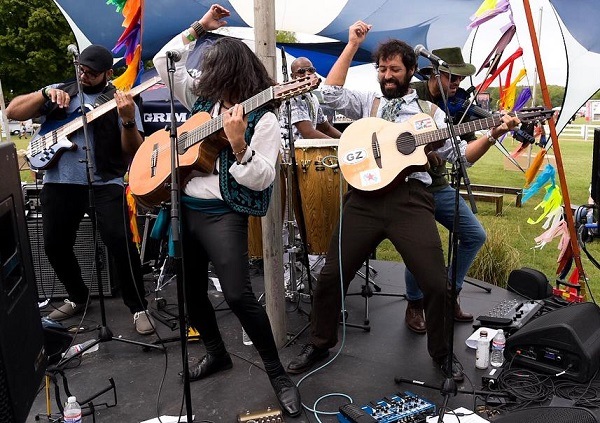
The Rumba Madre
The Rumba Madre playing live

The Rumba Madre  

After all the experience gained by David in those years, he thought it was time to create his own project and, for this, he chose two colleagues he met in that same musical context in Nashville, Nicaraguan guitarist Rubén Darío and Puerto Rican bassist Benjamín Alexander.   

The three artists coincided many times in different bands and concerts in which they played together, so they already knew each other’s styles very well. Since they were all Spanish-speaking, migrants and musicians, they saw that they had many things in common and established a friendship that led to a band.  

Both David and Ruben took advantage of the many compositions they had made in recent years and used them as repertoire for the project that was coming. Not much time would pass before music venues and festivals began to take them into account. 

On one such occasion, they met Cultura Profética keyboardist and composer Iván Gutiérrez Carrasquillo, who had lived in Miami his whole life, but decided to try his hand in Nashville, Gutiérrez was so impressed with the music made by The Rumba Madre that he proposed them to make an album. He also acted as a contact point for The Rumba Madre to be in touch with companies and labels that would be key to the success of the group later.   

They were going to release their first album in 2020, but could not present and promote it due to the pandemic, so they had no choice but to wait for things to die down.   

So far, The Rumba Madre has experimented with rumba, punk, Cuban son, salsa, flamenco, tango and many other genres. 
Read also: We welcome Patricio Angulo from Rumbaché to ISM 

We welcome Patricio Angulo from Rumbaché to ISM

The San Francisco Bay Area, California, has a lot of talented artists, many of which we have had the privilege to interview in this section to learn all kinds of details about the Latin music scene in this area of the United States. This time, we managed to have an interesting conversation with Patricio Angulo, leader and founder of the orchestra Rumbaché, who kindly answered all the questions we had.

Rumbaché is one of the most important salsa and timba bands in the Bay Area and has a varied repertoire of salsa and contemporary Cuban music that enchants any audience that hears the group perform. 

The following are some of the most important issues related to this Latin band and its history.

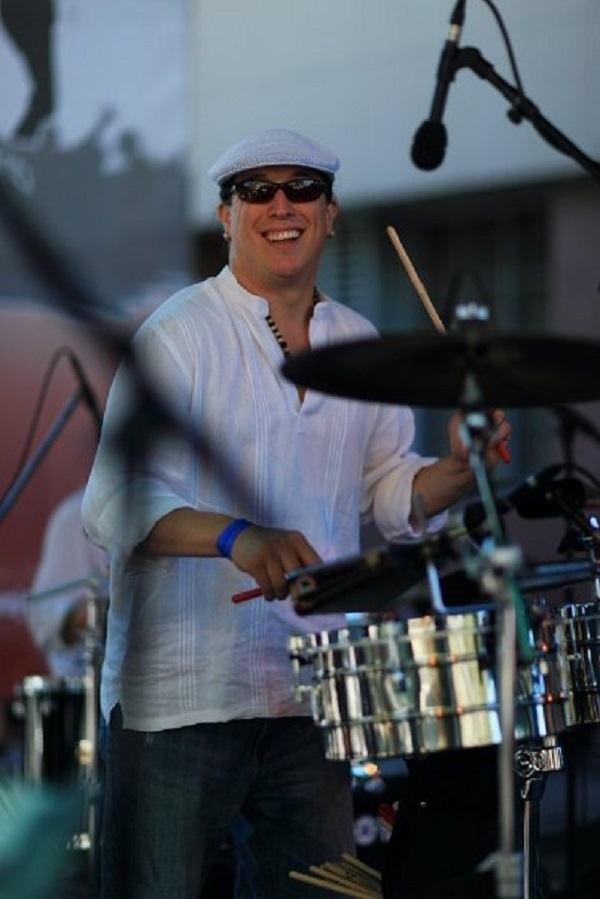
Patricio playing the timbales
Patricio Angulo playing the timbales on stage

Patricio Angulo’s beginnings in the music world

Patricio has had a long interest in music, which he developed by himself, since he did not have family musicians to encourage these activities in the little boy.

He started playing violin and trumpet, but it was not long before the young boy found he liked drums and orchestral percussion better. He also played some classical music and learned a lot about instruments used in this genre.

When he went to high school, there were several music programs from which Patricio could choose to develop this branch of art depending on his tastes and finally decided on a jazz group with which he started learning to play congas and timbales. This group wanted an extra Latin touch in their music and the boy was chosen for the role. 

The musician was very inclined to Latin Jazz at the time, but then, he was listening to other Latin genres until he discovered Cuban and Caribbean Salsa, which would be very important in the musical future of the artist.

Recruiting talent for Rumbaché

For years, he group Rumbaché, previously called Quimbombó, was forming from musicians Patricio considered played well, since for him this is most important. 

However, he emphasized that each orchestra has its own needs and highlighted the vocals as an example of that, as they are very necessary for dance music like the one they play. Likewise, professionalism and experience are two aspects taking into account by him when evaluating a candidate. 

In another order of ideas, the musician considers that Latin roots are not a key element in playing salsa or other genres of this type very well, since there are many singers and musicians who have never had contact with Latin genres or instruments can learn to play them without any problem. It is a matter of effort and discipline. 

Whole orchestra Rumbaché
This is the whole orchestra Rumbaché posing for the camera

Origin of the name Rumbaché and the Yoruba Religion

From what we have read about Rumbaché, the origin of the name and its relation with the Yoruba religion caught our attention. Rumbaché is a combination of the words ”rumba” (This word can mean ”party” and ”celebration”) and ”ache” (in the Cuyuní language, ”ache” is something very good and pleasant).

Something that Patricio wanted to clarify is that the music of his orchestra is not religious and has nothing to do with the Yoruba religion beyond some choruses and words as there are in many Cuban songs. In fact, they try to have a varied repertoire so as not to bore the audience.

Rumbaché’s activity in clubs

Rumbaché has featured heavily in festivals and renowned clubs in the San Francisco Bay Area such as Sausalito Seahorse, The Cigar Bar & Grill, Rassela’s Jazz Club, Moe’s Alley, Blue Note, among others. It is undeniable that the group has ample experience in performing in these types of venues. 

That is why we took this opportunity to ask Patricio how the movement is going in these places when it comes to hiring orchestras in recent years, to which he replied that the presence of orchestras in local venues has decreased dramatically in recent years, especially after the pandemic.

Likewise, because of this same situation, there were many clubs that began to close their doors indefinitely, making it very difficult for Rumbaché to play live regularly. 

Once the pandemic was relaxed, Patricio says that a few venues survived, but there were too many orchestras for the few available stages. This led them to opt for festivals, concert series and private shows. 

Every night there was a pen club, but that has changed radically and Patricio and the other members of Rumbaché have had to adapt to the circumstances. 

Rumbaché live
Rumbaché performing live

Oye Productions

In addition to Rumbaché, Patricio also has his own entertainment company called Oye Productions, with which he is responsible for providing live music for all kinds of events. Obviously, he gives priority to Rumbaché, but he also offers the services of guitarists, trios and all sorts of musicians.

What the company seeks to focus on is providing musical entertainment for private parties such as a business meeting or something more personal such as a wedding.

He always tries to hire musicians who play all kinds of instruments and genres to perform varied shows for each event. He also seeks to look for artists he knows beforehand and who he is sure will do an excellent job. 

Activities outside Rumbaché

Patricio also indicated that one of his most important occupations outside Rumbaché was teaching congas, timbales and drums. He also teaches drums to children once a week. 

These activities bring happiness to the musician and he always looks for the opportunity for these youngsters he teaches to have some knowledge of Latin percussion and get to know our music much better.

Read also: René Latin Soul and his journey into music from his home country

Mayito Rivera “El Poeta de la Rumba” was the distinctive voice of Los Van Van de Cuba

Mario ‘Mayito’ Rivera is, without a doubt, one of Cuba’s most outstanding contemporary singers.

For more than 20 years he was the distinctive voice and recognizable face of Cuba’s most famous musical group, Los Van Van.

Regardless of the musical genre he performs -rumba, son, salsa, bolero or timba, modern or traditional style, with strength and dynamism or with delicacy and tenderness, Mayito Rivera’s performances, with passages adorned with tremors and coloraturas, are always stellar.

Mayito Rivera “El Poeta de la Rumba”

Mario Enrique Rivera Godínez was born on January 19, 1966 in Pinar del Río, a province located in the westernmost part of Cuba and famous for its handmade Havana cigars.

It was there that ‘Mayito’ began his musical training as a child. Later, he moved to Havana, where he studied percussion at the renowned National School of Art (ENA), which he later extended with advanced studies at the Higher Institute of Art (ISA).

After completing his training, which lasted a total of 15 years, Mayito Rivera joined the musical ensemble of the well-known Cuban singer Albita Rodríguez.

Later, he played bass in the Moncada Group, a formation belonging to the Nueva Trova Cubana movement, whose renovating spirit is firmly rooted in traditional Cuban rhythms.

At the age of 26, Mayito was discovered by Juan Formell, the director of Los Van Van, an orchestra that by then had already become a legend. Initially hired to play bass and sing backing vocals, he soon established himself as the group’s lead vocalist.

Over the next 20 years, Mayito Rivera, more than any other musician, put his stamp on Los Van Van.

He burst onto the scene as the representative of a new generation of musicians, and his fresh style contributed to the group’s endurin Singer of the group’s countless salsa hits that were played in the discotheques, he has been nominated twice for a Grammy and won it once.

Mario ‘Mayito’ Rivera es, sin duda, uno de los cantantes contemporáneos más destacados de Cuba

At the same time, he was also working on other projects: in 1999 he released his first solo album, Pa’ bachatear.

Chappotín, in which he transports the past to our days with a brilliant interpretation of traditional Conjunto Chappotín songs.

But Mayito Rivera is not only a singer and percussionist. In 2005, he released Negrito Bailador, his second solo album, produced by the Timba label of the German music publisher Termidor, in which he performs only songs of his own composition.

The music, with a rumbero tinge, is fresh, lively and of timeless quality. Subsequently, Negrito bailador was marketed in the United States under the title Llegó la hora and was immediately nominated for a Grammy in the Best Salsa Album of the Year category.

Mayito Rivera is probably the most requested special guest by other Cuban orchestras; so much so, that in recent years he has sung with almost all of Cuba’s star casts.

Nor has his career suffered any interruptions since he left Los Van Van in 2011: currently, Mayito Rivera tours the whole world relentlessly, giving concerts in countries as diverse as the United States, Canada, Venezuela, Colombia, Mexico, Peru, Argentina, France, Germany, Denmark, Spain and Italy.

The great popularity and multiple talents of this ‘poet of rumba’ are reflected in his performances as guest singer for salsa greats such as Oscar D’Leon, Gilberto Santa Rosa, Issac Delgado, Adalberto Alvarez, Mayimbe, Son Como Son, Timba Live, Pupy y Los que Son Son, Charanga Latina, Havana D’Primera, Tumbao Habana and Elio Reve Jr, to name just a few.

In 2012, Mayito Rivera established himself as a permanent member of Los Soneros de Verdad, the most successful orchestra of the moment dedicated to son and its related rhythms, led by singer Luis Frank Arias.

Two sold-out world tours of three months each in Europe, Asia, Russia and the United States attest to the high quality and great interest in this amalgam of traditional son and the vocal artistry of Cuba’s most dynamic rumbero.

Mayito Durante más de 20 años fue la voz distintiva y el rostro reconocible del más famoso grupo musical cubano, Los Van Van

In 2014, the superstar will be touring with his own orchestra. But before that, from June to September 2013, he will give a series of concerts with Los Soneros de Verdad performing songs from his as yet unreleased album Alma de Sonero.

During this project he will return to his musical roots: son and rumba, bolero and guaguancó, both in their traditional interpretation and in their more modern variants.

The album Alma de sonero includes 11 tracks and will be released in September 2013 worldwide success.

The musicians include Alexander Abreu (Havana D’Primera) on trumpet, San Miguel Pérez on tres and Luis A. Chacón ‘Aspirina’ Bruzón on bongos and cajón.

Website: Mayito Rivera

Read Also:   Carlos “Patato” Valdés one of the best percussionists in the history of Latin Jazz.

Salsa singer Angel Rumba and what he has to say

Interview with Angel Rumba

Angel Manuel Ramos Sanchez, better known as Angel Rumba, is a New York singer of Puerto Rican descent with whom we had the great opportunity to talk about several issues of importance such as the beginning of his career with Pancho Bongó Y Su Orquesta, his debut as a soloist, the meaning behind his lyrics, among other things. It is a pleasure for us to have talked with this Latin talent and to bring the story to all our readers of International Salsa Magazine.

Angel Rumba tells us his story

His beginnings

Ramos Sanchez was born in New York City in the 1980s, when there was a well-established salsa movement in New York City and the United States in general. Evidently, little Angel could not be left out of this trend, especially if we take into account that through his veins ran Latin blood.

In addition, his father was a singer, musician and guitarist, so he always listened to salsa, merengue, bolero and other genres at home. It was at the age of seven when he started playing güiro, bongo and conga due to the curiosity generated by his father’s work, who spent a lot of time teaching his son to play as many instruments as possible.

In 1992 when Angel was 12 years old, he started playing with an orchestra called Projecto 3 in the city of Allentown, which represented his first opportunity to be on stage and show his face to an audience waiting to see what he could offer. It could be said that this was the beginning of what would become his life’s work.

Moving to California and Pennsylvania

Given that Angel’s father was a truck driver, the family had to move around a lot until 2003, the year in which he moved to Puerto Rico and lived there for three years. In 2006, he moved permanently to Pennsylvania, where he has been living until today.

Angel Rumba performing on stage

Release as a solo artist

When asked about his release as a solo artist, Angel stated that ”my beginnings were with merengue, but salsa always fascinated me because I really liked soneros such as Ismael Rivera, Gilberto Santa Rosa, El Canario and many more. I saw them improvising on stage and I always wanted to do the same.”

In 2014, he was given the chance to belong to the group Pancho Bongó Y Su Orquesta, which he was a member of for more than seven years until he wanted to make his own project in 2020. He felt he had the experience and took all the necessary stages to get to that point. In addition to that, being subject to command of a musical director greatly limits the creativity of the artists and the New Yorker singer no longer felt comfortable with what he was doing at that time.

The singer is also a composer and was not allowed to play his own music with the orchestra, which also led him to seek new horizons and, in turn, record his first solo track.

While acknowledging that this was no easy decision, he says that he has no regrets about it and all that he has been given from then until now has been a blessing for him and his family.

Obstacles during his solo career

On this subject, he confessed that many of his orchestra fellows were not happy with his decision to leave the group and he even felt that certain figures tried to put obstacles in his way so that he would not succeed in the way he wanted to. This is one of the reasons why he prefers not to show so much about his work and future projects to the public to avoid problems.

Angel Rumba in a photo shoot

”Mi sentimiento En Rumba”

The process of making this album was not easy, since the artist had to knock on many doors until making contact with Rafael Lozano, who arranged the first song ”Sin Un Amor”. This was a cover of a song by Los Panchos, so we can say that it is a tribute to the group in a totally different genre.

We went looking for musicians from several countries to work with u among whom was Angel Guzman, who plays trombone, baritone, saxophone, trumpet and many more. He also told us about sound engineer José Guerrero, who makes the mixing and mastering of the songs.

The album includes six songs composed by Angel himself and three that were adapted such as ”Perfidia” in a bolero version as a gift for fans of musical trios.

In total, the whole project has two merengues, two boleros and the rest are salsa songs.

Angel Rumba's last album ‘’Mi Sentimiento En Rumba’’
Angel Rumba’s last album ‘’Mi Sentimiento En Rumba’’

Salsa in a market dominated by trap and reggaeton

”Every genre has its audience and every artist has his fans” was what the singer answered when asked about the challenges facing a salsa singer in these times. With this, he shows that it does not bother him in the least that there are more popular genres than salsa and that every artist could have a strong fan base without this meaning involving damage to another one. He says that he will continue to create music with his favorite rhythms in spite of passing trends.

One thing he did emphasize is that there should be more artists who focus on writing and creating original music instead of doing so many covers. A lot of creativity is needed.

The importance of continuing to promote romantic love in the lyrics

The salsa exponent says that it is very important that music continues to promote romantic love and bring positive messages because unfortunately there are many genres focused on negative stuff such as disrespect for women, drugs, violence and much more. The salsa singer seeks to make his contribution to creating a better society in these hard times.

”The lyrics of the songs have always influenced society because their meanings anchor in the minds and the message endures” said Angel about this issue.

Read also: Are we really what we listen to?

Productions and El Gran Bamboo Restaurant & Bar present “Rumba Salsera for the Exigente Dancer”

For the first time in the city of Miami, a new Salsa Dura movement for the demanding dancer is emerging.

International Salsa Magazine and/or www.SalsaGoogle.com recommend and invite you to enjoy a night of Salsa with the best sound of the city of Miami.

For the first time in the city of Miami, a new Salsa Dura movement for the demanding dancer is taking shape.
Salsaoco Productions and Gran Bamboo Restaurant & Bar present “Rumba Salsera for the Demanding Dancer”

Carla Duque daughter of the renowned Betty Salsa Rumba pioneer of the clubs in Caracas, Luis Gudiño “El popular Hueso del 23” and one of the pioneers of Salsa activities in Caracas Dr. Ernesto Mendoza, are the drivers of this movement.

These three Venezuelan Rumberos Salsomanos decided to join forces to provide the South Florida salsero with musical events, dances, Salon Parties and in the not too distant future presentations of singers and orchestras of the salsa scene.

The Hosts have extensive and impeccable experience in organizing events, concerts, and parties in the city of Caracas -Venezuela, among these activities we can highlight presentations such as Bobby Valentin, Willie Rosario, Ray de la Paz, Mulenze, Pedro Brull, Bailatino, Frankie Vasquez, Herman Olivera among many others and as good RUMBEROS were assistants of emblematic salsa places such as Tio Pepe, O’ Gran Sol, Casa Latina, City Day, Status’ , El Sarao, El Sarao, El Maní es Así, Hipocampo, Hawai Kai, La Pachanga, Rincón Caribeño, La Asunción to mention the most attended.

The music will be provided by the famous Dj Jean Castillo, who has a good musical repertoire that we are sure will make the audience dance to this great Rumba.

Dj. Jean Castillo is characterized for making the salsa dancers dance until they get tired, he has dreamed in different locations in the city of Miami managing to captivate the Rumberos with the best of the best of Salsa and his extraordinary and excellent performance as far as musicalization is concerned.

El Gran Bamboo Restaurant, Specialists in extraordinary y Colombian cuisine.

Bamboo Restaurant, the best Colombian food in South Florida!
Bamboo Restaurant, the best Colombian food in South Florida

The chosen venue will be at BAMBOO RESTAURANT & BAR which is located in Hammocks Kendall Miami Florida.

This place is a family site and has a spectacular sound, large stage, giant screen, air conditioning, and an extremely spacious and safe park, has a variety of typical Colombian dishes and very affordable prices, drinks and cocktails are handled at very competitive prices and within reach of the pocket of its attendees, all under the supervision of their own owners.

The sum of all these local ingredients, sound, DJ, food, drinks, and the excellent attention of Carla, Luis Gudiño “El popular Hueso del 23” and Ernesto will guarantee you a first-class evening since the mission of your hosts is to provide a show difficult to forget where the joy, elegance and the SABROSITY OF THE SALSERO DANCER will prevail.

We are waiting for you and that’s why we invite you to come and guarachar next Friday, August 13th from 9:00 at night until dawn in the best Salsero style! And what else is left for us to toast with you for this event and those to come in the future.

El Gran Bamboo Restaurante
Friday, Saturday spectacular artists that bring the music of the Caribbean in all its splendor.

“You can’t miss it much less be told about it!”

Address and Contact:

Hammocks Town Center

10325 Hammocks Blvd, Miami, FL 33196, USA

Phone: +1 786-409-4744

WebSite: https://elgranbamboo.com/

Facebook: Gran Bamboo Restaurante & Bar

Article of Interest: Mulenze The Orchestra of Eternal Youth

  • « Go to Previous Page
  • Page 1
  • Page 2
  • Page 3
  • Page 4
  • Interim pages omitted …
  • Page 48
  • Go to Next Page »

International Salsa Magazine (ISM) is a monthly publication about Salsa activities around the world, that has been publishing since 2007. It is a world network of volunteers coordinated by ISM Magazine. We are working to strengthen all the events by working together.