• Skip to primary navigation
  • Skip to main content

International Salsa Magazine

  • HOME
  • Previous editions
    • 2026
      • ISM / March 2026
      • ISM / February 2026
      • ISM / January 2026
    • 2025
      • ISM / December 2025
      • ISM / November 2025
      • ISM / October 2025
      • ISM / September 2025
      • ISM / August 2025
      • ISM / July 2025
      • ISM / June 2025
      • ISM / May2025
      • ISM / April 2025
      • ISM / March 2025
      • ISM / February 2025
      • ISM / January 2025
    • 2024
      • ISM / December 2024
      • ISM / November 2024
      • ISM / October 2024
      • ISM / September 2024
      • ISM / August 2024
      • ISM / July 2024
      • ISM / June 2024
      • ISM / May 2024
      • ISM / April 2024
      • ISM / March 2024
      • ISM / February 2024
      • ISM / January 2024
    • 2023
      • ISM / December 2023
      • ISM / November 2023
      • ISM / October 2023
      • ISM – September 2023
      • ISM – August 2023
      • ISM July 2023
      • ISM Edition June 2023
      • ISM – May 2023
      • ISM April 2023
      • ISM March 2023
      • ISM February 2023
      • ISM January 2023
    • 2022
      • ISM December 2022
      • ISM November 2022
      • ISM October 2022
      • ISM September 2022
      • ISM August 2022
      • ISM July 2022
      • ISM June 2022
      • ISM May 2022
      • ISM February 2022
      • ISM January 2022
    • 2021
      • ISM December 2021
      • ISM November 2021
      • ISM October – 2021
      • ISM September 2021
      • ISM August 2021
      • ISM July 2021
      • ISM May 2021
      • ISM April 2021
      • ISM June 2021
      • ISM March 2021
      • ISM February 2021
      • ISM January 2021
    • 2020
      • ISM December 2020
      • ISM November 2020
      • ISM October 2020
      • ISM September 2020
      • ISM August 2020
      • ISM July 2020
      • ISM June 2020
      • ISM May 2020
      • ISM April 2020
      • ISM March 2020
      • ISM February 2020
      • ISM January 2020
    • 2019
      • ISM December 2019
      • ISM November 2019
      • ISM October 2019
      • ISM Septembre 2019
      • ISM August 2019
      • ISM July 2019
      • ISM June 2019
  • Download Salsa App
    • Android
    • Apple
  • Spanish

Search Results for: Rumba

Meet the director of the Academia Salsa Tepic – Mexico.

The history of Salsa Tepic :

Rafael Reyes is a Cuban who was dedicated to being a coach of Greco-Roman wrestling and Olympic Wrestling in Cuba and had the opportunity to work in Mexico in this profession during the time that his contract imposed, during this time he made the decision to live there , being his current stay in Nayarit, Mexico.

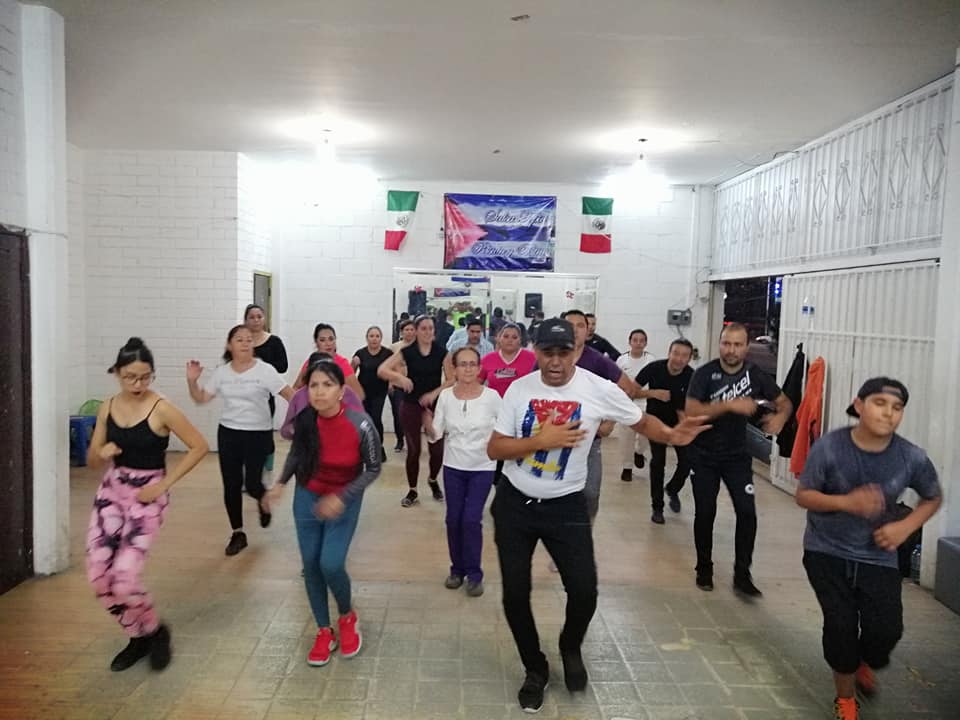
Thanks to personal motivation and the support of his students, he created and founded the Salsa Tepic Academy 6 years ago, he tells us that before founding his academy he gave dance classes at the Bar Juanes located at Rafael Buelna 86, Fray Junípero Serra, 63169 Tepic, Nayarit, Mexico; For him this was a hobby that he enjoyed very much and when he stopped working there, many of his students advised him to open a dance academy and that is how it came about.

Salsa Tepic Academy - Logo
Salsa Tepic Logo – Dance Academy


Practica de Salsa - Salsa Tepic
Estudiantes practicando pasos de baile en Salsa Tepic

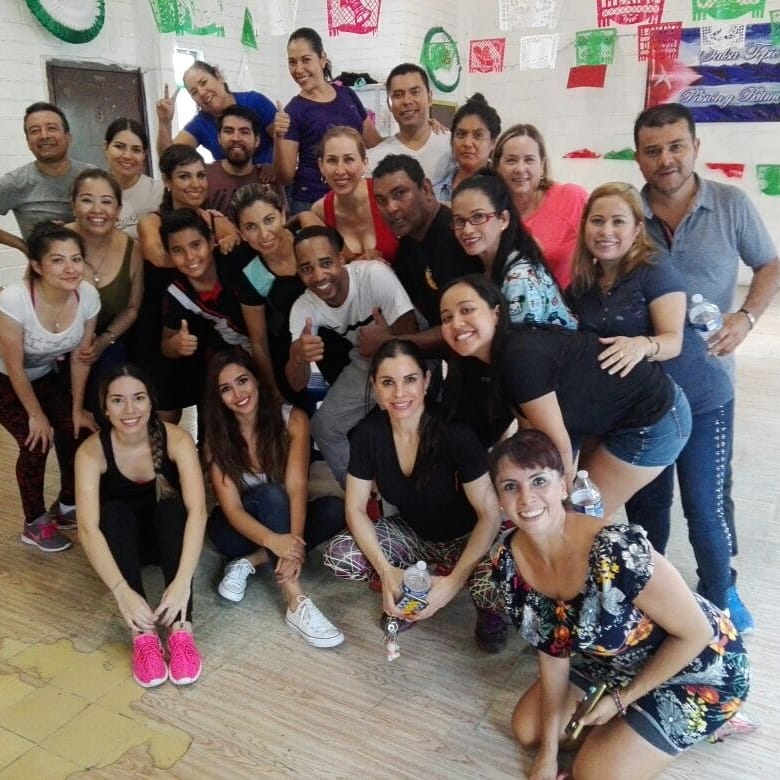
Estudiantes de la Academia Salsa Tepic
Photo of the Salsa Tepic Academy students

Son Cubano and Salsa Cubana are the genres that he likes the most, he mentions that each genre has an identification in each country and in Cuba he tells us that it is very lively and dynamic which can make different fusions such as Timba ( is the fusion of several Afro-Cuban rhythms)… giving this musical genre a lot of motivation, differentiating it from linear salsa, Salsa Neoyorquina and Salsa en Dos, but be careful, you have to know the differences between traditional Timba and Cuban Timba. and very broad cultural.Being Cuban, he tells us that music is in the blood of most Cubans, especially Afro-Caribbean music, and to top it off his parents enjoyed dancing so he spontaneously inherited this passion for dance from a very young age, and He perfected his native dance techniques in workshops with various teachers.

Rafael Reyes is also in charge of organizing the Salsa talent festivals in Nayarit, they have invited Guadalajara, Guaraguato, Puerto Bayarta, among others with new talents so that they have something more than just academic learning but a new experience through participation. and competition between the different students of each city, showing all their abilities on stage; In total, it has had 5 Salsa talent festivals, which one can find out when the next one will take place through the Salsa Tepic Facebook page.

Also the students of the Salsa Tepic academy have participated in other events such as the one that happened a few weeks ago at the Bar Tango Milonga, another event they participated was the Puerto Bayarta festival, and in other places.

The dance classes at the Salsa Tepic Academy are currently active, of course with the protection measures for the covid-19, they began to work from 7 – 10 am and from 5 to 10 pm Mexico time; There they teach Cuban Salsa, Bachata, Son Cubano, Rumba, Merengue, Cumbia, Cha Cha Cha, among other rhythms, so if you are interested in learning to dance from scratch or continue with the experience you have in order to be able to defend yourself during a social, competitions, parties and / or meetings, and at the same time that the students learn to identify the type of music that they dance respecting their respective times.

https://fb.watch/6q7Gdt89if/

And he leaves us the following message for all his readers, current and future students “Whatever happens, they dance, never stop, dance is very healthy, it takes away stress, it is motivational, it makes you more sociable and above all it is something that everyone likes when one learns … that they take off the taboo or the fear of saying I don’t like dancing because of any circumstance ”

For more information and the schedule of activities:

Roniel Alfonso Mella Music Producer, Orchestrator, Composer and Instrumentalist

Roniel Alfonso y Son del XXI Orchestra

Born on December 8, 1974 in the city of Matanzas-Cuba.

He enters in 1996 in the National School of Art (Ena) in, where he graduated in 2000 in the specialty of Guitar, Tres, and Ensemble Direction, in his student stage he was part of groups like Septeto Cohiba, Cuba Nueva, Conjunto Chapotin y sus Estrellas, Clave Cubana, Charanga Latina, etc.

In 2000 he was the founder of the Gardi Orchestra, of which he was its musical director, making several tours abroad with this orchestra and taking care of the musical direction of his first album ”Gardi” and the authorship of most of his songs.

In 2005 he participated in the prestigious contest of the Cuban TV Adolfo Guzman where he was 2nd prize in the category of dance music with a song that he orchestrated and produced, being interpreted by Joaquin More.

Roniel Alfonso Mella, Omara Portuondo y Aymee Nuviola

Later he joined the ranks of Haila María Mompie, being in charge of the musical direction of the band.

In 2006 he joined the Cuarteto Fusión with which he toured abroad for a long period of 4 years in countries such as Oman, Egypt, and Jordan.

In 2010 he returned to Cuba and made the musical production entitled Mala, Haila’s 5th album, which was awarded the Cuba Disco Award 2012, in the category of Latin music. At the same time, he returns to the orchestra and is once again in charge of the musical direction.

In 2011 he was in charge of the musical production of several artists, such as the Cuban singer Leoni Torres, 3rd album production of this, entitled “salseando” which was nominated for the Cuba Disco 2013 in the category of popular dance music and nominated for the Latin Grammy 2013 in tropical music, another production was the American percussionist Luis Carreras, entitled Luis Carreras and The Cuban Stars Project album that orchestrated and composed all his songs.

Roniel Alfonso and Son del XXI Orchestra Born on December 8, 1974 in the city of Matanzas-Cuba.
Roniel Alfonso Mella
Music Producer, Orchestrator, Composer and Instrumentalist

In 2012 he was part of the work team of composer and producer Descemer Bueno in his album “Bueno” which was awarded the “Cuba Disco Award 2013”, working frequently with him in numerous productions.

As a composer he has written songs for prestigious performers of our country such as Issac Delgado, Haila, Omara Portuondo, Leoni Torres, Aymee Nuviola, Yumuri, Alexander Abreu, Coco Freeman, Mario Rivera, Gardi, Calunga, Ricardo Amaray, Sixto Llorente, “El Indio”, Maykel Ante, Pedro Lugo “El Nene”, Wil Campa, Tania Pantoja, El Noro, Luna Manzanares, Hector Daniel, Alain Daniel, Rosaliz, Ruben y Gabi, Yai Valcarcel, Indira Hernández.

Internationals such as Jose Alberto “El Canario” (Dominican Republic), Dlg (USA), Ng2 (Puerto Rico), Willy Garcia (Colombia), Josimar (Peru), Septeto Acarey (Peru), Kewenaonda, David Kada (Dominican Republic), Nikki Alva (USA), Miguel Angel Caballero (Chile), Agustin Aspa (Spain), Orlando Max (Angola).

As a producer, he has collaborated with national and international artists.

Enrique Iglesias (Spain), Gilberto Santa Rosa (Puerto Rico), Jose Alberto ”El Canario” (Dominican Republic), Luis Enrique (Nicaragua), Olga Tañon (Puerto Rico), Dlg (USA), Ng2 (Puerto Rico), Willy Garcia (Colombia), Bebe (Spain), Nikki Alva (USA), Miguel Angel Caballero (Chile), Kewenaonda (Dominican Republic), Arturo Ortiz, Calle 7 (Puerto Rico), Septeto Acarey (Peru), David Kada (Dominican Republic), Luis Carreras (USA), Agustin Aspa (Spain), Orlando Max (Angola), Lalo Santos (Mexico) and Orly Solomon (Israel).

Roniel Alfonso Mella con Gilberto Santa Rosa

Nationals Omara Portuondo, Chucho Valdés, Gonzalo Rubalcaba, Aymee Nuviola, Grupo-Orichas, Leoni Torres, Descemer Bueno, Gente de Zona, Issac Delgado, Haila, Charanga Habanera, Alexander Abreu, Los Muñequitos de Matanzas, Mayito Rivera, Sixto Llorente, Yumuri, El Noro, Emilio Frías, Paulo Fg, El Nene, Septeto Santiaguero, Tania Pantoja, Coco Freeman, Alain Daniel, Wil Campa, Gardi, Ricardo Amaray, Calunga, Mandy Cantero, Roberton (Van Van), Maykel Ante, Luna Manzanares, Arlenys Rodríguez, Yenisel Valdés, Omi, Nelson Valdés, Yoyo Ibarra, Mayco de Alma, Héctor Daniel, Dayani Gutiérrez, Laritza Bacallao, Juan Guillermo, Rubén and Gabi, Alexis Zamora, Alain Pérez, Rosaliz, Eylen Remón, Yai Valcarcel, Beby Verdecia, Zunilda, Leo Garrido, Heydi Chapman, Trio d’ Ley, Mulatason, Insurrecto, Joaquín More, Karamba, Alisbet Reyes, Compañia de Danza “Rakatan Azúcar Negra, Patricio Amaro, Aíran Muñoz, Yani, Ángel Yos, Jose Luis Cortes, Osain del Monte, Son del Guaso, Orquesta Failde, Conga “Los Hoyos”, Lenny de la Rosa, Indira Hernandez, Liz Castillo, etc….

Achieving Hits such as “Idilio”, “Vivir Sin Ti”, Soledad (Leoni Torres)” Mala”, “Baila”, (Haila), “Si no Fuera por Ti”, Gardi, Lloro por ti, La Vida es Buena, Súbeme la Radio, Nos fuimos lejos, (Descemer Bueno).

In 2013 he started his own record production, entitled -Roniel Alfonso presents “Son del XXI”, this CD comes out under the label Egrem in 2016, nominated for the Cuba Disco 2017 in this is responsible for the musical production, orchestrations, and composition of each of the themes, the album that shows his vision of what would be the son of this XXI century, our purest and most traditional son, mixed with the new influences of this era. The album features performers such as Issac Delgado, Yumuri, Haila, Calunga, Mario Rivera, El Indio, El Nene, Wil Campa, El Noro, Alexander Abreu and Orlando Max (Angola) going deeper into his work as an orchestrator, using different orchestral formats, such as the Típica Orquesta Salsera, Jazz-Band, Grupo de Rumba and Septeto Tradicional.

In August 2014 he has invited Lucas to the gala offered in tribute to Formell to be in charge of the musical production of several themes of this great Cuban musician, with performers such as Laritza Bacallao, el Indio, el Noro, Dayani Gutiérrez, and el Niño.

In 2016 he collaborated in the 2nd edition of the television program sonando en Cuba where 3 songs of his authorship and 5 songs produced by him previously for other singers were interpreted, being interpreted this time by the contestants of this event.

In 2017 his song “Baila” sung this time by Haila and Alain Perez was the theme of the television program “Bailando en Cuba”.

In June 2017 he obtains the silver trophy (2nd place) at the International Music Festival “Viva la Música”‘ in the category original song, with his song “Que Locura” sung by Roberto Pulido, a Cuban singer based in Switzerland.

In 2018 under the record label Top Stopmusic is in charge of the musical production and all orchestrations of the CD AJourney Through Cuban Music of the great Cuban singer Aymee Nuviola, Grammy Awards Winner 2020 and nominated for the Grammy 2019 in the category of Best Traditional Tropical Album in which music stars such as Chucho Valdez were present, Gonzalo Rubalcaba, Omara Portuondo, Muñequitos de Matanzas, Septeto Santiaguero, Pancho Amat, Coto, Samuel Formell, Mario Rivera and his first single “Donde estabas anoche” was positioned at number 6 on the Billboard chart.

In March 2019 he has the honor of being accepted as a voting member of the Latin Academy of Laras Recordings (Grammy).
Grammy 2019 in the category of Best Tropical Traditional Album

In March 2019 he has the honor of being accepted as a voting member of the Latin Academy of Laras Recordings (Grammy).

On June 14, 2019, he founds his Orchestra “Son del XXI”, an orchestra that will have two objectives, to function by itself with its repertoire and its singers and also to continue accompanying the record productions to the many performers who request my work.

He is currently putting the final touches on his new production Roniel Alfonso y Son del XXI Orquesta, which will have national and international guests such as Jose Alberto “El Canario”, DLG, Septeto Acarey, Willy Garcia, Ng2, Nikki Alva, Aymee Nuviola, Leoni Torres, Issac Delgado, Haila, and will be released under the record label Puntilla Music based in Miami.

Alain Pérez invitado al Cd. Pa mi tres
Alain Pérez y Roniel Alfonso

He has worked in productions such as:

Sun and Soul (Canada)-2000

Carmen Flores (Babalu)

Latin Man Bobamba (Japan) 2000 Oasis Records

Helito George (Italy) (Simply My Way) 2002 Musical Production

Gardi “Gardi” 2003(Bis/Music) Musical Direction

Beby Verdecia “Montaña Mia” 2005 Colibrí

Issac Delgado “Prohibido” 2005 Luz Africa

Gardi “Lo que tu Querias” 2008 Egrem

Leo “Rodo de mi” 2009 / Egrem (Nominated Cuba Disco 2013)

Havana Heavy Hitters “Vestido de blanco” 2010

Haila 2011 “Mala” Bis Music (Cuba Disco Award 2012) music production

Luis Carreras (USA) 2012 8 y 5 Studios Music Production

Leoni Torres 2012 “Salseando” Egrem (Nominated Cuba Disco 2013) music production

Descemer Bueno “Bueno” Bis Music Emi 2012 (Cuba Disco Award 2013)

Zunilda “A mi tierra” 2012 Colibrí (Nominated Cuba Disco 2014)

Agustín Aspa (Spain) 2013 “De la Habana a Barcelona” Cuba Music Musical Production

Willie de Cuba” Prohibido” Italy) 2013

Luna Manzanares Egrem 2013

Eilen “Aquí estoy” 2014 Cuba Music

Gala Lucas “Tribute to Formell” 2014

Héctor Daniel “Alegría pa’ mi gente Cuba Music 2016-Music Production

Nelson Valdés and Leoni Torres “Tribute to Omara Portuondo” 2014 Bis Music

Omi (USA) 2014

Juan Guillermo Egrem 2015

Rosaliz “Dame Salsa” Egrem 2017 (Nominated-Cuba Disco 2018) Musical Production

Mulata Son “Mujer y Artista” Cuba Music 2017-Music Production

Issac Delgado” Made in Habana” Egrem 2016 (Nominated-Cuba Disco 2017)

Yoyo Ibarra “Tropical” Egrem 2017 Musical Production

Yai Valcarcel “Mi Esperanza” Yagruma S.A 2015

Miguel Herrera “Hoy quiero Fiesta (Sweden) 2017 Cuba Music and Egrem 2019 Music Production

Yenisel Seva “Romántica” (2016) Cuba Music Musical Production

Dance Company “Rakatan” 2016

Roberto Pulido “Mi locura” (Switzerland) 2016-2018 Music Production

Charles Manuel (Spain) 2017 Musical Production

Roniel Alfonso Presents “Son del XXI” Egrem 2017 (Nominated Cuba Disco 2017) Music Production

Gala “55 Aniversario del Icrt” 2017.

Miguel Ángel Caballero “Vista Fija” Blam Producciones 2017 Music Production

Kewenaonda “Arriésgate” (Dominican Republic) 2017-2020 Music Production

Enrique Iglesias Feat Gilberto Santa Rosa” Súbeme la radio” (Salsa) 2017 Music Production

Lalo Santos “Caribe 2018” (Mexico) (Mexico)

Azúcar Negra Egrem 2019

Patricio Amaro 2017 Musical Production

Haila” Canta a Armando Manzanero” Egrem 2018 (Cuba Disco Award of Honor 2019)

Grupo Orichas Feat. Luis Enrique” Sastre de tu Amor” (Salsa) 2018

Miguel Herrera (Sweden) 2018 Egrem Produccion Musical

Issac Delgado 2018

Descemer, Enrique Iglesias y Charanga Habanera “Nos fuimos lejos” (Salsa) 2018 Musical Production

Descemer, Enrique Iglesias y bebe-”nos fuimos lejos”(Acoustic) 2018 Musical Production

Leoni Torres “Amor bonito” Egrem 2019

Orquesta Failde y Omara “Homenaje a Benny” Egrem 2019 (Cuba Disco Award 2019)

Aymee Nuviola” Journey Through Cuban Music” Topstop Music 2019 Production Musical (Grammy Awards Winner 2020), (Latin Grammy Nominee 2019)

Nelson Valdés “Cubriendo Ausencias” Bis Music 2019 (Nominated-Cuba Disco 2019)

Leoni y Gente de Zona “Mejor sin ti” (Salsa) 2019 Music Production

Indira Hernández 2020 Music Production

Lenny de la Rosa 2020 Music Production

Yarima y Sabor Latino “Pa mi Tres” Egrem-Soundwear 2020 Musical Production

Leoni Torres “Deja la Tristeza” 2020 Music Production

Septeto Acarey ‘”Vamos a Pasarla Bien” 2021 Musical Production

Wil Campa “Zapato Nuevo” Egrem 2020 Music Production

Angel Yos Egrem 2020

Liz Castillo 2021 Bis Music Music Production

Gabriela 2021 (Denmark-Cuba) Music Production

Nesty-2021 (USA) Music Production

Kel-2021 Music Production

Cd Herederos (Tribute to Irakere) Egrem 2021

Roniel Alfonso and Son del XXI Orchestra 2021-Puntilla Music.

Orlando Valle, verdadero nombre del instrumentista "Maraca"
Orlando “Maraca” Valle y Roniel Alfonso

Facebook: Roniel Alfonso Mella

By: Diana Marie International Salsa Magazine Miami Correspondent

Salsa Superior
Salsa Superior Award
Diana Marie
Lady of Salsa 2021

International Salsa Magazine

Home

Fabián Rosales Araos Chilean singer-songwriter, native of the city of Valparaíso

With Santiago All Stars he recorded 2 albums leaving his voice captured in the songs Santiago de Fiesta, Forma la Rumba Sonero, Preparen Candela, Busca lo tuyo, Sabroso Guaguanco and more.

Chilean singer-songwriter, a native of the city of Valparaíso. He began his musical career at the age of 25, being part of salsa groups such as Latin Salsa, La Sandunguita, Trabuco Clásico and Santiago All-Stars.

With Santiago All Stars he recorded 2 albums leaving his voice in the songs Santiago de Fiesta, Forma la Rumba Sonero, Preparen Candela, Busca lo tuyo, Sabroso Guaguanco.
Fabián Rosales Araos Chilean singer-songwriter, native of the city of Valparaíso.

After achieving steady progress over the years, he decides in 2018 to jump into the limelight as a soloist recording solo his first production entitled “Ahora Si” leaving songs like Humo y Licor, Ahora Si, Tu Tiempo bailador, Buscando El Tumbao, Yo Vengo de aquí and more… All of them being original songs.

The production was made in Chile, Venezuela and Switzerland with great international collaborators. This album meant him to be nominated within the 5 best tropical productions of Chile for the Pulsar Awards of Chilean music.

In 2020 he released the single “A mí que me den la Salsa”, a composition of his own that has managed to position itself at No. 1 in the salsa ranking in the US, Puerto Rico and Europe.

In this year 2021, he surprises us with his most recent production titled “Como Suena mi Tambo”, a composition made by Fabian Rosales himself, with arrangements by Juan Rivadeneira, and where he has the collaboration of two great musicians from Puerto Rico such as Kachiro Thompson on Tumbadoras and Eliut Cintron on Trombone.

After achieving steady progress over the years, he decides in 2018 to jump into the limelight as a solo artist by recording his first solo production titled "Ahora Si
Fabián Rosales surprises us with his most recent production titled “Como suena mi Tambo” composition made by himself.

Fabian Rosales is currently nominated for the Awards to Excellence of the year 2021 in the category Salsero Singer of Excellence.

Follow on @FabianRosalesOficial #fabianrosales #comosuenamitambo #salsa

https://www.facebook.com/FabianRosalesOficial/

https://www.youtube.com/user/frosalestar/videos

Fabián Rosales Araos Cantautor chileno
Fabián Rosales is currently nominated for the 2021 Awards to Excellence in the Salsa Singer of Excellence category.

Valparaiso

Valparaíso is a city, commune and port of Chile, is the capital of the Province and Region of Valparaíso. Being also its historical, administrative, institutional and university center of the conurbation called Gran Valparaíso, which forms along with the communes of Viña del Mar, Quilpué, Villa Alemana and Concón.

According to the 2017 census, it has a population of close to 300,000 people, and if we include its conurbation, the Metropolitan Area of Valparaíso reaches 935,602 inhabitants, being the most populated in the region and the second city after Greater Santiago, together with Greater Concepción.

Valparaíso is the seat of the National Congress, the Command-in-Chief of the Chilean Navy and other national state institutions such as the Ministry of Culture, Arts and Heritage, the Undersecretary of Fisheries, Customs and Fisheries and Aquaculture. It is one of the busiest ports in Chile and one of the most important in the South Pacific.

According to the 2017 census, it has a population of close to 300,000 people, and if we include its conurbation, the Valparaíso Metropolitan Area reaches 935,602 inhabitants, being the most populated in the region and the second most populated city after Greater Santiago, together with Greater Concepción
Valparaíso is a city, commune and port of Chile, the capital of the Province and Region of Valparaíso.

The city is recognized for being a great center of higher education, since some of the most important universities in Chile are established, such as the Universidad de Valparaíso, Universidad Técnica Federico Santa María, Pontificia Universidad Católica de Valparaíso and Universidad de Playa Ancha.

Geographically, Valparaíso is presented in the form of a large natural amphitheater, located in the bay of the same name and surrounded by hills, where most of the population lives.

Between the foot of the hills and the sea is the Plan, the administrative, commercial and financial center of the city, while the port occupies the waterfront.

Due to its architectural wealth developed mainly in the late nineteenth century, in 2003 its historic center was declared a World Heritage Site by Unesco, becoming the third Chilean site protected by the international organization, after the Rapa Nui National Park and 16 churches in Chile.

Por: Erika Muñoz 

La Mulata RumberaErika Muñoz 

  “Se Armó la Rumba en México”

Correspondent de International Salsa Magazine

International Salsa Magazine

Home

Discover The Alternative To Dance Latin Music In Israel

Havana Music Club: An exclusive Cuban atmosphere in Tel Aviv

Man dressed in black dancing with woman in white top
The owners of Havana Music Club are the same as the legendary Arena club.

The number one Latin rhythm club in Israel, Havana Music Club, since August 2010 opens its doors every night. It serves as a different entertainment venue for loyal Salsa and Bachata lovers from this country located on the Asian continent.

This club has set a new standard in the Middle East that resembles the best Latin music clubs in Europe and North America specifically New York and Los Angeles but with a Cuban atmosphere. Additionally, it has an underground parking lot for approximately 250 vehicles and nearby side streets with free parking spaces.

Ten years and a resounding success led Havana Music Club to create Hula La in July 2019. This “Little Brother” is located next to the main headquarters and also meets the requirements of high quality in sound, lighting, and atmosphere with a space clean that houses hundreds of dancers in 1500 square meters of parquet, which allows you to fully enjoy the continuous music of the various DJs.

This club complex is located next to Ayalon Lanes at the Hashalom Interchange (Azrieli Towers), a 2-minute walk from Hashalom Train Station.

The next event that Havana Music Club will bring to the Latin scene in Israel in 2021 will be the Caramelo festival. This event will have workshops with a couple of top-level national and international artists in the Salsa and Bachata styles. In addition, you will enjoy three nights of crazy parties, as well as accommodation with three meals, and hot/cold drink bars at the Hotel Leonardo Club.

Date: Thursday, September 2nd – Saturday, September 4th

Venue: Leonardo Club Hotel. Kampen St, Eilat, Israel

PARTIES IN HAVANA MUSIC CLUB

Couple dancing in the middle of the dance floor
The club has a food menu served by waitresses with an additional charge to the price of admission.

Havana Music Club offers Latin parties with Salsa and Bachata instructions three days a week (Tuesdays, Thursdays, and Saturdays) from 9:00 PM to late at night, and you can start from the basic level up to the professional level.

You will start with a small warm-up lesson to continue with the Latin rhythm class of the moment you prefer in any of its levels, and end with the great dance party in the Havana Music Club and Hula La. Likewise; you can also opt for classes for small groups.

Among the courses that will open soon are:

Woman dressed in lilac and man in black shirt
The club is handicap accessible

Salsa Lady Style: This course is aimed at Salsa dancers that have an intermediate level or higher. Women interested in developing body movement, gaining confidence in dancing, developing their style, and technique.

In the Salsa Lady Style course, you will work on proper posture, turns, leg and handwork, body movement, hip work, and upper body.

Chat for beginners: These Bachata classes are designed for all levels. The objective is to give you the bases so that you enter the world of “chat” and give you the tools to enjoy the dance that is conquering Israel.

Sabor de Cuba – Master’s Level: The course is taught by Lear Shoshani & Moti Sabag, one of the oldest and most prominent Afro-Cuban Salsa instructors in the country. In these lessons, they will teach the essentials of the music of this Caribbean island from its origins and emphasizing the Son, Rumba, and Afro-Cuban Mambo to dance more in tune with the music.

Salsa and Cha Instructor Training: Havana Music Club’s most prestigious course to attract future instructors from the Salsa and Bachata scene in this Middle Eastern country. This course includes general instruction, safety before a captive audience, dance basics, instructional experience, and various enrichment lessons in the field of rhythm, style, and musical history of these styles that mark the development of the night scene of this decade.

Maybe This Data Also Interests You

Dancers in the middle of a dance pass
Havana Music Club is an exclusive Cuban atmosphere in Tel Aviv
  1. There are 3 different rooms in the club: Central Room with capacity for 300 people seated or 850 people standing, Secondary room “Hula La”, and VIP Room with 90 square meters to accommodate from 20 to 50 guests.
  2. Smoking is prohibited within the club’s facilities.
  3. It is also strictly forbidden to bring any kind of drink. (Includes water)
  4. Havana Music Club offers live local bands’ performances.
  5. If you bought the ticket for a concert, I recommend you arrive at the opening of the doors to choose seats because the places are not separated.
  6. In general, the price online is cheaper than the one paid at the box office.
  7. Two other courses that will soon be offered are Mixed Style Lady Style and Salsa del Medio.
  8. Among the DJs that currently display their sets with the best mix of Latin music are DJ Charlie Pérez, DJ Nadav Shamgar (DJ NASH), DJ Moti, DJ Paco, and DJ Tzachi Bachar.
  9. According to the Israeli Ministry of Health guidelines, the number of people who spend time in the club should be limited. Attendees must present a vaccination or “in recovery” card plus an identification card.

SalsaGoogle.com is International Salsa Magazine


Home

Flashback: Arturo “Chico” O’Farrill

The Architect Of Afro-Cuban Jazz

Arturo "Chico" O'farrill with reading glasses and sitting
In memory of the 20 years of his physical disappearance

Arturo O’Farrill, better known as “Chico” O’Farrill was born on October 28, 1921, in Havana (Cuba) at the height of Son. He had a normal childhood like any son of a Jewish family raised to continue the family profession, Law.

In the 1930s Chico was admitted to the Riverside American Military School in Gainesville, Georgia. His father, an eminent Irish lawyer recognized in the Afro-Caribbean country, decided to intern him to continue his studies.

During his stay at that institution, O’Farrill discovered the great jazz orchestras that made life in that territory. Those bands were known by the name of Big Bands. He entered that musical environment and began his process of love and passion for the industry. He listened to recordings by Benny Goodman, Artie Shaw, Glenn Miller, and Tommy Dorsey while learning to play the trumpet on his own. In almost immediate time Chico became the trumpet player for the school’s military band and large dance groups.

Years later, Arturo returned to Cuba. He studied the same profession as his father (Law) and at the same time with his studies, he developed his facet as a composer. He received composition and harmony classes from important island musical instructors such as Félix Guerrero.

His progress, determination, and development in music were unstoppable. He was a member of the Armando Romeu Bellamar Orchestra and the Isidro Pérez Orchestra at the time of Mambo and Son, rhythms that prevailed and enhanced Latin music for decades.

MUSICAL HISTORY

Arturo "Chico" O'Farrill seated and in black and white
Chico O’Farrill dabbled in rock

“The Architect of Afro-Cuban Jazz” worked for four years (1943 – 1947) in Montmartre, the Cuban cabaret with the greatest French style. In the same way, he belonged to the Bellamar Orchestra, directed by Armando Romeu with Luis and Pucho Escalante, and Mario Romeu, among many other members.

As a trumpeter, Arturo traveled to Mexico and Europe. He created Los Raqueteros del Swing band, being the director and member of the orchestra. Subsequently, he founded Los Beboppers (the first Cuban bop group) with continuous performances at the Hotel Saratoga. Here, Chico was once again at the helm as director of the band and musician with his related instrument, the trumpet.

In the 1950s he began his successes as an arranger, working briefly for various musical directors such as Gil Fuller, Noro Morales, Frank “Machito” Grillo, and Benny Goodman.

Likewise, he composed his first masterpiece, Afro-Cuban Jazz Suite in five movements: Canción, Mambo, 6/8, Jazz, and Rumba Open. This masterpiece of composition was made and recorded for the imprint of the businessman Norman Granz, with the Machito Orchestra as the rhythmic base and accompanist.

The expert comments on Afro-Cuban Jazz Suite were numerous, but here are two of the most outstanding opinions:

Luc Delannoy: “It begins and ends with a hypnotic flute and conga duo that reflects the essence of Cuban treatment; the union of musical universes: the European (the flute) and the African (the conga). These two instruments are joined by the oboe, followed by the trumpets, saxophones, and the double bass “Tumbao”… After a return to swing and bebop in the fourth movement, Chico takes us back to the origins of Latin jazz with a melody of clear Arabic accents, before immersing himself in the universe of Afro-Cuban percussions.”

And Benny Carter commented on the Afro-Cuban Jazz Suite the following: “The reason for the coherence of the rhythmic parts and their relationships with the solos that have their own life and independence, Masterpiece of a genius.”

Arturo "Chico" O'farrill dressed in black and with a red background
His last album was Heart Of A Legend

After the enormous success of this powerful piece of music, O’Farrill wrote Cuban Fantasy for Stan Kenton during his stay in New York (EE.UU). However, Kenton eventually changed the name of the piece and it was called the Cuban Episode.

In 1953 he moved from New York to the California state and founded his orchestra with renowned musicians such as Mario Bauzá, Doug Mettome, Jimmy Nottingham, Eddie Bert, Fred Zito, Lenny Hambro, Flip Phillips, and the saxophonist Eddie Wasserman. The orchestra used the Afro-Cuban rhythmic section of Machito, harp, and oboe.

Under this concept, he recorded for Norman Granz and performed in two emblematic venues of the American Jazz music scene: Birdland (New York) and Hat Ballroom located in Los Angeles, California. During this period he composed three new movements: “La Jungla”, “Contrast”, and “Rhumba Finale”, baptized as “Manteca Suite”. The latter recorded in 1954 with Jazzist Dizzy Gillespie and an orchestra with 21 talented musicians.

In 1956 he returned to Cuba in search of inspiration and immediately began to work for the best record companies such as Panart and RCA Víctor. In this record label, he made “Chico’s Cha-Cha-Cha”, adapting the Charanga rhythm to the Big band format. This album was released, once again, on compact disc by BMG during the last decade of the 20th century.

Two years later the restless O’Farrill traveled to Mexico due to the great platform that this country provided for Latin American musicians at the time. During that residency, he once again stood out with a special sound. He appears on television as music director for singer Andy Russell, and there his life takes a dizzying turn. He started the semi-retirement period but never stopped composing. By that time, he composed his next and one of his greatest works “Azteca Suite” for trumpeter Art Farmer. And he made history once again!

In the 60s and with the rise of rock, Chico returned to New York and made arrangements for such important figures as La Lupe (They Call Me La Lupe); Cal Tjader (Along with Comes Cal); Count Basie (High Voltage); Gato Barbieri (Chapter Three: Viva Emiliano Zapata); Ringo Starr (Night and Day) and dabbled in Rock music with David Bowie (I Know That It Will Happen and Looking for Lester) and finally was the director of the Venezuelan Aldemaro Romero’s Orchestra.

In this stage that lasted until the end of the 20th century and already in the 70s, the Big bands went from being an innovation to being displaced by other rhythms that were rapidly increasing in popularity. These genres used new techniques, styles, sounds, and harmonies. It led to the appearance of icons in Jazz and the disappearance of the exclusive Bing bands for ballroom dancing.

For this reason, Chico O’Farrill reinvents himself and begins to work in the lucrative field of music for audiovisual advertising.

Arturo "Chico" O'farrill in black and white
Pure Emotion album earned a Grammy Award nomination for Best Latin Jazz Performance

In the mid-nineties, American Jazz producer and director Todd Barkan contacted the “Afro-Cuban Jazz Architect” to pay tribute to his career with a compilation of his musical hits. The name of the album was Pure Emotion and it got a nomination for Best Latin Jazz Performance at the 37th Grammy Awards.

O’Farrill toured Europe with his orchestra in 1996 and recorded his latest album entitled “Heart Of A Legend” with 14 tracks.

For this album, they had an orchestra of 18 musicians and a collaboration of international artists. The arrangements and musical direction of “Heart Of A Legend” were in charge of his son Arturo O’Farrill Jr. and who continues with his legacy.

On June 29, 2001, at 80 years old in New York City, Arturo “Chico” O’Farrill passed away.

Undoubtedly, Chico O’Farrill was always a visionary, and he was at the forefront for more than half a century of the musical genre today recognized worldwide as Latin Jazz.

In memory of the 20 years of his physical disappearance

Arturo “Chico” O’Farrill Forever!

SalsaGoogle.com is International Salsa Magazine

Home

  • « Go to Previous Page
  • Page 1
  • Interim pages omitted …
  • Page 39
  • Page 40
  • Page 41
  • Page 42
  • Page 43
  • Interim pages omitted …
  • Page 48
  • Go to Next Page »

International Salsa Magazine (ISM) is a monthly publication about Salsa activities around the world, that has been publishing since 2007. It is a world network of volunteers coordinated by ISM Magazine. We are working to strengthen all the events by working together.