• Skip to primary navigation
  • Skip to main content

International Salsa Magazine

  • HOME
  • Previous editions
    • 2026
      • ISM / May 2026
      • ISM / April 2026
      • ISM / March 2026
      • ISM / February 2026
      • ISM / January 2026
    • 2025
      • ISM / December 2025
      • ISM / November 2025
      • ISM / October 2025
      • ISM / September 2025
      • ISM / August 2025
      • ISM / July 2025
      • ISM / June 2025
      • ISM / May2025
      • ISM / April 2025
      • ISM / March 2025
      • ISM / February 2025
      • ISM / January 2025
    • 2024
      • ISM / December 2024
      • ISM / November 2024
      • ISM / October 2024
      • ISM / September 2024
      • ISM / August 2024
      • ISM / July 2024
      • ISM / June 2024
      • ISM / May 2024
      • ISM / April 2024
      • ISM / March 2024
      • ISM / February 2024
      • ISM / January 2024
    • 2023
      • ISM / December 2023
      • ISM / November 2023
      • ISM / October 2023
      • ISM – September 2023
      • ISM – August 2023
      • ISM July 2023
      • ISM Edition June 2023
      • ISM – May 2023
      • ISM April 2023
      • ISM March 2023
      • ISM February 2023
      • ISM January 2023
    • 2022
      • ISM December 2022
      • ISM November 2022
      • ISM October 2022
      • ISM September 2022
      • ISM August 2022
      • ISM July 2022
      • ISM June 2022
      • ISM May 2022
      • ISM February 2022
      • ISM January 2022
    • 2021
      • ISM December 2021
      • ISM November 2021
      • ISM October – 2021
      • ISM September 2021
      • ISM August 2021
      • ISM July 2021
      • ISM May 2021
      • ISM April 2021
      • ISM June 2021
      • ISM March 2021
      • ISM February 2021
      • ISM January 2021
    • 2020
      • ISM December 2020
      • ISM November 2020
      • ISM October 2020
      • ISM September 2020
      • ISM August 2020
      • ISM July 2020
      • ISM June 2020
      • ISM May 2020
      • ISM April 2020
      • ISM March 2020
      • ISM February 2020
      • ISM January 2020
    • 2019
      • ISM December 2019
      • ISM November 2019
      • ISM October 2019
      • ISM Septembre 2019
      • ISM August 2019
      • ISM July 2019
      • ISM June 2019
    • 2016
      • ISM December 2016
      • ISM November 2016
  • Spanish
  • Download Salsa App
    • Android
    • Apple

Search Results for: Salsa Fest

ISM: Carine and Rafael, 8th World Salsa Champions

Meet the dance representatives of Brazil:

Carine and Rafael, 8th World Salsa Champions

Brazil, the country known for its tropics and its excellence in dancing Samba worldwide, especially dancing in popular festivals and its carnival every year, but that’s not all, at the level of salsa rhythm we have 2 important representatives that we were able to interview in This month, which are: Carine Morais and Rafael Barros, are great salsa dancers who represented their country in a great variety of dance competitions, where they became the Salsa champions 8 times in a row, these competitions are the that they conquered:

  1. World Salsa Open Brasil (2009/2010)
  2. Rey Castro Salsa Competition (2010/2011)
  3. World Salsa Open / Puerto Rico (2010, 2012, 2013)
  4. Six Degrees / Toronto (2012)
  5. World Latin Dance Cup / USA (2013, 2014, 2016)
  6. World Salsa Championship / USA (2016)

Each of them has its story, where we will start with:

Rafael Barros:

Photo by Rafael Barros
Photo – Rafael Barros

Who was born in Fortaleza, Ceará, Fortaleza, Brazil; He tells us that he liked dancing from a very young age and practiced thanks to family festivals and from the age of 14 he decided to enter a dance school to improve himself and have more contact with this art, resulting in Forró already teaching at 18 , Samba, Bolero and other rhythms. His first contact with salsa took place in 2004 through a study group: the Salseira Rebellion.

Starting in 2005, she made her first trip to the São Paulo capital with the group she was part of to study and perform in one of the most important dance congresses in the country at that time: the Latin Culture Week. Two years later, he moved to São Paulo to join Cia. Phoenix and, at age 21, was third at the Salsa Open Brasil.

Carine Morais:

Photo by Carine Morais
Carine Morais – Photo

She was also born in Fortaleza, Ceará, Brazil, dance was part of her life since she was a child since she enjoyed it as if it were a game, at the age of 13 she began her ballroom dance studies and a year later already She was teaching as a teacher, and in 2003 she traveled with a dance group to Spain where she participated in two seasons of a Brazilian music show.However, her first direct contact with Salsa took place in a study group in Ceará and had a Paulo Burracha as his first partner; As time passed, he acquired quality, ingenuity and dedication which began to attract attention and from 2006 Carine traveled to Rio de Janeiro by invitation to improve her samba de gafieira and funkeado, but she always continued studying and training in salsa and in 2007 she won with his partner Paulo Burracha the Brazilian stage of the Salsa Open.

In September 2008, she began her victorious partnership with Rafael Barros and together they won 8 world titles, in addition to becoming one of the greatest references in world dance, Carine Morais, along with her new partner Rafael Barros, who have already traveled to more than 35 countries with the aim of teaching and acting. Not to mention the various invitations to be a judge at the main world dance championships and the various participations in television programs.

Carine Morais hanging out with Rafael Barros
On stage Carine Morais going around with Rafael Barros

For almost 12 years of collaboration between Rafael and Carine, they emphasize that it is not only about perfecting the technique and musicality in dance but also its harmony. And they did not remain in being professional dancers, but they are also professors and choreographers in demand in various congresses nationally and internationally, reaching more than 300 participations in congresses distributed in more than 35 countries, among them are: Argentina, Italy, Guatemala, Uruguay , Chile, Australia, Portugal, Venezuela, Colombia, Mexico, Peru, Suriname, Puerto Rico, Canada, Turkey, India, Panama, Bolivia, Costa Rica, China, Canary Islands, Thailand, Spain, Lebanon, Ecuador, Bulgaria, Austria, Singapore, the United States, Germany, France, Greece and Switzerland; And these not only stay there, it is worth mentioning that they have had numerous participations in television programs, both entertainment and journalistic, in Brazilian and international stations, among them: TV Globo Fantástico, Encontro com Fátima Bernardes, Globo Esporte, Programa do Jô , Rede Record, among other outstanding appearances.

Carine and Rafael 8th championships
Flyer of Carine and Rafael 8th championships

For almost five years they maintained the Carine & Rafael Dance School unit in São Paulo, Brazil, which ended its activities in 2020 due to the Covid 19 pandemic, but since April 2021 they began to give online and face-to-face classes in compliance with the measures of security. They comment that for seven years they have been organizers of the largest Brazilian championship and ballroom dance project: the Brasil Latin Open, which you can have more information through on their Facebook and Instagram page through @brasillatinopen.

Thanks to this great feat that this dance couple did, they have placed Brazil at the center of the World Salsa, making Brazil a very important country regarding ballroom dancing.

If you want to contact these great artists, you can do so through:

  • WebSite: https://www.carineyrafael.com
  • Facebook e Instagram: @carineyrafael
  • Twitter: @Carineerafael
  • YouTube: https://www.youtube.com/channel/UCDUg6yjWAfxzar7v5zWnlcA?view_as=subscriber

Home

Enjoy Salsa In The New Zealand Winter

With Hanmer Salsa Winter Fest 2021

The longest and continuous annual event of Afro-Caribbean music in New Zealand since 1995 brings this year dancers from all over the country for you to enjoy moving to the rhythm of Salsa, Bachata, Merengue, Cha-Cha, Kizomba, and Zouk in the snow. Join this festival even if you are a dance professional or a beginner, you will always have something that suits you.

Hanmer Salsa Winter Fest 2021 is an event for the whole family!

Couple dancing at Hanmer Salsa Winter Fest 2021
Latin Party Ticket (Online): $30 or $40 at the door

According to the authorities, New Zealand continues in the Level 2 category concerning the Covid-19 pandemic, which means that dancing as a couple is allowed as part of active recreation and is classified as a sport.

At alert level 2, the contact is possible:

  • Keeping track of peers
  • Constant hygiene of hands and surfaces
  • Using the masks (Optional)
  • Also, you can dance with only one partner if you choose not to be part of the rotation. (Swapping pairs in classes)

This year Hanmer Salsa Winter Fest presents ten Workshops:

Greydis (Cuba) dancing in the hanmer Salsa
Instructor for Salsa workshops: Greydis (Cuba)

Afro-Cuban – Palo: Recommended for all those who want to learn the Afro-Cuban roots. It is open to all levels. (Palo Monte belongs to the West African region of the Congo and is part of the Bantú religion).

Cuban Salsa Casino Partnerwork & Rueda Intro: The Cuban style will be worked in pairs and Rueda. In the Rueda style, a man (leader) turns instructions, and everyone executes the specific movements while exchanging pairs. Level: Intermediate. Duration: 60 minutes.

Afro Cuban – Oggun: This workshop will be held on Saturday at 10 AM, and that is ideal to continue learning about Afro-Cuban roots. Dancers of any level can access it. (Oggun: is a god of the Yoruba religion).

The Cuban Salsa Shines: It is recommended for dancers of intermediate and advanced levels. Here you will improve your footwork in the Cuban style.

Cuban Salsa Casino Partnerwork & Rueda: Workshop dedicated to improving your dance technique as a couple and in Rueda. If you have not practiced it for years, I recommend doing the  Cuban SalsaCasino Partnerwork & Rueda Intro workshop first.

In addition to these five Salsa workshops, you can also learn to dance Kizomba and Bachata. The Bachata workshops include partner work and mergers with Sensual Bachata, while the kizomba workshops will be focused on improving transitions.

​​Maybe You Would Like To Read: 7 Signs That You Should Attend A Festival

On Friday night, the Salsa parties and other Latin rhythms begin on a large dance floor and with an incredible sound system. The DJs in charge will be DJ Reuben and DJ Dave. Time: 9 PM – 12 AM. During this party, at approximately 10:30 PM, the dance animation will enter. A fun solo dance style like Zumba. Get ready to have fun and meet new friends here.

Information to access the Hanmer Salsa Winter Fest

For the first day, you must arrive 5 to 15 minutes earlier than the stipulated time to obtain the bracelet that will guarantee your priority entry to any of the workshops.

If you are one of those with a single entry, don’t worry, you can access the class if any member of the full access entries is not on time. Payment will be made on the same day of the workshop.

There is no set limit for people to enter for the late-night Latin parties. The passes will be available online until a week before the event.

Date: Friday, August 27th – Saturday, August 28th

Address: Hanmer Memorial Hall. 1 Jollies Pass Rd, Hanmer Springs. New Zealand

These Data May Interest You:

Thermal pool with snow around
In Hanmer Spring, you can enjoy the snow while relaxing in the thermal pools
  1. Hanmer Springs is a small town in the Canterbury region of the South Island of New Zealand. Winter in this country runs from June to August.
  2. At this premier alpine spa destination in New Zealand, you will find a complex of Thermal Pools, as well as new pools, and incredible attractions.
  3. Taking a bus or driving is recommended if you want to save a little. It is an average trip of 1.5 to 2 hours.
  4. Hanmer Springs Village is located a 90-minute drive from Christchurch International Airport. If you want to take the tour, you will travel through the hills of the wine country, the rugged coastal route, and the picturesque mountain pass, if you come from the west coast.

Home

2nd Annual Bay Area Latin Jazz Festival brings news

Castro Valley will be the scene of the best jazz event you can find

After so many months of confinement due to the pandemic, which has ravaged the world, Castro Valley, California, will become the scene of a spectacular event that will make jazz and music lovers in general very happy. It turns out that, later this month, the second edition of the Annual Bay Area Latin Jazz Festival will take place, whose surprises will blow attendees out of water. 

This is the logo of the Bay Area Latin Jazz Festival
The logo of the Bay Area Latin Jazz Festival

In this new edition, the event is expected to be an important contribution to jazz as a musical genre, but it will not be the only musical style that attendees will enjoy, as organizers have made every effort to make the festival as varied and diverse as possible. This means that there is a planned special emphasis on the Latin American and Caribbean influences that have made this genre what we know today, so the mixture of cultures that will be present there will be unbelievable. 

The space destined for sales positions and counters will include businesses, food sales, handicrafts, community organizations, among many other things. However, the main attraction will be the great group of artists who have been invited to the Annual Bay Area Latin Jazz Festival, among which we can include Oscar Hernandez and his quintet Alma Libre, Bobi Cespedes, Carlos Rosario, Ricky’s Grupo Afro-Nativo, Rene Escovedo Latin Jazz Ensemble and much more. In addition, the festival will be attended by broadcaster Luis Medina, who kindly spoke with us and provided us with all this valuable information. 

Mr. Medina from KPFA Radio’s Con Sabor and WorldSalsaRadio.com’s Sabiduria Con Tumbao will be the master of ceremonies for the event and DJ during breaks, which will allow those who attend to see Luis in one of his most exciting musical facets. 

This is Luis Medina
Luis Medina, Master Of Ceremonies, DJ and musicologist

Montuno Productions and its role in this

Montuno Productions will be the entertainment services provider that will organize this great festival, which guarantees that it will be a success. It must be remembered that this corporation specializes in offering all kinds of services related to Latin music, including promotion, marketing, representation of artists of various genres, assistance in obtaining tickets, website creation and many other things. Without a doubt, this provider is highly reliable and respected in the industry, so it is a fact that its work will not disappoint. 

One of the great achievements of Montuno Productions in this time has been the coming together of local small businesses, community organizations and music lovers in one place to create a positive contribution to arts, economy and culture. Benefits to the community, attendees and music lovers will be incalculable. 

As for the place, this Latin jazz festival is expected to take place at Rowell Ranch, Castro Valley, California. It is a lovely area surrounded by hills whose access by motorway is quite easy for those who wish to go by car. The place is quite accessible for those coming from Livermore, Dublin and Pleasanton. Those coming from Hayward can be there in just 10 minutes.   

With respect to entry costs, this event is a very economical option for those who do not want to spend too much, but want to have a lot of fun. General admission has a value of $30, but can amount to $35 for those who bring their vehicle.   


Stage at the Bay Area Latin Jazz Festival
Stage at the Bay Area Latin Jazz Festival in the last edition

Link to the event’s website: https://www.facebook.com/events/rowell-ranch/2nd-annual-bay-area-latin-jazz-festival/595551574740975/  


Cost of tickets:  

General admission: $30  

Parking: $5


Home    

Wherever a musician lives, Salsa Superior will arrive.

International Salsa Magazine and its Miami Correspondent Diana Marie present Richard Román one of the most recognized and respected announcers of Salsa Dura on On-Line Radio in Miami.

His name is Ricardo Román Zapata; he has 40 years as a show promoter, 26 years as producer and host of his Superior Salsa Program in Miami.

As a promoter began in a series of events in Ventanilla Beach in 1981, his activities were known in Lima and Callao, so much so that Dr. Luis Delgado Aparicio came to my place in Ventanilla and made a program of Maestra Vida in which he gave me a plaque with the logo of Channel 9 Television and the name of Dr. Delgado Aparicio. Delgado Aparicio in 1984, in the years 1986 and 1988 I organized the First and Second Festival of Salsa Playa de Ventanilla where Orchestras of Lia and Callao participated with unpublished songs in lyrics and music.

Richard Román says Wherever a Musician Lives, Salsa Superior arrives

The winner in 1986 was Carlos Orozco y La Fragua with the theme “ESTAS LLORANDO” of the authorship of Carlos Orozco in tribute to Chabuca Granda, in 1988 the winner was El Combo Espectáculo Creación with the song “CONVERSEMOS” by Ricky Tosso, in homage to the problem of the Petisos (street children), in 1995 I started the Salsa Superior Program in Ventanilla Estéreo FM.

Wherever a Musician Lives, Salsa Superior will Arrive
His name is Ricardo Román Zapata

In 1997 I moved to Radio Pirata FM del Callao, in 2007 we started transmitting via www. radiosalsasuperior.com to date, in 2015 we started the delivery of plaques of recognition to musicians, composers and personalities of music in Peru, United States, Puerto Rico, Dominican Republic, Colombia, Venezuela, Ecuador, Cuba, Panama and our motto is “WHERE A MUSICIAN LIVES THERE WILL COME SALSA SUPERIOR”, The particularity of the plates is that in all this our National Flag, highlighting our beloved country and its people.

The District of Ventanilla

It is one of the seven districts that make up the constitutional province of Callao in Peru. It is the largest of them and the second in population.

It has gone through a process of economic, social, cultural, political, and urban changes, mostly unplanned, presenting itself as a district with a mostly poor population, territorially disjointed, disorderly, with worrying levels of environmental pollution and that has grown at rates that have exceeded the capacity of local management.

Ventanilla
The District of Ventanilla
It is one of the seven districts that make up the constitutional province of Callao in Peru.

Chimpùn Callao

Callao is a port city located in the constitutional province of Callao, in central-western Peru and in turn on the central coast of the Peruvian coast and in the central-western part of South America. It has the Pacific Ocean to the west and 15 kilometers to the east the Historic Center of Lima.

Most of its territory extends in a wide bay protected by the islands of San Lorenzo, El Frontón, Cavinzas, and the Redondo islet, south of the mouth of the Rímac River, but also reaches the northernmost part of the bay of Lima.

Both bays are separated by a peninsula known as La Punta. It covers an area of 148.57 km², including 17.63 km² of islands. It is located 5 meters above sea level.

Since colonial times, the port of Callao has been the largest seaport, the most important in Peru, and one of the most important in America.

ERMOZO BALENARIO LA PUNTA CALLAO – LIMA
Chipum Callao
Callao is a port city located in the constitutional province of Callao, in central-western Peru.

Today it is the main port of the country and the Jorge Chávez International Airport, making it the main gateway to Peru. These in turn are the ‘natural’ port and airport of the city of Lima.

In terms of population, Callao is the third-largest city in the country, with more than 1 million inhabitants (only behind Lima and Arequipa).

It has a floating population of approximately 500,000 inhabitants who visit daily for family, tourist, educational and business reasons, among others. Callao has always had the privilege of receiving military visitors, especially sailors, merchants, immigrants, tourists, and other types of social currents.

Richard Roman
.Jimmy Delgado, Heriberto Rios, Mauricio Smith Jr, Luis J Cruz, Jorge Leureyro, Roberto Rodriguez Jr.. Luis Mangual, Clara Colon, José Luis Mangual Jr., Leopoldo Pineda, Lewis Kahn, Bomberito Zarzuela, Richard Roman de Salsa Superior y Nicolas Condor

Salsa Superior Radio (Live)

Facebook: Richard Roman

Article of Interest: Ralph Irrizary, a well-known percussionist, is considered one of the most “Swing” timbaleros in the world.

Home

Meet the director of the Academia Salsa Tepic – Mexico.

The history of Salsa Tepic :

Rafael Reyes is a Cuban who was dedicated to being a coach of Greco-Roman wrestling and Olympic Wrestling in Cuba and had the opportunity to work in Mexico in this profession during the time that his contract imposed, during this time he made the decision to live there , being his current stay in Nayarit, Mexico.

Thanks to personal motivation and the support of his students, he created and founded the Salsa Tepic Academy 6 years ago, he tells us that before founding his academy he gave dance classes at the Bar Juanes located at Rafael Buelna 86, Fray Junípero Serra, 63169 Tepic, Nayarit, Mexico; For him this was a hobby that he enjoyed very much and when he stopped working there, many of his students advised him to open a dance academy and that is how it came about.

Salsa Tepic Academy - Logo
Salsa Tepic Logo – Dance Academy


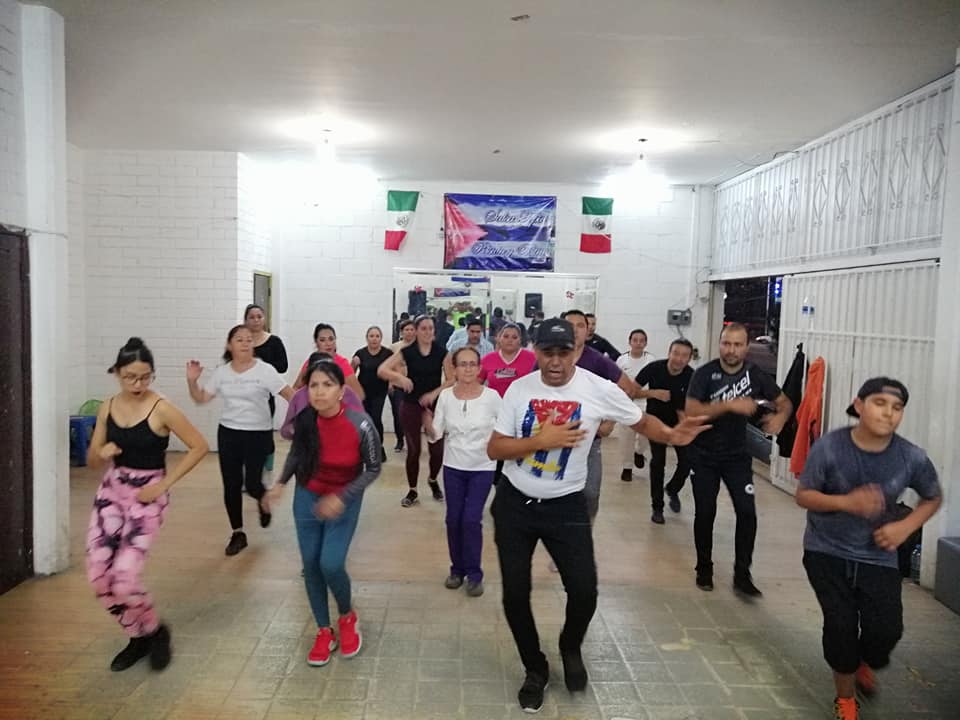
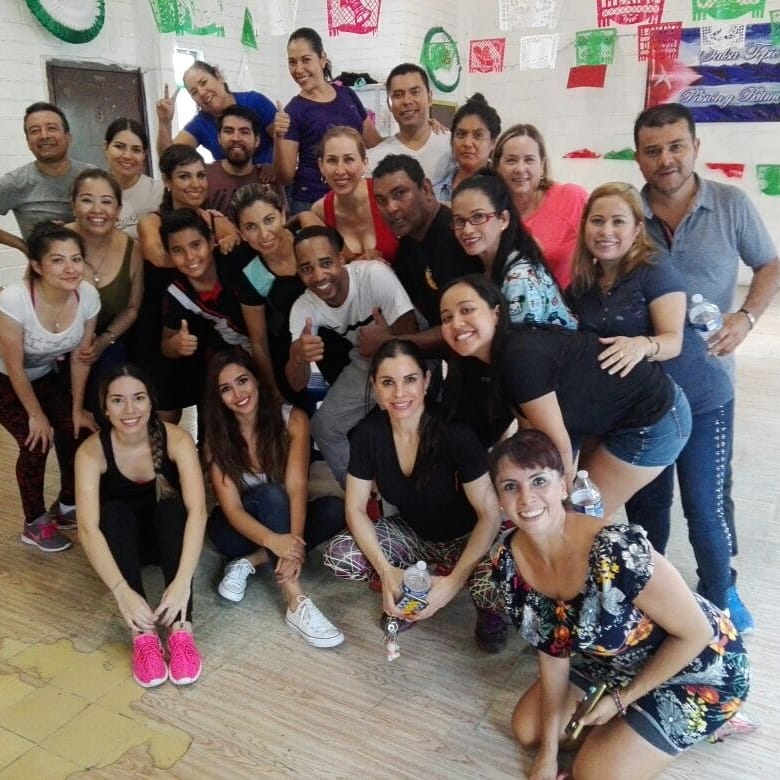
Practica de Salsa - Salsa Tepic
Estudiantes practicando pasos de baile en Salsa Tepic

Estudiantes de la Academia Salsa Tepic
Photo of the Salsa Tepic Academy students

Son Cubano and Salsa Cubana are the genres that he likes the most, he mentions that each genre has an identification in each country and in Cuba he tells us that it is very lively and dynamic which can make different fusions such as Timba ( is the fusion of several Afro-Cuban rhythms)… giving this musical genre a lot of motivation, differentiating it from linear salsa, Salsa Neoyorquina and Salsa en Dos, but be careful, you have to know the differences between traditional Timba and Cuban Timba. and very broad cultural.Being Cuban, he tells us that music is in the blood of most Cubans, especially Afro-Caribbean music, and to top it off his parents enjoyed dancing so he spontaneously inherited this passion for dance from a very young age, and He perfected his native dance techniques in workshops with various teachers.

Rafael Reyes is also in charge of organizing the Salsa talent festivals in Nayarit, they have invited Guadalajara, Guaraguato, Puerto Bayarta, among others with new talents so that they have something more than just academic learning but a new experience through participation. and competition between the different students of each city, showing all their abilities on stage; In total, it has had 5 Salsa talent festivals, which one can find out when the next one will take place through the Salsa Tepic Facebook page.

Also the students of the Salsa Tepic academy have participated in other events such as the one that happened a few weeks ago at the Bar Tango Milonga, another event they participated was the Puerto Bayarta festival, and in other places.

The dance classes at the Salsa Tepic Academy are currently active, of course with the protection measures for the covid-19, they began to work from 7 – 10 am and from 5 to 10 pm Mexico time; There they teach Cuban Salsa, Bachata, Son Cubano, Rumba, Merengue, Cumbia, Cha Cha Cha, among other rhythms, so if you are interested in learning to dance from scratch or continue with the experience you have in order to be able to defend yourself during a social, competitions, parties and / or meetings, and at the same time that the students learn to identify the type of music that they dance respecting their respective times.

https://fb.watch/6q7Gdt89if/

And he leaves us the following message for all his readers, current and future students “Whatever happens, they dance, never stop, dance is very healthy, it takes away stress, it is motivational, it makes you more sociable and above all it is something that everyone likes when one learns … that they take off the taboo or the fear of saying I don’t like dancing because of any circumstance ”

For more information and the schedule of activities:

  • « Go to Previous Page
  • Page 1
  • Interim pages omitted …
  • Page 26
  • Page 27
  • Page 28
  • Page 29
  • Page 30
  • Interim pages omitted …
  • Page 135
  • Go to Next Page »

International Salsa Magazine (ISM) is a monthly publication about Salsa activities around the world, that has been publishing since 2007. It is a world network of volunteers coordinated by ISM Magazine. We are working to strengthen all the events by working together.