• Skip to primary navigation
  • Skip to main content

International Salsa Magazine

  • HOME
  • Previous editions
    • 2026
      • ISM / April 2026
      • ISM / March 2026
      • ISM / February 2026
      • ISM / January 2026
    • 2025
      • ISM / December 2025
      • ISM / November 2025
      • ISM / October 2025
      • ISM / September 2025
      • ISM / August 2025
      • ISM / July 2025
      • ISM / June 2025
      • ISM / May2025
      • ISM / April 2025
      • ISM / March 2025
      • ISM / February 2025
      • ISM / January 2025
    • 2024
      • ISM / December 2024
      • ISM / November 2024
      • ISM / October 2024
      • ISM / September 2024
      • ISM / August 2024
      • ISM / July 2024
      • ISM / June 2024
      • ISM / May 2024
      • ISM / April 2024
      • ISM / March 2024
      • ISM / February 2024
      • ISM / January 2024
    • 2023
      • ISM / December 2023
      • ISM / November 2023
      • ISM / October 2023
      • ISM – September 2023
      • ISM – August 2023
      • ISM July 2023
      • ISM Edition June 2023
      • ISM – May 2023
      • ISM April 2023
      • ISM March 2023
      • ISM February 2023
      • ISM January 2023
    • 2022
      • ISM December 2022
      • ISM November 2022
      • ISM October 2022
      • ISM September 2022
      • ISM August 2022
      • ISM July 2022
      • ISM June 2022
      • ISM May 2022
      • ISM February 2022
      • ISM January 2022
    • 2021
      • ISM December 2021
      • ISM November 2021
      • ISM October – 2021
      • ISM September 2021
      • ISM August 2021
      • ISM July 2021
      • ISM May 2021
      • ISM April 2021
      • ISM June 2021
      • ISM March 2021
      • ISM February 2021
      • ISM January 2021
    • 2020
      • ISM December 2020
      • ISM November 2020
      • ISM October 2020
      • ISM September 2020
      • ISM August 2020
      • ISM July 2020
      • ISM June 2020
      • ISM May 2020
      • ISM April 2020
      • ISM March 2020
      • ISM February 2020
      • ISM January 2020
    • 2019
      • ISM December 2019
      • ISM November 2019
      • ISM October 2019
      • ISM Septembre 2019
      • ISM August 2019
      • ISM July 2019
      • ISM June 2019
  • Spanish
  • Download Salsa App
    • Android
    • Apple

Search Results for: Salsa Orchestra

Unstoppable Hollywood Salsa Fest focuses on the importance of Salsa

In the midst of the release of the single in which she collaborated with Edwin “El Calvito” Reyes ‘Dos pa’ lante’, on April 13, 2024; Melina Almodovar performed at the most important salsa festival in South Florida in the U.S. Melina also serves as an entrepreneur, along with her partner Cristina Moinelo, for the past nine years.

“La muñeca de la salsa”, Melina Almodóvar

Each year, the Hollywood Salsa Fest focuses on the importance of salsa music, recognizing that Afro-Latin music fuses us into a culture that draws from diverse roots. This year’s festival – sponsored by the city in a public-private partnership with various businesses – was held at the Artspark at Young Circle.

As masters of ceremony, the festival featured the winning team of “Meca” from Salseo Radio and “El Cacique” from Zeta 93 FM, Puerto Rico’s leading salsa radio station.  On the decks was DJ “Boricua loco” with a tremendous selection of salsa, in addition to coordinating from his musical corner the dance exhibitions by the salsa dancers of YC Dance Studios.

The first orchestra in charge of starting the concert, Latin All Stars, counted with the vocal and scenic mastery of Marlon Mendioroz, Yorman Clay, Adrián Marchant, Yomil Rivas and Frank Cróquer, backed by a musical team that did not fall short of the expectations of those who waited patiently for the stage to light up with good salsa. Latin All Stars was followed by “Juano, tu cantante” from Cali, Colombia. The team of musicians of the orchestra with the second shift shined accompanying who for 16 years was part of Orquesta Guayacán.

The trumpet player also performed in the mid-afternoon block, preceding the arrival of the Hollywood Salsa Fest Orchestra in a segment in which they accompanied Hilda Naranjo from Cuba, Fabián Rosales from Chile and Joey Hernández from Puerto Rico.
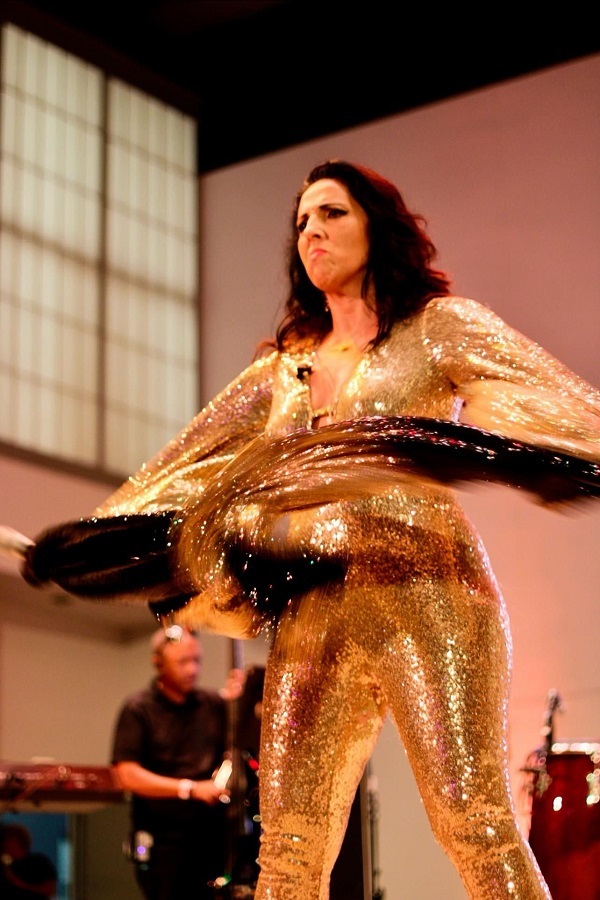
“La muñeca de la salsa”, Melina Almodóvar

At around 6:00 p.m., it was the turn of the Cuban sound known as timba, with the Julio Montalvo Orchestra and Miami’s Huracán. Once the hurricane winds that accompanied Julio Montalvo ceased, tribute was paid to the late Venezuelan percussionist Robert Vilera thanks to the staging of Vilera Son. The tribute to Vilera’s legacy featured the talents of Los Gaitanes from Panama, Avelino Romero from Venezuela, El Mola and Braidsman from Cuba, as well as Robert Vilera’s first singer, Felix Argenis.

“La muñeca de la salsa”, Melina Almodovar, was backed by Luigi Flores from Costa Rica on piano and musical direction, Johnny Fortunato from Dominican Republic on bass, Pablo Molina from Venezuela on timbales, Juan Pablo Camacho from Venezuela on tumbadoras, Carlos Molina from Venezuela on bongo, Carlos Perez from Cuba on first trombone, Ramon Benitez from Colombia on second trombone, Carlos Frank from Cuba on first trumpet and Julian Cifuentes from Colombia on second trumpet.

On backing vocals, Melina was backed by: Joe Arroyo from Puerto Rico and Freddy Lugo from Cuba. Melina gave us a first class show. As part of Melina’s performance, “El Calvito Reyes” joined her for the first time to perform the recently released single ‘Dos pa`lante’ as a live duet.

During the afternoon, the festival took place under a beautiful blue sky that kept the crowd’s enthusiasm positive. During the night, the clear Floridian skies kept the attendees dancing at full steam. Of course, to that end, the aforementioned talents kept the stage in salsa.

The festival closed with the always remembered for the classic ‘De barrio obrero a la 15’, Chamaco Rivera, who with a stellar salsa career to his credit, not only kept the audience engrossed in his impeccable staging, but also introduced us to his guest artist, his son: Christian Ray.

Melina contó con el respaldo vocal de Joe Arroyo de Puerto Rico y Freddy Lugo de Cuba

Christian delighted us with his repertoire shortly before inviting us to listen to his recently released CD entitled El legado continúa. To bid farewell to the musical day, which lasted nearly ten hours, the grand finale invited the group of singers who had paraded on stage during the day and part of the night to come in and jam with the “papa de los pollitos” (father of the chicks).

We are waiting to enjoy the next ‘Hollywood Salsa Fest’, for which the businesswomen in charge promise to throw the house out of the window. Melina and Cristina have delivered nine festivals in a row. So see you in April 2025 to dance in the tenth edition of the same.


Bella y Melina
Bella y Melina

Bella Martinez Puerto Rico

Also Read: A party of dancers at the concert to celebrate Willie Rosario’s 100th birthday

Pedro ”Pocholo” Segundo supports the Spaha Harlem Salsa Museum

At the Spanish Harlem Spaha Museum we always welcome the best of Latin music and, on this occasion, we could not stay behind, so we are glad to have had the opportunity to share with one of the best percussionists of the moment, Pedro Pocholo, who has a very interesting career that we will review below.   

Pocholo signing his album
Pedro ”Pocholo” Segundo signing a copy of his album ”A Guapetear” in 2022

Who is Pedro ”Pocholo” Segundo? How were his beginnings in music like?   

Pedro ”Pocholo” Segundo is an important producer and percussionist who has made a recognizable name in the Latin music industry thanks to his participation in some of the most critically acclaimed salsa and jazz orchestras.   

In music, it all started for him at the young age of 13, which is when he began playing with Ismael Miranda, representing the formal beginning of his professional career as a teenager. His efforts fortunately paid off, since a few years later, he was playing with Andy Montañez.   

In 1988, he joined Johnny and Ray’s group, causing him move to New York City, a place that gave him the greatest opportunities he would ever have in the artistic area. He became so well known for his skills as a percussionist that he was sought after by many artists to play with them such as Celia Cruz, Héctor Lavoe, Andy Montañez, Tito Rojas, Tito Nieves, José Alberto ”El Canario”, David Pabón, among many others.  

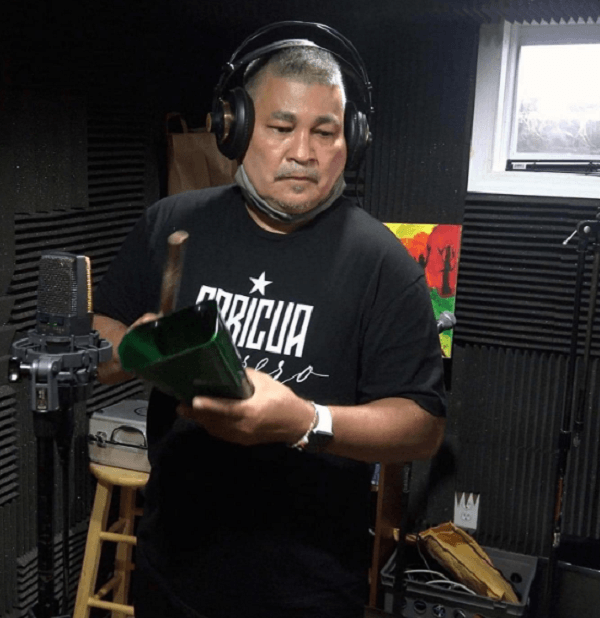
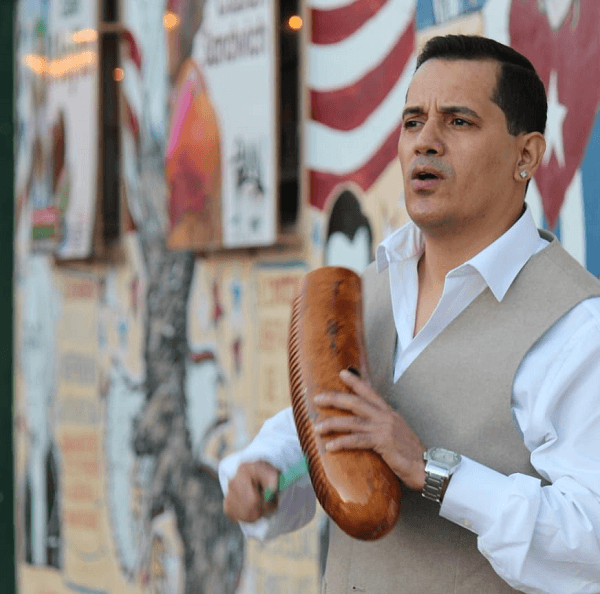
Pocholo playing the cowbell
Pedro ”Pocholo” Segundo playing the cowbell in his studio

Important things Pedro ”Pocholo” Segundo has done in his career 

Pedro ”Pocholo” lived many peak moments in the musical aspect, but without a doubt, the possibility to play to former presidents Bill Clinton and Al Gore with Celia Cruz and ”El Rey de Los Timbales” Tito Puente has been extremely important to his prestige as an artist, so he just went for more and more.    

This performance would not be the only collaboration he would have with Puente, as he also joined his talent to that of the timbalero in the DVD entitled ”Live at Manhattan Center” and traveled with him, The Big 3 Orchestra and Jimmy Bosch’s group to several countries in South America, Central America and Europe.   

Sometime later, in partnership with vocalists Carlos Santos and José Peña, Pocholo formed the group Madera Fina, with which he and his two fellow musicians managed to place some hits such as ”Guarimbo”, ”Palo de Son”, ”Desde Que Te Casaste”in very good places on the charts. They also went to Puerto Rico to promote the group and seek the support of local media such as La Mega 97.9 FM, being this radio station very important in the dissemination of these musicians’ work.   

Thanks to the experience gained from belonging to Madera Fina, Pocholo was more than ready to face bigger musical challenges, which led him to take on the creation, production and percussion of Boricua Legends, which has become one of the most popular New York orchestras of the moment.   

One of the best years of Boricua Legends was undoubtedly 2015, which was when it released its own version of ”Si Por Mi Llueve”, a song that was part of the world-renowned Cheo Feliciano’s repertory.  He also took second place in the GenGenSalsa Top 70 chart and eighth in the LatinosUnidosOnline chart.   

Pocholo performing live
Pedro ”Pocholo” Segundo during a live performance

Pocholo supports the Salsa Museum   

As many other Latin artists, Pocholo also supported the Spaha Harlem Salsa Museum and was a special guest on The Johnny Cruz Show to talk with the host and director of the museum, who was very pleased to welcome him on his show.   

In a video uploaded to Johnny Cruz’s social networks, the host can be seen introducing his guest and saying that they would talk about a number of very interesting topics, such as the beginning of his career, the founding of Boricua Legends and much more. Then, Cruz asks Pocholo to greet the audience and the musician, who was decked in a grayish suit and pink shirt, invites people to tune in to the show and assures them that they will talk about important things such as Latin music in New York and Puerto Rico.   

Finally, Johnny closes by saying that viewers can enjoy the show from 3:30pm to 4:30 every Saturday on channel 67 and says goodbye with the song ”La Fama” by Héctor Lavoe playing in the background. 

Johnny Cru ISM corresponde in New York City

Read also: Here we have Brazilian bandleader and composer Paula Maya 

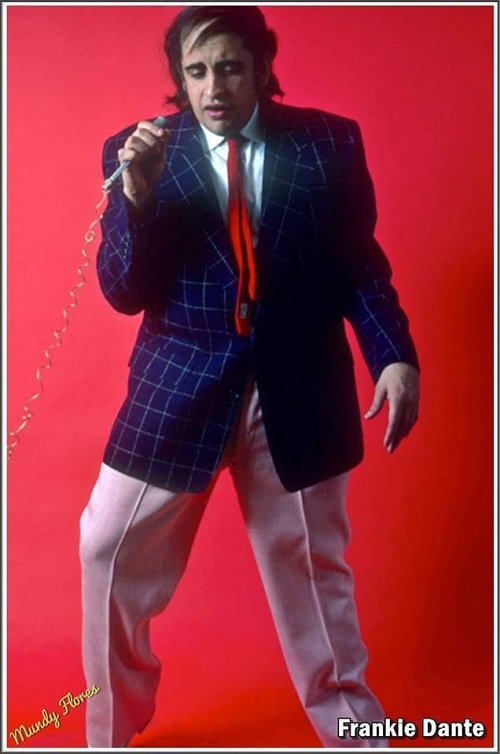
Lenin Francisco Domingo Cerda, better known as Frankie Dante, the “Underground” and “Irreverent” of Salsa in New York in the 60’s and 70’s.

“Cerda If I were president, if I were a president, there would be no armed forces, wars would end, the boys would go home where they belong.”

Lenin Francisco Domingo Cerda, mejor conocido como Frankie Dante el “Underground” e “Irreverente” de la Salsa en New York

Lenin Francisco Domingo Cerda, known as Frankie Dante, was born in Santo Domingo, Dominican Republic, on September 15, 1945.

He traveled to New York City in search of the sound of the barrio, influenced by Willie Colón and Eddie Palmieri with his Orquesta La Perfecta.

Frankie Dante, always characterized for being an authentic sonero, who interpreted the stories of the Latin barrio.

In 1968 under the label Cotique he appears in the album “Los Coquetones”, where Ismael Quintana also participated, the great influence in his development as a vocalist, this album is produced by Mr. George Goldner.

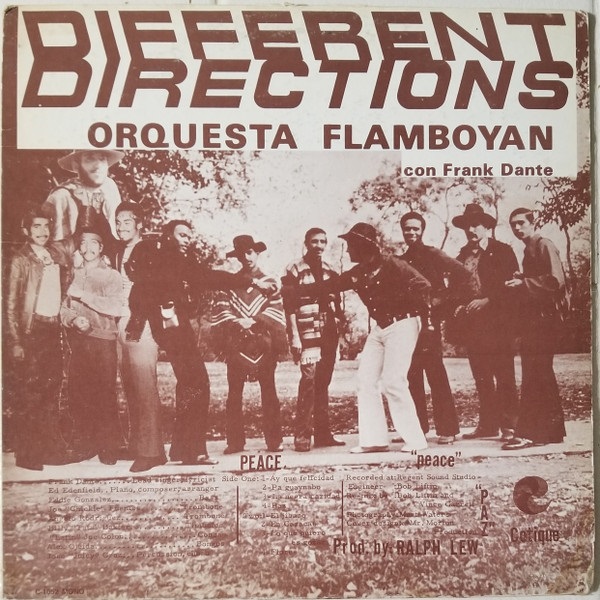
Cerda records a second production with La Orquesta Flamboyán, entitled: “Different Directions”, following the line implemented by maestro Eddie Palmieri with La Perfecta, where he continues the emphasis on social issues, raised in his first musical work, this time with the production of Ralph Lew.

Orquesta Flamboyan Con Frank Dante Different Directions1970
Orquesta Flamboyan Con Frank Dante Different Directions
1970

Launches the album: “Se Viste de Gala”. Resuming his social commitment, he includes the piece “Venceremos”, accompanied by the electric guitar played by Harry Vigianno, who also plays the tres in this production.

In 1972, Frankie Dante is invited by Larry Harlow to produce a new album entitled: “Orquesta Flamboyán Con Larry Harlow”.

Here Frankie achieved hits such as: “La Cuna del Son”, “Yo Te Seguiré”, “Vive La Vida Hoy” and “Presidente Dante”.

The album featured the participation of Larry Harlow on piano and musical production, Ray Romero and Jerry Gonzalez on Congas, Ismael “Pat” Quintana and Milton Cardona on backing vocals.

This album is considered as a recognition of Frankie Dante’s talent when he was asked by the “Wonderful Jew”, Larry Harlow to record together.

Frankie shows all his irreverence by substituting the montuno for a political speech in the manner of a candidate.

As a representative of the Underground current, Dante prefers to perform in a bohemian way in Clubs such as: El Caborrojeño and the Cheetah.

While in these clubs he meets pianist Marcolino Demond and they release the historic album: Beethoven’s V.

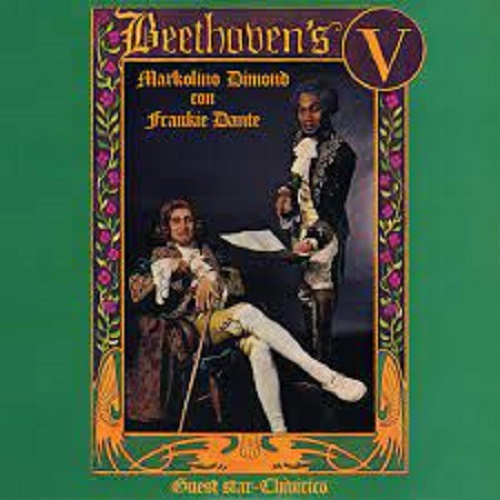
One of his best productions was with the extraordinary musician and pianist Markolino Dimond, who had played with Willie Colón, the album was titled: Markolino Dimond Con Frankie Dante Beethoven’s where in addition to his extravagances he imposed a different way of playing.

The album included five compositions by Marcolino Dimond: “Sabrosón”, “Camarones”, “El Quinto De Beethoven”, “Maraquero” and “Ahora Sí”, two songs with reserved author’s rights: “Los Rumberos” and “Yo No Tengo Amigo” and the hit “Porque Adore” by maestro Tite Curet Alonso.

Markolino Dimond Con Frankie Dante Guest Star Chivirico* Beethoven's V
Markolino Dimond Con Frankie Dante Guest Star Chivirico* Beethoven’s V

Dante and Marcolino were a duo without precedents, taking into account that both had the stigma of rebelliousness.

The album features Frankie Dante and Chivirico Davila on vocals and Yayo “El Indio”, Pete “El Conde” Rodriguez and Ismael “Pat” Quintana on backing vocals.

Other great musicians that participated in the band are Nicky Marrero – Timbales, Bongos; Pablito Rosario – Bongos; Barry Rogers – Trombone; Mike Collazo – Timbales, Eddie “Guagua” Rivera – Bass; Lewis Kahn – Trombone; Reinaldo Jorge – Trombone and Frank Malabé – Congas.

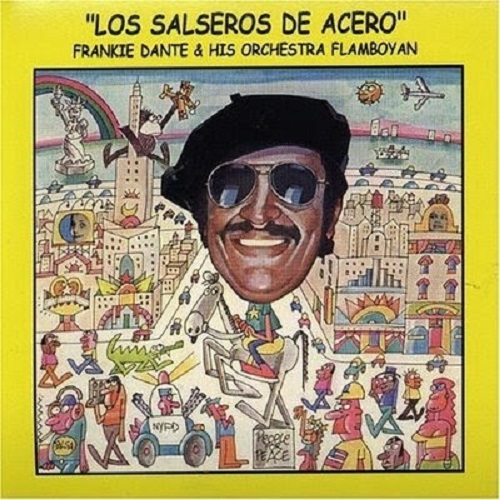
 In 1976, again with Marcolino, he released: “Los Salseros de Acero”, in an attempt to reunite the original line-up of Los Flamboyán with Joe “Chickie” Fuentes on trumpet, Ángelo Rodríguez on trombone and Alex Ojeda on timbales, plus the participation of stars of the moment such as: Charlie Palmieri, Tito Puente and Ricardo Marrero, in what was called: Flamboyán All Star Band.

Frankie Dante & His Orchestra Flamboyan Los Salseros De Acero

Among the songs on the album were “Ciencia Política” by Frankie Dante and “Chupa El Pirulí” composed by the wonderful Ciego Arsenio Rodríguez.

That year he published his seventh album “The Flamboyán All Star Band Frankie “Be Bop” Dante”, also recorded for Cotique Records, which included songs such as: “El Pipón”, “Son Retozón” and “Mumbo Jumbo”, compositions by Frankie Dante himself and a version of the song “María Cervantes” by the Puerto Rican Noro Morales.

Sonny Bravo, Norberto Cruz and Marty Sheller participated in the arrangements; Charlie Palmieri – Arrangements and Director and Mr. Ralph Lew as Producer.

The album also counted with the participation of other great musicians of the salsa movement such as: Leopoldo Pineda – Trombone, Ray Maldonado – Trumpet, Frankie Malabé – Congas, Orestes Vilató – Timbales, Ronnie Cuber – Sax and Flute, Willie Colón – Chorus and Tito Allen – Chorus.

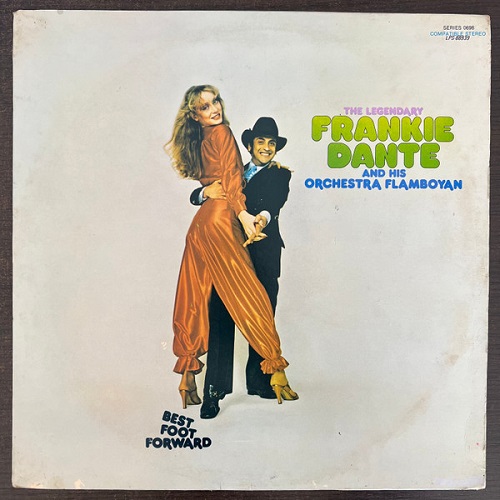
One of Cotique’s recordings was entitled “Frankie Dante and his Orquesta Flamboyán Best Foot Forward”, a compilation album with Frankie’s hits such as: “Paz”, “Los Rumberos”, “Presidente Dante”, “Venceremos” and the well known song “Yo Te Seguiré” written by the great Catalino Tite Curet Alonso.

The Legendary Frankie Dante And His Orchestra Flamboyan Best Foot Forward

His last recording appearance would happen in 1979 with the release of “Los Rebeldes”, where he decided to name his group: Frankie Dante Y Los Rebeldes.

This album has songs such as: “Los Congresistas” by Frankie Dante, a version of the song “Semilla De Caña Brava” by Cuban Luis Martinez Griñan “Lily” and “Vuelve El Rumbero” by Puerto Rican Johnny Ortiz.

Also participating in the recording were: Sal Cuevas – Bass, Louie Cruz, Marty Sheller, and Louie Ramirez in the Arrangements, Alberta Dering – Artistic Director, Ralph Lew as Producer and Milton Cardona as Musical Director.

Dominican Frankie Dante developed his musical career in New York City, where he died of cancer on March 1, 1993.

Dante, emulating his compatriot Johnny Pacheco, settles in the city of skyscrapers and takes with his “precursor” lyrical talent in terms of social conscience in salsa. With good artistic sense he perceives that the sound of the neighborhood and its hurtful musical style will be the main axis of the new concept that is born in the land of Uncle Sam.

“He recognizes in the almost adolescent Willie Colón a style to follow, he is enormously attracted to that “sour” way of arranging the songs, the maestro Eddie Palmieri and his Orquesta La Perfecta (already in full swing) also influence the young Dante as well as Ismael “Pat” Quintana’s way of interpreting, a style that Frankie incorporates immediately in his first production in 1968 under the Cotique label (Ref. CS-1043) titled Los Coquetones”.

Sources and Bibliography:

  • http://www.megaupload.com/pt/?d=FR6AAPU0
    • http://ww.malianteo.com
    • http://www.salsajazz.com/i
    • http://apostolsalsero.soy.es/frankie-dante-la-orquesta-flamboyan/
    • Latinastereo 100.9 FM nuestra música

Also Read: Nicky Marrero is an innovator, timbalero and bongo player, living legend of our Afro-Latin and Caribbean music.

Julio Vilchez and his orchestra conquer Miami

Peru continues to give us something to talk about thanks to all the salsa talent coming out that country in recent years and today we had the opportunity to talk with one of them, which is the producer, composer and singer Julio Vilchez. 

After we communicated with Vilchez via email and WhatsApp to schedule an interview, we have managed to have a great conversation in which we knew a little more about the artist’s beginnings in this fascinating world that is music.   

singer Julio Vilchez
This is Peruvian producer, composer and singer Julio Vilchez

Childhood and musical roots in the Vilchez family 

It is not surprising that Vilchez took that parth of life considering that his father, Juan José Vilchez Sanchez, was a talented actor, comedian and professional dancer who carried music in the blood and ran some of the most famous salsa clubs in the city of Lima, which served as a stage for important national and international groups and singers of all genres.   

Having referred with admiration to his father because of all that he achieved in life thanks to music, he assured that music definitely ran through the veins of his family and had always been a very important part of his childhood and youth. 

Seeing all this, the years were not many when Vilchez became interested in musical instruments such as maracas, the bongo bell and the güiro, which led him to participate in groups such as Raíces, La Fragua and Soy Calidad.   

Salsa and other genres 

A large majority of Peruvian artists whom we had the honor to interview have typically ventured in Peruvian Creole music before getting involved in salsa, but not Vilchez. In fact, he pointed out to us that his country was heavily influenced by Cuba musically speaking and there used to be a time when groups from the island visited Peru such as La Sonora Matancera and Los Compadres. Peru also received influence from Colombia, Venezuela and Puerto Rico, although to a lesser extent. 

The artist also remembers that, at home, he and his family always used to listen to Venezuelan singers and orchestras such as La Dimensión Latina, Oscar D’ León, Luisito Quintero, Nati Y Su Orquesta, among others. In the case of Puerto Rico, of course Vilchez and his family used to listen to La Fania All Stars.  

Vilchez was part of Raíces, La Fragua and Soy Calidad
Julio Vilchez was part of groups such as Raíces, La Fragua and Soy Calidad

Formal beginnings of Julio Vilchez in music 

In the neighborhood Vilchez and his family lived in, the singer made friends with other local boys and met up with them to sing in a completely amateur way. In addition to that, he liked to participate in school talent shows, in which he delighted the crowd performing songs from Oscar D’León, Rubén Blades and Willie Colón. 

After attaining the age of 17, he began working alongside his father in the business of running clubs, which gave him the opportunity to spend time with the members of the orchestra La Progresiva del Callao, who performed on Tuesdays, Wednesdays and Thursdays in one of those places.   

Since Vilchez loved to dance and the orchestra focused a lot on its choreographies, the young man identified himself a lot with the group and began to learn the steps the singers performed on stage. One day, the boys saw him dancing and invited him to sing with them in one of their shows, in which he danced very well, but he did not sing in the best way. For this reason, he got the opportunity to stay permanently in the orchestra, but only as a dancer for the moment.   

Over time, he was grabbing experience on stage and getting over stage fright until he managed to keep up with the rest of his orchestra fellows with the passing of days.  

Julio Vilchez with Cano Estremera
Julio Vilchez with Puerto Rican salsa singer Cano Estremera

Vilchez’s time in Venezuela 

Vilchez made friends with a group of Venezuelan musicians who accompanied Oscar D’ León in one of his concerts and invited him to travel with them to Venezuela because they wanted him to be part of the sextet they were going to create, which was meant to perform at a tavern in Caracas. 

Seeing that things were going well in Venezuela at that time, Vílchez decided to accept the invitation and immigrate to the South American country to try his luck. Once there, he spent a lot of time alone because the boys from the sextet traveled a lot, something which took advantage to get to know other groups, one of them being La Selecta de Cúa. One day, Vilchez was walking down the street and heard this orchestra rehearsing, but it needed a singer. That is when Vilchez proposed himself as an option, was admitted and worked for about two years in this orchestra. 

Although he did well in Venezuela, he ended up returning to his native country because he missed his homeland and his father could not get used to having him away, so he packed suitcases and decided to return.   

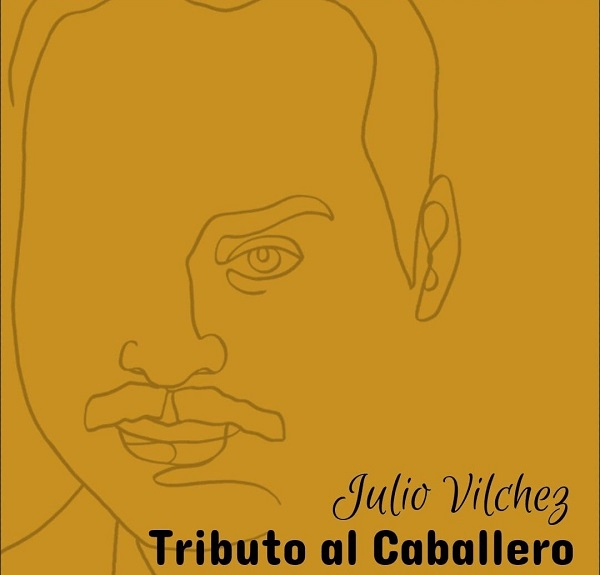
Tributo al Caballero by Julio Vilchez
Cover of the album Tributo al Caballero by Julio Vilchez

Life in the United States 

One of the songs he released in 1995 led him to make a video clip, which started to become very popular on music channels and shows, giving him the recognition Vilchez aimed for so long.  

Since things were not going as he expected on his solo career, he joined the Orquesta La Novel to continue working on music for the next two years. Although his name was not as well known as Vilchez needed it to be, his song was still sounding loud internationally for quite some time, which led him to receive a proposal to perform eight shows with his orchestra in the United States in 2000. 

When Vilchez and the rest of the musicians traveled to Miami, about nine members of the orchestra received proposals to stay in the country and decided to accept. It was there where the artist gathered his courage and says to himself ”I’m staying too”. That was over 24 years ago now.   

At that point, the Peruvian had to look for other musicians to replace the others in order to finish the concert tour they had scheduled. It was then when he contacted José Alberto ”El Canario” through a Peruvian colleague of his to use his band for the remainder of the tour and so he did. Vilchez did two or three shows with this band and stayed in Miami from 2001 to 2004.   

Given the lack of musical proposals, he spent a few years in New York, but returned to Miami some time later to work both with music and with a business sector linked to gastronomy, since living only from music is complicated. In addition to that, his children live in Miami and he wanted to spend more time with them, so this was also a powerful reason to return.   

Read also: Argentine-American composer and guitarrist Alejandro Meola kindly talked to us 

Young Puerto Rican singer Jeremy Bosch supports the Spanish Harlem Salsa Museum

There are many people who believe that salsa is a genre of past generations that does not have worthy youth representatives who stick up for this set of rhythms that has been keeping so many people dancing for so long, but fortunately they are wrong. Jeremy Bosch, whom we had the opportunity to interview at The Johnny Cruz Shw a few weeks ago is a god example of this.   

We are honored to know that one of the new sensations of Latin music, specifically salsa, supports one of the most important institutions dedicated to the genre such as the Spanish Harlem Salsa Museum, so we want to take advantage to talk a little about the career of this young singer and everything he has achieved so far.   

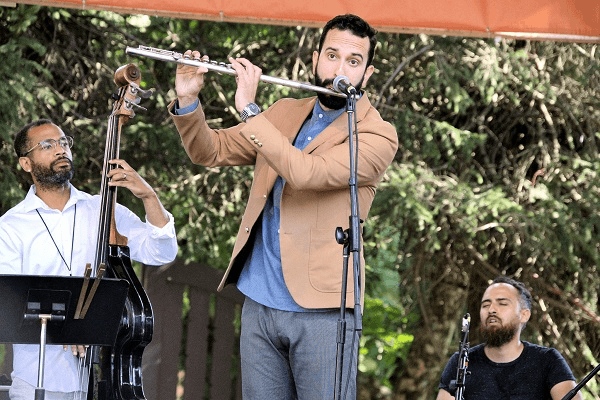
Jeremy playing the flute
Jeremy Bosch playing the flute live

Jeremy’s beginnings in this world 

Jeremy Bosch is a singer and flutist born in the city of Ponce, Puerto Rico, who began his journey in the world of music singing and playing percussion in the church on his block while growing up listening to a great variety of artists including Hector Lavoe to Chicago and Tonny Bennett, so he had influences of all kinds.   

Not much time would past before Jeremy took achevable steps towards the direction he was meant to take. At only 17 years old, he won a scholarship to study at Berklee College of Music in the city of Boston, United States, and graduated in 2023, specializing in jazz composition. From then on, what followed for the young artist have been successes and great proposals he could seize.   

One of thse things he is best known for is having been the vocalist and flutist of the acclaimed group Spanish Harlem Orchestra, but that has not stopped him from collaborating with great figures in the industry such as musical director and Grammy-winning percussionist Pete Perignon, with whom he recorded the social short called ”Sería Una Pena”.   

Johnny and Jeremy
Johnny Cruz and Jeremy Bosch posing for the camera

Jeremy’s professional career 

Sometime later, he would have the opportunity to realize one of the most important works of his career, which is the tribute to the late Cheo Feliciano, which was recorded live at the Dizzy Club in New York City and was titled ”The Music of Cheo Feliciano. In addition, the project included Nelson Gonzalez, Johnny ”Dandy” Rodriguez and Spanish Harlem Orchestra leader Oscar Hernandez.   

With regard to this great night for his career, Jeremy commented that since his debut both he and arranger and vibraphonist Felipe Fourniel had long time wanting to work on something about Cheo Feliciano and his legacy for a long time until they finally made it. This show was the sign that Jeremy has everything to become an icon of salsa and Afro-Caribbean music in general.   

As for his solo career, he has made a few remarkable recordings and one of them was ”Prologo Hoy”, which included the participation of Nicaraguan singer Luis Enrique and Cuban vocalist and guitarist Alain Perez. It is a five-song EP that focuses a lot on Afro-Colombian and tropical music, while including some covers in English such as ”Love Holiday”, which gives a distinct flavor to the material as a whole. 

Jeremy and Johnny on the set
Jeremy Bosch and Johnny Cruz on the set of The Johnny Cruz Show

Later on, Jeremy released ”Epilogo: la clave del tiempo”, which includes 11 tracks and is basically a mix of Afro-Cuban rhythms, soneo, urban genres, modern synthesizers, among other elements. The album starts with ”Locura” and continues with singles such as ”Try Again”, ”La Mala”, ”Autopsia” and a few more.   

Support for the Spanish Harlem Salsa Museum 

In the social networks of the director of the Spanish Harlem Salsa Museum, Johnny Cruz, there is a clip in which the The Johnny Cruz Show host introduces Jeremy as his special guest on that occasion, promotes the interview with him and describes him as the sensation of the moment. Then, the camera goes n Jeremy’s face, who thanks the invitation with a smile and assures that they both will have a good time talking about his life and career. 

We are honred to support young talents like Jeremy and, at the same time, to get the same support and love back because that is what salsa and the Latin music scene in general needs, that all those involved join together around it to keep it alive. 

Johnny Cru ISM corresponde in New York City


Read also: Paquito D’Rivera supports the salsa museum 

  • « Go to Previous Page
  • Page 1
  • Interim pages omitted …
  • Page 11
  • Page 12
  • Page 13
  • Page 14
  • Page 15
  • Interim pages omitted …
  • Page 156
  • Go to Next Page »

International Salsa Magazine (ISM) is a monthly publication about Salsa activities around the world, that has been publishing since 2007. It is a world network of volunteers coordinated by ISM Magazine. We are working to strengthen all the events by working together.