• Skip to primary navigation
  • Skip to main content

International Salsa Magazine

  • Home
  • Previous editions
    • 2025
      • ISM / November 2025
      • ISM / October 2025
      • ISM / September 2025
      • ISM / August 2025
      • ISM / July 2025
      • ISM / June 2025
      • ISM / May2025
      • ISM / April 2025
      • ISM / March 2025
      • ISM / February 2025
      • ISM / January 2025
    • 2024
      • ISM / December 2024
      • ISM / November 2024
      • ISM / October 2024
      • ISM / September 2024
      • ISM / August 2024
      • ISM / July 2024
      • ISM / June 2024
      • ISM / May 2024
      • ISM / April 2024
      • ISM / March 2024
      • ISM / February 2024
      • ISM / January 2024
    • 2023
      • ISM / December 2023
      • ISM / November 2023
      • ISM / October 2023
      • ISM – September 2023
      • ISM – August 2023
      • ISM July 2023
      • ISM Edition June 2023
      • ISM – May 2023
      • ISM April 2023
      • ISM March 2023
      • ISM February 2023
      • ISM January 2023
    • 2022
      • ISM December 2022
      • ISM November 2022
      • ISM October 2022
      • ISM September 2022
      • ISM August 2022
      • ISM July 2022
      • ISM June 2022
      • ISM May 2022
      • ISM February 2022
      • ISM January 2022
    • 2021
      • ISM December 2021
      • ISM November 2021
      • ISM October – 2021
      • ISM September 2021
      • ISM August 2021
      • ISM July 2021
      • ISM May 2021
      • ISM April 2021
      • ISM June 2021
      • ISM March 2021
      • ISM February 2021
      • ISM January 2021
    • 2020
      • ISM December 2020
      • ISM November 2020
      • ISM October 2020
      • ISM September 2020
      • ISM August 2020
      • ISM July 2020
      • ISM June 2020
      • ISM May 2020
      • ISM April 2020
      • ISM March 2020
      • ISM February 2020
      • ISM January 2020
    • 2019
      • ISM December 2019
      • ISM November 2019
      • ISM October 2019
      • ISM Septembre 2019
      • ISM August 2019
      • ISM July 2019
      • ISM June 2019
      • ISM May 2019
      • ISM April 2019
      • ISM March 2019
      • ISM February 2019
      • ISM January 2019
    • 2018
      • ISM December 2018
      • ISM November 2018
      • ISM October 2018
      • ISM September 2018
      • ISM August 2018
      • ISM July 2018
      • ISM June 2018
      • ISM May 2018
      • ISM April 2018
      • ISM March 2018
      • ISM February 2018
      • ISM January 2018
    • 2017
      • ISM December 2017
      • ISM November 2017
      • ISM October 2017
      • ISM September 2017
      • ISM August 2017
      • ISM July 2017
      • ISM June 2017
      • ISM May 2017
      • ISM April 2017
  • Download Salsa App
    • Android
    • Apple
  • Spanish

Search Results for: Salsa Orchestra

Salsa at Hacienda El Paraíso with Los Lebron Brothers Orchestra

The house of Hacienda El Paraíso or Casa de la Sierra, was built between 1816 and 1828, by Don Victor Cabal, a cattle rancher from Bugueño and ex-mayor of Cali. On June 20, 1854 it was sold to Don Jorge Enrique Isaacs, father of the poet, in whose hands it remained until June 15, 1858.

On April 18, 1953 it was acquired by the Department of Valle del Cauca and its first restoration was carried out by the master Luis Alberto Acuña in 1954.

It was declared a National Monument on December 30, 1959. It currently holds the status of Cultural Interest of the Nation.

With Law 397 of 1997 the properties previously declared national monuments were considered as properties of cultural interest and by Law 1185 of 2008 the BIC were defined as such due to the special interest that the property has for the community throughout the national territory…” (Law 1185 of 2008, Article 5, which modifies Article 8 of Law 397 of 1997).
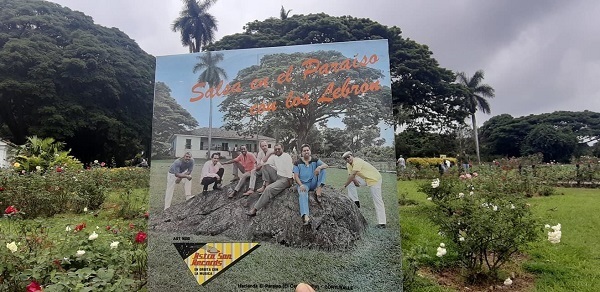
Los Lebron Brothers agradecidos y maravillados con Cali graban en enero de 1990 el elepé “Salsa en el Paraíso”

The Hacienda El Paraíso de Cali, setting of “María” written by Jorge Isaacs, a novel of an impossible romance and such wonderful landscapes that some Japanese decided to live in these lands just by reading the novel, landscapes that the Lebron Brothers also fell in love with.

The Lebron Brothers, grateful and amazed with Cali, recorded in January 1990 the LP “Salsa en el Paraíso” for the short-lived Cali label AstroSon Records, the hit of the album was the song “Thinking” with vocals by Luisito Ayala (RIP).
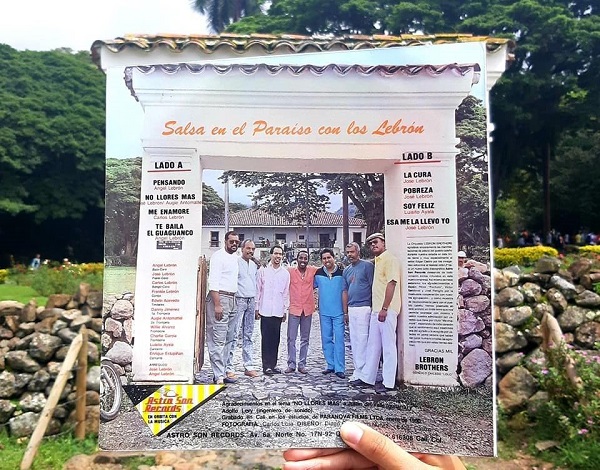
Los Lebron Brothers“ Salsa en el Paraíso”

The Lebrón Rosa family was born with the union of Francisco Lebrón Feliciano and Julia Rosa Sosa (mother of Pablo López Rosa) in Aguadilla (Puerto Rico), where María Antonia, José, Ángel and Carlos Enrique were born. They moved to New York in 1952, where Frank was born; they were educated in a purely musical environment, the father wrote décimas and in the family most of them were musicians and played cuatro and guitar, besides singing.

Pablo Lopez, since childhood was noted for his voice, was born on June 30, 1937 in Aguadilla, Puerto Rico.

Already settled in New York, he organized a trio “Las Tres Monedas” (1954). In 1962 José and Ángel formed their first group called Los Eltones.

Pablo founded the Orquesta Arecibeña (1965). Pablo managed to get the owner of the La Vega club in Brooklyn to give them an opportunity to audition, at which time José joined the Arecibeña as a pianist. In 1966 Angel Lebron y su Combo was formed, where his brother Carlos is the pianist.

The opportunity to record came from the hand of businessman George Goldner, head of the Cotique label, thanks to the fact that he had agreed to listen to them live.

As this meeting was important, Angel and Jose asked their brother Pablo to accompany them on vocals, to take advantage of his veteran and wonderful style.

The brothers Angel, Jose, Pablo and Carlos performed two boogaloos in their own way and style. It was Goldner who suggested that they call themselves Los Hermanos Lebrón and asked them to prepare a complete album.

Frank Lebron, Dj. Augusto Felibertt y Jose Lebron

The album appeared in 1967 under the title Psychodelic goes latin, which included the hit Summertime blues.

Thanks to the overwhelming success of the first work, in 1968 they presented their second album, The Brooklyn Bums, name of a famous baseball team. They released nine songs with interpretations in English and Spanish.

In 1969 the productions I Believe, (Lo tuyo Llegará) and Brother, (Pancho el Loco y Fe). These hits catapulted them internationally before the Latin American public, tracing a new musical horizon.

The boogaloo began to lose ground and Los Hermanos Lebrón reflected this change by producing an album entirely in Spanish with the title Llegamos, containing the songs Mi fracaso, Tus recuerdos (a song that achieved Pablo’s recognition as a great Bolerista).

BOOM…! SALSA…..!

In the same year with the production of the album Salsa y Control, success was glimpsed giving relevance and turning the term Salsa into a worldwide social phenomenon; where the younger brother (Frank Lebrón) makes his debut.

The innovations of three chorus singers (dubbed) were present, which gave it a true seal of distinction. In the boleros, they searched for the traditional sound of the Puerto Rican trios.

Los Lebron Brothers Orchestra

You can read: Luigi Texidor el Negrito del Sabor
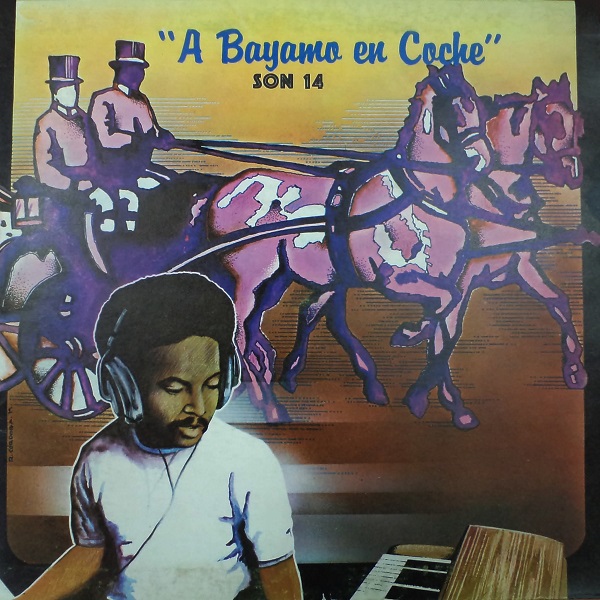
Son 14 The History of the Orchestra and the Success of “A Bayamo en Coche”

The Son 14 orchestra was founded in Santiago de Cuba in 1977 by vocalist Eduardo “El Tiburón” Morales (born in Cuba in 1935) and pianist and musical director Adalberto Álvarez.

As the name suggests, it is a 14-member ensemble dedicated to performing son, the national musical genre of Cuba. In 1978, Lázaro Rosabal (born in Santiago de Cuba in 1953) joined the group.

They quickly recorded several albums for the local EGREM label, many of which became bestsellers throughout Latin America, allowing them to undertake extensive tours across the Americas and Europe.

In 1992, co-founder Álvarez left the band to form his own group. Nevertheless, Son 14 continued its journey under the musical direction of Rosabal.

In addition to their continued success in the Latin market, the band began to gain international recognition, first with the song “El Son De La Madrugada,” included on the compilation Cuba – Fully Charged (Earthworks Records, 1993), and later with the release of Son – The BIG SOUND (Tumi Records, 1995), a compilation of their material from the Álvarez era.

Son 14 de «A Bayamo en Coche»

After introducing a modern, vibrant version of son and its variations (son montuno, bolero son, etc.) to non-Latin audiences, Tumi Records commissioned a new recording at Cuba’s EGREM studios. Released in 1996 as part of the Cuba Explosion series, the album Cubanía proved that the band had not lost an ounce of its musical talent and energy under Rosabal’s direction. Three years later, the group released La Máquina Musical, which incorporated Colombian tropical rhythms into their sound, promoting the album with a European tour that included a performance at the Cuba Presente Festival at the Barbican Centre in London. (Source: AllMusic)

Eduardo Morales Orozco Tiburón

 The Milestone of “A Bayamo en Coche”

The album A Bayamo en Coche (A Bayamo by Carriage) was released in 1979, with its biggest hit being the title track itself. The album’s opening song, composed and arranged by Adalberto Álvarez from Camagüey, instantly transformed him into one of the leading figures in popular Cuban dance music from that year on.

The song “A Bayamo en coche” not only revives traditional son and enriches it with new sounds but also artistically recreates a cherished tradition rooted in Bayamo, the cradle of Cuban nationality. In this city, coches (horse-drawn carriages) are used for pleasure rides and recreation, and the song’s lyrics narrate these moments.

The album contained other tracks that were hugely popular in Cuba between 1978 and 1980, such as “Calle Enramada” (a son elegy to that main Santiago street), “El Son De La Madrugada” (with a beautiful later version by Omara Portuondo), “Se quema la trocha,” and “Elena la cumbanchera,” which turned the record into a landmark within this genre of Cuban music. Most of the tracks were performed by Tiburón Morales, the group’s lead vocalist.

Tribute to The Gentleman of Son

Recently, Son 14 founder Adalberto Álvarez, known as “El Caballero del Son” (The Gentleman of Son), was honored with a concert at the Karl Marx Theatre. This event celebrated his 46 years in music and the 35th anniversary of his later orchestra, Adalberto Álvarez y su Son.

The concert was a memorable tribute to the work of the composer of “A Bayamo en coche.” Some of his best songs were performed by notable Cuban musicians:

  • Septeto Santiaguero (Son para un sonero)
  • Pancho Amat and Alain Pérez (Tu fiel trovador)
  • Alexander Abreu (Pura imagen)
  • Paulo F. G. (Fin de semana)

At other points, Frank Fernández performed a duet accompaniment with the voices of Adalberto Álvarez and Jorge Luis Rojas, “Rojitas,” on Santa Cecilia.

Additionally, Rojitas sang with Tania Pantoja (Vivir lo nuestro) and solo (Y qué tú quieres que te den). Robertón and Lele, vocalists from Van Van, performed Agua que cae del cielo, while the orchestra Adalberto Álvarez y su Son took on De Cuba pa’l mundo entero, Son de la madrugada, and Los caminos de Ifá.

En La Sala Show “El Saraito” Adalberto Álvarez (R.I.P) Fundador, Director. Arreglista y Pianista del Son 14 de Cuba, Dj. Augusto Felibertt y Vicente López

That night, Maestro José Luis Cortés highlighted Álvarez’s musical quality, focusing specifically on “A Bayamo en coche,” the song that, in 1979, announced the existence of a great artist to the public. Álvarez was capable of bringing son to Cuban art schools and has defended Cuban son with grace and artistry, all while staying true to the essence of one of the dance music genres that best represents Cuban identity. (Source: Joel del Río, Cibercuba)

“A Bayamo En Coche” Album Details (1980)

No. Track Genre Composer
01. A Bayamo En Coche Son Adalberto Álvarez
02. El Son De La Madrugada Son guaguancó Adalberto Álvarez
03. Se Fue Mi Amor Y No Lo Vi Partir Bolero son Adalberto Álvarez
04. Calle Enramada Son Pedro Gómez
05. Elena La Cumbanchera Son Gerardo Martínez
06. Se Quema La Trocha Bachata-Son Adalberto Álvarez
07. Tal Vez Vuelvas A Llamarme Son montuno Adalberto Álvarez
08. Gimen Las Rosas Por Una Triste Ilusión Bolero Adalberto Álvarez
09. Vamos, Háblame Ahora Bachata-son Adalberto Álvarez

Musicians who participated in the recording (1979):

  • Director, Acoustic Piano, Keyboards: Adalberto Álvarez
  • Vocals, Minor Percussion: Eduardo “El Tiburón” Morales, Héctor Wedderbron, Daniel Carmenates
  • Bass: Jorge Machado
  • Guitar: Efisio Barroso
  • Trumpet: Eduardo Sánchez, Guillermo Femández, José Fernández, Dagoberto Rodríguez
  • Trombone: Lázaro Rosabal
  • Tumbadora (Conga Drum): Ubaldo Canes
  • Bongó, Cowbell: Guillermo Viera

Recorded at: EGREM Studios (1979)

Collaborators:

L’Òstia Latin Jazz

Dj. Augusto Felibertt

Also Read: Luis Conte: The Cuban-American percussionist who fuses Cuban son with global music

Carlos “Cano” Estremera was a legendary Puerto Rican salsa singer, widely known as “El Dueño del Soneo” (The Owner of Soneo)

Why “El Dueño del Soneo”?

He earned this nickname due to his extraordinary and almost unbeatable ability for soneo, which is the part of a salsa song where the vocalist has the freedom to improvise lyrics, phrases, and rhymes over the musical base, elevating the track’s energy and the connection with the audience.

El Dueño del Soneo
El Dueño del Soneo

Cano Estremera was famous for his quick wit, rapid rhyming, and extensive vocabulary, qualities that established him as one of the greatest soneros in history, often compared to figures like Ismael Rivera and Héctor Lavoe.

He started in Latin percussion and also with the group Barrio Latino, then he was with Los Pleneros del Quinto Olivo, and later, at the young age of 18, he joined La Orquesta Mulenze, with whom he recorded the track “Mala Lengua” in 1976. The voice that replaced Cano Estremera in Orquesta Mulenze was the great Pedro Brull, who recounts that he had to thoroughly study Cano Estremera’s style to join Edwin Mulenze’s orchestra.

Undoubtedly, one of the greatest successes in Cano Estremera’s career was accepting, in 1978, the invitation to be the lead singer of maestro Bobby Valentín’s orchestra, “El Rey del Bajo” (The King of the Bass).

His first song recorded with Bobby Valentín’s orchestra was the iconic track “La Boda de Ella” (Her Wedding), by the Puerto Rican composer Roberto Angleró, with no suspicion that it would soon become one of the essential elements of Puerto Rican popular culture.

Cano Estremera was famous for his mental agility

Cano Estremera was a unique sonero. He was an artist with an identity and immense talent that was very distinct from the normal or commercial. He established his style from the very first day he became known. There was no style in the genre like “El Cano’s.”

Bobby Valentín was always looking for sound and voices, and Luigi Texidor was leaving the group, and that’s when “Cano” joined with a very different talent.

‘Bobby Valentín Presenta al Cano Estremera’ turns 40.

Cano Estremera’s first solo album, accompanied by Valentín’s orchestra. Produced by ‘El Rey del Bajo’ (The King of the Bass) and released by the Bronco Records label (BR-124) on Thursday, October 7, 1982. It includes the hits: Por qué Me Citas, Buen Corazón, El Caimán, Awilda, Casa En El Campo, etc.

'Bobby Valentín Presents Cano Estremera 1984

‘Bobby Valentín Presents Cano Estremera 1984

When he decided to go his own way as a solo singer, Cano Estremera did not have the support of the salsa industry’s machinery at the time. Despite this, with hard work and talent, Cano Estremera decided to fight alone with his music, personally producing everything from his album covers, musical arrangements, tours, and even the distribution of his musical works.

He was always a defender and fiercely protective of the genre. His style and demeanor were always controversial, and that was the magic that captivated his audience throughout his long career—always entertaining, creative, melodious, and above all, prodigious when he stepped onto a stage.

Solo Career: He separated from Bobby Valentín at the end of 1984 to form his own orchestra, further consolidating his career and his title with albums like “Dueño del Soneo”.

Cano Estremera y Dj. Augusto Felibertt

Death: He died on October 28, 2020, at the age of 62, after years of health problems related to pulmonary fibrosis, for which he received a double lung transplant in 2018.

Also Read: The owner of the Soneo’s solo career Cano Estremera

Salsa Pal Bailador

Europa /

Salsa Pal Bailador. The success of a passionate venture that goes against commercial trends

Salsa Pal Bailador - Anniversary
Salsa Pal Bailador – Anniversary

By Roberto “Vene Barral”

Last Saturday, May 6, the Garufa concert hall in A Coruña, a beautiful city in Galicia, central Spain, hosted the 5th Anniversary of Salsa pal Bailador. This event, created with the humble goal of offering a space to enjoy only quality salsa, has now become one of the most successful social events in Spain.

On the surface, the idea seems simple: organize a monthly event that brings together and gives free rein to all those who are passionate and nostalgic for pure, unadulterated salsa. But we must remember that we live in a consumer society that constantly tells us what we “have” to listen to, what fashions and styles are in and out. This is where SpB took a bold stand, going against what DJs and events were promoting at the time.

SpB emerged when kizomba, an African rhythm from Cape Verde, was spreading from neighboring Portugal into Spain. Along with the already established bachata, these were the trendy styles played at every social event that wanted to be a hit with audiences. But SpB’s proposal was even more daring. Not only did it focus exclusively on the most classic, least commercial, and least-known salsa, but it also had the audacity to schedule the event on a difficult day—Sunday—and at an even more challenging time: in the evening, starting at 8 p.m.

Perhaps in other parts of the world, organizing such an event would guarantee success with the public. But here, for the reasons already explained, it was a real challenge that was only expected to work because of the sheer tenacity that comes from having a passion for what you do.

So who are the impulsive salsa enthusiasts behind the success of Salsa pal Bailador?

DJs - Salsa Pal Bailador
DJs – Salsa Pal Bailador

For one, there’s one of the organizers of these sessions, Martín Fernández, an Argentine who has lived in Galicia for decades. He turned salsa and this event into his dream and his challenge, striving not only to make each edition better than the last but also to bring in dancers, DJs, and collaborators from other parts of Spain and abroad (Portugal, Italy, etc.). More importantly, he has tried to support all the local schools, dancers, and DJs in Galicia, as well as the salsa orchestra created by Galicians, the Orquesta Sonoridad. This is something to keep in mind, as the exposure for all these artists is possible thanks to the celebration and promotion of events like this one.

For its 5th anniversary edition, we enjoyed workshops and shows by Erik and Monika Eym Salsa from the Basque Country and Nuno and Rita from Portugal. There were also local shows like SSN Dancers, a group from a school in Betanzos, and Soulswing, a magnificent group of dancers from A Coruña, led by Javi Azúcar, who is a choreographer and guest DJ at several SpB sessions.

Over the years, many artists have participated in SpB sessions: figures such as Juan Matos, Yemambo, Carla Vocconi, Carlos Flow, Zergyo and Eva Mambo, Rui and Leonor, Nuno and Nágyla, or the local groups Mambo Sins and Son Candela, choreographed by the talented dancer Nuria Rodríguez Dieste, just to name a few.

Second, we have the two hosts who not only help organize all SpB events but also work hand-in-hand to ensure that each SpB session ends later, with more people asking for just one more song to dance to. I assure you that if the rules didn’t require a closing time, we would have the first after-hours venue where people consumed music, not substances, to stay awake. They are Manu Rumberito and El Nene del Bronx.

Salsa Pal Bailador - dance with me with Lugo - DJ Rumberito + El Nene
Salsa Pal Bailador – dance with me with Lugo – DJ Rumberito + El Nene

They are as unique as they are complementary, two tireless treasure hunters, searching for gems that haven’t yet been played on our dance floors, are unknown to our ears, or are classics we haven’t enjoyed in a long time or don’t get to hear very often. This is a luxury that, in these times of commercial music suffocation, very few of us can enjoy.

In addition, their passion for always seeking a more authentic, raw, and—why not say it?—more imperfect sound, but also one that is more acoustic and real, led them to start using vinyl records in their sessions. This trend has become SpB’s hallmark and has spread throughout Europe over time. Fortunately, we can now enjoy it at more and more events.

And, since passion is a state of mind that takes root everywhere, they found their alter egos in Madrid. Of course, they couldn’t celebrate SpB’s anniversary without them. These two turntable phenomena, Chema Sr. Importante and Marcin Martinelli, were the two guest DJs for such a special occasion. Other famous DJs have been featured at SpB sessions, including Hugo Leite, Nuno Melo, Dj Mito, Alexis Rodríguez, and Chris Beat, along with other local DJs such as Melao, Montuno, Sergio Elbembee, and the aforementioned Javi Azúcar. These DJs, like the guest dancers, aren’t unapproachable people; they come down to the dance floor to dance, chat, and enjoy themselves with the audience like everyone else.

Salsa Pal Bailador - Anniversary - DJs and workshops that will be presented
Salsa Pal Bailador – Anniversary – DJs and workshops that will be presented

At this point, many of you may be wondering: How is it possible that in a medium-sized city without a large Latin American population, an event featuring such a particular style of music can be so successful?

Well, it’s true that, fortunately for Galicians, in addition to having been welcomed with great hospitality in all the Latin countries to which we have emigrated, we have many returnees and natives from across the Atlantic living with us. This gives us the opportunity to enjoy many Cuban, Venezuelan, Colombian, and other styles of music and orchestras, which are very successful among both Galician and Latin American audiences.

But the truth is, we can say that they are different phenomena. People go to listen to the traditional music of these groups or orchestras for the pleasure of hearing those familiar tunes; it is more of a sensory delight.

However, when we talk about a social event, we associate it more with fun, leisure, and enjoyment in the sense of recreation. That’s what dancing at a social event means to us, where people of any age or condition simply let the music guide their bodies for pure joy, without any other pretensions.

It might be easy to conclude that this is the reason for the success of this type of event, and why they are so popular in this corner of the country. But we must remember that we are talking about A Coruña, a place that does not have the size or population of other large cities like Madrid, Barcelona, or Valencia. It’s a place where public attendance at these social events is high, where several social events are organized every week and on several days a week, and yet the public has been responding for decades. So what’s the secret?

Without wanting to diminish the great effort made in many other places, which despite this does not always have the deserved result, I believe that part of the success of this event is due to the courage to commit to formats or ideas that may not have an immediate and massive response or support but which, in return, offer sufficient quality to end up convincing even the most skeptical.

Therefore, in these times of commercial bombardment and mass-produced products, committing to creativity, innovation, and quality is a risky move. But we all know that if you don’t take risks, you don’t win, and SpB has taken that risk. As a result, every year it attracts more people from more places, including Portugal, Madrid, Valladolid, Asturias, Valencia, the Basque Country, Barcelona, etc. That is why, on its fifth anniversary, it has reaped its well-deserved rewards.

Salsa Pal Bailador - Congratulations
Salsa Pal Bailador – Congratulations

Congratulations to SpB and to its loyal audience, which is growing every day. Keep betting on quality!

Next event:

Salsa Pal Bailador

Sunday, June 4, 2017

Sala Garufa Club C / Riazor 5, A Coruña, Galicia, Spain

After the success of its fifth anniversary celebration, the Salsa Pal Bailador event returns on Sunday, June 4, to the Salsa Garufa Club in A Coruña, Spain. It will be a night of PURA SALSA, featuring 100% vinyl with DJs Manu Rumberito and El Nene del Bronx. There will also be two shows featuring the talents of Baila Conmigo Lugo and Euphoria Ladies Project from Vigo.

More information:

  • http://www.facebook.com/spb.salsapalbailadorlacoruna
  • http://www.facebook.com/SalsaGarufaClub/

Trombone player Lindsey McMurray from the women’s orchestra Las Chikas

Lindsey McMurray, bandleader of the group Las Chikas, has graciously accepted our invitation to talk about the women’s orchestra she is leading, which makes us very happy and pleased, so we invite our readers to enjoy this interview from beginning to end and learn about the musical journey of this young artist.

Lindsay from Las Chikas singing
Lindsey McMurray singing during a concert with Las Chikas

How Lindsey got started in music

Lindsey’s journey to become an artist began very soon at school, when she was just 10 years old and started learning to play the trombone. Prior to this, she had already studied other instruments such as the keyboard and the recorder, but she ended up trying the trombone.

Soon after, at the age of 11, she joined the school jazz band, but it was not until college that she began experimenting with salsa in orchestras that played this genre. Until then, Lindsey had had virtually no contact with Latin music, as she had only listened to typical U.S. rhythms. However, once she discovered Latin American music, she could not escape her love for it and continues to play it to this very day.

It should be noted that the musician does not have any family member who is too. So she would be the first one to make music her profession and, of course, one of the most important areas of her life.

Professional experiences prior to Las Chikas

Before even getting to know of the existence of Las Chikas, Lindsey was on a TV show called ‘’Noches Con Platanito’’ in the musical side, but she did not really lead anything until the bandleaders of the groups who were there left. Her big break came in 2017, when she finally managed to become a bandleader herself and, in turn, started two groups at the same time. 

This is because Lindsey did not want to depend on anyone be called whenever she was required, but, on the contrary, she wanted to go on developing her autonomy to the point of being the one to create jobs for others instead of looking for them somewhere else.

Whitney and Gabby from Las Chikas
Singers Whitney Hernández and Gabby Tamez from Las Chikas in Carson City

Las Chikas

It is important to clarify that Lindsey is not the founder of Las Chikas, but that the group already existed before she joined during the pandemic. The idea of Las Chikas was born during “Noches Con Platanito” as part of the show, but Lindsey and the other members wanted to have activities outside of the show and what the production asked them to do. At that time, the leader and founder of the group was Eliana Rose who during the pandemic wanted to settle in Southern California, so she asked the artist to take her place, which she accepted.

This posed a significant challenge for her, as she had never led a Latin music orchestra in her life. However, the novelty did not make him get cold feet, but on the contrary, it was an experience she wanted to live in order to learn from it.

The current members joined the group thanks to recommendations from friends and other people in the industry. Already at this point, it can be said that they all are her friends, to the extent that they have shared all kinds of special occasions such as birthdays, trips, and much more. 

Why only women in the orchestra

What catches the attention about Las Chikas is that, as its name suggests, it is only composed of women. One of the reasons is that the industry, despite of the recent social changes, continues to be dominated by men, so these young female talents find support between themselves.

What the original founder wanted was to promote the idea that a group of girls could play Latin music without it being perceived as strange. Lindsey shares this vision with hundred percent and hopes new generations of women never think for a moment that their gender is a limitation to achieve what they want in music.

Las Chikas with its certificate
Marina Panzetta, Shirly Ace, Lindsey Murray, Whitney Hernadez, Gabby Tamez, Maria Vega, Mayelin Vazquez, Alisha Ard Vazquez, Dolores Duran-Cefalu, and Anitta Garay from Las Chikas posing for the camera with its certificate from the City of Los Angeles. Photo taken by Craig Cochrane

While acknowledging that there have been positive changes in recent decades, she thinks there are areas that do not have enough female representation such as percussion, bass, production, arranging, among others. It is very common for women to be vocalists in a band, but it is still unusual to see them in other areas of the project.

Las Chikas as a mix of cultures and ethnicities

On the band’s website, it can be read that the group is a mix of diverse cultures and ethnicities. In this regard, Lindsey pointed out that, while it is true that she is not a Latina, she has always sought to create something as authentic as possible that is rooted in Latin culture, of course with great respect. “Latin music is so joyful, intelligent, and capable of being beautiful to the eyes of any human being who hears it. I also want in a certain way to make non-Latinos enjoy this beautiful music as much as I do,” Lindsey added on the subject.

She also said that diversity plays a very important role, as non-Latino audiences tend to feel that they have permission to be part of the joy emanating from this music. In addition to that, the fact that the members have diverse backgrounds helps the band have different perspectives on what they want to do.

Today, Las Chikas is composed of Cuban singer Mayelin Vázquez, Cuban singer Whitney Hernández, American pianist Dolores Duran-Cefalu, bassist María Vega, Mexican timbalera Anita Garay, Mexican conga player Diana Teixeira, American trumpet player Anne King, Mexican saxophonist Marina Panzetta, and Lindsay herself on trombone.

Read also: The best of Cuban music in Tampa with Cuband Son Band

  • « Go to Previous Page
  • Page 1
  • Page 2
  • Page 3
  • Page 4
  • Page 5
  • Interim pages omitted …
  • Page 148
  • Go to Next Page »

International Salsa Magazine (ISM) is a monthly publication about Salsa activities around the world, that has been publishing since 2007. It is a world network of volunteers coordinated by ISM Magazine. We are working to strengthen all the events by working together.