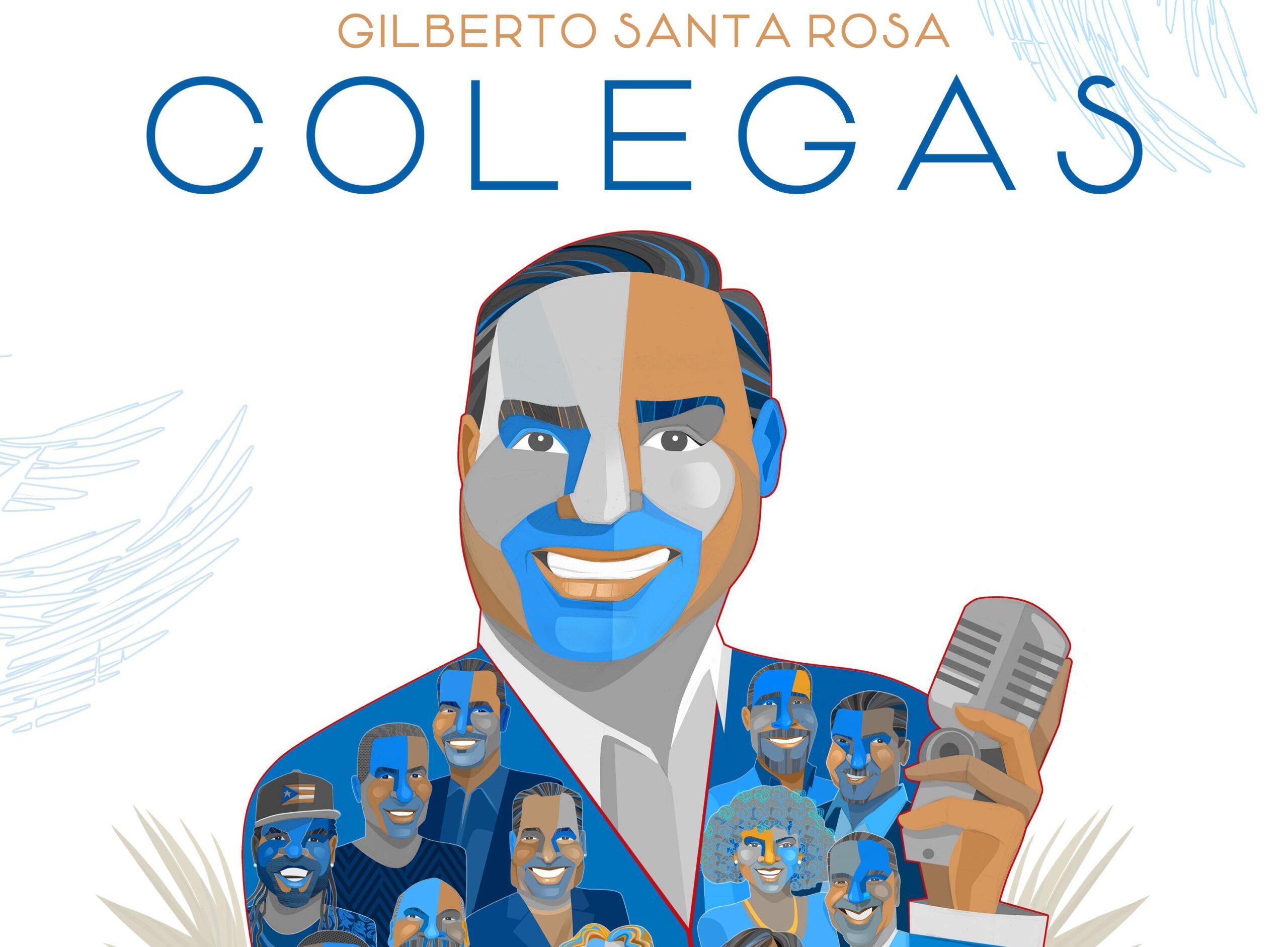
Salsa and more Salsa
SALSA is the commercial term used since the late 1960s to define a Hispanic music genere, resulting from the synthesis of Cuban son and other Caribbean music genres with jazz and other American rhythms. Salsa has varieties from Puerto Rico, Venezuela, the Dominican Republic, Colombia and other Latin American countries.
From this synthesis, Afro-Cuban and Latin jazz was also born, which has influences from other countries as well. Salsa was developed by musicians of Caribbean origin (Cuban and Puerto Rican) in the Greater Caribbean and New York City. Salsa encompasses various styles such as salsa dura, salsa romantica and timba.

ESSENCE
Cuban director Machito said that salsa was what he had played for forty years (between 1930 and 1970 approximately) before the musical genre was named. On the other hand, the New York musician of Puerto Rican descent, Tito Puente, denied the existence of salsa as a genre in itself, affirming that “what they call salsa is what I’ve played for many, many years: it’s called mambo, guaracha, chachachá, guaguancó, everything is Cuban music.
The musician Eduardo Morales defines salsa as “a new turn of the traditional rhythms to the sound of Cuban music and the cultural voice of a new generation,” “a representation of Cuban and Hispanic identity in New York.
New York Salsa

Nevertheless, some authors point out as a fundamental element in the emergence of salsa the role of Puerto Rican musicians and their culture, both on the island of Puerto Rico and in its New York diaspora. In that sense, the specific weight of Puerto Ricans in New York is pointed out, who, although a minority, were
Numerically far superior to any Latin American settlement.
It is also argued that the cut-off in cultural exchange between Puerto Ricans and the United States in New York’s Latin music scene.

MUSICAL CHARACTERISTICS
Musical Instruments
The sauce has the following characteristics:
- Rhythm: It uses as a base the clave de son, the rhythmic pattern of the Cuban son, which can be 2-3 or Melody:
- In many cases, the melodies used in salsa correspond to those traditionally used in the son montunoa although it can also be assimilated to other genres of Cuban and traditional Caribbean music, including melodies of Latin American popular music.
- Harmony: It corresponds to that used in Western music.
- Instrumentation: It uses Cuban percussion instruments popularized since the 1920s such as pailaso timbales, bongo, Cuban güiro, cowbell, two maracas and conga.
Arsenio Rodríguez was the first musician to incorporate the conga or tambo into dance orchestras.
The percussion, the instrumentation is completed with piano, double bass (in many cases electric bass), trumpets, saxophone, trombones, flute and violin.

Puerto Rican Salsa
The influence of Afro-Cuban jazz is determined by the arrangement, although it is not an essential condition in salsa.
RHYTHM
Clave de son the most representative rhythmic cell of salsa is called “clave de son” which is traditionally interpreted by the claves.
Salsa dancers and musicians group the pattern into two parts:
1. A) A part of 3 clave touches where an intermediate counter rhythm is presented.
2. B) A part of 2 keystrokes of clave 2 without a counter rhythm.
The numbers represent the blacks, the plus sign [+] represents the hit of the claves, and the dot [.] represents each quaver.
“son key 3-2”
1 . 2 . 3 . 4 . 1 . 2 . 3 . 4 .
+ . . + . . + . . . + . + . . .
“son key 2-3”
1 . 2 . 3 . 4 . 1 . 2 . 3 . 4 .
. . + . + . . . + . . + . . + .
Rumba key
There is another similar rhythmic pattern that is rarely used in salsa, and comes from the Cuban rumba complex. This pattern presents 2 counter-rhythms in one of its parts.
“rumba clave 3-2”
1 . 2 . 3 . 4 . 1 . 2 . 3 . 4 .
+ . . + . . . + . . + . + . . .
“clave e rumba 2-3”
1 . 2 . 3 . 4 . 1 . 2 . 3 . 4 .
. . + . + . . . + . . + . . . +
Son Key (3-2)
The clave is not always played directly, but forms the basis of other percussion instruments, as well as the song and accompaniment, which use it as a common rhythm for their own phrases. For example, this is the common rhythm of the bell with harpsichord 2-3:
. . + . + . . . + . . + . . . + clef 2-3
+ . * . + . * * + . * * + . * * Bell coincides with the 2 of key
The plus sign [+] represents a severe blow of the bell.
The asterisk [*] represents a sharp blow of the bell.

THE TERM SALSA
In 1933, Cuban musician Ignacio Piñeiro first used a related term, in a Cuban son entitled “Échale salsita”.
In the mid-1940s, Cuban Cheo Marquetti emigrated to Mexico.
Back in Cuba, influenced by spicy food sauces, he gave that name to his group Conjunto Los Salseros, with whom he recorded a couple of albums for the Panart and Egrem labels. In 1957 he traveled to Caracas-Venezuela for several concerts in that city and it was in Venezuela where the word “salsa” began to be broadcast on the radio to the music made by Cuban soneros inside and outside the island, designating them as “salseros”.
Music author Sue Steward states that the word was originally used in music as a “cry of appreciation for a particular spice or a quick solo,” coming to describe a specific genre of music from the mid-1970s “when a group of “Latin” (Latin American) musicians from New York began examining the arrangements of the great popular classical bands from the mambo era of the 1940s and 1950s.
She mentions that the first person who used the term “salsa” to refer to this musical genre in 1968 was a Venezuelan radio disc jockey named Phidias Danilo Escalona, who was broadcasting a morning radio program called La hora de la salsa (The Salsa Hour) in which Latin music produced in New York was broadcast as a response to the bombardment of rock music in those days (the Beatlemania).
The Time for Salsa According to this version, Phidias Danilo Escalona

What do you play?
What we do, we do with flavor, it’s like ketchup, which gives flavor to food.
What is this ketchup?
Well, that’s a sauce that is used in the United States to flavor the hamburger.Ah…! So what you guys play is sauce? Well, ladies and gentlemen, let’s now listen to the salsa of Ricardo Ray and Bobby Cruz.
Bobby Cruz called Pancho Cristal to baptize with the term “salsa” the new LP that was being launched to the market, Los Durísimos (1968). This version is supported by salsa singers such as Rubén Blades, Tite Curet Alonso and others.
It was lunchtime, time for the dressing, the flavor, and of course, the Cuban son, the guaguancó, the guaracha and the montuno.
Ed Morales also mentions the word as being used to encourage a band to increase the tempo and “put the dancers on top” to welcome a musical moment, [and] express a type of cultural nationalism, proclaiming the warmth and flavor of Latino culture.
He also mentions Johnny Pacheco, who made an album called Salsa na’ má, which Morales translated as “you just need a little bit of salsa or seasoning.
The word salsa to designate music made by “Latinos” in the United States, began to be used on the streets of New York in the late 1960s and early 1970s.
By this time, Latin pop was not a major force in the music heard in the United States as it lost ground to doo wop, R&B and rock and roll.
The emergence of salsa opened a new chapter of Latin music in American popular music where the Fania All-Stars orchestra, directed by Dominican Johnny Pacheco who along with the late lawyer Jerry Masucci founded the important salsa label Fania Records.
HISTORY AND EXPANSION
During the 1930s, 1940s and 1950s, Afro-Cuban music was widely consumed by sectors of “Latino” (‘Latin American’) origin in New York City. Cubans in New York, Puerto Ricans, and other musicians from other countries, based their music largely on elements of Afro-Cuban origin.
According to some musicians and historians, [who?] salsa is a trade name given to all Cuban music in the 1970s. Salsa expanded in the late 1970s and during the 1980s and 1990s.
New instruments, new methods and musical forms (such as songs from Brazil) were adapted to salsa, and new styles appeared like the love songs of romantic salsa.
Meanwhile salsa became an important part of the music scene in Cuba, Puerto Rico, Colombia, Dominican Republic, Venezuela, Panama and as far away as Japan. With the arrival of the 21st century, salsa has become one of the most important forms of popular music in the world.
Origins and instrumentation:
The integration of the tumbadoras and bongo in the groups that played son montuno was a fundamental element in the instrumentation of dance orchestras.

Bongo and Tumbadoras
In the late 1920’s, the son sextets and septets, which used bongo, reached a remarkable popularity in Cuba. In 1928, Gerardo Machado, with the intention of reducing the influence of African elements in Cuban music, prohibited the use of bongo, congas and carnival groups, which caused the charangas orchestras with the use of timbales) to increase their popularity.
Bongo was reintroduced into Cuban popular music in the late 1930s.
Around 1940, Rafael Ortiz’s Conjunto Llave introduced the tumbadoras or congas into an orchestra, instruments that were previously only used in Afro-Cuban folk music.
Arsenio Rodríguez popularized the use of congas by integrating them into his ensemble, introducing the son montuno on a commercial level.
In the 1940’s, Mario Bauza, director and arranger of Machito’s “Los Afro-Cubans” orchestra, added trombones to the son montuno and the guaracha. These innovations influenced musicians such as José Curbelo, Benny More, Bebo Valdés. In the album Tanga (1943), Bauza fused elements of Afro-Cuban music with jazz.
The influence of Afro-Cuban jazz and the mambo developed by Pérez Prado in 1948 led to the introduction of the saxophone in the son montuno and guaracha orchestras. In 1955, Enrique Jorrín added trumpets to the charanga orchestras, which until then only used violin and flute.
By the 1950s, Cuban dance music, i.e., the son montuno, mambo, rumba, and chachachá, became very popular in the United States and Europe.
In New York City, the “Cuban sound” of the bands was based on the contributions of Cuban, Puerto Rican, and Dominican musicians. As an example, we can mention Machito, Tito Rodríguez, Johnny Pacheco, Tito Puente or even figures like the Catalan director Xavier Cugat.
On the other hand, and outside the New York circle, groups such as the Orquesta Aragón, the Sonora Matancera and Dámaso Pérez Prado y su mambo achieved an important projection at an international level.
The mambo was influenced by Afro-Cuban jazz and son. The great bands of this genre kept alive the popularity of the long tradition of jazz within Latin music, while the original masters of jazz limited themselves to the exclusive spaces of the bebop era.
The Latin music played in New York since 1960 was led by musicians like Ray Barretto and Eddie Palmieri, who were strongly influenced by imported Cuban rhythms such as the pachanga and the chachachá. After the missile crisis in 1962, Cuban-American contact declined dramatically.
In 1969 Juan Formell introduced the electric bass into Cuba’s sonero ensembles.
The Puerto Rican cuatro was introduced by Yomo Toro in Willie Colón’s orchestra in 1971 and the electric piano in the 1970s by Larry Harlow.
In the 1970s, Puerto Rican influence increased in the field of Latin music in New York and the “Nuyoricans” became a fundamental reference.
The word salsa to designate the music made by “Latinos” in the United States, began to be used on the streets of New York at the end of the sixties and beginning of the seventies.
By this time, Latin pop was not a major force in the music heard in the United States, having lost ground to doo wop, R&B and rock and roll. In that context, the emergence of salsa opened a new chapter in Latin music, especially in the United States.

Fania All Stars
The Fania record label
Fania All Stars
The history of salsa, in which a large number of musicians participated, can be traced to some extent in the history of some important record companies.
In the seventies, Fiesta Récord, Manhattan Recording Company, and especially Fania Records, launched a great number of “salseros” from New York, performing tours and concerts all over the world.
Fania Records was founded in March 1964 by lawyer and businessman Jerry Masucci and Dominican flutist and bandleader Johnny Pacheco.
Fania began with Larry Harlow and the production of El Malo by Willie Colón and Héctor Lavoe in 1967.
Fania Records gave the genre its definitive backing by recording and distributing the albums of the great majority of salsa stars of the 1970s.
Within this company, the Fania All Stars were formed, an orchestra that brought together a large number of musicians and salsa singers such as: Ray Barretto, Willie Colón, Johnny Pacheco, Rubén Blades, Héctor Lavoe, Ismael Miranda, Cheo Feliciano, Bobby Cruz, and guest artists such as Tito Puente, Celia Cruz, and Eddie Palmieri.
The Fania All Stars instrumental ensemble represented the new tours of Caribbean music in the 1970s. In addition to the piano and bass, the presence of percussion instruments such as timba, tumba and bongo were used extensively by Puerto Rican and New York orchestras since the 1940s.
The wind instrument section was made up of three trumpets and three trombones, a rather strange endowment in the Caribbean musical tradition that would shape the particular sound of Salsa to this day.
The absence of the saxophone was remarkable, since at that time it belonged to musical concepts of the past and to the magnificence of the Big Band. The substitution of the saxophone for the trombone made it possible to differentiate, to some extent, the sound of salsa from the traditional Cuban sound.
Finally, the presence of the Puerto Rican Cuatro played by the musician Yomo Toro, who joined the group to bring the guitar from the rural Caribbean to the urban music scene (both the Cuban Tres and the Puerto Rican Cuatro), stands out.
The Puerto Rican Cuatro acquired the status of soloist and flagship instrument in the Fania All Stars while establishing the instrumental and sound differences with Cuban music.

Genesis and expansion of salsa: chronology of themes
In 1969, El Gran Combo de Puerto Rico recorded “Falsaria”. This song, initially a bolero, was interpreted as salsa.
Also Willie Colón’s orchestra with Héctor Lavoe as vocalist, recorded “Che che cole” and other important songs.
In 1965 Joe Cuba Sextet, with the singer Cheo Feliciano, recorded the song “El pito (I’ll never go back to Georgia)” and the same year the duo composed by Richie Ray and Bobby Cruz recorded the song “Comején”.
In 1971, Eddie Palmieri recorded the song “Vámonos pa’l monte” and Cheo Feliciano, as a soloist, recorded “Anacaona”.
In 1972 Fruko y sus Tesos, in Colombia, recorded “A la memoria del muerto”.
In 1973 Raphy Leavitt with La Selecta Orchestra recorded “Jíbaro soy”. At the same time, in Peru the song “Llegó la banda” by Enrique Lynch and his band was recorded, the same one that would be popularized by Hector Lavoe a year later.
In 1974 Celia Cruz and Johnny Pacheco recorded “Quimbara” and the salsa version of the Peruvian song “Toro Mata”, and Ismael Rivera did the same with “El nazareno”.
On the other hand, the Fania All Star festival held in Zaire that same year was an outstanding event in the diffusion of salsa.
In 1975, Venezuela’s Dimensión Latina, with Oscar de León as vocalist, recorded “Llorarás”, Fruko y sus Tesos recorded “El preso”, and El Gran Combo from Puerto Rico, “Un verano en Nueva York”. Héctor Lavoe began his career as a soloist with the song “Periódico de ayer”.
In 1978 La Sonora Matancera recorded “Mala mujer”. Likewise, the duo formed by Willie Colón and Rubén Blades published the album Siembra, which contained emblematic salsa songs such as “Pedro Navaja” and “Plástico”.
In 1980 Henry Fiol released his songs “Oriente” and “La juma de ayer”.
From New York, salsa expanded first in Latin America (especially in countries like Cuba, Colombia, Panama, Dominican Republic, Venezuela and obviously Puerto Rico.
In the eighties it reached an important diffusion in Europe and Japan.
Miami became a kind of “second metropolis” for Cuban music, given the specific weight of the large number of Cuban immigrants.
The Cuban community became an important reference in the life of the city of Miami, contrary to what happened in New York, where the Puerto Rican influence prevailed.
Salsa after the seventies
Eighties
During the eighties the sauce expanded to Europe and Japan. In this country the Orquesta de la Luz was born, which became popular in Latin America.
At the end of this decade the so-called “salsa romántica” emerged, a style that became popular in New York, characterized by slow melodies and romantic lyrics, that is, a concept similar to the lyrics of the ballad but with a salsa rhythm.
This new manifestation of salsa was soon assimilated by Puerto Rican artists such as Frankie Ruiz, Eddie Santiago, Paquito Guzmán, Marc Anthony, Willie González, Cano Estremera; Cubans such as Dan Den, Rey Ruiz, Issac Delgado, and even Nicaraguans such as Luis Enrique.

In Colombia
Colombian Salsa
Salsa in Colombia, in the 1970s, was linked to groups like Fruko y sus Tesos through the company Discos Fuentes de Colombia and the group The Latin Brothers.
In 1988, the record company Discos Musart published the series of LP Salsa Colección Estelar, which caused an increase in popularity and led it to compete with cumbia.
In the eighties groups like Los Titanes, Grupo Niche, Orquesta Guayacán, Joe Arroyo appeared. Also in the eighties, the Cuban Roberto Torres and the Colombian Humberto Corredor developed in Miami the concept of charanga-vallenata.

Venezuelan Salsa
From the end of the 1940s and the beginning of the 1950s, the “tropical dance music” orchestras such as Alfonso Larrain’s (1947), La Sonora Caracas (1948) or maestro Billo Frómeta’s, Billo’s Caracas Boys (1951) or Los Melódicos (1958), combined in their repertoires cumbias, merengues and other Antillean rhythms with Cuban genres.
This determined the emergence of a movement that later influenced Venezuelan salsa.
In this sense, we can talk about artists such as Canelita Medina, Federico y su Combo Latino, Los Dementes or the group of the musician Carlos Emilio Landaeta, known as “Pan con queso” of the Caribbean Classic Sonero.
The salsa in Venezuela counted with groups like the Sonora Maracaibo, the Grupo Mango or Dimensión Latina, from where figures like Oscar D’León came out.
Also musicians like Nelson Pueblo added influences of llanera music to native salsa.
From 1990 to the present.
Salsa registered regular growth between the 1970s and 2000 and is now popular in many Latin American countries and some areas of the U.S. market.
Among the singers and groups that stood out in the nineties we find figures such as Rey Ruiz, Luis Enrique, Jerry Rivera, Dan Den, Marc Anthony, La InRosa, Víctor Manuelle, Michael Stuart, Celia Cruz, Maelo Ruizdia, La Sonora Matancera, DLG, Gilberto Santa .
The most recent innovations in this genre include mixing rap or reggaeton with salsa dura.
Salsa is one of the genres of “Latin” music that has influenced the music of West Africa.
An example of this influence is the group Sonero Africando in which New York musicians work with African singers such as Salif Keita and Ismael Lo.
The irruption of sensuality
From the eighties onwards, salsa orchestras began to move away from loud sounds and “descargas” to a more cadenced and melodic sound, accompanied by lyrics with abundant references to love and sexual relations as the main and, in some cases, exclusive reason.
This music was called “erotic salsa” and had as maximum exponents Eddie Santiago, Frankie Ruiz, Rey Ruiz, Willie González and Luis Enrique.
The categorization of erotic salsa resulted in the name of the previous genre as “salsa dura”, which suffered a decline in production and popularity at the same time that the new genre was consolidated. It is worth noting that in these opinions and texts about salsa there are any number of singers who are still active with it today and there are an infinite number of recordings made by them or orchestras that were not made known and that is where the work of the music lover or DJs comes in, IN DIFFERENT PARTS OF LATIN AMERICA.