• Skip to primary navigation
  • Skip to main content

International Salsa Magazine

  • HOME
  • Previous editions
    • 2026
      • ISM / April 2026
      • ISM / March 2026
      • ISM / February 2026
      • ISM / January 2026
    • 2025
      • ISM / December 2025
      • ISM / November 2025
      • ISM / October 2025
      • ISM / September 2025
      • ISM / August 2025
      • ISM / July 2025
      • ISM / June 2025
      • ISM / May2025
      • ISM / April 2025
      • ISM / March 2025
      • ISM / February 2025
      • ISM / January 2025
    • 2024
      • ISM / December 2024
      • ISM / November 2024
      • ISM / October 2024
      • ISM / September 2024
      • ISM / August 2024
      • ISM / July 2024
      • ISM / June 2024
      • ISM / May 2024
      • ISM / April 2024
      • ISM / March 2024
      • ISM / February 2024
      • ISM / January 2024
    • 2023
      • ISM / December 2023
      • ISM / November 2023
      • ISM / October 2023
      • ISM – September 2023
      • ISM – August 2023
      • ISM July 2023
      • ISM Edition June 2023
      • ISM – May 2023
      • ISM April 2023
      • ISM March 2023
      • ISM February 2023
      • ISM January 2023
    • 2022
      • ISM December 2022
      • ISM November 2022
      • ISM October 2022
      • ISM September 2022
      • ISM August 2022
      • ISM July 2022
      • ISM June 2022
      • ISM May 2022
      • ISM February 2022
      • ISM January 2022
    • 2021
      • ISM December 2021
      • ISM November 2021
      • ISM October – 2021
      • ISM September 2021
      • ISM August 2021
      • ISM July 2021
      • ISM May 2021
      • ISM April 2021
      • ISM June 2021
      • ISM March 2021
      • ISM February 2021
      • ISM January 2021
    • 2020
      • ISM December 2020
      • ISM November 2020
      • ISM October 2020
      • ISM September 2020
      • ISM August 2020
      • ISM July 2020
      • ISM June 2020
      • ISM May 2020
      • ISM April 2020
      • ISM March 2020
      • ISM February 2020
      • ISM January 2020
    • 2019
      • ISM December 2019
      • ISM November 2019
      • ISM October 2019
      • ISM Septembre 2019
      • ISM August 2019
      • ISM July 2019
      • ISM June 2019
  • Spanish
  • Download Salsa App
    • Android
    • Apple

Search Results for: Salsa Orchestra

Alberto Crespo and Carlos Santos Release Their Latest Single “Narci” with Grupo Bacheo to the Latin Market

On November 7, 2025, the vibrant Latin music scene celebrates a stellar collaboration that promises to ignite dance floors.

The acclaimed Venezuelan pianist, arranger, and music producer Alberto Crespo joins legendary Puerto Rican sonero Carlos Santos and the talented Grupo Bacheo to present their latest musical track titled “Narci.”
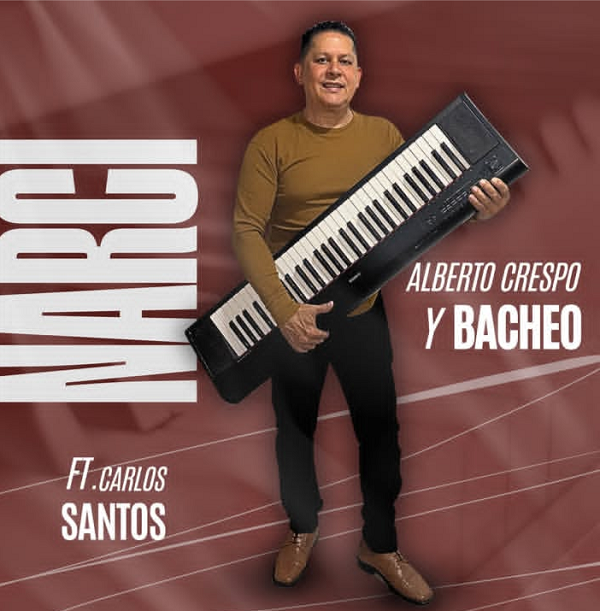
Alberto Crespo and Carlos Santos release their latest song, titled Narci, to the Latin market with Grupo Bacheo

This original composition by Ali Delgado and José Granados, featuring arrangements by Alberto Crespo himself, fuses a modern sound with the unmistakable rhythm of salsa, guaranteeing a musical experience that will delight dancers.

Alberto Crespo: A Piano Master with an International Career.

From his beginnings at the “José Ángel Lamas” Music Conservatory in Caracas, Alberto Crespo demonstrated exceptional passion and talent. His deep immersion in harmony, counterpoint, orchestration, and improvisation has established him as a versatile and well-rounded musician.

By age seventeen, he was already touring with renowned orchestras, sharing the stage with icons such as Naty y Su Orquesta, Celia Cruz, Bobby Capó, Carmen Delia Depini, Carlos Cano Estremera, Andy Montañés, Ismael Miranda, Pete Conde Rodríguez, and José Mangual Jr., among many others.

Alberto Crespo A Piano Master with an International Career

With over three decades of experience in salsa and Latin Jazz, Crespo has consolidated his reputation as a highly prestigious producer, arranger, and pianist. His impressive list of collaborations includes national and international artists such as Maikel Stuart, Frankie Morales (former singer for Tito Puente), Orquesta Bailatino, Grupo Mango, Herman Olivera, Rumberos de Callejón, Gilberto Santa Rosa, and Naty y Su Orquesta. His versatility has led him to be part of the most prominent musical groups in Venezuela.

Carlos Santos: A Classy Sonero with a Legendary Trajectory.

Born on March 13, 1946, in Cataño, Puerto Rico, Carlos Santos is a true sonero whose career took off with Joey Pastrana’s band. His powerful voice and unmistakable salsa flair led him to perform and record with emblematic salsa orchestras, including “Kako y su Trabuco,” “Los Kimbos,” “Conjunto Candela,” and Roberto Roena’s “El Apollo Sound,” in addition to special performances with Ray Barreto and El Conjunto Libre.

Santos has left classics for posterity such as “Chacaboom,” “Las cosas de la vida” and “Amor verdadero” with Joey Pastrana, as well as “Flores para tu altar” and “Me imagino” with Conjunto Candela. His voice also enriched productions by Eddie Palmieri and Los Kimbos with tracks like “Caridad” and “Todo el mundo.” During his time with El Apollo Sound, he garnered hits such as “El Progreso” and “Háblame ahora.”

Carlos Santos Un Sonero con Clase y una Trayectoria Legendaria

Carlos Santos currently resides in Florida, United States, and continues to delight audiences with his international and local performances.

The union of these two pillars of salsa, under the production of Chongo Producción (from New York) and Juancho Producción (in Cali), promises to be a memorable event for Latin music.

Ali Delgado (Caracas) y Juancho Producción (Cali)

Note: “45 RPM is for sale in Cali by Juancho Producción, and will be presented with great fanfare on December 30 at 10:00 a.m. at the Meeting of Music Lovers and Collectors (Encuentro de Melómanos y Coleccionistas) of the Cali Fair, Colombia. 2025.”

Production Credits

General Production

  • Production: Alberto Crespo & Chongo Productions LLC

Musical Team

  • Composer: Ali Delgado / José Granados
  • Vocalist: Carlos Santos
  • Arrangements: Alberto Crespo

Musicians

  • Timbal: Carlitos Padrón
  • Tumbadoras (Congas): Manuel “Manny” Márquez
  • Bongó / Bell: Carlitos Padrón
  • Trumpets: Jorge Maestre “Pitufo”
  • Baritone Saxophone: José Antonio Fariñas
  • Bass: José Soto “Mortadelo”
  • Percussion: Carlitos Padrón, Carlos Crespo
  • Chorus / Background Vocals: Heyzer Cabrera & José Soto “Mortadelo”

Recording and Post-Production

  • Recording Studios:
    • Chongo Estudios (New York)
    • A Tempo Estudios (Caracas)
    • París Recording Estudios (USA)
  • Mixing: Heyzer Cabrera / Alberto Crespo
  • Mastering: Heyzer Cabrera

Important Note by Alberto Crespo:

I was working on the arrangement for the song NARCI, and when I reached the chorus, I wanted to find a beautiful melody with a different harmony, like a chorus of angels singing from heaven. I was pacing around my workspace and the areas near my house, searching for ideas.

My wife, Adriangela, was listening to what I was developing to achieve a final connection, and all of a sudden, she sang that beautiful melody to me. I immediately copied it and added the chords, and honestly, it was something magical, very spiritual… “Ya no estás más a mi lado, cómo te extraño, mi amor, cómo te extraño…” (You are no longer by my side, how I miss you, my love, how I miss you…) That final unison of the chorus is very subtle and sentimental.

Video

Video: Chongo Productions LLC

Carlitos Padron Director de Chongo Producción (desde New York)

Listen to “Narci” on YouTube:

Alberto Crespo y Bacheo

[email protected]

+58 4142521642

Also Read: The Conjunto Bailatino “La Resistencia Salsera” again “Antes los ojos del Mundo” and here, “No hay quinto malo”

Pedrito Moya and Jhonatan Araque: A Tribute to Jerry Rivera

Latin America / Venezuela / Caracas

“There is a great variety of new artists who want to expand and promote their new talents to all lovers of salsa music. For this new edition, we present Jhonatan Araque, a Venezuelan born in Maracay, Aragua, on March 25, 1983. Since he was very young, he showed admiration and an inclination for music, especially singing. By the age of 14, he joined the Grupo Rumba Costeña for a year, performing as a soloist; later, he joined the quintet ‘Quinto Elemento,’ who interpret pop and ballad music. From that moment, he had the opportunity to perform at the ‘Forum’ of Valencia, his first experience performing in front of a significant audience.

He mentions that he began his studies at the ‘Tecnológico de Música de Valencia’ (Valencia Technological Institute of Music), where he graduated with a major in singing, obtaining excellent grades. By the age of 18, he decided to record his first solo demo, which opened the doors to his first record contract with the ‘Sonográfica’ record company, alongside the Moratinos brothers, forming part of a group called ‘Okey,’ experimenting with various genres on that album, such as ballads and pop with Latin and Spanish influences.

“Jhonatan Araque’s Orchestra is made up of very talented young Venezuelans.”

Pedrito Moya and Jhonatan Araque

After performing in various nightclubs, he decided to join the salsa orchestra ‘Los Latinos,’ where he became known in the cities of Caracas, Maracay, and Valencia, having the opportunity to share the stage with great national and international performers of the genre, including: Hernan Olivera, Marcial Istúriz, Wilmer Lozano, Edgar ‘Dolor’ Quijada, Hildemaro, Erick Franchesqui, Rodrigo Mendoza, Ángel Flores, and Mariana La Sonera.

Additionally, he spent six months as the singer for La Dimensión Latina, performing with them in different cities across the country; he also auditioned and became part of the ‘Simón Bolívar Latin Caribbean Orchestra,’ belonging to the National System of Youth and Children’s Orchestras and Choirs of Venezuela, with which he had great experiences in various projects under the direction of maestro Alberto Vergara Icaza.

With all these new experiences, new opportunities arose for him in various forms to become part of renowned orchestras within the national salsa genre, such as Rumberos del Callejón, Orquesta Puma Band, El Combo de Venezuela, and the recording of two tracks with Fidel and Julito Antillano. In 2013, he decided to retire from La Latino Caribeña and form his own orchestra to lead ‘The Tribute Project to Jerry Rivera and Rey Ruiz.’

Salsa singers Jerry Rivera (Puerto Rican) and Rey Ruiz (Cuban) are recognized in all Caribbean countries, and both have had a great impact in the Venezuelan salsa scene, where their recordings are widely known and have a large following.

Jhonatan Araque’s orchestra is made up of very talented young Venezuelans with specific studies for each of the instruments they use. They are dedicated to presenting the audience with the interpretations that have been highly successful throughout their careers, thus paying tribute to these two singers of great international renown.

The members of this great orchestra are:

Name Role
Jonathan Araque Solo Vocalist
Mauricio Marin Backing Vocalist
Luis Martínez Backing Vocalist
Angel Palma Piano
Edwin Garcia Bass
José “Puma” Reyna Timbales
Braimy Mijares Congas
Lukas Gomez Bongos
Jose Anahole Trumpet
William Rada Trumpet
Pedro Xavier Moya Trombone (Musical Director)
Leycester Licon Trombone
Pedrito Moya and Jhonatan Araque - TV
Pedrito Moya and Jhonatan Araque – TV

For more information, contact them at:

Contact Method

Phones

Jonathan Araque: +58 424-3443504 Pedro Xavier Moya: +58 416-3077868 0414-9276637

Facebook: https://www.facebook.com/ Bachology?hc_ref=SEARCH

Correo: [email protected]

YouTube: https://www.youtube.com/ channel/UCZP0snvp3tqkP24c X_fg1KQ

Twitter: @Bachology

Alberto Gonzalez talks about his book on Hector Lavoe and his experience with ‘‘El Jibarito de Ponce’’

As an artist, one of the most noble actions to be taken is to honor the great artists whose legacy inspired later generations, including those who pay homage to them today. Proof of this is the talented bandleader, composer, singer, and now author, Alberto González, whom we thank for sharing his story and various facets of his life with us, including his role as the author of a new book about “the singer of all singers,” Hector Lavoe. 

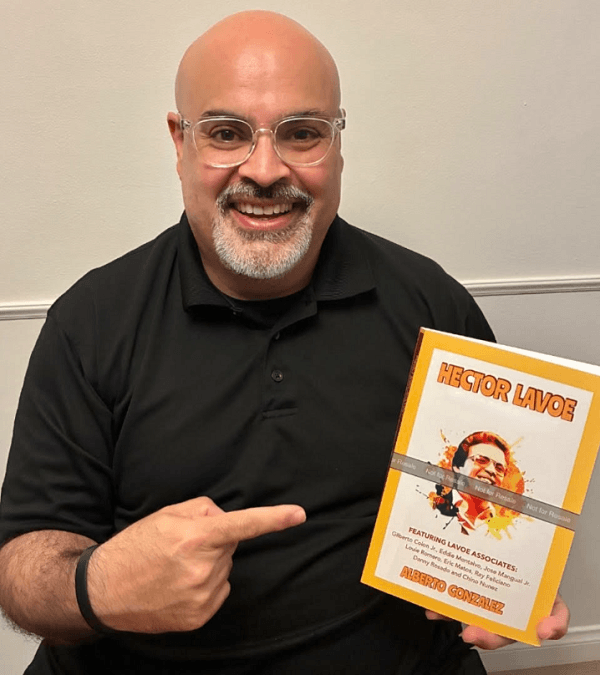
Alberto and his book on Hector
Author Alberto Gonzalez with a version of his book ”Hector Lavoe and Associates”

Alberto’s initial interest in music

Alberto’s initial interest in music began with an aunt from Puerto Rico who went to live with him and his parents in Chicago. She loved the music of Raphael and Sandro, so her nephew listened to them practically every day and ended up falling in love with their music and how they sang.

Little by little, Alberto began to learn their songs and was unknowingly taking his first steps toward becoming a professional singer. However, it did not stop there; he also listened to the trio music that his parents enjoyed and eventually to the salsa albums that his older brother began bringing to the house. Those salsa albums really caught Alberto’s attention.

Among the artists his brother listened to were Eddie Palmieri, La Sonora Ponceña, El Gran Combo de Puerto Rico, Willie Colón, and the one who would become his greatest inspiration, Héctor Lavoe.

Eventually, his brother became a professional trumpet player and played with various salsa orchestras in Chicago. Since he always heard Alberto singing songs at home, in 1979, he suggested that he audition for a new band of young salsa musicians his manager was putting together. For the audition, Alberto was tasked with learning and singing the popular Willie Colón and Héctor Lavoe song “Voso.”

Fortunately, his audition was a great success, and Alberto was asked to join La Típica Leal 79. The story behind the band’s name is interesting: Carlos Caribe Ruíz, the manager of the group, decided on the name Típica Leal because most of the members of his previous band, La Juventud Típica, decided one day to quit; they left him. For that reason, he decided to create a new band, and he made sure to add the word “Leal” (loyal in English) to the band’s name. His hope was that the new band, made up mostly of teenagers, would be loyal and not leave, just like the previous band did.

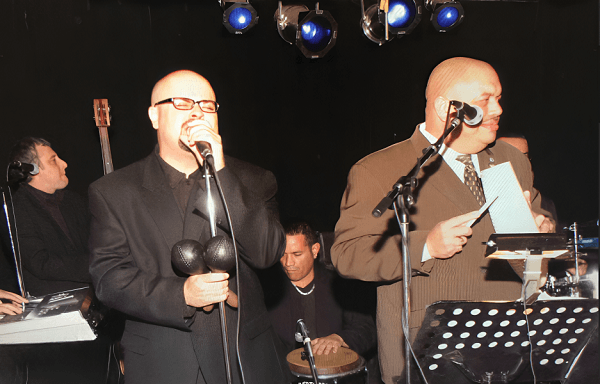
Sometime later, Alberto would go on to sing with a band called La Inspiración Latina, and he also worked briefly with Orquesta Yambo. In 2001, he moved to Los Angeles, where he began working with Johnny Polanco y Su Conjunto Amistad, becoming one of their main vocalists and traveling the world with them and the band.

Alberto and Johnny Polanco
Alberto Gonzalez playing with Johnny Polanco Y Su Conjunto Amistad

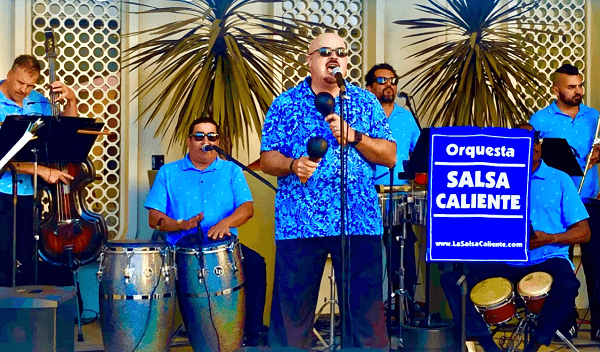
Orquesta Salsa Caliente

When he left Johnny Polanco’s group, Alberto finally felt ready to form his own group, and that is how Orquesta Salsa Caliente was born. He has been leading the band for many years now and has even traveled with the band to Africa and Bermuda.

Over the past few years, Alberto has concentrated mainly on his work as an author. While he continues to perform, his primary focus has been on his debut book ‘‘Hector Lavoe and Associates.’’

Alberto’s Hector Lavoe Experience

In 1979, after auditioning and doing well with the song “Voso,” 15 year old Alberto officially became a member of La Tipica Leal 79.Caribe, the band’s manager, then asked him to learn a few more Hector Lavoe (and Willie Colon) songs. Since Hector was his favorite singer, he gladly learned the songs. Since his voice was somewhat similar to Hector’s, his bandmates began to affectionately call him “Baby Lavoe.”

In the fall of that same year, Alberto learned that Héctor and his orchestra were going to be performing in Chicago. Once he found that out, he asked Caribe to please take him to see Héctor, and, if at all possible, to introduce him to Héctor. Thankfully, he did get to go to that show, and he did meet Héctor. It was during that show, and during one of Héctor’s breaks, that he was able to take a photo with his favorite singer. Alberto still cherishes that photo to this very day. That night, he realized that Héctor was a “man of the people” due to his humility and how he treated others. The photo and his experience with Héctor were some of the main reasons why he decided to write a book about Lavoe. Over the years, many have criticized Héctor and have focused primarily on the negative aspects of his life. Sadly, many people are not familiar with the other side of Héctor, the humble, generous, and kind side of Lavoe. They will learn more about that side of Héctor in the new book.

Well, about a year and a half after first meeting Héctor, La Típica Leal 79 was booked to open for Celia Cruz and Héctor Lavoe. That show would take place at one of the most acclaimed dance halls in the city, where many of the greatest salsa artists performed over the years. That night, Alberto was able to share another conversation with Héctor, and he also took another photo with him. Héctor was generous with his time; he was kind and very accommodating. That’s something that Alberto never forgot.

This and other experiences are documented by the author in the book. Alberto actually interviewed about sixteen of Héctor’s former musicians, and eight of them are featured in the book. You’ll learn about their musical experiences, and you’ll be able to read about their experiences with “El Jibarito de Ponce,” Héctor Lavoe. These are the musicians that are featured: Gilberto Colon Jr., Eddie Montalvo, Jose Mangual Jr., Louie Romero, Eric Matos, Ray Feliciano, Danny Rosado, and Chino Núñez.

Alberto called the book “Héctor Lavoe and Associates,” and that title was somewhat inspired by Willie Colón’s 1978 compilation album “Willie Colón and Associates.”

Alberto and Salsa Caliente
Alberto Gonzalez and his orchestra Salsa Caliente

A few Lavoe stories from the book

Among the many anecdotes that can be read in the book, Alberto told us one in which, on one occasion, a couple of Héctor Lavoe’s musicians had their vehicle broken into, and all of their instruments were stolen. When Héctor found out what had happened, he bought them new instruments and told them not to worry about paying him back. He did not charge them a penny.

Here’s another story. During a show, one of Héctor’s trumpet players accidentally dropped his trumpet on the floor and damaged it beyond repair; the instrument was unplayable. What did Héctor do? Héctor gave him $1,000 to go buy a new trumpet and, once again, didn’t charge him a penny.

These are just a few of the many stories regarding Héctor Lavoe that you’ll be able to read in the more than 400 pages of the book. The book will be officially launched in the coming months. For more information, please visit: www.hectorlavoebook.com.

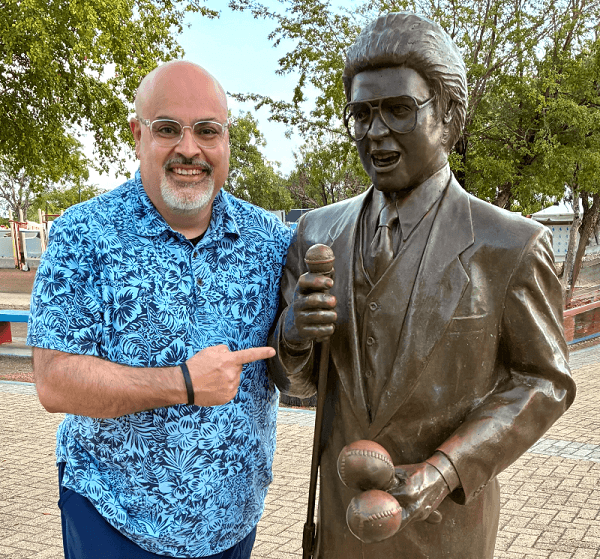
Alberto and Hector in Ponce
Alberto Gonzalez next to the statue of Hector Lavoe in Ponce, Puerto Rico

Read also: Puerto Rican American bandleader and singer Elle Jay is proud of her roots

Puerto Rican American bandleader and singer Elle Jay is proud of her roots

After so many years of coexistence between Latinos and Americans on US soil, there are many citizens who, as a result of this mix, carry in their DNA both identities and that is how they live their lives. Such is the case of Elle Jay, the founder and lead singer of Spanglish Latin American Band, with whom we talked about her life, career, and current orchestra.

Elle Jay recording
Bandleader and singer Elle Jay recording in the studio

Elle’s beginnings in music

Elle has been singing since she was very young. In fact, her mother says that when she was just six months old, she flounced excitedly whenever she heard Latin music. In addition, she comes from a family of musicians, firstly with her father, who played drums in an orchestra, and her mother, who was a singer. For this reason, music was always very present in each and every stage of her life, but she would not become a professional until many years later.

Moreover, once she grew up and became an adult, she felt she did not yet have the skills required to be a good singer, so she had to roll up her sleeves and start to gain experience if she wanted to reach the level she sought. That is how she met the members of a salsa orchestra that played in her area and asked them if they could give her the opportunity to join the group and get better over time. They said yes, and that is when she began to learn everything she could under the wing of various veteran musicians, who taught her to understand the rhythms and clave in the various genres of Latin music. 

She also joined other bands like the Orquesta Curaré and Pa’ Gozar Latin Band led by vocalist Laura Sosa, whom Elle considers one of her greatest mentors and teachers in the competitive and complex world of music.

Elle Jay and Jorge Rosario
Guitarist and bassist Jorge Rosario and Elle Jay presenting an evening serenade

How Spanglish Latin American Band got started

Several years later, she finally felt ready to start her own project according to her professional aspirations and therefore stop relying on what others were looking for in a group. In that regard, she took advantage of her half-Puerto Rican and half-American identity and her fluency in Spanish and English to develop an idea that she would share with other musicians she met in her neighborhood. These artists liked it and decided to join her on this road and see what the future held for them.

That was about six years ago, and the project has not done more to grow over time thanks to the tenacity of both Elle and the rest of the team who have made it all possible.

Current and former members of Spanglish Latin American Band

As many other groups of its type, Spanglish Latin American Band has undergone many changes since its founding. One of the few who has stayed in the band from day one is guitarist and bassist Jorge Rosario, who has accompanied Elle at all times and is by her side to this day. He also supports her greatly in everything related to sound and recordings.

The rest of the musicians have come and gone since the beginning. Among the current members of the band are Elle, Jorge, Italian trombonist Mike Matarrazo, and pianist Walter Ávalos. They are currently the most visible and stable faces of the group, while the others only play along with them occasionally.

Elle Jay and the rest of the band
Conguero Mike McSweeney, trombonist Mike Matarrazo, bandleader and singer Elle Jay, drummer Hermidez, bassist and guitarist Jorge Rosario, pianist Walter Ávalos, and bongo player Jay Torres

Half Puerto Rican, half American

In other interviews, Elle has said that she identifies herself a lot with both the United States and Puerto Rico, which she has wanted to reflect in her music. That is why she has always felt a strong connection with artists like Selena, as “The Queen of Tex-Mex” was also very aware of her Latin culture despite being born in the United States. Quintanilla inspired her so much that she wanted to make a tribute to her by singing her famous song “Bidi Bidi Bom Bom” in reggae.

Another example of this is the group Sade with the song “The Sweetest Taboo,” which Elle translated into Spanish and covered in rumba and salsa to “latinize” it. She has done the same with many other well-known songs that have been covered in salsa and Spanish by her group. 

Although the majority of the public has shown great receptiveness to their work, Elle also points out that this has caused them some problems with producers and event promoters who think that the group is not American or Latin enough, which has negatively impacted them in some bookings. However, the artist assures that both she and her bandmates stand firm in their convictions and should not change the basis of their project just because a few people do not like it.

“This is who I am, and I can’t please everyone. There always will be people who say yes or no because that’s how this business works, so you have to be strong and move forward despite the obstacles you face,” Elle said on the subject.

Elle Jay and her students
Elle Jay with her students during a salsa class. She is also a dance teacher

To communicate with Spanglish Latin American Band, you can do so via social media or email:

Facebook: Spanglish Latin American Band

Instagram: @spanglishlatinamericanband

Email: [email protected]

Read also: Trombone player Lindsey McMurray from the women’s orchestra Las Chikas

Trumpeter Davián Raúl Launches Solo Career with “Despierta Salsero” Album

Davián Raúl has released his debut production, Despierta Salsero, available now in digital format and on CD. The young Puerto Rican salsa artist is currently on a promotional tour for the album.

Davián Raúl is no stranger to the salsa scene. He’s been playing the trumpet since he was ten years old, starting with the Banda Sinfónica de Toa Baja. He eventually became a trumpeter for Sonora Ponceña, thanks to the support of Papo Lucca, director of “Los Gigantes del Sur.” To reach his current position, Davián Raúl pursued an education in Music Education and Performance, with the trumpet as his primary instrument. He is a graduate of the Interamerican University of Puerto Rico and is currently a music teacher at a school in Comerío, Puerto Rico, where he mentors students from pre-kindergarten through sixth grade.

Trumpeter Davián Raúl launches his solo career with the album Despierta Salsero.

Before joining one of the most important and iconic salsa orchestras—one that heavily emphasizes the trumpet’s sound—Davián was a trumpeter for the orchestras of Nino Segarra, Primi Cruz, Osvaldo Román, and Anthony Cruz, to name a few. He was also part of Conjunto Chaney shortly before auditioning for La Ponceña. During his time as a backing musician, he traveled the world, playing his instrument in major venues and gaining the experience necessary to make his leap. Davián Raúl makes his debut as a solo singer with Despierta Salsero, bringing a solid hard salsa proposal aimed at satisfying the taste of true salsa aficionados.

Album Details

The album features 10 tracks encompassing hard salsa, romantic salsa, rumba, bolero, and son. The recording includes: ‘Al que nace pa’ salsero,’ ‘Tengo que marcharme,’ ‘La campana’ (a song dedicated to Cali, Colombia, known as “the salsa capital of the world”), ‘Ahora me extrañas,’ ‘Coño, despierta salsero,’ ‘Mientras me sigas necesitando,’ ‘Mi salsa no muere,’ ‘La pachanga,’ ‘Te traigo el son,’ and ‘Ten compasión.’ The orchestration was arranged by Raúl Berríos Raymundí, with arrangements by talented musicians such as Ramón Sánchez, Ernesto “Tito” Rivera, Ángel “Pajay” Torres, and Andy Guzmán. Nine of the ten compositions are original works by Raúl Berríos Raymundí and Irvin Raúl Berríos López. The tenth track, ‘Mientras me sigas necesitando,’ is a renowned song by the celebrated Camilo Sesto.

Musical Production and Guest Artists

The musical execution was handled by a carefully selected group of great Puerto Rican and international musicians. The congas feature “Pequeño” Johnny Rivero, Kachiro Thompson, Gadwin Vargas, Charlie Padilla, and Sammy García. Japhet Rodríguez, Pete Perignon, Edwin Clemente, Pablo Padín, and Diego Camacho play the timbal. Alexandra Albán, Luisier Rivera, Javier Oquendo, and Richard Carrasco perform on the bongos. Richard Bravo is on drums, while Raúl Berríos Raymundí, Sergio Múnera, Ricardo Lugo, Ramón Vázquez, and Pedro Pérez provide the rhythm on bass. Andy Guzmán, Ramón Sánchez, and Carlos García play the piano. The trumpet section showcases David “Piro” Rodríguez, Angie Machado, Jesús Alonso, Marito Ortiz, Dante Vargas, Pedro Marcano, Yoandy Vera, and Davián Raúl himself. José Berríos Raymundí and Irvin Raúl Berríos López contribute on trombones. For the choruses, the voices of Carlos García and Jorge Yadiel Santos alternate with those of Raúl, Irvin, and Davián himself. The sound engineering team responsible for mixing and mastering included Papo Sánchez, Andy Guzmán, and Rolando Alejandro. With this impressive lineup, Davián Raúl, one of the youngest members of the Berríos dynasty, makes his debut, confidently declaring that “salsa is still in control.”

Davián Raúl released his first production available in digital format and on compact disc, Despierta Salsero.

Endorsements

Recently, “El Caballero de la Salsa,” Gilberto Santa Rosa, endorsed Davián Raúl’s debut production via a video clip shared on social media. Santa Rosa stated, “Davián Raúl is a tremendous young talent whom you must listen to… so that true salseros know there’s plenty of salsa for a long time to come. Davián Raúl: Go for it!” In response, Davián Raúl commented on his Facebook page, “Infinite thanks (…) for making this dream possible. You didn’t just give me space, you gave me an opportunity worth gold! This is just the beginning… and may the salsero awaken throughout the world!”

Bella Martinez Puerto Rico


Also Read: Bella Martinez, the irreverent Salsa writer

  • « Go to Previous Page
  • Page 1
  • Interim pages omitted …
  • Page 37
  • Page 38
  • Page 39
  • Page 40
  • Page 41
  • Interim pages omitted …
  • Page 156
  • Go to Next Page »

International Salsa Magazine (ISM) is a monthly publication about Salsa activities around the world, that has been publishing since 2007. It is a world network of volunteers coordinated by ISM Magazine. We are working to strengthen all the events by working together.