• Skip to primary navigation
  • Skip to main content

International Salsa Magazine

  • HOME
  • Previous editions
    • 2026
      • ISM / April 2026
      • ISM / March 2026
      • ISM / February 2026
      • ISM / January 2026
    • 2025
      • ISM / December 2025
      • ISM / November 2025
      • ISM / October 2025
      • ISM / September 2025
      • ISM / August 2025
      • ISM / July 2025
      • ISM / June 2025
      • ISM / May2025
      • ISM / April 2025
      • ISM / March 2025
      • ISM / February 2025
      • ISM / January 2025
    • 2024
      • ISM / December 2024
      • ISM / November 2024
      • ISM / October 2024
      • ISM / September 2024
      • ISM / August 2024
      • ISM / July 2024
      • ISM / June 2024
      • ISM / May 2024
      • ISM / April 2024
      • ISM / March 2024
      • ISM / February 2024
      • ISM / January 2024
    • 2023
      • ISM / December 2023
      • ISM / November 2023
      • ISM / October 2023
      • ISM – September 2023
      • ISM – August 2023
      • ISM July 2023
      • ISM Edition June 2023
      • ISM – May 2023
      • ISM April 2023
      • ISM March 2023
      • ISM February 2023
      • ISM January 2023
    • 2022
      • ISM December 2022
      • ISM November 2022
      • ISM October 2022
      • ISM September 2022
      • ISM August 2022
      • ISM July 2022
      • ISM June 2022
      • ISM May 2022
      • ISM February 2022
      • ISM January 2022
    • 2021
      • ISM December 2021
      • ISM November 2021
      • ISM October – 2021
      • ISM September 2021
      • ISM August 2021
      • ISM July 2021
      • ISM May 2021
      • ISM April 2021
      • ISM June 2021
      • ISM March 2021
      • ISM February 2021
      • ISM January 2021
    • 2020
      • ISM December 2020
      • ISM November 2020
      • ISM October 2020
      • ISM September 2020
      • ISM August 2020
      • ISM July 2020
      • ISM June 2020
      • ISM May 2020
      • ISM April 2020
      • ISM March 2020
      • ISM February 2020
      • ISM January 2020
    • 2019
      • ISM December 2019
      • ISM November 2019
      • ISM October 2019
      • ISM Septembre 2019
      • ISM August 2019
      • ISM July 2019
      • ISM June 2019
  • Spanish
  • Download Salsa App
    • Android
    • Apple

Search Results for: Salsa Orchestra

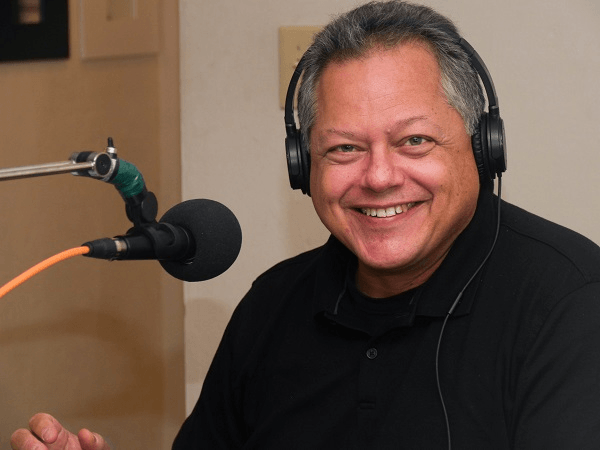
The Dudamel | Father and son

Latin America / Venezuela / Caracas

Oscar Dudamel, the father of Gustavo Dudamel, director of the Los Angeles Philharmonic Orchestra and the Simón Bolívar Orchestra of Venezuela, has been a musician for many years. Every Friday and Saturday, he receives applause from the public in the place where he plays the trombone since a small stage with “La Otra Banda de Dudamel” the Agraz ensemble, a salsa group whose main course is the songs of the duo made famous by Héctor Lavoe and Willie Colón.

Dudamel Padre e Hijo
Dudamel Father and Son

On Sundays, Oscar Dudamel has to be on the other shore and applaud standing up, as parents do, swollen with pride at the talent of their son who, with baton in hand, conducts a world-renowned Symphony Orchestra and if he think about it, his musical vein germinated from the brass bands of charanga, salsa and guaguancó.

After 10 at night it is difficult to find a place in “The Temple of Salsa”, the tickets are not sold out, but the tables and the best stalls of this place located on 7th Street that crosses Bolivar Avenue in Maracay, there fanatics and amateur dancers meet. of salsa and logically admirers of Héctor Lavoe and Willie Colón

Oscar Dudamel on the trombone is accompanied by Charly Guzmán, a talented young man who, at just 18 years old, shows the gifts of his voice; Oswaldo Agraz (musical director, piano and backing vocals), Gerardo Vargas (bass), Vicente Guzmán (timbale), Júnior Narváez (bongo), Diego Camus (conga and backing vocals), Ventura Prieto (trombone) and Johan Figueroa (alternate trombone). It is about the same format, instruments and identical distribution (the trombones next to the vocalist) of the orchestra that captivated him.
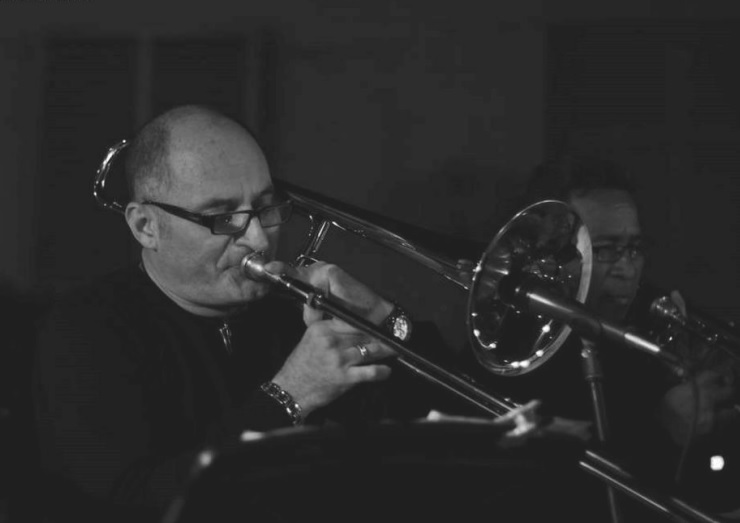
Dudamel father playing trumpet

And it is that music often also enters through the eyes, as Oscar Dudamel says, who knew he wanted to be a trombonist when he saw Willie Colón at La Feria de la Alegría holding his instrument while puffing out his cheeks, in that In this way, it is known that the first approach of the today brilliant, young and valued Orchestra Director Gustavo Dudamel to music, was not appreciating the Tchaikovsky that he likes to conduct so much, on the contrary, it was appreciating the music that came out of the trombone of his beloved dad.

The previous June, Oscar paid homage to Hector Lavoe as usual, for commemorating years of his death. “Héctor Lavoe died on Monday, June 29, 1993 at 11:45 in the morning”, an event that he remembers with the accuracy that sad events mark, but despite the pain, with satisfaction and pride, he mentions that his son Gustavo de Only 29 years old, before entering the stage he repeats a special ritual: “Before entering New York to direct, someone asked Gustavo: ‘“Master, what are you listening to? Tchaikovsky? and Gustavo replied: ‘No, Tito Rodríguez because he gives me swing'”.

If someone were to say that Gustavo Dudamel owes a debt to Willie Colón and Héctor Lavoe for his vocation as a musician, he would not be wrong, or acknowledge his father, who has often referred that his son’s versatility is due to the fact that he always listened to popular and classical music. . “I listened to more salsa than Beethoven, that’s why it has so much rhythm,” he says with a laugh.
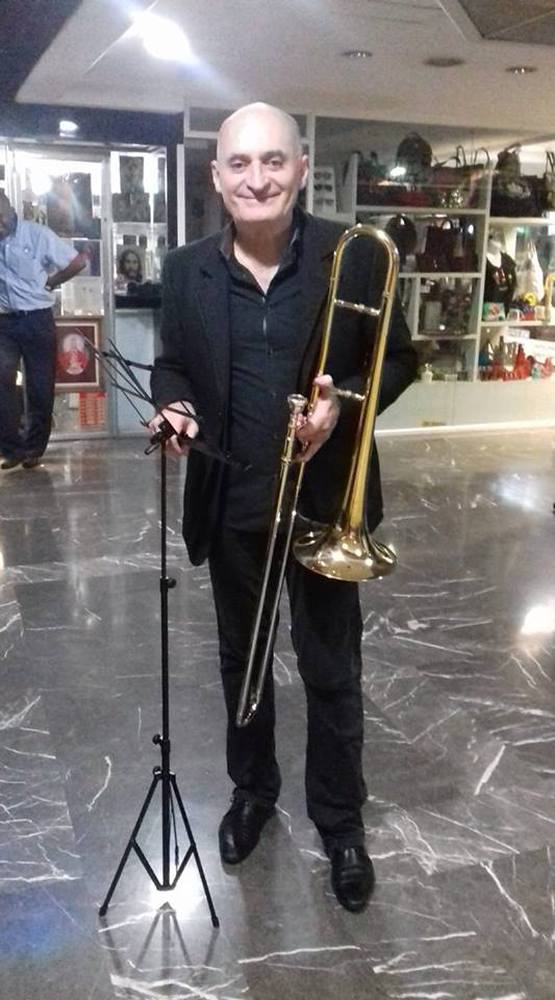
Dudamel Padre
Dudamel Father

“I am his number one fan. He fulfilled the goals that I, due to various circumstances, could not fulfill, he made the dream that I wanted come true. He has reached where I would have liked”, reveals the father, who sees in his son an extension of his, “ .

In a life marked by music, a soundtrack for falling in love could not be missing. It was during the visit of El Gran Combo de Puerto Rico to Barquisimeto in the late 1970s that Oscar noticed Solange Ramírez, his wife and Gustavo’s mother; Today, 30 years later, when Falsaria sounds in Maracay, the song leads him to remember that indelible moment.

Gustavo Adolfo, as his mother calls him, began playing the güiro before he was four years old; later he would build his own battery out of biscuit tins and safety helmets.

Dudamel Padre e Hijo photo
Dudamel Father and Son photo

Gustavo received his first knowledge of music from his father, who was then a trombonist with the Lara Symphony, who had plenty of passion to play and lacked patience to teach. He wanted to be a trombonist, like his father, but his small arm could not reach the instrument.

“I imagined that Gustavo was going to be a musician,” he says. “I told him: ‘You have to be the best or among the best and never lose your principles or forget where we come from.'”

At the age of seven Gustavo played the timpani with La Banda Actual and at the age of nine he arranged for this salsa orchestra in which Oscar played for 16 years and with which he met again after many years.
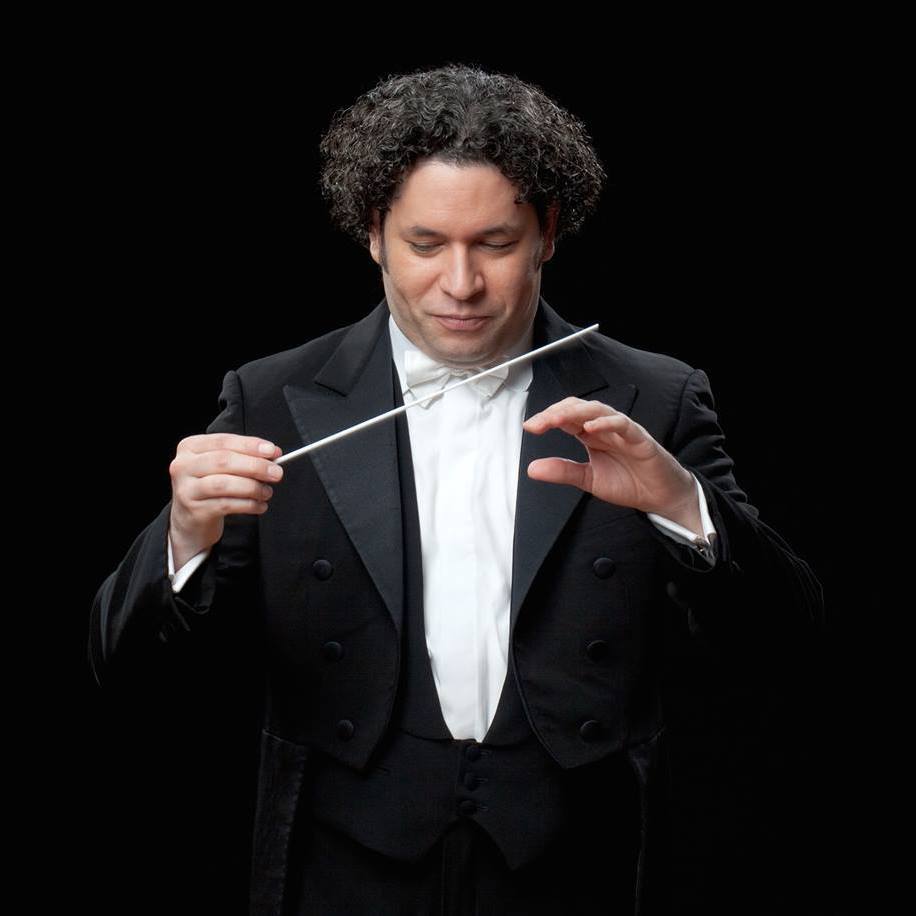
Gustavo Dudamel
Gustavo Dudamel

Gustavo decided on the violin, an instrument that adjusted to his size, and at home, father and son had the habit of studying while walking. There were times when one would bend down for the other to pass, so that the slide of the trombone and the bow of the violin would not trip over each other. However, popular music and academic music finally made their own meeting.

Oscar does not shake his hair, but he inflates his lungs with force and from that mouth-to-mouth breathing with his instrument, he manages to get the best out of it…. The father speaks of his salsa orchestra with the same pride that the son (Gustavo) does of his classical musicians.
Los Van Van in Europe

Europe

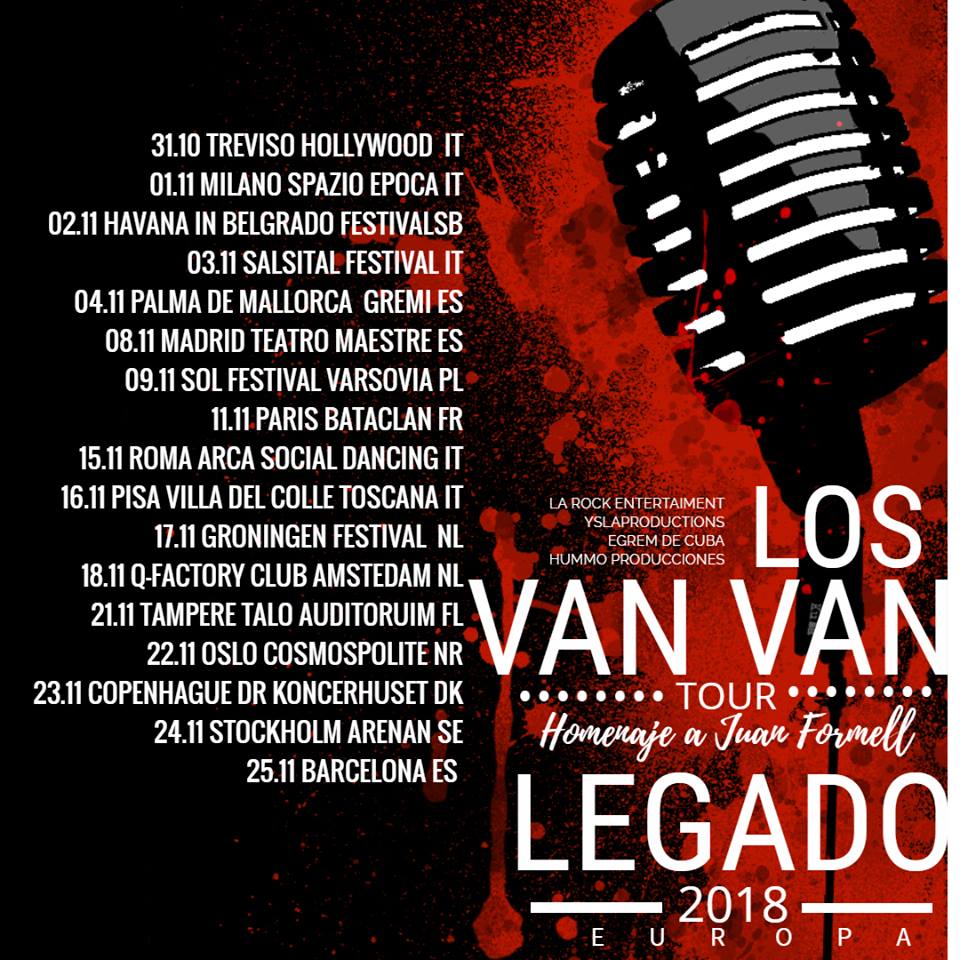
Los Van Van in Europe 2018

For decades, Los Van Van has been a world-class salsa orchestra that no one can keep silent about. The sixteen-strong formation continues to connect with this time through irresistible Cuban rhythms and Caribbean passion.

Los Van Van
Los Van Van

The band has been one of the first Cuban groups to use synthesizers and drum machines and has even created a completely new style: a superswing mix of a traditional charanga set-up (flute and violin combination), wind instruments and modern electronics, called ‘Songo’ by the Cubans.

In addition to Changui and Son Montuno, two traditional Cuban styles, Los Van uses different kinds of music such as rock, funk, disco and hip hop. Today Los Van Van consists of a selection of the best musicians of the first generation and new Cuban talents and vocalists. , led by Samuel Formell, son of the legendary founder of the band, Juan Formell.

In November you can enjoy to seventeen unmissable concerts for lovers of latin and salsa all around Europe!

The King of Bass Mr. Bobby Valentin

North America / USA / Nueva York

One step away from the Latin Grammy. The King of Bass Mr. Bobby Valentin

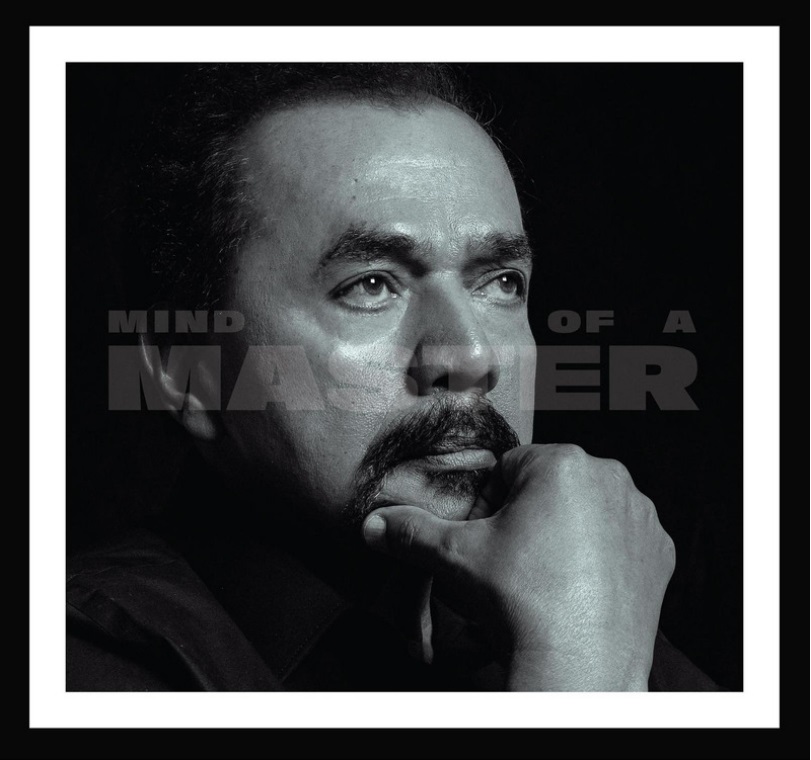
The Latin Grammy nomination of the experienced Bobby Valentin in the category of Latin jazz with the production “Mind of a Master” is another recognition of honor for his half-century musical career as an arranger and conductor.

“Mind of a Master” is the production with which Bobby Valentín enters the competition on the nineteenth day of the Latin Grammy. (Archive National Foundation for Popular Culture). Bobby, nominated last year in the category of salsa with “My rhythm is good”, is one of the five contenders for the Latin Grammy in the “Best Latin Jazz Album” section.

The other finalists are also Puerto Rican Néstor Torres (“Jazz Flute Traditions”), Adrian Laies (“The house of a jazz pianist”), Dafnis Prieto (“Back To The Sunset”) and Hermeto Pascoal (“Universal Nature”). . In a conversation with this medium, Bobby said that he will immediately capitalize on the nomination to promote the album at international festivals.

“We have sent to several festivals in the United States a report of what the album is and my career. We are waiting for answers. Right now I have a presentation at the Interamericana on Wednesday, October 17, which celebrates the 20th anniversary of the Music Department and there is a person interested in going to Costa Rica. It’s slow, but I have a lot of faith that little things will continue to appear. Latin jazz is another audience, although I know that many people who like salsa like it”.

Bobby Valentin
Bobby Valentin

The King of the Bass added that he feels as if he has won the precious golden phonograph. “The nomination of what is a salsa album is another style. This is another corner. What I’m saying is that after one is competing, even if you don’t win, the competition is good, as is being nominated among so many productions. For me the competition in Latin jazz is stronger than in salsa”. Bobby presents “Mind Of A Master” alongside The Latin Jazzists, who are mostly the musicians from his salsa orchestra, like Angie Machado and Eliud Cintrón. Bobby isn’t worried about purists arguing that they’re not jazz soloists.

“The musicians are happy. It is a genre that they like. Here they have been more concerned with projecting their styles and expressions”, Bobby reacts. A salsa musician can play jazz. This is how history supports it. Mongo, Puente, Machito, Mario Bauzá, Mario Rivera, Eddie Palmieri, Hilton Ruiz and Jerry González, among others, began in mambo and Afro-Caribbean dance music, prior to their foray into jazz.

“Like Ray Barretto, who was also linked to jazz. Finally, we all look for that corner. The same Néstor Torres, who started with Batacumbele. After one has done so many things in the tropical genre, one seeks satisfaction as a musician by looking for another corner”.

Jazz, however, is not new to Bobby Valentín. “Latín Gravy”, “Codazos”, “Shinny Stockins” and “Maiden Voyage” are several of the works recorded on his salsa albums. “It always caught my attention. When I was in New York, Latin jazz was mambo jazz. Later the name changed, but before it was done for the dancer, although there were solos. It’s no longer for the dancer. Now people sit down to listen to him. It was a good change.”

Bobby has not decided if he will travel to Las Vegas to be present at the awards ceremony, to be held in November. “I still don’t think so. It’s not because I’m going to win or not. To be competing even if I don’t win is reason for joy. I feel very happy. I have no plans yet”.

Next Wednesday the 17th he will perform with The Latin Jazzists at the INTER Metro Jazz Festival. That night he will perform the “Mind Of A Master” sequence. “I feel very happy. This record is like a baby to me. Although we have played tropical music, this is a new baby and that it is nominated for a Latin Grammy makes me feel very happy”.

Israel Tanenbaum from The Latinbaum Jazz Ensemble in ISM

The Island of Enchantment never ceases to amaze us and we continue to marvel at the fact that this small territory has been able to give the world so much talent, especially in music. Today, it is up to talk about Puerto Rican producer, arranger, composer and pianist Israel Tanenbaum and the enormous contribution that this great artist has made to Latin music over the last few decades.   

Israel Tanenbaum is also a bandleader who has produced more than 50 albums and participated in over a hundred recordings throughout his career, so his experience in this field is more than proven. We were fortunate to talk to him in just over half an hour and we will proceed to cover the most important issues in the following lines.   

Producer Israel Tanenbaum
This is Puerto Rican producer, arranger, composer and pianist Israel Tanenbaum

Israel and his passion for the piano 

Although Israel is widely known for his piano skills, this was not the first instrument he started playing, but the organ. As a child, he was given a toy organ and that was how he made up his mind and train his ear for music.   

In addition to that, he told us an anecdote about how one day he went to a music store with his parents and they left him alone for a while, time that little Israel used to play a huge object that caught his attention: an organ much bigger than the one he used to play at home. It was by watching the organist that he decided to position himself in front of the instrument and started imitating what the musician was doing with his little hands. 

He waited until the organist moved away from the instrument to sell it to a customer and Israel took the opportunity to get into the seat and start playing the instrument’s keys and foot pedal. After playing the five or six songs he knew, he noticed that he had a silent multitude watching what he was doing and once he finished playing, people started clapping their hands furiously at such a waste of talent in a child this small.  

That was when his parents decided to buy him an organ and a piano. A few years later, namely when he was 12 years old, Israel was already playing on the streets in a more professional way.  

Israel’s self-taught formation in music 

Israel’s initial training as a musician was entirely self-taught for the first few years. In fact, he says that when he started studying the craft for real when he had already been earning a living as a musician for more than 10 years.   

With regard to sound engineering, Israel says he had to become professional in this area ”in self-defense”, as he had problems with several sound engineers who did not have a good musical ear, so they ended up damaging some of his recordings unintentionally. This led him to learn to work on the engineering himself so that this kind of thing would not happen again.   

On the other hand, the arrangements and production process had to do with some experiences he had had. One of them happened when, at the age of 16, a friend’s father, an important person in the industry, on one occasion, introduced him to Machito, who very kindly invited Israel to go on stage and sit next to him to learn from what he saw that night. This experience marked the pianist so much that he said to himself: ”this is what I definitely want to do for the rest of my life”. 

Israel playing the piano
Israel Tanenbaum playing the piano during a performance

Colombia’s role in Israel’s career 

Colombia has been key to Israel’s career for several reasons and one of them is that his most productive time of life was spent in the coffee-growing country. The artist had already traveled to that country to accompany artists such as Pete ”El Conde”, Marvin Santiago and Arabella, but the situation was different when he had to tour with the group Batacumbele. This tour was scheduled to last about 10 days, but it was prolonged for 10 years. 

In those days, it turns out that he met by chance with Alexis Lozano, director of Orquesta Guayacán, who proposed him to stay in Colombia a longer time to produce the orchestra’s second album and he accepted. After this, he continued to receive proposals of this style and, almost without realizing it, he already had 10 years living in Colombia and more than 80 albums produced. In addition to Orquesta Guayacán, he worked with Grupo Niche, Cheo Acosta, Alfredito de La Fé and many more.    

”My real professional growth took place in Colombia, but my love for production began in Puerto Rico from the hand of percussionist Roberto Roena, whose orchestra was led by me for about two years. When we were recrding the album ‘El Regreso’, I spent many hours with Roberto in the studio and, seeing how dedicated, detail-oriented and precise he was with every chord and note, I was inspired to do the same at some point. That’s how I accepted all the opportunities to produce that arose in Colombia some time later. I owe all of that to Roberto” Israel said about his time as a producer in the South American country.    

In addition to his work side, Israel also says that Colombia means a lot to him on a personal level, since this country makes him feel at home and he has many friends there. Not to mention that his own wife is Colombian and one of his children was born there, so he is more than attached to that land for life. 

Israel during an interview
Israel Tanenbaum during an interview on the radio

Life in Puerto Rico and Hawaii    

In addition to Colombia, Israel also lived in Puerto Rico and Hawaii. He assures that from each of the places he has been, he has extracted something from their folklore and roots to add to his musical work. He says it is the best way to understand that country and the taste of its people.    

”If you want to understand the people of a country, you have to go back to their folklore and assimilate it. I lived in Venezuela for about six months and, being there, I became familiar with the quitiplás (a typical percussion instrument of Venezuela), the sangueo, the llanera music and many other elements of the musical culture of that country” Israel said on this issue.   

”I lived in Hawaii for almost three years, during which time I founded my first salsa orchestra. I served in the army with Quique Peña, a nephew of maestro Lito Peña, an eminence in Puerto Rico. The young man, whose classical training was extremely intense, taught me to transcribe what each instrument plays in detail. This was an invaluable lesson that served me well for what came later in my career. I also had the opportunity to study with maestro Eddie Palmieri, Papo Luca, José Milé, Jorge Milé, José Febles, among others. I transcribed music for all of them” Israel added on the issue.   

Israel Tanenbaum & The Latinbaum Jazz Ensemble   

”Impressions”, Latinbaum’s most recent album, was the result of an extensive musical stry that tells a wide experience with genres, styles and musicians of all kinds. Israel started this recording nine years ago, but he was always very busy with the rest of the recordings he was producing, so he always ended up abandoning this project.   

Once he had the album ready, but one day Israel had a catastrophic loss of equipment and recordings that led him to practically start the album from scratch, from which he could only save a single song. In the end, he opted to tear up and throw away the arrangements he had in order to start all over again. It took about eight more months to have the album ready again, and today, the musician is grateful that things went down like this, since this material represents the artist he is today for being more current.   

It is then when he sought out the artists and musicians who would accompany him in this new production, which would be his first solo album after having produced more than 100 other people’s albums.    

From now on, he wants to release a Latin Jazz production with his own orchestra every year and all of them under his new label, Latinbaum Records.    

Read also: Grupo Batachá, Houston’s Premier Latin band 

Los Adolescentes Giving The Swing The World Needs

Latin America / Venezuela / Caracas

Los Adolescentes  “We are premiering our most recent video clips “Close your eyes””

When talking about the great salsa orchestras of Venezuela, there are many names that come to the fore, either because of history, the great successes of the golden years of Salsa in Venezuela or because of their great distinguished voices of so many successes that the world well-known from this land of southern salsa, but if there is something impossible not to mention, it is one of the most important orchestras of this movement of the nineties.

The Adolescents, a group that marked a before and after of the new salsa era in this beautiful country. House of great youth voices, teenagers have made millions of people dance around the world, revealing the talent that this group has managed to nurture in more than 20 years of artistic journey.

Los Adolescentes in USA

Claiming Our Space, a record production with which they went on the market in 1995 with great songs like “Hoy aprendí”, “I can’t be your friend” and “Anhelo”, six songs from this CD; occupied the first place as hits throughout Venezuela and other countries of the Latin American continent, they started a sequence of successes for more than 20 years that have made this great group distribute Salsa and flavor throughout the world, it is that even the pope John Paul II had the honor of listening to this great musical event at Jubilee 2000, which brought together two million five hundred thousand people outside the University of Bergata, an event that lasted four years to prepare for this event.

In conversations with Carlos Mendoza, manager and main helmsman, we found out about the group’s latest projects for this 2019, great things continue to happen for these young salseros.

Los Adolescentes
Los Adolescentes

This new year started with great things for our young salseros, during the month of March and April they will be giving rhythm in Colombia with a tour of more than 5 cities, Mendoza tells us “We will be visiting Armenia, Bogotá, Medellin among other cities of the beautiful Colombia, we take a train that does not stop, we offer a list of unforgettable concerts”.

On the 23rd they will be in Armenia at the Fonda, the local forest that has received great national and international artists, they will continue in the capital of this southern country Bogotá on the 30th in Sutton club of the best clubs in the city, they will pass through Medellin in Emporium on April 05, 06 for Cartagena and closing on 06 in Marseille, they have dates for hiring, contact that we will leave at the end of this review for your contact, in the voices of Arnaldo Quintero, Renzo Romero, Ronald Gómez, Josep Palacios and Leonardo Leal we will be able to listen to the successes of these almost three decades of rhythms.

Los Adolescentes
Los Adolescentes

“For the month of June we will be part of the great experience that will be lived in the Adventure Dance Cruise, together with greats like Torito Acosta” Mendoza told us that the great company Royal Caribbean presents what they call: World’s Largest Latin Dance Cruise, from June 6 to 10 from Miami passing through the beautiful island of son and rumba Cuba and arriving in the Bahamas, full of dance classes, attractions, distractions and the best concerts on the high seas.

For the last semester of the year they are already preparing a concert in Tampa, Miami, presentations of variable types in North America, to close the projects for this 2019 an important tour of Europe with the great Maelo Ruiz is being prepared, a detail that we will have better reviewed in future editions.

For bookings on the tour of Colombia, contact the number +57 310 3293158, don’t miss out on living this great experience of dancing alongside one of the best salsa orchestras in the world.

Los Adolescentes in NY
  • « Go to Previous Page
  • Page 1
  • Interim pages omitted …
  • Page 39
  • Page 40
  • Page 41
  • Page 42
  • Page 43
  • Interim pages omitted …
  • Page 156
  • Go to Next Page »

International Salsa Magazine (ISM) is a monthly publication about Salsa activities around the world, that has been publishing since 2007. It is a world network of volunteers coordinated by ISM Magazine. We are working to strengthen all the events by working together.