• Skip to primary navigation
  • Skip to main content

International Salsa Magazine

  • HOME
  • Previous editions
    • 2026
      • ISM / April 2026
      • ISM / March 2026
      • ISM / February 2026
      • ISM / January 2026
    • 2025
      • ISM / December 2025
      • ISM / November 2025
      • ISM / October 2025
      • ISM / September 2025
      • ISM / August 2025
      • ISM / July 2025
      • ISM / June 2025
      • ISM / May2025
      • ISM / April 2025
      • ISM / March 2025
      • ISM / February 2025
      • ISM / January 2025
    • 2024
      • ISM / December 2024
      • ISM / November 2024
      • ISM / October 2024
      • ISM / September 2024
      • ISM / August 2024
      • ISM / July 2024
      • ISM / June 2024
      • ISM / May 2024
      • ISM / April 2024
      • ISM / March 2024
      • ISM / February 2024
      • ISM / January 2024
    • 2023
      • ISM / December 2023
      • ISM / November 2023
      • ISM / October 2023
      • ISM – September 2023
      • ISM – August 2023
      • ISM July 2023
      • ISM Edition June 2023
      • ISM – May 2023
      • ISM April 2023
      • ISM March 2023
      • ISM February 2023
      • ISM January 2023
    • 2022
      • ISM December 2022
      • ISM November 2022
      • ISM October 2022
      • ISM September 2022
      • ISM August 2022
      • ISM July 2022
      • ISM June 2022
      • ISM May 2022
      • ISM February 2022
      • ISM January 2022
    • 2021
      • ISM December 2021
      • ISM November 2021
      • ISM October – 2021
      • ISM September 2021
      • ISM August 2021
      • ISM July 2021
      • ISM May 2021
      • ISM April 2021
      • ISM June 2021
      • ISM March 2021
      • ISM February 2021
      • ISM January 2021
    • 2020
      • ISM December 2020
      • ISM November 2020
      • ISM October 2020
      • ISM September 2020
      • ISM August 2020
      • ISM July 2020
      • ISM June 2020
      • ISM May 2020
      • ISM April 2020
      • ISM March 2020
      • ISM February 2020
      • ISM January 2020
    • 2019
      • ISM December 2019
      • ISM November 2019
      • ISM October 2019
      • ISM Septembre 2019
      • ISM August 2019
      • ISM July 2019
      • ISM June 2019
  • Spanish
  • Download Salsa App
    • Android
    • Apple

Search Results for: Salsa Orchestra

Rónald Gómez Original Venezuelan Sonero for the World

Rónald Gómez, One of the most respected young soneros of the New Generation

He belongs to the new legion of young soneros and projects himself as one of the greatest exponents of Venezuelan salsa at the national and international level; I am referring to Rónald Eduardo Gómez Ávila, known artistically as Rónald Gómez, born in Caracas on March 11, 1995, son of Sonia Ávila and Rónald Gómez; his brothers: Jesús Eduardo and Rónner Eduardo.

He completed his high school studies at the Orinoco High School and his university studies at UNEARTE in Caracas.

He has been living in Los Teques for some time and is currently living in Valencia.

The singer and sonero Rónald, started in music since he was 4 years old, when his father, also a musician, invited him to sing the song “Llorarás”, with the free orchestra of the UCV and from that moment he won people over with his charisma and his swing. At the age of 6, he joined the Chiky Salsa orchestra and due to his versatility, he later joined the Porfi Baloa Teenagers, first as a musician and then as a vocalist, and later as a member of the Porfi Klan staff.

Rónald Gómez soneros of the New Generation
Rónald Gómez One of the most respected young soneros of the New Generation

It is worth mentioning that Rónald Gómez, besides being one of the most respected young soneros in our country, has stood out as an excellent sportsman, being a member of the Miranda State Volleyball Team in various national competitions.

Gómez has had the honor of sharing the stage with salsa greats such as: Tony Vega, Maelo Ruiz, El Gran Combo de Puerto Rico, Cheo Feliciano, Ismael Miranda, Hermanos Lebrón, Frankie Vásquez, Hermán Olivera, Adalberto Santiago, Oscar D’León and was a special guest to sing along with Sonora Ponceña and La India from New York.

Rónald has worked with the orchestras La Dimensión Latina, the Dance Orchestra “La Resistencia Salsera de Venezuela”, the Cheo Navarro Tribute Orchestra and currently Los Adolescentes.

Ronald Gòmez One of the most respected young soneros of the New Generation
Orchestra los Adolescentes

Among the countries where Rónald Gómez has represented Venezuela are United States, Peru, Canada, Colombia, El Salvador, Ecuador, Mexico and Cuba.

Some of the songs he has recorded are: “No puedo vivir sin ti”, “Ya la vi” with Bailatino and “No temas al amor” and “Tengo un amor” with Los Adolescentes, which are played on radio stations and social networks.

What are your current projects, Rónald? Carlos, I am currently continuing with the Teenagers and I also have projects as a soloist; I am recording some things on the fly individually, obviously without leaving the orchestra and at the same time I have in mind to enhance the image as Rónald Gómez. Have you recorded any new songs? Indeed, professor, I have recorded some with the Teenagers and as I told you, I am going to record with some guests together with myself; that is going to be good and I hope you enjoy it; in due time I will make them known.

Ronald, where are you currently with the Teen Orchestra? At the moment I am in Miami, last week we were in Los Angeles, San Francisco and Santa Ana.

What can you tell us about your next tour? We are going to Colombia at the beginning of March, we will be alternating with Diego Galé and Maelo Ruiz, then we will be on a break there in Venezuela and then we will continue with the full tour in the United States, having concerts in: Houston, Utah, Ohio, among many other cities.

Finally, Rónald tells us that he feels satisfied by his successes at a professional level and wishes to continue to succeed inside and outside our country, with the support of all his family, musicians, friends and all the salsa musicians who enjoy his presentations.

It is important to emphasize that Rónald Gómez is characterized by his simplicity, professionalism and gift of people who will surely make him one of the greats of Latin music.

From “Salsa Escrita” and International Salsa Magazine, we wish Rónald the best performance and he always counts on us.

To contact Rónald Gómez, you can do it through the Instagram: Ronaldadolescentes.

Ronald Gomez soneros of the New Generation
The singer and sonero Rónald Gòmez


Home

Johnny Cruz – Let’s support the artists who continue working

North America / United States

The latin music from the Johnny Cruz view

We are about to end this 2020 so atypical and challenging for everyone. Especially for artists who make a living from shows and entertainment. I want to congratulate all those who keep up working despite adversity. I also take advantage of the season to thank those who accompany us to make each and every one of our projects possible, and of course, to God, for the health and recovery of those who have had relapses throughout this year. Thank you all!

Johnny Cruz from New York
Johnny Cruz is the president of Spanish Harlem Salsa Gallery

My recognition goes to Ismael Miranda.

This Puerto Rican artist became famous during the salsa explosion of the 70s in New York, his fans called him “El niño bonito de la salsa”. Miranda was still a teenager when he recorded with the Larry Harlow Orchestra and joined the Fania All Stars.

Then came a solo career of extraordinary quality. Known for his professionalism and healthy habits, Miranda continues to record and perform concerts with his voice as vital as ever.

He recorded his first album at 16 with the Joey Pastrana orchestra. Then he went to Larry Harlow and began to seek his own identity and have more respect for music. He confesses that at first he did not take his music career so seriously, and although there were women and drugs, he never disrespected his directors or the public.

“When fame falls on you and you are not prepared, you become a person who is not very nice, who thinks that he is more than anyone else. I was an inexperienced baby, but I was catching up little by little.

Friends like Cheo Feliciano and Pete “El Conde” Rodríguez watched over me. Adalberto Santiago was always by my side. Santitos Colón — Tito Puente’s singer — became my compadre. With all those people that surrounded me, I had to start doing things as God intended so as not to lose their support,” he said in an interview. Given the good impression his performances with Andy Harlow made, his brother, Larry Harlow, called the Judío Maravilloso, decided to recruit him to his orchestra.

Ismael Miranda began his recording cycle with the album El exigente. Convinced of the potential of the young singer, in 1968, Larry launched a new production entitled Harlow Orchestra presents Ismael Miranda.

The successes were repeated with the recordings Electric Harlow, Tribute to Arsenio Rodríguez, Abran paso and Oportunidad. With Larry Harlow, Ismael also ventured into the field of composition, sharing credits with him on the songs “La revolucion”, “Guasasa”, “Arsenio”, “El malecón” and “Lamento de un guajiro”, among others.

He has also stated that the most unpleasant thing about his career is that being so young in the beginning, he has had to see iconic characters and great friends like Héctor Lavoe, Celia Cruz, La Lupe pass away.

Find it difficult to be alone after having so many friends. “Today the world is each one by his side. La Fania was not just a record company. We were a big family in which we all loved each other very much. Every time I hear another musician leave, my soul breaks. ”

In the 1980s he recorded several productions with his independent record label. He recorded in 1984 with the prestigious Cuban group Sonora Matancera for his old record company Fania.

In 1986 his album Versos de Nuestra Cultura, together with singer-songwriter José Nogueras, was one of the great successes of the Christmas season of that year. In 1988 he announced his intention to retire from the artistic media. But that idea never came to fruition. Ismael has recorded with his own record label, IM Records, and with the RMM company.

He has a very close family. He has been with his second marriage for 25 years and has also been with his first wife for another 25 years. All of his children are married and have their own businesses. He has 13 grandchildren and two great-grandchildren. Recently Ismael Miranda and José Alberto “El Canario” joined Daniel Peña in “Hijo Del Cañaveral” Daniel Peña, Dominican based in the city of Miami.

He is recognized for his percussion skills and for being a music producer. Peña has worked with music greats such as Tito Puente Jr., pianist Marlow Rosado, Ismael Miranda, pianists Richie Ray and Larry Harlow, Celia Cruz and Giovanni Hidalgo. In 2014, he made his debut with the album “Eleven”, dedicated to his children; and three years later I have released “Sancocho”, a project with eleven songs.

The Dominican presents his new single “Hijo del Cañaveral”, a production that he made together with two great masters of salsa, Ismael Miranda and José Alberto “El Canario”.

Gerardo Rivas releases his first solo single.

Gerardo Rivas first solo single
New song for this talented artist

Puerto Rican Gerardo Rivas delights his followers with the launch of his first solo song. “A derretir el hielo” is a salsa, composed by Juan José Hernández and Victor Sanabria López, with musical production by Marcos Sánchez.

A few weeks after its premiere, the video clip has almost thirty thousand views on YouTube. The work leads to mysticism and contains a refreshing proposal. The direction was the work of Giova González and was filmed in San Juan, Puerto Rico. “Vamos a juntar los cuerpos bella, vamos a subir al cielo, vamos a prender la vela bella, vamos a derretir el hielo” the chorus quotes.

After more than a decade belonging to the group NG2, Puerto Rican salsa duo Rivas decided to try it on their own. “With great humility I present my first solo work. All my life I have been involved in music and daring to do a solo project feels very good “, declared Rivas. The singer is the son of Jerry Rivas, who belongs to “El Gran Combo”. From a very young age he has been immersed in the musical world. He was the vocalist of the group “Gerardito y los rockolos”.

In addition, it has around twenty-five years of experience. Rivas has always been a believer in salsa, bets on it and defends it in each presentation. A faithful representative of the genre!

The new success of Papo Rosario with Luisito Carrion and Isidro Infante!

This is the land where I was born. Papo Rosario is a world-class artist who has put the name of Puerto Rico high. Rosario, who withdrew in 2019 from the group considered the “Universidad de la salsa”, El Gran combo de Puerto Rico, after having an accident and presenting health problems, affirms that he already feels ready to resume his musical career with the Launch of his first solo production by producer Isidro Infante.

From this new album, we have their second single that cannot be missed. Without jumping on stage as before, but maintaining the grace of his movements, the singer Papo Rosario continues to work on his return to salsa with maestro Isidro Infante, who was the musical director of Fania All Stars. Rosario retired from El Gran Combo de Puerto Rico in 2019, after 38 years, as a result of a tumor in the spine, with which he battled since 2000, when he was operated on for the first time. This was followed by a second surgery in 2005, a third in 2017, and a fourth and fifth in 2018.

“They took out the whole tumor, which shot up as it pleased. In 2017 they removed 70% of the tumor on my right side, equivalent to a football. In 2018 they rebuilt my spine because the tumor ate a lot. I have a titanium spine, a scaffold on my back with rods that keep me on my feet. They removed 30% of the tumor on my left side in 2018,”, explained the singer. The medical prognosis indicated that he would not walk again.

“After so much therapy, I feel super good. After the operation, he said: let it be the will of Father God, it was not known if he was walking or not. I am up in the fight and grateful to God and to all the people for their prayers, which have contributed greatly to my health ”, the now soloist has stated in recent interviews. Rosario’s relationship with Infante dates back to adolescence, when they studied at Central High School in Santurce.

“I have always been an admirer of Isidro. We met around the world, he with the Fania and I with the Combo. People told me: ‘You have to do something’, I made up my mind and wanted Isidro to make a couple of arrangements for me”, he revealed. He has also stated that: “We come with traditional sauce, eventually something will be done with more mischief. The topics are everyday, nothing hurtful, but motivational in the middle of the quarantine. We do not want to come with bochinches, but to bring joy and give thanks ”. I wish you success today and always!

Gran Combo in concert

The Gran Combo de Puerto Rico announce concert (more artists)
The concert will be this November 14th ith more artists

El Gran Combo de Puerto Rico announced its first virtual concert for this November 14th from the Centro de Bellas Artes in Santurce. After almost eight months of inactivity due to the paralysis of the entertainment and events industry caused by the COVID-19 pandemic.

The “Mulatos del Sabor” have remained “bien guardados” during this period, but they understand that it is now “time to remove the mold and offer the sauce that we are asking for,” according to Jerry Rivas, vocalist of the veteran group. The so-called “Universidad de la Salsa” will offer on Saturday, November 14 at 9:00 p.m. the virtual show from the stage of the Centro de Bellas Artes (CBA), Luis A Ferré in Santurce. The mulatos have named the concert “El Gran Combo para el mundo”, since from the Spyntyx.com platform it can be enjoyed from any corner of the planet.

“The pandemic arrived and the whole world was paralyzed. But in the face of people’s requests and the messages that reached us about when they are going to do a show, we ventured into this format, which is new to us, but it is still an opportunity to reach more people anywhere in the world. In addition, we are going to present some of the themes of what will be our new record production “, mentioned Willie Sotelo, musical director of the group.

Sotelo and Rivas indicated that the founder of El Gran Combo, Rafael Ithier welcomed the virtual format, since like the rest of the members he is eager to return to the stage. Ithier turned 94 years old in August this year and has been very careful and cautious in preventing the spread of the coronavirus. So much so that for the birthday celebration the mulattoes surprised him with a sound bus at his house.

The musicians arrived at the front of Ithier’s residence and greeted him from the outside, and according to Rivas, days later the older mulato was tested for COVID-19 to verify that he is in good health. The virtual show will be prerecorded in some parts to avoid any mistakes. Tickets can be pre-purchased through spyntyx.com at a cost of $ 8.00.

The presentation will be a musical journey through hits such as: “Arroz con habichuelas”, “Sin salsa no hay paraíso”, “El problema está en el coco”, “Es la mujer”, “Achilipú”, “Colombia tierra querida”, “A mí me gusta mi pueblo”, “La espuma y la ola”, “El comején”, “La receta de amor”, “Alguien que me quite tu amor”,”Si la ves por ahí”, “Te veo, nena” y “No hay manera”, among others.

The group will integrate to the repertoire about three new songs as part of the musical production that they have worked in the months of the pandemic and that they hope to release before the end of 2020. “We had started the album before the pandemic, but these months have been perfect because by not traveling we have been able to dedicate ourselves to finishing the nine songs on the album. We are already in negotiations with record companies and the launch should be in December”, said Sotelo.

The group is invited every year to participate in the Feria de Cali at the end of December. This year, the invitation came to make the presentations in a small format capacity and in various tents that can maintain social distancing. The salsa orchestra has not confirmed its participation, so they are still evaluating the possibility of traveling to Colombia. Even so, in Puerto Rico they have six dates of Drive-In events and closed circuits confirmed for the holiday season. This never stops!

Adaberto Santiago 65th Anniversary

And if we are talking about incredible careers in this edition, I can’t stop talking about Adalberto Santiago and the new projects of the 65th anniversary with great artists of the genre. This time I can tell you about Cuco Peña’s string arrangements, the participation of Nelson Jaimes and, of course, the help of my friend Freddy Miranda. At 83 years old, he is still in the rumba. There is less and less to show the world this historical piece for the world of salsa.

Some invitations

The invitation to tune in to the new Fm / Internet radio station on Live365.com continues: Salsagallery. Good music, interviews with the artists and much more.

As always, remember that Spanish Harlem Salsa Gallery is in 1708 Lexington ave New York N.Y. 10029. Open free to the public all Thursdays & Fridays from 4 to 7 pm and Saturdays from 1 to 8 pm. Check the updates in our website: spahasalsagallery.com.

Also, The Johnny Cruz Show, the # 1 Salsa Show on television on all 5 Boroughs of New York on CH67. Saturdays from 3:30 to 4:30 pm.

Contact: Johnny Cruz. 917-747-8505. [email protected].

Home

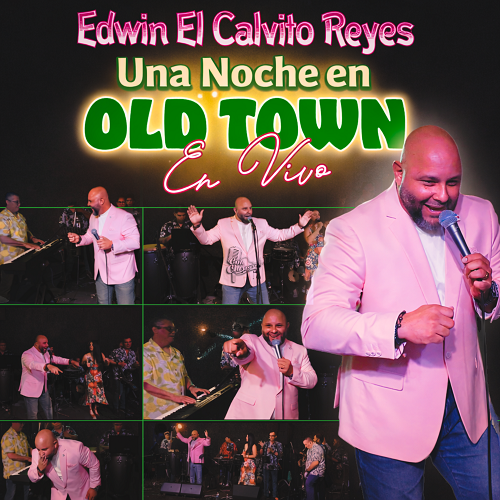
Let’s talk about Una noche en Old Town “en vivo,” while staying true to the musical journey of “El Calvito” Reyes

“Yes, Una noche en Old Town was an event held for about 100 people at a restaurant in the area known as Old Town in Kissimmee, Florida. Old Town is a park that feels like a year-round festival, 365 days a year,” the artist explains. This marks the third musical production from the Puerto Rican singer-songwriter known in the salsa world as “El Calvito,” one of the most fervent champions of the Salsa Nueva movement.

With this release, Edwin puts his salsa and his talent at the service of his followers. His repertoire spans classic salsa, romantic salsa, and what he calls “conscious salsa.”

Edwin “El Calvito” Reyes acknowledges that while everything has already been invented, the key is to stay focused and execute the ideas swirling in his mind. The press release for the new live album, titled Una noche en Old Town, notes: “Remember in the ’90s when many artists (…) recorded live productions? That was a trend that (…) went down in salsa history.”

The Production

The final product is a “live” recording of his orchestra. The production turned what was originally planned as a birthday party at Old Town Park in Kissimmee into a full album. Sound engineer Joseph Díaz captured the session, which was later mixed and mastered by pianist and engineer Víctor Romero. The content was further polished at Harmony Recording Studios in Orlando, Florida.

The album features the collective performance of the musicians who have accompanied the singer for years, including their appearance at the 2025 Día Nacional de la Zalsa in Orlando. The lineup includes:

  • John López: Congas
  • Daniel Ortiz: Timbales
  • Manny Urbina: Bongo
  • Víctor Romero: Piano and Musical Direction
  • Yasmani Roque & Marcos Rivera: Trumpets
  • Bert Laboy: Trombone
  • José Castro Marchán: Baritone Sax
  • Una Noche en Old Town Edwin El Calvito Reyes
    Una Noche en Old Town Edwin El Calvito Reyes
  • The night at Old Town also featured guest appearances by heavyweights such as Kriptony Texeira, Harold Montañez, and José Novoa. Additionally, Richie Nieves, the well-known voice of KQ FM Radio in Orlando, handled the album’s intro.

The Origin

The stage was set specifically at El Cilantrillo restaurant within Old Town. The event celebrated the birthday of Javier Colón, owner of La Feria Salsera and Edwin’s partner for the veteran-focused dance events that Edwin has successfully led in recent years. Javier hired “El Calvito’s” orchestra, the performance was recorded, and from that session, this authentic album was born.

By chance, the date of the party coincided with one of the most important days on the Puerto Rican salsa calendar: the traditional Holy Saturday Dance (Sábado de Gloria). “Many Latinos don’t understand and ask, ‘Are you guys seriously holding a dance on Holy Saturday?’ So, unintentionally, we tapped into that tradition—and it is a tradition in every sense of the word. By trying to keep it alive, we (Puerto Ricans) have shared it with the rest of the Hispanic public.”

According to Edwin, the performance was originally recorded for promotional purposes. However, the artist felt it was such a great capture of the evening’s energy that he consulted his musical director, Víctor Romero, to see what he thought of the idea.

The Release

Coincidence dictated that the album be published and available on digital platforms exactly one year after the recording. The producer admits it was a high-risk project because it was recorded live during an organic event outside of a controlled studio environment. The classic covers Edwin included as tributes to “those who have passed” (arranged as medleys) were his biggest concern, yet they ultimately earned widespread approval.

“El Calvito” Reyes says he doesn’t fear the critics. Driven by passion, he decided to release this 10-track production—eight of which he wrote himself, plus two salsa hit medleys—aiming to win over dancers, listeners, and collectors alike.

Tracklist:

  1. ‘Medley salsa nueva’
  2. ‘Así llamaban al Conde’
  3. ‘Homenaje a los que se nos fueron I y II’
  4. ‘Dime mi Buen Señor’
  5. ‘Tú del sur, yo del norte’
  6. ‘El karma’
  7. ‘Tócame la moña’
  8. ‘Baila cha cha chá’
  9. ‘Solo tiempo pa’ rumba’
  10. ‘Orgulloso de ser latino’

Stream & Connect: The album is available digitally on YouTube Music, Spotify, and Apple Music. Each track has a corresponding video at: https://www.youtube.com/@ElCalvitoReyesOficial/. The orchestra is available for bookings. You can reach the office via phone or WhatsApp at +1-912-980-8476 or by email at [email protected].

For more on the music of Edwin “El Calvito” Reyes, visit: https://solo.to/elcalvitoreyes

Bella Martinez Puerto Rico

Read Also: Edwin “El Calvito” Reyes el Sonero de la Sangre Nueva “Amor de Actualidad”

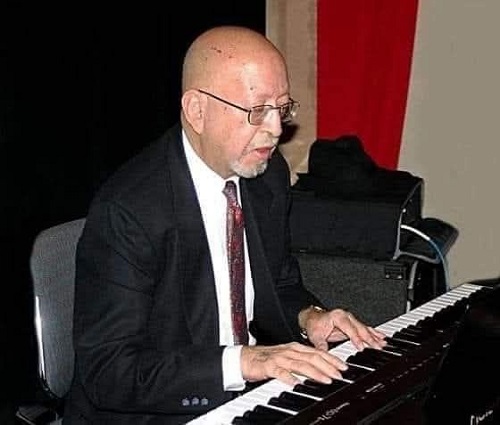
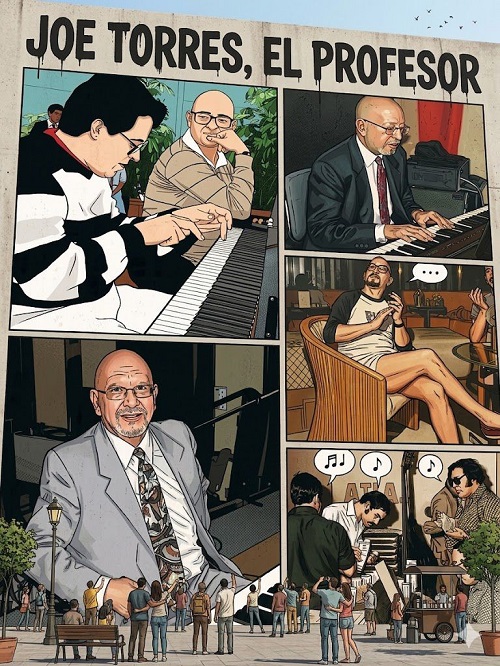
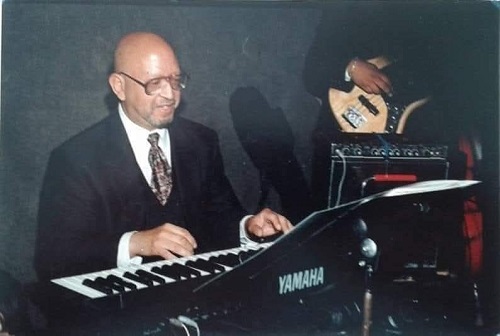
The Piano That Schooled the World the Eternal Legacy of “Professor” Joe Torres

The history of salsa is not only written by the voices of its idols or the thunder of its brass; it is written, fundamentally, on the black and white keys of those who knew how to sustain the pulse of an era.

On April 13, 2020, in the quiet of a Bronx hospital, the “backbone” of Salsa Dura passed away at the age of 76: José Manuel Torres, known universally as “Professor Joe.”

Jose Manuel Torres Professor Joe Torres passed away on this day, April 13, 2020, in the Bronx, New York City, at the age of 76

Born in Manhattan on November 29, 1943, a son of the Puerto Rican diaspora from Guayama and Ponce, Torres embodied the pure essence of the Nuyorican.

Raised on Fox Street, his destiny was sealed in the hallways of P.S. 52 an elementary school that would eventually become the academic sanctuary of Latin music in the South Bronx.

Excellence as the Standard: From Neighborhood Sound to Musical Glory

His nickname, “The Professor,” was no mere poetic license. In a musical ecosystem where many relied on intuition, Joe possessed an almost mathematical skill: sight-reading.

Un pianista maravilloso, que no se parece a nadie

His technical precision allowed him to navigate elegantly between formal discipline and “street” flavor (sabor).

After debuting in the 1960s with the “King of the Bass,” Bobby Valentín, on seminal albums like Bad Breath, his career took a definitive turn when he joined the orchestra of a young, rebellious Willie Colón.

Replacing the virtuoso Mark Dimond, Torres didn’t just fill a void; he defined an aesthetic. For a quarter-century, he was the harmonic architect behind the two greatest giants of the genre: Willie Colón and Héctor Lavoe.

“As the pianist for the band, Professor Joe Torres was excellent,” Colón would recall years later.

It is his piano that resonates in the urban chronicles of Cosa Nuestra; the piano that provides the festive nostalgia in both volumes of Asalto Navideño a cornerstone of Puerto Rican identity and the piano that sustains the rhythmic tension in classics like The Big Break (La Gran Fuga) and Lo Mato.

There was no Fania milestone where Joe did not leave his mark, from the social lyricism of Siembra and Maestra Vida with Rubén Blades, to the raw power of Lavoe’s solo career.

Joe acompañó a Willie Colón y Héctor Lavoe en gran parte de sus grabaciones

Humility in the Shadows: The Man and the Legend

Despite participating in more than thirty productions that are now considered world cultural heritage, Joe Torres never felt the urge to claim the spotlight of a frontman.

As his colleague José Mangual Jr. noted, his humility was as vast as his talent. He preferred the rigor of the studio and the camaraderie of the stage, balancing his musical genius with his work as a computer technician a duality that spoke to his sharp intelligence and adaptability.

El Piano que Dictó Cátedra el Legado Eterno del “Profesor Joe” Torres

His legacy was celebrated in the year 2000 during the historic reunion concert of the “P.S. 52 Alums,” immortalized in the documentary From Mambo to Hip Hop. There, surrounded by titans like Ray Barretto and Manny Oquendo, Joe remained the same: a man with a kind smile and a sharp mind who, according to Blades, represented the true “gentlemanliness” of salsa.

Today, years after his passing, the void at the piano bench remains felt. The “Professor” didn’t just teach people how to read music; he taught that true greatness does not require noise.

His music lives on in every descarga, reminding us that as long as there is a piano playing in the Bronx, the echo of José Manuel Torres will never stop schooling the world.

Also Read: International Salsa Magazine presents essential trivia and facts about Héctor Lavoe.


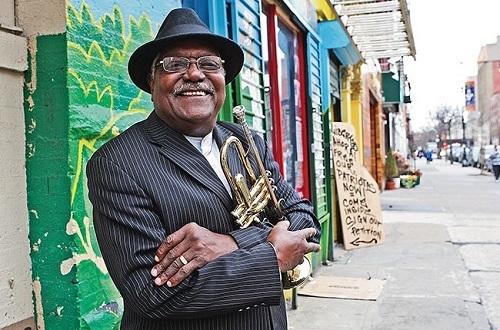
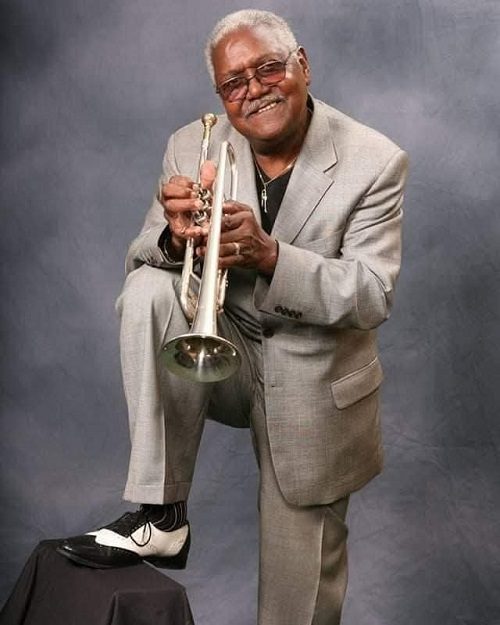
Alfredo “Chocolate” Armenteros: The Golden Legacy of the Cuban Trumpet

The history of Latin music cannot be written without mentioning the metallic brilliance and elegant phrasing of Alfredo “Chocolate” Armenteros.

Regarded by musicologists and peers as the “Latin Louis Armstrong,” Armenteros was more than just a trumpet virtuoso; he was a sonic architect who bridged the gap between traditional Cuban son, New York jazz, and the high-energy explosion of salsa.

Chocolate Armenteros🇨🇺fue una leyenda excelsa de la música cubana

Born on April 4, 1928, in Las Villas, Cuba, Armenteros carried the soul of his homeland to the world’s most prestigious stages.

His nickname, which became a hallmark of artistic quality, originated from a curious anecdote the musician shared in 2013: a young woman had mistaken him for the famous boxer “Kid Chocolate.”

What began as a case of mistaken identity ultimately became the name of a legend who would deliver his “knockouts” not with fists, but with perfect notes.

The Forging of a Master: From Arsenio Rodríguez to the “Bárbaro del Ritmo”

The career of Chocolate Armenteros serves as a detailed roadmap of the Golden Age of Cuban music. In 1950, he joined the ensemble of the “Blind Marvel,” Arsenio Rodríguez.

Alfredo Chocolate Armenteros el Legado de Oro de la Trompeta Cubana

Under Rodríguez’s tutelage, he recorded essential pieces of the Caribbean songbook such as “Deuda,” “Tengo que olvidarte,” and the iconic “La vida es un sueño.”

This period was vital in defining his style: a fusion of technical discipline and a gift for organic improvisation.

His rise was meteoric. By 1953, he was already a member of Sonora Matancera, the island’s most influential musical institution. That same year, he participated in a historic milestone: the founding of the band led by his cousin, the great Benny Moré.

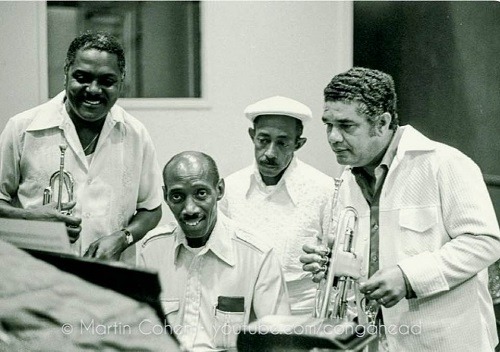
Alfredo Chocolate Armenteros, Lino Frias, Carlos Patato Valdez y el Negro Vivar 1973

The sound of Chocolate’s trumpet was a key gear in the machinery of Moré’s “Tribu,” cementing his status as the most sought-after instrumentalist of his generation.

Conquering New York and the Global Stage

In November 1958, Armenteros’ destiny changed forever. He traveled to New York with the Fajardo y sus Estrellas orchestra for a private performance at the Waldorf Astoria Hotel.

The event carried high-level political weight: it was a gala for the presidential campaign of then-candidate John F. Kennedy. Following this encounter with the Big Apple, the trumpeter decided to settle permanently in the city, becoming an ambassador for Caribbean rhythms at the epicenter of jazz.

In New York, his talent flowed through the most influential groups of the era:

  • The Machito Orchestra (1963): Where he fused Cubop with Afro-Cuban jazz.
  • Eddie Palmieri (70s): Contributing his power to the experimental sound of salsa brava.
  • Tico-Alegre All Stars (1975): Sharing the stage with giants like Celia Cruz, Tito Puente, Ismael Rivera, and Cachao.

An Endless and Eternal Style

In the late 70s and early 80s, Armenteros not only returned to collaborate with Sonora Matancera but also took the definitive step as a bandleader.

Under his own direction, he left behind memorable productions such as Chocolate Dice (1982) and Estrellas de Chocolate (1987), proving that his creative well never ran dry.The most admirable aspect of Armenteros was his artistic longevity. He remained active in festivals and concerts well into his 80s, preserving a privileged embouchure and a sense of timing that seemed to defy the laws of physics.

Alfredo Chocolate Armenteros y Eddie Moltalvo

Today, nearly a century after his birth, Alfredo “Chocolate” Armenteros remains the gold standard for trumpeters. His life was a testament to elegance, his music a bridge between nations, and his trumpet an eternal echo of Cuban identity that continues to resonate in every jazz descarga and every salsa step around the world.

Also Read: Larry Harlow and Ismael Miranda: The birth of “Arsenian Salsa,” a tribute to the music of Arsenio Rodríguez the creator of Son Montuno and the “King of Guaguancó.”

  • « Go to Previous Page
  • Page 1
  • Interim pages omitted …
  • Page 47
  • Page 48
  • Page 49
  • Page 50
  • Page 51
  • Interim pages omitted …
  • Page 156
  • Go to Next Page »

International Salsa Magazine (ISM) is a monthly publication about Salsa activities around the world, that has been publishing since 2007. It is a world network of volunteers coordinated by ISM Magazine. We are working to strengthen all the events by working together.