• Skip to primary navigation
  • Skip to main content

International Salsa Magazine

  • HOME
  • Previous editions
    • 2026
      • ISM / April 2026
      • ISM / March 2026
      • ISM / February 2026
      • ISM / January 2026
    • 2025
      • ISM / December 2025
      • ISM / November 2025
      • ISM / October 2025
      • ISM / September 2025
      • ISM / August 2025
      • ISM / July 2025
      • ISM / June 2025
      • ISM / May2025
      • ISM / April 2025
      • ISM / March 2025
      • ISM / February 2025
      • ISM / January 2025
    • 2024
      • ISM / December 2024
      • ISM / November 2024
      • ISM / October 2024
      • ISM / September 2024
      • ISM / August 2024
      • ISM / July 2024
      • ISM / June 2024
      • ISM / May 2024
      • ISM / April 2024
      • ISM / March 2024
      • ISM / February 2024
      • ISM / January 2024
    • 2023
      • ISM / December 2023
      • ISM / November 2023
      • ISM / October 2023
      • ISM – September 2023
      • ISM – August 2023
      • ISM July 2023
      • ISM Edition June 2023
      • ISM – May 2023
      • ISM April 2023
      • ISM March 2023
      • ISM February 2023
      • ISM January 2023
    • 2022
      • ISM December 2022
      • ISM November 2022
      • ISM October 2022
      • ISM September 2022
      • ISM August 2022
      • ISM July 2022
      • ISM June 2022
      • ISM May 2022
      • ISM February 2022
      • ISM January 2022
    • 2021
      • ISM December 2021
      • ISM November 2021
      • ISM October – 2021
      • ISM September 2021
      • ISM August 2021
      • ISM July 2021
      • ISM May 2021
      • ISM April 2021
      • ISM June 2021
      • ISM March 2021
      • ISM February 2021
      • ISM January 2021
    • 2020
      • ISM December 2020
      • ISM November 2020
      • ISM October 2020
      • ISM September 2020
      • ISM August 2020
      • ISM July 2020
      • ISM June 2020
      • ISM May 2020
      • ISM April 2020
      • ISM March 2020
      • ISM February 2020
      • ISM January 2020
    • 2019
      • ISM December 2019
      • ISM November 2019
      • ISM October 2019
      • ISM Septembre 2019
      • ISM August 2019
      • ISM July 2019
      • ISM June 2019
  • Spanish
  • Download Salsa App
    • Android
    • Apple

Search Results for: Salsa en Venezuela

“Tabaco y sus Metales” the legend of Salsa made in Venezuela

On May 30, 1995, Carlos “Tabaco” Quintana died in Caracas, Venezuela, the city where he was born on September 15, 1943.

Charismatic Timbalero, Sonero and Director of “Sexteto Juventud” and “Tabaco y sus Metales” the legend of Salsa made in Venezuela”

Former member of  “Sexteto Juventud”, founder of the orchestra  “Tabaco y sus Metales”. He was born on September 15, 1943 and began his musical training in the corners of San José.

Youth took him hand in hand with the street salsa brava, the rebellion of Palmieri and Mon Rivera’s trombones and the castinglés sound of Joe Cuba’s sextet.

And it was so long that they began to call him “tabaquito”, a tabaquito who waited for the day to be over to find the musical flavor far from the chore of shoeshine boy and town crier.

He never forgot that he used to go out to 23 de Enero to listen to the rehearsals of a group that was being formed there.

Years went by and rehearsals went by while Tabaquito got to know one by one the members of that group until 1963, when he was twenty years old, his friend Elio Pacheco recommended him to Olinto Medina, the leader of that band.

Olinto was about to rehearse “Guasancó” and the singer was not in tune with him.

Elio’s recommendation took effect and “Tabaco” did its thing, very well. Thus the Sexteto Juventud had a new voice and something more, because Carlos Quintana was able to walk through all the instruments of the group.

He had an almost magical vocal timbre. His voice was astonishingly similar to Ismael Rivera’s and we already know what that meant at a time when Maelo was the obligatory reference from the ranks of Rafael Cortijo’s Combo.

With Quintana the Sexteto Juventud had moments of true glory because although it reflected the influence of Joe Cuba they created a style that continues without copy.

In addition to his vocal art, Tabaco was a good composer, with a good vibe and reciprocity in the town. Every September he would go to play for the prisoners, on the day of Las Mercedes. He felt what a captive felt and that is why he composed “La Cárcel” (Qué malo es estar/ estar entre rejas/ y qué soledad/ qué soledad se siente).

Along with this song he released “Mi Calvario”, a piece that became a classic.

(Quisiera saber/ cuál fue la causa/ de nuestro olvido.And so, between recordings and toques, Tabaco, in the Sexteto Juventud, saw the arrival of José Natividad Martínez, Naty, the flutist and friend. Naty sold the idea of the brass to Quintana and Quintana, buying, suddenly came up with “Tabaco y sus metales” and recorded Pablo Alvarez’s “Una sola bandera” which was a smash hit, “Agua de mayo” and his tribute to the rumberos, “Tuntuneco”.

In May 1984 we published a very rich interview with Tabaco in El Nacional’s Feriado. Almost immediately they called to locate him. He was invited to the Managua 84 festival. It was the first time he left the country by air.

He performed for 30,000 people with Son 14, Amaury Pérez, Pupi Legarreta and Tania Libertad, among others. On his return he told me that the Cubans were astonished because they thought that in Venezuela there was only Oscar D’ León, and that he almost fainted when Daniel Ortega approached him to ask for an autograph, and that he touched the sky when Adalberto Álvarez and Son 14 went up on stage with him to sing “Una sola bandera”.

His dreams: He had two: To record an album as a tribute to Ismael Rivera, and to make another one with boleros. Once in Macuto he sang with Ismael Rivera and for both of them it was a tremendous experience. In Guarenas, the musical and brave, specifically in “Menca de Leoni” was cooking the dream.

With Naty’s help, he began to record Maelo’s on an album that the Sonográfica label did not take care of releasing afterwards. He could not finish it because cancer took him to the hospital where Joe Ruiz was also hospitalized.

That album was vocally completed by Ángel Flores. He, who admired Cheo Feliciano and Tito Rodríguez so much, could not make the bolero album either.

Naty says that in more than one night he managed to get Tabaco out of the hospital to advance the tribute album to Maelo. She knew that Tabaco wanted to do it, and pleased the friend, who also, looking for spiritual relief to his physical pain, went to Los Teques, where he was surprised by death on May 30, 1995.

“Tabaco” Chronology of his musical life 1.943 Carlos Quintana was born on September 15 in the San José neighborhood of Caracas, Venezuela.

1.955 as a child he worked as a shoeshine boy and began to be interested in music.

1.959 in his adolescence he attended the rehearsals of a musical group in the 23 de enero neighborhood of Caracas, because of his skinny body and stature they began to call him Tabaco.

1.962 on May 13 was founded the group called Conjunto Rítmico Juventud, which eventually gave rise to the Sexteto Juventud, composed of Olinto Medina as director and bassist, Elio Pacheco on the Tumbadora, Carlos Croquer on drums, Arturo Lopez singer, Juan Medina on guitar and Isaias on bongo.

1.963 musician Elio Pacheco introduces Olinto Medina leader of the group to his friend Carlos Quintana.

1.967 “Tabaco” joins the group and in a short time he becomes the vocalist of the group in his first recording titled “Guasanco”, a 45 rpm single whose reverse side was titled “Cautivo”, this happened on February 22nd of that year.

SB1 Publications

Besides having a voice similar to that of Ismael Rivera, Carlos Quintana performed well on the bongo and other instruments.

On June 11, 1967, the first album of Sexteto Juventud was released, entitled “Guasanco”, it was recorded for the Velvet label and the name of the album was due to the success of its first single “Guasanco”, other songs on the album were “La Jibarita”, “Bógalo” and “Consejos de mamá”.

The same year 1967, this time on September 24th, their second album is announced: “Mas Guasanco”.

A new production of the sextet is called “A bailar juventud”, which contains the songs “Guasanco número 3”, “Hermanos con salsa”, “Soy el Bravo” and “Guajira Sentimental”.

The Sexteto releases the album “Mala” for the same Velvet label, where the numbers “Capricho antillano”, “La calle 10”, and “El Nuevo Guasanco” were recorded.

Two new records that were pressed for Velvet are: “Sabroso tumbao” and a work with the voices of Carlos Quintana and Oscar Mijares who was nicknamed “El chino” titled “La juventud se impone” for the Velvet label, in which they developed rites such as: Guaguancó, Jala jala, Guajira, Guaracha and Mozambique with hits such as “La cárcel” and “Jala jala Navideño” in the voices of Carlos Quintana and Oscar Mijares.

1.971 a new Sexteto album was released, entitled “La magia del sexteto”, which included songs such as: “Con todas las banderas”, “Sandra Mora” which would later be recorded by Naty y su Orquesta, “Caramelo y Chocolate” and “Virgen de los cuatro vientos”.

Also in this year they recorded an album called “A todo ritmo” in which they included “Caramelo Tumbao”, “De nuevo Borinquen” and “Comand Bógalo”, they were awarded a gold record by the Velvet music label.

1.974 On April 22nd without “Tabaco” in their ranks, Sexteto Juventud recorded an LP that we have to mention for its success at the Salsa level, the album was called “Lo espiritual del Sexteto Juventud” with rhythms like “Guaguanco”, “Guaracha”, “Bolero”, “Danzon” and “Guajira” and we highlight the numbers “Espiritualmente”, “Vestida de Blanco” and the homage to the Boricua land with the theme “A Puerto Rico”.

1.975 following the suggestion of his friend and musician the Venezuelan flutist Natividad Martinez, Carlos Quintana creates his own group “Tabaco” and his Sextet. Their first song was called “Una sola bandera” and was very well received by the public.

Also in 1969 he recorded the spectacular album titled “Agúzate”, for Tico Records, with classic songs such as: “Aguzate”, Amparo Arrebato”, in homage to a dancer from Cali, Colombia, “Vive feliz”, “Guaguancó Raro”; “Traigo de Todo” and the bolero “A mi manera”.

Carlos Quintana recorded the album titled “El Sabor de Tabaco” in the Colors studios in Caracas, the album contains songs such as “Maria lienza”, “Pegao”, “Ofrenda” and Yabirongo”.

1.975 records the albums “Tronco e’ baile Tabaco y su Sexteto” for TH records in which appear the themes “Pobre”, “Mata Ciguaraya” by Benny More and the hit “La Libertad”, in which he makes mention of the greats like Benny More, Celia Cruz and Ismael Rivera, half of the themes of the album are authored by Gabriel Carrasco and the other record production of 1. 975 was called “Tabaco y su Sexteto: Mi pueblo – Mi burrita – Nostalgia”, for the Top Hits label, with the production of Tony Montserrat and which has the themes “El Vals de Papa”, the Tango “Nostalgia” and a very salsa number titled “Ponte en Ritmo”.

1.976 his musical work is titled “Tabaco y su Sexteto” with the arrangements, production and direction of Victor Gutierrez, the record was made in Venezuela by La Discoteca CA. And contains a number of authorship of “Tabaco” entitled “Mi Celda”, and other songs like “Amor amor” and “Prefiero mí son montuno”.

1.978 Carlos Quintana changes the name of his group to “Tabaco y sus Metales” and with that title they record for the Top Hits label in the Intersonido CA studios, the album includes songs like “Tristeza y pena”; “Celda de castigo” and “Sinceridad”; both by Carlos Quintana. The orchestra was formed by Pedro Landaeta on Piano, Hector Pacheco on Bass, Pablo Álvarez on Conga, Carlos Quintana Bongo and Percussion, Gabriel Carrasco on Tres, Trumpets by “Pollo” Fuentes and Luís Arias, Natividad Martínez on Flute, Carlos Quintana Singer and the choirs of Gabriel Carrasco, Dimas Pedroza, Álvaro Serrano, Carlos Quintana and Víctor Gutiérrez.

1.979 Tabaco y sus metales publishes a new album under the title “Ni poco ni demasiado” also for the TH label with a number of the same name and other songs such as the big hit “Arrollando”, a version of the song “Todo de los metales”, a version of the song “Todo de los metales”, and a version of the song “Todo de los metales”. a version of the song “Todo el mundo escucha” by Bienvenido Granda and also a number by Markolino Dimond titled “Maraquero”.

With the production, arrangements and direction of  Victor Gutierrez, the recording was made at Intersonido CA in Caracas.

1.980 the musical work of this year was titled “Advertencia”, this work was made in Puerto Rico under TH license, it is a sample of what at that time “Tabaco” meant in Salsa, in this recording participated musicians like Luís Quevedo in the Piano, Polo Huertas in the Bass, Papo Pepín in the Conga and Yayo el Indio and Carlos Santos in the choirs.

The musical direction and arrangements were in charge of Ray Santos. Among the songs on the album are “Agua de mayo” by Pablo Álvarez, “Que ironía” by Carlos Quintana and “Alegría” by Naty Martínez. Regarding this work, Rafael Rivas, Disc Jockey of Radio Aeropuerto, wrote: “Latin music in Venezuela has had several variants, some aimed at fulfilling a certain time, others evidencing the spirit and reality, the daily life with success; precisely to this current or trend belongs Tabaco.

The commitment to sing what he carries inside, to expose with his natural style the things he feels, even his motivations, leads us to reflect on the figure of Tabaco.

It is he, and no other, in our country, who has dedicated himself to present with passion what he suffers, what he sees, what he truly feels.

Tabaco says, his naturalness allows that balance between what he sings and lives, he seems to conjugate, and perhaps that is the truth, to take for himself, what we have logically lived.

Tabaco’s life is here, and we respect his criteria: without a tenacious diffusion Tabaco has managed to sell, to surpass the best; and there is a reason for it: Tabaco has the strength.

He is interested in singing, in carrying a message, and in his own way he has exposed it with sense, with full authenticity.

Tabaco commented to me one afternoon at the Airport: “Tigre, I believe that the important thing is to define ourselves, to express our reality and denounce at the same time: that is why Rafael believes in you, because you are the message, the truth of our movement”.

Tabaco was referring to the content of the songs; he believes in the possibilities of music, in its magic to undertake behaviors and to present the rage, love and passion of our spirit.

Later Tabaco pointed out to me: “What is indispensable is to sing, the way things are felt, the way the people communicate, that is why I make Salsa”.

And that is why Tabaco has a name, a special public, that has known how to understand him, because he has reached us, with sense and commitment. He is the voice of the people aimed at interpreting their process, their experiences, their daily work. Therein lies the reason for his inspiration, the context of his themes.

When he inspires, he shows his capacity to value, his speech evidences his thoughts, his aspirations, and also his repudiation. He hides nothing and what emotion we feel, when he unloads on the timbales, when his voice rises and blends with the rhythm, telling truths, encouraging the spirit, if I understand the dancer, generating relief to the heart, living the cadences, demonstrating his skills as a sonero. He created his own style, and this has consecrated him.

Now we have the new Tabaco, with more maturity, and the experience of the arranger who at this time has a special prestige: Ray Santos.

Ray’s commitment went beyond what we originally thought; Tabaco was a challenge for Ray; he had Santos in front of a marvel, as he described him, the people turned to the figure of Tabaco, who felt he had the best time to undertake the melody.

Ray prepared the arrangements with a concentration that he had never achieved before, he understood the commitment, and Tabaco knew how to respond to the requirements.

Ray confessed that Tabaco is gifted with possibilities, so his work demanded the maximum. For the first time, Tabaco appears with a superband, with a different orchestration, and it was necessary to do it, the time demanded it, his voice has the right to sound to the four winds, it is time that our best (Tabaco) interprets reaches the Caribbean, with height.

Tigres y tigressa, with this LP we will have special music; its quality, its conception, will lead us to take it into account, not only for our rumbas but to enjoy it all our lives.

The producers knew perfectly well the intention of recording with Ray Santos, they knew that Tabaco would keep to his style, without any change or twist that could deviate his personality as an interpreter; what they were basically looking for was perfection in the orchestration, that magic touch that would allow him greater expressive freedom; that is the reason for recording in Puerto Rico.

The best thing that could have happened to Tabaco this year was to meet Ray Santos, and for us, that unity represents the most audacious and wonderful thing that has been done so far. I believe, despite the express prohibition to advertise cigarettes, that this Tabaco is the purest, most inimitable in its Venezuelan flavor, and most authentic of the Caribbean. What are you waiting for? Light it up now! Tabaco y sus metales 1.981 was his next production for Top Hits records, with arrangements by Jorge Millet and Natividad Martínez, in which the songs “Si la envidia fuera Tiña” by Jorge Millet and Carlos Quintana: “Mi Celda” and “A Millet” were recorded.

In 1982 he recorded an album called “Cosa Linda”. The themes of the album are: “Cosa linda”, “Tremendo guaguancó”, “Fiebre de ti”, “El callo”, “De mi rancho a tu casa”, “El cafetero”, “Camarera de amor”, “Consejo a las mujeres”.

(H3) 1.983 Produces the album “Homenaje a los bravos”, also for TH records, which includes “Baranda” by Justi Barreto, “El Timbalito” by Tito Puente and “La Culebra” by Obdulio Morales.

1.984 in this opportunity the album was called “El Timbalero, Tabaco y sus Metales”, which includes two numbers by Justi Barreto: “Timbalero” and “Barito”, the song “Casamiento” by Rafael “Chivirico” Dávila and a song written by Carlos Quintana: “Contestación a mi calvario”, production, direction and arrangements by Andy Duran.

  1. 988 Tabaco y su grupo futuro, recorded for the Velvet label in which they recorded songs like “El taxista” and “El Temporal”, with arrangements by Félix Suárez and Víctor Santana, the members of the group are Carlos Quintana singer, Fidel Antillano pianist, Jesús Torres on bass, Cruz Armando Quintana on bongo, Alirio Castillo on Timbal, Alberto Vergara on Vibraphone, Victor Santana on tres and guitar, Jorge Ruiz on conga, Tambora and guiro in charge of Jorge Orta and the choirs of Carlos Quintana, Felix Suarez, Victor Santana, and Pablo Alvarez.

On May 30, 1995, the Venezuelan musician, composer and singer Carlos Quintana, known in the salsa world as “Tabaco”, died in the city of Caracas, victim of cancer. His voice died, but his legacy of thirty-two years of artistic life remains for all the followers of his musical work in Venezuela, Colombia, Latin America and the world.


The 4 Ladies of Venezuelan Salsa project

The rumba night is dressed as a woman with the arrival of Las 4 Damas de la Salsa de Venezuela, a project of musicalizers at parties and events to exalt one of the Afro-Caribbean rhythms that most identifies Latin culture: SALSA.

The 4 ladies of Venezuelan Salsa debuted in May 2018, on the initiative of Sol Graffe after feeling that there was no female and group movement as DJane’s or musicalizadoras.

When musicalizing becomes, not a job but a passion, the commitment grows, and so these D’jane’s arrive presenting a different proposal giving prominence to females, with the aim of incorporating into the salsa market 4 women willing to permeate in a movement where the male presence predominates.

Professional and tasteful, lovers of this genre that unites us in one spirit: SALSA, to bring a musical selection, energy and good vibes to encourage salsa dancers and dancers of Venezuela and beyond its borders.

4 Personalities Conjugated in one Rhythm

DJane. Sol Graffe: Born in Caracas, a salsa dancer at heart, she became a radio promoter, TV producer and event producer under her slogan “Sol 100% Salsa” with more than 25 years of experience in the salsa industry.

DJane. Rocío Blanco: Born in Maracay edo. Aragua, lawyer, manager of the Posada Turística África and salsera by birth, dedicated to the musicalization five years ago being the only lady of the aragüeña entity baptized “La Consentida de la Salsa”.

DJane.  Zaire Plater: “La del Melao Salsero”, born in Caracas, economist by profession, salsera by conviction; dedicated to the musicalization of salsa for five years, leads the family project called “El Arepazo Salsero Plater”, where they gather a large group of dancers and salsa lovers to dance and share eating some typical and delicious arepas.

DJane. Zulay Millán: Caraqueña, lives between two passions: Radio and Salsa. She is a teacher by profession and a salsa dancer by heart. Announcer, certificate #55.721, voice over, radio producer, with experience in events and TV production, radio host for 25 years and counting, presenter/entertainer, composer and article writer, which explains her slogan “Soy Salsa y Más” (I am Salsa and More).

The 4 Ladies of Venezuelan Salsa have managed to position themselves with this interesting project in the salsa environment, whose protagonism brings a touch of elegance and distinction when they go on stage uniformed and organized, supporting each other, where camaraderie and good vibes are noted, as well as the demonstration of commitment and discipline setting a precedent, opening the way for alternatives to enrich the forms of dissemination of the salsa genre.

A solid project, which has the acceptance of producers and especially the dancers, who have become an important support for the permanence of Las 4 Damas de la Salsa in the collective memory and the salsa scene.

Sol, Zaire, Rocio and Zulay.

Last March 12, 2022 they were awarded as best musical project 2021 – 2022 event held at Cerro del Avila V.I.P Disco in Caracas, this activity was conducted and sponsored by Libia Ascanio and Edgar Mendoza.

They are The 4 Ladies of Venezuelan Salsa

Facebook: https://www.facebook.com/4damasdelasalsadura

Frederlyn Mayora returns to Venezuela to sing Salsa Romántica to the dancing public.

Last Friday, April 22, at 7:00 p.m., a concert was presented at the Juana Sujo Hall of the Casa del Artista, in Quebrada Honda, Caracas. Tickets are already on sale at popular prices.

After several years out of the country, Venezuelan singer Frederlyn Mayora returns to Venezuela to relaunch his musical career and sing Salsa Romántica to Venezuelan dancers and music lovers.

Mayora, who has been part of the orchestras of Tony Vega, Maelo Ruiz, Jose Alberto “El Canario”, Luisito Carrion and Tito Nieves, among others, arrives in the country with a single called “Viernes Romantico” that promises to be a hit in a short time.

“I want everyone to know what I am doing and what I come to do in Venezuela”, said the singer who now has his own orchestra.

The singer will be in Venezuela until the end of his musical production loaded with romantic Salsa, ballads and merengues.

On April 1 and 2, Mayora offered a couple of concerts called “After Party de los Hermanos Primera”, that is to say, he performed in a well-known venue of the CCCT as soon as the presentation of the renowned singers Servando and Florentino was over, and it was a full house.

On Friday, April 8, at 4:00 pm, he will offer a press conference at the Doris Wells Hall of the Casa del Artista in order to announce in detail the entire agenda that he will fulfill on Venezuelan soil.

On Friday, April 22, he offered a concert at the Juana Sujo Hall of the Casa del Artista, located on Amador Bendayán Boulevard, Quebrada Honda, Caracas.

The event was scheduled for 7:00 pm. The occasion will be propitious to record a video click.

All Frederlyn Mayora’s events and presentations are in charge of her manager, Humberto Gonzalez, president of Producciones Salsayer.

A little bit of history

Frederlyn Alejandro Mayora Martínez, was born on July 27, 1982, in the populous Sucre Parish, west of Caracas, Venezuela.

He is a musician, singer and percussionist. At the age of 9 he began his musical studies, especially in percussion. He belonged to the estudiantina Héctor Pacheco and spent several years at the Bigott Foundation, where he received master classes with Professor Rodolfo González.

When Mayora turned 15 years old, he decided to focus his musical career as a singer and it is when the producer Humberto González, currently director of the Salsayer Orchestra, took him to sing in several salsa groups in Venezuela, among them, “Herencia”, “Neo Latino” and “El Combo Antillano”, among others.

In 2003 he moved to Spain, specifically to Galicia. There he became part of the orchestras “Panama”, “Filadelfia” and “Orquesta TV”, among others. His artistic commitments reached the beautiful city of Santander, located in the North of Spain, where he performed ballads, salsa and merengue.

In addition to the aforementioned orchestras, Frederlyn Mayora has been the lead voice in groups such as “Ekilibrio”, “La Junior”, “Mandinga Star Band”, “Puma Band”, “Patatín Orquesta” and the “Máquina de la Salsa” and has accompanied in the chorus, since 2002 to date, renowned singers such as “Maelo” Ruiz, José Alberto “El Canario”, Tony Vegas, Luisito Carrión and Charlie Aponte, former member of the Gran Combo de Puerto Rico.

Balance of the work carried out at the level of Social Media in Venezuela.

Publication of the Briefing

Noti-America (01-04-2022) Mexico

La Patilla (El Farandi) (02-04-2022) Venezuela

https://www.elfarandi.com/2022/03/30/briefing-vuelve-a-venezuela/

Notimundo (03-04-2022)

Press Conference

Day: Friday, April 8, 2022

Place: Doris Wells Hall of the Casa del Artista.

Attended by representatives from 10 media outlets and Instagram accounts. Examples: Venevisión, Portal La Patilla, Rumbas Venezuela, Intervez, Diario La Calle, Noticiero Digital, Analítica, El Universal, Tendencia Internacional and Radio Tiuna, among others.

Press releases published in digital media

Analitica.com (11-04-2022) Venezuela

https://www.analitica.com/emprendimiento/noti-tips/de-vuelta-al-barrio-toma-caracas-de-la-mano-del-salsero-frederlyn-mayora/

Tendencia Internacional (11-04-2022) Venezuela

https://www.tendenciainternacional.com/2022/04/11/de-vuelta-al-barrio-toma-caracas-de-la-mano-del-cantante-salsero-frederlyn-mayora/

Contraste Noticias Newspaper (12-04-2022) Venezuela

https://www.diariocontraste.com/2022/04/de-vuelta-al-barrio-toma-caracas-de-la-mano-del-salsero-frederlyn-mayora/

Vida y Arte (14-04-2022) Venezuela

http://www.vidayarte.com/farandula/cantante-salsero-frederlyn-mayora-esta-de-vuelta-al-barrio

Intervez (14-04-2022) Venezuela

Business and Destinations (15-04-2022) Venezuela

Cantante salsero Frederlyn Mayora regresa a Venezuela con “De vuelta al barrio”

La Calle Newspaper (17-04-2022) Venezuela

Mentions on Instagram accounts

@TendenciaInternalcional

@caracas_view

@augustofelibertt (Dj)

TV Programs, Portals and Radio

Wednesday, April 6, 2022

Venevisión, Channel 4. Presentation in the program “Sábado Sensacional” on the occasion of the 50th Anniversary.

Thursday, April 7, 2022

Globovision, Channel 33. Interview

Tuesday, April 12, 2022

Portal La Patilla. Interview. Broadcasted on April 20, 2022

Thursday, April 21, 2022

Program “Asi Suena”, Channel 8, with Rubén Jiménez. Broadcasted on Sunday 24-04-2022

Radio program 24-04-2022

“Ni tan Bravo”, with Isnardo Bravo. FM Center La Romántica 88.9 FM

This is a balance of the presence he has had in the media.

Wednesday, April 27, at 8:00 am, he was on Televen, Channel 10, in the program “Con lo actual”.

Sources

Salsayer Press Director: Yira Yoyotte, journalist. 0424-105-61-66. E-mail: [email protected]

Facebook: Frederlyn Mayora

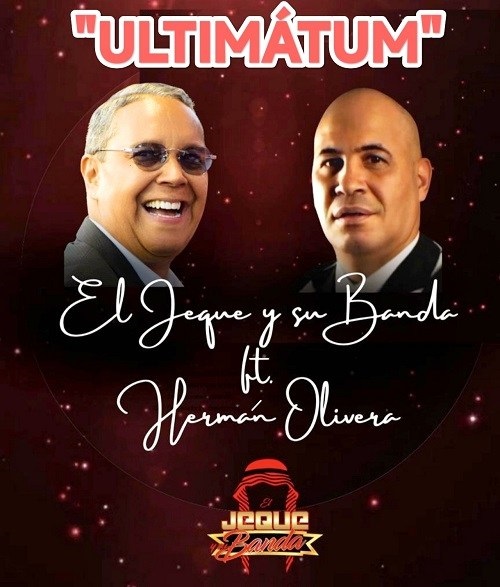
The Jeque and his Band present: “Ultimatum”, a musical gem with Hermán Olivera

A masterful fusion that redefines Guaguancó and Cha-Cha, celebrating the group’s tenth anniversary.

El Jeque y su Banda is a salsa ensemble based in Venezuela.

Under the direction of its founder and general manager, Lic. Ángel Martínez “El Jeque,” and with the impeccable musical direction, arrangements, and piano work of the renowned William “Willie” Melo, the band has established itself as a benchmark in the genre.

El Jeque y su Banda presenta “Ultimátum”, una joya musical junto a Hermán Olivera

Approaching ten years of professional trajectory, maintaining their momentum through persistence, passion, and dedication to their craft, the group celebrates this anniversary with the release of their fourth studio production: Evolución…El Jeque y sus Estrellas.

The Launch: “Ultimátum”

The purpose of this release is to announce the launch of their second promotional single, a piece crafted for the true music connoisseur: “Ultimátum.”

This musical gem features a collaboration with a legend of the genre, a world-renowned sonero and vocalist: Hermenegildo Olivera Suárez, globally known as “Hermán Olivera, El Sonero del Siglo XXI.”

Herman Olivera El Sonero del Siglo XII y Dj. Augusto Felibert

History and Evolution

This romantic-style track was originally recorded in 1981 by the great Puerto Rican interpreter Felipe “La Voz” Rodríguez.

The song was written by the legendary Puerto Rican composer Luz Celenia Tirado, who was the first woman recognized in the island’s challenging guild of troubadours and also performed on that original production.

On this occasion, El Jeque y su Banda takes the work in a new direction, transforming it into an aggressive Guaguancó fused with an elegant Cha-Cha.

The concept for this version was a creative endeavor led by Hermán Olivera, who defined the essence and intent of the track.

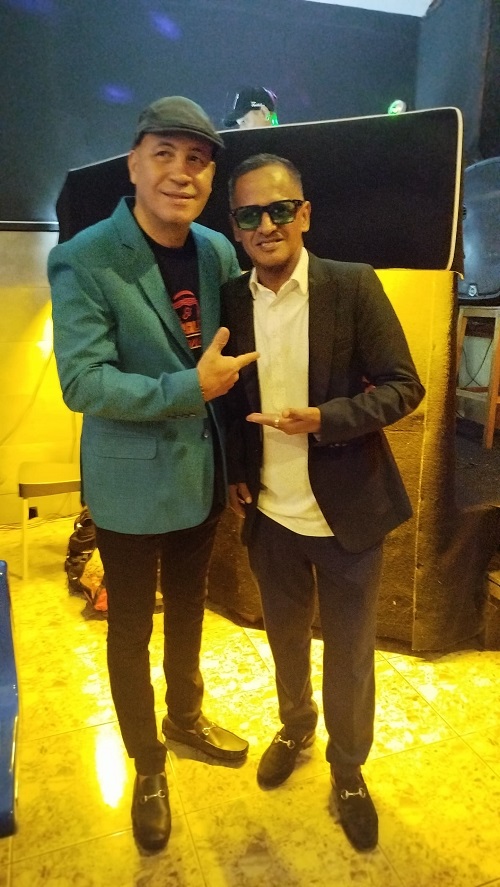
Ángel Martínez “El Jeque” y Dj. Augusto Felibertt

Subsequently, Luis Alberto and Willie Melo shaped the project, solidifying the final musical structure under the pen and direction of William “Willie” Melo, with the co-production of Luis Alberto “Redlouis” (Manager, Producer & Booking for Hermán Olivera).

Musical Virtuosity

It is remarkable how these music aficionados manage to mesh Guaguancó and Cha-Cha originally fused with a bolero with a versatility that preserves the essence, cadence, and appeal of the piece.

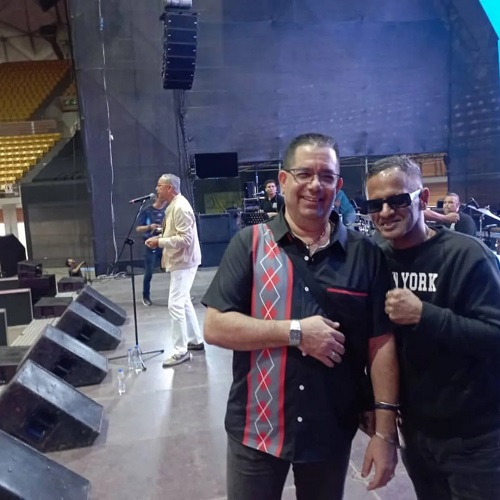
Herman Olivera Soneando Luis Rojas y Augusto Felibertt prueba de Sonido en el marco del evento Salsa Bajo la Cúpula Poliedro de Caracas.

Willie Melo masterfully integrates Hermán Olivera’s characteristic sound, marked by the influences of Manny Oquendo’s Conjunto Libre and the maestro Eddie Palmieri.

The arrangement, loaded with dissonant notes and power, softens its impact with the magic of the Cha-Cha, allowing Hermán to display his artistry in the soneo.

This interplay between the irreverent, the melodic, and the elegant makes “Ultimátum” a mandatory addition to any quality music lover’s playlist.

Production Credits

The excellence of this single is made possible by the participation of these great Venezuelan musicians:

  • Musicians: Yomar “Caballo” Méndez, Julito Antillano, Luis Ruíz, Joel “Pajarraco” Rivas, Frank Haslam, and Willie Melo.

  • Backing Vocals (Cha-Cha): Maestro Nino Segarra, accompanied by Rodrigo Mendoza and Wilmer Lozano.

  • Recording (Lead and Backing Vocals): Nino Segarra Studios (Puerto Rico).

  • Musical Recording, Mixing, and Mastering: Dale Cerebro Estudio, led by engineer Emmanuel “Cerebro” Romero.

Everything stated above summarizes a work with all the necessary elements to become a radio hit and, above all, an essential piece in your music library.

El Jeque y su Banda
El Jeque y su Banda

Sincerely,

Lic. Ángel Martínez “El Jeque”

Collaborations:

Luis Alberto “Redlouis” (Manager, Producer & Booking for Hermán Olivera)

Dj. Augusto Felibertt

Also Read: Hermán Olivera “El Sonero del Siglo XXI”

San Clemente 3rd Salsa Congress

Latin America / Argentina / Buenos Aires
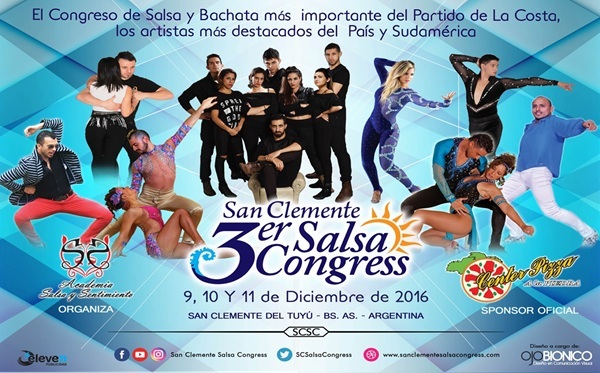
San Clemente 3rd Salsa Congress 2016

San Clemente 3rd Salsa Congress

December 9, 10, and 11, 2016 – San Clemente del Tuyú, Buenos Aires, Argentina

Kicking off this December, we present the 3rd International Congress of Salsa, Bachata, and Caribbean Rhythms. Widely recognized as the most important congress on Argentina’s Atlantic Coast, the event will take place on December 9th, 10th, and 11th in the town of San Clemente del Tuyú, located 185 miles (300 km) from the capital, Buenos Aires. The official sponsor is Center Pizza, with additional support from Tandori Indumentaria SYS.

This international congress will bring together dancers, instructors, and aficionados from across Argentina and South America. The event features world-class workshops (professional training) and countless showcases by headlining artists and dance companies from Argentina and neighboring countries. Attendees can also look forward to sets by top-tier DJs and plenty of social dancing.

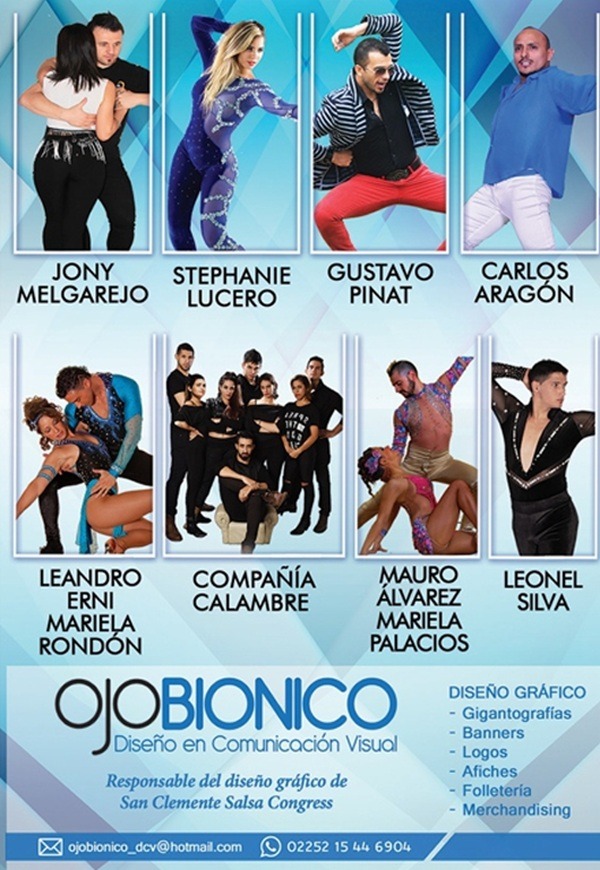
Dancers - San Clemente 3rd Salsa Congress 2016
Dancers – San Clemente 3rd Salsa Congress 2016

“The following main artists will be performing:”

Stephanie Lucero: Hailing from Buenos Aires, Stephanie is making her first-ever appearance at this Congress. She is widely recognized as one of the most prestigious instructors in the scene, standing out for her ability to dance both lead and follow roles with expertise. Stephanie has refined her skills under world-renowned masters such as Gaston Vidarte, Troy & Jorget, Korke & Judith, Daniel & Desiree, and Ataca & La Alemana. She has also shared the stage with international artists like Daniel Santacruz and Domenic Marte.

Currently, she leads her own all-female choreography group, “Luceros de Fuego.” For this major event, she will be leading two world-class workshops: Partner Bachata and Bachata Ladies’ Styling.

San Clemente 3rd Salsa Congress 2016 Flyers

La Compañía Calambre: Also making their debut at the congress and in the city, Calambre is Argentina’s premier dance company. Widely recognized as 2013 World Champions, they will be hosting three world-class workshops for this massive event. In addition to their incredible showcase, attendees will have the opportunity to enjoy their performances, dance with them, and interact with the team throughout all three days of the congress.

Leandro Erni & Mariela Rondon: Traveling from the city of Mar del Plata, this duo is the reigning Bachata Championship winners. They serve as directors of the Conjunto Clave Academy and are widely recognized as a world-class couple with an extensive international career. Notably, they secured 5th place at the 2015 World Latin Dance Cup in Miami. During the event, they will be hosting two workshops and performing two showcases. You’ll also have the chance to meet them and share the dance floor with them throughout all three days of the congress.

San Clemente 3rd Salsa Congress 2016 Flyers 2
San Clemente 3rd Salsa Congress 2016 - Details
San Clemente 3rd Salsa Congress 2016 – Details

Gustavo Pinat: Originally from Rosario, in the Santa Fe Province, Gustavo has over 19 years of experience in the salsa world. He has trained extensively across Europe and the Americas, including Germany, Switzerland, Spain, Italy, Greece, the U.S., Cuba, and Venezuela. A seasoned professional, he has taught workshops at numerous national and international congresses.

Gustavo is also the organizer of the VIVE CUBA Afro-Caribbean Rhythm Festival held in Rosario. Currently, he serves as the Director of the Bamboleo Salsa Studio in Rosario and leads “RAÍCES,” Argentina’s premier comprehensive training program for Afro-Cuban dance.

Leonel Silva: Hailing from Montevideo, Uruguay, Leonel is ranked among the top seven salsa soloists in the world and is a celebrated figure in his home country. Following his incredible performance at the last event, he returns to the 3rd San Clemente Salsa Congress.

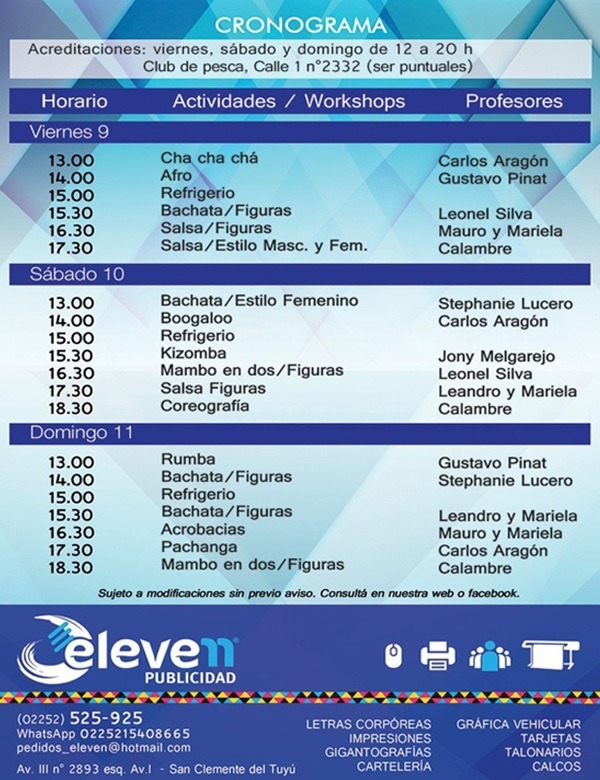
San Clemente 3rd Salsa Congress 2016 - Schedule
San Clemente 3rd Salsa Congress 2016 – Schedule

Carlos Aragon del Carpio: One of South America’s leading figures in the scene, Carlos is a regular at the region’s most prestigious congresses. He is the director of the first South American Mambo “On 2” school in Argentina and has refined his expertise through extensive training in Cuba and the United States.

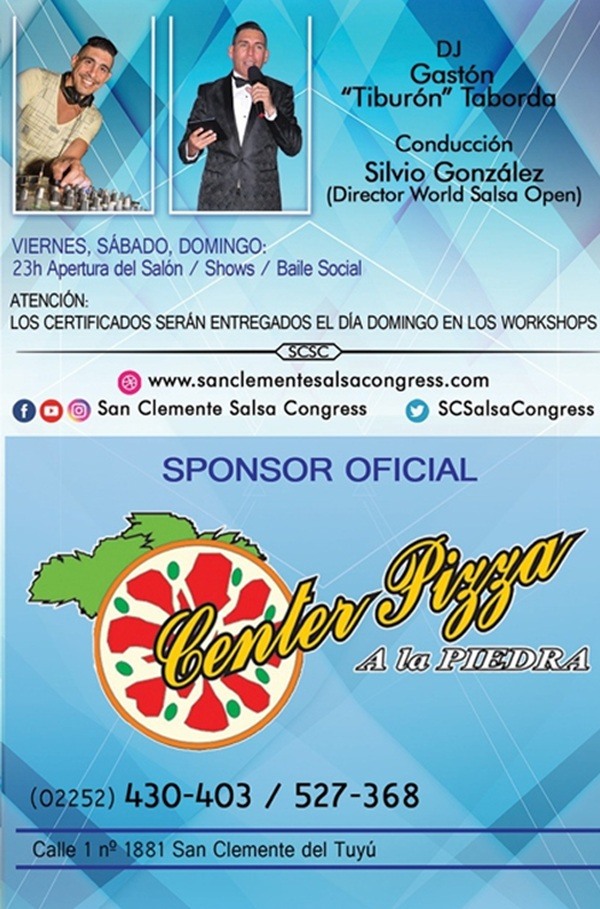
Our event host will be Silvio González, the director of the Argentina and Puerto Rico Salsa Open. A teacher and dancer with an extensive professional career, he is one of the most prominent figures in our country’s dance scene.

We are also proud to feature our Official DJ: GASTON “TIBURON” TABORDA, a nationally and internationally renowned DJ who headlines the most important congresses and competitions throughout Argentina and South America.

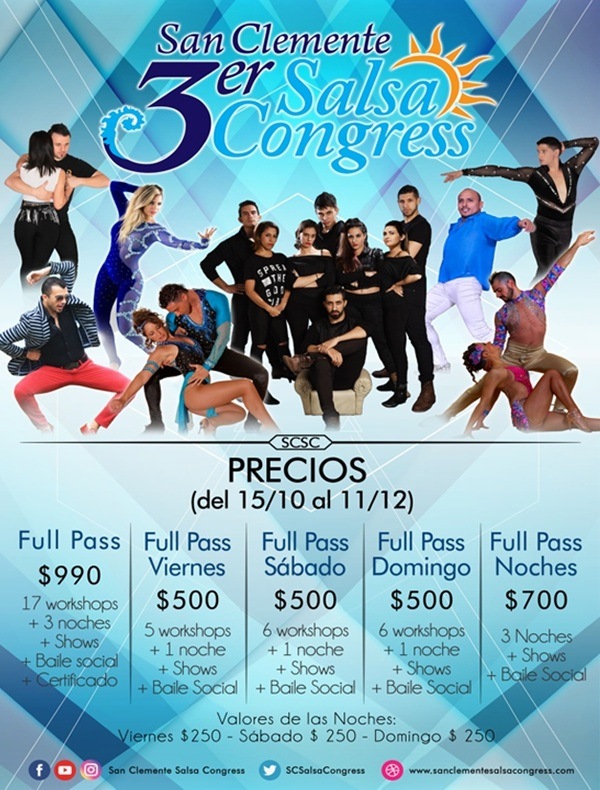
San Clemente 3rd Salsa Congress 2016 - Prices
San Clemente 3rd Salsa Congress 2016 – Prices

You can visit our official website and follow us on social media:

San Clemente 3rd Salsa Congress 2016 - Social Media
San Clemente 3rd Salsa Congress 2016 – Social Media

www.sanclementesalsacongress.com

  • Facebook: San Clemente Salsa Congress
  • Twitter: @scsalsacongress
  • Instagram: San Clemente Salsa Congress
  • YouTube Channel: San Clemente Salsa Congress


  • « Go to Previous Page
  • Page 1
  • Page 2
  • Page 3
  • Page 4
  • Interim pages omitted …
  • Page 95
  • Go to Next Page »

International Salsa Magazine (ISM) is a monthly publication about Salsa activities around the world, that has been publishing since 2007. It is a world network of volunteers coordinated by ISM Magazine. We are working to strengthen all the events by working together.