• Skip to primary navigation
  • Skip to main content

International Salsa Magazine

  • HOME
  • Previous editions
    • 2026
      • ISM / April 2026
      • ISM / March 2026
      • ISM / February 2026
      • ISM / January 2026
    • 2025
      • ISM / December 2025
      • ISM / November 2025
      • ISM / October 2025
      • ISM / September 2025
      • ISM / August 2025
      • ISM / July 2025
      • ISM / June 2025
      • ISM / May2025
      • ISM / April 2025
      • ISM / March 2025
      • ISM / February 2025
      • ISM / January 2025
    • 2024
      • ISM / December 2024
      • ISM / November 2024
      • ISM / October 2024
      • ISM / September 2024
      • ISM / August 2024
      • ISM / July 2024
      • ISM / June 2024
      • ISM / May 2024
      • ISM / April 2024
      • ISM / March 2024
      • ISM / February 2024
      • ISM / January 2024
    • 2023
      • ISM / December 2023
      • ISM / November 2023
      • ISM / October 2023
      • ISM – September 2023
      • ISM – August 2023
      • ISM July 2023
      • ISM Edition June 2023
      • ISM – May 2023
      • ISM April 2023
      • ISM March 2023
      • ISM February 2023
      • ISM January 2023
    • 2022
      • ISM December 2022
      • ISM November 2022
      • ISM October 2022
      • ISM September 2022
      • ISM August 2022
      • ISM July 2022
      • ISM June 2022
      • ISM May 2022
      • ISM February 2022
      • ISM January 2022
    • 2021
      • ISM December 2021
      • ISM November 2021
      • ISM October – 2021
      • ISM September 2021
      • ISM August 2021
      • ISM July 2021
      • ISM May 2021
      • ISM April 2021
      • ISM June 2021
      • ISM March 2021
      • ISM February 2021
      • ISM January 2021
    • 2020
      • ISM December 2020
      • ISM November 2020
      • ISM October 2020
      • ISM September 2020
      • ISM August 2020
      • ISM July 2020
      • ISM June 2020
      • ISM May 2020
      • ISM April 2020
      • ISM March 2020
      • ISM February 2020
      • ISM January 2020
    • 2019
      • ISM December 2019
      • ISM November 2019
      • ISM October 2019
      • ISM Septembre 2019
      • ISM August 2019
      • ISM July 2019
      • ISM June 2019
  • Spanish
  • Download Salsa App
    • Android
    • Apple

Search Results for: Salsa en Venezuela

Porfi Jiménez The Master of Rhythm Who United Two Nations

The life, work, and legacy of tropical music’s most “Venezuelan” Dominican.

Porfirio Antonio Jiménez Núñez, known universally as Porfi Jiménez, was more than just a musician; he was a cultural bridge.

A Dominican virtuoso by birth and Venezuelan by choice, he became one of the most iconic figures of Caribbean dance music.

His legacy endures as an exceptional trumpeter, arranger, and bandleader who possessed a unique gift for reading the pulse of the streets and elevating it to the level of fine art.
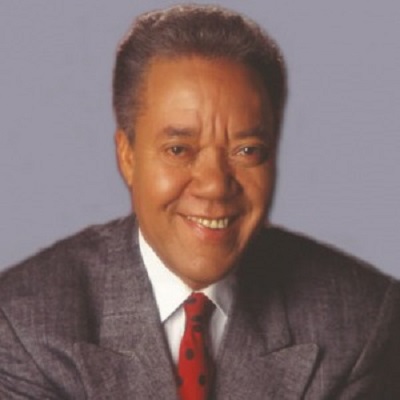
Porfi Jiménez El Maestro del Ritmo que Unió a dos Naciones

The Prodigy of Hato Mayor: Academic Training

Born on February 16, 1928, in Hato Mayor del Rey, Dominican Republic, Porfi’s destiny was sealed by music from an early age. A recognized child prodigy, he began his formal studies at age seven.

Following the death of his father, his mother gifted him his first trumpet when he was eight a tool that would eventually become his eternal voice.

Unlike many bandleaders of his era, Porfi sought technical excellence at the prestigious Berklee College of Music in Boston. This education granted him a superior technical command of jazz orchestration and tropical rhythms, allowing him to inject a unique harmonic sophistication into popular music.

Vida, obra y legado del dominicano más venezolano de la música tropical.

Putting Down Roots in Venezuela: A 50-Year “Layover”

On February 6, 1954, Porfi landed in Caracas at the invitation of his compatriot Rafael “Tata” Minaya for a brief Carnival tour.

What was planned as a temporary trip turned into a stay that lasted over half a century. Before founding his own sonic empire, he honed his craft within the country’s most elite musical institutions:

  • The Pedro J. Belisario Orchestra.
  • Billo’s Caracas Boys, under the baton of Maestro Billo Frómeta.
  • Staff orchestras for Venevisión and RCTV, where he shone as the lead arranger during the golden age of Venezuelan television.

The Birth of a Signature Sound

On December 31, 1963, as the world celebrated New Year’s Eve, a legend was born: Porfi debuted his own orchestra at the Tamanaco Hotel’s Naiguatá Hall.
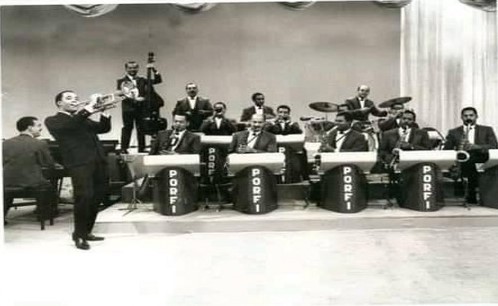
31 de diciembre de 1963, en el Salón Naiguatá del Hotel Tamanaco Foto By El Universal

His style broke the mold by fusing Dominican merengue with salsa and jazz, achieving a modern, high-energy orchestration.

That same year, he released his first LP, A bailar con Porfi (Velvet Records). Featuring the vocals of Kiko Mendive and Chico Salas, the orchestra produced hits that are now staples of the Latin party songbook:

  • “La Negra Celina”
  • “La Resbalosa”
  • “La Banda está Borracha”

The “King of Carnival” and the Golden Years

Throughout the 80s and 90s, his name was synonymous with sold-out venues. Dubbed the “King of Carnival,” no festival in Venezuela was complete without his music. His ability to create “people’s anthems” is undeniable, leaving behind timeless tracks such as:

Iconic Songs Cultural Impact
La hierba se movía A massive sales and dance phenomenon across the region.
Culucucú An undisputed hit during the December holiday season.
Se hunde el barco A quintessential classic in the repertoire of great orchestras.
Dolores / Chivo Florete A masterclass in high-energy, danceable merengue.


Culucucú Éxito indiscutible en las festividades decembrinas.

 An Immortal Legacy

Maestro Porfi Jiménez passed away in Caracas on June 8, 2010, at the age of 82.

Though Dominican by birth, he always declared himself “Venezuelan at heart,” leaving behind a devoted family and a generation of musicians trained under his disciplined leadership.

As we approach the centenary of his birth in 2028, his influence remains more vibrant than ever.

The tributes held between 2024 and 2026 in both the Dominican Republic and Venezuela only confirm that Porfi Jiménez was, is, and will always be the man who defined the rhythm of the Caribbean identity.

Also Read: Federico Betancourt “Pioneer of Salsa in Venezuela”

Adriana Mosquea: Between Strings, Winds, and Spirituality

Vocal Excellence, Instrumental Versatility, and Artistic Training

Adriana Carolina Mosquea Santana, born on August 25, 1993, in Santiago de los Caballeros, Dominican Republic, is a multi-faceted artist who has built a solid career as a solo singer, bassist, stage actress, and vocal coach.

Adriana Mosquea Between Strings, Winds and Spirituality

Early Training and First Steps

She began her musical journey at the age of five in school and church choirs. At nine, she entered the Centro de la Cultura de Santiago, where she studied singing, electric bass, and classical guitar. By age 17, she became the only female voice and bassist for the fusion group Oveja Negra.

After an accident that hindered the mobility of her hands for eight months, she defied medical diagnoses and achieved a full recovery through self-directed therapy, resuming her career with groups such as Sol Latino and La Piña Tá Dulce.

The Leap into Lyrical Music and Theater

In 2014, she received a scholarship from the La 37 por las Tablas school, joining the elite vocal group Les Cantatis. Under the tutelage of Roberto Guzmán and María Ligia Grullón, she performed pieces by Vivaldi, Pergolesi, and Tchaikovsky, and participated in the opera Carmen. In 2019, she was part of the choir for the opera La Traviata at the National Theater, conducted by José Antonio Molina.

Solo Career and National Projection

As a soloist, she has released tracks such as Humo y Humo and Zombie, performing at festivals like Arte Vivo and the Alliance Française. Her multidisciplinary project, Circo Imaginario, led her to open for the iconic Dominican rock band Toque Profundo.

Her appearance on Dominicana’s Got Talent in 2019 earned her massive recognition and excellent reviews from the judges. That same year, she joined Belkys Concepción y las Damas as a bassist and backing vocalist, sharing the stage with legendary figures like Johnny Ventura and Fefita la Grande.

Adriana Carolina Mosquea Santana, born on August 25, 1993 in Santiago de los Caballeros, Dominican Republic

Professional Background and Academic Formation

Adriana’s dedication goes beyond performance; she is an art scholar. She holds a degree in Art History and is currently pursuing a degree in Special Needs Education, focusing on music pedagogy.

Key milestones in her professional journey include:

  • Oveja Negra: Her first professional group at 17, where she served as the bassist.
  • Son Santiaguero & Sol Latino: Projects where she explored Cuban Son and alternative rock.
  • Belkys Concepción: She performed as the bassist for the band led by “The Mother of Merengue,” highlighting Belkys’ overwhelming energy on stage.

Innovation During the Pandemic and Recent Collaborations

Between 2020 and 2021, she produced her album Arte, Magia y Libertad (Art, Magic, and Freedom) in collaboration with Venezuelan producer Daniela Yánez. Her singles have received nominations at the Indie Dominican Awards and Expo Cibao.

Additionally, she participated in the In Memoriam segment of the 2020 Soberano Awards and composed part of the soundtrack for the film La Soga 3. In 2025, she stood out in a tribute to Maridalia Hernández, performing the duet Te Ofrezco.

Pedagogical Work and Vocal Coaching

Currently, Adriana is a prominent vocal coach. She has been a key figure in the technical evolution of the artist Tokischa, working on projects nominated for the 2025 Latin Grammys and 2026 Premios Lo Nuestro. She is a graduate in Art History and is currently completing a Degree in Pedagogy at CESUMA University in Spain.

Excelencia Vocal, Versatilidad Instrumental y Formación Artística

“Singing is a means of expression and healing. My focus is on a balanced life and technical discipline to set the voice free.”

The Multi-instrumentalist and the Winds of Communication

Although her primary instrument is the bass (and double bass in her early years), Adriana is proficient in guitar, piano, drums, and ukulele. her foray into woodwind instruments, such as the clarinet and saxophone, was born from a spiritual search:

“Wind instruments work with air, which is communication. As an artist, I needed to work on my ability to communicate what I was keeping silent.”

Identity, Flavor, and Spirituality

Proud of her roots, Adriana describes Santiago de los Caballeros as a peaceful “city-countryside.” Her palate travels between the Dominican Sancocho de siete carnes and the Venezuelan Mondongo, a dish she confesses has captivated her.

Adriana Mosquea
Adriana Mosquea

For her, music and spirituality are tools for self-knowledge. She defines spirituality as the acceptance of human duality—seeking balance between light and shadow, far from the pretensions of the ego.

Also Read: Dominican bandleader and singer Papo Ross is triumphing in Montreal

Don Perignon and La Puertorriqueña Release Classique et Savoureux

Timbalero, director, and music producer Pedro Luis Morales Cortijo, better known as “Don Perignon,” presents the 14th musical production from the “dancer’s orchestra” titled Classique et Savoureux. The leader of La Puertorriqueña features three guest vocalists on the album: Venezuelan musician and sonero Marcial Istúriz; Josué Rosado, one of the most iconic voices from La Puertorriqueña’s history; and “El Niño de Trastalleres,” Andy Montañez. With this record, Don Perignon reinforces his commitment to producing “flavorful” salsa with the dancer in mind.

In September 2025, Don Perignon and Andy Montañez reunited in the recording studio to reinvent “La Bikina.” The digital single fused the signature sound of Don Perignon’s La Puertorriqueña with the seasoned expertise of Andy Montañez. This alliance revives a nostalgic duo—the “dancing timbal” and the “singing compressor” that dates back to 1981. At that time, “Perín” took the reins as Andy’s musical director at the invitation of the legendary vocalist following his departure from Dimensión Latina. From that eight-year partnership, Andy Montañez still treasures Don Perignon’s participation in the 1988 recording of El Eterno Enamorado (TH-Rodven), where the latter not only played the timbales but also served as the album’s musical director. Regarding this, Andy says: “I remember him with great affection and appreciate his discipline in directing that recording, especially because every track became a hit.”

Don Perignon and La Puertorriqueña Release Classique et Savoureux

As promised in earlier press releases, that single was the prelude to Classique et Savoureux, where “La Bikina” is featured as the third track. Don Perignon released the song arranged by pianist and composer Domingo García 60 years after its original composition. The song, originally titled “The Beginning,” was penned by Mexican songwriter Rubén Fuentes Gasson.

Tracklist and Credits

The tracklist for Classique et Savoureux is as follows:

  • “Ella Sigue Bailando”: Composed and performed by Joe González; arranged by Andy Guzmán.
  • “Hay Que Quererlas”: Composed and performed by José Karlo Ribot; arranged by Roberto Pérez.
  • “Pura Imagen”: A classic piece by Adalberto Álvarez, vocalized by Joe González; arranged by Juan C. Cardona.
  • “Ayer Te Vi”: Written by Rubén Rada, featuring the vocals of Henry Santiago; arranged by Ramón Sánchez.
  • “No Se Equivocan”: Written and performed by José Karlo Ribot; arranged by Carlos “Cuto” Soto.
  • “Yo Soy Guaracha”: Written by Ángel Santos, performed by Marcial Istúriz; arranged by Carlos García.
  • A Medley of Boleros: Featuring “Necesito Llamar Su Atención” (Roberto and Erasmo Carlo) and “Mírame Más” (Julio Gutiérrez), performed by Henry Santiago and Joe González; arranged by Juan C. Cardona with a flute solo by Roberto Calderón.
  • “Será Mejor”: The closing track, written by Héctor Olmo and arranged by Juan C. Cardona, featuring vocalist Josué Rosado.

The Musicians

Leading his musical generation on the timbales and as director, Don Perignon was backed by the musicians of La Puertorriqueña and several guest artists. On the congas, Antonio “Coqui” Marrero, Jean Carlos Camuñas, and the late William “Kachiro” Thompson ensured the time and clave remained rhythmically precise. On the bongos, you can hear the distinctive touch of one of the original members of La Puertorriqueña, Miguel Aponte. On bass, the unmistakable Efraín Hernández interacts with Juan Rivera on piano. Other pianists on the recording include Luis Marín, Leni Prieto, and Ricky Rodríguez. The production is rounded out by the backing vocals of the incomparable Henry Santiago, Juan Bautista, and Joe González. The trumpet section featured Ángel and Richie Segarra along with Jesús Alonso; Sammy Vélez on baritone sax; and the trombones were handled by Juan C. Cardona, Gamalier González, César Javier Ayala, and Carlos “Cuto” Soto.

Pedro Luis Morales Cortijo “Don Perignon”

The album was recorded at the studios of Rolando Alejandro and Angelito Segarra, with mastering by Wiso Rivera.

This release “reaffirms Don Perignon’s commitment to the evolution of salsa in the digital age” without neglecting physical formats, as the album is available on CD and LP to ensure the music is accessible to everyone.

With the title Classique et Savoureux, Don Perignon honors more than four decades of using his stage name inspired by the French champagne Dom Pérignon. He expresses gratitude for the longevity of a concept that began without a clear goal but was built on heavy discipline and the firm purpose of making music for the dancer. In an interview, the bandleader stated that his musical project “is already a classic, thanks to the dancers who have appreciated and supported its sabrosura (flavor).”

Also Read: Long live the music! Repeat after me: “Long live the musicians so they can keep making it.” And I’ll add: “Long live SALSA!”

Bella Martinez Puerto Rico

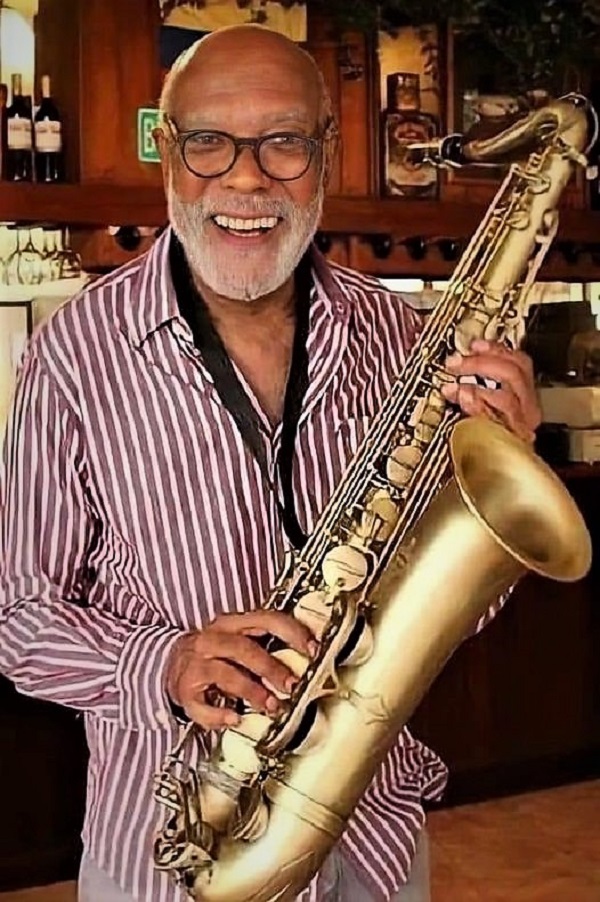
Víctor Cuica “The Eternal Breath of Latin Jazz and Venezuelan Identity “

The legacy of a visionary who fused the saxophone with the essence of the Caribbean and national cinema.

Víctor Cuica was more than just a musician; he was a bridge between two worlds. Born on April 19, 1949, in the iconic Caracas neighborhood of La Pastora, Cuica established himself as a preeminent saxophonist and actor, earning global acclaim for his innovative fusion of Jazz with Afro-Caribbean roots.

His presence defined a golden era in Venezuelan culture, as he shared the stage with legends such as Tito Puente, Paquito D’Rivera, Porfi Jiménez, and Gerry Weil.

Victor Cuica “The Eternal Breath of Latin Jazz and Venezuelan Identity”

Victor Cuica “The Eternal Breath of Latin Jazz and Venezuelan Identity”

Training and First Steps: The Birth of a Style

The journey of this virtuoso—master of the tenor and soprano saxophone as well as the flute—began in 1963 at the Military Music School of La Victoria. His time in the Venezuelan Navy band served as the catalyst for his love of Jazz, leading him to deepen his knowledge of flute, harmony, and composition at the “José Ángel Lamas” Higher School of Music.

His professional career took off in Chucho Sanoja’s orchestra. Shortly thereafter, he joined Oscar D’León’s ensemble. It was actually Cuica who suggested the name “Dimensión Latina” to replace the group’s former name, “Oscar y sus Estrellas,” thereby christening what would become the most iconic salsa orchestra in Venezuelan history.

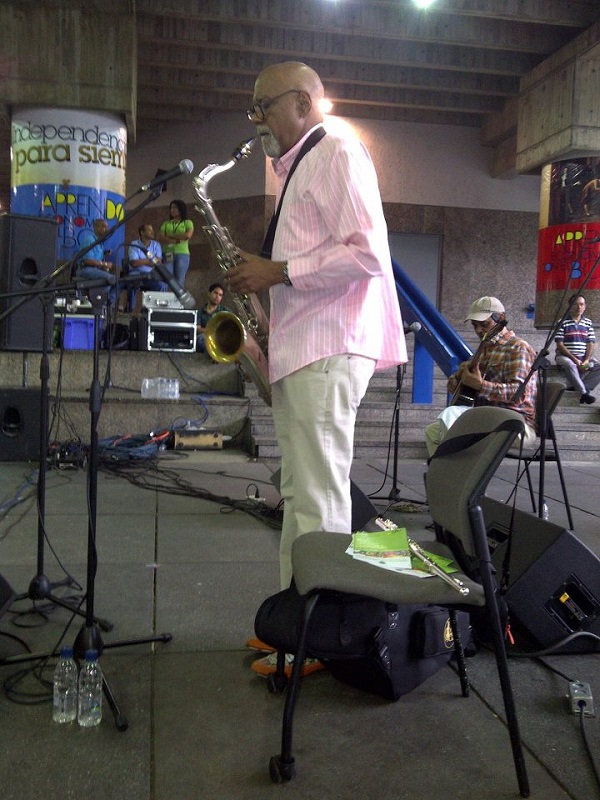
Victor Cuica in concert held on August 22, 2011 in Juan Pedro Lopez Square in Caracas

Victor Cuica in concert held on August 22, 2011 in Juan Pedro Lopez Square in Caracas

Latin Jazz: From the Silver Screen to International Stages

By the late 1970s, Cuica expanded his horizons into the “seventh art.” In 1978, he composed and performed the soundtrack for “The Sea of Lost Time” (El Mar del Tiempo Perdido), based on the short story by Gabriel García Márquez. A year later, he solidified his own group, “Víctor Cuica y su Jazz Latino,” debuting to resounding success at the Alcázar Theater in Caracas and gaining international momentum in Costa Rica.

Throughout the 1980s, critics hailed him as the most important innovator of jazz fusion in the region. His talent brought him to historic venues:

  • 1981: He triumphed at the “Memphis in May” festival in Tennessee.
  • 1982: He performed at the prestigious “Domicile” club in Munich, Germany.
  • 1985: He reached a milestone as the leader of the first Venezuelan group invited to the Montreal International Jazz Festival, where he shared the limelight with the legendary vibraphonist Lionel Hampton.

Artistic Maturity and Recognition

In the 1990s, his music reached new academic heights when Maestro Eduardo Marturet composed the work “Music for Six and Sax” specifically for him. It premiered with the Sinfonietta Caracas and represented Venezuela at the 1992 Universal Exposition in Seville.

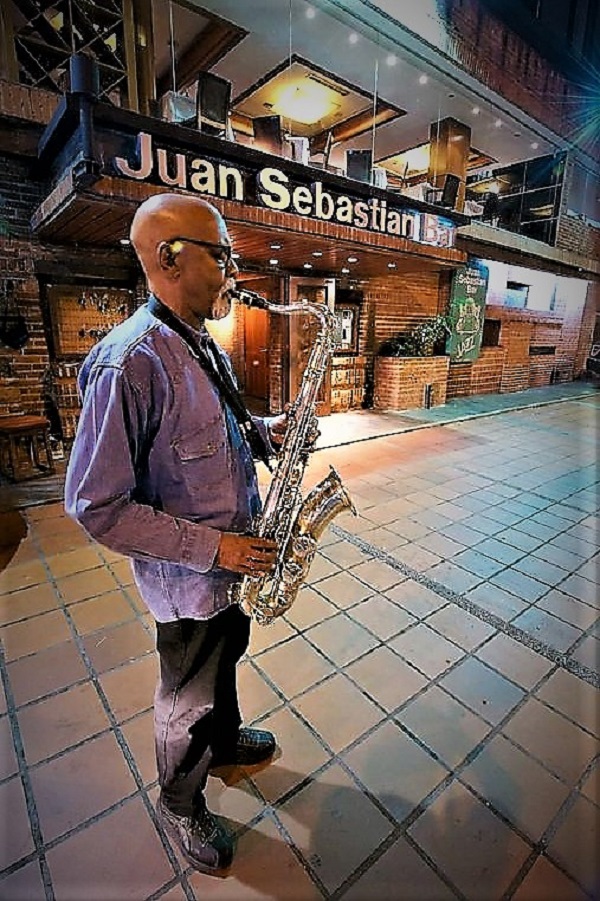
Víctor Cuica was not just a musician; he was a bridge between two worlds. Photograph at Juan Sebastian Bar

Víctor Cuica was not just a musician; he was a bridge between two worlds. Photograph at Juan Sebastian Bar

His discography, which includes gems such as Que sea para siempre (1984), Noctámbulo (1993), Just Friends (1998), and Los Locos de Caracas (1999), stands as a testament to his versatility. In 1995, the Venezuelan Artist’s Guild (Casa del Artista) honored him as Musician of the Year.

A Farewell with the Flavor of the Streets and Bohemia

Víctor Cuica passed away on Saturday, December 26, 2020, at the age of 71 due to a heart attack. His departure left a void in the film industry, where he starred in memorable films such as Santera (for which he also composed the award-winning soundtrack in 1997), and in the bohemian nights of Caracas, where his saxophone was often the soul of the evening.

A Tribute from His Peers

Multi-percussionist José Hidalgo, known as “El Tokun Mayor,” describes Cuica with words that summarize his essence:

“Víctor Cuica is the finest example of an artist intimately linked to his daily reality and cultural origins, without ever losing sight of the cosmopolitan and universal nature of his musical message. Cuica is the expression of genuine jazz performed with the simplicity of the streets.

Víctor is as authentic in his personal character as he is as an artist. This virtue was his companion as he traveled across numerous international stages, spanning the worlds of music, film, theater, and opera always with the transcendence of a bohemian, simple, and bold minstrel.

Cuica never ceases to surprise us, whether through his voice or the sound of his saxophone an instrument that, with his habitual ingenuity, he turned into a centerpiece of performance through his creativity and versatility.

His talent has graced stages across Europe and the Americas. His work projects far beyond the commercial mainstream and, today, leaves us with a brilliant musical improvisation that is truly beyond compare.”

DJ Augusto Felibertt with the one and only virtuoso Víctor Cuica

DJ Augusto Felibertt with the one and only virtuoso Víctor Cuica

Today, the name Víctor Cuica remains etched in history as the man who gave Jazz a Caribbean color and gave the Venezuelan saxophone a voice of its own.

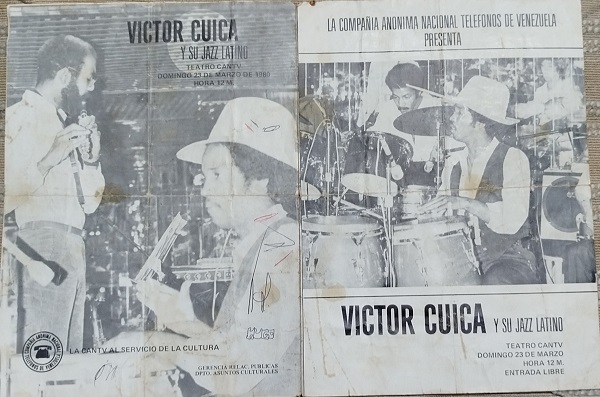
Victor Cuica and his Latin Jazz, March 23, 1980 at the Cantv Theater in Caracas

Victor Cuica and his Latin Jazz, March 23, 1980 at the Cantv Theater in Caracas

Also Read: Oscar Rojas Oscar Rojas has 54 years of musical career full of passion, rhythm and flavor

Carlos Jimenez offers his talent and passion to charm the audience in universities, hotels, and restaurants all over New York

We are very happy because this beginning of the year has brought us a very friendly conversation with brilliant bandleader, composer, vocalist, and flutist Carlos Jiménez, who kindly answered the questions we had for him. 

The New Yorker has many interesting things to tell, so we hope that everyone will enjoy the material below.

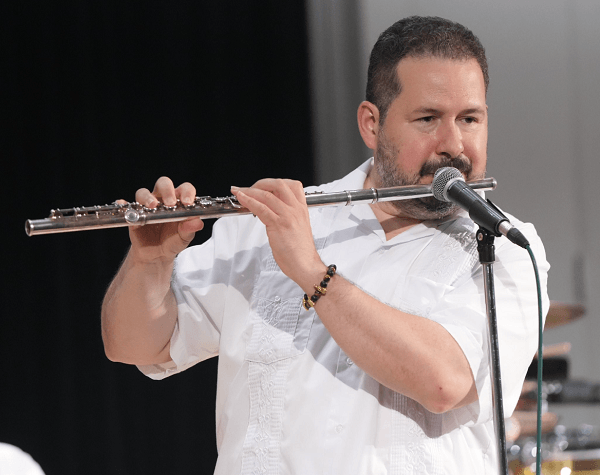
Carlos Jimenez playing
Carlos Jimenez playing the flute live

Carlos’ beginnings in music

Carlos was born in New York City, but moved to Puerto Rico with his family when he was six years old. It was on the Island of Enchantment that he discovered his inclination toward music thanks to his trumpeter father William, and his cuatrista grandfather Cruz, who encouraged him to take music lessons. Therefore, he also began to receive musical training and built competence for playing percussion instruments such as the timbales, bongos, and congas. 

His first lyrical instrument was the trumpet, which he learned to play under the tutelage of Professor Pablo León at Francisco Zayas Santana High School. However, inspired by Mongo Santamaría and his musical arrangements for his song “Song For You,” he decided to switch instruments and start playing the flute, which he has continued to do.

Carlos’ return to New York

As a young man, he decided to return to his hometown highly motivated by the vibrant Latin music scene there, which he describes as “the city where all our dreams come true.” While there, he enrolled at the Music Conservatory of Westchester to study classical flute, but his training have not been completed. 

He also studied jazz harmony and voicing with piano teacher Michael Longo, who he describes as a good friend and teacher to the point of making a recording together. Unfortunately, Longo was one of the many victims of the COVID-19 pandemic, which was an immense sadness for Carlos and those who had the privilege of knowing him. 

Orlando Marín and Carlos Jimenez
Orlando Marín ”El último Rey del Timbal” and Carlos Jimenez

Results of his prolific career

After more than 20 years of successful career, Carlos has built a great reputation in the industry at the point of passion and hard work. He himself says that his good name comes as a result of his responsibility, reliability, and, most importantly, his ability to play good music.

His great skills as a professional and musician have led him to play at corporate events for companies such as Victoria’s Secret, Nike, ScotiaBank, Regeneron, and many others. In addition to that, he has also been able to play and lead orchestras in performances for universities and cultural institutions such as Lehman College, Sarah Lawrence College, New York Botanical Garden, Columbia University, and many more. 

Likewise, Carlos’ band has performed in so many festivals such as West Harlem Jazz Festival, Harbour Jazz Festival, Fall Harvest Fishkill Farm Festival, Lake George Festival, Summer Sound Festival, and many others. 

Altruistic side

In addition to the above, Carlos has also earned the respect of his colleagues thanks to the numerous galas, charity events, and community activities the artist has been involved in recent years, which has made him worthy of numerous awards for his community service. This shows that the flutist is not only passionate about his craft, which is music, but also uses it to do good to those in need. We can also add that he has headlined numerous shows at well-known restaurants and hotels such as Casa Cipriani Hotel, The Marriott, Ritz Carlton, The Lexington Hotel, among others.

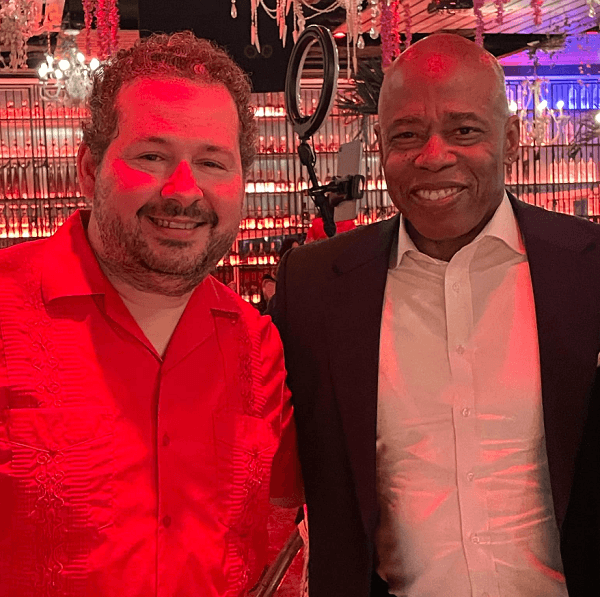
Carlos Jimenez and Eric Adams
Carlos Jimenez and former New York Mayor Eric Adams

The Carlos Mambo Dulcet

Together with his orchestra, Carlos has released several albums, including “Red Tailed Hawk Vol. 1,” “Red Tailed Hawk Vol. 2,” and “Despierta Boricua,” among others. The artist closed the conversation by saying that his group continues to be formed and has more than 100 musicians and all are are wonderful.

Read also: La Nota Band showcases the best of Venezuelan talent

  • « Go to Previous Page
  • Page 1
  • Page 2
  • Page 3
  • Page 4
  • Page 5
  • Page 6
  • Interim pages omitted …
  • Page 95
  • Go to Next Page »

International Salsa Magazine (ISM) is a monthly publication about Salsa activities around the world, that has been publishing since 2007. It is a world network of volunteers coordinated by ISM Magazine. We are working to strengthen all the events by working together.