• Skip to primary navigation
  • Skip to main content

International Salsa Magazine

  • HOME
  • Previous editions
    • 2026
      • ISM / April 2026
      • ISM / March 2026
      • ISM / February 2026
      • ISM / January 2026
    • 2025
      • ISM / December 2025
      • ISM / November 2025
      • ISM / October 2025
      • ISM / September 2025
      • ISM / August 2025
      • ISM / July 2025
      • ISM / June 2025
      • ISM / May2025
      • ISM / April 2025
      • ISM / March 2025
      • ISM / February 2025
      • ISM / January 2025
    • 2024
      • ISM / December 2024
      • ISM / November 2024
      • ISM / October 2024
      • ISM / September 2024
      • ISM / August 2024
      • ISM / July 2024
      • ISM / June 2024
      • ISM / May 2024
      • ISM / April 2024
      • ISM / March 2024
      • ISM / February 2024
      • ISM / January 2024
    • 2023
      • ISM / December 2023
      • ISM / November 2023
      • ISM / October 2023
      • ISM – September 2023
      • ISM – August 2023
      • ISM July 2023
      • ISM Edition June 2023
      • ISM – May 2023
      • ISM April 2023
      • ISM March 2023
      • ISM February 2023
      • ISM January 2023
    • 2022
      • ISM December 2022
      • ISM November 2022
      • ISM October 2022
      • ISM September 2022
      • ISM August 2022
      • ISM July 2022
      • ISM June 2022
      • ISM May 2022
      • ISM February 2022
      • ISM January 2022
    • 2021
      • ISM December 2021
      • ISM November 2021
      • ISM October – 2021
      • ISM September 2021
      • ISM August 2021
      • ISM July 2021
      • ISM May 2021
      • ISM April 2021
      • ISM June 2021
      • ISM March 2021
      • ISM February 2021
      • ISM January 2021
    • 2020
      • ISM December 2020
      • ISM November 2020
      • ISM October 2020
      • ISM September 2020
      • ISM August 2020
      • ISM July 2020
      • ISM June 2020
      • ISM May 2020
      • ISM April 2020
      • ISM March 2020
      • ISM February 2020
      • ISM January 2020
    • 2019
      • ISM December 2019
      • ISM November 2019
      • ISM October 2019
      • ISM Septembre 2019
      • ISM August 2019
      • ISM July 2019
      • ISM June 2019
  • Spanish
  • Download Salsa App
    • Android
    • Apple

Search Results for: Salsa en Venezuela

Hindy & his Orchestra “The Sonera of the Moment”

Latin America / Buenos Aires / Argentina

Hindy Singer of the Latin genre, with a high and extensive artistic career in salsa.

Hindy born in San Félix – Edo. Bolívar, in the south east of Venezuela, in 27 years of artistic career, has enriched her musical career through her different participations as a soloist, chorister, singer-songwriter and producer.

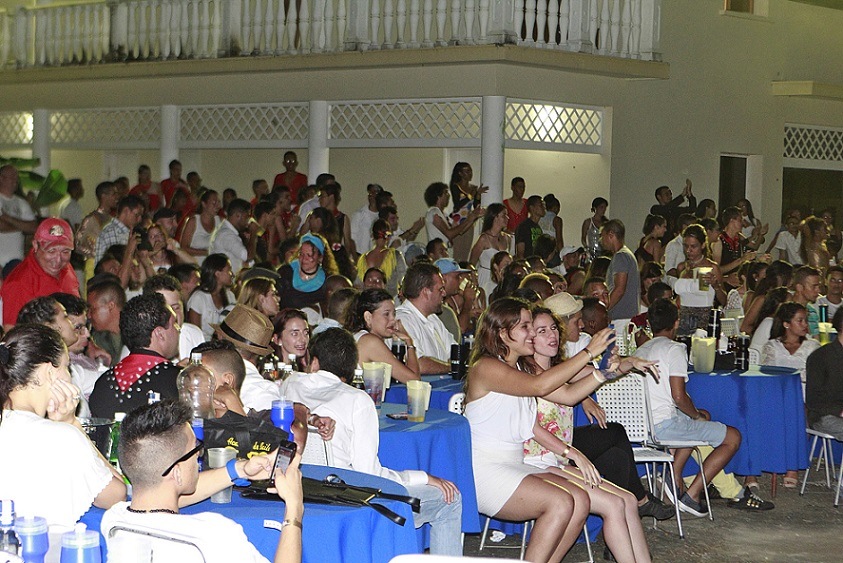
Photo 1: Hindy dancing in a party festival

His beginnings in the Venezuelan salsa music elite are with a first place in the Record Report, at the hands of the international producer César Monges “Albóndiga” interpreting in his production “De Regreso a mi País” the version of the song A Flor de Piel del Venezuelan singer-songwriter Yordano Di Marzo, being in turn the leading voice of the Monges orchestra “Latín Girls” under the representation of Korta Records of the businessman “Negro Mendoza”.

Among some of the national and international celebrities with whom he has participated on different stages are: Cheo Feliciano, Viti Ruiz, Henry Fiol, Roberto Blades, Jr. Gonzáles, Paquito Guzmán, Richie Ray & Bobby Cruz, Gilberto S, Wladimir Lozano, Erick Franchesqui , Paquito Barón, Gustavo Rodríguez, Armando Manzanero, Pancho Céspedes, Gran Combo, S. Ponceña, Hildemaro, etc.

There is a long way to go, if it can be said, in the “short” artistic career of Hindy Castillo. His jump to internationalism was in 2007-08 to Europe, where he participated for two consecutive summers in different popular music orchestras touring more than 30 cities in Spain, and in France.

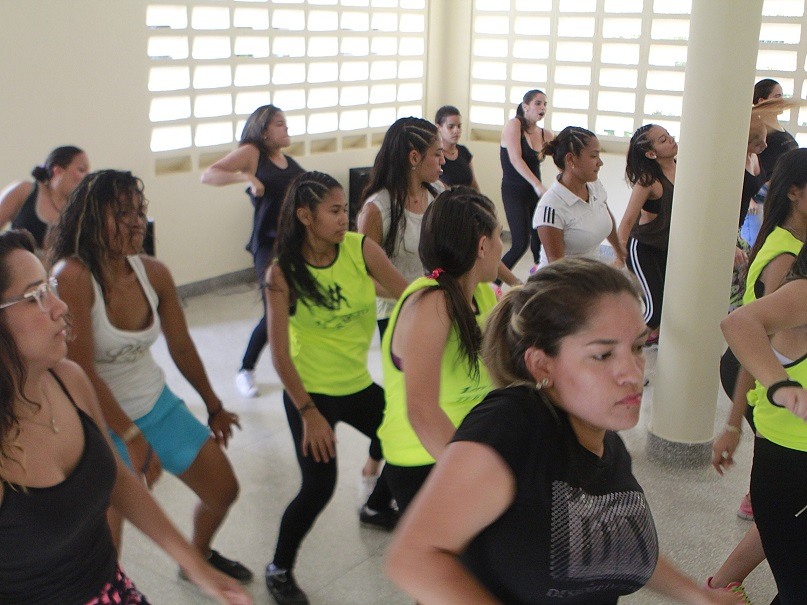
Photo 2: Hindy dancing in a party festival

His next artistic stop was in the state of Mexico.

Hindy was selected to assemble an international orchestra and travel from Venezuela to do a 3-month tour, which lasted another 13 months, the immediate rapport of all its members was a total success, profiling a true blunderbuss in the salsa environment. Veracruz.

She was also chosen to participate in the 1st Boca del Río salsa festival and, among other presentations, shared the stage with the great composer Armando Manzanero and Pancho Céspedes, extending her presentations to Guatemala City. Later, she travels to the capital, DF, invited by a local producer, who, seduced by her talent, encourages her with her orchestra to perform on different stages of the Aztec capital, capturing the taste of the Mexican music lover and salsa dancer, who turn to her presentations. to appreciate and enjoy his voice and the special talent of the soneo Salsoso.

Hindy musicalizes, produces her first songs and debuts as a singer-songwriter, under the executive production of her representative Carlos Zapata.

They record four songs sprinkled with romanticism, maintaining the bases of “hard” salsa and with novel musical variants.

Flamenco was one of these variants that played an important role in this product since its mixture with salsa resulted in a very genuine and fresh sound, from the pen of select Venezuelan arrangers. Graduated instructor of Popular Singing.

He has developed musical studies of: vocal technique, German singing method in Spain, Latin piano and modern harmony. He is currently doing his Bachelor of Music and Popular Singing at the José Ángel Lamas High School of Music. And preparatory studies of trombone. Caracas.

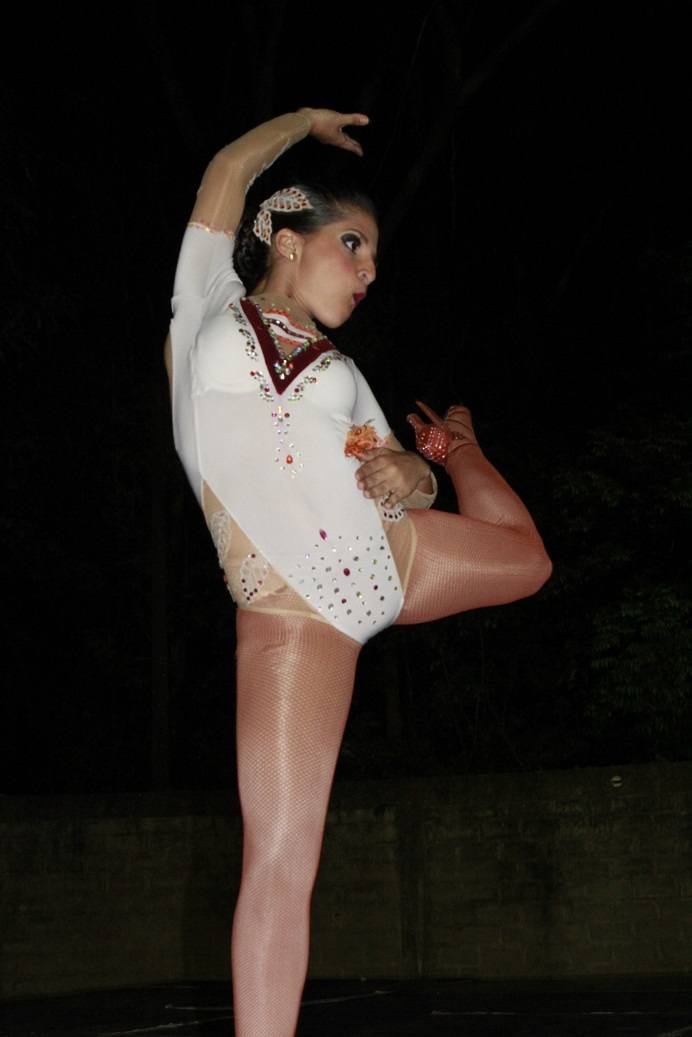
Photo 3: Hindy dancing in a party festival

As a musical producer, she manages the concepts “MujereSon & Boleros”, a musical of Boleros and sones, the social project Mujeres de la Escena, and her main project “Hindy & su Orquesta”, with a dynamic scene, full of salsa for all tastes, with the majestic quality that characterizes her performances.

Hindy is a talent full of energy, charisma, quality, with a Venezuelan flavor to export.

We continue working to enhance Salsa

This month I want to continue sharing good news for everyone in NY and in the Salsa world. On this occasion, Oscar Hernández and Spanish Harlem Orquesta join Spaha Salsa Gallery Museum. Oscar has donated an incredible piece that we will be exhibiting immediately.

Four times Grammy Award Winner, Oscar Hernández, has long been considered one of the most gifted and prominent pianist / arrangers on the contemporary Latin, Latin-jazz and salsa music scene. He has achieved legendary status for his prolific career spanning now over 40 years.

Hernández is the leader of the world renowned Spanish Harlem Orchestra. Won the Grammy for their second CD release, “Across 110th Street” and winning yet another Grammy with their 4th CD “Viva La Tradition” and won their 3rd Grammy with “Anniversary” in 2019. Oscar was the music producer as well as pianist / arranger on all CD’s.

Since the band’s inception in the year 2001, SHO has garnered numerous awards and world acclaim as one of the finest exponents of Salsa and Latin / Jazz music. Spanish Harlem Orchestra is generally considered one of the best Salsa & Latin Jazz Orchestras today and one of the finest music ensembles in the world.

The Bronx native has produced such artists as Ruben Blades, Paul Simon, Willie Colón “Carabali”, Daniel Ponce, Rafael Dejesus, Eddie Torres, Phil Hernandez, Steve Kroon, Juan Luis Guerra, etc.

In addition to being Rubén Blades pianist, arranger and musical director, Oscar Hernández has enjoyed a prolific musical career recording and performing with such world renown artists as Latin music king Tito Puente, Queen of Salsa Music Celia Cruz, Latin Pop Star Julio Iglesias, Juan Luis Guerra, Ray Barreto, Earl Klugh, Dave Valentin, Johnny Pacheco, Ismael Miranda, Pete “Conde” Rodríquez, Oscar De’ Leon, Luis “Perico” Ortiz, “Libre” “Grupo Folkorico Experimental “, Willie Colón, Kirsty MacColl, etc. Oscar’s musical exploits include working as Musical Director / Conductor, arranging and producing the music for “The Capeman,” pop-rock icon Paul Simon’s Broadway musical.

Oscar is also the music producer of “The Capeman” cast recording. Oscar was Musical Director / Arranger for the hit shows “Quén Mató a Hector Lavoe” and “La Lupe” at the 47th Street Theater. He was also, Music Supervisor / Arranger for the show “Four Guys named Jose & Una Mujer named María” Oscar also has released 2 CD’s as a solo artist, Oscar Hernández & Alma Libre, titled “The Art of Latin Jazz” and “Love The Moment ”on Origin Records. It is a true honor to have the donation of an incomparable musician like him in our museum. Thanks, Oscar!

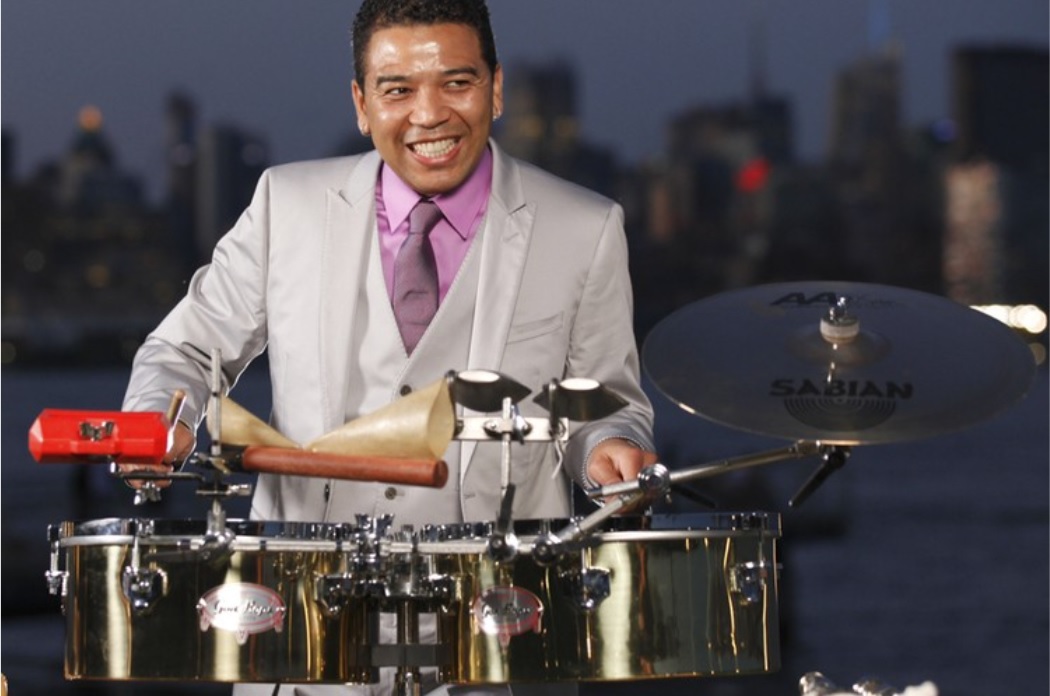
Another of the great figures of the Spanish Salsa Harlem Orchestra is Luisito Quintero, the timbalero from Venezuela. Luisito Quintero was born in Caracas, Venezuela where he had his first contact with music. Cultural influences of Afro-Venezuelan rhythms were always present at home. His father, a highly respected percussionist, taught and encouraged Luisito to play the timpani in his teens.

Luisito Quintero
Luisito Quintero

Quintero continued to refine his playing level with the Venezuela Symphony Orchestra, where his technique for playing the timpani soon caught the attention of his colleagues. Subsequently, he joined the popular music groups Guaco and the Trabuco Venezolano and traveled with Oscar D ‘León with whom he achievedan important international projection. The live performances, recordings and projects in which he has participated are countless.

He has made his mark as a percussionist with figures such as Tito Puente, Eddie Palmieri, Marc Anthony, Gloria Estefan, Richard Bona, Jack Dejonette, Willie Colón, George Benson, Natalie Cole, Herbie Hancock, Nuyorican Soul, Masters at Work, and of course, The Spanish Harlem Orchestra. Luisito is part of the group Elements of life, with whom he has toured for the last years.

The band has shared stages with major artists in the market such as Robert Plant, Lauryn Hill and Alicia Keys, performing at festivals such as Montreux Jazz Festival in Switzerland, North Sea Jazz Festival in Holland, Roskilde in Denmark, Blue Note in Japan, Jazz Cafe in London, England and the legendary New Morning Cafe in Paris, France. Without a doubt, an impressive and worth mentioning career.

And if we are talking about incredible careers in this edition, I can’t stop talking about Adalberto Santiago and the new projects of the 60th anniversary with great artists of the genre. This his time I can tell you about Cuco Peña’s string arrangements, the participation of Nelson Jaimes and, of course, the help of my friend Freddy Miranda. At 83 years old, he is still in the rumba. There is less and less to show the world this historical piece for the world of salsa.

Johnny Cruz and Adalberto Santiago - Salsa
Johnny Cruz and Adalberto Santiago – Salsa

I also want to remember Raphy Leavitt, on the fifth anniversary of her death on August 5. In 1970 Leavitt organized an orchestra that should have a different sound and style. He wanted to select the repertoire of songs of the orchestra with a particular, positive, social and even philosophical message; and founded “La Selecta”. Since its inception, La Selecta has featured Coamo-born Sammy Marrero as one of its singers.

Marrero, who has always been strongly influenced by the music of the Puerto Rican jíbaro, had an opportunity to teach his dramatic singing style in his first hits as the almost hymn “Jíbaro Soy”, a very patriotic and unusual Puerto Rican song, “Payaso”, and “The Good Shepherd”. However, it is in the band’s signature song, “La Cuna Blanca,” that Marrero’s voice is for the most part associated.

Raphy Leavitt
Raphy Leavitt

In 1978, Leavitt discovered a young singer named Tony Vega, who became a legend among salsa singers on his own merit. Raphy Leavitt and La Selecta were responsible for the introduction of salsa in many countries. In the 1980s, Leavitt became an independent producer and produced two albums for Bobby Valentine.

In the 1990s, he established his record recording company, R.L. Records. The company’s first production was the album titled “Provocame,” which became a hit in Puerto Rico, the United States, and South America.

In 1978, Leavitt discovered a young singer named Tony Vega, who became a legend among salsa singers on his own merit. Raphy Leavitt and La Selecta were responsible for the introduction of salsa in many countries. Raphy passed away in Miami as a result of an operation of the hip prosthesis that had been installed due to an accident in 1972, and that he had become infected. Leavitt passed away in his sleep. Raphy will always be endorsers of the Salsa Museum with the clown suit of its 25th anniversary.

I also want to thank the constant and significant support for the Museum, from my friend Sully Díaz, who as endorser of the museum, is always working to promote and make our work reach more people. Sully was born in New York, the daughter of Sephardic parents from Puerto Rico. She began her career as a model, and at the age of 17 she began acting in Spanish soap operas, making herself a well-known figure on television in Puerto Rico.

In 1983 she became popular throughout Latin America with the role of Coralito, in the telenovela of the same name. From that moment on, Sully was known as “the queen of Puerto Rican soap operas.” In the early 1990s, Sully moved to Hollywood and appeared on various television shows as a guest star and worked on a few movies.

Johnny Cruz and Sully Diaz

In the mid-1990s, Sully joined four other Latina women (Dyana Ortelli, Marilyn, Ludo Vika, and Lydia Nicole) in a comedy group called “The Hot & Spicey Mamitas”. They sold out at several Los Angeles comedy clubs. They recorded a CD live called simply The Hot & Spicey Mamitas.

In 2002 Sully appeared in the play La Lupe: My Life, My Destiny, in which she played the Cuban singer La Lupe. Shortly after the execution of this work, Sully made her own production of La Reina, La Lupe. This work toured all of Puerto Rico and was a great success in Florida. That same year, she starred in the Puerto Rican thriller “Cuéntame tu pena”, in which she plays Isadora, a radio host who receives a call from a woman who is killed while on the air.

In 2004 Sully toured with Gilberto Santa Rosa in a play called “The True Story of Pedro Navaja.” In 2009 Sully appeared in the movie Princess Protection Program as Reina Sofía, along with Selena Gómez and Demi Lovato.

Papo Rosario and Isidro Infante - Photo
Papo Rosario and Isidro Infante

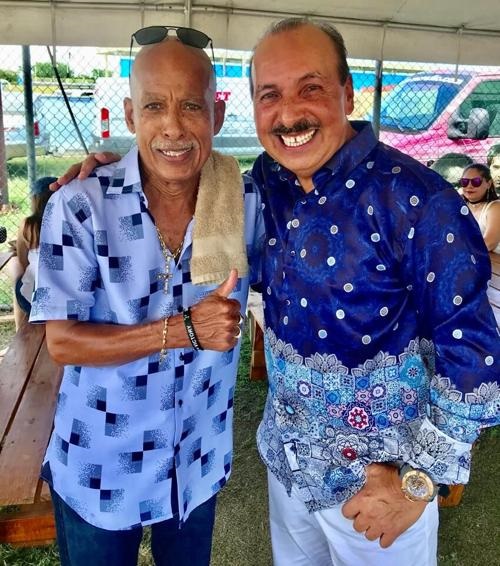
Recently, Papo Rosario released his new single “Gracias” produced by arranger and musician Isidro Infante. Rosario appreciates being alive and being able to walk after being bedridden as a result of a car accident. Papo Rosario is a world-class artist who has put the name of Puerto Rico on high. Rosario, who retired in 2019 from the group considered the “University of Salsa”, El Gran combo de Puerto Rico, after having an accident and presenting health problems, affirms that he already feels ready to resume his musical career with the Launch of his first solo production by producer Isidro Infante. I wish you success in this new beginning.

The invitation to tune in to the new Fm / Internet radio station on Live365.com: Salsagallery continues. Great music, artist interviews and much more.

Oscar Hernandez
Oscar Hernandez

At the Spanish Harlem Salsa Gallery Museum we are happy to affirm that New York City is preparing to resume its activities little by little. We hope to have more news soon and that we can return to normal soon.

By Johnny Cruz, ISM Correspondent, New York, New York City

Because even from home You can compete with Venezuela es Latina

Latin America / Venezuela / Caracas 

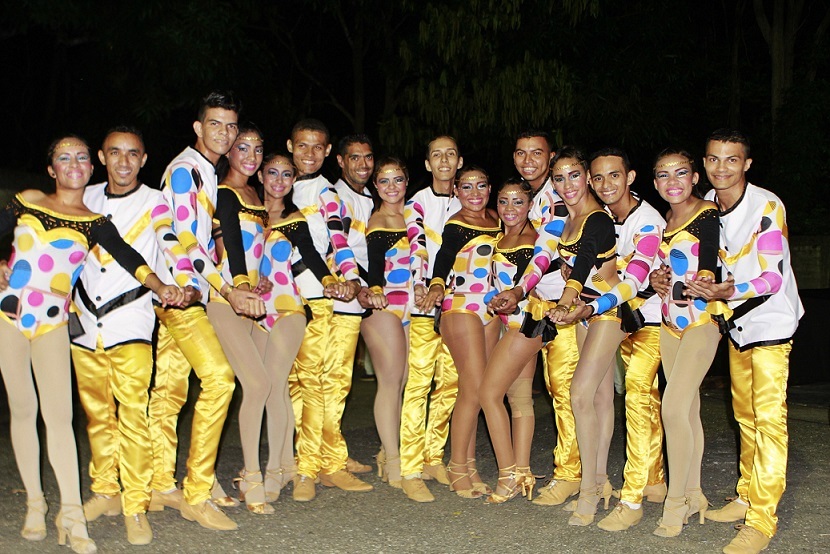
Venezuela es Latina prepared a preview of its 2020 edition to be enjoyed online, relying on social networks, anyone who wishes can be part of the competition or the spectator public.

Participant from Venezuela es Latina

Since 2007, Venezuela is Latina was born as a competitive event that sought to innovate and open a new path to dance competitions in Venezuela, hence since its birth, the event managed to capture the eyes of many by presenting new ideas, from the divisions of the competitors in categories to the emergence of a show in conjunction with the best dancers and academies in the country.

Viewers of Venezuela es Latina 2020

From its first delivery in August 2007 and until the last in a row in 2017, this event usually achieves hundreds of people at great moments, a custom that is maintained for this new edition. It reaches its 12th day, after a stop of two years in its annual run, for this 2020 they have prepared a comeback show, supported by the slogan, a tradition returns and we want to see you dance, this great event seeks to renew the systems a little of competitions that are constantly taking place in beautiful Venezuela, from changes in some categories to innovations in others, we must be prepared for everything that this great event could show us.

Social in Venezuela es Latina 2020

For now, they have advanced a mouth opener with an On Line competition through the famous Instagram social network, highlighted by the hashtag #CompiteEnCasa, this idea seeks to open a competition channel for all beginner dancers who can post a video from their homes demonstrating their freestyle skills to win additional prize money from other surprise dance surprises, all supported by great sponsors.

Dancer of Venezuela es Latina

To be part of this competition, those interested must search for all the information contained in their account on Instagram @vzlaeslatina, in addition to reviewing the price of the prize daily at @enviostenerife, the official sponsor, and join this initiative to stay home but take advantage of the time to compete. .

Be sure to follow in the footsteps of this great initiative and be part of the qualifying jury.


By Jose Perez, ISM Correspondent, Caracas, Venezuela

Bebo Valdés is considered one of the central figures of the golden age of Cuban music

On March 22, 2013 in Stockholm, Sweden, Dionisio Ramón Emilio Valdés Amaro, better known as Bebo Valdés, died.

He was an excellent musician of Cuban music and Afro-Cuban jazz, considered one of the central figures of the golden age of Cuban music.

In addition to being a pianist, his best known facet, he has been a composer, arranger and orchestra conductor.

He was born in Quivicán, Cuba, on October 9, 1918. He was the father of the Afro-Cuban jazz pianist Chucho Valdés (b. 1941). From 1931 to 1935 he studied piano in his hometown with Moraima González; in 1936 he moved with his family to Havana, where he studied music theory, harmony and composition with Oscar Bofartigue.

In 1938 he made his professional debut with Happy D’Ulacia’s orchestra. He played in Havana, since the 1940s, in the orchestras Ulacia, García Curbelo, Julio Cueva and Orquesta Tropicana, and recorded albums with groups dedicated to performing Afro-Cuban jazz.2

Known among his family and friends by the affectionate nickname of Caballón because of his considerable stature, he composed mambos, such as La rareza del siglo, which covers the genre recently introduced by Pérez Prado and which would change the course of Cuban music. From 1948 until 1957, he worked at the Tropicana cabaret as pianist and arranger for Rita Montaner.

The Sabor de Cuba orchestra, of Bebo Valdés, and that of Armando Romeu, made the show of this night club, in which Valdés stopped performing in 1957, when he was hired by Ernesto Roca, of the Peer International Music Publishers, to make arrangements for Xiomara Alfaro and Pío Leyva; at the same time, he joined Guillermo Álvarez Guedez, of the Panart and Rolando Laserie in Radio Progreso. With his orchestra Sabor de Cuba, he accompanied singers Reinaldo Henríquez, Orlando Guerra (Cascarita), Pío Leyva and Ada Rex; Beny Moré also sang with this group, and Chucho Valdés made his debut.

About the descarga or jam session, there are multiple versions, this is the one by Bebo Valdés which, due to the concreteness of data, dates and record labels that made the recordings, is the most objective: “One night in October 1952, I was resting in a cabaret in Havana with members of the Tropicana orchestra.

Bebo Valdés Fue un excelente músico de música cubana y jazz afrocubano, considerado como una de las figuras centrales de la época dorada de la música

It is important to know that since 1948, Cuban, Mexican or even American musicians used to meet on Sunday afternoons at the Tropicana to play descarga, in the course of which we mixed jazz and Cuban rhythms.

Sometimes the descargas were held at four o’clock in the morning, at the end of the [Tropicana] show. The percussionist Guillermo Barreto was the one who animated them; we had received Roy Haynes, Kenny Drew, Sarah Vaughan, Richard Davis and many other musicians passing through; in fact, all the great names of jazz paraded through the Tropicana.

All of that could have been recorded, but no one was interested. So, that night Irving Price, the owner of a record store on Galiano Street, announces to me that producer Norman Granz is in town and that he can’t believe that Cuban musicians are capable of playing jazz.

Granz and Price ask me to go to the studio to record. It was September 16, 1952. So, I called some musicians, but I myself was late for the session, because in the morning I had another recording for RCA: I was going to accompany a singer! When I finally arrived at Panart’s studio, Granz had already left for the United States.

We called the orchestra The Andre’s All Star, after the name of Irving Price’s record store. We had decided to play classic jazz tunes, such as Distrust, Taboo, Sleep and Blues for Andre. At the end of the session, as there were still a few minutes available for the record, I started playing a riff, from which we improvised. We called that track “Con poco coco.”

The record was titled Cubano! and the participating musicians were all from the Tropicana cabaret: Gustavo Más, tenor saxophone; Alejandro Vivar (El Negro Vivar), trumpet; Kiki Hernández, double bass; Guillermo Barreto, timbal; Rolando Alfonso, tumbadora and Bebo Valdés, piano.

The works it contains are the same as those mentioned by Bebo Valdés, and the label, Mercury. In 1955, Bebo Valdés recorded, in the studios of Radio Progreso, Holiday Habana and She Adores the Latin Type, for the Decca label, which contained mambo, chachachá, bolero, jazz descarga, even jazz with bebop tendencies.

According to Luc Delannoy, in 1956 the Panart recorded Cuban Jam Session, with Julio Gutiérrez and Pedro Jústiz (Peruchín), as directors, and the musicians Alejandro Vivar (El Negro Vivar), Edilberto Escrich, Osvaldo Urrutia (Mosquifin), Emilio Peñalver, José Silva (CHombo), Juan Pablo Miranda, Salvador Vivar, Jesús Esquijarrosa (Chucho), Oscar Valdés, father, Marcelino Valdés, Walfredo de los Reyes and José Antonio Méndez. The participation of Israel López (Cachao) in a descarga did not occur until 1957, when the Panart recorded Descargas cubanas, with the participation of Cachao himself, Guillermo Barreto, Gustavo Tamayo, Rogelio Iglesias, Richard Egües, Andrés Hechavarría (El Niño Rivera), Rolito Pérez, Alfredo León, Arístides Soto (Tata Güines), Alejandro Vivar (El Negro Vivar), Generoso Jiménez, Orestes López (Macho), Emilio Peñalver and Virgilio Vixama. In other years, there were also recordings of downloads, and some unrecorded ones, such as those recalled by Leonardo Acosta at the Cuban Jazz Club, held between 1958 and 1960, with the participation of Pedro Jústiz (Peruchín), piano; Guillermo Barreto, drums and pailas, and Arístides Soto (Tata Güines), tumbadora (drums). This proves -or at least shows another side of the coin- that Bebo Valdés was one of the initiators of descarga in Cuba, a resource used by Cuban musicians in the most diverse instrumental formats, genres and styles of our popular music, as, for example, did the composers of the filin movement.

On June 8, 1952, with a band of twenty musicians, Bebo unveiled the batanga rhythm in the studios of RHC Cadena Azul; among the three singers in the orchestra was Beny Moré.

Bebo Valdés un virtuoso de la música cubana

That same year he travels to Mexico with the purpose of recording a disc with this new modality of Cuban music, which also included a new choreography; they were not successful, and, according to Bebo Valdés, “the batanga died a natural death”.

When he left Cuba in 1960 due to disagreements with the Cuban government, Bebo also abandoned his family, his wife Pilar Valdés and his five children (including Chucho). Bebo Valdés goes to Mexico, then moves to Los Angeles, California, where he works with singer Miguelito Valdés; from there he travels to Spain, where he records two albums as director of the orchestra that accompanies Chilean singer Lucho Gatica.

Later he toured England, France, Holland, Germany and Finland with the Lecuona Cuban Boys. In 1963 he settled in Sweden, and worked with the Hatuey Orchestra, a Swedish group playing Cuban music. In Sweden he formed a new family when he married in 1963.

International career

After thirty years of relative anonymity, on November 25, 1994, Valdés received a call from Paquito D’Rivera, who invited him to record a new album in Germany for the Messidor label. A new beginning in his career took place at the age of 76 with the recording of Bebo Rides Again.

He participated in Fernando Trueba’s film Calle 54, along with, among others, pianist and composer Chucho Valdés, Paquito D’Rivera, Elaine Elías, Chano Domínguez, Jerry González, Michel Camilo, Leandro J. Barbieri (Gato Barbieri), Ernesto Antonio Puente (Tito Puente), Arturo O’Farrill (Chico), Israel López (Cachao), Orlando Ríos (Puntilla) and Carlos Valdés (Patato).

In 2004 he traveled to Salvador de Bahia, Brazil, to participate in Trueba’s film El milagro de Candeal, along with Carlinhos Brown, Marisa Monte, Mateus Aleluia and César Mendez.

Bebo y Chucho Valdés una verdadera dinastía de la Música Cubana

An integral musician capable of tackling the most diverse genres and styles of music, not only as a pianist and composer, but also as an orchestrator and orchestra conductor of sublime values; of solid technical training, both theoretical and pianistic, Bebo Valdés is one of the all-time greats of Cuban music. He was, with Israel López (Cachao) and Patato Valdés, nominated for the Latin Grammy Award for El arte del sabor, best traditional tropical album 2002.

In 2002, Fernando Trueba produced Lágrimas negras, an album that unites flamenco singer Diego el Cigala with Bebo Valdés on piano.

After its release in 2003, it became an international success, recognized with a Grammy, three Music Awards, an Ondas Award, five Amigo Awards, three Platinum Discs in Spain and one each in Argentina, Mexico and Venezuela. The New York Times praised the album as Best Latin Music Album of the Year and opened the doors to a tour of Paris, New York, London, Havana, Buenos Aires, Tokyo, Mexico City, Madrid and Barcelona, among others. By the end of 2004 the album had sold more than 700,000 copies worldwide.

He retired to Benalmádena, a village in the province of Málaga (Spain), until his death in Stockholm (Sweden).

Chucho Valdés

Read also: Carlos “Patato” Valdés one of the best percussionists in the history of Latin Jazz

Rosa Maria Peña Collado, Rome and its Sauce Online TV program Music and Entertainment

Latin America / Peru

Rosa María Peña Collado: “ROMA Y SU SALSA” is an On Line TV Program with a MAGAZINNE format of MUSIC and ENTERTAINMENT that has as its main objective to promote the permanent diffusion of the Peruvian national talent and international guests that work in the different musical and artistic genres.

The Program “ROMA Y SU SALSA” begins its transmission in March 2015 through the web address http://www.radiomiraflores.com and later in other media such as

Rosa María Peña Collado - Roma y su Salsa
Rosa María Peña Collado – Roma y su Salsa

Roma y su Salsa

http://www.radioondadigital.com/tv

http://www.eccoradio.pe

http://www.caracolrecord.pe

where it has been executed in a sustained way (with two periods) until now.

In the itinerary of interviews and presentations, Peruvian members and talents of   ORCHESTRAS have paraded such as

Zaperoko La Resistencia Salsera del Callao

K’llao Salsa, N’Samble,

Creole Sax, Perkutao

Sabrosura

La Chola Caderona

Salome

Beto Chira and Orchestra

Las Estelares de la Rumba

The Wizards of Sauce

Sauce Suggestions

Son Canelas

Rock Band Stirrup

SINGERS AND COMPOSERS

Antonio Cartagena

Edilberto Cuestas CANTES Willy Rivera

Johnny Rojas

Kike Peña

Pablo Villanueva “Melcochita”

Victor Zanelli

Manolo Rodriguez

Carlo Supo

Shanney Hurtado

David Roman

Marcelo Villar

Martin Lopez

Anne Kolher

Laura Mau

Fanny Almenara

Sandra Cardenas

Rosa María Peña Collado

SINGERS AND IMITATORS

Paquito Português “Frankie Ruiz”

Isabel Castro “La India”

MUSICIANS AND COMPOSERS

Carlos Orozco

Isaac Sanchez

Juan Rebaza

Juan Arana

Juan Medrano “Cotito”

Manuel Leon

Daniel Venegas

MUSICIANS

Cesar Vivanco

Urban Collac

Maximum Chest

Mita Barreto

Lucho Cueto

John Canevello

Aldo de Dios

Omar Basallo

Percy Chinchilla

Carlos Nieves

Guillermo Arias

Jesús Zavala (visually impaired percussionist)

WRITERS

Mario Aragon

DANCERS AND CHOREOGRAPHERS

Charles Anton

Julio Zegarra

Joel Pictures

Daniel Vivanco

COLLECTORS

Walter Renteria

Beto Onetto

Albert Cologne

ANIMATORS AND PRESENTERS

Jorge Eduardo Bancayan

Dante Corrales

Oscar Godos

INTERVIEWS PERUVIANS LIVING ABROAD

Cesar Correa

Daniel “The Cat” Arboleda

Hector “Jereto” Ferreyra,

Rosa María Peña Collado

SINGERS AND COMPOSERS

Renzo Padilla “El Borincaico”

Mirko Radovic

Mike Ortiz, Luchito Muñoz

MUSICIANS AND COMPOSERS

Ahmed La Torre

Kiki Sanchez

Rafaelo Parejas

DANCER AND CHOREOGRAPHER

Cecilia Villalobos

DJ’s SALSA

Armando Carrasco

August Felibertt

(Caracas – Venezuela)

INTERNATIONAL ARTISTS

Pedro Brull

Roberto Blades

Pichie Perez, Jose Lugo (RIP)

Alberto Martinez

Alex D’Castro

Vitti Ruiz

Jose Fajardo Jr.

Nolberto Velez

Gerardo Rivas NG2

Patty Padilla

TELEPHONE LINK

Herman Olivera

Papote Jimenez

Ramonita Parra

Raffi Torres

DANCER

Allien Ramirez (Tri World Salsa Champion)

PRODUCER

Albert Torres (RIP)

Finally, it has been planned to resume the interviews via zoom in order to continue the permanent work of diffusion of the art and talent of the great SALSA FAMILY, complemented by the online radio that is under construction.

Rosa María Peña Collado

Peru: Roma y su Salsa

Rosa María Peña Collado

Driver

“ROME AND ITS SAUCE”

  • « Go to Previous Page
  • Page 1
  • Interim pages omitted …
  • Page 23
  • Page 24
  • Page 25
  • Page 26
  • Page 27
  • Interim pages omitted …
  • Page 95
  • Go to Next Page »

International Salsa Magazine (ISM) is a monthly publication about Salsa activities around the world, that has been publishing since 2007. It is a world network of volunteers coordinated by ISM Magazine. We are working to strengthen all the events by working together.