

| DIRECTORY OF NIGHTCLUBS | ||
|
|
|
|
|
|
|
|
|
|
|
|
|
|
|
|
|
|
|
|
|
|
|
|
| DIRECTORY OF NIGHTCLUBS | ||
|
|
|
|
|
|
|
|
|
|
|
|
|
|
|
|
|
|
|
|
|
|
|
|
Latin America / Cuba
When it comes to dances, rhythms and sounds, it is impossible not to take as a reference the island with the most impact in the world of dance in the entire world, the beautiful island of Cuba, how many countries are not nourished by all the culture that this pearl of the Caribbean It allows us to see with its cultural roots, it seems that on the day of creation they left in Cuba all the musical dance creativity that they had.
Today we will be talking with one of the distinguished artists of the Cuban cultural movement in Europe, a member of a family legacy in Cuba, the so-called aspirins, we are talking about Ismaray Chacón Tejeda, a Piscean eradicated in Switzerland.

Welcome and always grateful for opening the doors of your life to make it known to our readers and your followers, we are going to get to know you a little.
Thank you for this great opportunity sir.
Ismaray let’s start by talking about the roots of your country. Do you live for folklore or do you enjoy it?
I enjoy it and at the same time I live it, it satisfies me is transmitting it and having the greatest result that a teacher can have, seeing the progress of the students, knowing that they deepen and feel identified with my culture, with my dance.
What does folklore mean in your life?
My identity as Cuban. It is life, feeling, experience… Everything!!

How was the idea of being part of the dance world born in you?
I was born and raised in that environment for my family. My grandfather rehearsed every week at home with his group and I didn’t miss a concert. I am the result of that environment.
How long study and career?
Professionally I started at the age of 17, after I left the School of Art Instructors (EIA), which I could not finish, I auditioned in a group called Obini Bata (Bata Woman). This group and my family were my true school. Look, we rehearsed twice a week all day where we learned the different taps, songs and dances plus the rehearsal of the group for the weekly function, the other days I practiced with my family, or I attended a drum, güiro or cajon (religious festivals) . All that mix was very important to me as it gave me the foundation for my career.
How many countries have you traveled making known the culture of your Island?
Uff!… (Between laughter and emotion) I have really been very lucky to visit many and repeatedly. Singapore, Russia, Morocco, Israel, France, Italy, Spain, England, Sweden, Finland, Peru, Denmark, Poland, Serbia, Germany, Austria, Brazil, Canada, Croatia, Ukraine, Switzerland, among others. I would like to go to the brother countries of Latin America and be able to exchange cultures. I went to Mexico but only on vacation.

What countries have you not visited that you would like to know?
Colombia, Argentina, USA, Africa (Nigeria, Congo), Dubai, China, Japan, India, Venezuela and other Latin countries, hopefully I can. Hey, let the promoters know (between laughs)
The Casino (Cuban Salsa), the rumba or the Afro-Cuban?
What comes to mind when you hear the name Luis Chacón Mendive?
Phew!… my map, my friend, the example to follow, my teacher, my idol, my little green old man, my adoration.
You have a traditional surname and a lot of renown in Cuba. At some point in your training was it a requirement or a motivation?
Yes, it was both. A motivation because it is a great pride for me to belong to this important family and to have that experience, which made me lean towards this side of dance, but at the same time, a challenge because I grew up with my grandfather and my father and every time I had to work, the other artists always said…
that’s Aspirin’s granddaughter… Koky’s daughter… There were those who trusted that I would do a good job, but there were also those who wanted to see if I was up to the job. that last name. Sometimes even though I don’t like to be the center of attention, I had to show it and be a fool as we say in Cuba.

Why Aspirin?
Many say that when they see us play, dance or sing, their headaches go away hahahaha. In truth, it was from the great Aspirin who worked at that time and the boss always had pain in his teeth and sent him to the pharmacy to buy Aspirin. As it was very often, from there he got the nickname.
Do your dream and your reality go hand in hand? Did you dream of having another profession?
Today I can say yes. Being an artist was one of my dreams of the many I have. I remember when I was a child I wanted to be a flight attendant to travel the world and learn about other cultures, today I am lucky to travel carrying my culture and exchanging, I managed to be a flight attendant but in my own style. I’m very lucky.
What has the dance world given you and what has it taken from you?
It has not taken anything away from me, on the contrary, in addition to meeting so many beautiful people, it has given me life, emotions, sacrifices that today help me to value things more, it keeps me healthy and when I execute it, from that moment on all my problems they leave…it’s my therapy.
If you were born again, would you go back to dancing? Why?
Yes, a thousand times. Because art in general is a way of expressing what we feel, in the case of dance, we express it and transmit it with our body….it is life!

How is Cuban folklore currently spread in the world? Are lines of the original traditions maintained?
Well… this topic is very open and with different points of view, and the word Folklore says it all… In Cuba we have the Afro-Cuban and the Cuban, my point of view to summarize it in a few words, is an oral culture that was always transmitted through generations and family traditions, there is no book like in classical music where everything is written, rather what was seen that older people were doing was repeated, of course everything evolves and transforms over time of the generations even what is sung, the touches or their dances.
But in a certain way patterns are created to follow. I think that in order to spread it and teach it, it is important to know the basics and from there I totally agree with the evolutions, mixtures and others. We just have to be careful not to mistreat it.
What new projects could you share with us?
I currently live in Switzerland although I feel that I must start a new stage of my life in another European country. I also hope one day to be able to return to my country, be with my family and from there continue in the art that is what I love. For now I continue teaching and transmitting my culture throughout the world, already happily married I would like to have the blessing of one day having my family. Together with my husband Serguei Yera Madera, singer of La Reve, we want to continue developing our careers. We keep making history 😉
Grateful for letting us enter a very small corner of your life, we see that you are a true lover of your culture, we hope to continue seeing you succeed in the whole world. For our readers, you already know that this beautiful artist can be followed on her social networks.

Latin America / Venezuela / Caracas
On this occasion we have the privilege of meeting the new Venezuelan talent Toñito Laya (singer), son of Maestro Antonio “20 DEDOS” Laya, who was one of the most significant conga players in the Venezuelan salsa movement in the 1980s, director of the “ Banbankere Orchestra” of Petare with two musical productions; giving him more than enough reason to grow in Latin music, such as “el Son”, “la Rumba”, “la Guaracha”, “el Danzón“, “Boogaloo”, “la Timba” and “la Salsa” being This is the beginning of his artistic and musical career.
Starting in the 90s, he entered the Bigott Foundation where he had the opportunity not only to learn the various rhythms in Afro-Venezuelan percussion, but also developed as a dancer in one of the most important groups in Venezuela when it comes to popular traditions. “Vasallos del Sol”, eventually becoming “Vasallos de Venezuela” in 2016, where he had 16 concerts, productions, albums and national and international tours; Colombia, Mexico, United States, South Korea and Japan, among others.
In 2006, a project called “Comprehensive School of Latin Tradition Dance 100% Tumbao” began, where many dancers were trained in the Cuban Salsa Casino genre, combining this training with Venezuelan traditions, making them understand that traditions come first. Venezuelans. Then they participated in the most important events and competitions in Venezuela, they even became Latin American Champions of “CUBAMEMUCHO 2009” in the city of Caracas-Venezuela, thus managing to represent the country in the grand final to be held in the city of Munich-Germany, 2010 .

He also tells us that in 2009, they were invited to participate in a new project but this time not to dance, but to “sing” in a group that by then had no name but a particular genre such as “Son Cubano” . From that moment Toñito began his musical career to develop in a somewhat unexpected way, he was a founder and assumed the commitment of being in charge of this group as one of its leading singers for more than 7 years, where the themes arose:
To me that, La Ruñidera, Bilongo, El Jamaiquino, I hear a drum, among others; They were part of his first musical repertoire. With two record productions together with the already structured band “La Séptima Bohemia” he consolidated his musical career as a singer, going through a training process with different teachers and vocal coaches such as:
Ronald González, Fanny Olano, Gustavo Gerardo and Marcial Istúriz, among others. others, who would help him develop in the middle of music. National tours, award nominations and concerts allowed him to share the stage alongside large-scale national and international groups such as:
Francisco Pacheco, Canelita Medina, Alexander Abre y su Habana de Primera, Manolito y su Trabuco, El Septeto Santiaguero, José Alberto “El Canario” to mention a few. Toñito records for the year 2012, the song “She takes me”, a song that in turn would be the title of the second album becoming an icon of parties, dances and social events not only in Venezuela but in many salsa and salsa dancing countries. casino in the world.
In the year 2016 Toñito Laya arrives in Aztec land to embark on a new path, he begins by residing in the city of Cancun-Mexico to sing in some local groups and participate in various projects such as: Los Panas.com, La Formula Perfecta, Grupo Swing Latin among others.
This new stage as an artist prompts him to consider a new musical challenge but this time as a solo singer with a well-defined and focused vision, his pleasant experience as a dancer motivates him to dedicate his first promotional single “ABRE QUE VOY”, this being the complement of an orchestra, for the musicians and their singers “EL BAILADOR”.
“ABRE QUE VOY” is the result of the work of talented and renowned Venezuelan musicians who give an important plus to this Musical production of “Maurice Melo”, this first single is created, performed by Toñito Laya, in the company of the Venezuelan talent of the following musicians:
Caracas – Venezuela 2018
If you want to meet or contact Toñito, you can follow him through:
North America / USA / Nueva York
Luis Perdomo is one of the most active jazz pianists in New York. Originally from Venezuela, she began playing the piano at age 10, and by age 12 she was playing professionally on radio and television, as well as in concerts and clubs.
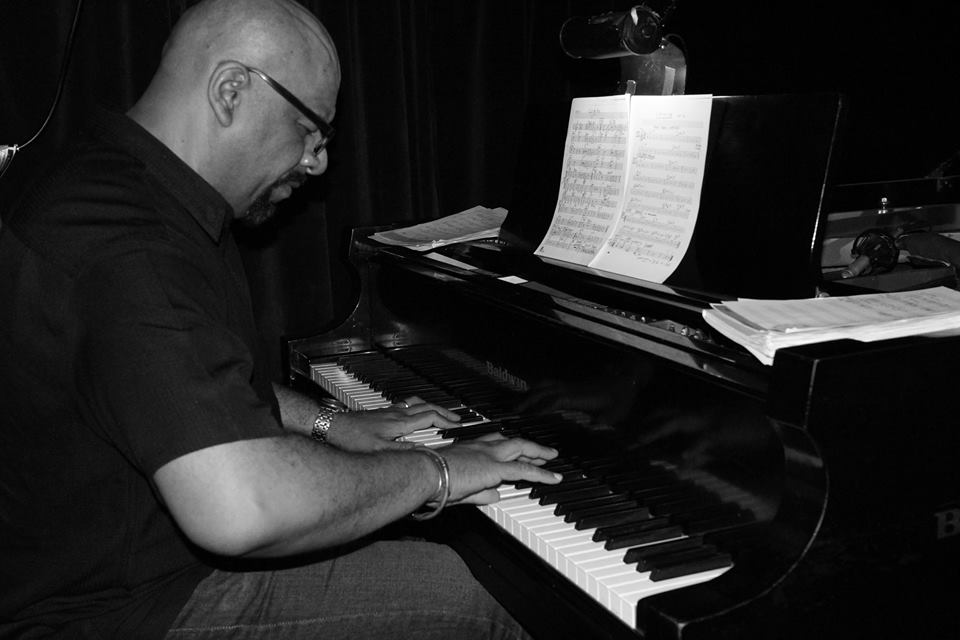
Luis later moved to the US to attend the Manhattan School of Music on a scholarship, graduating in 1997 and later earning a master’s degree from Queens College, where he was a student of the great pianist Sir Roland Hanna.
Shortly after moving to New York, he quickly established himself as an in-demand pianist amassing an impressive resume.
Some of the artists Luis has recorded and/or performed include Ravi Coltrane, David Sanchez, Tom Harrell, John Patitucci, Ray Barretto, Brian Lynch, Miguel Zenon, Dave Douglas, David Weiss and The Cookers, David Gilmore, Ralph Irizarry and Timbalaye, Henry Threadgill, and Steve Turre, among others; a roster that is as remarkable for its high standard as it is for its diversity.
Luis is also recognized as a member of several bands, especially the groups led by Ravi Coltrane, with whom he spent 10 years and Miguel Zenón, with whom he has had a collaboration that is currently in its 18th year.
Luis has also made a mark as a performer. Composer and arranger on recordings by Ray Barretto, Ignacio Berroa, John Benitez and Ralph Irizarry.
He has also been commissioned as a composer by the Jazz Gallery, The Afro Bop Alliance and Arturo O’Farrill’s Afro Latin Jazz Orchestra. He can be heard most recently on Ravi Coltrane’s Grammy-nominated “Spirit Fiction” and Miguel Zenón’s “Típico.”
In 2002 he won the 2nd Grand Prize at the “3rd Martial Solal Jazz Piano Competition” in Paris, among a group of 66 international pianists. He can be heard most recently on Ravi Coltrane’s Grammy-nominated “Spirit Fiction” and Miguel Zenón’s “Típico.” In 2002 he won the 2nd Grand Prize at the “3rd Martial Solal Jazz Piano Competition” in Paris, among a group of 66 international pianists. He can be heard most recently on Ravi Coltrane’s Grammy-nominated “Spirit Fiction” and Miguel Zenón’s “Típico.” In 2002 he won the 2nd Grand Prize at the “3rd Martial Solal Jazz Piano Competition” in Paris, among a group of 66 international pianists.
As a sideman, Luis has performed at most major music festivals and venues in over 50 countries, and as a frontman, he has toured Europe, Japan, South America, and the United States.
Luis has also been very active around the world in recent years as a teacher, soloist and as the leader of his own trio: The Controlling Ear Unit and various other projects, and has released nine highly praised recordings as a leader: “Focus Point”. (2005), “Awareness” (2006), and the highly acclaimed “Universal Mind” with Drew Gress and Jack Dejohnette (2012) for Ravi Coltrane’s RKM Music label. “Pathways” in 2008, the “Childhood” project in 2012 and “Links” in 2013 were recorded for Criss Cross Jazz.
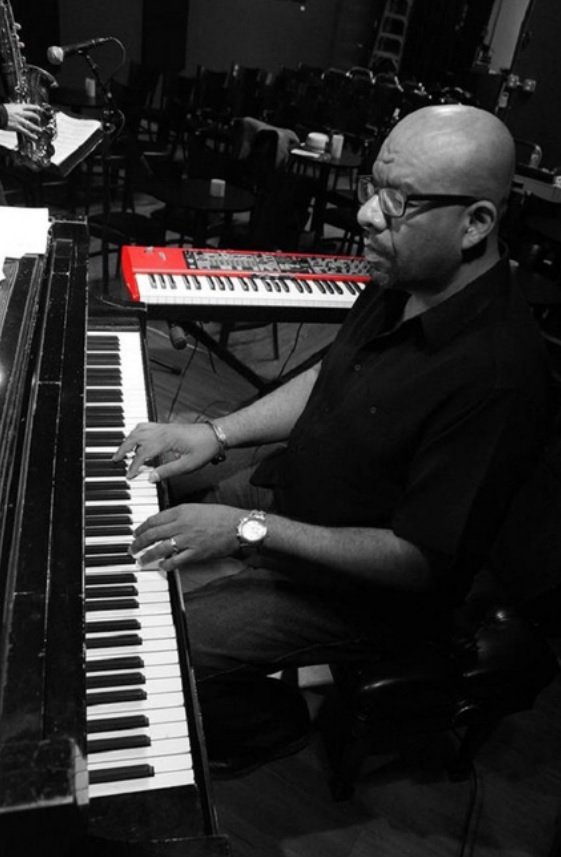
His “Twenty – Two” project, featuring “Controlling Ear Unit”, was released in 2015 on the Hot Tone Music label. This high-octane CD teams Luis with bassist/vocalist Mimi Jones and drummer Rudy Royston. The two most recent CD’s: ” Montage “; Luis’s first piano outing and “Spirits and Warriors”; a quintet release for the Criss Cross Jazz label featuring drummer legend Billy Hart, was released in May 2016. Luis Perdomo has also participated in over 200 recordings as a sideman.
As an educator, Luis has taught master classes at conservatories in Amsterdam and Paris, Princeton University, Hochschule Fur Musik und Theater (Munich, Germany), Berklee (Valencia, Spain), IUDEM (Caracas, Venezuela), Esmuva (Madrid, Spain) ; and the School of Jazz in Berkeley, California, among others.
He has taught jazz summer camps, including “Jazz in July” at the University of Massachusetts, Langnau Jazz Nights in Switzerland; The Banff International Workshop and the University of Manitoba in Canada, Badajoz Jazz Worshop in Spain; EAFIT University in Medellin; Tonica Jazz Festival in Guadalajara, Mexico and Guimaraes Jazz Workshops in Portugal, among others.
In 2016, Mr. Perdomo served as artistic director of the Langnau Jazz Workshops in Switzerland. Luis has also taught at the New School for Social Research, and is currently an adjunct professor of piano at Queens College in New York City.
For more information, visit www.luisperdomojazz.com.
Latin American / Venezuela / Caracas
Eukaris Figeroa. I don’t imitate Celia Cruz
Five years ago, Eukaris Figueroa dared to initiate an investigation into Celia Cruz. A work came out of that work, La guarachera del mundo.

Figueroa is also in charge of directing and producing the play. It explores from Cruz’s beginnings, in 1950, until his death, in 2003; addressing his personal life and ailments.
Where did that idea of presenting the life of the sauce boat come from?
When I decided to launch myself as a singer 10 years ago, I visited his grave in New York and asked his permission, not to take his place, but to perpetuate the salsa genre. Later, I began to investigate his life and this montage emerged, which I am very proud of. This is the second season and we hope it will be as well received as the first.
Was it easy to interpret a character as mediatic as she?

There is no imitation here. There is, yes, a lot of admiration. And the public will realize this in the monologue of the piece, where they will discover things that she wanted to do, but could not and that she did not see on a stage either. Impersonators always make her old and fat. And no. Celia was also a very beautiful young woman.
Doesn’t her nickname “The sexy salsa babe” pigeonhole her and distance her from the image of Celia?
The fact that I have made myself known like this does not imply that I do not have training and that I do not worry about studying. It was the way I got them to notice me, and I did it.
But behind these curves there are many hours of work. An orchestra of 14 musicians. This montage that I am passionate about does not separate me from my career as a salsa singer. Everything is complemented to offer the best to the public.