• Skip to primary navigation
  • Skip to main content

International Salsa Magazine

  • HOME
  • Previous editions
    • 2026
      • ISM / April 2026
      • ISM / March 2026
      • ISM / February 2026
      • ISM / January 2026
    • 2025
      • ISM / December 2025
      • ISM / November 2025
      • ISM / October 2025
      • ISM / September 2025
      • ISM / August 2025
      • ISM / July 2025
      • ISM / June 2025
      • ISM / May2025
      • ISM / April 2025
      • ISM / March 2025
      • ISM / February 2025
      • ISM / January 2025
    • 2024
      • ISM / December 2024
      • ISM / November 2024
      • ISM / October 2024
      • ISM / September 2024
      • ISM / August 2024
      • ISM / July 2024
      • ISM / June 2024
      • ISM / May 2024
      • ISM / April 2024
      • ISM / March 2024
      • ISM / February 2024
      • ISM / January 2024
    • 2023
      • ISM / December 2023
      • ISM / November 2023
      • ISM / October 2023
      • ISM – September 2023
      • ISM – August 2023
      • ISM July 2023
      • ISM Edition June 2023
      • ISM – May 2023
      • ISM April 2023
      • ISM March 2023
      • ISM February 2023
      • ISM January 2023
    • 2022
      • ISM December 2022
      • ISM November 2022
      • ISM October 2022
      • ISM September 2022
      • ISM August 2022
      • ISM July 2022
      • ISM June 2022
      • ISM May 2022
      • ISM February 2022
      • ISM January 2022
    • 2021
      • ISM December 2021
      • ISM November 2021
      • ISM October – 2021
      • ISM September 2021
      • ISM August 2021
      • ISM July 2021
      • ISM May 2021
      • ISM April 2021
      • ISM June 2021
      • ISM March 2021
      • ISM February 2021
      • ISM January 2021
    • 2020
      • ISM December 2020
      • ISM November 2020
      • ISM October 2020
      • ISM September 2020
      • ISM August 2020
      • ISM July 2020
      • ISM June 2020
      • ISM May 2020
      • ISM April 2020
      • ISM March 2020
      • ISM February 2020
      • ISM January 2020
    • 2019
      • ISM December 2019
      • ISM November 2019
      • ISM October 2019
      • ISM Septembre 2019
      • ISM August 2019
      • ISM July 2019
      • ISM June 2019
  • Spanish
  • Download Salsa App
    • Android
    • Apple

Search Results for: Salsa en Venezuela

Toñito Laya

Latin America / Venezuela / Caracas

On this occasion we have the privilege of meeting the new Venezuelan talent Toñito Laya (singer), son of Maestro Antonio “20 DEDOS” Laya, who was one of the most significant conga players in the Venezuelan salsa movement in the 1980s, director of the “ Banbankere Orchestra” of Petare with two musical productions; giving him more than enough reason to grow in Latin music, such as “el Son”, “la Rumba”, “la Guaracha”, “el Danzón“, “Boogaloo”, “la Timba” and “la Salsa” being This is the beginning of his artistic and musical career.

Starting in the 90s, he entered the Bigott Foundation where he had the opportunity not only to learn the various rhythms in Afro-Venezuelan percussion, but also developed as a dancer in one of the most important groups in Venezuela when it comes to popular traditions. “Vasallos del Sol”, eventually becoming “Vasallos de Venezuela” in 2016, where he had 16 concerts, productions, albums and national and international tours; Colombia, Mexico, United States, South Korea and Japan, among others.

In 2006, a project called “Comprehensive School of Latin Tradition Dance 100% Tumbao” began, where many dancers were trained in the Cuban Salsa Casino genre, combining this training with Venezuelan traditions, making them understand that traditions come first. Venezuelans. Then they participated in the most important events and competitions in Venezuela, they even became Latin American Champions of “CUBAMEMUCHO 2009” in the city of Caracas-Venezuela, thus managing to represent the country in the grand final to be held in the city of Munich-Germany, 2010 .

Toñito Laya
Toñito Laya

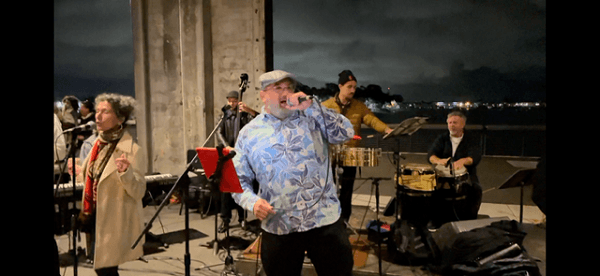
He also tells us that in 2009, they were invited to participate in a new project but this time not to dance, but to “sing” in a group that by then had no name but a particular genre such as “Son Cubano” . From that moment Toñito began his musical career to develop in a somewhat unexpected way, he was a founder and assumed the commitment of being in charge of this group as one of its leading singers for more than 7 years, where the themes arose:

To me that, La Ruñidera, Bilongo, El Jamaiquino, I hear a drum, among others; They were part of his first musical repertoire. With two record productions together with the already structured band “La Séptima Bohemia” he consolidated his musical career as a singer, going through a training process with different teachers and vocal coaches such as:

Ronald González, Fanny Olano, Gustavo Gerardo and Marcial Istúriz, among others. others, who would help him develop in the middle of music. National tours, award nominations and concerts allowed him to share the stage alongside large-scale national and international groups such as:

Francisco Pacheco, Canelita Medina, Alexander Abre y su Habana de Primera, Manolito y su Trabuco, El Septeto Santiaguero, José Alberto “El Canario” to mention a few. Toñito records for the year 2012, the song “She takes me”, a song that in turn would be the title of the second album becoming an icon of parties, dances and social events not only in Venezuela but in many salsa and salsa dancing countries. casino in the world.

In the year 2016 Toñito Laya arrives in Aztec land to embark on a new path, he begins by residing in the city of Cancun-Mexico to sing in some local groups and participate in various projects such as: Los Panas.com, La Formula Perfecta, Grupo Swing Latin among others.

This new stage as an artist prompts him to consider a new musical challenge but this time as a solo singer with a well-defined and focused vision, his pleasant experience as a dancer motivates him to dedicate his first promotional single “ABRE QUE VOY”, this being the complement of an orchestra, for the musicians and their singers “EL BAILADOR”.

“ABRE QUE VOY” is the result of the work of talented and renowned Venezuelan musicians who give an important plus to this Musical production of “Maurice Melo”, this first single is created, performed by Toñito Laya, in the company of the Venezuelan talent of the following musicians:

  • Piano and arrangement: Joel Uriola.
  • Bass: Jesús Torres “Mandinga”
  • Percussion: Yomar Méndez “Caballo”
  • Trombone: Jhonal Rivero.
  • Trumpet: Edward Platter.
  • Baritone sax: Michel Peña.
  • Choirs: William “Wywy” Buznego, Carlos Guzmán and Ramfis Fajardo.
  • Recorded in the studio: A Tempo Records by Heyzer Cabrera.
  • Mixing and Mastering: Heyzer Cabrera.

Caracas – Venezuela 2018

If you want to meet or contact Toñito, you can follow him through:

●      E-mail: [email protected]

  • Facebook: https://www.facebook.com/tonito.laya
  • YouTube: https://www.youtube.com/channel/UCUkjU7SFnPc_W-XJDlMMzRg
  • Twitter: https://twitter.com/negrolaya
 

Luis Perdomo

North America / USA / Nueva York

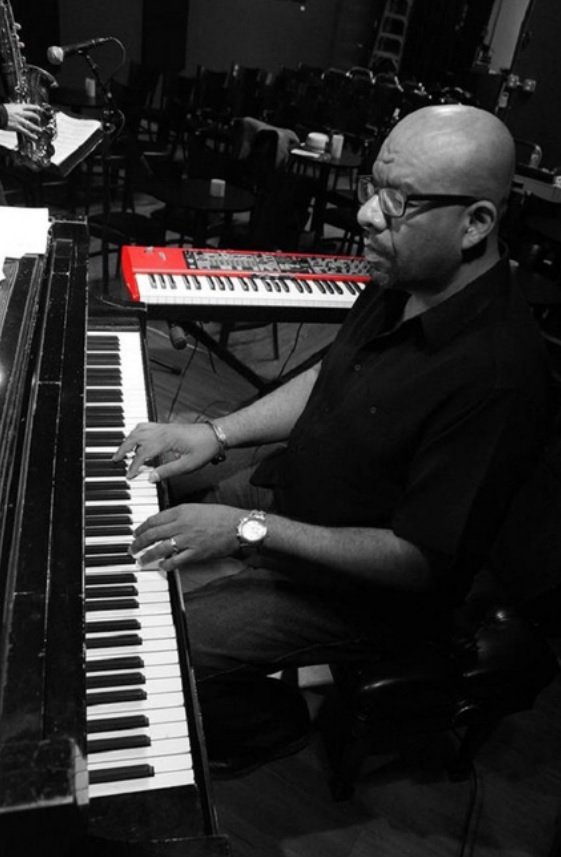
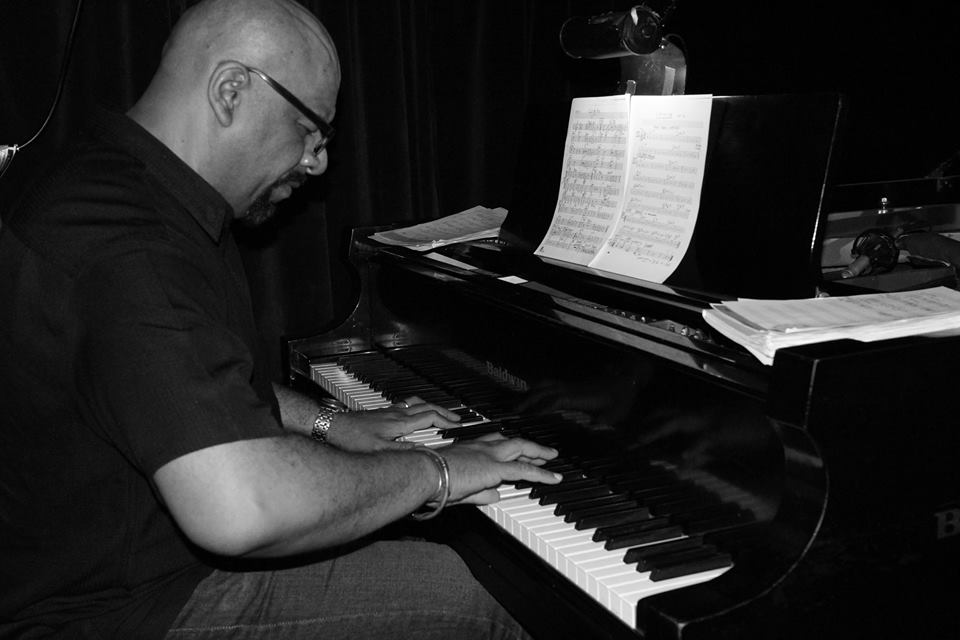
Luis Perdomo, one of the most eager jazz pianists in New York.

Luis Perdomo is one of the most active jazz pianists in New York. Originally from Venezuela, she began playing the piano at age 10, and by age 12 she was playing professionally on radio and television, as well as in concerts and clubs.

Luis Perdomo playing the piano

Luis later moved to the US to attend the Manhattan School of Music on a scholarship, graduating in 1997 and later earning a master’s degree from Queens College, where he was a student of the great pianist Sir Roland Hanna.

Shortly after moving to New York, he quickly established himself as an in-demand pianist amassing an impressive resume.

Some of the artists Luis has recorded and/or performed include Ravi Coltrane, David Sanchez, Tom Harrell, John Patitucci, Ray Barretto, Brian Lynch, Miguel Zenon, Dave Douglas, David Weiss and The Cookers, David Gilmore, Ralph Irizarry and Timbalaye, Henry Threadgill, and Steve Turre, among others; a roster that is as remarkable for its high standard as it is for its diversity.

Luis is also recognized as a member of several bands, especially the groups led by Ravi Coltrane, with whom he spent 10 years and Miguel Zenón, with whom he has had a collaboration that is currently in its 18th year.

Luis has also made a mark as a performer. Composer and arranger on recordings by Ray Barretto, Ignacio Berroa, John Benitez and Ralph Irizarry.

He has also been commissioned as a composer by the Jazz Gallery, The Afro Bop Alliance and Arturo O’Farrill’s Afro Latin Jazz Orchestra. He can be heard most recently on Ravi Coltrane’s Grammy-nominated “Spirit Fiction” and Miguel Zenón’s “Típico.”

In 2002 he won the 2nd Grand Prize at the “3rd Martial Solal Jazz Piano Competition” in Paris, among a group of 66 international pianists. He can be heard most recently on Ravi Coltrane’s Grammy-nominated “Spirit Fiction” and Miguel Zenón’s “Típico.” In 2002 he won the 2nd Grand Prize at the “3rd Martial Solal Jazz Piano Competition” in Paris, among a group of 66 international pianists. He can be heard most recently on Ravi Coltrane’s Grammy-nominated “Spirit Fiction” and Miguel Zenón’s “Típico.” In 2002 he won the 2nd Grand Prize at the “3rd Martial Solal Jazz Piano Competition” in Paris, among a group of 66 international pianists.

As a sideman, Luis has performed at most major music festivals and venues in over 50 countries, and as a frontman, he has toured Europe, Japan, South America, and the United States.

Luis has also been very active around the world in recent years as a teacher, soloist and as the leader of his own trio: The Controlling Ear Unit and various other projects, and has released nine highly praised recordings as a leader: “Focus Point”. (2005), “Awareness” (2006), and the highly acclaimed “Universal Mind” with Drew Gress and Jack Dejohnette (2012) for Ravi Coltrane’s RKM Music label. “Pathways” in 2008, the “Childhood” project in 2012 and “Links” in 2013 were recorded for Criss Cross Jazz.

Luis Perdomo
Luis Perdomo

His “Twenty – Two” project, featuring “Controlling Ear Unit”, was released in 2015 on the Hot Tone Music label. This high-octane CD teams Luis with bassist/vocalist Mimi Jones and drummer Rudy Royston. The two most recent CD’s: ” Montage “; Luis’s first piano outing and “Spirits and Warriors”; a quintet release for the Criss Cross Jazz label featuring drummer legend Billy Hart, was released in May 2016. Luis Perdomo has also participated in over 200 recordings as a sideman.

As an educator, Luis has taught master classes at conservatories in Amsterdam and Paris, Princeton University, Hochschule Fur Musik und Theater (Munich, Germany), Berklee (Valencia, Spain), IUDEM (Caracas, Venezuela), Esmuva (Madrid, Spain) ; and the School of Jazz in Berkeley, California, among others.

He has taught jazz summer camps, including “Jazz in July” at the University of Massachusetts, Langnau Jazz Nights in Switzerland; The Banff International Workshop and the University of Manitoba in Canada, Badajoz Jazz Worshop in Spain; EAFIT University in Medellin; Tonica Jazz Festival in Guadalajara, Mexico and Guimaraes Jazz Workshops in Portugal, among others.

In 2016, Mr. Perdomo served as artistic director of the Langnau Jazz Workshops in Switzerland. Luis has also taught at the New School for Social Research, and is currently an adjunct professor of piano at Queens College in New York City.

For more information, visit www.luisperdomojazz.com.

Eukaris Figeroa

Latin American / Venezuela / Caracas

Eukaris Figeroa. I don’t imitate Celia Cruz

Five years ago, Eukaris Figueroa dared to initiate an investigation into Celia Cruz. A work came out of that work, La guarachera del mundo.

Eukaris Figeroa
Eukaris Figeroa

Figueroa is also in charge of directing and producing the play. It explores from Cruz’s beginnings, in 1950, until his death, in 2003; addressing his personal life and ailments.

Where did that idea of ​​presenting the life of the sauce boat come from?

When I decided to launch myself as a singer 10 years ago, I visited his grave in New York and asked his permission, not to take his place, but to perpetuate the salsa genre. Later, I began to investigate his life and this montage emerged, which I am very proud of. This is the second season and we hope it will be as well received as the first.

Was it easy to interpret a character as mediatic as she?

Eukaris Figeroa Photo

There is no imitation here. There is, yes, a lot of admiration. And the public will realize this in the monologue of the piece, where they will discover things that she wanted to do, but could not and that she did not see on a stage either. Impersonators always make her old and fat. And no. Celia was also a very beautiful young woman.

Doesn’t her nickname “The sexy salsa babe” pigeonhole her and distance her from the image of Celia?

The fact that I have made myself known like this does not imply that I do not have training and that I do not worry about studying. It was the way I got them to notice me, and I did it.

But behind these curves there are many hours of work. An orchestra of 14 musicians. This montage that I am passionate about does not separate me from my career as a salsa singer. Everything is complemented to offer the best to the public.

Eukaris Figeroa Flyer

Meet the Carlos Rodríguez Quintet

Latin America / Venezuela / Caracas

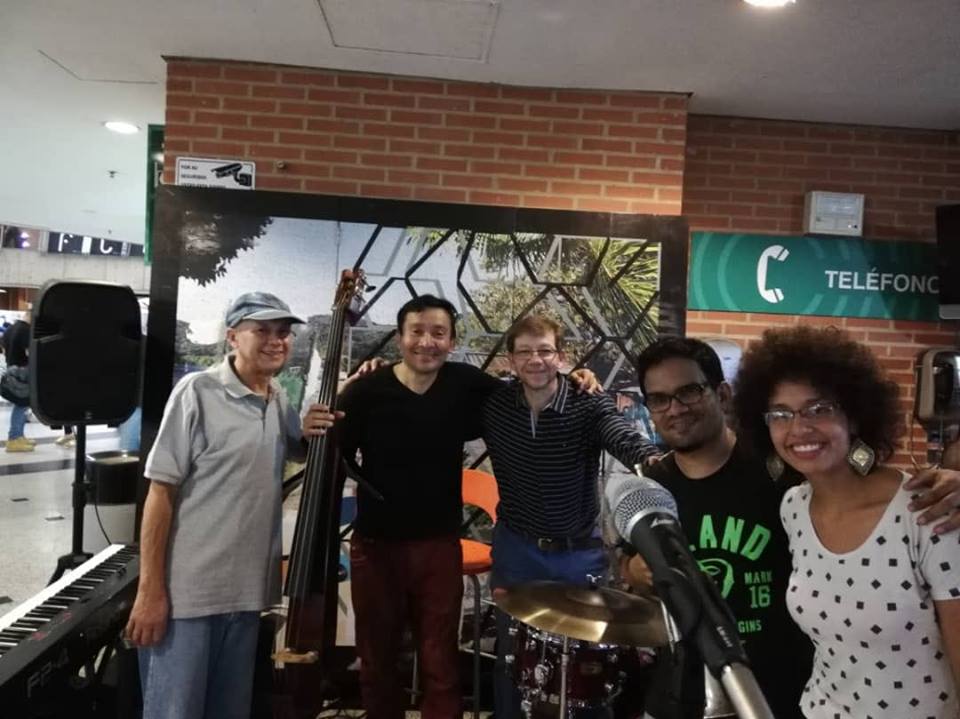
There are many Latin music orchestras worldwide, and our duty is to know and recommend the best orchestras, whether they are known or new talents. On this occasion we had the opportunity to interview Carlos Rodríguez and his orchestra who were playing Jazz, Latin Jazz, Salsa and various mixes of Latin rhythms at the “Café Mi Cosa” located in City Market, Caracas, Venezuela.

Carlos Rodríguez Quintet

At this meeting in the cafe, there was the Carlos Rodríguez Quintet, who make it up: Antonio Davicenzo (Drummer), Darwin Manzi (Trumpet), Pancho Santangelo (Piano), Cesar Bolivar Changu (Percussion) and lastly Carlos himself as soloist.

Carlos mentions that his orchestra has in its themes and/or songs a mixture of Venezuelan music with jazz, Afro-Venezuelan, begin bolero, merengue with a bolerito, among others. Currently for the time they demand the search for new rhythms and stay stuck with the current rhythms, seeking to satisfy and enjoy the public and something that impacts them.

In his first album that was based on Jazz, he made several combinations with various Latin rhythms, such as: Guaguacom, Afro, Bolero, Jazz with Latin rhythm, Jazz with Venezuelan rhythm and other fusions.

It started a long time ago, he tells us that he was with the “National Philharmonic Orchestra”, where he learned and gained experience in the area of ​​music. Of course he not only works with them but with other orchestras and/or artists.

Later he won an international award in Colombia as the best bassist, and his project is to be known as a soloist in his orchestra and not just another accompanist of another orchestra; however, he continues to work with a wide variety of musicians since that is the world of music, living from music not only as his profession but as his greatest passion.

The Carlos Rodríguez Quintet

His recommendation for new talents is that there is always a certainty in their musical career, discipline, gain and perseverance to progress and move forward since the road is hard and with obstacles, therefore one should not be discouraged and continue fighting and progressing to so be recognized.

For more information:

  • Instagram: https://www.instagram.com/carlosrodriguezfalcon6/ @carlosrodriguezfalcon6
  • E-mail: [email protected]
  • Phone: +58 414-2037324


Vocalist of La Moderna Tradición Eduardo Herrera and his fascinating story

This time, we are very pleased to have been able to talk with a talented Venezuelan who has left the name of his country well off thanks to his talent and professionalism. We are talking about bandleader and singer Eduardo Herrera, who was kind enough to speak exclusively to us and give us details on his personal and professional life so that we can get to know a little more about him.    

Venezuelan singer Eduardo Herrera
This is vocalist of La Moderna Tradición and Venezuelan singer Eduardo Herrera

How did Eduardo Herrera become interested in music?   

Eduardo comments that his parents always spent their time singing in a very cheerful way since he was a child, so his best childhood memories are with music. 

He grew up in Caracas, so he always had close contact with all kinds of music and listened to a great variety of artists starting with Celia Cruz, La Sonora Matancera, La Billo Caracas Boys, Los Melódicos, Benny Moré, Oscar D’ León, Daniel Santos, Los Adolescentes La Dimensión Latina, La Fania, among others. These artists strongly encouraged him to lean towards salsa in the 1970s.   

In his hometown, he began playing with the Teresa Carreño Chamber Choir, which was his first professional contact with music and, in his own words, was a great school for him during his time there. 

In 1987, being already in the state of California, United States, there was an orchestra called Radiante that played Puerto Rican salsa. Eduardo worked with them for a year until he joined Orquesta Sensual, whose strength was romantic salsa that was fashionable at the time.   

After that, he also worked with Orquesta Charanzón, which at that time was led by Anthony Blea, a famous violinist from the Bay Area. It was with this band that he began to fully discover Cuban music and develop a great passion for it, which would lead him to continue along this path in the following years.    

In those years, he played with an unlimited number of orchestras with which he gained a lot of experience and learned to perform properly on stage. However, his big break came with the Orquesta La Moderna Tradición in 2021, when he was offered to participate with the group in some projects.   

Even so, the latter did not prevent him from working with other groups of this style throughout the San Francisco Bay Area, as he has no problem with playing with anyone who wants to invite him.   

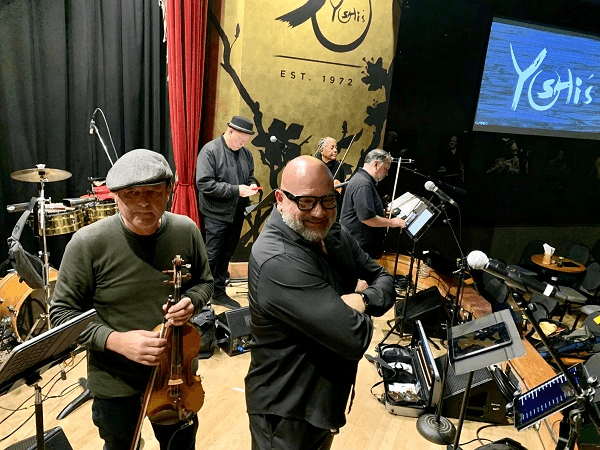
Eduardo Herrera and Tregar Otton
Eduardo Herrera next to director, arranger, composer and violinist Tregar Otton at Yoshi’s

Reasons to leave Venezuela and go to the United States   

Like any other immigrant, Eduardo’s primary reason for leaving his country was the search for new opportunities. Eduardo goes on to explain that he was awarded a scholarship by the famous Gran Mariscal de Ayacucho fellowship programme and managed to obtain his degree in biology in the United States, but unfortunately with the change of government, the things that were promised to him and other fellows such as jobs and revalidations were not kept. As a result, the young man was left in a limbo that made it nearly impossible for him to practice biology.    

With his options reduced to almost zero in Venezuela, Eduardo had no choice but to return to the United States, where he started working as a high school teacher until 2023, when he finally retired from his basic profession. In total, he taught for more than 40 years at the secondary level. During most of this time, he combined his school activities with his second profession, which was music.   

Other areas of music explored by Eduardo 

The singer explained to us that his voice has always been his most important instrument when he gets on stage, but he also confesses to having experimented with hand percussion instruments such as the maracas and the güiro. He pointed out that both are very easy to learn at first glance, but they have their level of complexity once you try them. 

At present, he only uses his voice in the orchestras in which he currently plays.  

Orquesta La Moderna Tradición   

”La Moderna Tradición reached out to me at the beginning to record one of their CDs and I started singing backup and the harmonies, which is how you should always get you started in any group. When you master those areas and have the talent, you may think about being a soloist and that’s exactly what happened with me” Eduardo started saying about the issue. 

La Moderna Tradición’s music was mostly instrumental at that time and they wanted Eduardo for their second album, which would include choirs for the first time, but the group had no singer at that time. In view of the good results offered by the vocalist, he found himself in frequent demand to give voice to other old numbers, but now with a singer.   

Years later, he finally received the proposal to be part of the orchestra as such, together with Ramón ”Monchi” Estévez on vocal. Already for the third album, all the songs had a singer, who was Eduardo most of the time. 

From then on, the artist has continued to be part of La Moderna Tradición with some interruptions because he moved from the Bay Area to the Central Valley in Manteca, which made it more complex for him to play with the orchestra on weekday evenings. 

At the same time, he worked with the group Vissión Latina, Carlos Caro’s orchestra or any other that invited him to play on weekends, which were on his days off. 

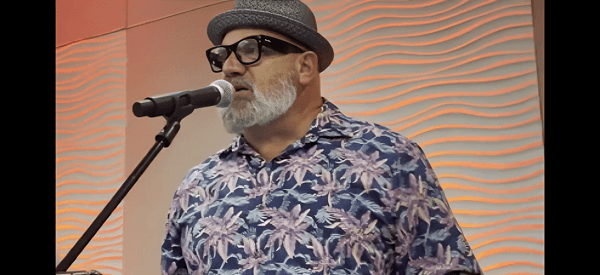
Eduardo Herrera performing
Eduardo Herrera performing live

What Eduardo has learned from La Moderna Tradición and other artists he has played with 

The most important things Eduardo says he has learned from the great artists he has played with are the study, humility, knowing your limits and the development of the love of music. He says the latter is fundamental, because if you do not love music, you will not do the job right.   

”With music, you sacrifice your time and the pay you receive in return does not always go according to what you do, but it is something you’re supposed to do for the love you have for the craft. If you do not love what you do, you will hardly do it well and use your skills in it” said Eduardo. He added that ”you are an eternal student and you never know everything about everything. There is always something to learn from other singers and seeing any of them on stage is an opportunity to emulate what they do as long as it is useful for your career. 

He also said that ”the ego of many artists is a really depressing thing because it prevents them from moving forward and takes their focus away from what is really important, which is the love of the genre and the opportunity to learn as much as you can”.  

Complex moments for Eduardo personally and professionally  

Eduardo mentioned to us that one of the hardest moments for him personally and professionally was his move outside of the Bay Area, which we had already talked about. Being so far away from the area where he did most of his performances was a blow to him, as he had to be near his wife and children.   

Eduardo was very late from work and his wife had a job which made her to leave home for several days, so it was up to him to stay with the children during all that time. For the artist, his family comes first every time and no job or hobby goes above that. 

His responsibilities with his children let him to distance himself from music little by little, since not being always available to play, orchestras would look for other singers to replace him. This made his opportunities to sing to be reduced, but Eduardo assures that the sacrifice has been worth it, as quality time with his children is the most main thing for him. 

Eduardo’s plans to create his own orchestra  

Eduardo was able to conduct an orchestra for a few months, which allowed him to see what the work of a director would be like and the truth is that he did not like it. ”During the time that I was conducting an orchestra, I could see I don’t have the right personality for it. I’m not good for working with adults who are irresponsible and many musicians tend to be late for the engagements and not to take this profession very seriously. I’m a very perfectionist person who has very high standards and I don’t expect anyone to work less than me, so I know it would be torturous for me to have a responsibility of that magnitude,” Eduardo said. 

He says that being a bandleader is far beyond what he wants to do with music and that he wanted to keep developing as a singer. In addition to this, going back to the family issue, such a position would have forced him to be away from his family again and that was something he was not willing to do. 

He also took into account the little stability offered by music as a profession. His work as a biology teacher was much more stable and allowed him to have secure income without having to worry about the bad times of orchestras. He loves music to a fault, but does not like uncertainty and insecurity.  

Eduardo Herrera and Maru
Eduardo Herrera performing with Maru Pérez-Viana, La oderna Tradición manager and chorister

Other groups  

In addition to playing with La Moderna Tradición, he also works with a Cuban group called Pellejo Seco, with which he recorded an album that is currently being remastered in Cuba. The material was recorded just before September in California, but will soon be released to the public. 

Eduardo works directly with Ivan Camblor, director of the orchestra and professional tres player. In this part of the conversation, the artist was very complimentary about Camblor and highlighted his great potential as a bandleader and musician. 

Something he likes about Pellejo Seco is that his main genre is Cuban son and it focuses a lot on very rural and traditional Cuban rhythms, so he can explore other elements different from what he does with La Moderna Tradición. They are very different groups with different genres and different characteristics. 

Read also: Nicaraguan singer and guitarist Yelba Heaton in an exclusive interview 

  • « Go to Previous Page
  • Page 1
  • Interim pages omitted …
  • Page 58
  • Page 59
  • Page 60
  • Page 61
  • Page 62
  • Interim pages omitted …
  • Page 95
  • Go to Next Page »

International Salsa Magazine (ISM) is a monthly publication about Salsa activities around the world, that has been publishing since 2007. It is a world network of volunteers coordinated by ISM Magazine. We are working to strengthen all the events by working together.