• Skip to primary navigation
  • Skip to main content

International Salsa Magazine

  • HOME
  • Previous editions
    • 2026
      • ISM / March 2026
      • ISM / February 2026
      • ISM / January 2026
    • 2025
      • ISM / December 2025
      • ISM / November 2025
      • ISM / October 2025
      • ISM / September 2025
      • ISM / August 2025
      • ISM / July 2025
      • ISM / June 2025
      • ISM / May2025
      • ISM / April 2025
      • ISM / March 2025
      • ISM / February 2025
      • ISM / January 2025
    • 2024
      • ISM / December 2024
      • ISM / November 2024
      • ISM / October 2024
      • ISM / September 2024
      • ISM / August 2024
      • ISM / July 2024
      • ISM / June 2024
      • ISM / May 2024
      • ISM / April 2024
      • ISM / March 2024
      • ISM / February 2024
      • ISM / January 2024
    • 2023
      • ISM / December 2023
      • ISM / November 2023
      • ISM / October 2023
      • ISM – September 2023
      • ISM – August 2023
      • ISM July 2023
      • ISM Edition June 2023
      • ISM – May 2023
      • ISM April 2023
      • ISM March 2023
      • ISM February 2023
      • ISM January 2023
    • 2022
      • ISM December 2022
      • ISM November 2022
      • ISM October 2022
      • ISM September 2022
      • ISM August 2022
      • ISM July 2022
      • ISM June 2022
      • ISM May 2022
      • ISM February 2022
      • ISM January 2022
    • 2021
      • ISM December 2021
      • ISM November 2021
      • ISM October – 2021
      • ISM September 2021
      • ISM August 2021
      • ISM July 2021
      • ISM May 2021
      • ISM April 2021
      • ISM June 2021
      • ISM March 2021
      • ISM February 2021
      • ISM January 2021
    • 2020
      • ISM December 2020
      • ISM November 2020
      • ISM October 2020
      • ISM September 2020
      • ISM August 2020
      • ISM July 2020
      • ISM June 2020
      • ISM May 2020
      • ISM April 2020
      • ISM March 2020
      • ISM February 2020
      • ISM January 2020
    • 2019
      • ISM December 2019
      • ISM November 2019
      • ISM October 2019
      • ISM Septembre 2019
      • ISM August 2019
      • ISM July 2019
      • ISM June 2019
  • Spanish
  • Download Salsa App
    • Android
    • Apple

Search Results for: Salsa music

Bandleader and conga player Tony Rosa tells us how he built his career

The great percussionist, conga player, and six-time Grammy winner Tony Rosa has honored us with his presence for this February edition, which is full of many interesting things despite being a very short month.

Like so many other artists of this kind, he started very young in this world. Although his musical roots were not so Latin or folkloric, as is common, he ended up falling in love with one of his great passions today: Latin music.

Tony Rosa with his Grammy
Tony Rosa as part of the Latin Grammy Arturo O’Farrill & The Chico O’Farrill Afro-Cuban Jazz Orchestra won

Tony’s beginnings in music

Tony started playing the tumbadora at the age of just 10 in New York, his native city, but when he turned 12, he moved to Los Angeles, California, which is where his formal career as a musician began. It was in Los Angeles that he learned to play percussion, more specifically the conga, in the streets of this new city that welcomed him and his family.

One interesting thing about this is that absolutely everything he knows about instruments he learned by himself, indicating that he did not attend any institution that provided formal training in music. At that time, as a 15-year-old boy, he was already playing for different orchestras and touring with them.

Rock phase

Before becoming integrally involved with salsa, Tony played with some rock bands such as Chicanos. In fact, rock is a genre he still likes very much, and several of his favorite groups are rock bands such as Queen and Santana. However, that phase did not last for ever, and it was not long before, at the age of 16 or 17, he played with orchestras such as Azuquita Y Su Melao. 

In 1997, he moved back to his native New York, where he started collaborating with Conjunto Libre and other groups of salsa and Latin jazz, a genre that was also making him curious.

Tony and Gilberto
Tony Rosa and ”The Salsa Gentleman” Gilberto Santa Rosa

Time with the Afro Latin Jazz Orchestra and Arturo O’Farrill

In 2008, while playing with Manny Oquendo, Tony met orchestra leader, composer, and pianist Arturo O’Farrill, who, after witnessing the great talent he had, asked whether he would be interested in joining his Afro Latin Jazz Orchestra, and he said yes. In total, he spent about nine years playing with O’Farrill and it was over five years ago. In fact, when asked if he knew why the Afro Latin Jazz Orchestra would no longer be playing at Birdland, he said he knew absolutely nothing about it.

After that, the artist found the right time to create his own quintet which he named Tony Rosa’s Afrojazz and with which he has songs such as “Mambo Mongo,” “Nothing Personal,” “Alfie’s Theme,” “Isn’t She Lovely,” and “Rica Mulata.”

Tony, Eddie, and Adan
Tony Rosa, legendary pianist Eddie Palmieri, and producer and arranger Adan Pérez

However, he assures us that his affection for O’Farrill and the orchestra remains intact, and they even played together again in a tribute to Andy González at Saint Peter’s Church in Manhattan. He is also grateful for all the experience he gained there, otherwise he would not have the project he currently manages.

Projects apart from Tony Rosa’s Afrojazz

In addition to his work he does with his Latin jazz quintet, Tony is also recording with another musical group called Los Amigos, with which he recently released an album.

And about tours and performances at arenas and well-known venues, he says he does not know yet what he will be doing in the coming months. However, he expects things to start moving as the year progresses.

Tony and Andy
Tony Rosa and Cuban-American actor Andy García in 1992

Read also: Bandleader Arturo O’Farrill leaves behind Birdland to look for other opportunities

Don Perignon and La Puertorriqueña Release Classique et Savoureux

Timbalero, director, and music producer Pedro Luis Morales Cortijo, better known as “Don Perignon,” presents the 14th musical production from the “dancer’s orchestra” titled Classique et Savoureux. The leader of La Puertorriqueña features three guest vocalists on the album: Venezuelan musician and sonero Marcial Istúriz; Josué Rosado, one of the most iconic voices from La Puertorriqueña’s history; and “El Niño de Trastalleres,” Andy Montañez. With this record, Don Perignon reinforces his commitment to producing “flavorful” salsa with the dancer in mind.

In September 2025, Don Perignon and Andy Montañez reunited in the recording studio to reinvent “La Bikina.” The digital single fused the signature sound of Don Perignon’s La Puertorriqueña with the seasoned expertise of Andy Montañez. This alliance revives a nostalgic duo—the “dancing timbal” and the “singing compressor” that dates back to 1981. At that time, “Perín” took the reins as Andy’s musical director at the invitation of the legendary vocalist following his departure from Dimensión Latina. From that eight-year partnership, Andy Montañez still treasures Don Perignon’s participation in the 1988 recording of El Eterno Enamorado (TH-Rodven), where the latter not only played the timbales but also served as the album’s musical director. Regarding this, Andy says: “I remember him with great affection and appreciate his discipline in directing that recording, especially because every track became a hit.”

Don Perignon and La Puertorriqueña Release Classique et Savoureux

As promised in earlier press releases, that single was the prelude to Classique et Savoureux, where “La Bikina” is featured as the third track. Don Perignon released the song arranged by pianist and composer Domingo García 60 years after its original composition. The song, originally titled “The Beginning,” was penned by Mexican songwriter Rubén Fuentes Gasson.

Tracklist and Credits

The tracklist for Classique et Savoureux is as follows:

  • “Ella Sigue Bailando”: Composed and performed by Joe González; arranged by Andy Guzmán.
  • “Hay Que Quererlas”: Composed and performed by José Karlo Ribot; arranged by Roberto Pérez.
  • “Pura Imagen”: A classic piece by Adalberto Álvarez, vocalized by Joe González; arranged by Juan C. Cardona.
  • “Ayer Te Vi”: Written by Rubén Rada, featuring the vocals of Henry Santiago; arranged by Ramón Sánchez.
  • “No Se Equivocan”: Written and performed by José Karlo Ribot; arranged by Carlos “Cuto” Soto.
  • “Yo Soy Guaracha”: Written by Ángel Santos, performed by Marcial Istúriz; arranged by Carlos García.
  • A Medley of Boleros: Featuring “Necesito Llamar Su Atención” (Roberto and Erasmo Carlo) and “Mírame Más” (Julio Gutiérrez), performed by Henry Santiago and Joe González; arranged by Juan C. Cardona with a flute solo by Roberto Calderón.
  • “Será Mejor”: The closing track, written by Héctor Olmo and arranged by Juan C. Cardona, featuring vocalist Josué Rosado.

The Musicians

Leading his musical generation on the timbales and as director, Don Perignon was backed by the musicians of La Puertorriqueña and several guest artists. On the congas, Antonio “Coqui” Marrero, Jean Carlos Camuñas, and the late William “Kachiro” Thompson ensured the time and clave remained rhythmically precise. On the bongos, you can hear the distinctive touch of one of the original members of La Puertorriqueña, Miguel Aponte. On bass, the unmistakable Efraín Hernández interacts with Juan Rivera on piano. Other pianists on the recording include Luis Marín, Leni Prieto, and Ricky Rodríguez. The production is rounded out by the backing vocals of the incomparable Henry Santiago, Juan Bautista, and Joe González. The trumpet section featured Ángel and Richie Segarra along with Jesús Alonso; Sammy Vélez on baritone sax; and the trombones were handled by Juan C. Cardona, Gamalier González, César Javier Ayala, and Carlos “Cuto” Soto.

Pedro Luis Morales Cortijo “Don Perignon”

The album was recorded at the studios of Rolando Alejandro and Angelito Segarra, with mastering by Wiso Rivera.

This release “reaffirms Don Perignon’s commitment to the evolution of salsa in the digital age” without neglecting physical formats, as the album is available on CD and LP to ensure the music is accessible to everyone.

With the title Classique et Savoureux, Don Perignon honors more than four decades of using his stage name inspired by the French champagne Dom Pérignon. He expresses gratitude for the longevity of a concept that began without a clear goal but was built on heavy discipline and the firm purpose of making music for the dancer. In an interview, the bandleader stated that his musical project “is already a classic, thanks to the dancers who have appreciated and supported its sabrosura (flavor).”

Also Read: Long live the music! Repeat after me: “Long live the musicians so they can keep making it.” And I’ll add: “Long live SALSA!”

Bella Martinez Puerto Rico

Bandleader Arturo O’Farrill leaves behind Birdland to look for other opportunities

After making some room in his packed schedule, we finally managed to meet with bandleader, composer, and pianist Arturo O’Farrill, who after arriving in Richmond, Virginia, greeted us and talked about various interesting topics related to his long and successful career.

Of course, we did not miss the opportunity to ask if it is true that he and his orchestra will drop out of performing at Birdland as they had done over the past 29 years and what other projects in door they have from now on.

Arturo O'Farrill posing for the camera
Bandleader and pianist Arturo O’Farrill posing for the camera

What was his childhood like with two artist parents?

Arturo is the son of Cuban conductor, arranger, and musician Chico O’Farrill and Mexican singer Lupe Valero, so it is natural that he would show an interest in art like them. In addition, being the first male child in the family, there was lots of expectations on him and anything he could get, so he was enrolled in piano lessons and fortunately he had good aptitude for the instrument and was very present at his father’s parties and events with many other artists. 

So, he was for a time studying music on Saturdays until he discovered a Miles Davis album in his living room. He says that listening to it changed his life forever, and the song that most marked him was “Seven Steps to Heaven.” At that time, he knew he was going to become a professional musician by choice, not because his father had decided it for him.

He decided to become the best pianist he could be, and because of how busy Chico was with his own career, Arturo studied jazz alongside other young musicians. Some time later, he met bassist Andy González, who finally made him understand his Latin roots and encouraged him to study artists such as Charlie Palmieri and Eddie Palmieri.

“Precisely thanks to Andy, now I understand that our music is a treasure of the Afro-Latin diaspora, and the music my father and so many others of his generation made, for me, is the most incredible thing in the world,” said Arturo.

Arturo O'Farrill 02 2026
Arturo O’Farrill with his parents Lupe Valero and Chico O’Farrill

Arturo’s musical education

The artist studied at several top academic institutions, including LaGuardia High School of Music and Art, the Manhattan School of Music, the Brooklyn College Conservatory of Music, and the Aaron Copland School of Music. He clarified that he did not graduate from the Manhattan School of Music, but he does recognize that it was there that he began to truly understand music.

In the case of LaGuardia High School for Music and Art, his parents had to withdraw him because he never attended classes, as he was not interested in history and mathematics, but only in music. He was then enrolled in City As School and got his GED (General Educational Development). Later, at Brooklyn College, he met Professor Teófilo Ruiz, who taught him the importance of forging a social and political conscience, which had a profound impact on his development as a professional and a person. 

While working as a musician, Arturo earned his bachelor’s and master’s degrees at Queens College. He spent some time playing, studying, and teaching until Wynton Marsalis, artistic director of the jazz at Lincoln Center program, asked him to create an orchestra for the venue, which they called the Lincoln Center Jazz Orchestra. He worked there for five years until he knew he had to continue his career elsewhere.

Chico O’Farrill Afro-Cuban Jazz Orchestra

After playing along with the great jazz star Carla Bley and Machito, Arturo finally joined his father’s orchestra, the Chico O’Farrill Afro-Cuban Jazz Orchestra, at a time when they were creating many jingles for commercials. When the world was rediscovering Chico, his health was unfortunately in bad shape, so his son stood by his side to support him any way he could.

In the end, he had no other option than taking charge and, together with the rest of the musicians, recording the band’s last three albums. One thing that he had very clear when he took up this challenge was that he did not want to compete with his dad or be constantly compared to him, though he knew it was inevitable. In fact, after doing a concert with him, when he came home, he found a voicemail from someone saying: “You don’t have a fortieth of your father’s talent. In fact, I’ll see you picking through garbage.”

Arturo O'Farrill with the Grammy
Arturo O’Farrill posing with the Grammy he won in 2023

Despite the hurtful comments, it was liberating for him to hear it, since someone had the stupidity to compare him with his father when it did not make sense. That pushed him to use his own compositions in the orchestra, continue creating new music, and have a completely different path from Chico O’Farrill. Unknowingly, the man who insulted him had helped him throw off the mental and artistic chains that bound him by fear of being compared.

Afro Latin Jazz Orchestra

Although Arturo was sorry for leaving Chico’s orchestra, he knew he had to make many changes. One of them was that he wanted intergenerational musicians, more races and nationalities. This also led him to change the name of “Afro-Cuban Jazz Orchestra” to “Afro Latin Jazz Orchestra” because, from his point of view, Latin music must include not only Cuba, but also countries such as Puerto Rico, Colombia, Bolivia, Peru, Mexico, and many others.

Despite these changes, Arturo and his orchestra kept playing every Sunday at the prestigious Birdland jazz club, something they had been doing since 1997, before the death of Chico O’Farrill. However, 29 years after that important proposal, Arturo announced on social networks that he would not perform there anymore, but he was very grateful to the staff and management of Birdland for the opportunity they gave him over so many years.

When we wanted to know the reasons for this decision, the artist just told us that this was largely due to “creative and financial disagreements that were making the working environment very toxic,” so the best thing was to cut to the chase and seek pastures new. He assures us that his words do not want to disrespect anyone and that he wishes the best for both the club and its staff, who always treated him and his musicians the best. 

Eddie and Arturo
Eddie Palmieri and Arturo O’Farrill some years ago

Afro-Latin Jazz Alliance and Casa Belongó

The musician also wanted to talk about his foundation Afro Latin Jazz Alliance, which seeks to educate, play, and preserve. The project has grown so much that today it has 49 teachers, 21 public schools, and a preprofessional program known as “The Fat Cats,” which aims to help young musicians join an orchestra and exploit their talent as never before. 

After several formal requests, New York City finally agreed to construct a building with affordable apartments for residents of East Harlem and the first floors are destined to house Casa Belongó. These spaces will include a theater, a jazz club, a healthy restaurant, rehearsal rooms, classrooms, and much more. “Imagine that the power of our Latino community will physically change New York City history,” she concluded on this topic. 

Read also: Music reviewer and photojournalist Ricky Ricardo describes his work from the last 35 years

ISM / February 2026

ISM Feb 2026 L ISM Feb 2026 R
SalsaApp Left SalsaApp Right
NA Feb 2026
LA Feb 2026
WU Feb 2026
AF Feb 2026
AS Feb 2026
OC Feb 2026
 Festival de la Salsa Cuba
Michael Joseph 02 2026

“We are the Real Latin music world network”

Letter to the Editor Joint our team

Víctor Cuica “The Eternal Breath of Latin Jazz and Venezuelan Identity “

The legacy of a visionary who fused the saxophone with the essence of the Caribbean and national cinema.

Víctor Cuica was more than just a musician; he was a bridge between two worlds. Born on April 19, 1949, in the iconic Caracas neighborhood of La Pastora, Cuica established himself as a preeminent saxophonist and actor, earning global acclaim for his innovative fusion of Jazz with Afro-Caribbean roots.

His presence defined a golden era in Venezuelan culture, as he shared the stage with legends such as Tito Puente, Paquito D’Rivera, Porfi Jiménez, and Gerry Weil.

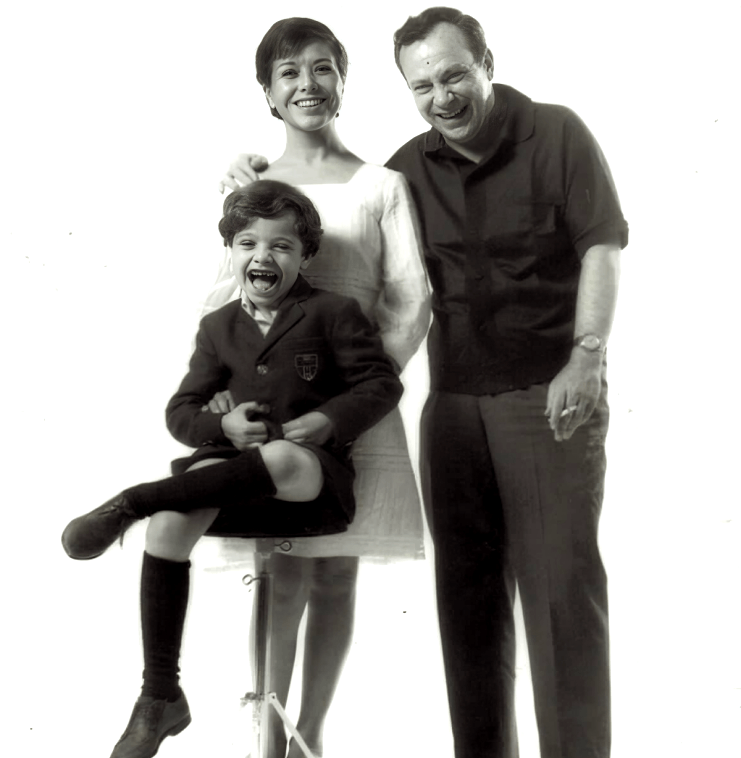
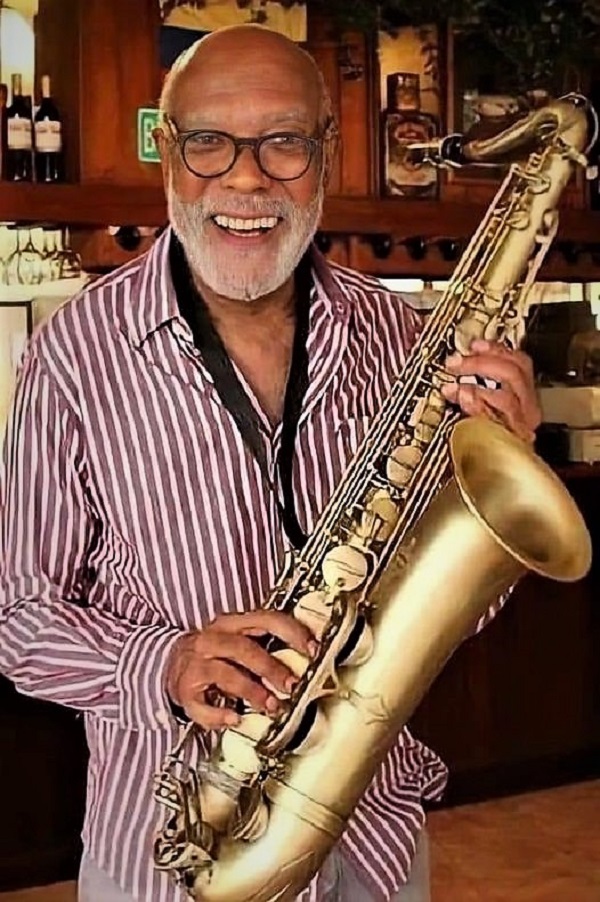
Victor Cuica “The Eternal Breath of Latin Jazz and Venezuelan Identity”

Victor Cuica “The Eternal Breath of Latin Jazz and Venezuelan Identity”

Training and First Steps: The Birth of a Style

The journey of this virtuoso—master of the tenor and soprano saxophone as well as the flute—began in 1963 at the Military Music School of La Victoria. His time in the Venezuelan Navy band served as the catalyst for his love of Jazz, leading him to deepen his knowledge of flute, harmony, and composition at the “José Ángel Lamas” Higher School of Music.

His professional career took off in Chucho Sanoja’s orchestra. Shortly thereafter, he joined Oscar D’León’s ensemble. It was actually Cuica who suggested the name “Dimensión Latina” to replace the group’s former name, “Oscar y sus Estrellas,” thereby christening what would become the most iconic salsa orchestra in Venezuelan history.

Victor Cuica in concert held on August 22, 2011 in Juan Pedro Lopez Square in Caracas

Victor Cuica in concert held on August 22, 2011 in Juan Pedro Lopez Square in Caracas

Latin Jazz: From the Silver Screen to International Stages

By the late 1970s, Cuica expanded his horizons into the “seventh art.” In 1978, he composed and performed the soundtrack for “The Sea of Lost Time” (El Mar del Tiempo Perdido), based on the short story by Gabriel García Márquez. A year later, he solidified his own group, “Víctor Cuica y su Jazz Latino,” debuting to resounding success at the Alcázar Theater in Caracas and gaining international momentum in Costa Rica.

Throughout the 1980s, critics hailed him as the most important innovator of jazz fusion in the region. His talent brought him to historic venues:

  • 1981: He triumphed at the “Memphis in May” festival in Tennessee.
  • 1982: He performed at the prestigious “Domicile” club in Munich, Germany.
  • 1985: He reached a milestone as the leader of the first Venezuelan group invited to the Montreal International Jazz Festival, where he shared the limelight with the legendary vibraphonist Lionel Hampton.

Artistic Maturity and Recognition

In the 1990s, his music reached new academic heights when Maestro Eduardo Marturet composed the work “Music for Six and Sax” specifically for him. It premiered with the Sinfonietta Caracas and represented Venezuela at the 1992 Universal Exposition in Seville.

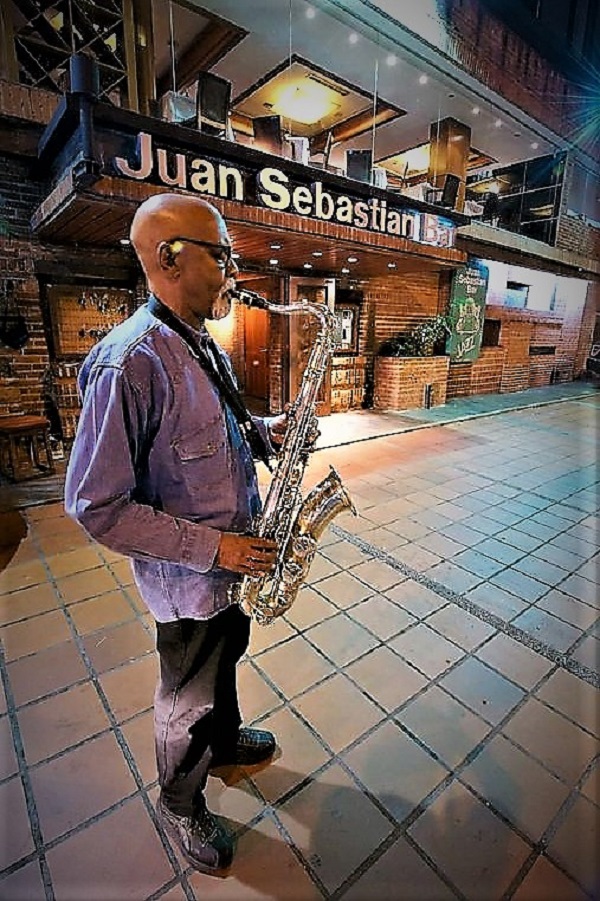
Víctor Cuica was not just a musician; he was a bridge between two worlds. Photograph at Juan Sebastian Bar

Víctor Cuica was not just a musician; he was a bridge between two worlds. Photograph at Juan Sebastian Bar

His discography, which includes gems such as Que sea para siempre (1984), Noctámbulo (1993), Just Friends (1998), and Los Locos de Caracas (1999), stands as a testament to his versatility. In 1995, the Venezuelan Artist’s Guild (Casa del Artista) honored him as Musician of the Year.

A Farewell with the Flavor of the Streets and Bohemia

Víctor Cuica passed away on Saturday, December 26, 2020, at the age of 71 due to a heart attack. His departure left a void in the film industry, where he starred in memorable films such as Santera (for which he also composed the award-winning soundtrack in 1997), and in the bohemian nights of Caracas, where his saxophone was often the soul of the evening.

A Tribute from His Peers

Multi-percussionist José Hidalgo, known as “El Tokun Mayor,” describes Cuica with words that summarize his essence:

“Víctor Cuica is the finest example of an artist intimately linked to his daily reality and cultural origins, without ever losing sight of the cosmopolitan and universal nature of his musical message. Cuica is the expression of genuine jazz performed with the simplicity of the streets.

Víctor is as authentic in his personal character as he is as an artist. This virtue was his companion as he traveled across numerous international stages, spanning the worlds of music, film, theater, and opera always with the transcendence of a bohemian, simple, and bold minstrel.

Cuica never ceases to surprise us, whether through his voice or the sound of his saxophone an instrument that, with his habitual ingenuity, he turned into a centerpiece of performance through his creativity and versatility.

His talent has graced stages across Europe and the Americas. His work projects far beyond the commercial mainstream and, today, leaves us with a brilliant musical improvisation that is truly beyond compare.”

DJ Augusto Felibertt with the one and only virtuoso Víctor Cuica

DJ Augusto Felibertt with the one and only virtuoso Víctor Cuica

Today, the name Víctor Cuica remains etched in history as the man who gave Jazz a Caribbean color and gave the Venezuelan saxophone a voice of its own.

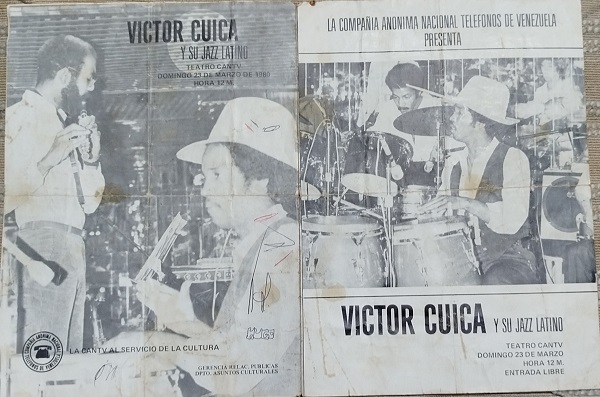
Victor Cuica and his Latin Jazz, March 23, 1980 at the Cantv Theater in Caracas

Victor Cuica and his Latin Jazz, March 23, 1980 at the Cantv Theater in Caracas

Also Read: Oscar Rojas Oscar Rojas has 54 years of musical career full of passion, rhythm and flavor

  • « Go to Previous Page
  • Page 1
  • Interim pages omitted …
  • Page 101
  • Page 102
  • Page 103
  • Page 104
  • Page 105
  • Interim pages omitted …
  • Page 293
  • Go to Next Page »

International Salsa Magazine (ISM) is a monthly publication about Salsa activities around the world, that has been publishing since 2007. It is a world network of volunteers coordinated by ISM Magazine. We are working to strengthen all the events by working together.