| Karina Bernales present | September 2025 | FESTIVALS |
|
|

![]() |
Caramelo FestivalSep 18 / 21, 2025 Kampen St 3 |
Search Results for: Salsa music
Africa / September 2025
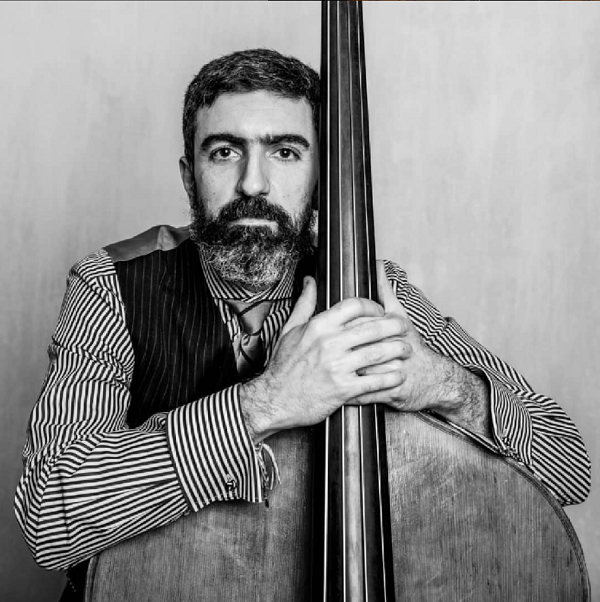
Argentine tango bassist and Latin Grammy winner Pedro Giraudo returned to his roots
Latin Grammy winner Pedro Giraudo spoke exclusively to us for International Salsa Magazine, so we are very pleased to bring you the best of our conversation with the Argentinian bassist and composer. Next, these are the highlights of his beginnings and his exciting career in his native country and in the United States, where he currently resides.

Pedro’s beginnings in music
Pedro comes from a family of musicians. In fact, his father was a bandleader and his mother sang in a choir, so he was surrounded by music practically since he was born. He has memories of him watching his parents rehearse and play instruments when he was very young, so he was always very familiar with this kind of thing.
During his adolescence, he performed recitals with various ensembles, some of which played classical music, jazz, and tango. His professional advancement was very gradual, but he was doing some activities that prepared him for what was to come years later.
His love for this world grew so big that, once he turned 19, he moved to the United States precisely to study music and learn everything he could about what can be expressed through it. His musical interests initially focused on jazz, but that changed over time.
Already at the end of his last year in college in New York, he was working regularly with various groups of different genres.
Interest in tango
Although, as we have said, Pedro comes from Argentina, he had not been particularly interested in tango at first, but his numerous trips around the world made him feel a little uprooted and detached from his beginnings. For this reason, nostalgia made him reconnect with the traditional music of his homeland. In addition, the fact that he was Argentinean encouraged many groups to call him, even though his knowledge of tango was not yet very deep at that time.
After giving himself the opportunity to play tango more formally, he also set to work to study it much more to learn about its most famous composers, its various styles, its ways to write music in the genre, among other things. In addition to that, he started to transcribe a lot of music to know what it sounded like in different styles and to gain practice.
This path eventually led the artist to become part of many tango bands and even to lead some ensembles.

Groups Pedro was in
Pedro’s main goal in arriving in the United States was to become a double bassist, and after finally achieving it, he graduated from college and started to explore his role as a composer and leader of his own ensemble. From there, the band varied for characteristics and changed members and in size over the next 15 years. The last thing was a 17-piece big band.
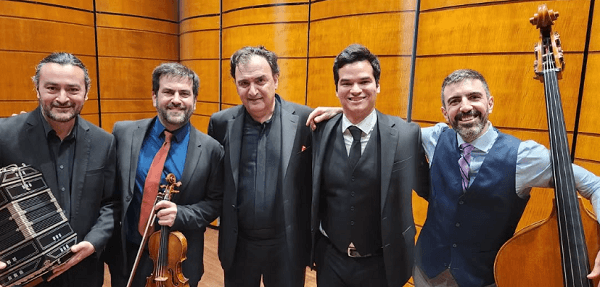
Then, in the year 2014, due to the death of a great friend, Argentine pianist Octavio Brunetti, the Lincoln Center for The Performing Arts asked him to lead an event to celebrate his life and music. Therefore, in 2015, the musician started his tango project, which he would name Pedro Giraudo Tango Quartet, taking this request as a starting point.
Today, he focuses all his efforts on tango ensembles, although he does recognize that he is increasingly angling for the classical side. For example, for his latest album, Pedro used a symphony orchestra, and since the last few months, he has been conceiving his next project with a chamber orchestra.
Great collaborations in his career
Throughout his career, Pedro has been able to work with great music glories such as Paquito D’ D’Rivera, Rubén Blades, Pablo Ziegler, William Cepeda, and many others. One of the nicest things about this work for the Argentine is that he is always surrounded by very talented people from whom he can learn a lot.
One of them was bandoneonist Hector Del Curto, who was one of the first people Pedro started playing tango with in New York. Del Curto, in turn, had the great honor of playing with the greats of the golden age of Argentine music, such as Osvaldo Pugliese.
It was through Hector that Pedro was able to meet and play with Pablo Ziegler, who was the principal pianist of Astor Piazzolla’s Second Quintet and greatly influenced the way tango is played on the piano. In fact, playing along with him on the double bass was an experience of which he learned so much, which he appreciated.

In the case of William Cepeda, the artist made some arrangements for him and he received many valuable lessons from him, such as the importance of keeping musicians engaged with sheet music to prevent them from getting too lax. It was also with Zepeda that he made his first arrangements for a symphony orchestra.
On the other hand, Paquito taught him how to be a practical musician and to make perfect, well done arrangements for any occasion.
Latin Grammy winner
Pedro is fortunate to be a Latin Grammy winner thanks to his album “Vigor Tanguero” in the category Best Tango Album in 2018. When we asked him about his experience, the double bassist said that there are some details he does not fully understand, such as the elements taken into consideration when voting for an artist in a category. However, that did not overshadow the joy of winning such an important award.
He says his victory was a surprise. At the time, he remembers being on tour with Pablo Ziegler, and after a four-hour rehearsal, his phone had about 40 missed calls congratulating him, while he did not even know that the nominations were being announced that day. To his amazement, he was included.
The final event was in Las Vegas, where Pedro finally heard his name and felt a total joy and pride for all he had achieved. In this respect, he said, “I’m not a person who collects awards, but this is a recognition I’m very proud of, to be honest.”
Read also: French flamenco dancer Fanny Ara lets us know the most important details of her career
North America / September 2025
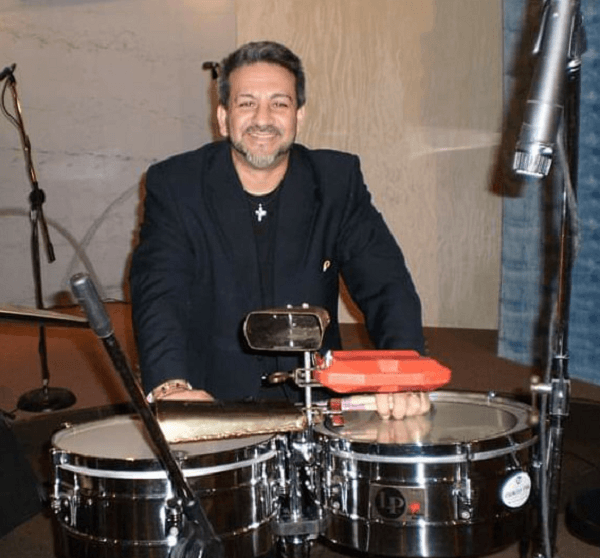
Julio Albino Y Su Secreto A Voces released ‘‘Pasaporte A Rumbero’’
After a few months of absence, we’re finally back with the batteries recharged to put a magnifying glass on the current projects of the best soneros right now. Today it is the turn of percussionist Julio Albino, who, as usual, delights us with every project he releases.
But before that, we are going with a bit of the artist’s story so that everyone can know him better.

A little bit about Julio Albino’s beginnings
Julio Albino, also known artistically as Junito, became interested in music in his homecity of New York, and after his subsequent return to Puerto Rico, this curiosity did nothing but grow as time went by. It was then that he started listening to the music of legendary names in the industry such as “El Rey de Los Timbales” Tito Puente and Oreste Vilato, who inspired him to join the San German’s school band to some extent. He would later pursue an artistic career through collaborations with more experienced artists.
He ventured into this world professionally in the 1960s, when he began to be taken into account by several of the greatest salseros of the time, such as Frankie Ruiz, Hector Tricoche, Marvin Santiago, Paquito Guzman, Junior Gonzalez, Los Hermanos Colon, Joe Quijano, among others.
There is no denying that each of these collaborations contributed to Julio making known his great talent as a percussionist, but he would not rest until he was able to form his own project, which he eventually achieved. That was how he founded his own orchestra, Julio Albino Y Su Orquesta Secreto A Voces.
Secreto A Veces
Thanks to all the effort invested in his career, Julio has managed to secure a place for his orchestra in the salsa scene, and his best-known musical works are proof of this. His big debut came in 2005 with the album ‘‘Bailalo’’, which ranked high on the charts in countries such as Italy.
Ten years later, he also released the album “Haciendo Ruido” and, the following year, he came with his single “Chachara Con Cua” and the promise of a new album. In 2018, he released “Edén Borinqueño” as his second promotional single, and shortly after, Julio released the full album, which he named “El Secreto Ya No Es Secreto”.

Pasaporte de Rumbero
In 2025, Julio once again showed why he deserves the place he has earned and released his new single “Pasaporte de Rumbero”, with which he looks to consecrate himself as a worthy heir to the soneros who previously gave him the opportunity to join their ranks. Similarly, he shows absolute respect for Afro-Caribbean culture and its deepest roots.
This joyful and energetic piece is not only a reflection of the Puerto Rican artist’s talent, but also of the strength and modernity of his orchestra, which is deeply connected to the Cuban musical tradition. From the very first seconds of the song, listeners can appreciate a festive street atmosphere, but at the same time with sophisticated percussion led by Julio himself, who boasts incredible technique that serves as a guide for the rest of the musicians accompanying him.
Among the members of the orchestra, we can mention trombonist Juan Colón, trumpeter Juan “Junito” León, saxophonist Ricardo Dávila, pianist Gabriel Rodríguez, and bassist Luis Rodríguez. Likewise, the lead vocalist is the charismatic singer Ángel Ríos, who contributes his exquisite phrasing and an enviable dominance of the clave at all times.