

UNITED STATESDIRECTORY OF NIGHTCLUBS |
||
| CALIFORNIA | FLORIDA | ILLINOIS |
| MICHIGAN | NEW JERSEY | NEW YORK |
| OHIO | PENNSYLVANIA | TEXAS |
| VIRGINIA | WASHINGTON | |
UNITED STATESDIRECTORY OF NIGHTCLUBS |
||
| CALIFORNIA | FLORIDA | ILLINOIS |
| MICHIGAN | NEW JERSEY | NEW YORK |
| OHIO | PENNSYLVANIA | TEXAS |
| VIRGINIA | WASHINGTON | |
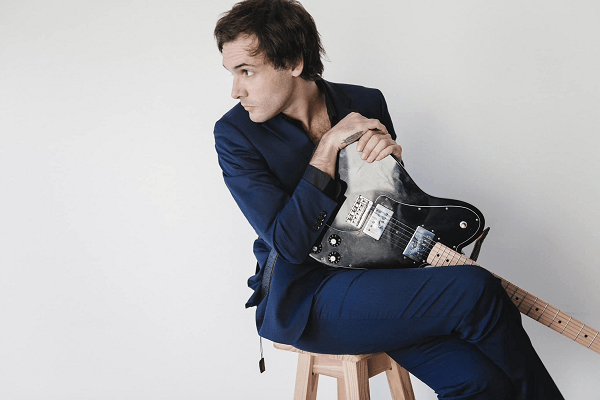
There is a country we do not usually talk much about in this edition, but we have found the best moment to do so, and it is the land of tango and mate, Argentina. It turns out that, on this occasion, we talked with composer, singer and guitarist Alejandro Meola, who has honored us by accepting our invitation to this very special exclusive interview we had.
Alejandro Meola is an artist who was born in the city of Miami, but his parents moved to Argentina when he was very young, so he spent his childhood and adolescence in the aforementioned country. In his accent, we can see how influential his upbringing in Buenos Aires was.
Next, we will touch some of the most important issues related to his career and his life in general.

As is typical, Alejandro began to feel a great attachment to music and it all started with the guitar that was in the house he grew up, with which he played at an amateur level and began practicing slowly and improving his skills over time. He says he always knew that his vocation was music, even without being old enough to decide on these issues.
Given that the guitar was the instrument with which he started in music, this will always be the most important element in his artistic life above any other. However, he is also capable of playing other instruments such as piano, drums and bass, which can transport him to places within his mind where the guitar does not always take him.
With regard to composition, Alejandro started to develop in this area through the need to express those emotions he had on the inside and communicate what his feelings in an original way with the help of music and the melodies that compose it. ‘‘I like to communicate things that resonate in other people’s minds and that’s where my taste for composition came from. Besides, I think that practice and time improve your ability to communicate emotions and transmit messages to anyone who listens to you. That evolves with oneself” said the artist.
Alejandro told us that he studied at a music school in Argentina where he specialized more on guitar and composition, but what he calls ”street training” also helped him a lot to polish his act as an artist. The experience gained out the academies is so important to Alejandro that he even defines it as ”a parallel university”, which is as important as formal academic training, if not more.
”It’s the street that gives you the tools, the experience and the journey to be a more complete artist. Practice on real stages is critical to specialize in music as it should be” Alejandro said on the subject.

Hearing Alejandro play evidences that he is heavily influenced by legendary and world-famous Argentine rock and the artist confirms this stating that he listened a lot to Fito Paez, Soda Stereo, Charlie Garcia, Gustavo Cerati, Luis Albert Spinetta, Andres Calamaro, among others. Undoubtedly, all of these music luminaries played a very important role on how this young man would perceive music, adding to all the American rock and blues he would listen to upon arrival in the United States.
However, he noted that being in the United States also allowed him to listen to a number of Latin artists and rhythms which he never planned on experimenting with, but he did. His song ”La Inmigración” is a good example of this. In that regard, living in New York has expanded his horizons and led him to discover salsa, Cuban and Puerto Rican music. He also says that he took inspiration from Héctor Lavoe, Cheo Feliciano and La Fania when doing one or two songs.
”At the end of the day, my music is a mixture of who I am and the places I’ve lived. A little from there, a little from here and a little from nowhere (laughs). A little from everywhere and a little from nowhere” he said.
Alejandro also said that he is always on the lookout for other rhythms and ideas that come his way, but always using rock and guitar as a starting point.

Since he was very young, Alejandro had always wanted to experience the dream of living and working in his art in New York. In addition to that, he wanted to know other cities in the country where he was born because while it is true that he spent most of his life in Argentina, he was also very clear that his country of birth was the United States, so he was curious to know it better.
Once in New York, I met all kinds of people and artists with a very high musical level, so I was able to learn a lot from all of them. I feel like the bar is rising here and that led me to want to improve further every day. In that sense, I feel that New York gives you thick skin, since there are many obstacles to overcome to be truly recognized in music” said Alejandro about the city.
The artist has been living in New York for 10 years now and is at ease in the place in which he currently is. In addition, he has managed to find a niche singing in Spanish, which has made him very happy and satisfied with his career.
Something very common that many well-known artists do is to record songs in both English and Spanish so that the audience they reach is bigger, but Alejandro does not believe in it. He thinks that each song must have its own language and feeling, so he prefers to do one version of each song in one language.
When he arrived in New York, he experimented a lot with English and has several albums in this language, but noting that he could work with Spanish without problems, he began to focus his music in that direction. In fact, today, almost all of his concerts are in Spanish.
Each language has its advantages and disadvantages in terms of sound, so I must always pay attention to that,” said Alejandro on the subject.
It has been a great pleasure for us to count on the talented Argentinean singer Alejandro Meola for this edition and we wish him the greatest success in his career from now on.
Read also: El Tresero Moderno San Miguel Perez
Latin America / Puerto Rico / San Juan
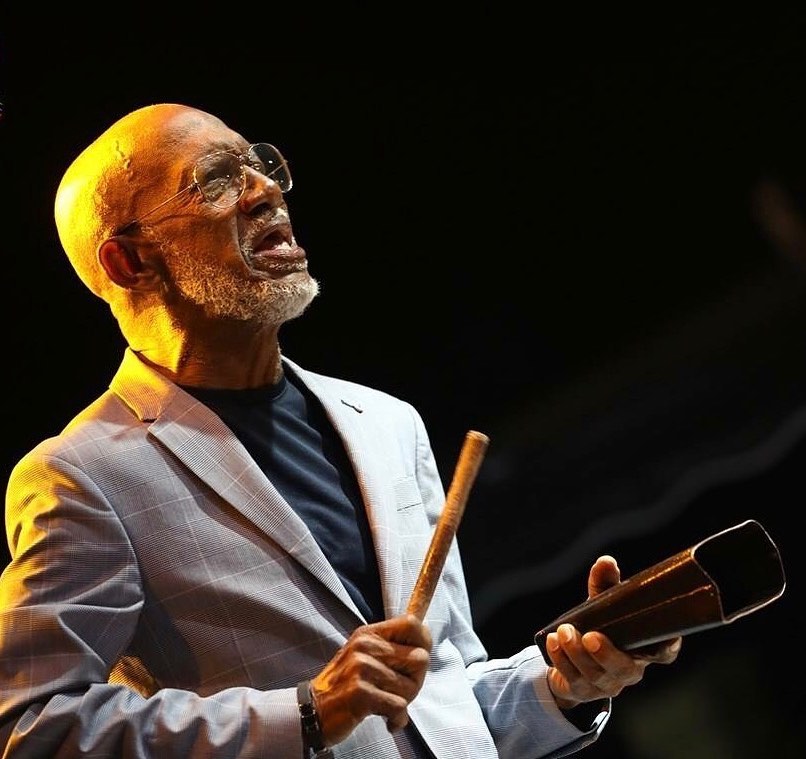
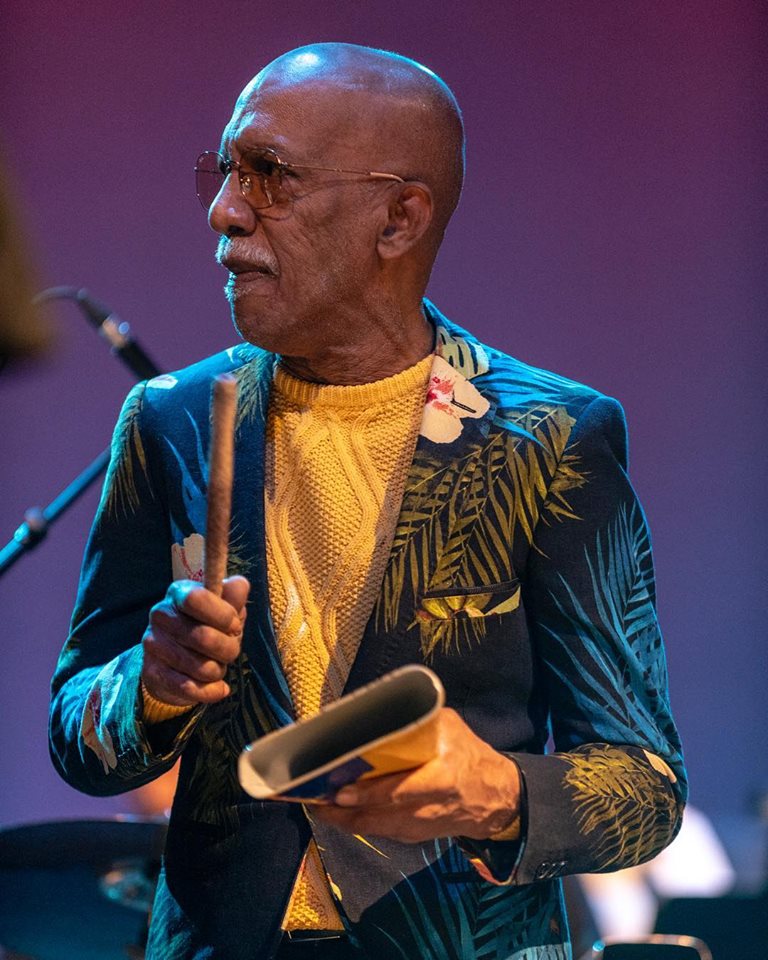
That is the reality of the Apollo Sound orchestra and its founder, the percussionist and dancer Roberto Roena, who this summer celebrate five decades making the world dance and will celebrate it with a great concert to commemorate his career.
“We are going to do something big to celebrate 50 years. It will be in the month of June at the Center for Fine Arts, “said Roena in conversation with this medium.
“It’s going to be something really cool. We are going to sing the hits of the orchestra, we will have guests and a little bit of everything”, added the musician, who indicated that the exact date will be confirmed in the coming weeks.

The Apollo Sound Orchestra was founded in July 1969 and its name derives from the launch that same month of the Apollo 11 space mission, which aimed to carry the first human being to walk on the surface of the moon.
His record catalog includes more than 20 productions and among his most notorious hits are “Tú loco loco y yo tranquil”, “El Escapulario”, “Marejada Feliz” and “El Progreso”, among many others. In the case of Rohena, the renowned 79-year-old musician from Mayagüez began his musical career much earlier, at age 16, with the distinguished group of Rafael Cortijo y su Combo.
He was also part of Rafael Ithier’s Gran Combo and appeared in the star catalog of the famous Fania record company and its All Stars, among other collaborations.
It was in the Mayagüez neighborhood of Dulces Labios where he was born, raised and took his first steps as a dancer. “Sweet Lips is my neighborhood. I have many memories of my childhood days.
From there came great musicians, such as Santitos Colón and Mon Rivera”, he pointed out.

When she was nine years old, her family moved to Santurce and when she was barely a teenager, she was already appearing on television.
He was discovered by Cortijo in one of his dance performances on the La Taberna India program and from there he became a percussionist for the renowned group. Since then, he has not stopped delighting his followers with his music.
“In these 50 years, there is no greater satisfaction than being able to continue playing,” said Roena, who last Saturday began the celebration of his 50 years in a concert at the Lehman Center of Performing Arts in New York, where he brought together several of the singers who accompanied the group in its beginnings, such as Sammy González, Tito Cruz and Carlos Santos, among others. In addition to the concert, Roena does not rule out going back to the studio to continue shaping her music for posterity.
“This does not mean the end of Roberto Roena and the Apolo Sound. We are going to continue as long as God wants”, he sentenced.

RELATED ITEMS: 50TH ANNIVERSARY, CENTER OF FINE ARTS P.R., INTERNATIONALS, ROBERTO ROENA AND HIS APOLLO SOUND
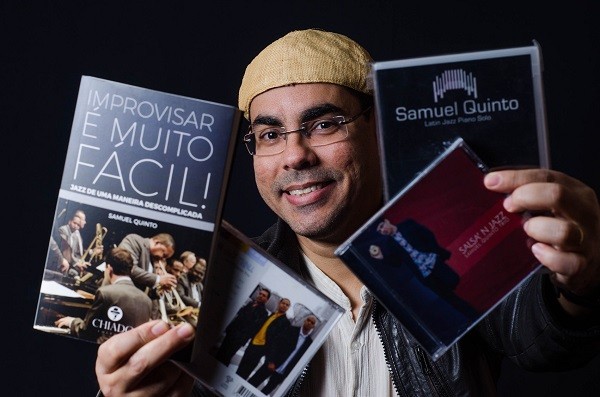
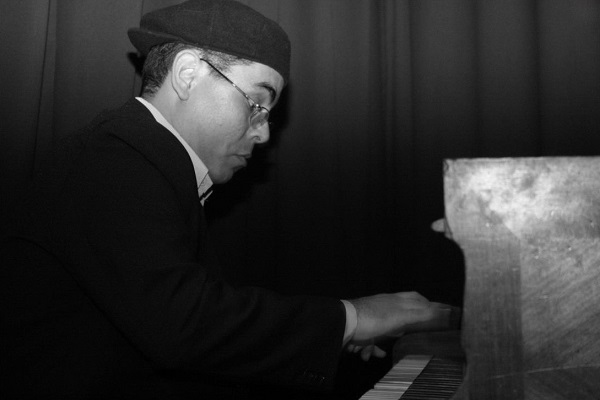
Quinto grew up in Salvador, where he developed his art mainly with the piano. Samuel Quinto was born in Belém, Pará, but grew up in Salvador, Bahia.

Since the age of seven, he developed his musical talent by virtue of the contact with the piano through the gospel, accompanied by the Baptist Church that he studied during his childhood with his family in Salvador.
Then Samuel took the first steps on the piano in the family home, always without accompanying teachers, and developed his piano skills learning also, as self-taught, harmony, reading and writing music and orchestration, musical composition, arrangements for the church choir, which begins to play as a pianist at the age of 12 years. In Europe.
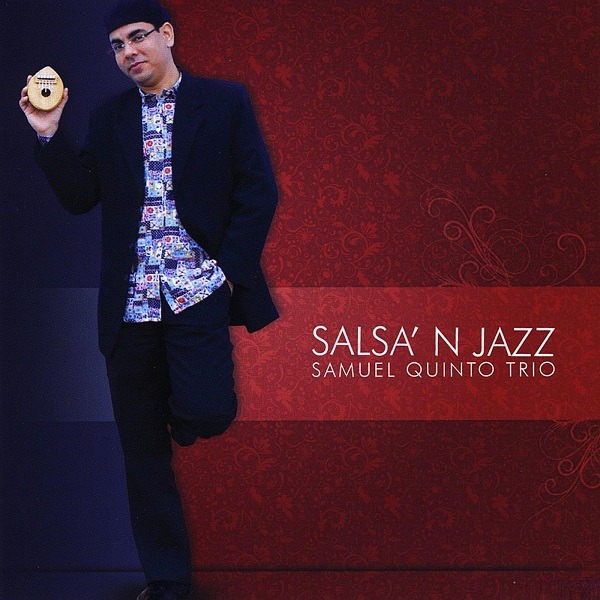
Samuel Quinto released his first CD “Latin Jazz Thrill” in 2007, in Portugal, with trio formation (Bass, Piano and Drums), which formed the core of his repertoire in various festivals and concerts during the years 2007 and 2008 in Portugal.
During his 2008 tour he performed in cities such as Hamburg, Berlin, Cologne, Heilbronn, Liège and Limoges; in addition to a special concert held in Salvador in collaboration with the Catholic University of Salvador in June 2008. His compositions are used at the University of Porto (ESMAE) in the Jazz degree, as study material in the training of Jazz students.

Even more extensive, which passed through Belgium, Germany, Portugal, Spain, France, Luxembourg, Netherlands and England. In this second work, Samuel was accompanied by another Brazilian, classically trained, Marcos Borges on bass and Manuel Santiesteban, Cuban, graduated in drums in Havana, Cuba.
He founded the first Latin Jazz course at the North Jazz School, Porto – first professional Jazz school accredited in Portugal and one in the Iberian Peninsula to have the Professional Jazz Instrumentalist course until then.
Besides being invited to be the artistic director of one of the most traditional Portuguese jazz clubs, Si bemol.
Samuel has also been invited to conduct workshops in the field of Jazz, Latin Jazz Composition and Arranging both in Brazil and Europe. But his musical talent is not only to jazz, after having been a pianist of the corps de ballet, he began to develop the scholar side of his music.
Inspired by great composers such as Beethoven, Mozart, Bach, Tchaikovsky, Brahms and others, he began compositions to accompany ballet in performances, as well as for orchestra and choir. _ (allaboutjazz)
There is something about Brazilian-born pianist Samuel Quinto that strikes a vibrant chord in the inner ear. Perhaps it has to do with his wonderful grasp of the joy that abounds in the Brazilian northeast.
His sense of “joy”. Perhaps it also has to do with his mature approach, his wonderful use of dynamics, his expression and his innate ability to allow the tonal center of his music to shine.
He has an exquisite ear and his hands are independently controlled by his mind, which separates melody and harmony when necessary.
Quinto, as a result, makes his fingers tingle on the keys, rumble and guffaw and cry with chords from which he wrings laughter and sadness and pure joy.

The result is a discotheque where these cultures converge in a point of ignition that warms the blood of the soul. His playing is muscular and intuitive and smacks of an artist who likes to invent on the fly, to constantly evolve.
The starting point of Quinto’s playing is also a deeply symbiotic relationship with forro music in all its vibrant splendor-baiao, xote and arrasta-pe-all elegantly captured and sparkling as his fingers touch ebony and ivory.
The most joyous and memorable display of this is her rendition of Victor Young’s “Stella by Starlight,” which gets a rousing liner treatment and reaches its climax as the song’s choruses unfold.
It is worth mentioning that on this song – as on the others on this album – Brazilian bassist Marcos Borges and Cuban drummer Manuel Santiesteban shine with their wonderful interplay.
Samuel Quinto is also an accomplished composer and demonstrates maturity and a sense of adventure with the rhythmic variety he presents here in a rumba, “Quinto’s Rhumba” which, by the way, is played in a deliciously choppy style reminiscent of Thelonious Monk.
“Jaci” is an exciting, danceable song that crosses Cuban rhythms with a touch of Brazil.
“Bolero To Preta,” an affectionate semblance of the pianist’s mother, suggests that the pianist has a lot of inner clave.
“Ficou No Meio” is simply a marvelous forro that becomes dizzying as Quinto, Borges and Santiesteban gloriously rumba in harmony and rhythm.
Santiesteban gloriously ruminate the harmony and rhythm.
“Voo Da Andorinha” is a chorinho that, quite simply, reveals Quinto’s “Alma de Nordeste”. And “Isabel (Para Voce)” is a beautiful ballad that shimmers and shines as its emotive tonal colors begin to unfold.
Here is a very promising pianist, who brings with him his rich Brazilian tradition and, indeed, all of Latin America, a new and exciting musical landscape. _
Raul D’Gama Rose
Samuel Quinto Trio – Salsa’N Jazz (2009).
Musicians:
Samuel Quinto (Piano)
Marcos Borges (Bass)
Manuel Santiesteban (Drums)
Information provided (September 16, 2023)
Samuel Quinto Feitosa (Neuroscientist and Musician)

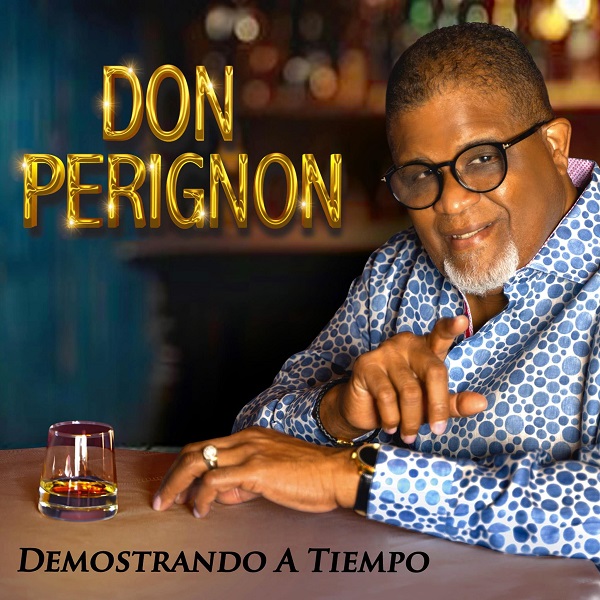
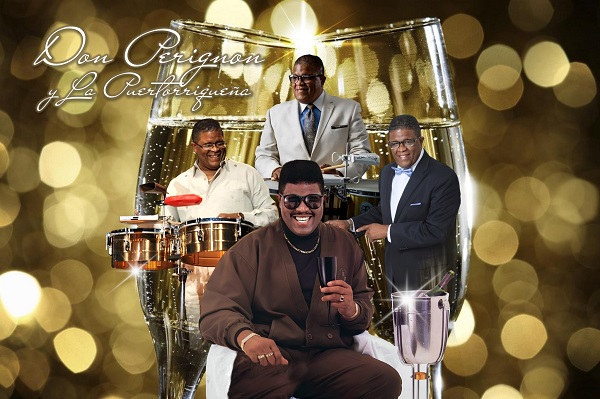
This release is a testament to more than forty-five years dedicated to music by the orchestra’s leader, Pedro Morales Cortijo, known artistically as “Don Perignon”. After overcoming health challenges,
“Don Perignon“, with renewed vigor, turns his attention to what he calls “an unprecedented chapter for the orchestra”.
And what better way to kick off this new phase than with the release of the album? Demostrando a tiempo, a title derived from Moncho Rivera’s composition arranged by Carlos García, adds a historical and significant nuance to the recording.
“Don Perignon” highlights the importance of paying tribute to the pioneers of Puerto Rican popular music, Ismael Rivera and Rafael Cortijo, underlining the crucial influence they had on the musical movement to which their group belongs:
“Moncho represents Ismael Rivera and I represent Rafael Cortijo. They (Cortijo and Rivera) were the ones who created what we do, that’s why we decided to pay tribute to these two greats of our music”.
The album opens with a composition by Sammy Ayala, entitled ‘Dilo tú’, previously recorded by Rafael Cortijo’s Combo. This song, on this occasion, includes an exquisite timbal solo by Perignon.
This, which is La Puertorriqueña’s thirteenth production, rescues two jewels of the prolific composer Catalino “Tite” Curet Alonso.

It should be noted that ‘Soy tu ley’ was destined to be part of the album Música Maestro (2014), but like fine wines, it waited patiently until it reached its optimum point to be released.
Highlighting the musical diversity, the album includes ‘A quién iré’, a composition by singer-songwriter Héctor Olmo, which at Perignon’s request, seeks to express gratitude to God for all that He has given him, including what the orchestra leader calls “a new opportunity in life”.
“I have my way of thanking God, but not through a message as fine as that,” says the director of La Puertorriqueña, considering that the song written by Olmo came to answer questions about everything he has achieved musically, despite the many obstacles that have come his way. ‘A quién iré’ features the arrangement by Juan C. Cardona, the vocal participation of Alex D’ Castro and the creation of the chorus by “Don Perignon” himself.
Demostrando a tiempo includes the songs: ‘Sácala a bailar’ (composition and vocals by José Karlo Ribot, with a tasty arrangement by Andy Guzmán who incorporates a forceful piano solo); ‘Sin brújula’ (lyrics by Harold Aguirre, musical arrangement by Ramón Sánchez, sung by Joe González); ‘La clave me lleva’, ‘Como si me amaras’ and ‘Afinque, cadencia y sabor’ (title that lists the distinctive adjectives of La Puertorriqueña).
Demostrando a tiempo reflects the dedication and unparalleled talent of “Don Perignon” and La Puertorriqueña.
Through a careful fusion of tradition and innovation showcased in the repertoire, this album represents the invaluable contribution of the orchestra, captivating dancers around the world with its vibrant and distinctive sound.
La Puertorriqueña de “Don Perignon” invites the public to immerse themselves in this unique musical experience and enjoy Demostrando a tiempo, available on digital platforms and select music stores.
Don’t miss the opportunity to experience the magic of Demostrando on time. Join us on this exciting musical journey.

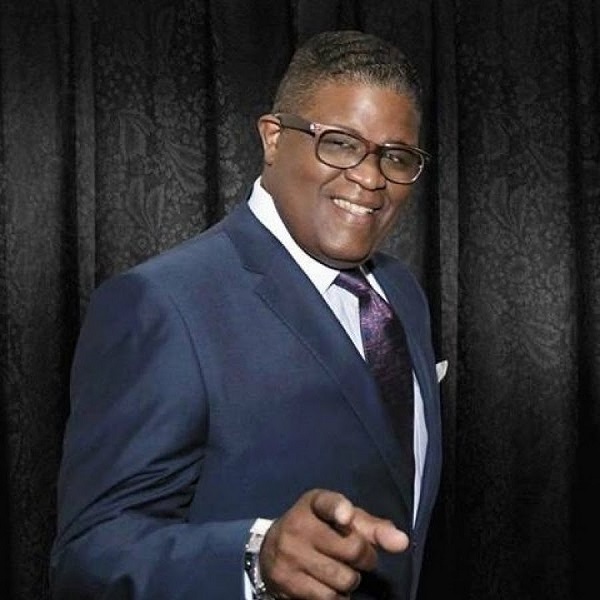
“Don Perignon” comes from a family with a long musical tradition, which includes his cousin, Rafael Cortijo.
After having stood out as musical director for singers Andy Montañez and Lalo Rodríguez, in 1989. “Don Perignon” released his first production La buena vida, which featured the participation of Victor Manuelle. This album was followed by Festival de soneros (1990) and Subiendo (1992).
Also Read: Déjalo, the latest track by Pedro Conga y su Orquesta Internacional