







Lulada Club is a group composed entirely of women that plays a good number of Latin music genres such as salsa, bolero, cha cha chá, boogaloo, among others. These girls have a very interesting concept that caught our attention as soon as we checked their social networks, so we decided to get in touch with their director, Andrea Chaparro, who kindly agreed to talk to us and give us more details about the group she leads.

We found the name they chose for the group very curious, so Andrea went on to explain that Lulada is a Colombian drink, specifically Cali (the capital of salsa) that comes from the lulo fruit. She and her partner, who is also part of the orchestra, wanted to pay tribute to this city so important for their careers and for salsa in general.
The idea came from several sessions and rehearsals in which they were deciding what name to use, but they always knew that they wanted it having to do with Cali. In the end, they thought that ”lulada” sounded very good and mixed the term with ”club”, which originated a result that they all liked.
Andrea recognizes that having a Latin female orchestra is not a novel idea, far from it. In fact, she saw this concept in Cali in several all-female orchestras that have been around for decades, so she wanted to replicate that idea.
About six or seven years ago, it was when she wanted to create an all-girl group and the opportunity was given to her in the framework of the pandemic. In Colombia, the artist had been playing with other all-male groups, but she began meeting other female musicians and instrumentalists and had the opportunity to organize a group for an event to which she and her saxophonist partner were invited.
When we wanted to know more about the selection process of the members, Andrea noted that she did a sort of search on Instagram to see their work directly, but several of the girls were brought in and recommended by other members.
Some of these girls had not had the opportunity to develop their skills because they were always underestimated in the Latin salsa scene for being female or very young, so Lulada Club has been a great opportunity for them to grow and evolve in music.
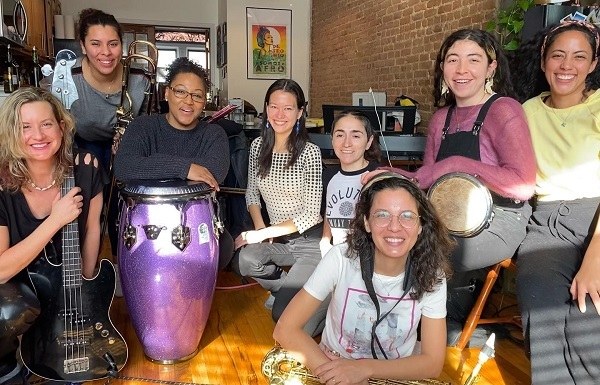
She considers that they have all fit together very well with the group and understand each other perfectly most of the time, which is why she considers that they have been very fortunate to find each other and join their professional lives.
At the moment, all of the members of Lulada Club live in New York and have no plans to move to any other place, since their greatest opportunities have been given to them in this city.
She does say that they are completely open to the possibility of touring both nationally and internationally whenever they find it possible. Indeed, at present, they already have many invitations to attend concerts and festivals in many other cities in the United States, but they will not base the orchestra anywhere else.
Both Andrea and the rest of the girls feel that their biggest audience is there and many people in positions of power are seeing what they are doing and taking them into account. People, club owners and event organizers have received them with open arms and have taken them into account for events of all kinds.
One such event is SummerStage on August 2, whose main attraction will be the maestro Eddie Palmieri, who will be offering one of the last concerts of his career after announcing his retirement. It is a great honor for the girls to be able to open for this world-renowned artist who has contributed so much to salsa and Latin music since his beginnings.
The news about their participation in the event made them very happy and feel that all their hard work has paid off.
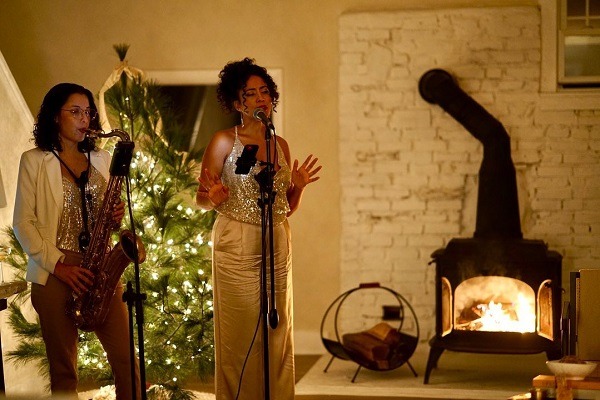
As we have mentioned at the beginning of this edition, there are several Latin genres played by Lulada Club such as salsa, cha cha chá or boogalo, but each one has its own audience.
In that sense, Andrea said that they play a lot of hard salsa for dancers and classical music coming from the clubs in Cali. There are certain songs that can never be out of their repertoire such as ”Llorarás” by Oscar D’ León, ”La rebelión” by Joe Arroyo, ”Brujería” by El Gran Combo de Puerto Rico, among others.
In cases where we get a quieter audience, we can play a bolero or cha cha chá, but everything will depend on the reaction of those present to our performance,” said Andrea on this subject.
In terms of their original songs, they have two recorded and their names are ”La Palma” ”Lulada ya llegó”, which has been very well received by those who have heard it.
Undoubtedly, Lulada Club has a lot to offer to the audience and fortunately festival organizers and club owners are realizing the great potential of this group, and every day that passes they are taking more into account in their lineups.
Read also: Allyson Briggs ”La Rubia de La Salsa”
A virtuoso musician, Luis Tata Guerra, member of a humble and hard-working family, is the last of 4 brothers, born of a musical tradition, his father played guitar, and his older brother Emerio Guerra is a guitarist in Havana.

He joined the Almendra Orchestra in 1954, performing in the best nightclubs of the island. He rehearsed with Conjunto Casino and Conjunto Arsenio Rodríguez.
In 1956 he arrived in Colombia with the Cuban Swing Orchestra, he stayed for 4 years working with the groups Sonera del Caribe and the Pepe Reyes Orchestra (Cuban singer). From there he went to Venezuela where he has lived since 1960.
Maestro Guerra has an extensive career as a musician for his activity in different groups such as: Los Melódicos, Víctor Piñero y sus Casiques, Aldemaro Romero, Chucho Sanoja, El Pavo Frank, and accompanying on percussion in Caracas Tito Rodríguez, Miguelito Valdez, Rolando Laserie, Daniel Santos, Olga Guillot, Rubén Blades, Paco de Lucia, including the Timbal King Tito Puente and many Others.
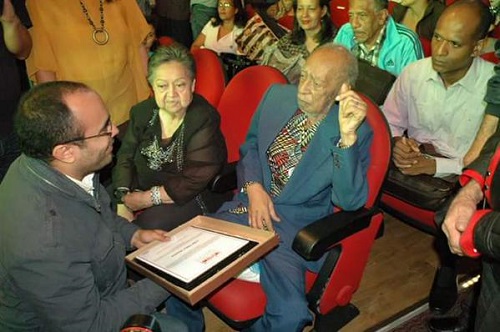
His compositions have been played in the media in Santo Domingo, Spain, Cuba, Puerto Rico, Colombia, Venezuela.
The composition “Son Matamoros” dedicated to this famous Cuban trio, was included in the movie “Salsa” with the participation of Celia Cruz, Tito Puente, Mongo Santamaria, Grupo Niche and other values. He was a member of the VTV Orchestra (channel 8) for 23 years (1965-1991).
Again in 1999, they returned to the Canary Islands for more than 2 months, in addition to performing at the fabulous The Trump Taj Mahal Casino Resort in Atlantic City, New Jersey.
He presented his program “RAICES CARIBEÑAS” on ANTV.
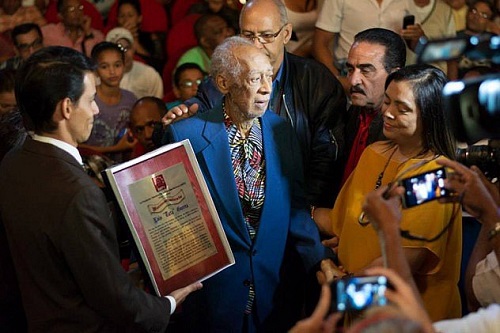
We also remember the time he shared with his compatriot Rafael “Felo” Bacallao Hernandez, who had retired from the Aragon orchestra.
With great regret we recorded on February 24, 2015, the unfortunate news of the death of Tata Guerra, four months shy of his 81st birthday, he had been suffering from an accelerated affection in his respiratory system, remaining hospitalized at the Florida Clinic in the city of Caracas, where in the early morning of that day he left us.
“When I listen to reggetón/ my heart stops/ because my thing is rumba and son”.
Read Also: Stelio Bosch Cabrujas a remarkable musician, but completely forgotten by the new generations
Source:
Por: Carlos Molano Gómez
Bogotá – Colombia
Derechos Reservados de Autor -primera publicación – 2016
Actualizado 2021.

Tempo Latino is a music festival held in Vic-Fezensac, France, in the region of Gers in Gascony it is the first and the greatest Latin American and Afro-Cuban music festival of the summer in Europe. The festival was founded in 1994 and has been held annually since then.
“In 2020 and 2021, the festival was only interrupted for two consecutive years due to the containment of the new crown pneumonia (COVID-19) epidemic.”
With around 600 volunteers from all over the city for four days of intense activities and an audience of around 60,000 people from all over the world.
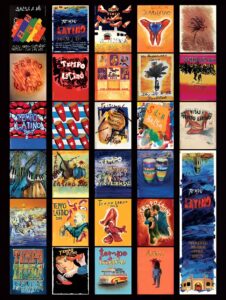
Tempo Latino offers a variety of Latin American and Afro-Cuban music, including Salsa, Bachata, Kizomba, Cumbia, Merengue, Rumba, Latin-jazz, Reggaeton and more. The festival also features dance workshops, food stalls and other cultural events.
International performers and instructors from Cuba, Puerto Rico, Colombia, Venezuela, Panama, Africa, the United States (primarily New York, Miami, and California), and Europe have participated in a number of concerts and workshops
Tempo Latino has grown from a small festival to one of the most important Latin American music festivals in Europe. The festival hosts some of the biggest names in Latin music, including Celia Cruz, Ruben Blades, Eddie Palmieri, Oscar D’ León, Johnny Pacheco, Adalberto Álvarez, El Gran Combo de Puerto Rico, Kassav, Totó la Momposina, and Los Van Van. Tempo Latino has also helped advance the careers of many new artists.
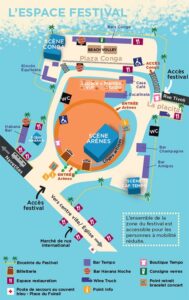
A festival of concerts takes place in the square and, at the same time, many free outdoor events for those who want to discover music in the city’s dance halls in the afternoon and evening. In the second edition, they have integrated dance, music, and percussion lessons.
La Conga
27 July – Ana Tijoux (France)
Les Arenes
28 July 2023
21:00 – Orchestra Baobab (Senegal)
23:00 – Grupo Compay Segundo (Cuba)
29 July 2023
21:00 – Lila Downs (Mexico)
23:00 – Cimafunk (Cuba)
30 July 2023
21:00 – Bernard Lavilliers (France)
23:00 – La Excelencia (USA)
and many more!
On the official website, tickets for four days are available for 120 € (during the festival, they cost 150 €).
The current director of Tempo Latino is Eric Duffau from Toulouse, France. He is also the founder of the music festival which he started in 1994. A passionate lover of Latin American and Afro-Cuban music, Dufour devoted his life to promoting this music to a wider audience and serves on the board of the French Association for the Promotion of Latin Music (AFMPL).

Dufoe was a tireless promoter of Latin American and Afro-Cuban music. He travels the world in search of new talent and works hard to make Tempo Latino a major cultural event. He is a passionate advocate of Latin music and works to bring this music to a wider audience.
Dufour graduated from the National School of Arts and Crafts (ENSAM) in Paris. In the early 1980s he worked as a DJ, during which time he became interested in Latin American and Afro-Cuban music. In 1989, he decided to create a festival to showcase this music and Tempo Latino was born.
 https://www.youtube.com/user/TempoLatinoFestival

My surnames Rojas Salazar, both symbolize flavor; rumba; happiness; love; humility and dedication, with my families I learned everything I know about the rhythms especially Salsa, my parents Jaime and Ligia, my 5 brothers, my uncles and cousins are a part of what I am today …. “Djane Shina, the queen of Salsa.

Shinaury Thais, the queen, because that’s what my mother called me (R.I.P), the queen of the house, the little monkey among her monkeys.
I was born on October 28th, caraqueña and caraquista, I am from the most beautiful parish “23 de Enero” in the Mirador sector, and even though I only lived there for 2 years I always kept its essence, in February of 73 we moved to my beloved town ‘La Victoria’ in Aragua State, to the urbanization Las Mercedes, in the most salsa area that exists “Madera 15”, named after the Madera Group of San Agustin.
I grew up surrounded by neighbors all music lovers and parties, almost all organized by my brothers at home, Vinyl parties, which scratched so much to put them and to leave them out of their cover, a girl surrounded by people with different orchestral tastes but all of Salsa, there I learned to dance, sing and play instruments, were unique moments, to see those gatherings and end up picking up and cleaning everything so my parents would not be upset.

A very nice experience as a Djane because people knew that when I was one of the guests at their meetings I took control of the music, always as a contribution to the celebration, there was never any charge, as I said at the beginning this is my passion and I do it from my heart.
When I was a child I practiced the cuatro, I was in the show band of my school “Unidad Educativa Colegio Brito” directed by the teacher Carlos Gonzalez, I started with the cymbal, followed by the grenadier, then the redoblante to finish with the trombone.I
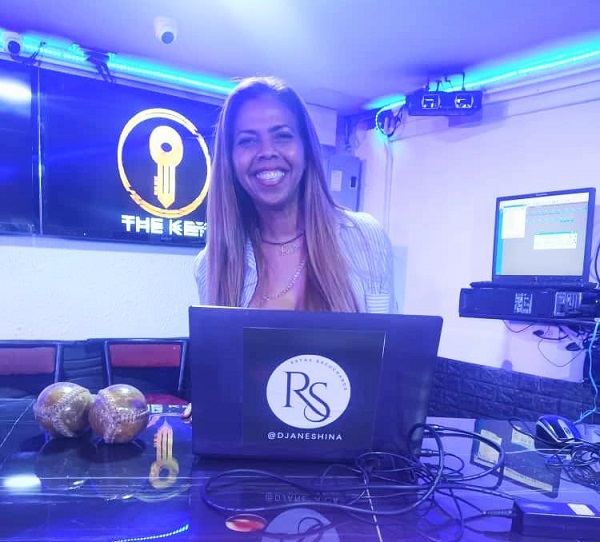
When I was 18 years old, apart from sports (athletics, cycling, aerobics and power), I practiced percussion with my friends and teachers Humberto Rodriguez and Boris Pedra, playing the congas, bongo, timbal, and minor percussion clave, maracas, güiro, among others, here my inspiration was my beautiful uncle Oscarcito Rojas, for me the best conguero in the country.
Throughout my life I saw the formation of different orchestras and salsa groups by my brothers and neighboring friends, in them I participated in rehearsals and learned a lot to sing, over the years I could participate and organize groups of Christmas music and bagpipe as a soloist and with the minor percussion in the companies where I worked.
My life has always revolved around music and art and in the midst of that, wanting to be a professional musician I became a graduate in Business Administration, I had two beautiful daughters Yaima and Victoria, which are my greatest pride and motivation to move forward bringing happiness to the world with my talent.

Shinaury Rojas
Contact: +058 4244009655
Read also: Salsa and its detractors “Caiga quien Caiga”
