






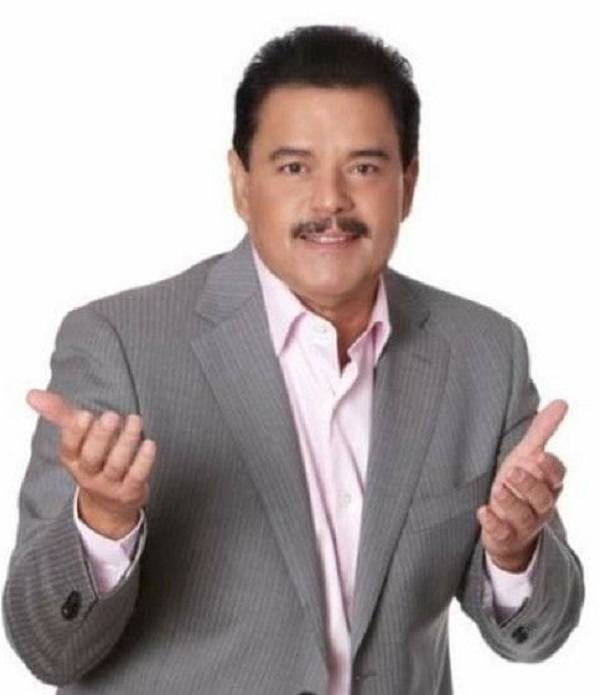
The world of music, more specifically salsa, has lost one of its greatest stars later this year 2022 and is none other than the unforgettable Lalo Rodriguez, who leaves a huge void after his unfortunate departure. In view of the unfortunate things that happened to the humanity of the great artist, we want to take this opportunity to remember the most important of his musical work and the importance of the legacy left by him.
Ubaldo Rodríguez Santos, better known as Lalo Rodríguez, was born in Río Piedras, Puerto Rico on May 16, 1958 in the family formed by his parents José Rodríguez and Magdalena Santos. As a child, he soon started singing in music festivals and radio and television shows, in which he already showed the great talent that would carry him for the rest of his life. So much so that, a few years later, he was already part of his first musical group, the Tempo Moderno Orchestra.
When he was 15 years old, he received the necessary support to move to New York City, a place where some of the biggest salsa stars of the time were located. While there, he joined Eddie Palmieri‘s band and provided vocals for several songs on the album ”Sun of Latin Music”, which became the first salsa album to win a Grammy. The following year, the artists would team up again to create ”Unfinished masterpiece”, which got a nomination for the aforementioned awards. At that time, it was Palmieri himself who named him ”Lalo” for the first time.
After walking away from Palmieri, he participated in the Machito Grillo’s orchestra, with whom he recorded the album ”Fireworks”. Incredibly, this album also got a Grammy nomination, which represented fabulous numbers for Lalo. Upon coming of age, he already had three albums, a Grammy won and two Grammy nominations.
During these years, Lalo recorded a significant amount of albums and was beginning to be considered as one of the precursors of romantic and erotic salsa, a subgenre that was beginning to gain much more notoriety in those years. One of the biggest hits of his entire career was the song ”Ven devórame otra vez”, which won him a Lo Nuestro Award in the category of Tropical Song Of The Year and reached very good positions in the Latin Music charts.

In the 1990s, he continued working hard in his career, resulting in the albums ”Nací para cantar” and ”Estoy aquí”, with which he won gold and platinum records due to the large number of copies sold. These were the last record productions of the artist to be released to the public.
Lalo never stopped being active on stages of all types, both in his native Puerto Rico and in other countries around the world. In 2020, it was announced that he was going to release a new album and already had a song selection to include in the material, although no further details had been offered.
Unfortunately, fate would not allow him to go forward with his plans and he was found dead near a basketball court in Carolina, Puerto Rico. One of the first relatives to make an appearance was his road manager.

After knowing that Lalo was found dead, his road manager Francisco Pérez, who had been working with the artist for several years. He indicated that he had communicated with him that same day and they had agreed to meet, but instead, he received the unfortunate news about his death.
During the following days, many artists expressed their sorrow for the departure of the singer and highlighted his great talent in life, such as Víctor Manuelle, Elvis Crespo, Arnaldo Vallellanes, among many others.
Read also: This is the story of Percussionist Joe González
 By Johnny Cruz, ISM Correspondents, New York, New York City
One of the mainstays of Afro-Cuban rhythm in recent times, Angá played with a multitude of jazz stars, from Chucho Valdés, Chick Corea or Steve Coleman, to Roy Hargrove, Minino Garay, Chano Domínguez and Herbie Hancock, among others.
The claim that he was one of the best percussionists in the world is backed up by the Grammy awards he won, his participation in such important projects as Buena Vista Social Club and the Afro-Cuban All Stars, and his status as sideman of geniuses like Tito Puente, Herbie Hancock, Carlos Santana or Danilo Pérez, as well as his membership in legendary groups like Irakere, according to Más i Más, the organizer of his concerts in Barcelona.
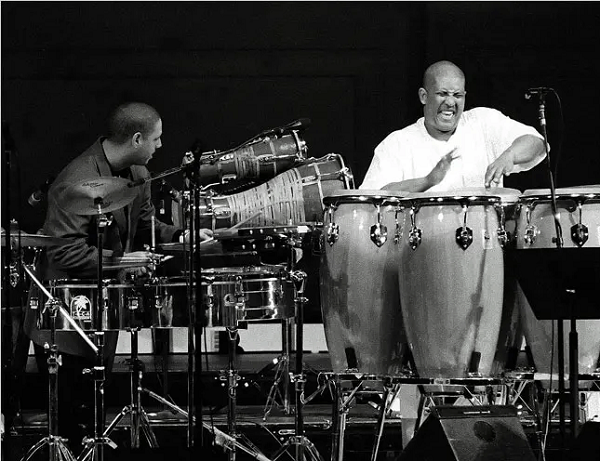
Father of three daughters – the eldest living in Cuba and the two younger ones in Paris – Angá never stopped searching for new forms of musical expression, experimenting with the fusion of different styles, such as jazz, African sounds, rock and hip-hop.
He played with several Cuban artists, including Irakere, Afro-Cuban All Stars, Buena Vista Social Club, Omar Sosa, Omara Portuondo, Tata Güines, Rubén González and Orishas.
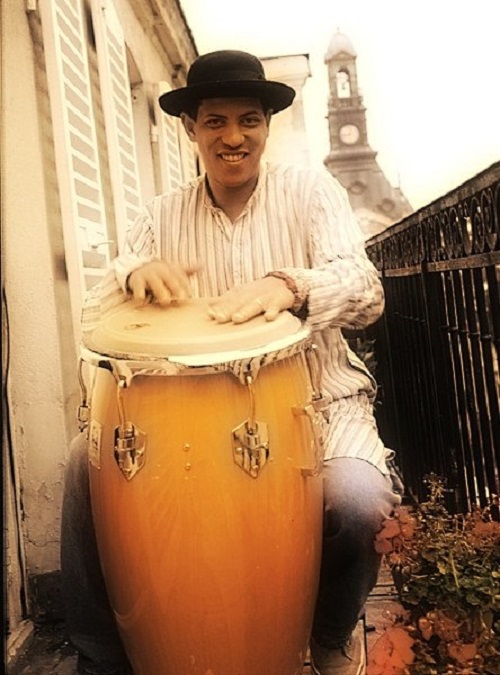
At that time he recorded and toured frequently with international musicians such as Steve Coleman, Roy Hargrove, Baba Sissoko, Ry Cooder, Pascal Coulon, Mezzadri Malik, Montgomery Buddy, Pascal Coulon and John Patitucci. Angá’s musical journey was a personal quest to investigate and create new sounds and rhythmic fusions.
For Paris-based Argentine percussionist Minino Garay.
“He is indisputably one of the great percussionists of his generation; the greatest of all. His death causes me enormous sadness, as if it were a story that did not end,” lamented Garay, who will not attend the funeral this Friday, due to the fact that on that day he will give a concert in Vance, in the south of France. “I will certainly dedicate it to him,” he added.
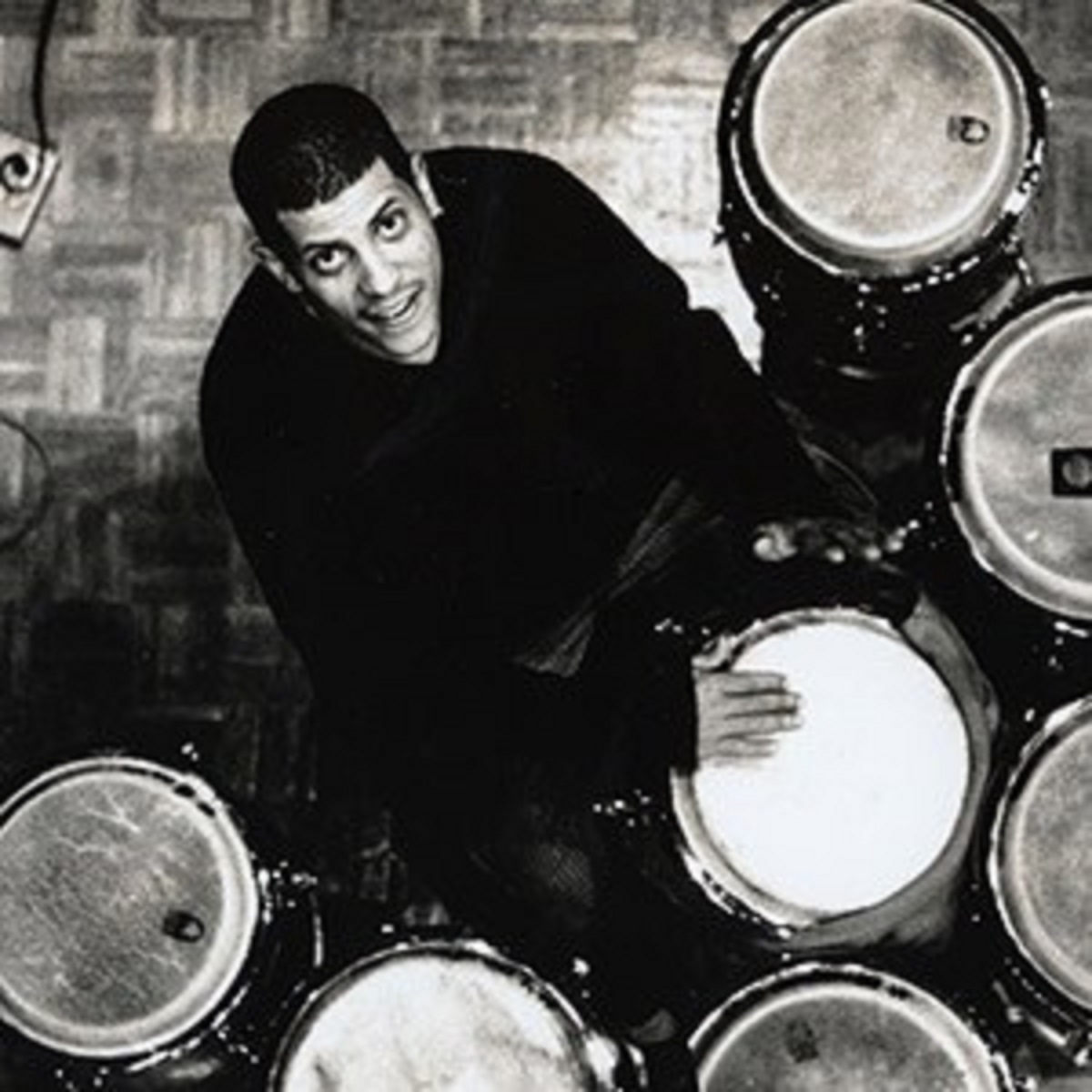
Angá Díaz received his formal education at the Escuela Nacional de Arte in Havana, Cuba, and after joining the Latin jazz groups Opus 13 and Irakere, where he perfected his conga playing technique, he moved to Europe, where he devoted himself to exploring the fusion of styles, bringing Cuban music closer to other musics and thoroughly investigating the relationship between Afro-Cuban polyrhythms and technology.
In the summer of 2005, Angá released his first solo album EChu Mingua, which the musician himself described as “a musical religious mass. Spiritual music is when the spirits are invoked to come down to earth, inviting them to a party or to talk to them”, and that is “the whole concept of the album”.
Transgressor of conventions, Angá emerged as an independent, free and committed musician with a wide variety of projects, from experimental jazz with Steve Coleman and Roy Hargrove, and hip-hop with the Orishas, to his participation in Omar Sosa’s tours, in addition to participating in numerous alternative projects with musicians from all over the world.
Source: jornada.com.mx
You can read: Freddy de Jesús Ortega Ruiz “Coco & su Sabor Matancero”
Patato was born into a very santera and very musical family, his father was a tres player of Los Apaches, the port germ of two illustrious sonera groups: the Sexteto Habanero and the Sexteto Nacional.
He learned to play the tres and the botijuela before turning to percussion, first on the cajones and finally on the congas.
He was an extraordinary percussionist of outstanding participation with the “Conjunto Kubavana”, “La Sonora Matancera”, “Conjunto Casino” and the “Orquesta de Tito Puente”, among other groups, both Son and Latin Jazz.
Formed in rumbero gatherings and carnival groups, Valdés became a professional in the early forties, after trying his luck as a boxer and dancer.
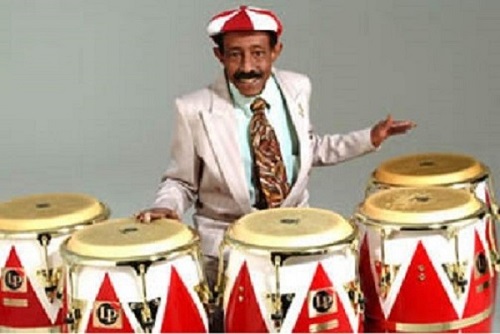
He played with Conjunto Kubavana, La Sonora Matancera and El Conjunto Casino. He accumulated nicknames: Zumbito (for his performances at the Zombie Club), Pingüino (for a dance he did on television) and Patato (for his small size), and in those days, dedicating oneself to music in Cuba guaranteed hardship. Besides, Patato wanted to experiment and that was not possible playing for dancers or tourists.
He immediately began working with Tito Puente. His first recording in the United States was the album Afro-cuban, by trumpeter Kenny Dorham, which opened with the intoxicating Afrodisia. Those were good times for tropical music.
He was the first percussionist to improvise “Solos” with 3 or more Congas at the same time. In addition, he was the creator of the “Congas Afinables”, instruments on which he would ride to dance making them sound rhythmically.
Patato Valdes was an excellent musician, an unforgettable person. Nervous and diminutive, he spoke with an impenetrable Cuban accent; he dressed elegantly, hiding the necklaces and bracelets of Changó and other “orishas”. He looked like a living caricature, but when he hit the percussions he became a divine creature: he had power, spectacularity, sense of melody.
Those skills made him an ambassador of Afro-Cuban rhythms in the jazz world, although he will also go down in history for his extraordinary rumba recordings.
In 1956, Patato appeared in the film Y Dios creó a la mujer, teaching the dances of his homeland to Brigitte Bardot. A great moment, although an implacable Guillermo Cabrera Infante criticized the actress’s movements: “she seems to commit suicide by dancing a cross between mambo and chachachá, a really toxic cross between mambo and chachachá”.
A flexible musician, Valdés sounded as comfortable playing with Machito’s big band as with Herbie Mann’s group. However, he felt indebted to the “rumba de solar” and in 1968 he recorded a revolutionary album with his friend Eugenio Arango, alias Totico.
The exuberant Patato & Totico had genuine Havana flavor, but enriched the basic percussion instrumentation with Cachao’s contrabass and Arsenio Rodriguez’s tres.Patato expanded the creative possibilities for percussionists by playing with three or more congas.
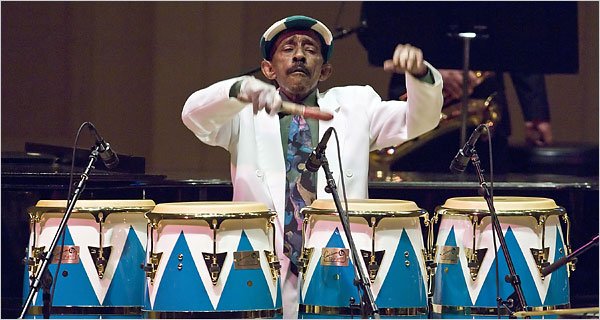
The LP company mass-produced his model, which was to become the standard for conga players. To promote it, he formed the Latin Percussion Jazz Ensemble with Tito Puente, Jorge Dalto and Alfredo de la Fé, among others, an orchestra that would end up becoming Puente’s big band in the early 80s.
It was during this period with Dalto that the album we have chosen for today began to take shape. It was titled “Patato, Master Piece” and it synthesizes all of Patato’s genius.
“Masterpiece” is an album that travels first class through tango, jazz, descarga, guaguancó and bolero, always in a masterful way and with a luxury crew made up of names like Jorge Dalto, Artie Webb, Michel Camilo, Jerry and Andy González, Nicky Marrero, Ignacio Berroa, Joe Santiago, Néstor Sánchez, Vicentino Valdés, and Sabú Martínez, among others.
The Art of Flavor.
Unfortunately Dalto had already passed away when in 1993 the project was released by the venerable German label Messidor, the same label that had already financed some impressive sessions of Patato with Mario Bauzá or Bebo Valdés, with whom he would later record the famous El Arte del Sabor.
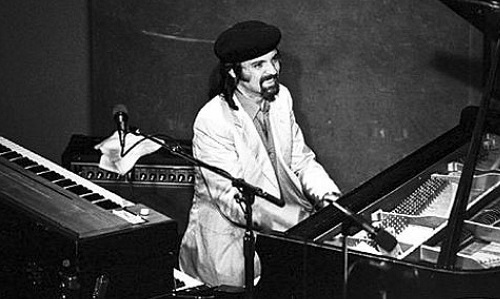
In fact, the great Argentine pianist had to be replaced for the last recording sessions that were made 6 years ago since his illness was too advanced, but he left us some incredible arrangements that were kept in the great majority of the themes.
Dalto left us in 1987 when he was only 39 years old. His replacement was nothing more and nothing less than a very young Michel Camilo.formed by 9 cuts among which we especially want to highlight the huge versions of Cute and Nica’s Dream, Masterpiece is an essential album for all lovers of Latin-jazz with capital letters and that is why we wanted to share it on a day as special as today.
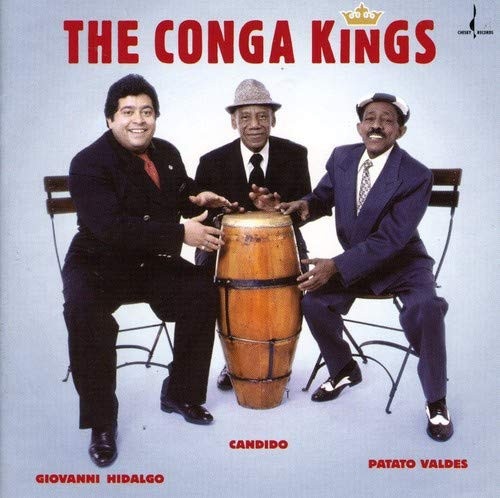
He even made his way onto the modern dance floors, with a remix of San Francisco tiene su propio son. Just as he was returning from playing in California with the Conga Kings, his breathing began to fail.
The plane he was on had to make an emergency landing in Ohio to admit him to a hospital. The 81-year-old percussionist, a heavy smoker, was on his way to his beloved New York, but he would never get there. According to his relatives, he held out until December 4, the day of Santa Barbara, the Afro-Cuban equivalent of Changó, when the cables and tubes that kept him alive were removed.
Valdés died in Cleveland, USA, on December 4, 2007.
Fuentes: http://www.herencialatina.com/Patato/Patato_Valdes.htm
Imágenes: Martin Cohen de Congahead.com