• Skip to primary navigation
  • Skip to main content

International Salsa Magazine

  • HOME
  • Previous editions
    • 2026
      • ISM / April 2026
      • ISM / March 2026
      • ISM / February 2026
      • ISM / January 2026
    • 2025
      • ISM / December 2025
      • ISM / November 2025
      • ISM / October 2025
      • ISM / September 2025
      • ISM / August 2025
      • ISM / July 2025
      • ISM / June 2025
      • ISM / May2025
      • ISM / April 2025
      • ISM / March 2025
      • ISM / February 2025
      • ISM / January 2025
    • 2024
      • ISM / December 2024
      • ISM / November 2024
      • ISM / October 2024
      • ISM / September 2024
      • ISM / August 2024
      • ISM / July 2024
      • ISM / June 2024
      • ISM / May 2024
      • ISM / April 2024
      • ISM / March 2024
      • ISM / February 2024
      • ISM / January 2024
    • 2023
      • ISM / December 2023
      • ISM / November 2023
      • ISM / October 2023
      • ISM – September 2023
      • ISM – August 2023
      • ISM July 2023
      • ISM Edition June 2023
      • ISM – May 2023
      • ISM April 2023
      • ISM March 2023
      • ISM February 2023
      • ISM January 2023
    • 2022
      • ISM December 2022
      • ISM November 2022
      • ISM October 2022
      • ISM September 2022
      • ISM August 2022
      • ISM July 2022
      • ISM June 2022
      • ISM May 2022
      • ISM February 2022
      • ISM January 2022
    • 2021
      • ISM December 2021
      • ISM November 2021
      • ISM October – 2021
      • ISM September 2021
      • ISM August 2021
      • ISM July 2021
      • ISM May 2021
      • ISM April 2021
      • ISM June 2021
      • ISM March 2021
      • ISM February 2021
      • ISM January 2021
    • 2020
      • ISM December 2020
      • ISM November 2020
      • ISM October 2020
      • ISM September 2020
      • ISM August 2020
      • ISM July 2020
      • ISM June 2020
      • ISM May 2020
      • ISM April 2020
      • ISM March 2020
      • ISM February 2020
      • ISM January 2020
    • 2019
      • ISM December 2019
      • ISM November 2019
      • ISM October 2019
      • ISM Septembre 2019
      • ISM August 2019
      • ISM July 2019
      • ISM June 2019
    • 2016
      • ISM December 2016
  • Spanish
  • Download Salsa App
    • Android
    • Apple

Search Results for: Salsa music

Papo Rosario with his “Salsa de La Buena” at the Spanish Harlem Salsa Gallery Museum

Papo Rosario and his “Salsa de La Buena”

We are incredibly pleased to talk about Luis Alberto Rosario, better known as Papo Rosario, who can be considered one of the most beloved salseros by people who have enjoyed his music for decades. In addition to being a very cloase and kind man to everyone around him, his musical and acting talent is undeniable.

Isidro Infante next to Papo Rosario

After having sung along with El Gran Combo de Puerto Rico for more than 40 years, Rosario makes his debut as a soloist with his first recording work “Salsa de La Buena”, in which he receives the full support of maestro Isidro Infante. Both Rosario and Infante are part of Salsaneo Records, which is close to becoming one of the most important music labels thanks to its contemporary salsa. Thanks to the counselling and advice received from Isidro, Papo has managed to create one of the most important and interesting albums in 2002.

One of the things that makes the album stand out is the great amount of danceable rhythms, positive lyrics, good vocals and fresh sonority. It is evident that the essence of the artist always stands out and he does not let himself be dragged along by what he learned during his time in El Gran Combo. While it is true that there are some traits learned from his friend and former colleague Jerry Vivas, Rosario seems pretty determined to distance hemself from the past and focus on a vastly different future.

Rosario and Infante recording in the studio

What “Salsa de La Buena” is 

“Salsa de La Buena” has many tracks that can perfectly mark a before and after in current Latin music. It starts with a beautiful hymn to optimism and perseverance called “Gracias”, which is one of the four songs composed by the pen of maestro Infante. In the case of “Salsa de La Buena”, the song that gives its name to the entire album, speaks of the connection the singer has with his people as an exponent of the salsa genre. The arrangements and piano melodies are reminiscent of what Richie Ray and Bobby Valentín did when they sang “Los Reyes de La Salsa”.

Isidro also shows his great talent with “Los refranes de Don Yeyo”, a beautiful piano solo where you can see how important the Caribbean collection of proverbs is for the culture at large.

Johnny Cruz with Papo Rosario

Promotion for Papo Rosario’s album 

In a conversation between Papo Rosario and Johnny Cruz, director of the Spanish Harlem Salsa Gallery Museum, the two talk about this recording work and the artist tells how did the whole process go.

Rosario has said that both he and Infante had studied together, but had built their careers separately until they met again recently. That’s when he proposed him to make some arrangements to his songs, but they ended up collaborating to make the album in full. The main objective of the record production was to bring a positive message to the peoples and do what God has put on their shoulders.

In the same way, he pointed out that the salsa museum was quite empty the last time he went, but he was surprised to see that all those spaces have been filling up with truly valuable objects for salsa and its fans.

From there, they gave their regards to Isidro Infante and invited him to the museum to join them and talk about “Salsa de La Buena” and other issues that arise.

Johnny Cruz, Papo Rosario and Rubio Boris

        By Johnny Cruz, ISM Correspondents, New York, New York City

Carlos Molina Jr. presents his book El Legado, 100% real salsa stories

Carlos Molina and El Museo de La Salsa

It makes us very happy to talk today about Carlos Molina Jr. and El Museo de La Salsa in Colombia, place that has become a salsa library with all the information the Latin public wants to get about their favorite artists. The popularity that this proposed reading has achieved is no coincidence, as it compiles the old, the new and the best of our Latin roots to raise anyone interested awareness of it.

Carlos Molina Jr., director of El Museo de la Salsa

Carlos Molina Jr., director of El Museo de La Salsa, knows everything that a proper salsero should know about this beautiful musical genre, since much of his life has been tied to this kind of music and the biggest stars who have excelled in it. Let us not forget that Daniel Santos himself had a chance to hold him when he was just a baby, which says a lot about the path taken by Molina growing up.

This man has so many things to say and stories to tell that he has written a book in which all this data can be read in great detail.

“El Legado”

Molina explained recently that the book arose due to his intention in paying tribute to his father, Carlos Alfredo Molina. He said that he had already worked on a documentary in his honor and wanted to use that same script for a text in which the most important stories of both his progenitor and himself could be read.

Carlos Molina Jr. next to Oscar D’ León

Molina Jr.’s father became known as “El Fotógrafo de La Salsa” in the middle and maintained a close relationship with several of the most famous artists of the genre. Such was his closeness that he even managed to attend many of their rehearsals and forged bonds of friendship that many can only dream of.

It was Molina Sr.’s work as a photographer that allowed his son to create El Museo de La Salsa and turn it into a place of pilgrimage where all lovers of the genre should visit at least once. The room has approximately 700 photographs, which are part of an archive of 300,000 negatives.

Childhood and adulthood surrounded by artists

Molina Jr.’s childhood was definitely not common, as his father’s profession allowed him to stay in constant contact with many big names in the industry. He got to witness a very important number of rehearsals and grew up forming a very special relationship with music.

Johnny Pacheco and Carlos Molina Jr.

He also managed to form the same relationship with several well-known singers, some of whom write the foreword for El Legado such as Willie Rosario, Andy Montañez and Papo Lucca. From the very beginning, the three luminaries maintained a very close relationship with the museum and did not hesitate to participate in the text when asked to do so.

“El Legado” tells completely true stories

The book is already on sale at the Museo de La Salsa, but it can also be found on Amazon, so anyone who wishes to read some of the most important salsa stories ust has to order their copy and enjoy everything the material has to offer.

Molina Jr. also commented that he still expects many more copies of the book to be printed and made available at “la Red de Bibliotecas Públicas de Cali”.

Celia Cruz and Carlos Molina Jr.

        By Johnny Cruz, ISM Correspondents, New York, New York City

Directory of Salsa Clubs in Latin America

La Salsera

Yatay 961, CABA, Argentina

Azucar Argentina

1193 Buenos Aires, Argentina

Mundo Latino Disco Salsa

Esmeralda 565, C1007 ABC, Buenos Aires, Argentina

La City

Av. Álvarez Thomas 1391, C1427 CABA, Argentina

La Venezuela Disco

Santiago del Estero 1280 C1136ABB Buenos Aires, Argentina

Son Habana

Juan Carlos Gómez 1327, 11000 Montevideo, Departamento de Montevideo, Uruguay

La Bodeguita del Sur

Soriano 840, 11100 Montevideo, Departamento de Montevideo, Uruguay

Salsa & Company

Constituyente 1637, 11200 Montevideo, Departamento de Montevideo, Uruguay

Lotus Club

Cr. Luis E. Lecueder, 11300 Montevideo, Departamento de Montevideo, Uruguay

Casa de la Música de Miramar

Calle 20# 3308 esquina a 35 Miramar Playa La Habana, Cuba 10400

Casa de la Música Varadero

Varadero, Cuba

Cabaret Tropicana, Habana

La Habana, Cuba 11500

Café Cantante Mi Habana

Av. Paseo, La Habana, Cuba

Palacio de la Rumba

Avenida Las Americas, Varadero, Cuba

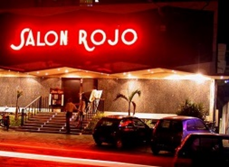
Salon Rojo del Capri

21 /M y N La Habana, Cuba 10400

Where To Go Dancing Salsa In Paris?

We bring you the 5 best Salsa clubs and events so you don’t miss any opportunity to continue dancing in the city of lights

Every year is a unique opportunity to make Salsa resound throughout the city of freedom and lights. Here, several prestigious places monthly immerse attendees in a Latin atmosphere. It is why in this August edition, we will take you on a journey into Latin American culture with a dream destination of Salsera fun in Paris.

La Pachanga

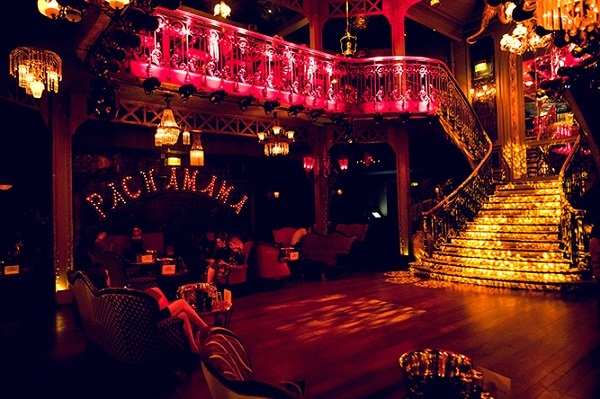
La Pachanga derives its name from the Cuban rhythm of the 60s

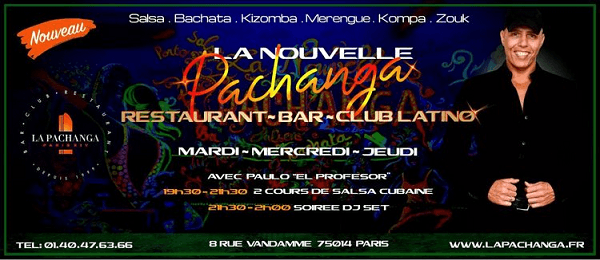
The Bar/Restaurant/Club La Pachanga https://www.lapachanga.fr/ is a place of reference for Salsa lovers, and is located near the Eiffel Tower at 8, rue Vandamme 75014. This club is designed in a cozy and Caribbean style. At the bar, you can enjoy various types of cocktails, Mojitos, Caipirinha, or Cuba Libre as well as a Latin American menu at the restaurant.

At the Pachanga, you can attend classes for beginner and intermediate levels with different instructors who will make you live two hours of Salsa Cubana and Salsa Puertorriqueña dance from Tuesday to Thursday from 7:30 PM to 9:30 PM continuing with social dancing and DJ set until 2 AM. On Saturdays, there are also two-hour Salsa lessons at the same time, and La Pachanga closes its doors on this day at 5 AM. The cost of entry is 12 euros.

Le Balajo

You must present a Vaccination Certificate and an identity document to access the club.

Le Balajo nightclub https://www.balajo.fr/ open since 1936 brings Salsa and Bachata classes every Tuesday from 7:30 PM to 2 AM for beginners and intermediate-level dancers. Amateur Salsa lessons start at 7:30 PM, while Intermediate Salsa lessons begin at 8:30 PM, followed by a Latin party hosted by DJ Karim until 2 AM.

The fees to attend this weekly event of joy and good humor are €8 and include non-alcoholic drinks and €12 if the beverage is alcoholic, but if you want to enjoy the bar and its atmosphere, the entrance fee is €5. The address is 9 Rue de Lappe, 75011 Paris, France.

Cubana Café

It is a restaurant, bar, and smokehouse for cigar enthusiasts with a quiet atmosphere in the evening.

The Cubana Café Bar/Restaurant https://www.cubanacafe.com/ is a cozy, exotic place with a 100% Cuban atmosphere. Every weekend they organize Latin Nights until dawn. Starting on Fridays and Saturdays with a DJ set from 9 PM to 5 AM and ending on Sundays from 12:30 PM to 3 AM, if you consume one of the three traditional Cuban dishes with a cocktail with or without alcohol, you will only pay €17.90. Cubana Café opened its doors 22 years ago and is located at 47 Rue vavin in the 6th district. Decoration made in Cuba, warm colors, Salsa, and a dynamic atmosphere at night await you at Cubana Café.

Pachamama

The decoration is influenced by the regions of South America with glamorous and bohemian touches that converge.

Pachamama Parisian Restaurant/ Bar/ Nightclub https://www.pachamama-paris.com/index.php/en/home-alt-2/ is located at 46-48 rue du Faubourg Saint Antoine, 75012, Paris, in a historic building from the 19th century designed by Gustave Eiffel in the neo-vintage colonial style. It has three levels inspired by the myths and sacred symbols of the pre-Columbian peoples influenced by the Latin traditions of the New World. It is open from Thursday to Saturday from 8 PM to 5 AM, with resident DJs on stage lighting up the dance floor (Lower Floor) with harmonious mixes between Latin Music, Soul, Pop, and Deep House.

La Terrasse Latino

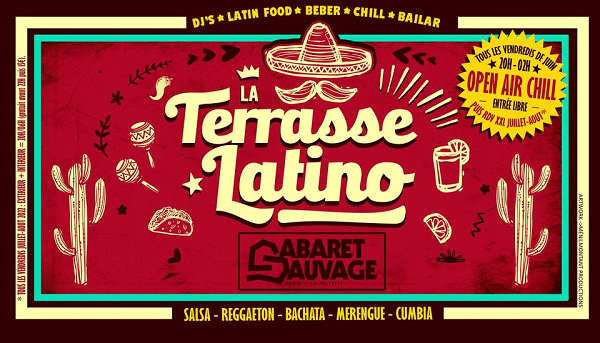
Around 1,000 lovers from the Latin American continent enjoy gathering at the Terrasse every Friday in the summer.

The largest open-air Latino gathering in Paris continues on the terrace of Cabaret Sauvage this summer in August. La Terrasse Latino https://www.cabaretsauvage.com/work/la-terrasse-latino-du-cabaret-sauvage-3  located at Parc de la Villette 59 Boulevard Macdonald, 75019 will offer Salsa Caleña lessons every Friday with instructor Francy Barahona de Calisabor (8:45 PM – 9:30 PM). It will also have Latin American cuisine, and DJ El Dany, DJ Nybra, DJ Barbas and DJ Capitán Cumbia will be present until 5 AM. Admission is free from 8 PM to 10 PM and after that it will cost €15 per box office.

Paris Salsa Weekend 

Paris Salsa Weekend is organized by passionate DJs and followed by a large Salsera community.

The capital of France is a dream destination for Salsa dancers. Here, magic happens, that’s why in this edition, we bring you three regular Salsa parties in a row that will take place during Paris Salsa Weekend 2022, https://www.lesalsaclub.com/psw from September 9th to September 11th. So, don’t miss the opportunity to attend because they are rarely held.

Sal’Sounds 70’S Party in Paris. You will hear Salsa only on Vinyl by DJ Mulato on Friday, September 9th from 9 PM to 2 AM. The address is Salle Colonne, 94 Bd Auguste Blanqui, 75013, Paris, and admission is €13. Party strictly on vinyl is the sound that dictates the law!

LeSalsa’Club Party. You will dance at the biggest monthly Salsa social party on September 10th from 3 PM to 8 PM. You can meet national and international instructors specializing in On1 and On2 styles here. LeSalsa’Club will take place in the 13th arrondissement, at the Maison des Associations de Solidarité (MAS), 10-18 rue des Terres-au-Cure, 75013 Paris. The cost of admission is €13.

Sunday Night – O’Sulli Sauce. The Paris Salsa Weekend culminates with the party on the night of Sunday, September 12th at O’Sullivans By The Mill located at 92 Bd de Clichy from 9 PM to 2 AM, and the ticket will have the same value as the previous ones.

Home

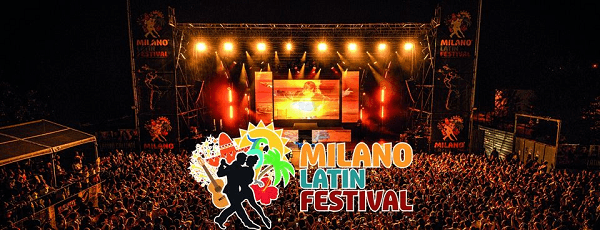
Milano Latin Festival Will Have Great Salsa Stars

The Lombardy Metropolis will continue impregnated with Latin American Culture until August

Milano Latin Festival opens its doors at 5:30 PM, and concerts start at 9:30 PM

The most important annual festival of the summer in northern Italy dedicated to celebrating Latin American culture will continue bringing Salsera fun to the 190,000 visitors of the Foro Mediolanum in the town of Assago located in ASSAGO Viale Milano Fiori parking Metropolitan 20100 Assago, Lombardy, Italy.

Milano Latin Festival founded almost a decade ago (2013), maintains the format of its beginnings with concerts by artists with a trajectory in tropical genres, urban rhythms, and traditional music, tasting of Latin American cuisine, art exhibition, and sale of crafts with a wide variety of Natural ethnic products for health and nutrition with organic and fair trade. Likewise, you can find the Salone Delle Nazioni (Nations Hall), especially for Diplomatic Missions of Latin America, organizations, and institutions.

This reopening that began on June 9th and will end on August 16th puts the magnifying glass on the public that loves Latin dances, residents, tourists, experts, connoisseurs, or simply curious about Latin rhythms after two years of cessation due to the Covid-19 pandemic.

This edition has featured presentations by artists from the Tropical genre such as Marc Anthony (June 10th), Frank Reyes (June 11th), and Habana D’ Primera (June 12th).

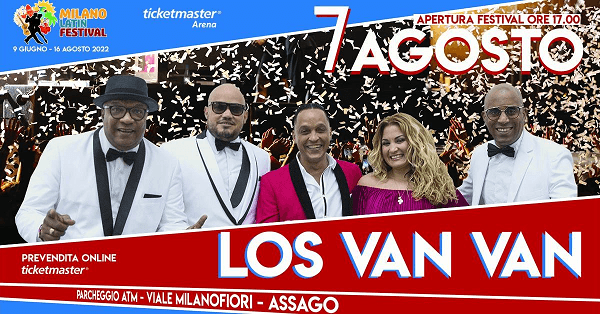
The Van Van derives their name from the jargon of the cane collectors to say Come on, Come on.

This month brings Prince Royce (July 1st) and continues with the presentation in a single evening of Maelo Ruíz, Alex Magan, and David Pabón with Salsenato Vol. 2 (July 2nd). Oscar D’ León (July 14th), Tony Vega (July 23rd), Tony Succar (July 30th), and ends on August 7th with the performance of the most prolific group in Cuba, Los Van Van.

This prolific Cuban orchestra is still in force with its peculiar sound. “Their texts are considered by many to be true chronicles of Cuban society. They have an extensive recording career with more than 40 albums, many of them nominated and awarded. They obtained a Grammy (2000) with the production “Permiso que llegó Van Van” and were nominated with the album “Fantasia”, a tribute to Juan Formell in 2017”. Fragment extracted from the Milano Latin Festival website. https://www.milanolatinfestival.it/

For the Salone Delle Nazioni program, there will be a rich calendar of cultural events on the occasion of paying tribute to the various countries with the celebration of their national holidays. This tribute begins with the Day dedicated to the second generation: A challenge for everyone! (July 1st). During this celebration, there will be reflections and testimonies of the “New Italians” with themes inspired by the encyclicals of Pope Francisco, Laudato Si, and Fratelli Tutti. In the same way, this tribute to each country will continue with Los Kunas de Panamá (July 4th), the national day of the Bolivarian Republic of Venezuela (July 5th), and then there will be the pictographic exhibition of the Environment in tribute to the Holy Father Pope Francis from July 6th to 8th. The celebration of the national days of Argentina, Peru, Colombia, Cuba, El Salvador, and Bolivia will continue.

So, July is the best month to vacation in Milan thanks to the most complete Festival that celebrates Latin American culture with more than five honored countries, concerts by internationally renowned artists, dance schools with great instructors, performances by folk groups and DJs, exhibitions photo booths, ethnic restaurants, and a street food area, musical plazas, cocktail bars, and a concert area. Milano Latin Festival is the largest three-month event celebrating Latin American culture in Italy.

  • « Go to Previous Page
  • Page 1
  • Interim pages omitted …
  • Page 59
  • Page 60
  • Page 61
  • Page 62
  • Page 63
  • Interim pages omitted …
  • Page 300
  • Go to Next Page »

International Salsa Magazine (ISM) is a monthly publication about Salsa activities around the world, that has been publishing since 2007. It is a world network of volunteers coordinated by ISM Magazine. We are working to strengthen all the events by working together.