• Skip to primary navigation
  • Skip to main content

International Salsa Magazine

  • HOME
  • Previous editions
    • 2026
      • ISM / March 2026
      • ISM / February 2026
      • ISM / January 2026
    • 2025
      • ISM / December 2025
      • ISM / November 2025
      • ISM / October 2025
      • ISM / September 2025
      • ISM / August 2025
      • ISM / July 2025
      • ISM / June 2025
      • ISM / May2025
      • ISM / April 2025
      • ISM / March 2025
      • ISM / February 2025
      • ISM / January 2025
    • 2024
      • ISM / December 2024
      • ISM / November 2024
      • ISM / October 2024
      • ISM / September 2024
      • ISM / August 2024
      • ISM / July 2024
      • ISM / June 2024
      • ISM / May 2024
      • ISM / April 2024
      • ISM / March 2024
      • ISM / February 2024
      • ISM / January 2024
    • 2023
      • ISM / December 2023
      • ISM / November 2023
      • ISM / October 2023
      • ISM – September 2023
      • ISM – August 2023
      • ISM July 2023
      • ISM Edition June 2023
      • ISM – May 2023
      • ISM April 2023
      • ISM March 2023
      • ISM February 2023
      • ISM January 2023
    • 2022
      • ISM December 2022
      • ISM November 2022
      • ISM October 2022
      • ISM September 2022
      • ISM August 2022
      • ISM July 2022
      • ISM June 2022
      • ISM May 2022
      • ISM February 2022
      • ISM January 2022
    • 2021
      • ISM December 2021
      • ISM November 2021
      • ISM October – 2021
      • ISM September 2021
      • ISM August 2021
      • ISM July 2021
      • ISM May 2021
      • ISM April 2021
      • ISM June 2021
      • ISM March 2021
      • ISM February 2021
      • ISM January 2021
    • 2020
      • ISM December 2020
      • ISM November 2020
      • ISM October 2020
      • ISM September 2020
      • ISM August 2020
      • ISM July 2020
      • ISM June 2020
      • ISM May 2020
      • ISM April 2020
      • ISM March 2020
      • ISM February 2020
      • ISM January 2020
    • 2019
      • ISM December 2019
      • ISM November 2019
      • ISM October 2019
      • ISM Septembre 2019
      • ISM August 2019
      • ISM July 2019
      • ISM June 2019
  • Spanish
  • Download Salsa App
    • Android
    • Apple

Search Results for: Salsa music

Tribute to Eddie López for his career

How were his beginnings?

On January 10, 2023, the death of Eddie Lopez has been made known, who has been one of the greatest pillars of the radio station KXLU since 1976 when he started his career as a DJ. His arrival came during the third anniversary of the famous program ”Alma Del Barrio”, being a fundamental piece in the huge success the show had during several decades and making it remain part of the programming of the already mentioned radio station.
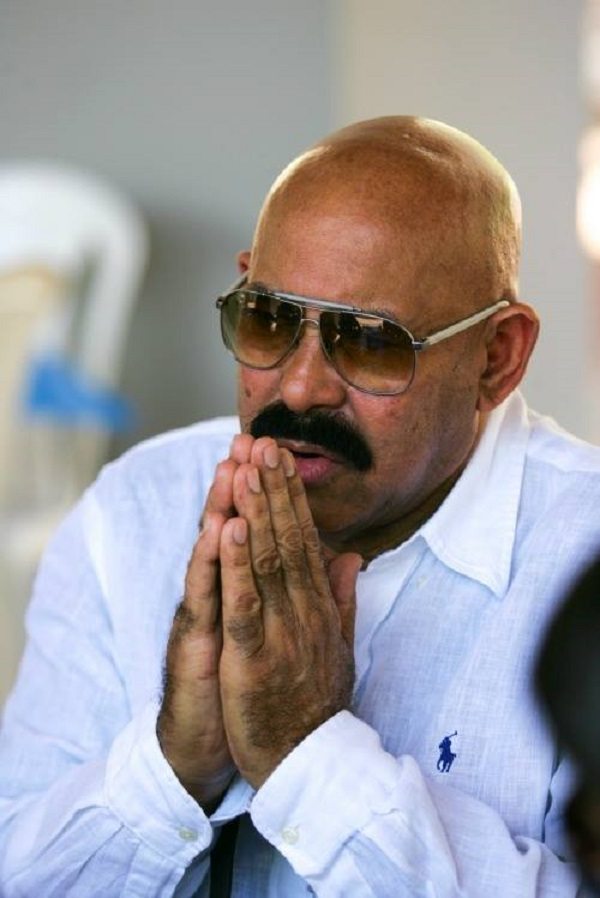
Host of the radio show ''Alma Del Barrio'' Eddie López
Host of the radio show ”Alma Del Barrio” Eddie López

A little bit of his life

Eddie Lopez was originally from Los Angeles and spent much of his childhood in his father’s photography studio, which may have been one of his greatest inspirations to dedicate his life to the arts in adulthood. After graduating from Cathedra High School, he was admitted to Pepperdine University, but switched to Loyola Marymount University, from where he finally graduated in 1978.

Although much of his professional career was spent at KVEA Channel 52 Telemundo, he spent 46 years working at ”Alma Del Barrio” and streaming the best Afro-Cuban music through the waves of KXLU from 2pm to 6pm. During all these years, Eddie always said that he wanted ”Alma Del Barrio” to be as professional as possible and encouraged all his colleagues to always be better every day to give their best to the audience. He also said that this show was not only a work team with common interests, but a family in which everyone supported each other to achieve their goals.

All those involved in his life who came to know him say that he was a man completely dedicated to his family who deeply loved his wife Vanessa and his daughter Nina, who were always his greatest motivation to get ahead day by day. He was loved by all his family and friends, who are very sorry for this sad loss in the Latino cultural world of Los Angeles and the United States in general.
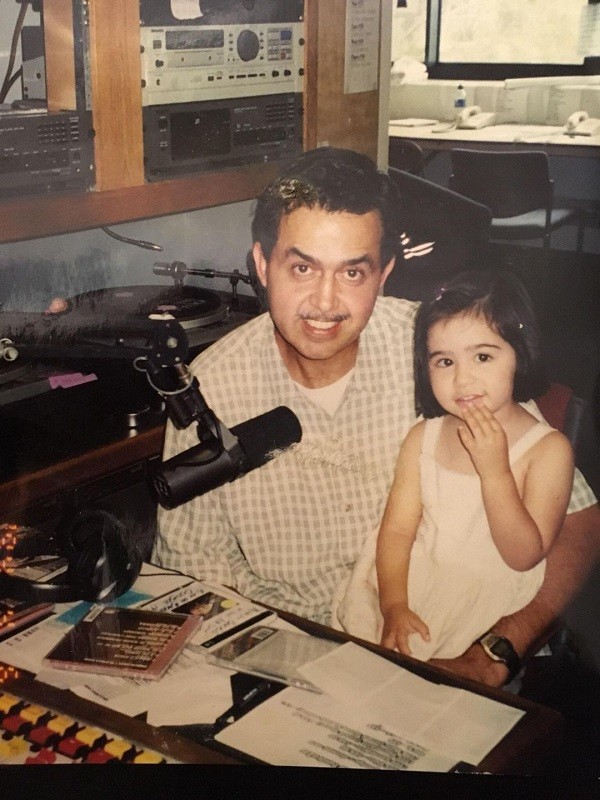
Eddie López with his daughter Nina

Reactions to his passing

In the social networks of ”Alma Del Barrio”, the sorrow of the team over the physical disappearance of the host can be clearly seen. On the Facebook account of the show, there are several messages referring to all that Eddie achieved during his professional life and all that he contributed to the show ”Alma Del Barrio” and to the radio station KXLU. These comments are accompanied by photographs in which Lopez can be seen carrying out his work with the enthusiasm that characterized him in those periods when he practiced the profession he so loved, which was communication.

One of those who mourned the loss of the broadcaster was the host of the program ADB, Alan Geik, who had been his personal friend for decades thanks to the passion for the media they both shared. It all started when Eddie hired Alan to host a evening show called ”Latin Dimensions” at a station that works in a small classroom.

Geik did not have any plans to become a broadcaster at the time, but Lopez convinced him by telling him it could be a great adventure and a learning experience for himself. When he accepted, he never thought that the programme presented by him would multiply the number of audience several times over thanks to the popularity he was gradually acquiring. Not to mention that the station where the program was aired moved to better facilities and became a radio power.

The host ends his note of mourning by expressing that he is proud to have been such a good friend of Eddie and all that they achieved together thanks to the professional team they formed during such a long time.
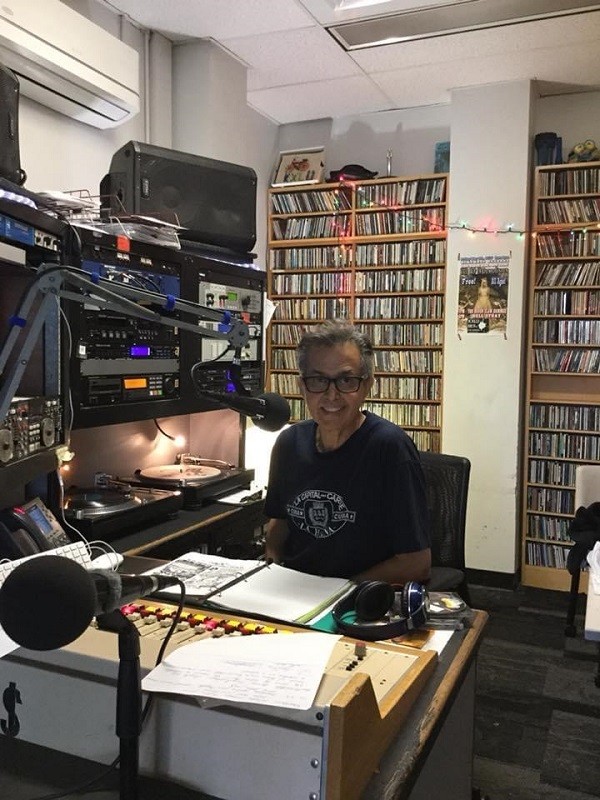
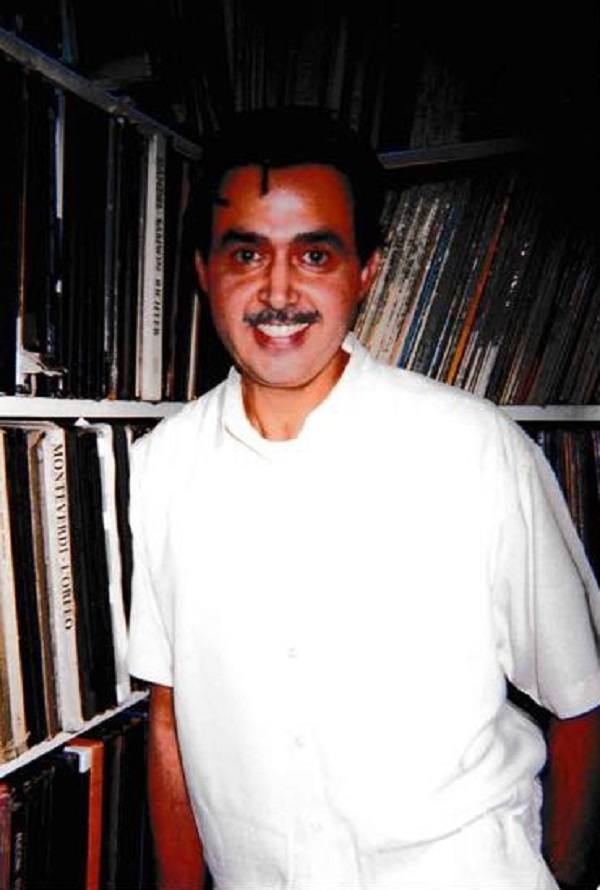
Eddie López working at the radio station

Read also: ”Salsa Con Sabor’’ and its contribution to salsa music
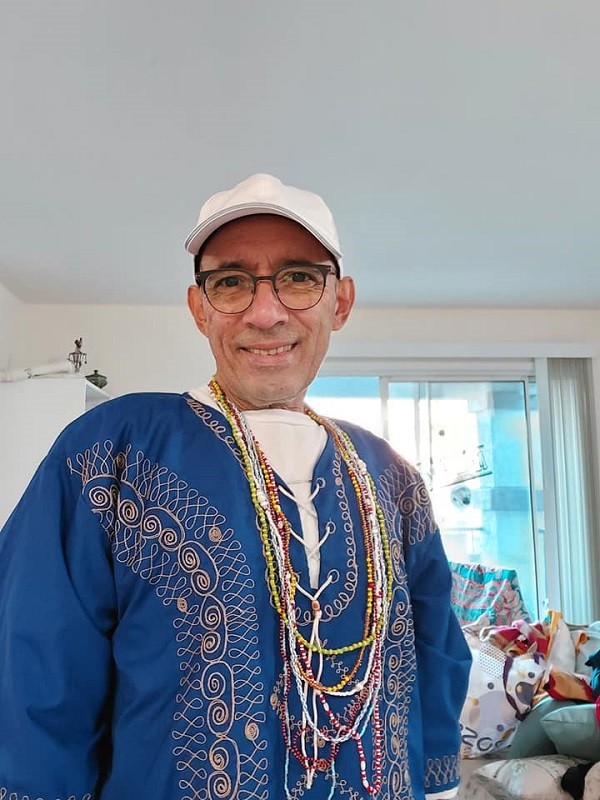
Current news in the San Francisco Bay Area

What is happening now?

Tito Garcia-The Doctor of Salsa, the renowned colorful bandleader and timbalero of Tito Garcia y Orquesta Internacional passed away on Saturday, April 23rd after a long battle with cancer.  Tito has performed Salsa and Charanga in the 1970’s with the seminal SF based bands Ritmo 74 and later Charanga Rene Del Mar. He later spearheaded the band “Orquesta Salsa Dulce” in the late 1980’s which morphed into the first edition of his band La International featuring a young Julio Bravo on coro in the early 1990’s.  La Internacional were remembered for their explosive performances by dancers and aficionados.

Tito was a staple at the late, famed salsa palace Cafe Cocomo with his monthly “Mambo Saturdays” during the early 2000’s. I often was the DJ during those hot nights. His band featured fine musicians and vocalists such as former Batachanga vocalist Ricky Rangel, congueros Eddie Borrero and Sandy Perez of Los Muñequitos De Matanzas and keyboardist Coto Pincheira who relocated to New York.

Tito García had been fitghing against, cancer, which took his life at the end

Tito resurfaced after his bout with Cancer in 2020 to relaunch La Internacional but the comeback was short lived due to his health issues. He later hosted some outdoor rumba sessions near his new home of Vallejo but those dates were limited due to COVID restrictions. He relapsed during his recent trip to Costa Rica and died due to complications with his recovery.  He will be sorely missed.

Don’t forget coming up on Friday, May 6th at 8 pm with be the tremendous Cuban music double bill of “El Tren De Cuba”…Los Van Van and Alexander Abreu y Havana d’Primera at the UC Theatre, 2036 University Avenue in Berkeley. Two of the powerhouses of Cuban Popular music are appearing together for the first time in the US and on only certain dates of the tour…SF Bay Area residents are blessed to have this double bill play here!  DJ Antonio will spin in-between sets.  I will be your MC for the evening. Run to get your tickets because they’re going fast!  For more information, go to jaffeevents.com

Salsa superstar Oscar D’Leon and his orchestra will visit the SF Bay on Saturday, May 21 at Roccapulco, 3140 Mission St. in San Francisco. Oscar is still one of the dynamos to watch perform live…a tremendous show!  Guayacan Orquesta from Colombia will also play on Friday, May 13 at the Mission Street hot spot.  Also coming to Roccapulco Sat. June 11th…the Homenaje A La Musica Cubana featuring Mayito Rivera, Alain Perez, Yeny Valdes, Lily Hernandez “La Amaona” and Julio Cesar “JC Five” plus DJ Walt Digz (SF) and DJ Jimmy Rumba (LA) and on Thursday, July 7th…the explosive sounds of Pupy Y Los Que Son Son direct from Cuba.

Oscar D’ León will be in the San Frrancisco Bay Area on 21 May

SF JAZZ and the San Francisco Jazz Festival are featuring an impressive array of Salsa, Cuban and Latin Jazz starting Wednesday June 8 with Pacific Mambo Orchestra.  Followed by Gonzalo Rubalcaba and Grammy nominee Aymee Nuviola 6/9; Chucho Valdes with Dianne Reeves and Joe Lovano 6/12; Changui Majadero 6/13, Danilo Perez Global Messengers 6/14; Issac Delgado’s Con Tumbao Project w/Miguel Zenon, Oscar Hernandez, Pedrito Martinez, Alain Perez, Tony Succar and more 6/18.  SF JAZZ and Stanford University co-presents Eddie Palmieri and Arturo Sandoval at Stanford’s Frost Amphiteater on July 23.  Info: www.sfjazz.org.

The Yerba Buena Gardens Festival will begin Saturday, May 7th from 1 to 2:30 pm with a free concert featuring local treasure Jesus Diaz y Su Habana Afro-Cuban Ensemble featuring a lineup of heavyweights from Cuba and the SF Bay including Ariacne Trujillo Duran, Leider Chappotin, Raul Pineda, Roberto Junior Vizcaino, Karl Perazzo, Jeff Cressman, Melecio Magdaluyo and Julio De La Cruz.  The Yerba Buena Gardens is located on Mission Street between 3rd and 4th Streets in San Francisco.  Visit ybgfestival.org for more information.  There will also be an after party featuring Jesus Diaz and the Habana Afro-Cuban Ensemble and DJ Carlitos Way at the Elbo Room, 311 Broadway in Oakland.

The San Francisco Carnaval and much more

The annual Carnaval San Francisco is back on the streets of San Francisco on Sat, May 28 and Sun. May 29th with the theme Colores De Amor.  The two day festival will take place on Harrison between 17th and 22nd Streets from 11 am to 6 pm.  The grand parade will take place on Sunday, May 29th starting at 9:30 am on 24th and Byrant Streets.  Scheduled to perform will be Jesus Diaz y Su QBA, Momotombo, Sambada, Javier Navarette & His Socially Distant Friends, Dos Four, Puro Bandido, Namorados da Lua, Annette Aguilar & West Coast Stringbeans, Susanna y Orquesta Adelante, Magna Fresq, Los Allegres Callejeros, Aqua Pura, Mariachi Juvenil, Azul Latino and more.  Headliners TBA.  Food, Beer, Crafts, DJ areas and Cannabis gardens on the grounds.  Free!   For more information: carnavalsanfrancisco.org.

There is a new Salsa scene happening on Thursdays starting May 12th at Charley’s LG, 15 N Santa Cruz Ave, Los Gatos presented by your friends at International Salsa Magazine.  Opening night at this state of the art club will feature the swinging sounds of the multi-talented vocalist/conguero Edgardo Cambon and Candela.  I, Luis Medina from KPFA/WSR and International Salsa Magazine will be your DJ.  World Salsa Radio DJ El De La Clave will also be in the house. Dance lessons by Migi & Angel starts at 8:00 pm.  Music starts at 9 pm.  The upcoming schedule is the following: Julio Bravo and Salsabor 5/19, Manny Martinez and La Rebeldia 5/26 and the Charanga sounds of Orquesta La Moderna Tradición 6/2.  Thursday nights just got hotter in the South Bay…be there!!

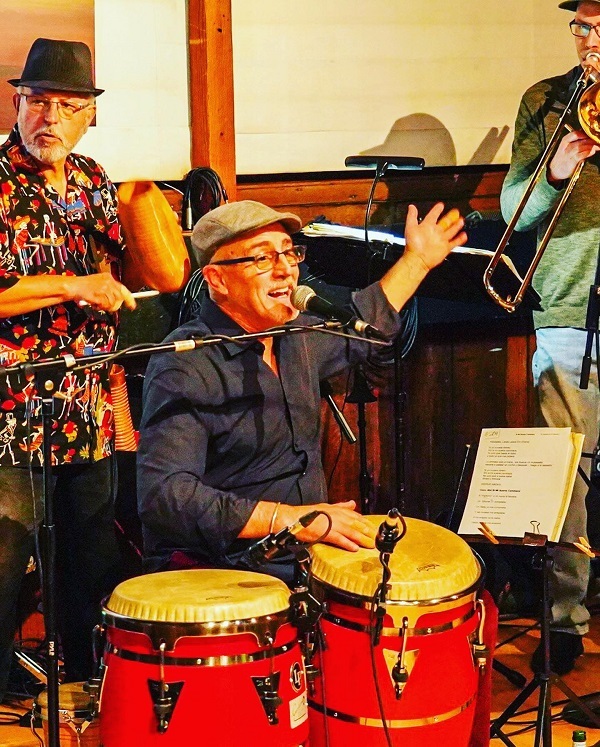
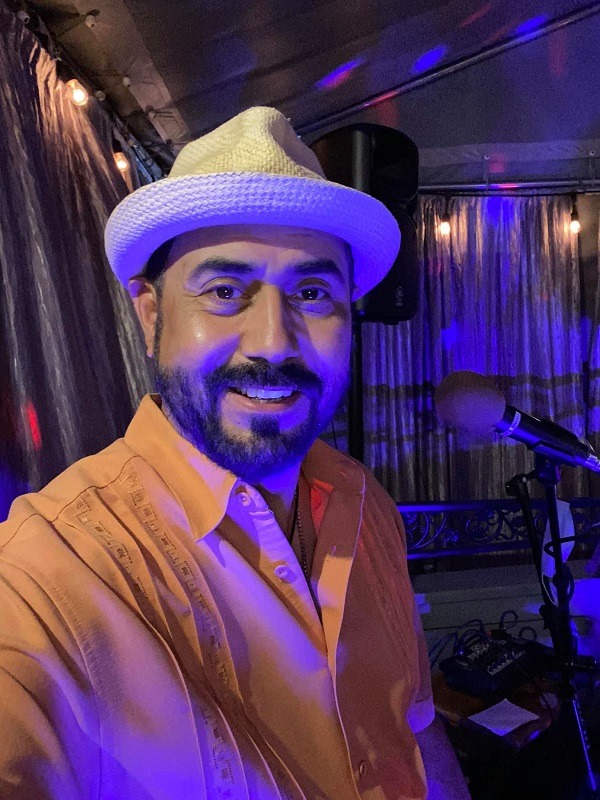
Edgardo Cambón at The Seahorse Restaurant, Sausalito

The Ramp at 855 Terry Francois Blvd in San Francisco continues to present Salsa orchestras on Saturday afternoons starting at 5 pm.  The night is closed on June 7th for a private event, The Ramp’s first Salsa festival featuring 2 bands: Gary Flores y su orquesta Salsa Caliente and Eric Rangel and Orquesta America 5/14, The Latin Rhythm Boys 5/21 and Louie Romero and Mazacote on May 28th.  DJ Mendy spins in-between sets and after the live music from 9 to 11 pm.   The Ramp has a great patio overlooking the SF Bay and serves food and drinks.

The Seahorse located at 305 Harbor Drive in Sausalito features live music plus KPOO-KPFA DJ Jose Ruiz on Saturday and Sundays.   Sat, April 30th features La Clave Del Blanco, Rene Escovedo Salsa Band with Ric Feliciano Sun 5/1; Edgardo Cambon & Candela Sun, 5/8; Orquesta Timbalero Sat, 5/14; Louie Romero & Mazacote Sun, 5/15; Susanna y Adelante Sat, 5/21; Orquesta La Original w/Alexis Guillen 5/22; Pepe Y Su Orquesta Sat. 5/28; and Orquesta Taino Sun. 5/29.  Enjoy the fine Italian cuisine, beer, wine and ambiance both indoors and the outdoor patio at this scenic spot just crossing the bridge to Marin County.

The Cigar Bar, 850 Montgomery St. in San Francisco is a favorite spot to dine, have drinks, enjoy a cigar in the courtyard and dance to hot Salsa music.  The calendar for May includes Manteca 5/6, Orquesta Timbalero 5/7, Somos El Son 5/13, Josh Jones Latin Jazz Ensemble 5/14, N’Rumba 5/20, Edgardo y Candela 5/21, Orquesta Taino 5/27 and La Clave Del Blanco 5/28.

René Escovedo will perform at the Seahorse Restaurant, Sausalito, on May 1

DJ Walt Digz has a hot Wednesday night Cuban scene “El Timbon” happening at the Slate Bar, 2925-16th Street in San Francisco.  Digz also hosts his own livestream called “El Timbon” featuring the latest Timba, Cuban Salsa and Cubaton videos every Tuesday night from 7 to 9 pm on Twitch.  He also keeps busy by hosting the monthly Fresquecito Saturday nights at La Furia Chalaca in Oakland and the outdoor El Timbon En El Callejon Sundays from 3 to 8 pm at Vida Cantina, 56 Belden Place in San Francisco.  Digz also continues his original Friday La Tropi-Cal monthly at Il’ Pirata in SF with Añejo Productions now going on their 21st year!

Berkeley’s Ecology Center will present the Berkeley Farmer’s Market Salsa Festival on Saturday, May 21 from 10 am-5 pm.  This free event will feature Christian Pepin and Orquesta Bembe, Afro-Cuban and Afro-Peruvian keyboardist Erick Peralta and Band, Berkeley High School Youth Ensemble and the Latin Jazz Youth Ensemble.  Dance performance and Dance lessons by Rebecca Galindo.  Food, crafts and more. For more information, visit www.ecologycenter.org. 

Don’t forget to check out my radio programs: Con Sabor now in it’s 25th Anniversary Year on KPFA 94.1 FM every Saturday night from 9 to 11 PM PST and Sabiduria Con Tumbao every Wednesday night 5 to 7 pm PST on WorldSalsaRadio.com.

That’s it for this month!  Ciao 4 now!

Luis Medina as a master of ceremonies, broadcaster, DJ and much more

Incredible conversation with Luis Medina

Luis Medina on the radio
This is Luis Medina on the radio

Good afternoon, everyone. We are here with broadcaster, DJ and event producer Luis Medina. Mr. Medina, how are you today?  

I am well and ready to talk to you right now.

Mr. Medina, you have a very long career as a radio presenter. You got started in this business in 1974. What led you to spend so much time in your career on the radio? 

In 1971 I was studying architecture at San Francisco State University, but in 1974 I changed my major to broadcasting and communications in the Department of Radio and Television. When I was a kid, I was always fascinated by broadcasters on TV with their microphones. My parents gave me a toy microphone, and I always imagined I was broadcasting. At the time I was accepted in the broadcasting program, I already loved salsa because my cousin  Stella played popular music for me since I was about 8 years old. I loved all kinds of music. At home, we always had the radio on, and my parents always listened to tropical music, which was very common at that time.

In 1974 my cousin Eduardo invited me to go to a radio station called KBRG to visit some friends who had a program called Venezuela Suya. In another studio in the station, there was a radio producer named Arturito Santiago, who was the master of ceremonies for the Gran Combo de Puerto Rico when they did dances in San Francisco hotels. When I saw him doing his job, I was intrigued. Two months later, my cousin called to tell me that he’d gotten involved in a community radio station called KPOO San Francisco and asked me if I wanted to help him with the show. I brought a stack of LPs, and we did the show from midnight until 6 am. I went a few times to help, but I could not maintain that pace because I was still in college.

A few months later, he called me to tell me that he had a show from 3pm to 6pm on Sundays. He told me he was talking to other people I knew in order to do the show together. I got a segment of 45 minutes to an hour to do whatever I wanted, so I decided to start programming salsa. I helped produce several programs until I had my own show. In 1979, while I had a four-hour show on Saturdays on KPOO, KBRG’s program director, Al Carlos Hernandez, called me. KBRG was a powerful FM station at that time. That gave me the opportunity to do a commercial show.

DJ Luis Medina
Broadcaster Luis Medina with two maracas

I am part Venezuelan and part Mexican, but I grew up in the United States. I spoke Spanish perfectly until I was five years old, but when I started school, I just wanted to speak English in school and at home. When I turned 18, I decided to get my culture back and relearn to speak Spanish again. However, I’m wasn’t completely fluent in Spanish because I have to translate mentally from English. I explained the situation to Al Carlos, and he told me that he did not care. That’s how I became the first radio announcer to do salsa programming in English on a Spanish-speaking station. The program was called Sabor Caliente and it lasted about a year and a half, until they let me go due to philosophical differences. After that, I did specials in KPFA, until Víctor Castro, who produced the program Ahora, invited me to alternate weeks with him. I produced salsa shows on KPFA from 1983 to 1995.

What Medina has to say about all his combined activities

How do you balance your radio activities and event production and your job as a DJ?  

When I was a student at San Francisco State University, I became co-director of the university’s productions to present musical acts. From 1974 to 1976 I presented acts from various genres such as rock, R&B, and jazz, among others. I also presented some salsa and Latin jazz shows, including Pete and Sheila Escovedo, who were part of Roger Glenn’s band, Benny Velarde and others. I became friends with Pete and Sheila before Sheila became Sheila E and I also worked with Pete’s brother, Coke Escovedo in the 70s.

Then I met Roberto Hernandez, who had an organization that helped produced the first major street fairs in the San Francisco Mission district together with a coalition of community agencies. I got involved with the fairs, which presented the famous singer Joe Bataan among others. It was the era of Latin rock, but salsa was also booming. I was part of the renaissance of salsa music that occurred on the radio, but I also had the opportunity to play an influential role in the community in the Mission. In 1977, the Mission Cultural Center opened in a furniture store ran by artists that were organizing it. I became part of the music committee and we presented performances and salsa groups that were growing in fame at that time. I was involved on the activities of the center until the 1980s, when some of us created a production group called CMP (Cultural Music Productions). During the 80s we did a series of dances, in which I worked as master of ceremonies. I already had experience as master of ceremonies because when I was at KBRG, they gave me the opportunity to introduce some great shows with Celia Cruz, La Sonora Matancera, Oscar D’ León, Cal Tjader and La Orquesta Broadway. I was also master of ceremonies for Brazilian carnivals for about five years. With CMP I was involved in dances with Willie Colón, Bobby Valentín, Oscar D’ León, and boxing champion Roberto Durán (who at the time wanted to be a salsa singer).

Eventually I left CMP, and I was contacted by Roberto Hernandez, who offered me the position of entertainment director of his new organization, MECA. I accepted and started to help him program the schedule for events such as the San Francisco Carnival, and the 24 Street Fair. I worked with Roberto until 1994 and we presented Santana, Los Lobos, Eddie Palmieri, Luis Henrique, Willie Colón, Yomo Toro, Mighty Sparrow, The Neville Brothers, Shaggy, and many more. When Roberto Hernandez left the organization, I stayed for four more years and worked with Manny Oquendo and Libre, John Santos, Pete Escovedo and Pancho Quinto. In 1998, the president of the organization Patricia Aguayo and I had some problems, so we stopped working together.

A radio DJ and a party DJ are two completely different things. It took me a little while to adjust to being a live DJ. In the early 1990’s, the producers at the Alta Vista club hired me from time to time. Then, they moved to a ship called Alta Vista del Mar in Pier 3, and occasionally hired me as their DJ.

Event producir Luis Medina
Event producer Luis Medina posing for or the camera

In 1994 I met a very ambitious young Venezuelan by the name of Adrian Goddard and started working with him at his club, 330 Ritch. It was a winning combination of Adrian’s talent as an event producer and my talent as a DJ and MC. I worked there for about nine very successful months, but then I had an opportunity with KPFA and I was forced to leave the club because the schedule conflicted. My priority was to produce my own salsa show (ironically, this program didn’t last long, but in 1997 they offered me the same slot, which would become the program Con Sabor, which I still produced today, 25 years later, at KPFA, on Saturdays from 9-11pm.)

A little later, Kimballs Carnaval hired me as a Latin House DJ, as this rhythm was very popular at that time. I wanted to please them, but it wasn’t a good fit. Eventually I was hired as a salsa DJ by the club Kimballs West. This opened other opportunities and I became the DJ in residence at the most prominent salsa clubs in San Francisco at the time, the legendary Jelly’s Cafe, where I DJ’d until it closed in 2010 and the popular Café Cócomo, which closed in 2014. I now DJ and MC primarily for special events and private parties.

Something very important in my story is that in 1997 I worked with Bill Martinez and Arturo Riera  and they both gave me the opportunity to be master of ceremonies for a very important series of concerts featuring Cuban musicians who were allowed into the States for the first time. I was the first master of ceremonies for a Los Van Van concert in San Francisco and I also represented my show and KPFA for their concert at Stern Grove in 2019. That was one of many times that I worked with that group.  I also was the MC   for Orquesta Aragon, Cubanismo, NG La Banda and other Cuban acts.

During the pandemic, I was offered a show with an online radio station called World Salsa Radio. I started the show Sabiduría con Tumbao on Wednesdays from 5 to 7 pm. What makes this show different from Con Sabor is that Sabiduría Con Tumbao is a conceptual program that focuses on certain musicians, musical themes and movements within salsa and Afro-Latin music. On the other hand, Con Sabor offers a broader perspective of salsa, Latin Jazz and música cubana from the classics to the latest.

Since the pandemic started, I produce all my radio shows at home. I managed to master the technology and built my own home studio. I am not afraid of technology or modern things. I go with the flow because I’ve learned that I should be at the forefront of technology and music. If I do not know something, I am going to research it right away. I keep an open mind and ears and I appreciate and listen to all kinds of music, something that was key when I was music director at KPFA from 2001 through 2014. In terms of my own programs, I really love salsa from the 70s, but I’m not stuck in any time period.

Eduardo and Luis
Our editor Eduardo Guilarte and Luis Medina


Talented Nicaraguan Ernesto Tito Garcia and his amazing artistic career

His life and career

Ernesto Tito Garcia is a Nicaraguan bandleader and timbalero who has been part of many musical groups that passed from romantic salsa to mambo and many other Latin genres.   

This astonishingly gifted artist has been playing professionally since the year 1971. A few years later, he formed his first orchestra called Ritmo 74, which was in charge of opening up for the biggest names in Latin music from back in the day. Both Ernesto and his fellow musicians were noted for their ages and the musical styles they used at the time. 

He experimented with Latin rock during his youth until he heard salsa for the first time and wanted to devote himself fully to that musical genre. After spending a long time playing romantic music, he decided to experiment with hard salsa and added his own style to the rhythms played by La Orquesta Internacional. 

Ernesto Tito García
Talented Nicaraguan Ernesto Tito García

Our conversation

We are very happy to get him in International Salsa Magazine today ready to go and talk a little about his life and musical career. 

My father signed me up for music lessons. I did not like them very much, but they kept me busy and interested me. Thanks to those lessons I took once a week, my ear opened wide and I learned to read music, which is a very rare thing for a timbalero. In 1969, I was 13 years old and my dad was paying for weekly accordion lessons and when Santana came out in my eighth grade, I heard my first timpani and knew it would be my instrument. That’s when I told my dad not to spend money because I wanted to play the timpani. He was a good man who died in my arms because of the same cancer I have today. 

On Broadway Street, San Francisco was where I began to learn how to play the timpani. My dad helped me buy my first timpani and I found a group that played Latin rock just like Santana, which gave me the opportunity to develop my technique. When I was in San Francisco, I did not hear much of salsa because it was more present in New York City, but my dad bought some records recommended by a friend containing the last of salsa. That was the first time I heard salsa and I was playing Latin rock with the group I already mentioned. When I heard that music, I met a girl who was interested in buying an electric piano that belonged to my girlfriend’s brother who was 15 years old at the time. From there, we formed our first orchestra in 1974, which we called Ritmo 74. When the music outside like Eddie Palmieri or Tito Puente came, people over 40 years old also came, but young people did not like it because the music was very regimented and had many pitoretas (wind musical instrument, also known as clarion). 

Tito on the beach
Ernesto Tito García on the beach

About the time Willie Colón came out was when the orchestra started getting big because we were the young people of salsa. I was 16 or 17 years old, while the oldest member was 26 or 27 years old. We had agents who gave us the opportunity to open up for the biggest names in New York like Eddie Palmieri and Willie Colón. At that time, we were the only orchestra of our generation with that kind of playing. We were growing up, but the thing is that I liked education and for whatever reason, I found that I made good grades.   

As our fame grew here in the Bay Area, I had to devote much time to rehearsals, learn new songs, among other things. That’s why my grades started to fall and I was about to graduate from high school. The last two years were the most important ones at school, so I realized I would not be able to do both at the same time. So I decided to quit music and knew the only way in which I could do it was to sell my timpani, so I went to a store and they gave me $60 for them. 

I got my grades up, was admitted by San Francisco State University and the first year was amazing, but I met other Latino students who also played music. They began renting a room right there on campus to rehearse, so I did not have to go somewhere else. It was there that we founded La Orquesta Salsa Caliente and as soon as we got to be known, people liked us. About two or three years later, my grades started to fall again, so I quit music again. I graduated from College and was admitted to the school of optometry in 1985 or 1986. Thanks to that diploma I started working with a very skilled Salvadoran doctor. He was a surgeon and ophthalmologist. When I formed my own orchestra, I had two very simple rules for the members. The first was that when we played, we could not take any kind of drugs or alcohol, while the second was that we had to always wear a suit and a tie, that’s what no other youth orchestra did.   

This is Mike Rios
Tito García and Mike Ríos, who designed the album covers for Santana

Do you think that the style of mambo that your orchestra plays is what makes it unique or are there other elements that stand out? 

First of all, when I formed the orchestra, romantic salsa was in vogue just like its exponents included Eddie Santiago, Tony Vega and many more. The problem was that the music was boring because the arrangements were very simple. In 1996 or 1997 was when I heard Tito Puente with his orchestra playing mambo and that is what gave me the idea to do the same with four or five pitoretas. That’s when I lost several musicians and singers because they wanted to sing romantic salsa, but I was tired of that. 

So, we started playing what I called hard salsa, which had mambo arrangements and singers who knew how to perform it. That combination pushed us on a new level. Those who wanted to sing romantic salsa formed their own orchestra. Julio Bravo was one of my favorite artists and I helped him with some musicians. There was also my comadre Denis Corrales, who formed her women’s orchestra. The orchestra looked very good with all the girls, but it was not what dancers were looking for. There is also the case of Venezuelan Eduardo Herrera whose voice was incredible and he also grew up with salsa music, but he did not know how to sing hard salsa. 

Tito García and Tito Puente
Tito Puente and Tito García

Do you think having musicians from so many different countries has to do with the final product you present to the public?  

This did not have a lot of influence on our music. Back then, our orchestra was called Salsa Dulce. When my agent retired, I got stuck with the orchestra. He wanted the orchestra to have my name in its title but did not want it to be too obvious, for example, Los Titanes de La Salsa Con Tito García or El Gran Combo Con Rafael Ithier. Regarding nationalities, the singer was Venezuelan, the bass player was French, the pianist was Peruvian, the conguero was Puerto Rican, the saxophonist was Irish and the trombonist was American as was the trumpet player. It was the reason why my agent suggested me to call it Tito García Y Su Orquesta La Internacional. I liked how it sounded so much that I called the group that.  

What are your future projects? 

I can mention an album dedicated to Tito Puente and am going to record it between San Francisco and Nicaragua. The problem is that his family has the rights to all his music and I do not know if they give me permission to do it. I hope they are not going to charge me a lot for those rights. Of course, we are going to make money with the project, but costs are much more comfortable and negotiable in Nicaragua. That is one of the reasons why I want to do it there.  

Timpani of Tito garcía
Tito García’s timpani

Noticias Con Sabor with Luis Medina

Noticias Con Sabor in the month of January

We leave this year with the loss of giants in the Latin Music who have joined the ancestors that include the recent loss of the legendary Mexican star Vicente Fernandez, Panamanian powerhouse sonero Meñique and Paquito Guzman who was known for both his boleros and Salsa tunes.  This year we have also lost legends and great musicians such as Johnny Pacheco, Roberto Roena, Chick Corea, Larry Harlow, Adalberto Alvarez, Johnny Ventura, Ralph Irrizary, Tommy Villariny and at the end of 2020, Tito Rojas.  We are lucky that these artists have left us with their legacies of music that will continue to entertain people for years to come.  Rest in Power!

Spanish Harlem Orchestra conquered Monterey with two explosive sets at a special show this past Saturday, Dec. 11th at the Monterey Conference Center. SHO played a few new tunes from their upcoming 2022 release, their repertoire of hits and Christmas salsa music much to the crowd’s delight. I had the pleasure of emceeing the show as well as playing music as the event’s DJ. SHO who were on fire all night and the dance floor was packed all night long. The crowd roared their approval with a standing ovation at the end of the night.  SHO responded with an infectious danceable Christmas song with a crowd sing-a-long which ended the festive evening. Thanks to producer Luis Mendoza and Montuno Productions for inviting me to be a part of this event. Thanks to the great crowd in Monterey who are salseros all the way!

Oscar Hernández playing the piano
Oscar Hernández from Spanish Harlem Orchestra performing at The Monterrey Conference Center

During the COVID19 pandemic, it seemed that all live music stopped being played in public.  However, there were a few places, mostly outdoor cafes, farmer’s markets and restaurants with outdoor dining that offered live Latin Jazz during these dark times.  One of the unsung heroes who continued to play when the pandemic was at its height is veteran pianist-bandleader Gary Flores who formed Salsa Caliente in SF in 1976.  The group has had a lot of prominent musicians including vocalists Paquito Acosta and Angelo Pagan who continued to see their careers thrive in Puerto Rico and Los Angeles.  He disbanded Salsa Caliente in the late 90’s to concentrate on a smaller Latin Jazz group.  Flores along with ex Franco Brothers bassist/vocalist Carlitos Franco and a revolving lineup of all-star percussionists including Santana timbalero Karl Perazo and former Avance bongocero Oscar Soltero kept the live music going during the pandemic at different venues.  Flores was able to continue to play Latin Jazz and Salsa in stripped down format as a trio due to rearranging Salsa tunes as all the members sang coros and vocalized horn lines behind Franco,   Now that live music has made a comeback of sorts and some venues are now booking bigger bands, Flores is revitalizing a bigger version of Salsa Caliente featuring Franco and Perazo.  Flores has been writing new music and plans to record new music with the group.  His last recording “Descarga Caliente: A New Beginning” came out in 2005.  Gary Flores is a veteran and a survivor of the San Francisco Salsa Scene who deserves a big shout out for keeping Latin music alive in the age of COVID!  Pa’lante Gary!!

Reopening will be later

Some scenes are not reopening for 2022 until February or later.  One of those venues affected is Space 550 at 550 Barneveld St. in San Francisco who will reopen in February due to concerns regarding the current surge in COVID cases and the situation with the new variant of the disease.  I also spoke with Adrian Goddard of Jaffe Events who told me that he will continue to book events but later in the first quarter of 2022,  For some event producers, January isn’t a good month to book Latin Music.

People at Space 550
Some people dancing at Space 550

However that’s not stopping Grammy Award winners Pacific Mambo Orchestra who will play their annual January dates at Yoshi’s, Jack London Square on Friday, January 7 and Saturday, January 8th.  Get ready to enjoy and dance to swinging Mambo, Salsa and Latin Jazz from this awesome all-star 20 piece band led by pianist Christian Tumalan and trumpeter Steffen Kuehn. This SF based band is scheduled to play at Europe’s prestigious Tempo Latino Festival in late July. Tickets are now available for these upcoming January dates at Yoshi’s. For more information,  visit www.yoshis.com.

The Cigar Bar, 850 Montgomery St. in SF is starting 2022 with a calendar of great acts coming to this fine venue where you can dine, dance and smoke a fine cigar if you choose to do so. The schedule includes Orquesta La Original w/Alexis Jan 7, Josh Jones Latin Jazz Ensemble Jan 8, The Latin Rhythm Boys Jan 14, Edgardo y Candela Jan 15, N’Rumba Jan 21, La Clave Del Blanco Jan 22, Julio Bravo Y Salsabor Jan 28 and Manteca Jan 29

The Seahorse in Sausalito continues to feature explosive music from the following acts in January on Saturday and Sunday including La Clave Del Blanco Jan 2, Gary Flores and Salsa Caliente featuring Karl Perazo of Santana Jan 8, Edgardo Cambon y Candela Jan 9, Carlos Xavier Salsa Band Jan. 15, Louie Romero and Mazacote Jan 16, Braulio Barrera and Somos El Son, Jan 22,  Orquesta Bembe featuring Christian Pepin on Jan. 23 and Rumbache on Jan. 29.  DJ Jose Ruiz from KPOO/KPFA Radio will also be behind the decks for your dancing pleasure. Check out their fine Italian cuisine and selection of beer and wine.

Seahorse at night
Beautiful decoration of Seahorse at night

The Ramp, 855 Terry Francois in SF continues to offer Salsa under their all-weather tent during the month of January.  Their line up includes N’Rumba Jan 8, Louie Romero & Mazacote Jan. 15, Manny Martinez y La Rebeldia, Jan 22 and Orquesta Borinquen on January 29th. DJ Mendy is providing the music in-between sets and from 9 to 11 pm.  The music starts at 5 pm on Saturdays.

Cascal, 400 Castro in Mountain View will be featuring the explosive sounds of Edgardo Cambon and LaTiDo on Fridays, January 7th and 21st starting at 7:30 pm. There is no cover. Cascal continues to offer their tasty menu of Spanish cuisine, Tapas and fine drinks.

The following recordings kept me going during the second year of COVID19: Ruben Blades “Salswing”, El Gran Combo “En Cuarentena” and their Xmas cd “De Trulla Con El Combo”, Gilberto Santa Rosa’s all-star studded “Colegas”, Sonora Ponceña “Hegemonia Musical”, Mel Martinez “Asi Escribe Un Sonero”, Los Generales De La Salsa featuring Van Lester, a 1996 all-star session finally seeing the light of day, Tromboranga “Salsa Terapia”, Los Van Van “Mi Songo”, Various Artists “El Son De Caballero-Homenaje A Adalberto Alvarez and “Son Para Un Sonero”, Sounds Of Cuba “Los Titanes De La Timba”, Alexander Abreu/Havana d’Primera, Various Artists “En Barranquilla Me Quedo-Homenaje a Joe Arroyo, Dorance Lorza’s Sexteto Cafe “20 Aniversario”,  Luis Perico Ortiz “Sigo Entre Amigos”, Charlie Donato’s Son Ideal “De Vuelta Al Barrio, Eduardo Zayas Y Su EZ La Banda “Huerto De Soneros” and his latest “Sabor Y Sandunga”, Alain Perez, Issac Delgado & Orquesta Aragon “Cha Cha Cha: Homenaje A Lo Tradicional”  and Orquesta Failde “Joyas Ineditas”.  There are a flood of singles that did the job as well from Julito Alvarado’s maxi single “Lo Que No Se Escucha (Descarga De Soneros), Don Pergiñon Y La Puertorriqueña, Marc Anthony, Wilito Otero, Josean Rivera, Monsi Y Su Salsa , Mariana Y Su Makynaria, Julito Albino y Secreto De Voces and VibraSON.  These recordings are some of my picks for the Best of 2021.

And…if that wasn’t enough, my program Con Sabor, Saturday nights 9 to 11 PM PST on KPFA 94.1 FM will be celebrating its 25th Anniversary year on January 1, 2022!  Time flies when you’re having fun!!  I’m also on “Sabiduria Con Tumbao” every Wednesday night 5 to 7 PM PST on WorldSalsaRadio.com.

That’s it for this time.  Ciao 4 now!!

The tent at The Ramp!
Inside the tent at The Ramp

This is the report last month: Noticias con Sabor by Luis Medina

BY LUIS MEDINA, PRODUCER AND HOST OF CON SABOR ON KPFA 94.1 FM AND SABIDURIA CON TUMBAO ON WORLD SALSA RADIO.COM

  • « Go to Previous Page
  • Page 1
  • Interim pages omitted …
  • Page 92
  • Page 93
  • Page 94
  • Page 95
  • Page 96
  • Interim pages omitted …
  • Page 293
  • Go to Next Page »

International Salsa Magazine (ISM) is a monthly publication about Salsa activities around the world, that has been publishing since 2007. It is a world network of volunteers coordinated by ISM Magazine. We are working to strengthen all the events by working together.