• Skip to primary navigation
  • Skip to main content

International Salsa Magazine

  • HOME
  • Previous editions
    • 2026
      • ISM / March 2026
      • ISM / February 2026
      • ISM / January 2026
    • 2025
      • ISM / December 2025
      • ISM / November 2025
      • ISM / October 2025
      • ISM / September 2025
      • ISM / August 2025
      • ISM / July 2025
      • ISM / June 2025
      • ISM / May2025
      • ISM / April 2025
      • ISM / March 2025
      • ISM / February 2025
      • ISM / January 2025
    • 2024
      • ISM / December 2024
      • ISM / November 2024
      • ISM / October 2024
      • ISM / September 2024
      • ISM / August 2024
      • ISM / July 2024
      • ISM / June 2024
      • ISM / May 2024
      • ISM / April 2024
      • ISM / March 2024
      • ISM / February 2024
      • ISM / January 2024
    • 2023
      • ISM / December 2023
      • ISM / November 2023
      • ISM / October 2023
      • ISM – September 2023
      • ISM – August 2023
      • ISM July 2023
      • ISM Edition June 2023
      • ISM – May 2023
      • ISM April 2023
      • ISM March 2023
      • ISM February 2023
      • ISM January 2023
    • 2022
      • ISM December 2022
      • ISM November 2022
      • ISM October 2022
      • ISM September 2022
      • ISM August 2022
      • ISM July 2022
      • ISM June 2022
      • ISM May 2022
      • ISM February 2022
      • ISM January 2022
    • 2021
      • ISM December 2021
      • ISM November 2021
      • ISM October – 2021
      • ISM September 2021
      • ISM August 2021
      • ISM July 2021
      • ISM May 2021
      • ISM April 2021
      • ISM June 2021
      • ISM March 2021
      • ISM February 2021
      • ISM January 2021
    • 2020
      • ISM December 2020
      • ISM November 2020
      • ISM October 2020
      • ISM September 2020
      • ISM August 2020
      • ISM July 2020
      • ISM June 2020
      • ISM May 2020
      • ISM April 2020
      • ISM March 2020
      • ISM February 2020
      • ISM January 2020
    • 2019
      • ISM December 2019
      • ISM November 2019
      • ISM October 2019
      • ISM Septembre 2019
      • ISM August 2019
      • ISM July 2019
      • ISM June 2019
  • Spanish
  • Download Salsa App
    • Android
    • Apple

Search Results for: Salsa orchestra

Son Del Monte’s musical director and timbalero Manuel Rivera

Who is ”Manny”

Manuel ”Manny” Rivera is the musical director and timbalero of the Son Del Monte Orchestra. We had the great opportunity to have a friendly conversation with him to know in detail his beginnings, career, groups, role as musical director, among other things.

Manuel ''Manny'' Rivera tells us his interesting story
Manuel ”Manny” Rivera tells us his interesting story

Time in the Yambú Orchestra

After apologizing for his deficits in the Spanish language, he continued by thanking us for the opportunity to tell his story and describe his time in the Yambú Orchestra, which was the first group in which he could start developing his talents in the 70’s. ”what we wanted to do at that time was make a mix between jazz with typical music because the pianist, who was of African descent, was who wrote the music with musical director and bassist Ramón Rodríguez”. It is presumed that the pianist focused a lot on these genres because of his roots, but his colleagues were fine with it.

Although he loved jazz, Manuel began to notice that it was not very danceable for the audience, which is what caused him to become interested in charanga, a genre that was already very famous in New York City in those years. That’s how he decided to immerse himself in this set of rhythms because he liked to see people go to the dance floor and enjoy themselves.

He also liked Yambú’s style a lot, but felt he had to take a more accurate path for what he was feeling at the time.
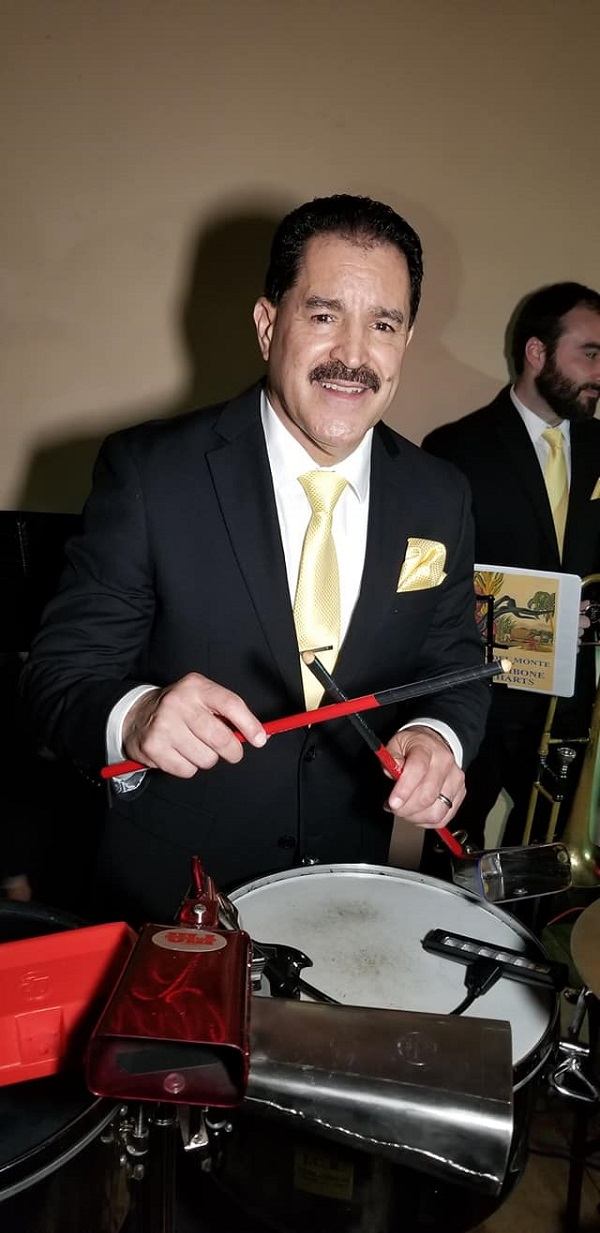
Manuel Rivera performing on stage

Similarities of Son Del Monte with other jazz big bands and members

I was a bongo player, but I started playing timbales because they are widely used in charanga. What I was looking for was to do a similar thing to what Eddie Palmieri did with La Perfecta, who used trombones and a flute mixed with timbales to achieve a charanga sound” said Rivera on this subject. He also added that ”I also wanted to avoid monotony of charanga so I also started using trombones, violin and a flute. This is what I have baptized as chajunto, a mixture of charanga with the characteristics of an ensemble (conjunto in Spanish) ”.

He also pointed out that New York does not have an orchestra like his because he did not want to do the same thing that all groups of this kind do, but something different and novel. ”Son Del Monte is charanga with something more for the people, not only violin and flutes,” said the artist. ”I have three singers with three different styles and they are Puerto Rican Luis Ayala, Colombian Armando Son Giménez and Puerto Rican-Dominican Luisito Soto Junior,” he added.

The Son Del Monte Orchestra also features from the talent of flutist Mauricio Smith Junior, violinist Erick Salazar, trombonist Juanga Lakunza, trombonist Charlie García, bassist Bert Castro, conguero Joe González, pianist Andy Colón, among others. This is the group that has stuck by his side for more than six years in spite of the storms and they always perform together.

All members of the Son Del Monte Orchestra

Opinion on the academic training of musicians

Rivera was one of the best students at Harbor’s Conservatory of Music in Manhattan, New York and he thinks that institution had done so mucho good for folk music because of all the talent that graduated there. After studying there, he began to read percussion music and learned to play batá, tumbadora, Colombian rumba, guaguancó, yambú, and so on.

The musician stresses the importance of studying, as this knowledge helps to understand the clave, the moment to start playing an instrument, the chime, the reading of music, discipline and many more. Before this, Manuel played led by the spirit and sensations, but his teachers at the conservatory taught him to have the technical tools necessary for being even more professional.

What is more important, experience or studies?

”Definitely experience. I have seen many great artists learn to read music without going to a conservatory and a great example of that is Roberto Roena, who did not need that learning to be who he was. However, that is something that not everyone can do” said Manuel. I can also mention the case of Tito Rodriguez who was not a musician guided by the lyrics, but he knew very well what he wanted. These are some of the many examples of privileged artists who only needed accumulated experience to achieve wonders with their work”.

However, this does not mean studies are not important, as they can teach things that can be useful later on and under some circumstances.
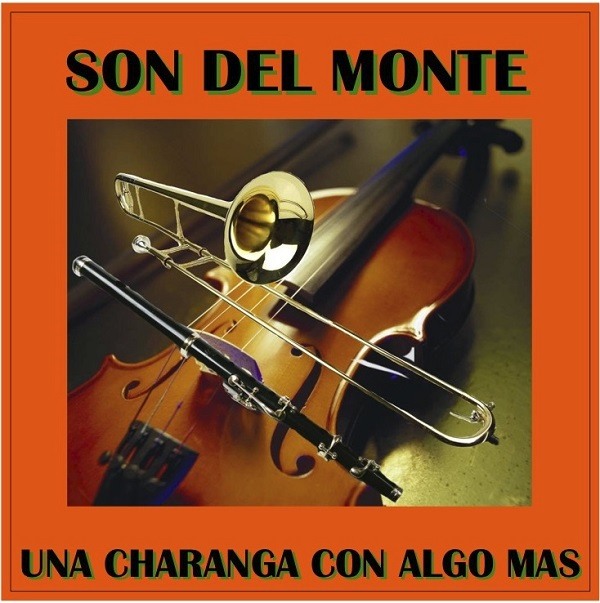
Front cover of the Son Del Monte Orchestra's album ''Una Charanga Con Algo Más''
Front cover of the Son Del Monte Orchestra’s album ”Una Charanga Con Algo Más”

Covid-19

”The pandemic did not let us do anything on stage. The guys went to the studio from time to time or we met virtually, as we do now. It was so sad because there are many venues that have failed to open their doors again. Since the pandemic started, we have not seen as much activity in New York as it used to be before” expressed the artist sadly.

Also of concern to the musical director of the Son Del Monte Orchestra is that this situation has put many musicians out of work, at least in the industry. Active musical groups have very few members in the vast majority of the cases, contrary to his and the orchestra he conducts. He hopes that it will improve with time.

Read also: Founder of the Son Latino de Orlando Orchestra Carlos Rodríguez

First edition articles ISM

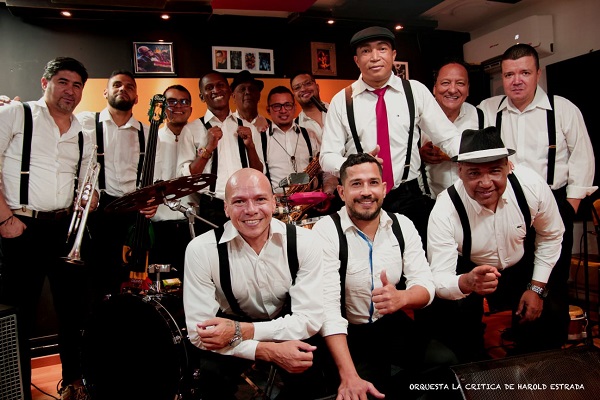
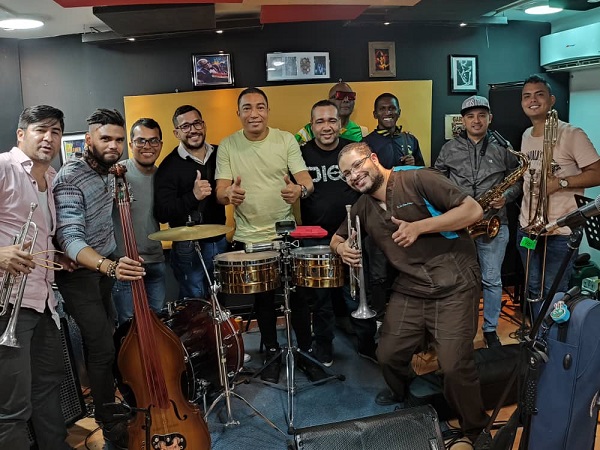
From Cali, Colombia, “La Crítica Orquesta” by Harold Estrada

With a unique, impacting, dynamic sound and with an explosion of musical energy, “La Crítica Orquesta” of Harold Estrada comes to us in this delivery, directly from the city of Cali, Colombia; who presents to the world, a different proposal with a clear and forceful message of much social sense in his interpretations. In a brief conversation we had with its director Harold Estrada, a young musician of great experience with Colombian Orchestras, he shared with us aspects of this successful group from Caleña.

Welcome Harold to International Salsa Magazine “The Only Salsa Magazine in the World”. First of all, tell us: since what date does “La Crítica Orquesta” come out? Thank you Professor Carlos Colmenárez, for the wonderful invitation that you make us from your city Barquisimeto, in our sister Venezuela, with a fraternal greeting and thus let us know a little more through you and this prestigious media; because let me tell you friend, that the Orchestra begins to sound since 2012, with an enterprising, constructive, quality and very professional work, in search of an authentic sound that identifies it and allows it to take its rightful place in the salsa environment here in Colombia and internationally.

De Cali, Colombia, “La Crítica Orquesta” de Harold Estrada

And in these 10 years of trajectory, have you had important participations in events and festivals? Indeed Professor Carlos, we had the honor of being present at the World Salsa Festival 2012 and also in the fairs of Cali, likewise several departments of the country have witnessed this magnificent evolution, seeking to remember the essence and expression of salsa Caleña with that characteristic sound and Orchestras that left their mark on the Afro-Caribbean and Colombian music.

Harold friend I understand that you develop a social and musical work in the city of Cali, tell us… Yes, our orchestra is developing and forming a “Collective of salsa to the street”, which is a program that is ready to rescue the Caleña culture, with the purpose of safeguarding the salsa in the city.

Which international artists have been accompanied so far by “La Crítica Orquesta”. Carlos, we have had the privilege of accompanying here in Colombia salsa artists of the stature of: Rafu Warner, Luigi Texidor, Chamaco Rivera, Ruben Sierra, Julio Lopez, Manny Fuentes, and more, demonstrating the musical support of the group.

What is the mission of “La Crítica Orquesta”? We are convinced that our mission is to make quality music for the enjoyment of the people, for the delight of the dancer and the ear of the music lover, but especially, music to free the spirit and cheer the soul.

Who are the members of the Orchestra? “La Crítica Orquesta”, is conformed by: Harold Estrada (conductor and conguero), Oscar Eduardo González (Trumpeter), Cruz Ramón Mayora (Bongos player), Andrés Holguín (Trumpeter), Ramiro Lennis (Singer), Leo Bonilla (Trombonist), Andrés Felipe Silva (Bassist), Marco Felipe Ramírez (Timbalero), Carlos Alberto Cruz and Harrison Muñoz (Singers), Mauricio Bastidas (Saxophonist), Jerry Alejandro Figueroa (Pianist), Gregorio Gómez (Singer), by the way our bongos player, is Venezuelan, born in the city of Naiguatá, but since he was a child he lives in the city of Barquisimeto, to which soon will be back, the experienced and excellent musician Cruz Ramón Mayora Medina.

La Critica Orquesta de Harold Silva
La Critica Orquesta de Harold Estrada

As for productions, have you already recorded some? Yes Professor Carlos, we already have several songs and even videos on Youtube for the knowledge of all. And these are the titles, composers, arrangers and performers: “Cannabis”, this is the most recent single recorded just a month ago, with lyrics by: Einar Flores and in the arrangements Andrés Silva, both Colombians. “Canallón”, lyrics by Einar Flores (Colombia) and arrangements by Pedro Cruz, (Dominican Republic). “Dale Duro”, composer and arranger Luis Cabezas (Venezuelan), the interpreters are: Carlos Cruz, Harold Aguirre and Adrián Barragán, respectively.

Excellent friend Harold and the social networks of the Orchestra. On Youtube you can reach us as: Orquesta la Crítica de Harold Estrada, Instagram: lacriticadeharoldestrada and Facebook: lacriticaorquestacali; for bookings you can contact us at: +573147800543.

Upcoming concerts or events? We will be present God willing at the “Concierto Circulación”, on November 26 and also at the Cali Fair.

Thank you for accepting the invitation, brother and friend Harold Estrada and the whole Orchestra, for us it was an honor to have you in International Salsa Magazine salsagoogle.com, and from here we wish the greatest success to “La Crítica” of Colombia, a group that undoubtedly, is putting well in high the Salsa made in Cali.

The privilege is ours, Professor Carlos Colmenárez, and from Colombia, we will transmit you the best wishes of the Orchestra and the whole country, so that you continue to make known the salsa talent of your beloved Venezuela as well as of all the Salseros in the world. Thank you a thousand times for the support you give to “La Crítica Orquesta”, and on behalf of all its members, we send you blessings and wish you many successes and long life. You, the social communicators are a key factor to promote and publicize the musical work for Salsa made with quality and international flavor for the dancers and connoisseurs of the genre.

Until next time and we continue salseando…!

Carlos Colmenarez

You can read: Henry Valladares, a brilliant, versatile, and disciplined percussionist

Lizna Tovar winner in the category Voice Over of the year 2022 in Canary Islands Tenerife

Lizna Tovar is based in the city of Charallave, Miranda State in Venezuela.

She begins her steps in the radio in 2015, participating in a health segment for a radio program on 102.5fm in the state of San Carlos Edo. Cojedes, Venezuela.

The following year they change the program to the radio station Plata 105.7 FM, in which the director Gonzalo Playa offers him to dabble in depth in the locution, giving him the opportunity to have his own space to which he gave the name “La buena vibra en radio”, of urban cut inclined towards reggae, ska and rap.

Lizna Tovar
Lizna Tovar

Always with the intention of national support, she managed to be the most sought after program with the new talents in the region, always being the special guest in her different presentations.

Her preparation continued with “Gente de radio” and with the school of the director of the same station which gave the best school for great speakers of the state today.

In 2019 he advances to the Voice Over, managing to become the official voice of countless DJs. nationally and internationally, official voice of different stations such as Fantástica 97.5 FM in Venezuela, Latino FM Web of Canary Islands, Radio Constellation Musical of Arizona, among others.

Voice Over  del año 2022

He had the opportunity to identify the adult entertainment channel Venus.

The latter gave her a boost with the recordings in sensual tone, suggesting to many colleagues of the medium and her slogan was the sensual voice.

Continuing with her participation in radio, she was the female voice in the program Baúl Salsero and from there she moved on to her own production Voltaje Salsero, taking her to be the female voice in the presentations of different singers.

In conjunction with her colleague Deisy Bonett, she arrives to another production called Ni tam Santas ni tam Fiablas, broadcasted in K-ribeña stereo.

In August of this year she is announced her nomination for the Latin Gold Awards 2022 in the category of Voice Over in international mention, being the winner of the award and official voice of the same.

Latin Gold Award 1st Edition.

A well-deserved recognition to the evolving talent of singers, orchestras, DJs and communicators whose effort and dedication to achieve a space in the music industry deserve to be recognized, especially for working every day to provide entertainment, information and much Latin joy to all corners of the planet.

Voice Over  del año 2022 en Islas Canarias Tenerife

Premio Latino de Oro brings together an ecosystem composed of emerging artists and orchestras, as well as those of recognized trajectory and greater projection worldwide, providing a large niche of diversified talent that the entertainment industry requires daily, also concentrates the most representative network of DJs in the Latin world, in addition to the most global online Latin radio circuit that exists whose musical window is the dream of all artists.

Lizna Tovar ganadora en la categoría Voice Over  del año 2022 en Islas Canarias Tenerife

Today also active in social networks, she is part of a project called “Nuestra Visión” transmitted every Tuesday broadcast via instagram live, produced by Carlos Viloria in conjunction with the team formed by professor and historian Jeijal Perez and DJ. Julio the black.

She continues her preparation and constant learning in this medium and support for national talent, dedicated to carry out her projects with her motto “Always working for the positive” And it is that what is done from the heart transmits positive energies.

She does not think about rivalries or competitions, only to do a good job and in order to improve the quality, knowledge and experience.

Lizna Tovar (Voice Over)

 You can read: Saúl Delhom “Esta Salsa me gusta” one of the things I like the most is to learn, create and share

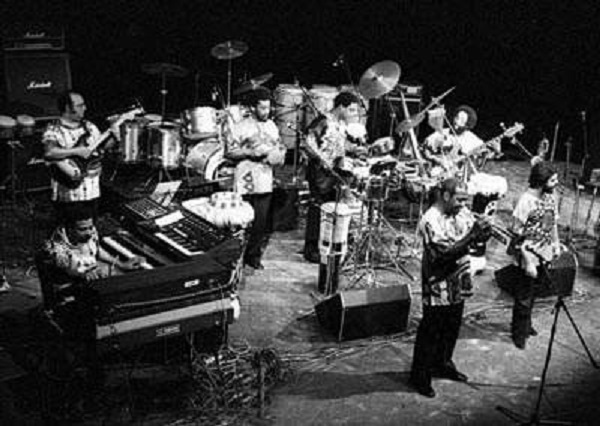
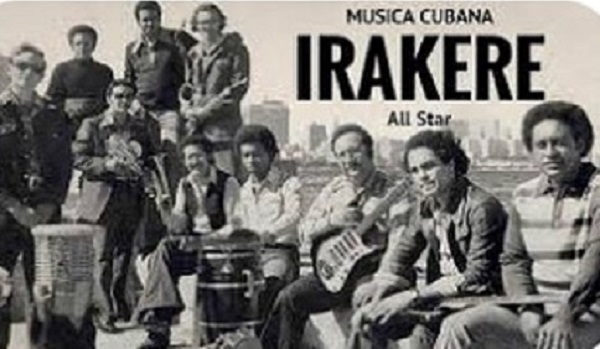
Irakere was a Cuban group that developed an important work in Cuban popular music and Latin Jazz under the direction of Chucho Valdés

Irakere was formed as such in 1967 but had begun to work much earlier; in that year precisely they went to a selection called in Havana to organize with the best musicians of that time the Cuban Orchestra of Modern Music; already in 1972 they were approaching to what they currently produce deciding in 1973 to call it Irakere, which in Yoruba language means Vegetation and that is how, starting from its name, they work based on the Afro-Cuban musical roots.

In this way, through the combination, mixture and interrelation of classical, impressionism, jazz, rock and various compositional techniques they managed to walk through all styles such as dance music, concert, traditional and popular Cuban music.

Thanks to the impulse of pianist Chucho Valdés, the Cuban group Irakere took off in 1973, nourished by Thelonious Monk’s bop.

Founders

Grupo Irakere: It was founded in Havana in 1973, by:

Jesús Valdés(Chucho) composer, director and pianist;

Paquito D’Rivera (Paquito), alto and tenor saxophone, flute and clarinet;

Carlos Averhoff, tenor saxophone, soprano, flute and bass clarinet;

Jorge Varona, trumpet, trombone and percussion;

Carlos del Puerto, bass, bass guitar and tuba;

Carlos Emilio Morales, guitar;

Bernardo García, drums and batá drums;

Jorge Alfonso, batá drums;

Enrique Plá, drums;

Carlos Barbón, güiro, chekeré and tambourine; and

Oscar Valdés, singer, tumbadora (conga), batá drums and bongo.

Irakere, fue un grupo cubano que desarrolló un importante trabajo en la música popular cubana y el Jazz Latino

On the founding of Irakere, Chucho Valdés expressed:

“For us the group always existed, it was present at all times; it was like something pending. At the beginning it had no name, it was just an idea we were working on: to use Cuban folkloric percussion in dance music, and to look for different timbres with a common characteristic: “ours”.

Then Oscar Valdés came up with the idea of combining the not easy and little known batá drum with the tumbadora, güiro and cowbell and so, step by step we arrived at the current group…”.

About Irakere’s first stage, the musicologist Leonardo Acosta points out: “one of the successes of Irakere had been not to try to invent and identify itself with a “new rhythm”, according to the old guidelines of advertising so much used from the forties to the sixties.

The slogan about the “new rhythm” was until recently the “open sesame” on which the musicians counted to become famous overnight, and by that way sometimes quite commercial results were achieved.

Apart from the fact that no “new rhythm” is so new, they all come from the alteration or amalgamation of pre-existing rhythms.

Irakere’s only alchemy comes from the spontaneous creativity of its members. Since there is no commercial endeavor, laboratory practices are unnecessary, and the group can perform a contradanza, a danzón, a son montuno or a cha cha chá without fear of seeming “old-fashioned”, since they are in fact playing something else at the same time. And without setting themselves the goal, nor having to invent a “pega” name, almost by an imperative of the material they are working on, new rhythmic combinations are emerging, to the point that Irakere’s rhythm is unmistakable among Cuban listeners or dancers.

Grupo cubano Irakere

Certainly, and in spite of their triumphs in international jazz festivals, Irakere is not a jazz group. But these successes are not gratuitous either, because as we have seen, they have formidable musicians with great experience in the jazz field, especially in the aspect of improvisation, the great discovery of jazz and perhaps its greatest contribution to the music of the 20th century.

“Paquito D’Rivera: Irakere was born against the will of the Cuban authorities”.

When talking about Cuban music, the name of one of the most emblematic groups in the country’s musical history comes to mind, Irakere, which in Yoruba language means vegetation, jungle.

Irakere became the seed that would germinate a lush forest of rhythms and sounds, a school through which many of the great stars of Cuban music have paraded.

Founded more than four decades ago, this legendary band has been a pioneer of Afro-Cuban jazz and the initiator of the musical revolution in the seventies.

Gracias al impulso del pianista Chucho Valdés, el grupo cubano Irakere levantó vuelo en 1973

Irakere emerged at a time when, due to political demands on the island, music and culture were treated as an instrument of revolutionary identification and jazz was branded as imperialist music.

It was at this time, in the late sixties and early seventies, that a group of great musicians founded a band whose main goal was to enrich Cuban popular dance music with Latin jazz as essential elements.

Under the direction of the outstanding pianist Jesús “Chucho” Valdés, excellent musicians came together in search of a different sonority, based on the use of Afro-Cuban folkloric percussion together with the renewed timbres of the popular rhythms of the time that fused jazz, rock, funk and popular Cuban rhythms such as son, mambo or cha cha chá, together with classical or concert music.

“Irakere was the Musical Generation of change”.

Sources:

https://www.ecured.cu/Irakere

Leonardo Acosta

Radio Televisión Marti

Mirna Guerra

Irakere

You can read: Israel Kantor was an excellent bassist, arranger and composer who achieved great popularity in Cuba for his vocal technique and original “Sonear” style

  • « Go to Previous Page
  • Page 1
  • Interim pages omitted …
  • Page 115
  • Page 116
  • Page 117
  • Page 118
  • Page 119
  • Interim pages omitted …
  • Page 155
  • Go to Next Page »

International Salsa Magazine (ISM) is a monthly publication about Salsa activities around the world, that has been publishing since 2007. It is a world network of volunteers coordinated by ISM Magazine. We are working to strengthen all the events by working together.