• Skip to primary navigation
  • Skip to main content

International Salsa Magazine

  • HOME
  • Previous editions
    • 2026
      • ISM / May 2026
      • ISM / April 2026
      • ISM / March 2026
      • ISM / February 2026
      • ISM / January 2026
    • 2025
      • ISM / December 2025
      • ISM / November 2025
      • ISM / October 2025
      • ISM / September 2025
      • ISM / August 2025
      • ISM / July 2025
      • ISM / June 2025
      • ISM / May2025
      • ISM / April 2025
      • ISM / March 2025
      • ISM / February 2025
      • ISM / January 2025
    • 2024
      • ISM / December 2024
      • ISM / November 2024
      • ISM / October 2024
      • ISM / September 2024
      • ISM / August 2024
      • ISM / July 2024
      • ISM / June 2024
      • ISM / May 2024
      • ISM / April 2024
      • ISM / March 2024
      • ISM / February 2024
      • ISM / January 2024
    • 2023
      • ISM / December 2023
      • ISM / November 2023
      • ISM / October 2023
      • ISM – September 2023
      • ISM – August 2023
      • ISM July 2023
      • ISM Edition June 2023
      • ISM – May 2023
      • ISM April 2023
      • ISM March 2023
      • ISM February 2023
      • ISM January 2023
    • 2022
      • ISM December 2022
      • ISM November 2022
      • ISM October 2022
      • ISM September 2022
      • ISM August 2022
      • ISM July 2022
      • ISM June 2022
      • ISM May 2022
      • ISM February 2022
      • ISM January 2022
    • 2021
      • ISM December 2021
      • ISM November 2021
      • ISM October – 2021
      • ISM September 2021
      • ISM August 2021
      • ISM July 2021
      • ISM May 2021
      • ISM April 2021
      • ISM June 2021
      • ISM March 2021
      • ISM February 2021
      • ISM January 2021
    • 2020
      • ISM December 2020
      • ISM November 2020
      • ISM October 2020
      • ISM September 2020
      • ISM August 2020
      • ISM July 2020
      • ISM June 2020
      • ISM May 2020
      • ISM April 2020
      • ISM March 2020
      • ISM February 2020
      • ISM January 2020
    • 2019
      • ISM December 2019
      • ISM November 2019
      • ISM October 2019
      • ISM Septembre 2019
      • ISM August 2019
      • ISM July 2019
      • ISM June 2019
    • 2016
      • ISM December 2016
      • ISM November 2016
  • Spanish
  • Download Salsa App
    • Android
    • Apple

Search Results for: Salsa

You will hallucinate with these 4 Salsa clubs in Spain

Barcelona is the second destination city with the major Salsero movement in the Iberian Peninsula

After the Spanish capital, Barcelona, ​​Galicia, and Alicante are the main cities with the greatest salsa identity.

During the 90s this tropical rhythm began to be adopted in the territory and the first cities to put aside the prejudice toward Latin music were Madrid, Murcia, Cádiz, and Galicia, although Salsa was always heard in the Canary Islands but that is a story that we will tell later.

Currently, Barcelona is the second city with the most salsa movement and there are many options where you can enjoy an amazing dance experience in combination with tropical music and amplified energy. So, we will give you a guide to four clubs that have left their mark in Spain with Latin rhythms and which we assure you that you will love a lot.

Mojito Club

Mojito Club is 100% Salsa & Bachata on Thursdays and Sundays

If there is a place where you can go dancing Salsa and enjoy an unforgettable night out, that place is Mojito Club. Indeed, this club is a reference for Salsa in one of the fascinating cities in Spain with architectural landmarks and where more people like this Caribbean rhythm, Barcelona. On its dance floor, you can have a great time until dawn. Thursdays are from 11 PM with the usual Salsa and the most current Latin sounds with local DJs. Does it surprise you? Wait, there is still more to celebrate. On Fridays and Saturdays, they play the most international Latin music and on Sundays, it’s student day from 8 PM.

Mojito Club also has a dance school where they teach classes of Salsa and Bachata to start or improve. These lessons are entertaining, educational, and fun. Each course is 10 hours long and the lessons are from Monday to Friday. It’s not necessary to attend as a couple. Registration is free and costs € 29 per month.

The charm of Mojito Club https://mojitobcn.com/ is located at Rosellón Street, 217. 08008 Barcelona.

Sabor Cubano Sarrià

Luis Alberto Díaz “El Negri” plays the big hits of traditional Cuban music on salsa nights

It’s true Barcelona is almost the cradle of Salsa in this European country. Sabor Cubano Sarrià is one of the town’s Salsa clubs. This Night Club offers live music with the virtuous Cuban pianist, Luis Alberto Díaz “El Negri” also you can dance to the melodies of Cuban Salsa, International Salsa, Bachata, and urban rhythms with DJs. Here, you will find Salsa and Bachata teachers who give free lessons for beginners at 8 PM every Sunday with minimum consumption. Sabor Cubano Sarrià https://www.facebook.com/saborcubanoclub is one of the clubs where you can have fun with the two most widespread Latin dances in the world. It opens its doors from 7 PM to 12:30 AM and you can find it at Calle Marià Cubí 4. 08006 Barcelona.

Baby’Oh

Baby’Oh is a meeting point for lovers of Salsa, Bachata, and Kizomba

Baby’Oh is another fantastic club to enjoy Salsa and is easy to locate in Alicante at Calle Sabadell, 16, 03203 Elx. It is characterized by having a large room to dance and slide with quick movements and turns. It has a terrace for smokers, V.I.P and Reserved areas, as well as Table Service. Additionally, Baby’Oh https://www.facebook.com/babyohelche/ offers monthly events, workshops (Saturdays), and live performances with stars and emerging Salsa and Bachata artists.

Salason
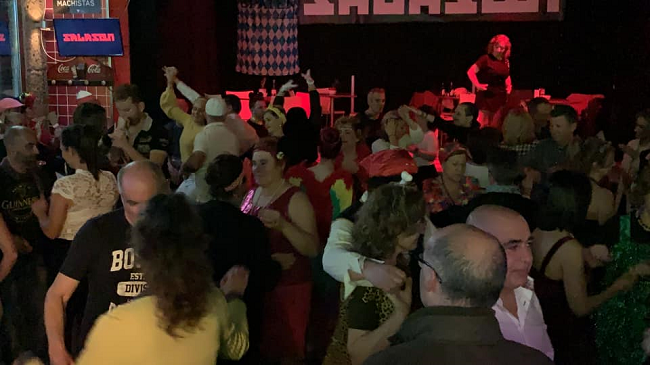
This cultural platform is designed with exceptional acoustics and cutting-edge technology.

The last stop in this guide with the four Salsa clubs in Spain with which we assure you that you will hallucinate is Salason. Of course, you will learn Cuban-style Salsa and Rueda Casino as well as traditional Bachata lessons with maximum fun, coordination of movements, and body language.

You can practice on Tuesdays in two groups: Students (intermediate level), the Salsa lessons start at 8 PM, and the Bachata group starts at 8:30 PM.

Thursdays are classes for beginners with two choice times: 8 PM and 9:30 PM.

Salason https://salason.es/ is a structured building with three independent rooms but complementary to each other and is located in the northwest of the country at Calle Lirio, 30 Cangas Do Morrazo, 36940, Galicia.

La Sonora Ponceña Returns To Salsa County

The only performance with Yolanda Rivera & Mario “Mayito” Rivera will be at the Lehman Center

The name “La Sonora Ponceña” is in honor of the Cuban band La Sonora Matancera and its hometown (Ponce – Puerto Rico)

La Sonora Ponceña “National Treasure of Puerto Rico” together with its leader Enrique Arsenio “Papo” Lucca returns to Salsa County (The Bronx) with the special guests Yolanda Rivera and the Cuban singer Mario “Mayito” Rivera (former member of Los Van Van) onstage at one of New York’s leading non-profit performing arts centers, Lehman Center.

This unique presentation, long-awaited by its fans, will be on Saturday, May 14th at 8 PM at the Lehman Center for the Performing Arts located at 250 Bedford Park Blvd West, Bronx, New York 10468 and the online price per ticket ranges from between $45 – $100. https://www.lehmancenter.org/sonora-poncena

La Sonora Ponceña gained popularity in 1960 during its trip to New York City to give a series of presentations and established itself as one of the most demanded orchestras among Hispanics.

The legendary band, for more than 65 years, has made uninterrupted performances and has been recognized as one of the best Salsa orchestras for its fusion of traditional Cuban sounds with the modern style of Latin Jazz.

In 1967, under the direction of Papo Lucca, they released the first LP Hachero Pa’ Un Palo with the Inca label (a subsidiary of Fania). This album was an overwhelming success in New York as well as its second record production Fuego en el 23 (1969). The famous band from Puerto Rico recorded 29 more albums for this record label, including eight with the singer Yolanda Rivera, La Ceiba with Cuban singer Celia Cruz (1979), and in 1980 New Heights from which they began to establish the internationalization of the orchestra.

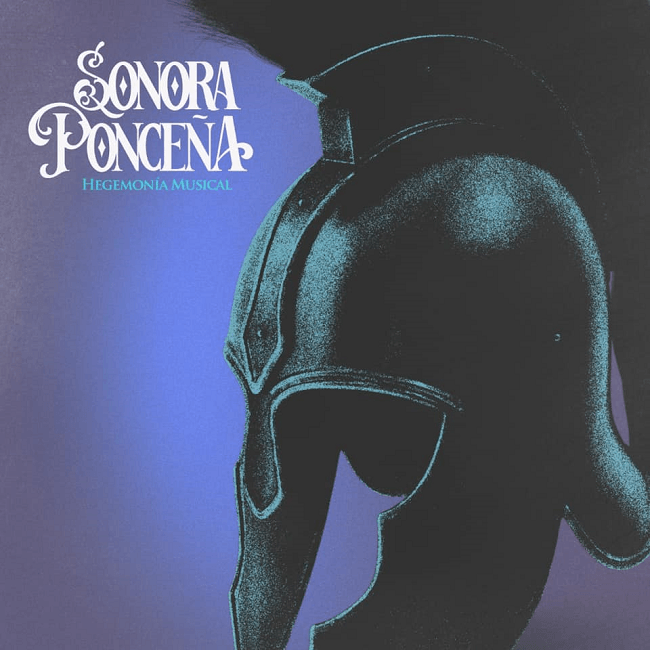
Musical Hegemony consists of 8 tracks including Caminando Con Mi Padre, Nadie Toca Como Yo, and Borrachera

This last year (2021), during the pandemic period, La Sonora Ponceña launched two new record productions: Hegemonía Musical (June 2021) and Christmas Star (November 2021).

The last one is the fourth Christmas-themed album in his career. “Thirteen years after our last Christmas production, we seek to present a record work that is a true reflection of the sound and musical quality that we always want to offer our audience”, Papo Lucca told digital media.

While “Salsa Que Cura To” is the first single taken from their most recent album Hegemonía Musical and whose authorship and interpretation is by Jorge Nicolai Avilés (vocalist of the band) with musical arrangements by Papo. Musical Hegemony, nominated in the Tropical Album of the Year category at the Billboard 2021 awards, was made with great dedication and professionalism as indicated on its official social media. “…We thank the public for the support they have been giving to this latest album that was worked with much love and dedication to the memory of our always remembered Enrique “Quique” Lucca Caraballo (RIP) and all our dear followers… And we will continue working as we have been doing for 67 years to place in your consideration what best of our music, soul, perseverance, and professionalism that seek to bring joy and enjoyment to all our dancers… Thank you very much!”

The song “Borinquen” (1980) with Sonora Ponceña becomes her a famous Salsa star

Yolanda Rivera will also perform at this event. She was born in Ponce (Puerto Rico) and moved to New York City with her family during her childhood. Her first opportunity as a singer was in 1969 in Willie Rosario’s band. In 1975 she returned to Puerto Rico and performed in several orchestras, including Joe Rodríguez’s La Terrifica. Her career reached its peak when she joined La Sonora Ponceña in 1977. The song “Borinquen” from the album Unchained Forcede (1980), a musical tribute to her native country (Puerto Rico), made her a Salsa star. Yolanda Rivera is considered one of the main and most famous singers of La Sonora Ponceña with songs like “Rumba en el Patio” and “Madrugador”. Her repertoire includes Salsa, Plena, Bolero, Guaguancó, Son Montuno, and Guaracha.

Mario “Mayito” Rivera (El Poeta de La Rumba)

The second special guest tonight will be Mario “Mayito” Rivera. His vocal skill and masterful interpretation of Cuban music in modern and traditional styles earned him the nickname “El Poeta de La Rumba”. Mayito was born in Pinar del Río (Cuba) and has training degrees from the National School of Art and the Higher Institute of Art. After his educational training in Cuba, he joined the band of the Cuban singer Albita Rodríguez and played bass in the Moncada group. From 1992 to 2011, Mayito was the lead voice and face of the successful Cuban band, Los Van Van, earning a Latin GRAMMY® and two nominations with them.

Izis La enfermera de La Salsa talks about her passion for music and nursing

This is our interesting conversation

Right now we are talking to Izis La Enfermera de La Salsa Good afternoon, Izis, how are you today?

I’m super happy and feel very blessed. I believe that being healthy is already a great blessing.

One of the things about you that has caught my attention the most is the name you chose. Why are you called Izis La Enfermera de La Salsa?

I have been a military nurse for the last 15 years. I mean, I’m a soldier in the United States Army. I work for the army as a nurse.

La Enfermera de La Salsa

So you use that name because of your first profession.

That’s correct. I loved the name because I believe that music has the power to cure, distract and heal. So, I think that mix was perfect. The fact remains that the name comes from my profession, but I also use music as part of the cure for my patients.

You come from a musical family. Evidently, that also influenced the path you took later on. What did you like most about the musical world while still a child?

I was born in Puerto Rico and my parents are Puerto Rican, but I moved out because my dad served in the army, so I followed in his footsteps. Indeed my family is musical and specialized in jíbaro music, which is very typical in Puerto Rico. I think this was the connection with my native island and my family, so to speak. When I listened to their songs, it inspired me to follow this path and, in particular, salsa was the genre with which I have made the strongest conection. My parents listen to a lot of salsa music and I fell in love with it. Since I was a child, I always wanted to be involved in these activities of dance and song.

Your first instrument was the flute. Do you play any other instruments?

I play a little bit of cuatro, which is the Puerto Rican string instrument, but I focus more on the flute and the vocal part. I used to play flute in classical music when I was in school, but I never thought I would use it in salsa. It’s the perfect combination.

How have you managed to combine your facets as a singer and a nurse?

That’s the question my family, friends and co-workers always ask me. My answer is that my profession requires 12 hours, but the advantage I have is that I don’t have to work every day. I take advantage of my spare time to pursue my other passion which is music; that’s why I always tell people that music is like my baby. Those who have children know that you have to make many sacrifices for them. That’s the same thing I do for music. Sometimes, it may happen that I don’t sleep or eat well, but I pour all that passion into music.

When asked how I combine both facets, I think I use my two passions to serve others. What feeds my heart and soul is to serve, so I serve my nation as a nurse and soldier. As a singer, I serve my community and anyone who listens to my music. That’s what fills me with energy.

Izis playing the flute

Salsa as a medicine

I recently interviewed Jérôme Martin, a Frenchman who runs an Internet site called La Salsa Es La Cura. When asked why he uses that name, he replied that salsa and music heal everything, whether it’s a physical or emotional pain, do you agree with that statement?

I totally agree. Karina, I began my career as a general nurse, but there came a point where I had the opportunity to specialize as a labor and delivery nurse. However, I felt I was missing something and that’s where I made the change for mental health. It is in this field that I have seen results related to music.

Although I was not a psychiatric nurse, I have had moments in which I have cared for patients with pills as I have mentioned in other interviews, but I felt they needed something more. When I started singing to them, I started noticing physical and mental changes. I remember a comatose patient who, when she came back, told me that all that she remembers was my voice. So, I myself have seen and experienced what music can do for your health.

Psycho-oncologist Argelia Melet states that the physical part won’t improve unless the mental part is well. In fact, she uses music in several of her therapies. It has much to do with what you are telling me.

That’s is absolutely true. If you don’t feed your body and your mental health, you are going to fail in many things.

Izis performing on stage

How was your musical activity during the pandemic?

As a soldier, at that time, the army had sent me to a town in the middle of the desert and that’s when I knew that I would not be able to have so much musical activity because I was far away from everything. I did events for the military community here and there, but all that is over because of Covid.

At that time, I started recording and connecting with other people through a virtual initiative called Corro Con Salsa with which people can listen to this genre from anywhere and at the same time. The point of the show is to exercise with music and that project combines everything I believe in, that is, the physical, mental health and music. That made me cheer myself up a bit, as I was a little sad not to see my audience. As artists, the audience is our fuel.

During the pandemic, I got connected to my musical roots, that is to say, my uncle, my aunt and my cousins. We join together to make a song together online, which I don’t believe we could have done without Covid due to our occupations.

Let’s talk about your new album and the genres in which it focuses on.

You know that my passion is salsa, but I sing anything. I usually record salsa, but I have also recorded several bachata songs and one or another merengue song. However, I am no longer focused on albums because the release of a full album is not like it was before. Now, what I’m doing is releasing one song at a time. I’m releasing a Madonna song in a salsa version called Like A Prayer. I have been releasing songs in English because I live in the United States, so if I want Americans to understand me and feel the same passion for salsa, we have to have something in common, that’s where the language comes into play.

Besides music and nursing, what other passions do you have?

I love to paint. I paint on hats, shirts and many other things. This passion for art is like an extension of my passion for music and my way of connecting with the public because, oftentimes, I perform on stage and then I go to my sales kiosk where I interact with my fans, sign autographs, paint hats, among other things.

Almost all of my designs are related to music. In fact, many important artists have used them such as Larry Harlow, La Sonora Ponceña, El Gran Combo, and so on. Almost all my designs include musical notes, maracas, drums, among other musical elements.

One of the hats where Izis has painted

Salsa Carlos

Panama, its music and performers and its best places for Salsa dancing

Panama is a country located on the isthmus linking Central and South America. The Panama Canal, a famous landmark of human engineering, crosses its center and links the Atlantic and Pacific oceans to create an essential maritime route.

In the capital, Panama City, modern clubs, casinos and skyscrapers contrast with the colonial buildings of Casco Viejo and the jungle of the Metropolitan Natural Park.

As every country also has its native music, La Murga is a musical genre performed by street groups, used mainly in carnivals in different provinces of Panama. La Murga was created by local musician Manuel Consuegra Gómez.

Murgas generally include the interpretation of songs in chorus, with voices accompanied by percussion instruments. These groups also have dancers who perform steps characteristic of the genre, including jumps and other acrobatics.

“Hey, let’s dance the murga

The murga of Panama

This is an easy thing

And very good for dancing

Ay tu tienes un caminao

That has me upset

And when you dance La Murga

Hey mamita how good you are

Murga pa’quí, murga pa’llá

(This is the murga of Panama)” Composers: Willie Colon / Hector Lavoe.

Panamá, its music and performers and its best places for Salsa dancing

This country has produced important musicians, singers, composers and sportsmen linked to Latin music.

Camilo Azuquita, Gabinete Pampini, José Luis Gracia “Chino Garcia”, to name a few.

To name a few.

Composer Aceves Núñez, accordion player and singer of typical Panamanian music.

Ricardo Fábrega composer of “Taboga”, Carlos Almarán composer of the song “Historia de un Amor”, Erika Ender author of the song “Despacito”, renowned composer Omar Alfano, Franciasco Buckley, Busch y sus Magníficos, pioneer of salsa in Panama.

Raúl Gallimore, Rubén “Yindo” Rodríguez, Manny “Bolaños, Papi Arasomett.

Some years before Blades arrived in New York (the city where he became known), figures such as Miguel Barcasnegras better known as Meñique, Victor Paz, Emilio Reales, Mauricio Smith and many others were struggling among the greats of this type of music in the big city.

All of them, making their way and making a breakthrough to achieve, based on pure talent, a privileged place for Panamanians in the musical environment, where at that time the Cuban and Puerto Rican presence dominated.

Roberto Delgado, Salsaswing, who recently recorded with Rubén Blades, is also Panamanian.

Later on, already in the movement of what was officially baptized as salsa, the most outstanding names are Francisco Buckley, better known as Bush, Roberto y su Zafra and Toti Pino’s Los Excelentes; Orlando Barroso and Los Salvajes del Ritmo, the group where Rubén Blades’ career began, also have their distinction.

All of them, making their way and making a breakthrough to achieve, based on pure talent, a privileged place for Panamanians in the music scene, where at the time the Cuban and Puerto Rican presence dominated. The future of salsa in Panama is promising.

Cartographer Ernesto Jiménez points out that the combination of music, talent, promotion and public acceptance opened the door for maestro Omar Alfano to become, without a doubt, one of the most successful composers. La Kshamba, Sociedad Anónima, Orquesta Yaré, Roberto Delgado, Soundcheck, La 507, are just some of the good salsa orchestras in Panama.

Women are not left behind, singer Anita Barroso stands out with her talent and defends the place of women in the Panamanian salsa scene; while singers Luis Lugo, Tony Flores and Victor Jaramillo, are making their way in their careers choosing salsa as their source.

Musicians like Ricky Salas and maestro Danilo Pérez found in salsa and in their country, the ideal base to develop their successful careers. Others became allies of salsa; announcers such as El Capitán Luis Gooding, Erick de Icaza, El Gigante de la Salsa; Jimmy Dawson; Moisés Rodríguez; El Lobo Edy Molina; Johnny Salsa; Eddie Vázquez and Valentín Ortega, among others, have defended the genre through the radio waves and, in some cases, venturing out as entrepreneurs.

The initiative to talk about Panama and its people linked to salsa is great and I know that it is not easy to touch on several aspects in an article.

One of them is the Barrio El Chorrillo, for all that it represented for Ismael Rivera, practically to turn his life around.

Sorolo was a protagonist of this, famous for his fried fish and his friendship with Maelo.

Sorolo, Mery and Cuñón, people named by Maelo in his proclamation of El Nazareno, who accompanied him to carry the Negrón.

Another important character of El Chorrillo is Mano’e Piedra Duran, who thanks to fame and money, made an orchestra, “Alegria”. Where he has an active business where salsa is always present.

External references:

Sources consulted

WhatsApp group: SalsaGoogle

Lluís Enric Mayans

@lluísenricmayans

Dumas

Lo Mejor de Panamá 

EL KARAOKE 50
EL KARAOKE 50


Website: El Karoeke 50

Facebook: El Kareoke 50

Article of Interest: Anacaona Areito de Anacaona ‘Flor de Oro’ (Golden Flower)

  • « Go to Previous Page
  • Page 1
  • Interim pages omitted …
  • Page 39
  • Page 40
  • Page 41
  • Page 42
  • Page 43
  • Interim pages omitted …
  • Page 409
  • Go to Next Page »

International Salsa Magazine (ISM) is a monthly publication about Salsa activities around the world, that has been publishing since 2007. It is a world network of volunteers coordinated by ISM Magazine. We are working to strengthen all the events by working together.