• Skip to primary navigation
  • Skip to main content

International Salsa Magazine

  • HOME
  • Previous editions
    • 2026
      • ISM / May 2026
      • ISM / April 2026
      • ISM / March 2026
      • ISM / February 2026
      • ISM / January 2026
    • 2025
      • ISM / December 2025
      • ISM / November 2025
      • ISM / October 2025
      • ISM / September 2025
      • ISM / August 2025
      • ISM / July 2025
      • ISM / June 2025
      • ISM / May2025
      • ISM / April 2025
      • ISM / March 2025
      • ISM / February 2025
      • ISM / January 2025
    • 2024
      • ISM / December 2024
      • ISM / November 2024
      • ISM / October 2024
      • ISM / September 2024
      • ISM / August 2024
      • ISM / July 2024
      • ISM / June 2024
      • ISM / May 2024
      • ISM / April 2024
      • ISM / March 2024
      • ISM / February 2024
      • ISM / January 2024
    • 2023
      • ISM / December 2023
      • ISM / November 2023
      • ISM / October 2023
      • ISM – September 2023
      • ISM – August 2023
      • ISM July 2023
      • ISM Edition June 2023
      • ISM – May 2023
      • ISM April 2023
      • ISM March 2023
      • ISM February 2023
      • ISM January 2023
    • 2022
      • ISM December 2022
      • ISM November 2022
      • ISM October 2022
      • ISM September 2022
      • ISM August 2022
      • ISM July 2022
      • ISM June 2022
      • ISM May 2022
      • ISM February 2022
      • ISM January 2022
    • 2021
      • ISM December 2021
      • ISM November 2021
      • ISM October – 2021
      • ISM September 2021
      • ISM August 2021
      • ISM July 2021
      • ISM May 2021
      • ISM April 2021
      • ISM June 2021
      • ISM March 2021
      • ISM February 2021
      • ISM January 2021
    • 2020
      • ISM December 2020
      • ISM November 2020
      • ISM October 2020
      • ISM September 2020
      • ISM August 2020
      • ISM July 2020
      • ISM June 2020
      • ISM May 2020
      • ISM April 2020
      • ISM March 2020
      • ISM February 2020
      • ISM January 2020
    • 2019
      • ISM December 2019
      • ISM November 2019
      • ISM October 2019
      • ISM Septembre 2019
      • ISM August 2019
      • ISM July 2019
      • ISM June 2019
    • 2016
      • ISM December 2016
      • ISM November 2016
  • Spanish
  • Download Salsa App
    • Android
    • Apple

Search Results for: Salsa

Enjoy Salsa In The New Zealand Winter

With Hanmer Salsa Winter Fest 2021

The longest and continuous annual event of Afro-Caribbean music in New Zealand since 1995 brings this year dancers from all over the country for you to enjoy moving to the rhythm of Salsa, Bachata, Merengue, Cha-Cha, Kizomba, and Zouk in the snow. Join this festival even if you are a dance professional or a beginner, you will always have something that suits you.

Hanmer Salsa Winter Fest 2021 is an event for the whole family!

Couple dancing at Hanmer Salsa Winter Fest 2021
Latin Party Ticket (Online): $30 or $40 at the door

According to the authorities, New Zealand continues in the Level 2 category concerning the Covid-19 pandemic, which means that dancing as a couple is allowed as part of active recreation and is classified as a sport.

At alert level 2, the contact is possible:

  • Keeping track of peers
  • Constant hygiene of hands and surfaces
  • Using the masks (Optional)
  • Also, you can dance with only one partner if you choose not to be part of the rotation. (Swapping pairs in classes)

This year Hanmer Salsa Winter Fest presents ten Workshops:

Greydis (Cuba) dancing in the hanmer Salsa
Instructor for Salsa workshops: Greydis (Cuba)

Afro-Cuban – Palo: Recommended for all those who want to learn the Afro-Cuban roots. It is open to all levels. (Palo Monte belongs to the West African region of the Congo and is part of the Bantú religion).

Cuban Salsa Casino Partnerwork & Rueda Intro: The Cuban style will be worked in pairs and Rueda. In the Rueda style, a man (leader) turns instructions, and everyone executes the specific movements while exchanging pairs. Level: Intermediate. Duration: 60 minutes.

Afro Cuban – Oggun: This workshop will be held on Saturday at 10 AM, and that is ideal to continue learning about Afro-Cuban roots. Dancers of any level can access it. (Oggun: is a god of the Yoruba religion).

The Cuban Salsa Shines: It is recommended for dancers of intermediate and advanced levels. Here you will improve your footwork in the Cuban style.

Cuban Salsa Casino Partnerwork & Rueda: Workshop dedicated to improving your dance technique as a couple and in Rueda. If you have not practiced it for years, I recommend doing the  Cuban SalsaCasino Partnerwork & Rueda Intro workshop first.

In addition to these five Salsa workshops, you can also learn to dance Kizomba and Bachata. The Bachata workshops include partner work and mergers with Sensual Bachata, while the kizomba workshops will be focused on improving transitions.

​​Maybe You Would Like To Read: 7 Signs That You Should Attend A Festival

On Friday night, the Salsa parties and other Latin rhythms begin on a large dance floor and with an incredible sound system. The DJs in charge will be DJ Reuben and DJ Dave. Time: 9 PM – 12 AM. During this party, at approximately 10:30 PM, the dance animation will enter. A fun solo dance style like Zumba. Get ready to have fun and meet new friends here.

Information to access the Hanmer Salsa Winter Fest

For the first day, you must arrive 5 to 15 minutes earlier than the stipulated time to obtain the bracelet that will guarantee your priority entry to any of the workshops.

If you are one of those with a single entry, don’t worry, you can access the class if any member of the full access entries is not on time. Payment will be made on the same day of the workshop.

There is no set limit for people to enter for the late-night Latin parties. The passes will be available online until a week before the event.

Date: Friday, August 27th – Saturday, August 28th

Address: Hanmer Memorial Hall. 1 Jollies Pass Rd, Hanmer Springs. New Zealand

These Data May Interest You:

Thermal pool with snow around
In Hanmer Spring, you can enjoy the snow while relaxing in the thermal pools
  1. Hanmer Springs is a small town in the Canterbury region of the South Island of New Zealand. Winter in this country runs from June to August.
  2. At this premier alpine spa destination in New Zealand, you will find a complex of Thermal Pools, as well as new pools, and incredible attractions.
  3. Taking a bus or driving is recommended if you want to save a little. It is an average trip of 1.5 to 2 hours.
  4. Hanmer Springs Village is located a 90-minute drive from Christchurch International Airport. If you want to take the tour, you will travel through the hills of the wine country, the rugged coastal route, and the picturesque mountain pass, if you come from the west coast.

Home

Spanish Harlem Salsa Gallery and its role towards salsa

Spanish Harlem Salsa Gallery and Latin music

The Spanish Harlem Salsa Gallery is one of those places where every salsa lover in New York should visit since there is plenty to see here. This museum has all kinds of items donated by many renowned artists or relatives of some who had passed away. This collection of valuable possessions has resulted in a set of priceless objects that will bow anyone visiting the facilities of such a special institution out of water. 

The Spanish Harlem Salsa Gallery, also known as Spaha Salsa Gallery, can be defined as an institution of a cultural nature whose main purpose is to serve as a reminder of how great our culture is, especially our music. Both residents and visitors of East Harlem, New York, can learn about the salsa genre and its roots as long as they desire. All thanks to a lot of tools, information and many initiatives with which those interested will know all kinds of interesting facts about salsa first hand. 

Another of the great objectives pursued by this place is the quest for knowledge about Latin music and the artists involved to offer it to anyone who decides to visit its facilities. That is why both its president Johnny Cruz and the team that helps him have been responsible for creating an inclusive and diverse gallery in which you can appreciate how far Hispanic talent has come by the hand of its top stars. 

Johnny Cruz with Viti Ruíz
Johnny Cruz while receiving Franklin Ruiz’s jacket from Viti Ruíz, his brother

Role of the Spaha Salsa Gallery in the dissemination of Latin culture 

The role played by the Spaha Salsa Gallery in the dissemination of Latin culture is very important, since these institutions are the ones that manage to arouse the interest of the inhabitants of Harlem and other nearby sectors towards one of the most representative musical genres of Latinity. This has made many other cultural institutions to use this gallery in order to awaken a higher interest in its own activities, which shows extensive cooperation between those who seek to promote anything Latin-related at all costs. 

Fortunately, our work is not that complicated to carry out because too many tourists visit New York every day and many of them know that this city was the birthplace of the biggest salsa movement in history, so they are always looking for cultural sports in which you can find information about this set of rhythms and how it emerges in the public arena.   

Instruments donated by La Sonora Ponceña
Some instruments donated by La Sonora Ponceña

Who Johnny Cruz is 

Johnny Cruz is the founder of the Spaha Salsa Gallery, but there are many other facets by which this talented Puerto Rican is known in the entertainment industry. Cruz is a famous musician and record producer who has worked and make friends with a wide number of artists from all genres, by providing him with the platform to create a true sanctuary for Latin music lovers. 

One interesting fact about the museum is that it is located on the plot where a hardware business owned by Johnny’s father used to function, which was made into something completely different thanks to the genius of his son long after. Today, that place contains several of the most invaluable objects in the history of salsa and whose relationship with some of the greatest figures of the genre is legendary.   

Link to the official website of the Spaha Salsa gallery: spahasalsagallery.com

By: Johnny Cruz correspondent of International Salsa Magazine in New York City, New York

Home

Willie Morales The Salsa Pilot Taking off with force… New, Tasty and Danceable Salsa!

The Salsa Pilot Willie Morales, “Vivencias mi Misión”

Is his second and most recent musical production after debuting with Desafiando la Gravedad, el Piloto returns with more power and an original sound that bets on the style of Salsa de la Vieja Guardia or Gorda in the same way of interpreting a Son Montuno, a Guaracha, a Bolero or El Mambo and surrounds us with a voice of the original Sonero.

The main theme and title track of the production “Vivencias mi Misión” features an excellent Congas solo by veteran Puerto Rican percussionist Paoli Mejías and the Vázquez brothers (Víctor and Toñito) on Trombones.

Willie Morales El Piloto de la Salsa ¡Despegando con fuerza... Salsa Nueva, Sabrosa y Bailable!
El Piloto de la Salsa Willie Morales, “Vivencias mi Misión”.

 William Morales Echeverría, better known as Willie Morales. Born in East Chicago, Indiana on December 1st. Son of Puerto Rican parents from the town of Añasco.

From a very young age, the inclination towards music was apparent, inspired by his brother Jose Rodolfo Morales (Rudy) who sang with various musical groups in the city of Chicago.

Willie developed in choirs of different schools in the city of Chicago where he demonstrated his vocal range where he performed all voices from soprano to baritone.

At the age of 13, after his parents’ retirement, he took up residence in Añasco, Puerto Rico on Nicolás Soto Ramos Street, better known as La Gallera.

Willie performed in choirs of different schools in the city of Chicago where he demonstrated his vocal range from soprano to baritone.
Taking off with force… New, Tasty and Danceable Salsa! The Salsa Pilot Willie Morales

It was here where his passion for Salsa grew and he had gatherings in the neighborhood with family and childhood friends where we spent hours in street rumbones.

He attended the Escuela Libre de Música de Mayagüez, where he took piano lessons with Luciano Quiñones, and also participated in the school’s band as a singer. He sang with several musical groups in the area such as Polanco, Nelson (Ruido), and La Dictadora, which belonged to Willie Sotelo, the current pianist of the Gran Combo.

His favorite singers are Cheo Feliciano, Marvin Santiago, Ismael Miranda, his relative among others. During this trajectory, he began another passion in his life, aviation.

His desire to be a pilot grew with the same intensity he felt to be a singer, as time went by, he took the path of aviation where he has been flying around the world for more than 30 years. He never stopped singing, bringing joy to co-workers, neighbors and the general public.

Bringing music and joy in every corner, in every place, dancing and singing even in the airplane.

Always with the hope that in the future he could realize his dream of making his own musical production. After such a long wait, he got the opportunity to do what he loves so much in life, taking both careers hand in hand, singing and defying gravity, two dreams come true.

Here is Willie Morales, El Piloto de la Salsa! As his friends called him.

Familia… ¡Recién salido del horno! Ya está disponible

Family…

Just out of the oven!

Now available for sale by PayPal, Zelle or money order. Bufete de Salsa, features 12 tracks, Pa’ Gozá!!!! Each unit has a cost of $16.00 includes shipping (USA) with tracking number. Autographed if you wish!

“YOUR SUPPORT IS VERY IMPORTANT TO CONTINUE MAKING MUSIC FOR THE SALSA PEOPLE”.

Contact: Willie Morales II or call 832-515-3522

Por: Erika Muñoz 

La Mulata Rumbera

Erika Muñoz 

“Se Armó la Rumba en México”

Corresponsal de International Salsa Magazine

Article of Interest: Fabián Rosales Araos Chilean singer-songwriter, native of the city of Valparaíso

Home

Wherever a musician lives, Salsa Superior will arrive.

International Salsa Magazine and its Miami Correspondent Diana Marie present Richard Román one of the most recognized and respected announcers of Salsa Dura on On-Line Radio in Miami.

His name is Ricardo Román Zapata; he has 40 years as a show promoter, 26 years as producer and host of his Superior Salsa Program in Miami.

As a promoter began in a series of events in Ventanilla Beach in 1981, his activities were known in Lima and Callao, so much so that Dr. Luis Delgado Aparicio came to my place in Ventanilla and made a program of Maestra Vida in which he gave me a plaque with the logo of Channel 9 Television and the name of Dr. Delgado Aparicio. Delgado Aparicio in 1984, in the years 1986 and 1988 I organized the First and Second Festival of Salsa Playa de Ventanilla where Orchestras of Lia and Callao participated with unpublished songs in lyrics and music.

Richard Román says Wherever a Musician Lives, Salsa Superior arrives

The winner in 1986 was Carlos Orozco y La Fragua with the theme “ESTAS LLORANDO” of the authorship of Carlos Orozco in tribute to Chabuca Granda, in 1988 the winner was El Combo Espectáculo Creación with the song “CONVERSEMOS” by Ricky Tosso, in homage to the problem of the Petisos (street children), in 1995 I started the Salsa Superior Program in Ventanilla Estéreo FM.

Wherever a Musician Lives, Salsa Superior will Arrive
His name is Ricardo Román Zapata

In 1997 I moved to Radio Pirata FM del Callao, in 2007 we started transmitting via www. radiosalsasuperior.com to date, in 2015 we started the delivery of plaques of recognition to musicians, composers and personalities of music in Peru, United States, Puerto Rico, Dominican Republic, Colombia, Venezuela, Ecuador, Cuba, Panama and our motto is “WHERE A MUSICIAN LIVES THERE WILL COME SALSA SUPERIOR”, The particularity of the plates is that in all this our National Flag, highlighting our beloved country and its people.

The District of Ventanilla

It is one of the seven districts that make up the constitutional province of Callao in Peru. It is the largest of them and the second in population.

It has gone through a process of economic, social, cultural, political, and urban changes, mostly unplanned, presenting itself as a district with a mostly poor population, territorially disjointed, disorderly, with worrying levels of environmental pollution and that has grown at rates that have exceeded the capacity of local management.

Ventanilla
The District of Ventanilla
It is one of the seven districts that make up the constitutional province of Callao in Peru.

Chimpùn Callao

Callao is a port city located in the constitutional province of Callao, in central-western Peru and in turn on the central coast of the Peruvian coast and in the central-western part of South America. It has the Pacific Ocean to the west and 15 kilometers to the east the Historic Center of Lima.

Most of its territory extends in a wide bay protected by the islands of San Lorenzo, El Frontón, Cavinzas, and the Redondo islet, south of the mouth of the Rímac River, but also reaches the northernmost part of the bay of Lima.

Both bays are separated by a peninsula known as La Punta. It covers an area of 148.57 km², including 17.63 km² of islands. It is located 5 meters above sea level.

Since colonial times, the port of Callao has been the largest seaport, the most important in Peru, and one of the most important in America.

ERMOZO BALENARIO LA PUNTA CALLAO – LIMA
Chipum Callao
Callao is a port city located in the constitutional province of Callao, in central-western Peru.

Today it is the main port of the country and the Jorge Chávez International Airport, making it the main gateway to Peru. These in turn are the ‘natural’ port and airport of the city of Lima.

In terms of population, Callao is the third-largest city in the country, with more than 1 million inhabitants (only behind Lima and Arequipa).

It has a floating population of approximately 500,000 inhabitants who visit daily for family, tourist, educational and business reasons, among others. Callao has always had the privilege of receiving military visitors, especially sailors, merchants, immigrants, tourists, and other types of social currents.

Richard Roman
.Jimmy Delgado, Heriberto Rios, Mauricio Smith Jr, Luis J Cruz, Jorge Leureyro, Roberto Rodriguez Jr.. Luis Mangual, Clara Colon, José Luis Mangual Jr., Leopoldo Pineda, Lewis Kahn, Bomberito Zarzuela, Richard Roman de Salsa Superior y Nicolas Condor

Salsa Superior Radio (Live)

Facebook: Richard Roman

Article of Interest: Ralph Irrizary, a well-known percussionist, is considered one of the most “Swing” timbaleros in the world.

Home

Meet the director of the Academia Salsa Tepic – Mexico.

The history of Salsa Tepic :

Rafael Reyes is a Cuban who was dedicated to being a coach of Greco-Roman wrestling and Olympic Wrestling in Cuba and had the opportunity to work in Mexico in this profession during the time that his contract imposed, during this time he made the decision to live there , being his current stay in Nayarit, Mexico.

Thanks to personal motivation and the support of his students, he created and founded the Salsa Tepic Academy 6 years ago, he tells us that before founding his academy he gave dance classes at the Bar Juanes located at Rafael Buelna 86, Fray Junípero Serra, 63169 Tepic, Nayarit, Mexico; For him this was a hobby that he enjoyed very much and when he stopped working there, many of his students advised him to open a dance academy and that is how it came about.

Salsa Tepic Academy - Logo
Salsa Tepic Logo – Dance Academy


Practica de Salsa - Salsa Tepic
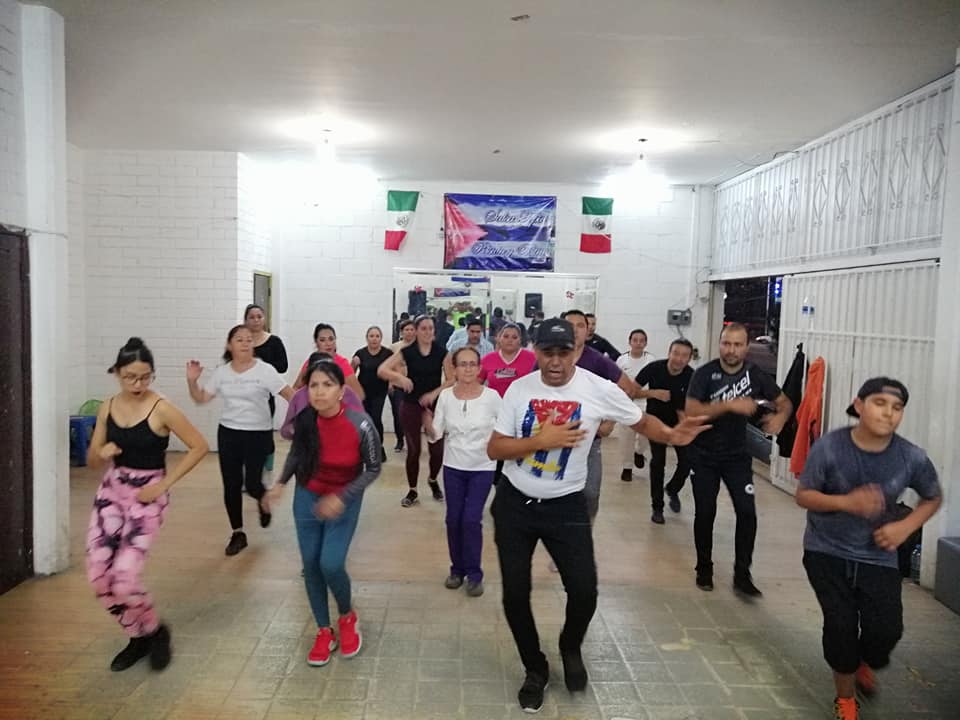
Estudiantes practicando pasos de baile en Salsa Tepic

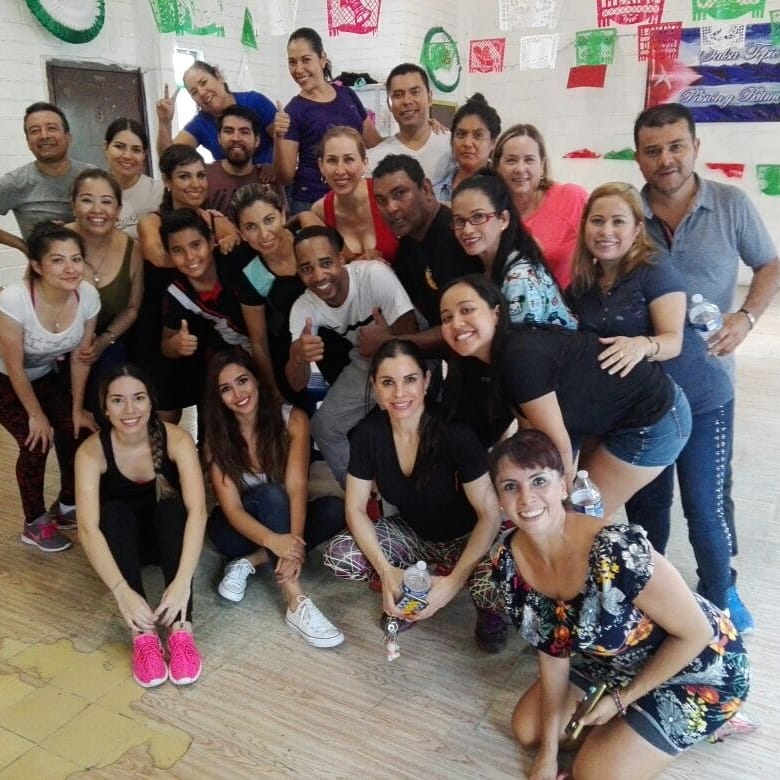
Estudiantes de la Academia Salsa Tepic
Photo of the Salsa Tepic Academy students

Son Cubano and Salsa Cubana are the genres that he likes the most, he mentions that each genre has an identification in each country and in Cuba he tells us that it is very lively and dynamic which can make different fusions such as Timba ( is the fusion of several Afro-Cuban rhythms)… giving this musical genre a lot of motivation, differentiating it from linear salsa, Salsa Neoyorquina and Salsa en Dos, but be careful, you have to know the differences between traditional Timba and Cuban Timba. and very broad cultural.Being Cuban, he tells us that music is in the blood of most Cubans, especially Afro-Caribbean music, and to top it off his parents enjoyed dancing so he spontaneously inherited this passion for dance from a very young age, and He perfected his native dance techniques in workshops with various teachers.

Rafael Reyes is also in charge of organizing the Salsa talent festivals in Nayarit, they have invited Guadalajara, Guaraguato, Puerto Bayarta, among others with new talents so that they have something more than just academic learning but a new experience through participation. and competition between the different students of each city, showing all their abilities on stage; In total, it has had 5 Salsa talent festivals, which one can find out when the next one will take place through the Salsa Tepic Facebook page.

Also the students of the Salsa Tepic academy have participated in other events such as the one that happened a few weeks ago at the Bar Tango Milonga, another event they participated was the Puerto Bayarta festival, and in other places.

The dance classes at the Salsa Tepic Academy are currently active, of course with the protection measures for the covid-19, they began to work from 7 – 10 am and from 5 to 10 pm Mexico time; There they teach Cuban Salsa, Bachata, Son Cubano, Rumba, Merengue, Cumbia, Cha Cha Cha, among other rhythms, so if you are interested in learning to dance from scratch or continue with the experience you have in order to be able to defend yourself during a social, competitions, parties and / or meetings, and at the same time that the students learn to identify the type of music that they dance respecting their respective times.

https://fb.watch/6q7Gdt89if/

And he leaves us the following message for all his readers, current and future students “Whatever happens, they dance, never stop, dance is very healthy, it takes away stress, it is motivational, it makes you more sociable and above all it is something that everyone likes when one learns … that they take off the taboo or the fear of saying I don’t like dancing because of any circumstance ”

For more information and the schedule of activities:

  • « Go to Previous Page
  • Page 1
  • Interim pages omitted …
  • Page 47
  • Page 48
  • Page 49
  • Page 50
  • Page 51
  • Interim pages omitted …
  • Page 409
  • Go to Next Page »

International Salsa Magazine (ISM) is a monthly publication about Salsa activities around the world, that has been publishing since 2007. It is a world network of volunteers coordinated by ISM Magazine. We are working to strengthen all the events by working together.