Directory of North American nightclubs |
||
CALIFORNIA |
ILLINOIS |
|
MICHIGAN |
NEW JERSEY |
NEW YORK |
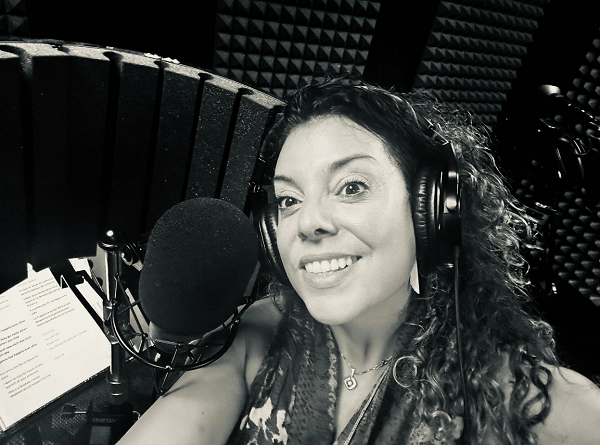
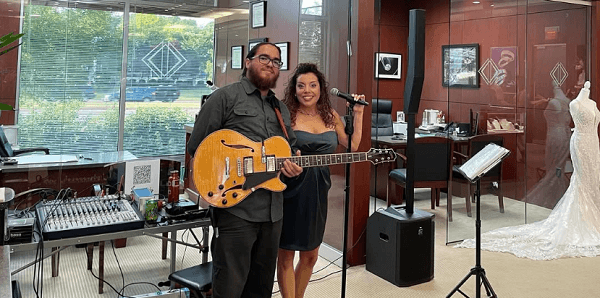
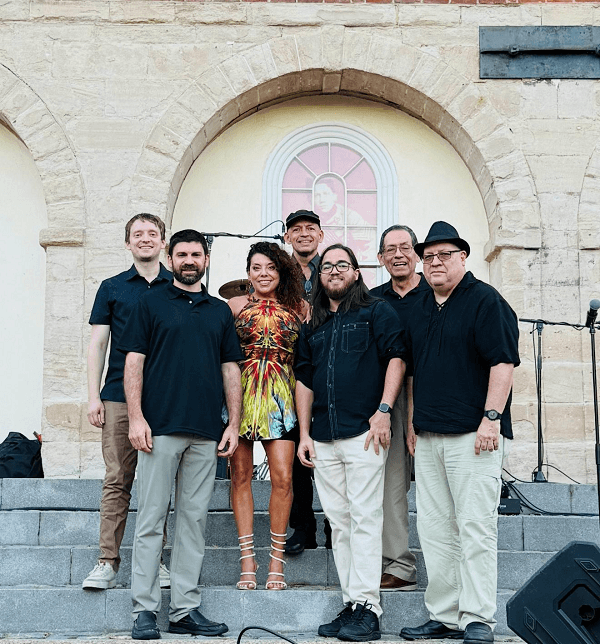
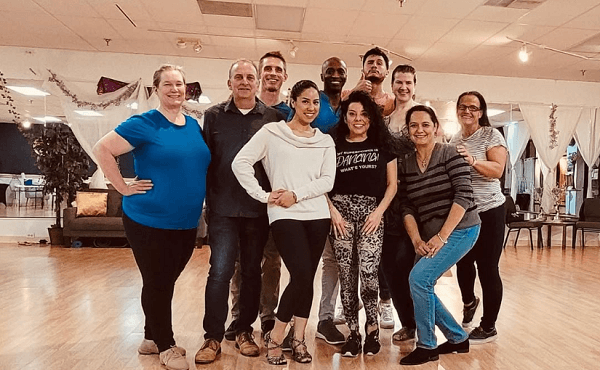
A while ago, we wrote a story about Sizzling Summer Nights, which is a series of outdoor performances by long-established and emerging orchestras at the Autry Museum of the American West, Los Angeles. However, we never had the opportunity to talk to any of those involved in the event, but that has changed in the last few days, as we have had the joy of speaking with professional dancer, dance teacher and choreographer April Connella, who will give us details on her career and professional life.

April started to become interested in everything related to dancing from a young age, but the one who really introduced her in this world is Orlando Delgado, who was a salsa instructor and dancer in Los Angeles. It turns out that in this same city, someone close to Orlando saw April dancing in events by chance and told her to go to Orlando’s studio, meet him and take classes with him to reach her full potential. So she did and the connection between the two was instantaneous and, over time, they became friends and Orlando came to be someone very special in her life.
They became a dance couple, taught classes and did many events together until the untimely passing of Orlando in September 2023 due to a long battle with cancer
April was telling us that it was Orlando they really contacted to participate in Sizzling Summer Nights. One of his students in one of his dance classes, who turned out to be one of the organizers, suggested that both he and April attend these events, since the previous instructors had left, so he was looking for new ones.
Since then about eight years have passed and Sizzling Summer Nights has become one of the biggest salsa and Latin music events of the summer, largely due to the effort made by the talented duo.

The dancer also confessed to us that Orlando’s loss has affected her personally and professionally, to the degree of saying that, together with him, she has lost a part of herself that feels that she will never be able to recover. Many have asked her why she does not get a new dance partner, but she finds it difficult to do that. She recognizes that there are many good dancers who could fill that spot, but finding someone she has the relationship and emotional connection she had with her previous partner is impossible. You do not get that anywhere else.
However, despite this painful loss, April knows she has to move forward in spite of everything and carry out her projects as hard as it is. In fact, one of those challenges is that April herself also happened to be sick with cancer and is in remission.
To this we must add that one of the things keeps her going is the great passion she feels for what she does and she believes that her profession is a part of her soul she cannot let die too. Not to mention that she has felt the support of the entire salsa community that knew Orlando in life and helped her to continue her work.

The dance instructor explained that April’s Feel Da Beat is actually a new version of the previous dance company that was only called Feel Da Beat and was directed by Orlando. After the two meet, they not only become dance partners and best friends, but also business partners.
Then, Orlando was planning to retire at some point due to age, so he wanted his project to be in the hands of someone he could trust and that was April, whom he taught everything he knew so he could delegate what he had built so far to her. When Delgado’s health was already very frail, both he and April discussed the matter of the company and concluded that the best thing to do was to transfer it to her and change its name to April’s Feel Da Beat. After that, it was up to her to handle the project alone and adjust to this new stage without Orlando by her side.
She does not have a big team working for her right now, but she does work with many artists and dancers for the various events in which she performs.

Read also: Los Boleros Latin Band Bandleader Rudy Furlan kindly talked to us
If there is something that we have seen in recent times is that Los Angeles, New York and Miami are not the only places Latin music has had great boom due to the huge number of Latinos in those areas, as our culture has permeated many other places in the United States. A great example of that is the Orquesta Afinke, based in the state of Connecticut, and its director Herminio ‘‘Tito’’ Planas, with whom we were able to talk about his career and band.

Tito was born in Puerto Rico and raised in the town of Ponce, the home of great luminaries of salsa such as Hector Lavoe, Pete ‘’El Conde’’ Rodriguez, Papo Luca, Jose ‘‘Cheo’’ Feliciano, Ismael Quintana, Yolanda Rivera, among many others. He even attended school with Keila Lucca, the daughter of one of the Luccas of La Sonora Ponceña, and is still in contact with her through social networks.
He studied at the Free School of Music in Ponce where he sang in a children’s choir and they traveled around the town to delight a variety of audiences with his voice. Building on the success of this program run by the school, there were many children from third through eighth grades who began taking lessons of solfeggio or any instrument they wanted.
In Tito’s case, he moved with his parents to the United States at age 13 in the eighth grade of the secondary education. His father had lost his job in Puerto Rico and the economic situation of the family was very precarious, so he made the decision to go first to find work and, in so doing, taking his children and his wife to live there.
In college, he started getting involved with salsa and had Jerry Perez as a trombone teacher, who taught him in this instrument for several years and offered him to form an orchestra together. They eventually did and toured with it in various parts of the United States.

After being played the trombone for some time, many other musicians saw him and offered him to play with them in their orchestras. Many of these job opportunities came from New York, which was very close to him, which benefited him greatly because the clubs in that city closed much later, so they could play even till five in the morning. He combined all these activities with university and his private lessons in order to further improve his musical skills.
After the foundation of the orchestra, Tito and his musicians accompanied many great artists such as Hector Tricoche, El Grupo Guayacán, Viti Ruíz, Van Lester, Frankie Vázquez and many others.
Thanks to all these shows they were doing with other groups, Sammy Diaz, co-director of the orchestra, and Tito decided it was time to create a much more formal project that grouped together all the original members of the band. What brought them closer together was the fact that both Tito and Sammy had teenage children, whom they included in the group to keep them playing and in constant contact with music.

Today, Tito’s youngest son is 18 years old and is about to enter the University of Connecticut to study music in order to follow the same path as his father, with whom he has been working in the orchestra since he was about 11 years old singing backup and playing the saxophone.
They started with about three scores with which they managed to put on a show for as long as half an hour. Today, 16 years later, they have more than 80 scores and about 12 original songs, of which one was recently released and another is being recorded at the time of writing this article.
On the other hand, the core of the orchestra has been the same since its foundation and includes pianist Rafael Rosado, bassist Victor Planas, bongo player Sammy Diaz Jr. (co-director of the orchestra Sammy Diaz’s son), timbalero Sammy Tercero (another son of Sammy Diaz), conguero Luis Carrasquillo, singer Junior Travieso, singer Raquel Ramirez, Peruvian singer Jano Arroyo, trombonist Jerry Perez (the teacher who taught Tito to play the trombone) and Daniel Planas (Tito’s son).

Read also: Eduardo Ron and his Fondo Blanco Band liven up great events in Miami
The colloquial abbreviation dates to the 1860s; the verb form of the word, meaning “to treat an animal,” came a few decades later—according to the Oxford English Dictionary, the earliest known usage is 1891—and was applied primarily in a horse-racing context (“He vetted the stallion before the race,” “You should vet that horse before he races,” etc.). By the early 1900s, “vet” had begun to be used as a synonym for “evaluate,” especially when searching for flaws.
“Vetting” in reference to immigration in the United States of America involves investigations by the State Department’s security units, which include various branches of security. This process is used to assess individuals applying for visas or those who already have visas or residency status. The purpose of vetting is to ensure that individuals entering or remaining in the country are not a security risk and that they maintain their lawful status.
Eduardo Guilarte
Okay, so I’m talking with immigration attorney Bill Martinez about the current immigration situation here in the United States and the impact that the executive order is having. Bill, tell us what’s going on?
Bill Martinez
Well, since the elections, there’s been a chilling effect on the artists, presenters, promoters, everyone involved in bringing international artists over to the United States, particularly from certain country-designated countries. The executive order that Trump announced divided countries into different categories: red, yellow, and green. If you’re coming from a “red” country like Cuba or Venezuela, the vetting process is tougher.
The vetting process, which involves investigations by the State Department’s security units (which are multi, the various “ramas,” various branches of security), can delay the processing of visas for a long, long time, in some cases years. I had somebody vetted for a couple of years; he was always supposed to be here for two months. This was just last year. A famous Cuban artist was going to be honored as the best of his instrument, just to get an award.
Eduardo Guilarte
Who was that?
Bill Martinez
I can’t tell you. I don’t want to…I feel like I can’t give you that information. But it was someone very well known. Okay, and he ended up missing that opportunity. We’re going to try to bring him in again, but for right now, it’s very unsure and uncertain whether an artist will get a Visa or not.
It’s not just Cubans, but it’s across the board. The process under the executive order continues throughout, even if you have residency, even if you seem to have a Visa and you’re okay. At any point, if there’s some red flag of uncertainty, you are subject to having a Visa revoked and being returned to your home country, or in the majority of the cases for Cubans, you suffer really long delays for administrative processing, which means security clearances.
We just lost out on getting 15 young artists from the jazz school “Diana,” who were going to be in Berkeley on April 10th (or I think it was October). They were invited to go to Berkeley for about 10 days, and their visas were denied under the executive order because they come from a country whose ideology is contrary to the United States.
These are kids, and they’ve been practicing since July to come and do this wonderful exchange with their colleagues at Berkeley High School. The Berkeley High School people, the kids and supporters, were really excited for this to happen, and there was sadness for them after they got interviewed in December. They were told, “Why are you getting the administration involved? We need to vet, we need to investigate more and more.”
Finally, about three weeks ago, we found out, “Well, we made a decision because they come from a country whose etiology is going for the United States.” These are young kids, and their hearts were broken equally.
The Berkeley students wanted to reciprocate; Berkeley students to go to Cuba every year for the past eight years. They wanted to reciprocate, but they couldn’t. Similarly, a project we had with a famous Broadway producer…
Our licensed activity was essentially to send (this happened) the day after we got the denials of these kids, three days (or two days) later, I could not get visas for two of the three original members of the Buena Vista Social Club and Ibrahim Ferrer Jr., the son of Ibrahim Ferrer from the original Buena Vista Social Club. I could not get their visas to attend.
Did one of these Social Club members play on Broadway? We were only asking for one day, so the 30 kids from “Diana,” that’s nice, and the Broadway play…
Eduardo Guilarte
So, let me ask you about artists like Isaac Delgado. What’s his status right now?
Bill Martinez
I’m not sure because I know he does a yearly tour over here, I believe, and I could be wrong, but he now has dual citizenship. I’m not talking about citizenship and people who have become residents or permanent residents with permanent residence. The vetting process isn’t just to get the visa originally; it continues throughout. I mean, it is subject to review at all times. It’s an exhaustive review of the entire vetting process, and that continues even if you have residency. So, they will continue to investigate to assure that you maintain your lawful status, even when you think everything is okay.
Eduardo Guilarte
So, let me ask you this question: Let’s say that I am a permanent resident, and have been here for 20 years. Are you saying that if I am against Trump, they could potentially cancel my residency?
Bill Martinez
You can see what happened to the medical doctor, at Rutgers University. She’s a Lebanese doctor who went home to visit her family for a couple of weeks, and they wouldn’t let her back in. She had an H-1B visa. (referring to MD Rasha Alawieh, which while some initial reports mentioned Rutgers, also affiliated with Brown Medicine and had a clinical appointment at Brown University).
There was a…I forget which country this gentleman was from; I think he was a journalist, and he tweeted something against Donald Trump, and he had residency and was not allowed back yet. So, it’s a risky proposition to leave the country, even if it’s lawful and everything’s cool. You think it’s not a time to be taking risks.
Eduardo Guilarte
Thank you, Bill.
Bill Martinez