• Skip to primary navigation
  • Skip to main content

International Salsa Magazine

  • HOME
  • Previous editions
    • 2026
      • ISM / May 2026
      • ISM / April 2026
      • ISM / March 2026
      • ISM / February 2026
      • ISM / January 2026
    • 2025
      • ISM / December 2025
      • ISM / November 2025
      • ISM / October 2025
      • ISM / September 2025
      • ISM / August 2025
      • ISM / July 2025
      • ISM / June 2025
      • ISM / May2025
      • ISM / April 2025
      • ISM / March 2025
      • ISM / February 2025
      • ISM / January 2025
    • 2024
      • ISM / December 2024
      • ISM / November 2024
      • ISM / October 2024
      • ISM / September 2024
      • ISM / August 2024
      • ISM / July 2024
      • ISM / June 2024
      • ISM / May 2024
      • ISM / April 2024
      • ISM / March 2024
      • ISM / February 2024
      • ISM / January 2024
    • 2023
      • ISM / December 2023
      • ISM / November 2023
      • ISM / October 2023
      • ISM – September 2023
      • ISM – August 2023
      • ISM July 2023
      • ISM Edition June 2023
      • ISM – May 2023
      • ISM April 2023
      • ISM March 2023
      • ISM February 2023
      • ISM January 2023
    • 2022
      • ISM December 2022
      • ISM November 2022
      • ISM October 2022
      • ISM September 2022
      • ISM August 2022
      • ISM July 2022
      • ISM June 2022
      • ISM May 2022
      • ISM February 2022
      • ISM January 2022
    • 2021
      • ISM December 2021
      • ISM November 2021
      • ISM October – 2021
      • ISM September 2021
      • ISM August 2021
      • ISM July 2021
      • ISM May 2021
      • ISM April 2021
      • ISM June 2021
      • ISM March 2021
      • ISM February 2021
      • ISM January 2021
    • 2020
      • ISM December 2020
      • ISM November 2020
      • ISM October 2020
      • ISM September 2020
      • ISM August 2020
      • ISM July 2020
      • ISM June 2020
      • ISM May 2020
      • ISM April 2020
      • ISM March 2020
      • ISM February 2020
      • ISM January 2020
    • 2019
      • ISM December 2019
      • ISM November 2019
      • ISM October 2019
      • ISM Septembre 2019
      • ISM August 2019
      • ISM July 2019
      • ISM June 2019
    • 2016
      • ISM December 2016
      • ISM November 2016
  • Spanish
  • Download Salsa App
    • Android
    • Apple

Search Results for: Son

Nano Cabrera Presents “Échate Pa’ Cá

North America / Puerto Rico

Renowned Puerto Rican singer-songwriter Nano Cabrera presents his theme for this holiday season titled “Échate Pa ‘Acá”. This song has mergers with urban music. It was written by Marinés Colón and can be downloaded for free via the Nano channel on the Sound Cloud digital platform.

“I present this song with a lot of humility and I hope you enjoy it, we did it with the purpose of downloading it and enjoy it at your parties.” Christmas is the best time of the year! It’s when forget the problems because the Christmas represents parrandas, joy and sharing in family, “said Nano.

The contagious joy to which we are accustomed, is demonstrated in the musical arrangement of the song “Échate Pa ‘Acá” that was created by the own Nano and counted on the co-production of Durand tla Elite.
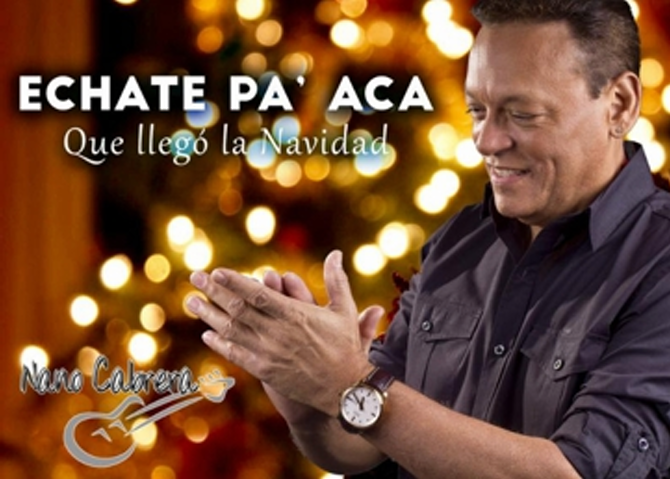
Nano Cabrera - Echate Pa aca
Nano Cabrera – Echate Pa aca

Cabrera, responsible for successes such as: “Que le den, que le den” and “Este Pueblo tiene sabor”, is a graduate of the Conservatory of Music of Puerto Rico and dominates the execution of guitar, bass, piano, cuatro and percussion. In addition, it has participated in 65 record productions.

“The Christmas theme can be downloaded for free through the Sound Cloud digital platform”

Nano Cabrera

Date of Birth: March 1, 1952

Place of Birth: Puerto Rico

Nano Cabrera Biography
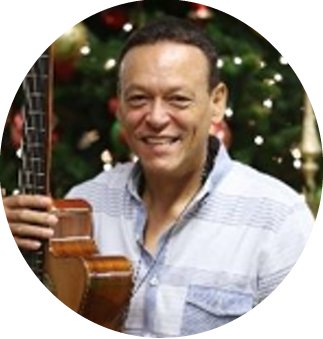
Nano Cabrera
Nano Cabrera

Nano Cabrera was born in the context of a musical family. In his childhood years he began to manifest his talent with the guitar and already in his adolescence he founded his first Latin rock group, “Dios, Madre y Patria”. In that stage of rocker that occurred in the years when the movement of the new wave reigned, Nano composed, arranged and played bass. Already in the late 60’s the young musician coincided with the arrival of the duo Nelly and Tony, with whom he worked for several years as arranger, bassist, composer and vocalist.

Graduated from the Conservatory of Music in the 70’s Nano was a founding member of the new group, Haciendo Punto en Otro Son. With this group, distinguished as one of the pillars of the new Puerto Rican trova, Nano remained for two years, thus polishing his knowledge as arranger and composer. In addition to playing the bass, Nano added to the group a singular falsetto that became the characteristic sound of Haciendo Punto.
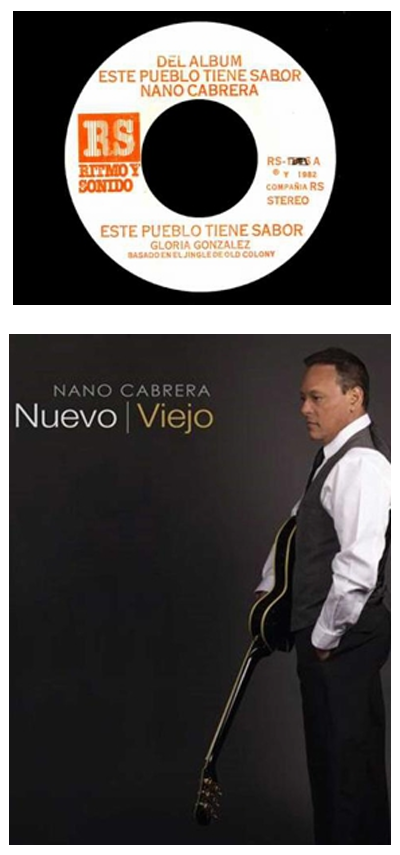
Nano Cabrera - Nuevo Viejo
Nano Cabrera – Nuevo Viejo

After his work with the group, Cabrera began a career as a soloist popularizing the theme “Que le den, que le den” with which he won an exclusive contract with

Wapa Televisión (today Televicentro). At this stage comes his famous “Este pueblo tiene sabor” that brought so much popularity by becoming the jingle of a well-known soft drink.

In his career, Nano has recorded more than a dozen albums as a soloist, in which he has popularized songs such as “María Isabel” and “Ramito de azucenas”.

Part of his artistic career includes performances in the Dominican Republic, Colombia, the United States and Spain.

Since always his shows have been characterized by creating a fresh, original and full of positive energy. Today, along with twelve other musicians and some dancers, Nano Cabrera has managed to create a fusion of sounds and visual elements that allow spectators to make an imaginary journey through different musical genres.

Main Discography

  • A ella le gusta – 2000
  • Amiga de la luna – 1995
  • Con buena nota – 1997 (junto a Ismael Miranda)
  • Tropimusical – 1990
  • Caribe soy – 1986
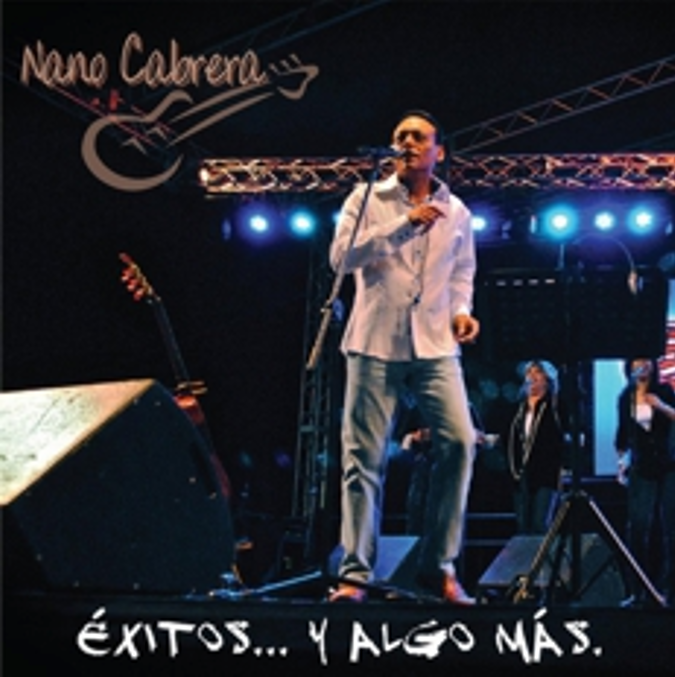
Nano Cabrera - Exitos y algo mas
Nano Cabrera – Exitos y algo mas

Rey Ruíz visits the Salsa Museum and talks about his prolific career

The Salsa Museum is celebrating the tremendous and valuable support of Cuban singer-songwriter Reinerio Ruíz Santiago, known to the world as Rey Ruíz, whom I had the pleasure to interview along with El Rubio Boris on our show Salsamania.

The artist was not only in our facilities to tell us important details about his career and share some of his time with us, but he also granted us the honor of gifting us one of the suits he used to wear for several of his most important shows. We are very grateful for the distinction he has made with us, and now let us mention some of the most important topics we discussed with the salsa singer.

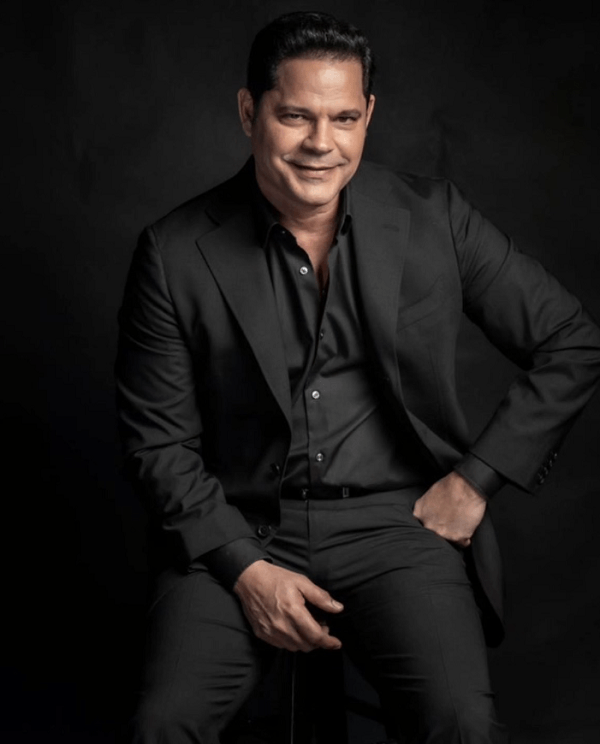
Rey posing for the camera
Cuban singer-songwriter Rey Ruiz posing for the camera

Rey’s life in Cuba

Rey sang since his childhood to the point that his parents said he sang songs without words and started imitating the sounds his father taught him. He began to study music in sixth grade in his native Cuba, but his interest went far beyond simple childlike curiosity, so his parents enrolled him at the music conservatory in Havana so that he could have a more formal training. 

Soon after, he appeared on Cuban television and sang for the orchestras “La Riverside” and “Los Dadas” at the then Habana Hilton.

Rey’s beginnings in music

Among many interesting things, Rey told us that he left his country at the age of 24, turned 25 in Miami, and arrived in Puerto Rico at 26. Shortly after arriving in Miami, he took a salsa demo to a record label, since Puerto Rican salsa was experiencing a long boom at the time, so they advised him to choose that genre. 

Then, he got down to work with his producer Toby Villarini, recently deceased, to create the album.

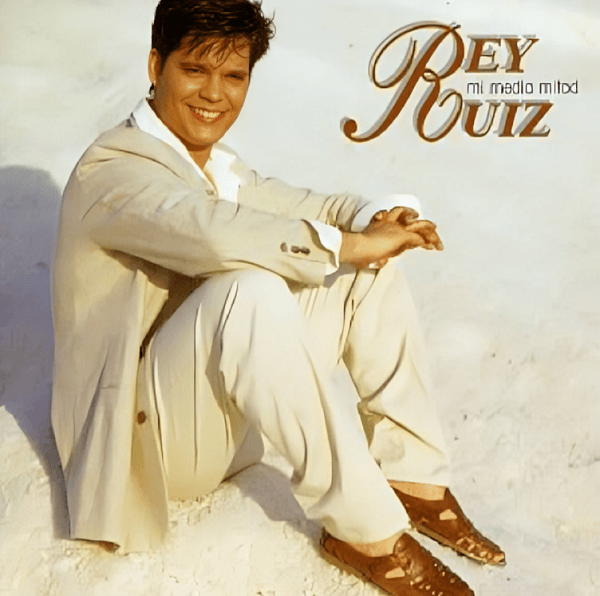
Mi Media Mitad
Cover of the album ”Mi Media Mitad’’

Following the success obtained, the record label asked him to move to Puerto Rico, where they got him an apartment for about six months so he could make a life there and focus on his music. He then began working with musical director Guillermo Calderón’s orchestra, until Rey felt confident enough to say that the orchestra was his about a year later.

In 1994, he released his second album ”Mi Media Mitad” and the cover includes a very young Rey on a mountain of salt posing for the camera in a beige outfit and with a big smile on his face. The arrangements were made by Ernesto Sánchez, who also passed away recently at a very young age.

What Ray Ruiz is doing now

When El Rubio and I wanted to know what Rey is doing now, the singer confessed that he had chosen a career in which work never ends and that always makes him seek progress. “You’re always looking for ways to produce something new and show people what you’re doing at the recording and show production level.” In fact, the day after the interview, on February 14, he had a concert to celebrate Valentine’s Day at the Lehman Center for the Performing Arts in New York City. 

Johnny and Rey
Johnny Cruz and Rey Ruiz at the Salsa Museum

He told us that it was the first time he performed as a solo artist at this venue, something he wanted to do for many years and finally got it. Never before has he performed in New York without the company of another artist or orchestra, so he was very happy and excited about living that new experience in his career.

Opinions about the Salsa Museum

Rey Ruiz had to leave soon to make final arrangements for the next day’s show, but we could not let him go without asking for his honest opinion about the Salsa Museum. When we asked him, he told us that he loved the place and that seeing what the museum exhibits was like seeing history. The history of salsa and all the artists who have been part of that genre. He also said that being here was like going to school because, even he who has been in this business for so many years, he has learned a lot from what he has seen.

He concluded by saying goodbye and thanking us for the opportunity to share with us and be on our platform.

Johnny Cruz ISM


Read also: Caoba Y Bambú, Tito Rivera’s first discographic production

“El Caballero de la Salsa” Kicks Off “Íntimo” in Puerto Rico

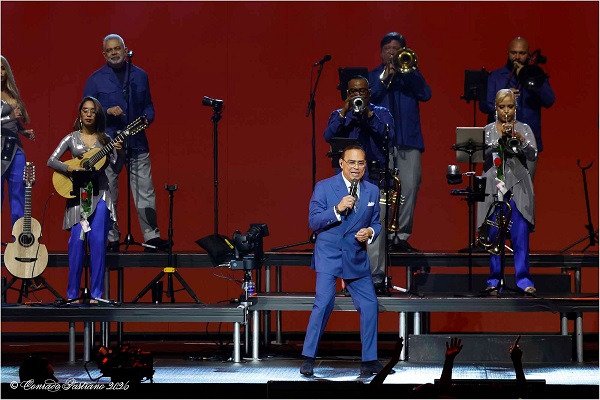
With performances on February 14 and 15, 2026, at the Coliseo de Puerto Rico, Gilberto Santa Rosa started the year “at home” with two sold-out shows and the successful launch of his “Íntimo” tour. That is always the goal. On the island, the audience is as demanding as they are generous and the singer knows it. Following the concerts, “El Caballero” posted on social media: “Puerto Rico, thank you for giving us two nights full of love, dancing, and so much music at home! What a thrill it is to sing at home!”

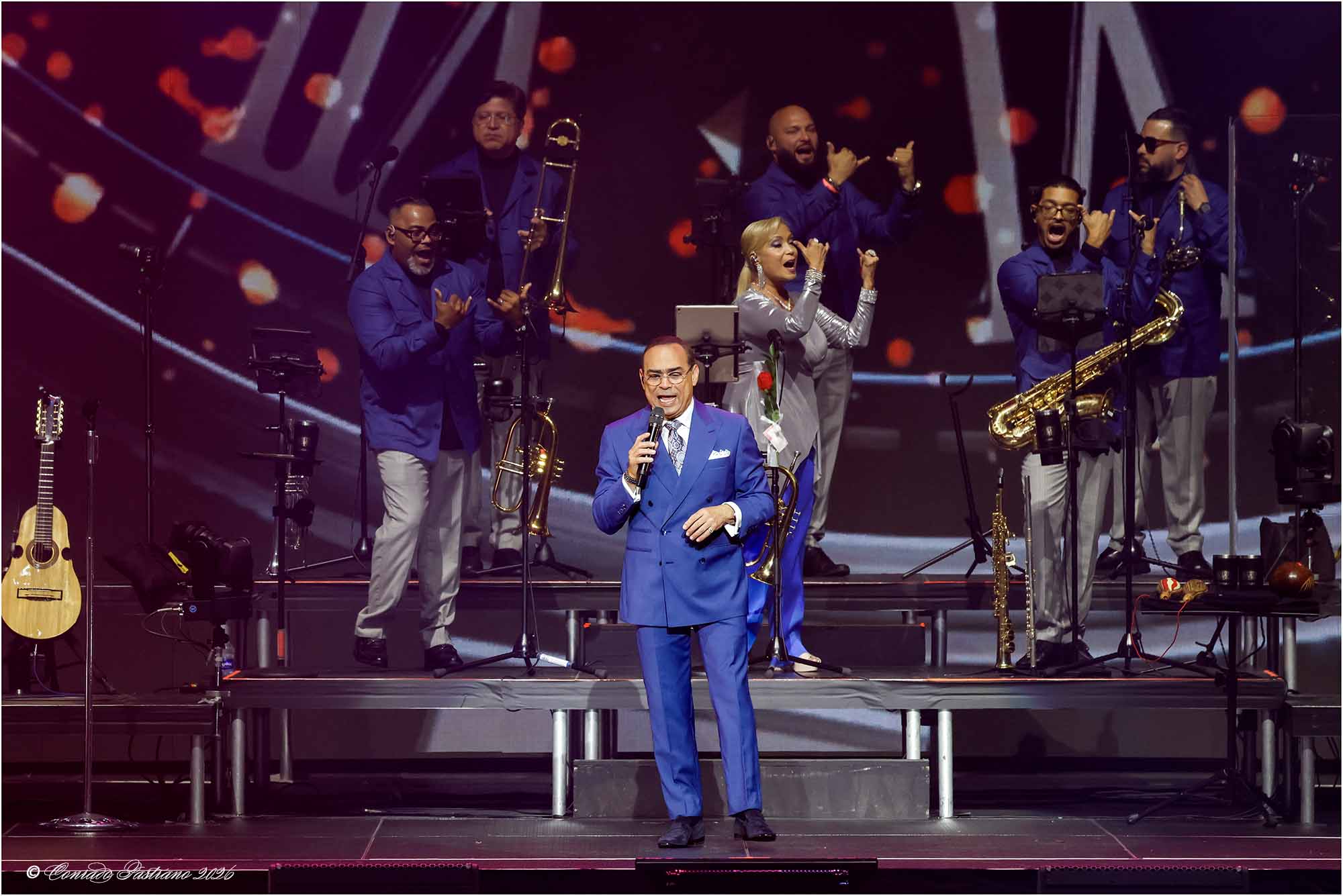
“El Caballero de la Salsa” Kicks Off "Íntimo" in Puerto Rico
“El Caballero de la Salsa” Kicks Off “Íntimo” in Puerto Rico

On January 30 of this year, the album that shares the tour’s title was released. In Puerto Rico, two shows were scheduled for Valentine’s Day weekend. The first coincided with Valentine’s Saturday; the second was added for the following day due to how quickly the first round of tickets sold out.

At exactly 6:46 PM on Sunday, February 15, 2026, the stage of the Coliseo de Puerto Rico welcomed Gilberto Santa Rosa’s orchestra to begin the second concert, marking the salsa singer’s long-awaited reunion with the Puerto Rican public. According to a press release from Edumil Ruiz’s agency: “These performances are part of a series of special concerts celebrating the month of love (…) and represent the long-awaited reunion of ‘El Caballero de la Salsa’ with his Puerto Rican audience after two years since his last performance on the island.”

A Night of Rhythms and Ovations

The performance began with high energy and impact from the very first track. The opening bars were seasoned with the sounds of the Puerto Rican cuatro, played by Fabiola Muñoz. “Déjate querer” featured a timbal solo by Pete Perignon, while “Cartas sobre la mesa” highlighted Saviel Cartagena’s saxophone. These were followed by “Ahora o nunca,” “Tú,” “Amor para la historia,” “Quiéreme,” and “Almas gemelas,” which featured Juan Carlos Vega on an aerophone solo; followed by “Yo no te pido” and “Conciencia,” for which the audience gave the artist a thunderous standing ovation.

Between songs, Santa Rosa took a moment to address the crowd: “I was born, raised, and live here. And it moves me to know that here in Puerto Rico, I am still dearly loved.” He added that he is a fan of singing to the brokenhearted with “scorned” lyrics set to savory, danceable arrangements. Addressing the contradiction of that combination, he stated, “We Puerto Ricans are capable of crying and dancing at the same time,” capping the explanation with: “That’s just how passionate we are.”

152 With the performances on February 14 and 15, 2026 at the Coliseo de Puerto Rico, Gilberto Santa Rosa began the year in "his home" with two sold-out shows.

152
With the performances on February 14 and 15, 2026 at the Coliseo de Puerto Rico, Gilberto Santa Rosa began the year in “his home” with two sold-out shows.

After his remarks, “Gilbertito” explained he would welcome a beloved artist to sing “Misterio,” an urban salsa track with lyrics “about a relationship where you don’t know if it’s coming or going, starting or ending.” Gerardo Rivas took the lead in his solo role, which required Pete Perignon to fill in on the congas while Pedro Marcano took over the timbales.

Tributes and Special Guests

Later, Gilberto Santa Rosa dedicated a segment of the concert to a legend Puerto Rico bid farewell to last December. He stated that Rafael Ithier was a musical genius whom he considered a mentor and a father in music, dedicating the iconic “Las hojas blancas” to him. Notably, the production featured a team of sign language interpreters who translated the entire concert in real time.

The repertoire also included “Vino tinto,” “Cosas nuevas” highlighting Pedro Marcano on the flugelhorn and “No me dejes solo,” which kicked off with a mozambique rhythm and rumba clave on the drums, courtesy of Gerardo Rivas and Tito Echevarría. The most anticipated moment arrived when Santa Rosa asked the crowd to join him in a chorus that allowed “El Caballero” to pay his respects to special guests. The “Choliseo” vibrated as the crowd chanted: “Mira quien llegó / Quién está ahí / Qué bueno que te vino a ver” (Look who arrived / Who is there / How good they came to see you). The tenacious sonero greeted the following guests in perfect rhyme and with his trademark elegance: Don Perignon, Luisito Ayala, Luis Vázquez, Juan José Hernández, Elwood Cruz, Marilin Pupo, Cucco Peña, Lissette Álvarez, Willie Chirino, his wife Alexandra Malagón (whom he called “The owner of my heart”), and Ismael Miranda, among others.

The evening continued with “No pensé enamorarme otra vez” and “Para vivir,” for which he was joined by Yeika Álvarez and “a representation of the Arturo Somohano Philharmonic Orchestra of Puerto Rico.”

Gerardo Rivas (Hijo de Jerry Rivas el reemplaso de Jimmie Morales), Gilberto Santa Rosa y Pete Pergnon

A Monument to Nostalgia

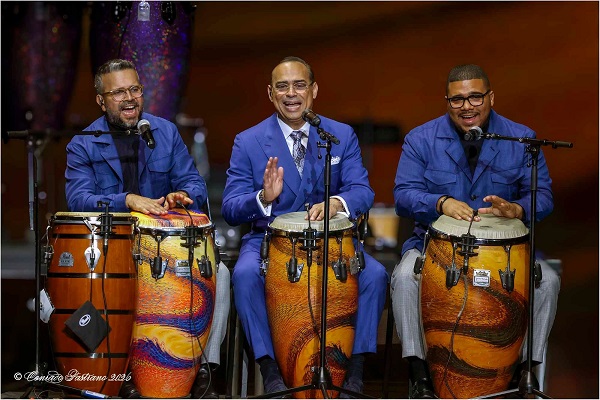
“Tengo una muñeca,” followed by a fusion that progressed from boogaloo to cha-cha-cha and finally to salsa with Gilberto showcasing his skill on the maracas led us into a monument of nostalgia. The memory of the conga player Santa Rosa had worked with since their days in Willie Rosario’s orchestra until his passing in 2021 was honored with “Impaciencia.” The song showcased the Jimmie Morales Signature Series drums by Remo Percussion©, which sponsored “El Rey del Seco” (The King of the Dry Hit) from 2005 to 2016.

During this segment, “El Caballero” displayed his own skills as a talented conguero while singing, accompanied by Gerardo Rivas (the orchestra’s conga player) and Pete Perignon (the timbalero) on either side. While the audience was spellbound by the sight of the three musicians at their drums, this writer wondered if Gilberto was reminiscing about the days when he used to imagine he was a singer, using an upside-down trash can as a drum in the group led by Don Perignon.

The “Army of One”

This intervention was followed by “La agarro bajando,” which preceded the introduction of the band members, “musically directed by the master of the trombone,” Georgie Torres. The lineup included:

  • Backing vocals: Yeika Alvarez and Gino Ramírez.
  • Puerto Rican Cuatro: Fabiola “The one who holds her own” Muñoz.
  • Trumpet: Rebecca Zambrana (with the orchestra for 29 years) and Pedro Marcano.
  • Trombone: Anthony Rosado (also a ballroom dance champion).
  • Saxophone/Flute: Francisco “Paquito” Cruz and Saviel Cartagena.
  • Piano: Luis Marín.
  • Congas: Gerardo Rivas.
  • Timbales: Pete Perignon Morales.
  • Bongos: Rafael “Tito” Echevarría.
  • Bass: The legend Johnny Torres.
  • Keyboard/Aerophone: Dr. Juan Carlos Vega.
  • Vocals: Michael Pérez.

Santa Rosa also praised the technical and audiovisual teams, producer Rafo Muñiz, and Edumil Ruiz, noting that “all these people make this work.”

After identifying his team who gave a masterclass in what the military calls an “Army of One” the hits “Conteo regresivo,” “Perdóname,” “Que alguien me diga,” and “Que manera de quererte” rang out. Gilberto Santa Rosa celebrated Valentine’s weekend by once again proving why he holds the loyalty and preference of his Puerto Rican fanbase.

From the start, the energy never wavered. The crowd sang and danced along with the artist, the musicians, and the dancers on stage. The vast repertoire serves as a reminder of the countless hits “El Caballero de la Salsa” has collected throughout his prolific career.

Bella Martinez Puerto Rico


Also Read: Bandleader and conga player Tony Rosa tells us how he built his career

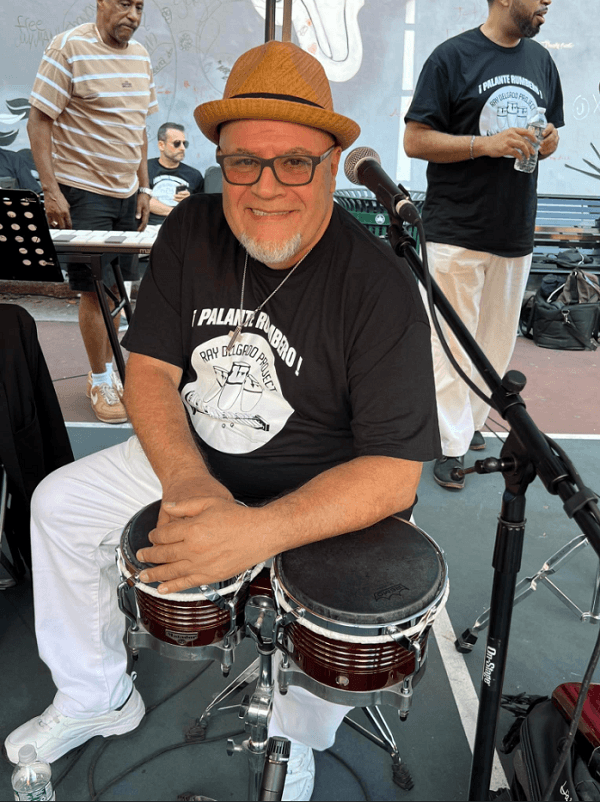
Bandleader and bongosero Ray Degaldo is here to talk about his life and career

The talented percussionist Ray Delgado has made room in his schedule to share some time with us and talk about some of the most curious details of his artistic career, which fills us with pride and gratitude in equal measure. The founder of the Ray Delgado Project has many interesting things to say, and we are more than willing to listen.

Ray playing the bongo
Ray Delgado playing the bongo live

Ray’s inspirations to become an artist

Ray grew up in a family with deep Puerto Rican roots and was raised between Puerto Rico and New York because his parents constantly moved from one place to another, which made him feel very fortunate because he was being formed between two cultures that allowed him to listen to all kinds of music. In his time, radio remained extremely popular, so this was his vehicle to travel just by listening to certain songs.

Music in English came from the United States and Europe, while music in Spanish came from Cuba, Venezuela, Puerto Rico, the Dominican Republic, Jamaica, and many other countries. Delgado was exposed to all genres, but as a New Yorker, the one that resonated the most with him was salsa and the atmosphere that it brings with it. In fact, he remembers having the joy of seeing the Machito Orchestra, Johnny Pacheco, Héctor Lavoe, Willie Colón, Pete Conde, and many others live.   

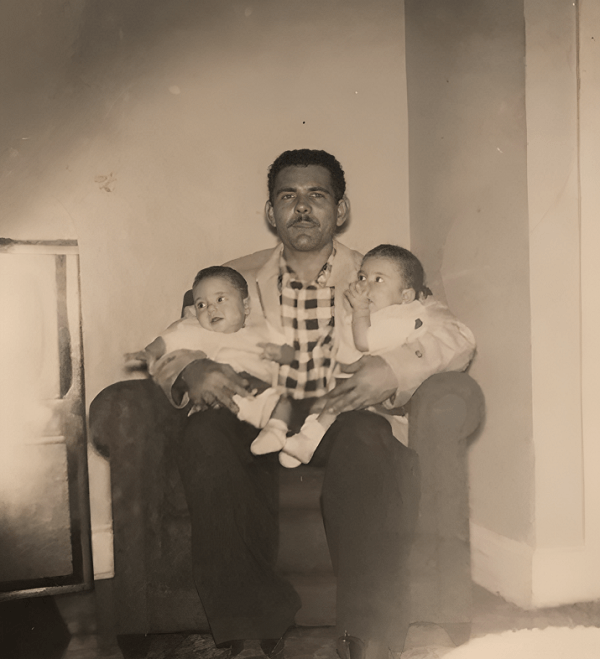
These great exponents were the ones who sparked off the young man’s desire to pursue music at some point, but his father did not like the idea at all, as he saw the men in this business as womanizers, drunks, and irresponsible. Obviously, no father wants his son to end up like that, so Ray had to wait to become a responsible adult with a steady job to finally realize his aspirations as a kid.

Ray and his father
Ramón Delgado Castro holding his son Ray Delgado and his brother when they were babies

It all started when some older men invited him to play with them, so he found an old bongo drum he kept in his closet and accepted the offer without a second thought.

That was the point of departure for him to play with many other bands in New York, and his consistent work led him to want to be better, to study hard and prepare himself much more.

Ray’s music education

Ray studied at the East Harlem Music School founded by legendary musician Johnny Colón in Manhattan, and focused on timbales with teacher Ray Cruz, but he left the instrument aside for a while when he moved back to Puerto Rico. When returning from the Island of Enchantment, he enrolled at the Harbor Conservatory for the Performing Arts. He also studied with Professor George Delgado, who is the current conguero for the Spanish Harlem Orchestra. He describes him as an excellent teacher and musician from whom he learned so much.

Additionally, he had the support of many musician friends who also helped him and taught him many things that are not learned in an educational institution, including Luis Rivera, Radamés Rojas, Eric Rivera, and many others. Close contact with other artists and groups made him see that many sounded exactly the same and there was little variety, so he decided to form his own orchestra.

In this way, he also learned percussion, which is the area by which he is best known today.

Joe and Ray
Joe Bataan and Ray Delgado

Ray Delgado Project’s birth

Driven by the lack of musical variety in his environment, he wanted to create his own musical project that included vibraphone, percussion, piano, bass, and vocalist. It all started with a workshop for musicians offered by Ray himself in a community room in the building where he lived and he was allowed to use it. After having played and experimented with different styles, the group was getting smaller until all the musicians who signed up ended up leaving.

From there, at every show and opportunity he had to meet new musicians, he would ask for their numbers to recruit them and achieve a chemistry and combination, resulting in the sound he wanted. Ray was in that process from 2009 until now. About three years ago, in 2023, he finally got what he was looking for. 

This group was called Ray Delgado Project, which takes up a huge amount of time and effort. However, the musician says that the New York where his youth was spent, which offered lots of places to go dancing, no longer exists, so there is not much work as back then.

Today, they play many covers of great hits from the 1970s, but they add their own touch to stand out with completely new arrangements. Not so long ago, they released their new version of “Lo Que Traigo es Sabroso,” a hit by Eddie Palmieri, and adapted it to their own style and arrangements. It can be found on Spotify and the main digital platforms. 

Ray and his orchestra
Ray Fuentes (piano), Abraham Saenz (bass), Danny Sieber (vibraphone), Ray Delgado (director and bongo), Rhadames ”Randy” Rojas (lead vocals) Izzy Diaz (congas), and José ”Cheo” Colón (timbales)

Ray is so happy with what he has achieved so far with their orchestra that ensures that when God calls him, he will be calm and happy to have been able to play and make audiences dance during his lifetime. God willing, we wish him many more years playing with the Ray Delgado Project, enjoying life and bringing joy to those who have the pleasure of listening to him. 

Read also: Leader of K’ndela Salsa Band Eric Cabanilla and all his entertainment company has to offer

Latin Bayarea WebSite

North America / USA

Latin Bayarea WebSite

Sitio web de Latin Bayarea

At present, the search for information about Latin music and its culture in California (USA) has been put into the technology, because it is a very practical tool. On the internet, you can find an online site where you can investigate practically everything: music, culture, entertainment, clubs and concerts. The Web site is Latin Bay Area.

Among its many events that advertise monthly is that of:

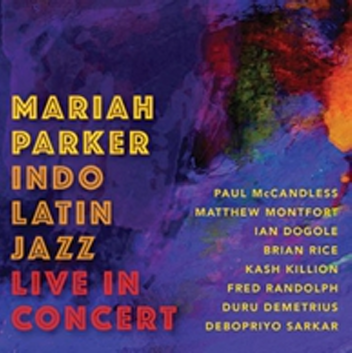
Mariah Parker’s Indo Latin Jazz Ensemble CD Release Concert

This concert celebrates the upcoming release of Mariah Parker’s new CD, Indo Latin Jazz Live in Concert.

According to Latin Beat Magazine, Mariah Parker’s Indo Latin Jazz Ensemble “blends the rhythmic syncopations of Latin jazz music with the entrancing, asymmetrical meters of East Indian rhythms resulting in first- class world music. Intriguing melodies that draw musical inspirations from the tempos of Brazil, Cuba, India, and Spain make for an uplifting serene yet passionate musical journey into an idealworld.”

Sunday, January 22, 2017, 7:00 PM Freight and Salvage

2020 Addison Street

Berkeley, California

Tickets: $24 in advance, $28 at the door

For more info, call (510) 644-2020 or visit www.thefreight.org

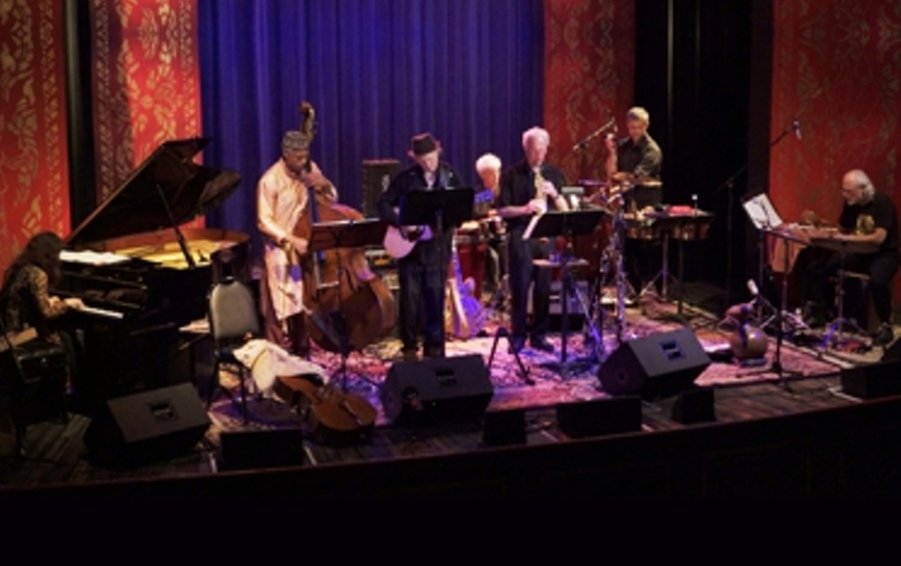
Featuring Mariah Parker (composition, piano, santur), Paul McCandless (woodwinds), Matthew Montfort (guitar), Kash Killion (bass, cello), and percussionists lan Dogole, Brian Rice, and Michaelle Goerlitz.

Indo Latin Jazz Live in Concert CD Release 1/20/17

Lanzamiento del CD "Indo Latin Jazz Live in Concert", 20/01/17
Lanzamiento del CD “Indo Latin Jazz Live in Concert”, 20/01/17

In 2009, Mariah Parker launched her Indo Latin Jazz Ensemble with a sold- out debut concert at Yoshi’s in Oakland, California. Mariah’s new release for AncientFuture.com records, “Indo Latin Jazz Live in Concert,” captures the magic of that first performance, as well as subsequent Northern California concerts at the Freight & Salvage in Berkeley, the Throckmorton Theater in Mill Valley and a studio session at Bob Weir’s TRI Studios in San Rafael. These multi-track live recordings were painstakingly mixed and mastered over a seven-year period by veteran Ancient Future producer Matthew Montfort. Indo Latin Jazz Live in Concert is a follow-up recording to Sangria, Mariah’s debut CD, which received airplay on over 468 New World, Jazz, and Latin radio programs, and earned over 365 reviews and media placements, including two songs that ascended to the Smooth Jazz Now Top 100 Songs of 2009 Chart.

Bios Mariah Parker

Mariah Parker in concert

(Composition, piano, santur) http://www.mariahparkermusic.com

“Parker, who holds a degree in music from UC Santa Cruz, wrote the eight instrumental compositions on this exquisite collection of pieces that fuse Latin rhythms with influences from South America and India with a dash of straight-up American jazz. It’s an intoxicating blend of East and West performed by musicians of astounding virtuosity. Like all the best jazz bands, this group is as disciplined as it is innovative, stopping on a dime when the composition calls for it and soaring into gorgeous landscapes of free association the next moment that are as pleasing as they are adventurous.

Mariah Parker's
Mariah Parker’s

This is sophisticated stuff, an album of global fusion performed by a group with character, charisma and the confidence that comes across when world-class musicians at the top of their games come together and create magic in the here and now of a live performance.” -Marin Independent Journal

Mariah Parker has been playing music from the time she could reach the keys on the grand piano in her family home. While completing her degree in music at UC Santa Cruz, she worked with ethnomusicologist Fred Lieberman and drummer Mickey Hart on the “Planet Drum” project and became fascinated with the possibilities of bridging musical concepts from different traditions.

She has performed her original compositions in festivals in the US and Europe. A gifted composer and band leader, she released her first solo recording of her compositions, “Sangria,” in February of 2009. This release received extensive airplay and critical acclaim worldwide.

“Dazzling…. Parker’s subtle and sensuous sounds reflect exotic flavors of India, the Middle East and Latin America.” -Palo Alto Daily News.

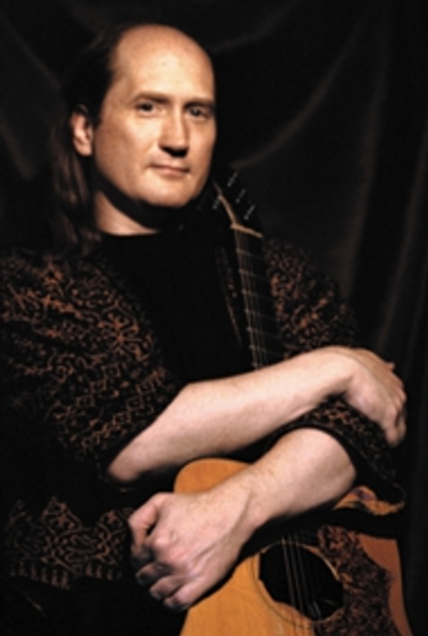
Matthew Montfort (Scalloped Fretboard Guitar)

Matthew Montfort
Matthew Montfort

Recently recognized as one of the world’s 100 Greatest Acoustic Guitarists, Montfort is a pioneer of the scalloped fretboard guitar and the leader of the seminal world fusion music ensemble Ancient Future. He has performed concerts worldwide, including at the Festival Internacional de la Guitarra on the golden coast of Spain near Barcelona and the Mumbai Festival at the Gateway of India in Bombay.

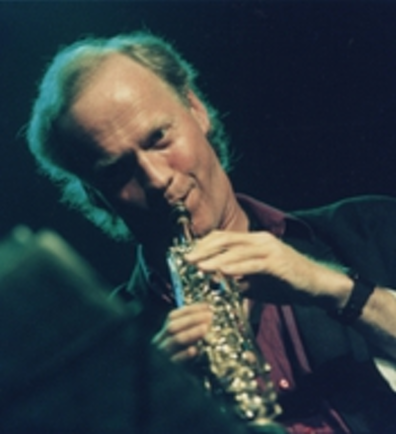
Paul McCandless (Reed Virtuoso)

Paul McCandless
Paul McCandless

During a distinguished career spanning three decades, Grammy-winning woodwind virtuoso Paul McCandless has brought a soaring lyricism to his playing and composing that has been integral to the ensemble sound of two seminal world music bands, the original Paul Winter Consort and the relentlessly innovative quartet, Oregon.

A gifted multi-instrumentalist, McCandless has specialized in an unusually broad palette of single and double reed instruments that reflect his grounding in both classical and jazz disciplines.

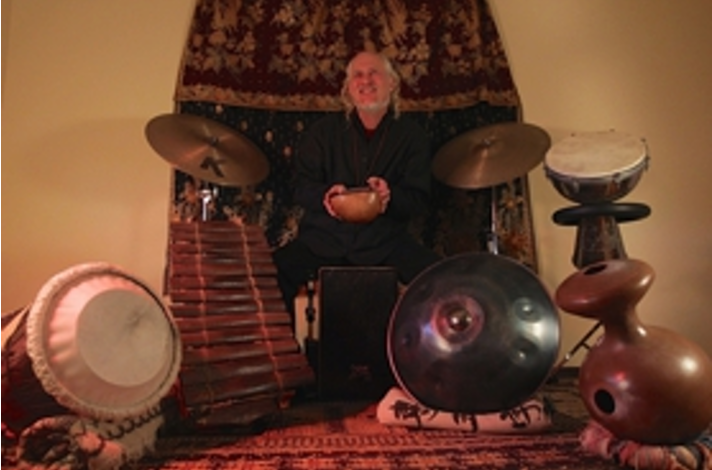
lan Dogole (Global Percussion)

Ian Dogole is an accomplished bandleader, composer, and multi- percussionist who has recorded and performed with artists such as Hamza el Din, Tito La Rosa, Ancient Future, and Alex de Grassi on a wide variety of percussion instruments, including udu, cajon, hang, African talking drum, kalimbas, cymbals and dumbek.

Ian Dogole
Ian Dogole

Kash Killion (Bass, Cello)

Kash Killion plays cello, bass and assorted African and Middle Eastern stringed instruments, and has worked with Donald Byrd, George Cables, Billy Higgins, Cecil Taylor, John Zorn, Sun Ra, Butch Morris, George Lewis, Reggie Workman, and the Sun Ra Arkestra.

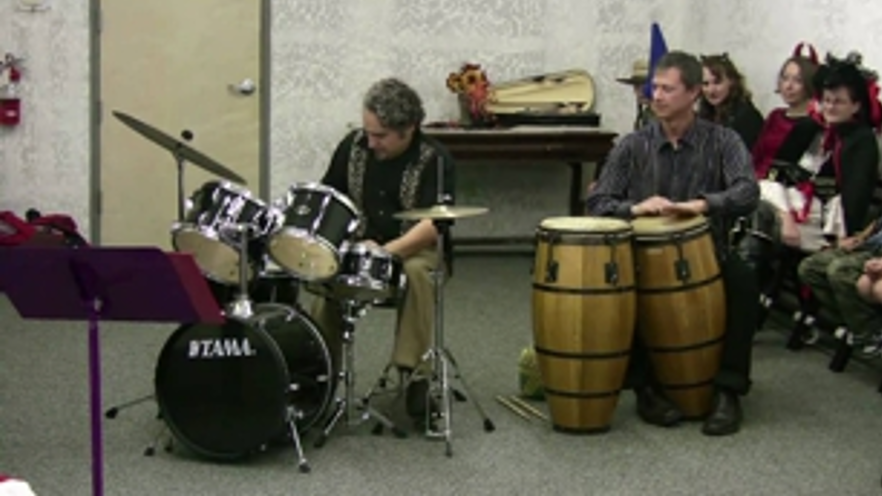
Brian Rice (Latin Percussion)

Brian Rice is a highly acclaimed musician specializing in Latin, Afro- Cuban, and Brazilian percussion who performs with acts such as Mike Marshall with Choro Famoso and the Antionio Calogero Quartet featuring Paul McCandless and Mike Manring.

Brian Rice
Brian Rice

Michaelle Goerlitz (Latin Percussion)

A talented percussionist with a focus on Brazilian, Afro Cuban, Venezuelan and Peruvian rhythms, Michaelle has played, recorded and toured with Mark Levine, Wayne Wallace, Houston Pearson, Denise Perrier, Joan Jeanrenaud, the Pickpocket Ensemble, Samba Rio, Novo Tempo, Bossa 5-0, and many others.

  • « Go to Previous Page
  • Page 1
  • Interim pages omitted …
  • Page 36
  • Page 37
  • Page 38
  • Page 39
  • Page 40
  • Interim pages omitted …
  • Page 268
  • Go to Next Page »

International Salsa Magazine (ISM) is a monthly publication about Salsa activities around the world, that has been publishing since 2007. It is a world network of volunteers coordinated by ISM Magazine. We are working to strengthen all the events by working together.