• Skip to primary navigation
  • Skip to main content

International Salsa Magazine

  • HOME
  • Previous editions
    • 2026
      • ISM / May 2026
      • ISM / April 2026
      • ISM / March 2026
      • ISM / February 2026
      • ISM / January 2026
    • 2025
      • ISM / December 2025
      • ISM / November 2025
      • ISM / October 2025
      • ISM / September 2025
      • ISM / August 2025
      • ISM / July 2025
      • ISM / June 2025
      • ISM / May2025
      • ISM / April 2025
      • ISM / March 2025
      • ISM / February 2025
      • ISM / January 2025
    • 2024
      • ISM / December 2024
      • ISM / November 2024
      • ISM / October 2024
      • ISM / September 2024
      • ISM / August 2024
      • ISM / July 2024
      • ISM / June 2024
      • ISM / May 2024
      • ISM / April 2024
      • ISM / March 2024
      • ISM / February 2024
      • ISM / January 2024
    • 2023
      • ISM / December 2023
      • ISM / November 2023
      • ISM / October 2023
      • ISM – September 2023
      • ISM – August 2023
      • ISM July 2023
      • ISM Edition June 2023
      • ISM – May 2023
      • ISM April 2023
      • ISM March 2023
      • ISM February 2023
      • ISM January 2023
    • 2022
      • ISM December 2022
      • ISM November 2022
      • ISM October 2022
      • ISM September 2022
      • ISM August 2022
      • ISM July 2022
      • ISM June 2022
      • ISM May 2022
      • ISM February 2022
      • ISM January 2022
    • 2021
      • ISM December 2021
      • ISM November 2021
      • ISM October – 2021
      • ISM September 2021
      • ISM August 2021
      • ISM July 2021
      • ISM May 2021
      • ISM April 2021
      • ISM June 2021
      • ISM March 2021
      • ISM February 2021
      • ISM January 2021
    • 2020
      • ISM December 2020
      • ISM November 2020
      • ISM October 2020
      • ISM September 2020
      • ISM August 2020
      • ISM July 2020
      • ISM June 2020
      • ISM May 2020
      • ISM April 2020
      • ISM March 2020
      • ISM February 2020
      • ISM January 2020
    • 2019
      • ISM December 2019
      • ISM November 2019
      • ISM October 2019
      • ISM Septembre 2019
      • ISM August 2019
      • ISM July 2019
      • ISM June 2019
    • 2016
      • ISM December 2016
      • ISM November 2016
  • Spanish
  • Download Salsa App
    • Android
    • Apple

Search Results for: Son

Gabrielito Y La Verdad giving everything in Los Angeles and beyond

Gabriel González from the group Gabrielito Y La Verdad has been kind enough to speak exclusively with International Salsa Magazine and me, Karina García, about his beginnings, bands, and current career. The composer, actor, and musician gave us some of his time to address the most important issues concerning his successful career and everything that surrounds it, for which we are extremely grateful.
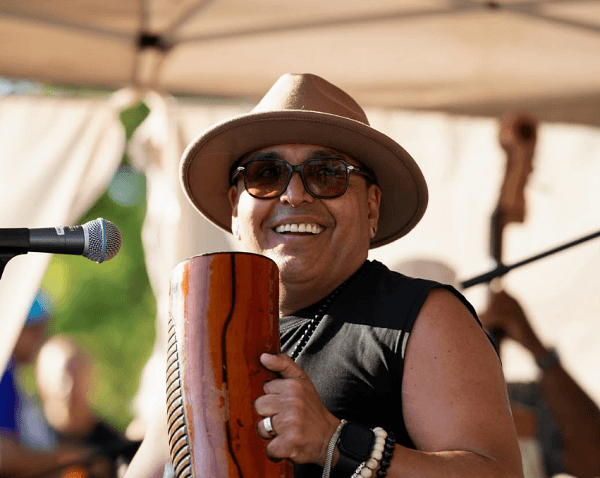
Gabriel performing at the museum
Composer, percussionist, singer, and actor Gabriel Gonzalez playing live at the Los Angeles County Museum of Art

How Gabriel started to become interested in music 

Gabriel was born and raised in Los Angeles, where he took his first steps towards what would become his lifelong vocation. Since his parents were Mexican immigrants, it was not uncommon for him to listen to rancheras, huapango, boleros, son jalisciense, and other genres typical of that country.

He liked music so much that he began participating in contests at “El Mercadito,” a place located east of Los Angeles, where amateur concerts and all kinds of musical events were held. After his father sang there several times, he told him he wanted to do the same, and that is how he began entertaining wider audiences with his voice.

Years later, after his passion for music was being shaped and getting more serious, he contacted his uncle, who was a promoter, and took him with him to Mexico to get some acting work in movies. This means that his artistic career was not just limited to singing but also to acting, but at some point, both areas would end up mixing. 

It should be noted that his work as an actor made him stay in Mexico for several years, so he shared with many great actors of the time who were also singers, such as Yolanda del Río, Federico Villa, David Reynoso, Lucha Villa, and many more. 

Upon returning to California, he experienced a significant culture impact. He realized that he was not Mexican enough for Mexicans nor American enough for Americans. This double identity made it much easier for him to cross cultural and musical boundaries, so from playing ranchera, huapango, and son jalisciense, he was given a chance to play other styles such as son montuno, which for Gabriel is the basis of salsa and much of Latin music. 
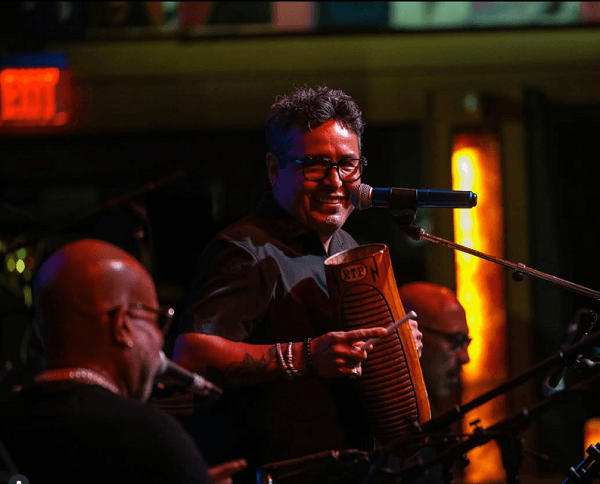
Gabrielito at the Vibrato Grill And Jazz
Gabrielito Y La Verdad performing at the Vibrato Grill And Jazz

Gabriel’s professional beginnings in music

Gabriel tells us that, during a huge part of his career, he worked as a solo artist, but he went on to collaborate with several groups and one of them was the Mexican band Quetzal, which specializes in playing Chicano rock and son jarocho. His sister Martha González was the lead singer, so he was able to work with them on and off for about 20 years. He describes his time with Quetzal as a very nice period in which he learned a lot and was even blessed to win a Grammy, but everything has an end, so he went ahead and worked with many other bands in the Los Angeles salsa scene.

In fact, today he is a member of Boogaloo Assassins and has been playing with them since 2015, while also having his own project, which he named Gabrielito Y La Verdad.

Gabrielito Y La Verdad

After all experience gained so far, Gabriel decided to form his own group Gabrielito Y La Verdad, with which he had his first big hit “Oye Muñeca,” released around 2019. Since the project began, the artist has had the same keyboardist and pianist, but the rest of the musicians have come and gone over the years, as it is not easy to maintain a cohesive musical group for a long time.

In fact, he usually has a list of musicians he can call, and their presence at an event depends almost entirely on their availability and ability to read sheet music. Gabriel often works with the same musicians Jimmy Bosch uses, so when the Puerto Rican travels to Los Angeles, Gabriel knows he can count on them if an event comes up. He also often uses some of Jerry Rivera’s musicians and those of many other exponents of the genre.
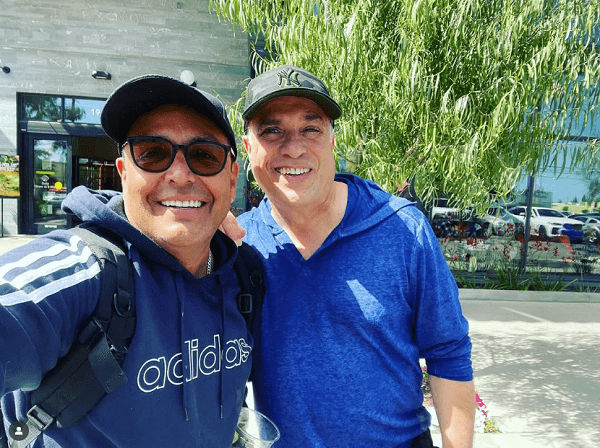
Gabriel with Oscar Hernandez
Gabriel Gonzalez and bandleader and pianist Oscar Hernandez

Facets additional to singing

In addition to being a singer and film actor, Gabriel has also participated in commercials and done a little musical theater, since the condition of being an artist forces you to learn a little about everything. Being still very young, he participated in the film ”Mojado de Nacimiento” alongside La Sonora Santanera.

One of those memorable experiences was his participation in the second national tour of the musical ”In The Heights” with Lin-Manuel Miranda. It was during this tour that Gabriel learned that he had won a Grammy with the band Quetzal. The news came during a bus trip, making it clear that he experienced several of these facets at the same time without any problems.

More recently, he has served as composer of several of Gabrielito Y La Verdad’s songs in collaboration with pianist Matt Amper, who is also actively involved in the creation of the group’s original songs. 

Collaborations with other artists

Gabriel has shared the stage and collaborated with big names in the industry like Bruno Mars, “El Divo de Juarez” Juan Gabriel, Los Van Van, Silk Sonic, and many others. Similarly, during his acting career, Gabriel also met many great actors of the time with whom he shot scenes during the day, and at night, did voice-overs at the studios, and went out singing.

All this led him to share the stage with Aida Cuevas, Rosenda Bernal, Los Lobos, and Lalo Guerrero. While still with Quetzal, he opened for Aerosmith, Taj Mahal, and others. 

Gabriel Gonzalez and Richie Perez
New York’s singer Hector ”Pichie” Perez and Gabriel Gonzalez

Read also: Creator of Afro-Rican Jazz William Cepeda talks about this subgenre
Colombian dancer and instructor Camila Cepeda takes salsa caleña to Canada

Every day there are more Latinos who, with their talent, are gradually taking over various cities in Canada and the hearts of many of its inhabitants. Colombian instructor and dancer Camila Cepeda shows us that she and several of her compatriots have managed to break into the aforementioned North American country and shares with us a little bit of her interesting story.

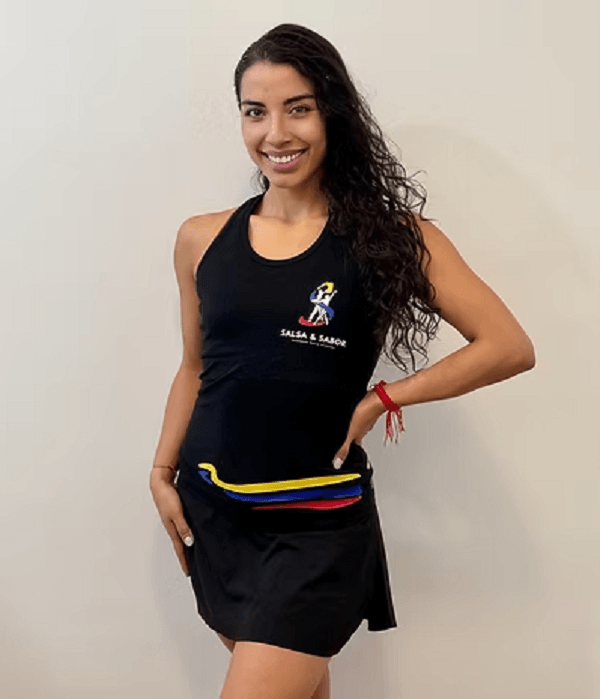
Dancer and instructor Camila Cepeda
Colombian dancer and salsa caleña instructor Camila Cepeda

Camila’s interest in dance

Camila has danced through life, and since she was a little kid, dance has been very important to her. One genre in particular that caught her attention was salsa caleña, especially since she saw it for the first time with dance groups on the TV show “Colombia’s Got Talent”. From there, more specifically in 2011, she looked for a dance academy where she could learn to dance and imitate what she saw on the screen.

Almost immediately, she realized that it was a very demanding style that required stunts and movements that were not common in more classic versions of salsa. After training in dancing, she did not want to be just an expert in salsa caleña, but many more people learned how to dance it as well, which led her to create a folk dancing group with which she would take her first steps towards teaching.

In addition to salsa caleña, Camila also danced salsa choka, champeta, bachata, merengue, and Colombian folklore. 

Camila dancing at an event
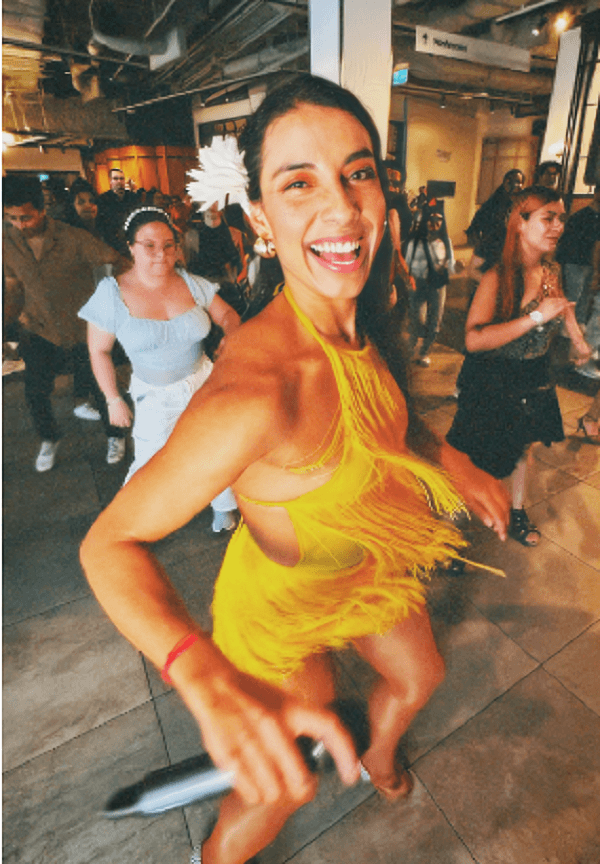
Camila Cepeda dancing in one of her salsa caleña events

Moving to Canada

Initially, Camila’s plans did not include leaving Colombia, but when she knew Canada, she found it an extremely interesting country where she could start something new with dance due to the lack of salsa caleña there. So, she entered the country with a student visa and studied international business at Seneca College in Toronto, with the intention of forming her own company in her new host country.

While gaining business experience through jobs for other companies, she continued to offer classes in parallel. Finally in 2020, in the middle of the COVID-19 pandemic and when she was still a university student, she decided to register and open her dance academy, “Salsa & Sabor.”

During that time, she also validated her teaching in English so that she could give classes to both locals and people from other cultures who spoke the same language.

Camila, Aleja, and Sonia
Camila with dancers Aleja and Sonia

Salsa & Sabor today

Although the academy was started with only online classes due to the sanitary restrictions of that time, Camila was able to gather together a more or less numerous community that allowed her to stay afloat in such a difficult moment. Therefore, when government controls were relaxed, the young woman had no problem to organize dance classes and activities in parks keeping proper social distancing.

A short time later, she could finally open her dance studio, welcome students in person, and recruit other instructors such as Diana, Victoria, Mateo, and Paula. One thing to mention about these five young Colombians is that they were all Camila’s students in the past and, after all the training she offered, they also became experts in the field. Given the pitifully small number of salsa caleña instructors in Canada, when they were ready, she asked them to join her team, and they gladly accepted the opportunity.

This, in turn, helped them to open up more schedules and workshops for many more people, allowing the academy to grow even more.

Camila with her students
Camila with some of her little students

Division of teaching genres and events

As we said at the beginning of this article, Camila also teaches other genres such as salsa choke, la champeta, bachata, and merengue, but her flagship and main rhythm remains salsa caleña. An important difference between salsa caleña and the rest is that it has a well-defined continuity and academic structure, so it takes much longer to learn. The other genres are relatively simpler, so they do not require as many hours or such an elaborate program.

Differences between salsa caleña and traditional salsa

According to Camila, a very important component of salsa caleña is its speed compared to traditional salsa. The way salsa is danced in Puerto Rico, Cuba, or New York is much better known around the world due to its age, while salsa caleña is a little newer and only began internationalizing a few years ago. In addition, traditional salsa is slower and uses the hips and shoulders a lot, while salsa caleña relies heavily on the rapid movements of the feet.

In fact, an important fact to know is that salsa caleña was created from a mistake. It turns out that a group of young people in Cali were doing private parties with LPs by various artists of the time, but they accidentally raised their speed and made the songs sound faster than they should. This led them to create completely new steps and choreographies based on these fast songs, giving rise to what we now know as salsa caleña. 

These parties were called “aguelulos,” a Colombian term to refer to alcohol-free parties or gatherings for young people. 

Read also: Tito Puente Jr.: perpetuating a legacy with its own rhythm

Kadenza Dance School

Latin America / Argentina/ Buenos Aires

Kadenza Dance School is a dance academy located in Buenos Aires, Argentina. They don’t just teach people the steps of a musical rhythm; they demonstrate through their teaching that dancing nourishes the spirit of those who practice it. Not only that, but dance also allows for a connection with emotions, giving students more freedom for their spirit or soul.

KADENZA is a school geared toward students of all ages and with different goals, whether they wish to pursue a professional path or use dance as a form of recreation or therapy. All their students and teachers benefit from a comfortable reception area, spacious studios equipped with mirrors, barres, wooden floors, high-quality sound systems, and Wi-Fi throughout the studio. In short, it’s an ideal place to learn with passion, as the atmosphere is full of joy, respect, and good vibes, where one can enjoy what they love to do most… which is dancing.

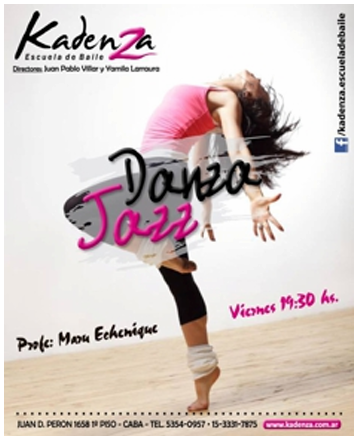
Kadenza Dance School - Danza Jazz
Kadenza Dance School – Danza Jazz

They also state that they are seriously committed to the quality of instruction, where qualified professors and instructors give their best in every class. This ensures their students incorporate the essentials of each technique and develop the maximum potential of their learning in the rhythms chosen by the student.

The Directors: Yamila Larraura and Juan Pablo Villar

The School’s Directors are Yamila Larraura and Juan Pablo Villar, who mention that, “Anyone can open an Academy, but few are the ones that make a difference.”

If we want to know more about the history of these two directors, we can start with Yamila Larraura, who was born in Argentina. Since she was a child, she began listening to Afro-Latin music thanks to her father, “Jorge Washington Larraura,” who was of Uruguayan origin. When she was 14, she went on vacation to Villa Gesell with her parents and a friend of theirs. It was on this trip that her interest in Salsa was awakened, as she went to a place near the beach that played Salsa music and offered classes in the afternoon with all the people from the beach.

One of the songs heard back then was “El Muerto se fue de Rumba” by the group “Las Sabrosas Zarigüellas,” which was very catchy for everyone who heard it. After her vacation, she decided to enroll in Salsa classes, where her teachers were Pablo Demaro and Kimena Puente.

As for Juan Pablo Villar, during his youth, he worked as a waiter in a bar and took theater classes, which also included lessons in national folklore and Latin rhythms (Salsa). This was his first contact with dance, and from that moment, he developed an interest in it. One day, a person came to the bar and mentioned that they taught classes in a studio, asking if they could leave flyers at the bar for people who wanted to dance. Knowing this, Juan Pablo Villar decided to go to the Salsa classes taught by Professor Pablo Demaro.

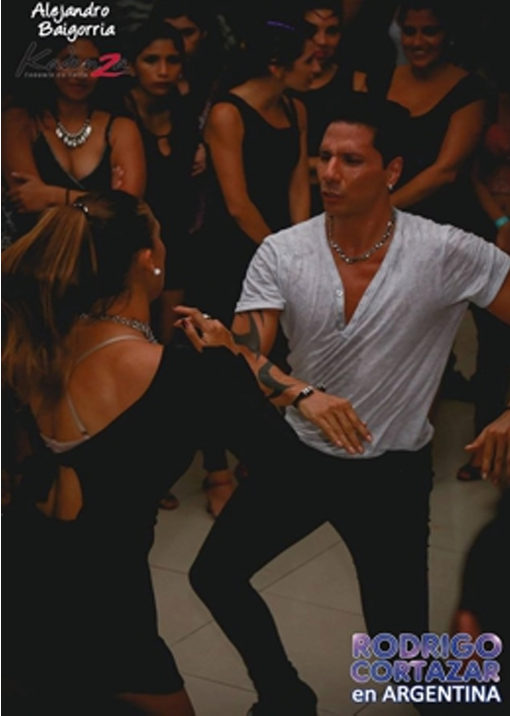
Kadenza Dance School - Social
Kadenza Dance School – Social

They explain that the Salsa classes back then were in a Cuban style, which featured fairly simple movements and figures. It was in these very classes that the future directors of KADENZA, Juan Pablo Villar and Yamila Larraura, first met.

The Journey to Kadenza

To gain a better experience, and to teach and give classes, they had to learn new techniques. They decided to seek out the best teachers in Argentina, who at that time were from the “Escuela de Mambo en Dos,” led by teachers Liz Paredes and Carlos Aragón, until they moved to Italy in 2007.

Afterward, they formed a dance group with their colleagues called “Combo Bayres,” during which time they toured the country and performed on various stages. In 2007, Liz Paredes and Carlos Aragón returned from Italy and formed the “Compañía Mambo en Dos,” where Yamila Larraura and Juan Pablo Villar joined the project. They gained great experience in the artistic world, traveling to different Argentine cities like Mar del Plata, Rosario, among others.

They also had the opportunity to travel abroad, attending the Salsa Congress in Uruguay, and later going to the United States, to New York City, to present at the Salsa Congress where they met great dance legends like Eddie Torres. Another great experience they had was the honor of being the official dancers for the famous Venezuelan Salsa singer “Oscar D’León” and the Dominican Salsero José Alberto, also known as “El Canario.” By 2010, they left the Mambo en Dos company to start their own school.

The academy’s beginning went without a name for a year, simply referred to as Pablo and Yamila’s school, but they were always looking for a name that would identify the essence they wished to convey. They eventually came up with “Cadenza,” which in Italian means “style of free rhythms.” To make the name more original, they changed it to “KADENZA,” feeling proud of their choice.

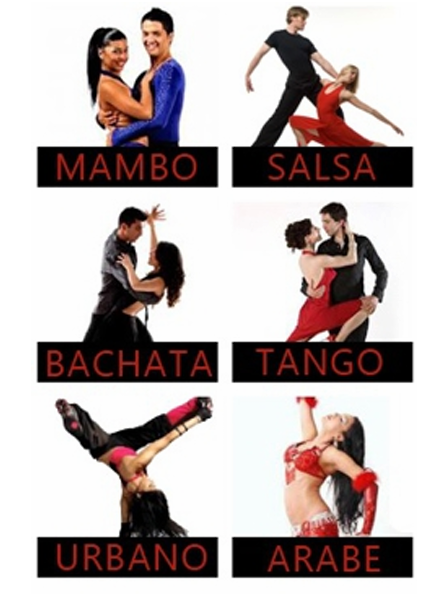
Kadenza Dance School - Mambo, Salsa, Bachata, Tango, Urbano, Arabe
Kadenza Dance School – Mambo, Salsa, Bachata, Tango, Urbano, Arabe

Contact Information

For more information, contact them at:

  • Website: http://www.kadenza.com.ar
  • Facebook:escueladebaile
  • Phones: 5354-0957 / 15-3331-7875
  • Email: [email protected]
  • Google Plus: https://plus.google.com/106664874547676369685
  • Youtube: https://www.youtube.com/channel/UC-he58RYqrJwoxoH8OID3ZA


Pedrito Moya and Jhonatan Araque: A Tribute to Jerry Rivera

Latin America / Venezuela / Caracas

“There is a great variety of new artists who want to expand and promote their new talents to all lovers of salsa music. For this new edition, we present Jhonatan Araque, a Venezuelan born in Maracay, Aragua, on March 25, 1983. Since he was very young, he showed admiration and an inclination for music, especially singing. By the age of 14, he joined the Grupo Rumba Costeña for a year, performing as a soloist; later, he joined the quintet ‘Quinto Elemento,’ who interpret pop and ballad music. From that moment, he had the opportunity to perform at the ‘Forum’ of Valencia, his first experience performing in front of a significant audience.

He mentions that he began his studies at the ‘Tecnológico de Música de Valencia’ (Valencia Technological Institute of Music), where he graduated with a major in singing, obtaining excellent grades. By the age of 18, he decided to record his first solo demo, which opened the doors to his first record contract with the ‘Sonográfica’ record company, alongside the Moratinos brothers, forming part of a group called ‘Okey,’ experimenting with various genres on that album, such as ballads and pop with Latin and Spanish influences.

“Jhonatan Araque’s Orchestra is made up of very talented young Venezuelans.”

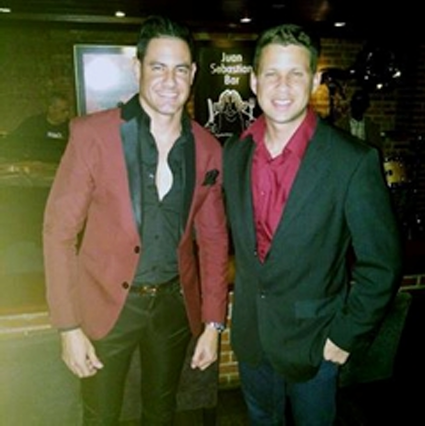
Pedrito Moya and Jhonatan Araque

After performing in various nightclubs, he decided to join the salsa orchestra ‘Los Latinos,’ where he became known in the cities of Caracas, Maracay, and Valencia, having the opportunity to share the stage with great national and international performers of the genre, including: Hernan Olivera, Marcial Istúriz, Wilmer Lozano, Edgar ‘Dolor’ Quijada, Hildemaro, Erick Franchesqui, Rodrigo Mendoza, Ángel Flores, and Mariana La Sonera.

Additionally, he spent six months as the singer for La Dimensión Latina, performing with them in different cities across the country; he also auditioned and became part of the ‘Simón Bolívar Latin Caribbean Orchestra,’ belonging to the National System of Youth and Children’s Orchestras and Choirs of Venezuela, with which he had great experiences in various projects under the direction of maestro Alberto Vergara Icaza.

With all these new experiences, new opportunities arose for him in various forms to become part of renowned orchestras within the national salsa genre, such as Rumberos del Callejón, Orquesta Puma Band, El Combo de Venezuela, and the recording of two tracks with Fidel and Julito Antillano. In 2013, he decided to retire from La Latino Caribeña and form his own orchestra to lead ‘The Tribute Project to Jerry Rivera and Rey Ruiz.’

Salsa singers Jerry Rivera (Puerto Rican) and Rey Ruiz (Cuban) are recognized in all Caribbean countries, and both have had a great impact in the Venezuelan salsa scene, where their recordings are widely known and have a large following.

Jhonatan Araque’s orchestra is made up of very talented young Venezuelans with specific studies for each of the instruments they use. They are dedicated to presenting the audience with the interpretations that have been highly successful throughout their careers, thus paying tribute to these two singers of great international renown.

The members of this great orchestra are:

Name Role
Jonathan Araque Solo Vocalist
Mauricio Marin Backing Vocalist
Luis Martínez Backing Vocalist
Angel Palma Piano
Edwin Garcia Bass
José “Puma” Reyna Timbales
Braimy Mijares Congas
Lukas Gomez Bongos
Jose Anahole Trumpet
William Rada Trumpet
Pedro Xavier Moya Trombone (Musical Director)
Leycester Licon Trombone
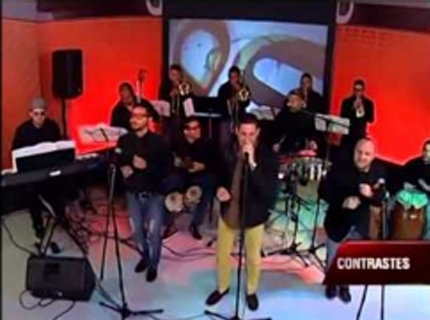
Pedrito Moya and Jhonatan Araque - TV
Pedrito Moya and Jhonatan Araque – TV

For more information, contact them at:

Contact Method

Phones

Jonathan Araque: +58 424-3443504 Pedro Xavier Moya: +58 416-3077868 0414-9276637

Facebook: https://www.facebook.com/ Bachology?hc_ref=SEARCH

Correo: [email protected]

YouTube: https://www.youtube.com/ channel/UCZP0snvp3tqkP24c X_fg1KQ

Twitter: @Bachology

Jose Nogueras and Bobby Cruz Share a Social Message in Salsa

Veteran artists Jose Nogueras and Bobby Cruz have teamed up to create “Yo Soy Tú, Tú Eres Yo” (“I Am You, You Are Me”), a powerful song that celebrates equality, solidarity, and brotherhood among all people. According to a statement from Nogueras, the track delivers a deep and universal message: “Beyond our differences, we share the same dreams, struggles, and hopes.”

Bobby y Jose Por Bella Martínez

Composed by Jose Nogueras, “Yo Soy Tú, Tú Eres Yo” is a clear tribute to hope, love, justice, and unity, all set to a salsa rhythm deeply rooted in Puerto Rican heritage. The unmistakable voices of Nogueras and Cruz encourage us to reflect on the importance of human connection and empathy.

The song blends the classic essence of salsa with a meaningful human message. As is often the case with Nogueras’s compositions, the content resonates with today’s social reality. The arrangement perfectly complements the lyrics with rhythmic power, flavor, and authentic Puerto Rican style. This new release honors tradition while connecting with new generations of musicians and fans alike, thanks to its timeless message.

José Nogueras and Bobby Cruz combine their experience to produce "Yo soy tú, tú eres yo" (I Am You, You Are Me) by Bella Martinez

José Nogueras and Bobby Cruz combine their experience to produce “Yo soy tú, tú eres yo” (I Am You, You Are Me) by Bella Martinez

Nogueras’s lyrics once again confirm that his music serves as a vehicle for unity and hope. Meanwhile, the impeccable musical arrangement by Luis “Perico” Ortiz brings together several generations of great Puerto Rican musicians. The track features the talented Jorge Rivera on bass, interacting with the veteran tumbadora player Sammy Garcia. One of the most promising percussionists of his generation, David Marcano, shines on timbal and bongo. He’s also a member of one of the most respected dynasties in Puerto Rican popular music. On piano is Puerto Rico’s most versatile contemporary salsa artist, Carlos Garcia. The voices of the irreplaceable Josué Rosado and Willito Otero in the chorus seem to welcome back someone we’ve been missing for a while: Aldo Matta. The trumpets were handled by the song’s arranger, Luis “Perico” Ortiz, while Diego Diaz played the trombone.

Bella Martinez Puerto Rico


Also read: Mel Martinez, “I come from Puerto Rico and Puerto Rico is Salsa”

  • « Go to Previous Page
  • Page 1
  • Interim pages omitted …
  • Page 49
  • Page 50
  • Page 51
  • Page 52
  • Page 53
  • Interim pages omitted …
  • Page 267
  • Go to Next Page »

International Salsa Magazine (ISM) is a monthly publication about Salsa activities around the world, that has been publishing since 2007. It is a world network of volunteers coordinated by ISM Magazine. We are working to strengthen all the events by working together.