• Skip to primary navigation
  • Skip to main content

International Salsa Magazine

  • HOME
  • Previous editions
    • 2026
      • ISM / March 2026
      • ISM / February 2026
      • ISM / January 2026
    • 2025
      • ISM / December 2025
      • ISM / November 2025
      • ISM / October 2025
      • ISM / September 2025
      • ISM / August 2025
      • ISM / July 2025
      • ISM / June 2025
      • ISM / May2025
      • ISM / April 2025
      • ISM / March 2025
      • ISM / February 2025
      • ISM / January 2025
    • 2024
      • ISM / December 2024
      • ISM / November 2024
      • ISM / October 2024
      • ISM / September 2024
      • ISM / August 2024
      • ISM / July 2024
      • ISM / June 2024
      • ISM / May 2024
      • ISM / April 2024
      • ISM / March 2024
      • ISM / February 2024
      • ISM / January 2024
    • 2023
      • ISM / December 2023
      • ISM / November 2023
      • ISM / October 2023
      • ISM – September 2023
      • ISM – August 2023
      • ISM July 2023
      • ISM Edition June 2023
      • ISM – May 2023
      • ISM April 2023
      • ISM March 2023
      • ISM February 2023
      • ISM January 2023
    • 2022
      • ISM December 2022
      • ISM November 2022
      • ISM October 2022
      • ISM September 2022
      • ISM August 2022
      • ISM July 2022
      • ISM June 2022
      • ISM May 2022
      • ISM February 2022
      • ISM January 2022
    • 2021
      • ISM December 2021
      • ISM November 2021
      • ISM October – 2021
      • ISM September 2021
      • ISM August 2021
      • ISM July 2021
      • ISM May 2021
      • ISM April 2021
      • ISM June 2021
      • ISM March 2021
      • ISM February 2021
      • ISM January 2021
    • 2020
      • ISM December 2020
      • ISM November 2020
      • ISM October 2020
      • ISM September 2020
      • ISM August 2020
      • ISM July 2020
      • ISM June 2020
      • ISM May 2020
      • ISM April 2020
      • ISM March 2020
      • ISM February 2020
      • ISM January 2020
    • 2019
      • ISM December 2019
      • ISM November 2019
      • ISM October 2019
      • ISM Septembre 2019
      • ISM August 2019
      • ISM July 2019
      • ISM June 2019
  • Spanish
  • Download Salsa App
    • Android
    • Apple

Search Results for: Sonora Matancera

Joseíto Mateo “They call me the Negrito del Batey, because work for me is an enemy”

Joseito was a consecrated Dominican merenguero who began his career in the 1930’s, better known as “El rey del merengue, El diablo Mateo”.

As a child he learned to sing and dance. He sang at the “Fiestas de la cruz” and at wakes, since at that time the deceased were prayed to with songs.

Mateo began his career as a singer during the 30’s, a period in which he was gaining the public’s favor.

Some time later he was requested by the record label “SEECO” to join the cast that in Havana would record with the Sonora Matancera.

Those were the years of the Trujillo Era in which Dominicans required an exit permit to travel abroad.

At first, this document was denied to Joseito.

As a consequence, in Havana, once the record was contracted and the pieces that would be part of it had been selected, including “El negrito del batey”, Joseito’s place was taken by the Dominican singer Alberto Beltrán, who was known since then by the Cuban public as “El negrito del batey”, instead of his true inspirer.

He was born on April 6, 1920 in Santo Domingo (Dominican Republic).

In one of his later trips, he decided to stay in Cuba to sing in CMQ, together with Celia Cruz and La Sonora Matancera, a very popular group at that time.

After the assassination of Rafael Trujillo on May 30, 1961 and the end of his dictatorship, Joseito decided to try his luck in Puerto Rico.

In 1962, Joseíto participated as vocalist in the first tour of the “Gran Combo” to Panama, to promote the album ‘El Gran Combo con Joseíto Mateo’.

There he met the young singers Pellín Rodríguez and Andy Montañez, who ended up replacing him in the Puerto Rican group.

“El Gran Combo was very good to me, I adapted to sing plena, bomba, guaracha, boleros, but then I had to return to Santo Domingo to clear my name.

They were falling behind all those who were with Trujillo, and in the Republic they said I was a spy and was on the run”.


Mateo’s professional work has spanned more than 70 years and constitutes an important reference of the Dominican musical culture.

He was nourished by the roots of merengue and became a singular exponent of it. His innovative style was characterized by a stage participation enriched by his particular way of dancing and singing.

Some of his best known songs are Madame Chuchí, Dame la visa, La cotorra de Rosa and La patrulla, among others. Joseito is known as “El Rey del Merengue” (The King of Merengue).

On November 11, 2010, Mateo was recognized at the 11th Latin Grammy Awards with the Latin Recording Academy’s Musical Excellence Award for his contributions to Latin music.

He retired in 2001, close to his 82nd birthday and after recording 50 “elepes”.

Joseíto Mateo passed away on June 1, 2018 at the age of 98, due to leukemia. He spent his last days in the Hospital de las Fuerzas Armadas.

Source:

https://www.buscabiografias.com/biografia/verDetalle/8662/Joseito%20Mateo

Frankie Vázquez “El Sonero de todos los Barrios and still going strong” Guatacando

Efrain is a Puerto Rican Sonero Excélsior, he was born in Salinas in La Isla del Encanto.

His father gave him his first conga at the age of 10, and another one two years later, which allowed him to practice to the rhythm of his mother’s records: El Gran Combo, Cortijo and Eddie Palmieri.

His parents helped him to create his own band at the age of 16 “Los Generales” where he played congas; the band played concerts in his father’s restaurant. Suddenly replacing the singer of the orchestra, he becomes better and more popular. He then dedicated himself to singing, without giving up instruments such as congas, timbales, clave, maracas, güiro and bell.

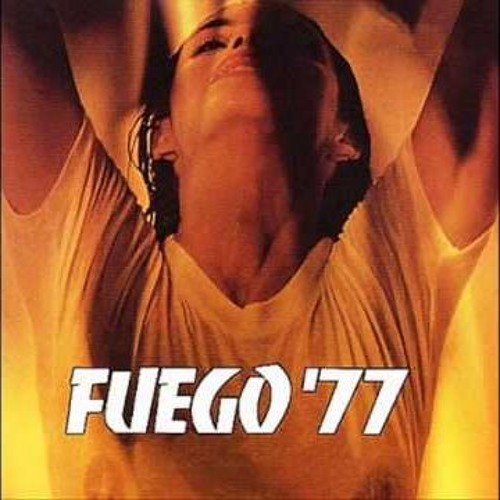
He moved to New York ’77, debuted recording on Al Santiago’s production Fuego ’77 to Alegre by the young band of the same name; Al liner note Frankie described as “enthusiastic, energetic and full of life”, he always chorused and sang lead vocals on the cut “Nueva York”, his cousin David Sanchez handled the remaining lead vocals. Fuego ’77 lasted two years.

Frankie performs: “New York”, where his very young voice is barely recognizable:

“New York site of opportunity

New York the city I love the most

I have a feeling that one day I would make it big”.


In the others, David Sanchez sings and Frankie is on backing vocals. Both are thanked in the credits for having contributed to the sounds.

This album is a wonderful little one, no song disappoints, on the contrary there is a communicative energy from the first to the last song.

“Fuego 77” was a band of young people in their early 20s.

He then spent two years with Sonido Taiborí (Sánchez sang in chorus with Johnny Ortiz and Taiborí ’79 in Fania with lead singer Tito Nieves, founder Ortiz, an outstanding Puerto Rican composer, later left), a year and a half with Orquesta Calidad and intermittently worked for three years with Orquesta Metropolitana.

He joined the “Conjunto Wayne Gorbea Salsa” for five years, providing lead vocals and güiro, accompanying one of the highlights of the Montuno sessions. He replaced Herman Olivera as singer with Manny Oquendo and his “Conjunto Libre” in December 1990, making his debut.

He partnered with pianist Martin Martin, bandleader of the magnificent “Los Soneros del Barrio” Orchestra in 1999.

He has sung with the Lebron Brothers for more than three years, as well as other spectacular company such as New swing Sextet, Leña Moncho, Tony Gonzalez, La Sonora Matancera, Frankie Morales, Delgado Jimmy, Joe Cuba, Jimmy Bosch, Spanish Harlem Orchestra and stop counting with his great success characterized.

He is currently one of the artists who has participated in countless recordings all over the world and even participated as a special guest in the group Dislocados de Ucrania.

His career is very rich and the list of his collaborations that we have just mentioned is not exhaustive.

We hope that the list will grow because we love his way of modulating his voice in each song, with a perfect diction, and his inspirations that enchant us in concert.

Facebook: Frankie Vázquez

Maestro Jorge Anselmo Barrientos Silva, conductor, arranger and composer

He is one of Mexico’s most important musicians and cultural heritage, recuerdos del Son with Jorge Anselmo Barrientos Silva.

Jorge Barrientos was born on November 14, 1953 in Mexico City. He studied music at the Escuela del Sindicato Único de Trabajadores de la Música del Distrito Federal. Groups and orchestras in which he has worked: Mocambo, Horóscopo Tropical, Jorge y su Boogaloo, Sonora Brasilia, Sonora Mayoral, Yímbola Combo, La Justicia, Sonora.

In 1980 he founded Recuerdos del Son (director, arranger, and composer), whose group is already part of our cultural heritage of Afro-Caribbean music in Mexico. This group has participated in festivals, conferences, concerts, and courses, in the most important auditoriums and theaters of the CDMX and the interior of the country. It is worth mentioning that it has been the only Mexican group invited to Nicaragua.

Within his musical career he has been a commentator on radio stations such as Radio D, Radio Educación, La Tropi Q and XEB. He has published several works on Afro-Antillean music and especially on Cuban Son -among others- El Son Raíz y evolución, La Clave en el Son cubano, Método de Tres and a didactic disc on the variants of Son.

 Jorge Anselmo Barrientos Silva y Erika Muñoz

Jorge Anselmo Barrientos Silva y Erika Muñoz

Regarding pre-Hispanic music, he published the research: ANALOGÍA ENTRE LOS INSTRUMENTOS DE PERCUSIÓN PREHISPÁNICOS Y LOS DEL SON CUBANO (ANALOGY BETWEEN PRE-HISPANIC PERCUSSION INSTRUMENTS AND CUBAN SON). He has given conferences, concerts and workshops in several cultural spaces such as Faculties of the Universidad Autónoma de México, Cultural Centers in Mexico City, as well as in the interior of the Republic.

He has participated in the Cervantino Festival twice, the Caribbean Festival in Managua, Nicaragua in 1984, Festival de las Artes in Monterrey, Nuevo León, Tabasco, Querétaro, San Luis Potosí, etc, etc. Jorge A. Barrientos Silva was an advisor in the Chamber of Deputies, and commissioner of the Musicians Union.

He has been Secretary of Political Action and in charge of the Legal Department. In the Musicians Union, he was a founder of the Afro-Antillean music workshop, besides having given countless lectures on the Cuban Son and its variants.

Jorge, how many productions have you recorded?

FIRST PRODUCTION OF MR. GENARO ÁLVAREZ (R.I.P.D.)

Jorge Anselmo Barrientos Silva
First production of Mr. Genaro Álvarez (Q.E.P.D.)

He is one of Mexico's most important musicians and cultural heritage

INDEPENDENT PRODUCTION, OWN BRAND, EL SON RECORDS

Record pressed in Pentagrama brand, production Jorge Barrientos
Independent production for the company's own brand, discs Son
Independent production for the company’s own brand, discs Son
Record pressed at the pentagram brand, production Jorge Barrientos

Among those productions, which is the one that has left a mark in your musical history?

All of them have been important and, for example, the album HOIMENAJE PEREGRINO, is a product that record collectors look for and has a special value.

The album, recorded live at the Teatro de la Ciudad, is a document that contains compositions and arrangements by the members, including music and piano solos by Mexican jazzman Héctor Infanzón.

We know that you participated in a festival in Nicaragua, can you share with us about that great experience?

It was something special, since several groups from all over the world participated, among them, Italians, Venezuelans, Cubans, etc. and when playing “al tocar al tú por tú”, the Mexican musicians did not shrink.

You participated in several recordings of your musical partners, to mention a few Tony Camargo, Linda Vera, Wuelfo Gutiérrez, (former member of the legendary Sonora Matancera), what did these great musicians leave you as a musician?

Participating with great music legends is an unforgettable experience since they ask you to interpret the scores, according to the recordings that have left their mark.

Were you in the golden age of Afro-Antillean music, how did Afro-Antillean music develop in those years?

Without underestimating the work of today’s musicians, the era I lived in was very special, because each group tried to put its “stamp” on each performance, nowadays, regularly and with honorable exceptions, most of them “sound the same”.

In the present time, do you consider that Afro-Antillean music has transcended?

Yes, it has transcended, but, with the globalization of culture, sometimes there are few novelties.

Jorge, which show do you remember that alternated with the salseros from abroad?

In the fever of the ’80s, fortunately, the businessmen looked at us to alternate with the great figures, among these I can mention: Irakere, Orquesta Aragón, Gran Combo, Sonora Matancera, Sonora Ponceña, Son 14, Adalberto y su Son, etc.

In the fever of the 80's, fortunately, businessmen looked at us to alternate with the great figures
In the fever of the 80’s, fortunately, businessmen looked at us to alternate with the great figures

¿Recuerdos del Son is already a cultural heritage of the CDMX did you imagine that someday it would happen?

The work in the cultural area has been the goal of our efforts. How nice to receive the affection and recognition of the people, who are ultimately the ones who make our career.

As director and musician of your own orchestra, has it been difficult to get to where you are?

Music and being in the show business is a daily battle, and if it has been difficult, of course, no one has the formula for success, we will continue in the daily struggle, preparing ourselves and presenting our new productions,

How did your love for the guitar, the bass and the Cuban tres come about?

First, I am a descendant of a bohemian family, where the guitar was never missing, then with time my love for the bass and then the Cuban tres began.

Are you still performing?

I’ve been performing on Saturdays at the Salón Caribe and other dance halls for 4 years. The cultural activities have been suspended for some time now (by covid) but, hopefully, the presentations in festivals and theaters will be reactivated.

Do you still feel the same adrenaline rush when you step on a stage?

Fortunately, it’s the same emotion, you never know if the public is receptive or ignores your efforts.

In your musical career, have you been honored or received recognition?

Yes, I have received countless recognitions, both for the trajectory of RECUERDOS DEL SON and for the research work I have done.

Jorge before saying goodbye we want to thank you for being and existing as the cultural heritage of the CDMX.

Would you like to close this talk with a few words?

Some say that Son is dead, Don Ignacio Piñeiro used to say: “Son is the most sublime thing for the soul to have fun, it should die, who for good does not judge it.

MAY THE SON NOT DIE, WITH CLAVE AND BONGO, MEMORIES OF THE SON.

Facebook: Jorge Anselmo Barrientos Silva

Article of Interest: Fabián Rosales Araos Chilean singer-songwriter, native of the city of Valparaíso

Luis Medina as a master of ceremonies, broadcaster, DJ and much more

Incredible conversation with Luis Medina

Luis Medina on the radio
This is Luis Medina on the radio

Good afternoon, everyone. We are here with broadcaster, DJ and event producer Luis Medina. Mr. Medina, how are you today?  

I am well and ready to talk to you right now.

Mr. Medina, you have a very long career as a radio presenter. You got started in this business in 1974. What led you to spend so much time in your career on the radio? 

In 1971 I was studying architecture at San Francisco State University, but in 1974 I changed my major to broadcasting and communications in the Department of Radio and Television. When I was a kid, I was always fascinated by broadcasters on TV with their microphones. My parents gave me a toy microphone, and I always imagined I was broadcasting. At the time I was accepted in the broadcasting program, I already loved salsa because my cousin  Stella played popular music for me since I was about 8 years old. I loved all kinds of music. At home, we always had the radio on, and my parents always listened to tropical music, which was very common at that time.

In 1974 my cousin Eduardo invited me to go to a radio station called KBRG to visit some friends who had a program called Venezuela Suya. In another studio in the station, there was a radio producer named Arturito Santiago, who was the master of ceremonies for the Gran Combo de Puerto Rico when they did dances in San Francisco hotels. When I saw him doing his job, I was intrigued. Two months later, my cousin called to tell me that he’d gotten involved in a community radio station called KPOO San Francisco and asked me if I wanted to help him with the show. I brought a stack of LPs, and we did the show from midnight until 6 am. I went a few times to help, but I could not maintain that pace because I was still in college.

A few months later, he called me to tell me that he had a show from 3pm to 6pm on Sundays. He told me he was talking to other people I knew in order to do the show together. I got a segment of 45 minutes to an hour to do whatever I wanted, so I decided to start programming salsa. I helped produce several programs until I had my own show. In 1979, while I had a four-hour show on Saturdays on KPOO, KBRG’s program director, Al Carlos Hernandez, called me. KBRG was a powerful FM station at that time. That gave me the opportunity to do a commercial show.

DJ Luis Medina
Broadcaster Luis Medina with two maracas

I am part Venezuelan and part Mexican, but I grew up in the United States. I spoke Spanish perfectly until I was five years old, but when I started school, I just wanted to speak English in school and at home. When I turned 18, I decided to get my culture back and relearn to speak Spanish again. However, I’m wasn’t completely fluent in Spanish because I have to translate mentally from English. I explained the situation to Al Carlos, and he told me that he did not care. That’s how I became the first radio announcer to do salsa programming in English on a Spanish-speaking station. The program was called Sabor Caliente and it lasted about a year and a half, until they let me go due to philosophical differences. After that, I did specials in KPFA, until Víctor Castro, who produced the program Ahora, invited me to alternate weeks with him. I produced salsa shows on KPFA from 1983 to 1995.

What Medina has to say about all his combined activities

How do you balance your radio activities and event production and your job as a DJ?  

When I was a student at San Francisco State University, I became co-director of the university’s productions to present musical acts. From 1974 to 1976 I presented acts from various genres such as rock, R&B, and jazz, among others. I also presented some salsa and Latin jazz shows, including Pete and Sheila Escovedo, who were part of Roger Glenn’s band, Benny Velarde and others. I became friends with Pete and Sheila before Sheila became Sheila E and I also worked with Pete’s brother, Coke Escovedo in the 70s.

Then I met Roberto Hernandez, who had an organization that helped produced the first major street fairs in the San Francisco Mission district together with a coalition of community agencies. I got involved with the fairs, which presented the famous singer Joe Bataan among others. It was the era of Latin rock, but salsa was also booming. I was part of the renaissance of salsa music that occurred on the radio, but I also had the opportunity to play an influential role in the community in the Mission. In 1977, the Mission Cultural Center opened in a furniture store ran by artists that were organizing it. I became part of the music committee and we presented performances and salsa groups that were growing in fame at that time. I was involved on the activities of the center until the 1980s, when some of us created a production group called CMP (Cultural Music Productions). During the 80s we did a series of dances, in which I worked as master of ceremonies. I already had experience as master of ceremonies because when I was at KBRG, they gave me the opportunity to introduce some great shows with Celia Cruz, La Sonora Matancera, Oscar D’ León, Cal Tjader and La Orquesta Broadway. I was also master of ceremonies for Brazilian carnivals for about five years. With CMP I was involved in dances with Willie Colón, Bobby Valentín, Oscar D’ León, and boxing champion Roberto Durán (who at the time wanted to be a salsa singer).

Eventually I left CMP, and I was contacted by Roberto Hernandez, who offered me the position of entertainment director of his new organization, MECA. I accepted and started to help him program the schedule for events such as the San Francisco Carnival, and the 24 Street Fair. I worked with Roberto until 1994 and we presented Santana, Los Lobos, Eddie Palmieri, Luis Henrique, Willie Colón, Yomo Toro, Mighty Sparrow, The Neville Brothers, Shaggy, and many more. When Roberto Hernandez left the organization, I stayed for four more years and worked with Manny Oquendo and Libre, John Santos, Pete Escovedo and Pancho Quinto. In 1998, the president of the organization Patricia Aguayo and I had some problems, so we stopped working together.

A radio DJ and a party DJ are two completely different things. It took me a little while to adjust to being a live DJ. In the early 1990’s, the producers at the Alta Vista club hired me from time to time. Then, they moved to a ship called Alta Vista del Mar in Pier 3, and occasionally hired me as their DJ.

Event producir Luis Medina
Event producer Luis Medina posing for or the camera

In 1994 I met a very ambitious young Venezuelan by the name of Adrian Goddard and started working with him at his club, 330 Ritch. It was a winning combination of Adrian’s talent as an event producer and my talent as a DJ and MC. I worked there for about nine very successful months, but then I had an opportunity with KPFA and I was forced to leave the club because the schedule conflicted. My priority was to produce my own salsa show (ironically, this program didn’t last long, but in 1997 they offered me the same slot, which would become the program Con Sabor, which I still produced today, 25 years later, at KPFA, on Saturdays from 9-11pm.)

A little later, Kimballs Carnaval hired me as a Latin House DJ, as this rhythm was very popular at that time. I wanted to please them, but it wasn’t a good fit. Eventually I was hired as a salsa DJ by the club Kimballs West. This opened other opportunities and I became the DJ in residence at the most prominent salsa clubs in San Francisco at the time, the legendary Jelly’s Cafe, where I DJ’d until it closed in 2010 and the popular Café Cócomo, which closed in 2014. I now DJ and MC primarily for special events and private parties.

Something very important in my story is that in 1997 I worked with Bill Martinez and Arturo Riera  and they both gave me the opportunity to be master of ceremonies for a very important series of concerts featuring Cuban musicians who were allowed into the States for the first time. I was the first master of ceremonies for a Los Van Van concert in San Francisco and I also represented my show and KPFA for their concert at Stern Grove in 2019. That was one of many times that I worked with that group.  I also was the MC   for Orquesta Aragon, Cubanismo, NG La Banda and other Cuban acts.

During the pandemic, I was offered a show with an online radio station called World Salsa Radio. I started the show Sabiduría con Tumbao on Wednesdays from 5 to 7 pm. What makes this show different from Con Sabor is that Sabiduría Con Tumbao is a conceptual program that focuses on certain musicians, musical themes and movements within salsa and Afro-Latin music. On the other hand, Con Sabor offers a broader perspective of salsa, Latin Jazz and música cubana from the classics to the latest.

Since the pandemic started, I produce all my radio shows at home. I managed to master the technology and built my own home studio. I am not afraid of technology or modern things. I go with the flow because I’ve learned that I should be at the forefront of technology and music. If I do not know something, I am going to research it right away. I keep an open mind and ears and I appreciate and listen to all kinds of music, something that was key when I was music director at KPFA from 2001 through 2014. In terms of my own programs, I really love salsa from the 70s, but I’m not stuck in any time period.

Eduardo and Luis
Our editor Eduardo Guilarte and Luis Medina


Freddy Sánchez one of the musicians with the greatest trajectory and hierarchy in Venezuela

In 1994, he participated for the first time in a group called “Sentir Caribeño”, from Mariara, Carabobo State.

Greetings my salsa people, here again with you, wishing you the best. First of all, lots of health, prosperity and optimism from your friend professor MSc. Carlos Colmenárez, who, through International Salsa Magazine and www.SalsaGoogle.com, presents you in this opportunity to: Freddy Sanchez bastion of this genre that we are so passionate about, for your delight Enjoy them.

“You must always remember that to be a good musician you have to maintain three fundamental elements, such as: discipline, responsibility and respect … Many do not understand that.”

These recommendations come from perhaps one of the musicians with the greatest trajectory and hierarchy in Venezuela, such as: Freddy Alí Sánchez Carvallo, born on November 9, with his musical beginnings at 15 years of age.

In 1994, he participated for the first time in a group called “Sentir Caribeño”, from Mariara, Carabobo state, playing bass; He continued his musical career with the “Mangüe” orchestra of Maracay, Aragua state and from there he went to the “Alteración” orchestra, then to the Sonostars de Mañito Junior, having the privilege of accompanying Yolandita Rivera and Luigi Texidor.

Freddy Sanchez bastion of this genre that we are so passionate about.
Freddy Sanchez one of the musicians with the greatest trajectory and hierarchy in Venezuela.

In 1999, he was called by the “Latin Dimension”, remaining in it for about 6 years.

At the same time, at the beginning of 2000, he participated in the orchestras of: Hildemaro, Erick Franchesky, Magia Caribeña, Puerto Rico es Salsa, Pasión Juvenil, Porfi Jiménez and Francisco Pacheco y la Pueblo de el.

Freddy, have you accompanied international artists?

Of course, Professor Carlos, thank God I have had the honor of playing for: Andy Montañez, Henry Fiol, Junior González, Domingo Quiñónez, José Alberto “El Canario”, Ismael Miranda, Adalberto Santiago, Wichy Camacho, Tony Vega, Willie González , Tito Gómez, Cano Estremera, Pedro Arroyo, Gabino Pampini, among others.

And I understand that you directed the career of Venezuelan musicians?

That’s right, my friend, I was the manager of Jimmy “El León” until 2005, when I joined the Oscar D’León orchestra “El Sonero del Mundo”, until 2013, visiting more than 32 countries.

And “Son Colón”?

Professor Carlos, in 2010, I founded “La Orquesta Son Colón”, with which I have accompanied figures such as: Joseph Amado, Rodrigo Mendoza, Hildemaro, Erick Franchesky, Paquito Barón, Néstor Rivero, Oscar Arriaga, Wílmer Lozano, Frederick El Coco, Wílmer Cano, Éukaris, Wiwi Buznego and Mariana “La Sonera de Venezuela”.

told us that the second production of the "Orquesta Son Colón" is well underway and that the promotional "El Monstruo de la Calle
“The Son Colón Orchestra”. Founded in 2010

It should be noted that Freddy Sánchez is currently the musical director of the “Orquesta de Porfi Jiménez” and also tells us that in 2019, he participated with the orchestras “Los Melódicos” and “Billos Caracas Boys Internacional” of Amable Frómeta.

–Master Freddy, honestly, let me congratulate you for this trajectory that you have.

Apart from being a bass player, do you stand out with other instruments?

In addition to being a performing bassist, both for the baby and the chest, I am also a trombonist, arranger, director and music producer.

In Colombia I directed “La Sonora Matancera Internacional Siglo XXI” and I had the great experience, being very young, of accompanying, when I was only 21 years old, the legend of the Venezuelan salsa, Orlando José Castillo “Watussi”.

Likewise, I formed the staff of “Albóndiga y la Pandilla de él, being the arranger of some of his songs together with David González and where Gustavo Gerardo and Rodrigo Mendoza vocalized.

-Freddy, from what you have told us, your career is quite broad, what can you add to us? Ok teacher, I’m remembering that I was also in the ranks of “Osuna Banda Show” and “La Bigband de San Agustín”.

Now, Freddy, where did you acquire your musical knowledge and of course your studies?

My friend, I practically studied alone. My uncle Elías Sánchez taught me the figures and I went that way, my story is very particular, my father showed me the bass notes and how it was played, since he is a guitarist, also my relatives, most of them are musicians and being next to of the braves of the time, I was learning and trying to get a sound out of the bass, but I never had a teacher, or anything ”.

Freddy told us that at 17 years of age he had already made his first musical arrangement and by asking Mañito Junior, he learned what harmony was; with the musician Pastor Rodríguez (Q.E.P.D.), regarding the reading of sheet music and with the teacher Gilberto Riera, also deceased, he explained to her how he should maintain the swing when there were percussion solos.

Oh and another musician, known as “Lopecito”, recommended that it is necessary to listen to music, because everything is not reading, but you had to read. Regarding the future projects of today’s guest in “Salsa Escrita”, through International Salsa Magazine, he told us that the second production of the “Orquesta Son Colón” is well advanced and the promotional “El Monstruo de la Calle ”, ”, Is already playing on radio stations and additionally on this album, national artists will be recording as special guests.

Likewise, “La Orquesta Son Colón” will be accompanying vocalist Joseph Amado again in 2020, in his second symphonic concert at the Teresa Carreño Theater in Caracas, in the middle of the year.

"I would like to say to musicians who are starting out in these times, never forget where you came from and what you were, and keep humility first and foremost.
Willie Colon “El Malo del Bronx y Freddy Sánchez

Finally, we asked Freddy Sánchez for some recommendations, as well as those made at the beginning of this review, for the new generations and he literally told us: “I would like to tell the musicians who are starting in these times, never forget where they came from and what that they were, and keep humility above all else, always thanking the opportunities given and do not forget that music is not a competition, because there is always someone who can be beyond you today and here tomorrow ”.

Finally, we would also like to add the following: “music must be learned daily, as it is an infinite world much adored and which is part of our lives.”

Humility and perseverance will make us great in every way. Congratulations Freddy Sánchez and we hope you continue to achieve success, inside and outside our country with your master’s degree.

Facebook: Freddy Sánchez 

By: Carlos Colmenárez Correspondent in Venezuela

Home

  • « Go to Previous Page
  • Page 1
  • Interim pages omitted …
  • Page 5
  • Page 6
  • Page 7
  • Page 8
  • Page 9
  • Page 10
  • Go to Next Page »

International Salsa Magazine (ISM) is a monthly publication about Salsa activities around the world, that has been publishing since 2007. It is a world network of volunteers coordinated by ISM Magazine. We are working to strengthen all the events by working together.