• Skip to primary navigation
  • Skip to main content

International Salsa Magazine

  • Home
  • Previous editions
    • 2025
      • ISM / November 2025
      • ISM / October 2025
      • ISM / September 2025
      • ISM / August 2025
      • ISM / July 2025
      • ISM / June 2025
      • ISM / May2025
      • ISM / April 2025
      • ISM / March 2025
      • ISM / February 2025
      • ISM / January 2025
    • 2024
      • ISM / December 2024
      • ISM / November 2024
      • ISM / October 2024
      • ISM / September 2024
      • ISM / August 2024
      • ISM / July 2024
      • ISM / June 2024
      • ISM / May 2024
      • ISM / April 2024
      • ISM / March 2024
      • ISM / February 2024
      • ISM / January 2024
    • 2023
      • ISM / December 2023
      • ISM / November 2023
      • ISM / October 2023
      • ISM – September 2023
      • ISM – August 2023
      • ISM July 2023
      • ISM Edition June 2023
      • ISM – May 2023
      • ISM April 2023
      • ISM March 2023
      • ISM February 2023
      • ISM January 2023
    • 2022
      • ISM December 2022
      • ISM November 2022
      • ISM October 2022
      • ISM September 2022
      • ISM August 2022
      • ISM July 2022
      • ISM June 2022
      • ISM May 2022
      • ISM February 2022
      • ISM January 2022
    • 2021
      • ISM December 2021
      • ISM November 2021
      • ISM October – 2021
      • ISM September 2021
      • ISM August 2021
      • ISM July 2021
      • ISM May 2021
      • ISM April 2021
      • ISM June 2021
      • ISM March 2021
      • ISM February 2021
      • ISM January 2021
    • 2020
      • ISM December 2020
      • ISM November 2020
      • ISM October 2020
      • ISM September 2020
      • ISM August 2020
      • ISM July 2020
      • ISM June 2020
      • ISM May 2020
      • ISM April 2020
      • ISM March 2020
      • ISM February 2020
      • ISM January 2020
    • 2019
      • ISM December 2019
      • ISM November 2019
      • ISM October 2019
      • ISM Septembre 2019
      • ISM August 2019
      • ISM July 2019
      • ISM June 2019
      • ISM May 2019
      • ISM April 2019
      • ISM March 2019
      • ISM February 2019
      • ISM January 2019
    • 2018
      • ISM December 2018
      • ISM November 2018
      • ISM October 2018
      • ISM September 2018
      • ISM August 2018
      • ISM July 2018
      • ISM June 2018
      • ISM May 2018
      • ISM April 2018
      • ISM March 2018
      • ISM February 2018
      • ISM January 2018
    • 2017
      • ISM December 2017
      • ISM November 2017
      • ISM October 2017
      • ISM September 2017
      • ISM August 2017
      • ISM July 2017
      • ISM June 2017
      • ISM May 2017
      • ISM April 2017
  • Download Salsa App
    • Android
    • Apple
  • Spanish

Search Results for: Tempo Latino Festival

Steffen Kuehn and Christian Tumalan talk about their musical roots and orchestra

Preamble

This time, we are going to talk with German producer, arranger, composer and trumpet player Steffen Kuehn and Mexican bandleader, composer and musician Christian Tumalan. Both are at the head of the Pacific Mambo Orchestra and share the role of co-executive director of Pacific Mambo LLC and Pacific Mambo Records. Also, each has his own record label and separate musical achievements, but unify their skills to make the group they have in common one of the best in the United States.

Both expressed their points view about the orchestra, the work they do in it and what each one has done in music in general. These views reveal that quality, professionalism and adaptability are the main values on which the orchestra they lead is based.

Steffen Kuehn at the Tempo Latino Festival in France

A bit of Steffen’s story

The start of the conversation focused on the beginnings of Steffen Kuehn, who ackowledges having been a musician all his life, since he started playing the trumpet when he was just eight years old. He attended the University of North Texas to start his formal music education and learned to arrange music, compose and specialize more in the trumpet. He now focuses on is teaching trumpet, playing for the orchestra, arranging, selling music for television and movies, among other activities (all  have to do with music).

When we talk about his written publications, he mentioned a instruction book to help beginners to play the trumpet some years ago. Today, He is working on a second book and a new record production. What he has planned for Pacific Mambo is to make about 10 songs for its new album, of which two have already been made.

Christian’s musical background

Christian told us a bit about his musical training and confirmed that he studied piano for more than 10 years. He has also played piano since the age of 14 when he was in high school and started much more formal musical training at the age of 15. It can be said that he was already an expert at playing both instruments after a decade of much dedication and practice.

When asked about his roots in jazz, he commented to us that almost all jazz musicians have some training in classical music and direct access to technical elements with the instruments. His goal in learning about classical music was not to become a performer dedicated only to that style, but to gain as much knowledge as possible about music in general and to improve his piano skills.

Christian Tumalan plating the piano

How do you apply German and Mexican heritage to the music of the orchestra?

As for this interesting subject, both artists pointed out that polka music and Mexican banda music were very similar in terms of sounds and instrumentation used for both. In Steffen’s case, he was always very interested in going to the United States to learn and study about jazz, how and where it originated. He comments that, if he had wanted to study classical music, the best places would have been Germany, France and Italy, as many of its greatest exponents come from there.

Both Christian and I went to the root of how the jazz movement started, how it originated and developed over the years. However, I studied Latin music here in the United States and my Colombian roommate at the time explained to me a lot of things and introduced me to a lot of Latin rhythms I have ever heard before,” said Kuehn.

They both started to introduce jazz and this knowledge to the music of the orchestra. About this, Christian said that the mixture of rhythms was like ”a battle of entities” in which they were looking for what works and what does not work, since not everything can be mixed. ”What I usually do is combine my knowledge in classical music with my own Big Band arrangements,” Christian said.

”The fact that we have musicians from various countries in Europe and Latin America has helped us a lot to see different perspectives. Also, due to the number of musicians we are, we can play in different styles that other groups cannot” added Steffen.

Christian Tumalan and Steffen Kuehn during an interview with Jesse Chuy Varela

Skills they look for in their musicians

Steffen pointed out that the first thing they look for in their musicians is the chemistry we can have with them. In this sense, he mentioned that he has met excellent musicians with whom he does not get along with at all, which makes the work environment very heavy. Therefore, he does not take them into consideration for the orchestra because, if there is no chemistry and an atmosphere of respect, everything else does not work.

Another thing that the performer considers important is the spirituality of music, which many times is not attained by all musicians. When a musician opens up to the spirituality of the music, that’s when the magic happens and the chemistry hits us. We are very fortunate to have so many musicians who share this feeling and have reached that point as we have,” he added.

How do you share roles in the orchestra?

Christian commented that both he and Steffen were very good in different areas separately. Steffen has a quite charismatic way of communicating with people and knows how to earn the respect of others very quickly, while I focus more on the technical and musical aspects of the group. I think that complements us very well”. He also said that the German was very good with information and details such as tours, hotels, flights, names, taxes, among other things.

When Steffen’s came to talk about his partner, he said that he knew a lot about everything to do with music technology, stage direction, tempos, editing, mixing, video, audio and many other things. He confesses that he is unable to do many of these things, so they are left to Christian.

Read also: Multi-Percussionist Carlos Navarro and his Son Y Clave Orchestra
Shoemaker and shoe designer Carlo Farroni

We talked with shoemaker and shoe designer Carlo Farroni

In entertainment, singers, musicians and dancers are always the ones who show their faces to the audience, so they usually take the credit that comes from the final result, but there are many other professionals who also do their part so that a stage performance can be carried out, but unfortunately they do not get the recognition they deserve from the mass media.

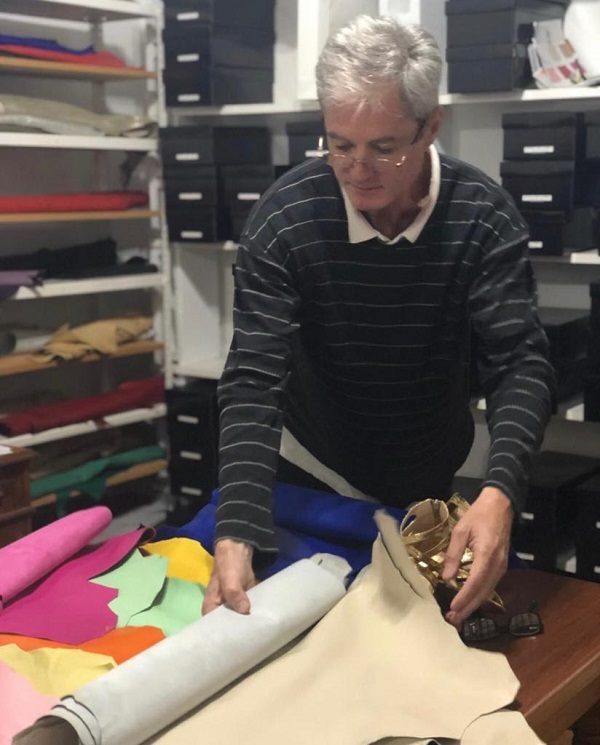
Carlo Farroni checking his materials for shoes

Some of those professionals are shoemakers and shoe modelists, who offer absolute comfort and elegance to artists during their shows, especially when it comes to dancers. Today, we are going to bring the story of Mr. Carlos Farroni, who kindly agreed to talk to us and told us how he began in this interesting and important occupation.

How did you start your career as a shoemaker and shoe designer? (título 3)

Carlos Farroni tells us that he started his apprenticeship at the age of 20, namely more than four decades ago. All this training took place at the shoemaking institute in Buenos Aires, Argentina, Farroni’s native country, but it was not the only place responsible for teaching this man everything he knows today. He also combined his studies with certain tasks in an artisan footwear workshop, something that would be a great support to the knowledge gained within the field of formal education.

Dancing shoes for women made by Carlo Farroni

A few years later, he enbarked on a trip to Italy, where he worked in various areas of the creation of shoes, such as design and subsequent manufacturing, which was also extremely important for the Argentinean to continue learning how to navigate the world that has made him so well known.

Asked why he dedicates himself to the creation of special shoes to dance, he replied that he was carrying out exclusive footwear for theatre plays for many years, during this time his work started to become known in many parts of the world. After the quality of his products made news in many countries, many dancers started contacting Farroni to design exclusive shoes for them. It can be said that this is how he started the famous brand we know today.

More dancing shoes for women made by Carlo Farroni

How is your working methodology? (título3)

Regarding the production process, Mr. Farroni has revealed to us that everything is hand-made, which means that the tailoring, design, choice of materials, cutting, sewing, assembly and finished are handmade. In the same way, he ensures that the materials used for his products (most of the shoes are made of leather) are of excellent quality both in tanning and in thickness. This whole process is what makes the shoes look so professional and, at the same time, so comfortable and light as to allow the wearer to move freely.

It is also important to underline that the shoes handmade by Mr. Farroni’s brand can be used to dance every kind of musical genre without an problem. Obviously, tango dancers are the ones who most often seek out and promote these products, but there is no limit with regard to this detail. Anyone who wants the greatest elegance, sophistication and comfort at the moment of dance anything can contact Carlo Farroni, who will be happy to assist them and offer them the best of his work.

Dancing shoes for men made by Carlo Farroni

Read also: Omar Ledezma Jr talks about his experience at the Tempo Latino Festival

North America – October2022

Omar Ledezma Jr talks about his experience at the Tempo Latino Festival

A new salsa talent with Latin parents and born in Boston

The interesting story of French percussionist Dominique Patrick Noel

We interviewed IndiviDúo singers Tiffany Joy and Maqui Reyes

Noticias Con Sabor with Luis Medina

Noticias Con Sabor in the month of January

We leave this year with the loss of giants in the Latin Music who have joined the ancestors that include the recent loss of the legendary Mexican star Vicente Fernandez, Panamanian powerhouse sonero Meñique and Paquito Guzman who was known for both his boleros and Salsa tunes.  This year we have also lost legends and great musicians such as Johnny Pacheco, Roberto Roena, Chick Corea, Larry Harlow, Adalberto Alvarez, Johnny Ventura, Ralph Irrizary, Tommy Villariny and at the end of 2020, Tito Rojas.  We are lucky that these artists have left us with their legacies of music that will continue to entertain people for years to come.  Rest in Power!

Spanish Harlem Orchestra conquered Monterey with two explosive sets at a special show this past Saturday, Dec. 11th at the Monterey Conference Center. SHO played a few new tunes from their upcoming 2022 release, their repertoire of hits and Christmas salsa music much to the crowd’s delight. I had the pleasure of emceeing the show as well as playing music as the event’s DJ. SHO who were on fire all night and the dance floor was packed all night long. The crowd roared their approval with a standing ovation at the end of the night.  SHO responded with an infectious danceable Christmas song with a crowd sing-a-long which ended the festive evening. Thanks to producer Luis Mendoza and Montuno Productions for inviting me to be a part of this event. Thanks to the great crowd in Monterey who are salseros all the way!

Oscar Hernández playing the piano
Oscar Hernández from Spanish Harlem Orchestra performing at The Monterrey Conference Center

During the COVID19 pandemic, it seemed that all live music stopped being played in public.  However, there were a few places, mostly outdoor cafes, farmer’s markets and restaurants with outdoor dining that offered live Latin Jazz during these dark times.  One of the unsung heroes who continued to play when the pandemic was at its height is veteran pianist-bandleader Gary Flores who formed Salsa Caliente in SF in 1976.  The group has had a lot of prominent musicians including vocalists Paquito Acosta and Angelo Pagan who continued to see their careers thrive in Puerto Rico and Los Angeles.  He disbanded Salsa Caliente in the late 90’s to concentrate on a smaller Latin Jazz group.  Flores along with ex Franco Brothers bassist/vocalist Carlitos Franco and a revolving lineup of all-star percussionists including Santana timbalero Karl Perazo and former Avance bongocero Oscar Soltero kept the live music going during the pandemic at different venues.  Flores was able to continue to play Latin Jazz and Salsa in stripped down format as a trio due to rearranging Salsa tunes as all the members sang coros and vocalized horn lines behind Franco,   Now that live music has made a comeback of sorts and some venues are now booking bigger bands, Flores is revitalizing a bigger version of Salsa Caliente featuring Franco and Perazo.  Flores has been writing new music and plans to record new music with the group.  His last recording “Descarga Caliente: A New Beginning” came out in 2005.  Gary Flores is a veteran and a survivor of the San Francisco Salsa Scene who deserves a big shout out for keeping Latin music alive in the age of COVID!  Pa’lante Gary!!

Reopening will be later

Some scenes are not reopening for 2022 until February or later.  One of those venues affected is Space 550 at 550 Barneveld St. in San Francisco who will reopen in February due to concerns regarding the current surge in COVID cases and the situation with the new variant of the disease.  I also spoke with Adrian Goddard of Jaffe Events who told me that he will continue to book events but later in the first quarter of 2022,  For some event producers, January isn’t a good month to book Latin Music.

People at Space 550
Some people dancing at Space 550

However that’s not stopping Grammy Award winners Pacific Mambo Orchestra who will play their annual January dates at Yoshi’s, Jack London Square on Friday, January 7 and Saturday, January 8th.  Get ready to enjoy and dance to swinging Mambo, Salsa and Latin Jazz from this awesome all-star 20 piece band led by pianist Christian Tumalan and trumpeter Steffen Kuehn. This SF based band is scheduled to play at Europe’s prestigious Tempo Latino Festival in late July. Tickets are now available for these upcoming January dates at Yoshi’s. For more information,  visit www.yoshis.com.

The Cigar Bar, 850 Montgomery St. in SF is starting 2022 with a calendar of great acts coming to this fine venue where you can dine, dance and smoke a fine cigar if you choose to do so. The schedule includes Orquesta La Original w/Alexis Jan 7, Josh Jones Latin Jazz Ensemble Jan 8, The Latin Rhythm Boys Jan 14, Edgardo y Candela Jan 15, N’Rumba Jan 21, La Clave Del Blanco Jan 22, Julio Bravo Y Salsabor Jan 28 and Manteca Jan 29

The Seahorse in Sausalito continues to feature explosive music from the following acts in January on Saturday and Sunday including La Clave Del Blanco Jan 2, Gary Flores and Salsa Caliente featuring Karl Perazo of Santana Jan 8, Edgardo Cambon y Candela Jan 9, Carlos Xavier Salsa Band Jan. 15, Louie Romero and Mazacote Jan 16, Braulio Barrera and Somos El Son, Jan 22,  Orquesta Bembe featuring Christian Pepin on Jan. 23 and Rumbache on Jan. 29.  DJ Jose Ruiz from KPOO/KPFA Radio will also be behind the decks for your dancing pleasure. Check out their fine Italian cuisine and selection of beer and wine.

Seahorse at night
Beautiful decoration of Seahorse at night

The Ramp, 855 Terry Francois in SF continues to offer Salsa under their all-weather tent during the month of January.  Their line up includes N’Rumba Jan 8, Louie Romero & Mazacote Jan. 15, Manny Martinez y La Rebeldia, Jan 22 and Orquesta Borinquen on January 29th. DJ Mendy is providing the music in-between sets and from 9 to 11 pm.  The music starts at 5 pm on Saturdays.

Cascal, 400 Castro in Mountain View will be featuring the explosive sounds of Edgardo Cambon and LaTiDo on Fridays, January 7th and 21st starting at 7:30 pm. There is no cover. Cascal continues to offer their tasty menu of Spanish cuisine, Tapas and fine drinks.

The following recordings kept me going during the second year of COVID19: Ruben Blades “Salswing”, El Gran Combo “En Cuarentena” and their Xmas cd “De Trulla Con El Combo”, Gilberto Santa Rosa’s all-star studded “Colegas”, Sonora Ponceña “Hegemonia Musical”, Mel Martinez “Asi Escribe Un Sonero”, Los Generales De La Salsa featuring Van Lester, a 1996 all-star session finally seeing the light of day, Tromboranga “Salsa Terapia”, Los Van Van “Mi Songo”, Various Artists “El Son De Caballero-Homenaje A Adalberto Alvarez and “Son Para Un Sonero”, Sounds Of Cuba “Los Titanes De La Timba”, Alexander Abreu/Havana d’Primera, Various Artists “En Barranquilla Me Quedo-Homenaje a Joe Arroyo, Dorance Lorza’s Sexteto Cafe “20 Aniversario”,  Luis Perico Ortiz “Sigo Entre Amigos”, Charlie Donato’s Son Ideal “De Vuelta Al Barrio, Eduardo Zayas Y Su EZ La Banda “Huerto De Soneros” and his latest “Sabor Y Sandunga”, Alain Perez, Issac Delgado & Orquesta Aragon “Cha Cha Cha: Homenaje A Lo Tradicional”  and Orquesta Failde “Joyas Ineditas”.  There are a flood of singles that did the job as well from Julito Alvarado’s maxi single “Lo Que No Se Escucha (Descarga De Soneros), Don Pergiñon Y La Puertorriqueña, Marc Anthony, Wilito Otero, Josean Rivera, Monsi Y Su Salsa , Mariana Y Su Makynaria, Julito Albino y Secreto De Voces and VibraSON.  These recordings are some of my picks for the Best of 2021.

And…if that wasn’t enough, my program Con Sabor, Saturday nights 9 to 11 PM PST on KPFA 94.1 FM will be celebrating its 25th Anniversary year on January 1, 2022!  Time flies when you’re having fun!!  I’m also on “Sabiduria Con Tumbao” every Wednesday night 5 to 7 PM PST on WorldSalsaRadio.com.

That’s it for this time.  Ciao 4 now!!

The tent at The Ramp!
Inside the tent at The Ramp

This is the report last month: Noticias con Sabor by Luis Medina

BY LUIS MEDINA, PRODUCER AND HOST OF CON SABOR ON KPFA 94.1 FM AND SABIDURIA CON TUMBAO ON WORLD SALSA RADIO.COM

“La Muerte de un Burocrata” At the Palace Theatre in Downtown L.A.

North America / USA / Los Angeles
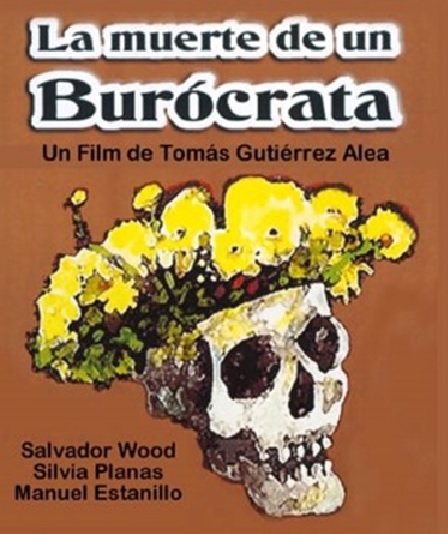
La Muerte de un Burocrata

Latin American Cinemateca of Los Angeles (lacla) in collaboration with the Los Angeles Conservancy’s Last Remaining Seats film series, proudly present the Cuban film La muerte de un Burocrata (1966, Tomas Gutierrez Alea).

On June 14th at the Palace Theatre in Downtown Los Angeles’ historic theatre district at 8:00 PM. Satire of the Cuban bureaucracy of the post-revolution era which shows how convoluted it can be to get things seemingly simple.

La muerte de un burocrata is centered on the predicament of a hapless nephew (Salvador Wood) to retrieve the ID of his recently deceased uncle, a model worker and inventor. His widow (Silvia Planas) placed it in the coffin, but now need it, admonished by a bureaucrat that she will not get a pension without this piece of identification. But the bureaucrat in the cemetery tells him no exhumation is possible without a court order.

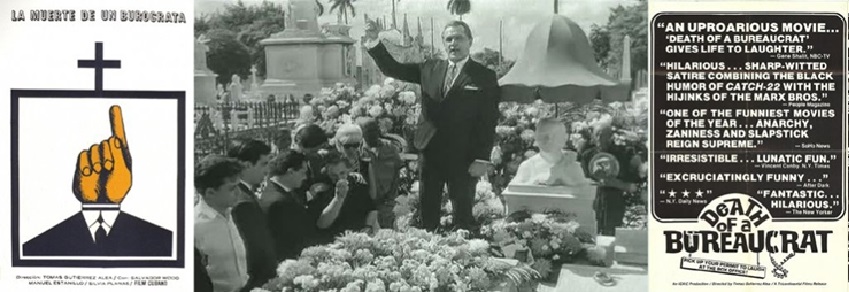
La Muerte de un Burocrata - Flyer
La Muerte de un Burocrata – Flyer

A clandestine operation yields the coffin but the nephew has to wheel it back to their home when the police unexpectedly show up. (Imagine the depredations of the Caribbean heat on an unrefrigerated cadaver). The farce escalates, the lampooning of recognizable government employees gets more ridiculous, and some sacred cows are turned upside down – like socialist realistart, and the fact that everybody is equal but some are more equal than others.

  • Director and Screenplay: Tomas Gutierrez alea.
  • Stars: Salvador Wood, Silvia Planas, Manuel Estanillo.
  • Music: Leo Brouwer
  • Cinematography: Ramon F. Suarez
  • Edited: Mario Gonzalez
  • Production Co: Instituto Cubano del Arte e Industrias Cinematograficos
  • Release Date: July 24, 1966 I Runtime: 85 minutes
  • Country: Cuba I Language: Spanish.

Tickets can be purchased through the L.A. Conservancy at the following link

http://www.laconservancy.org/event/la-muerte-de-un-burocrata-palace-theatre

For more information, please contact: Mariluz Gonzales, 818-667-6403, [email protected]

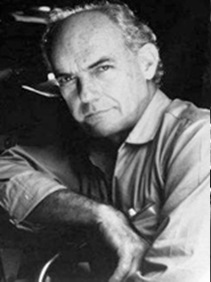
About Tomas Gutierrez Alea

Tomas Gutierrez Alea was a fervent supporter of the Cuban revolution, but good director that he was, his pictures never toe an overt propaganda line. They are aligned with the tenets of the regime but at the level of form, they are an artist’s creative take on the medium. “La muerte de un Burocrata” is a case in point, both in content and style. Fifty years after it was made, “La muerte” is still a refreshing, almost post-modern, satire on the plague of bureaucrazy… under any type of government and organization.

Tomás Gutiérrez Alea

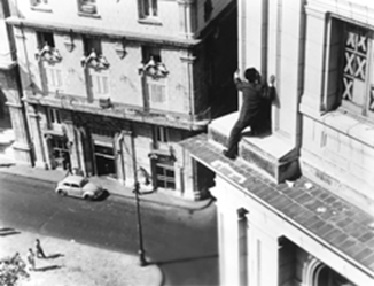
Gutierrez Alea uses the conventions of satire to blast the bureaucratic mindset that reduces life to a succession of absurdities, with witty homages to films and directors, in the guise of scenes filmed a variety of comedic styles: the assembly line of Chaplin’s Modern Times, the clock  from which Harold Lloyd hangs in Safety Last, Dracula’s fangs, the pie fights of Laurel and Hardy, a scattered and curvaceous Cuban Marilyn Monroe, and surrealist dreams like those of Buñuel.

The potpourri works very well, and gets hearty laughs from the audience. By Maria Elena de las Carreras, Ph.D. Noteworthy to mention, the film features music by the legendary composer, Leo Brouwer, who currently resides in Cuba.

About LACLA

Latin American Cinemateca of Los Angeles (LACLA) is a California non-profit organization dedicated to promoting cultural exchange through film by screening classic and contemporary films from Latin America and by USA Latinas and Latinos.

LACLA also supports the film and media efforts of Los Angeles inner-city middle and high school students with its annual student film festival.

About Last Remaining Seats

Last Remaining Seats is the Los Angeles Conservancy’s annual series of classic films in historic theatres. The series began in 1987 as a way to draw attention to the spectacular yet overlooked and underused historic theatre of Los Angeles. The film series has since become a summer tradition, drawing thousands of people from the region, the nation, and outside the U.S.

Photo of Los Angeles

About the Los Angeles Conservancy

The Los Angeles Conservancy is a nonprofit membership organization that works through education and advocacy to recognize, preserve, and revitalize the historic architectural and cultural resources of Los Angeles County. What began as a volunteer group in 1978 now has more than 6,000 member households, making the Conservancy the largest local organization of its kind in the U.S.

  • « Go to Previous Page
  • Page 1
  • Page 2
  • Page 3
  • Page 4
  • Page 5
  • Page 6
  • Interim pages omitted …
  • Page 10
  • Go to Next Page »

International Salsa Magazine (ISM) is a monthly publication about Salsa activities around the world, that has been publishing since 2007. It is a world network of volunteers coordinated by ISM Magazine. We are working to strengthen all the events by working together.